
16 Oct 2018 | Focolare Worldwide
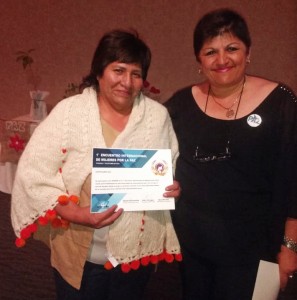 Many of our readers are familiar with the story of Margarita Ramirez De Moreno who comes from Santa Maria di Catamarca in the north east of Argentina. She is a descendent of Calchaquies Aborigines whose leader was Juan Calchaqui. These people were well known for their abilities in many forms of traditional crafts. Margarita certainly inherited an enterprising spirit and great talent in weaving from her ancestors. When she was young, she studied for a diploma at the “Aurora School” in her town: this institute is recognised by the Argentinian government for the outstanding contribution it makes to teaching about designs and traditional skills deriving from the “quechuan” culture. Later on in life, Margarita was unemployed but she did not give in to the personal challenges that she and many women like her faced but decided to open a spinning mill to provide thread for the looms in the school workshop. This enabled her to overcome discrimination and reclaim her cultural identity. On October 1st in Tucuman, Margarita received an award during the first international meeting of “Women for Peace” organised by the “World Federation of Grand Master Ladies”. This is an international association, found in many parts of the world that works with individuals, groups and foundations: its spirit facilitates women in establishing links of friendship, fraternity and support and enables them engage politically in initiatives promoting peace, security and protection.
 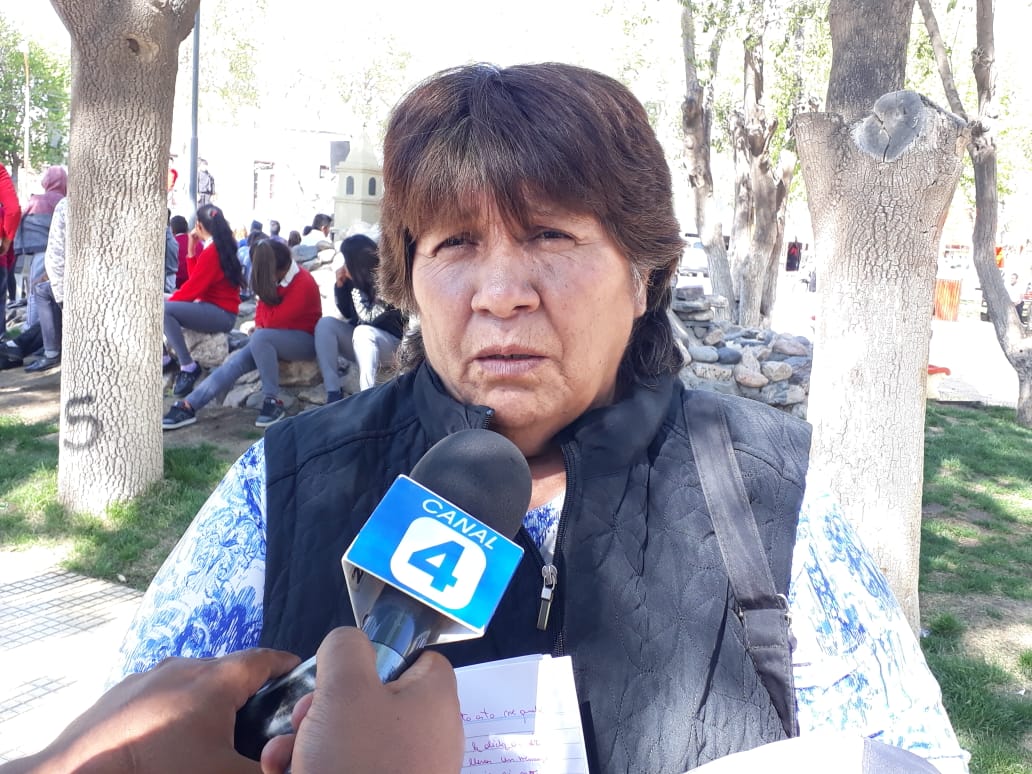 “There is no peace without justice and there is no justice without peace,” affirmed Mariela Martin Domenichelli, the co ordinator of the Latin American branch of the federation. “It’s important to listen to the women describing the situations in which they live so they can transform their ideas into political action that benefits the entire community.” The meeting wanted to showcase the positive contribution made by women in various fields of action. After the federation visited her area, Margarita was chosen as the person who symbolises the complete integration of women and the entire Aboriginal community to which they belong. Margarita – who now has seven children – said that it had not been easy to convince women in her area to work in spinning mills once again because they had suffered discrimination for so long. In addition, they had to walk long distances, crossing rivers to reach the mill because there was no transport. However, they gradually began to share the little they had: a bobbin, some wool or their skills in traditional crafts. “The cost of machinery was a big problem,” Margarita said. “One day I was getting a lift and I told the driver about the difficulties we had. He told me that he knew how to make spinning machines and that we could pay him later, when we had the money. There were many difficulties but there were also signs that confirmed that what we were doing was right.” Margarita continued, “One day, when we were moving some fittings in the workshop, we found a picture of Mary, the Mother of God. This made a big impact on me and I felt that we should make a pact together to always love one another each day at work. We did this and soon after we received a donation that we used to buy better fittings and machinery.” We named our workshop “Tinku Kamayu” which in the local dialect means “Gathered together to work.” “We have found our identity and with that comes hope, growth, job opportunities for ourselves and others and the richness of our cultural origins. We feel we are useful – we don’t feel humiliated any longer. Other people appreciate us and want to hear our ideas.”
14 Oct 2018 | Focolare Worldwide
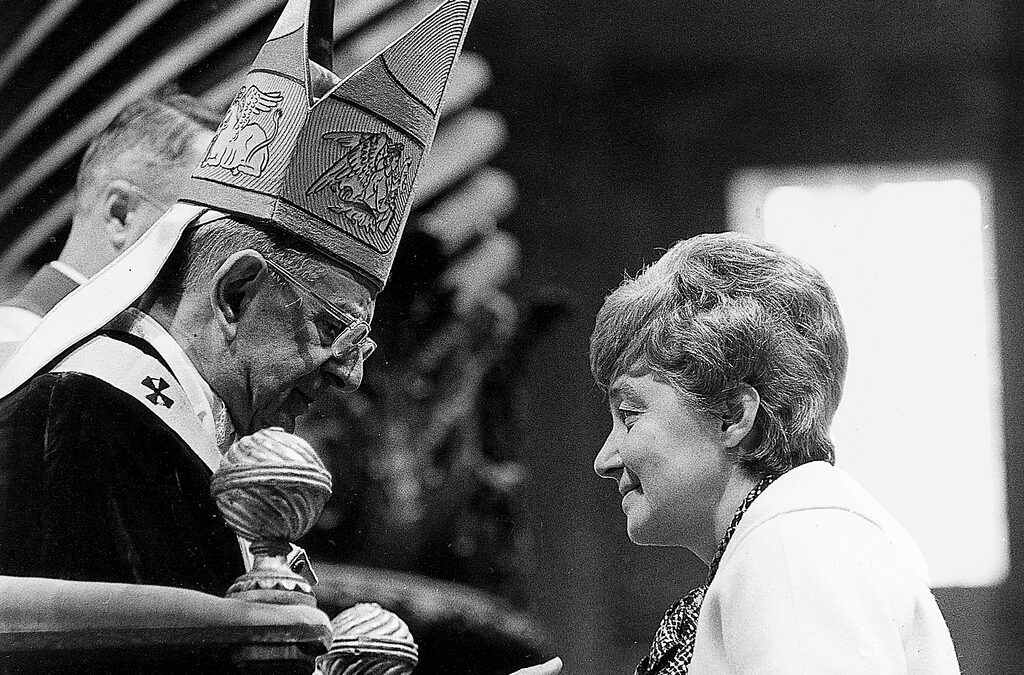
 “YOUNG GEN! We welcome you with great joy as sons and daughters, brothers and sisters, friends! […] To search is really part of being a young person. Once the eyes of consciousness have opened on the world around us, curiosity is aroused in the souls of young people: they want to know, they want to try above anything else, and they want to attempt. Search, but for what? […] You, the young people of our times, you already have a negative answer, an almost rebellious answer in your hearts: we don’t want, you say, a world that presents itself to use like this! It’s a strange phenomenon: a world that offers you the most beautiful, the most perfect, the most enjoyable fruits of contemporary civilisation, doesn’t satisfy you, doesn’t please you. You benefit from the achievements, the comforts, the wonders placed at your disposal by modern progress. Yet a sense of criticism, protest and even nausea stops your search in this direction. This is a direction that takes you out of yourselves, an alienation because at the basis, it is a materialistic, hedonistic and selfish direction. It does not fully satisfy the soul. It does not completely resolve the important and personal problems of life. […] You have made a different choice. This is why you are called Gen, new generation. It is before all else a liberating choice, liberating from the passive conformism that affects so many young people of our times… At the basis of your psychology is a personal and sovereign act of free determination. The choice of Christ. […] Jesus Christ has crossed your path; and this is why you are here. Yes, the meeting with Him, Jesus Christ. But who is Jesus Christ? What an infinite question! […] Well: first, in Himself, Christ is the word of God made man; Christ is for us the Saviour of humanity. Two oceans: the Jesus Christ’s divinity, and Jesus Christ’s mission in the world. […] It seems to us that you, Focolarini, have faced this dual problem: Who is He, Christ? And Who is He, Christ, for us? And now the fire of light, enthusiasm, action, the gift of self and joy has been lit within you, and with a newfound inner fullness you have understood everything, God, yourselves, your life, people, our times, the central direction to take for the whole of your existence. Yes, this is the solution, this is the key, this is the formula, ancient and eternal, and when it is discovered, new. You have intuited it, and you have, rightfully, given your movement the definition of ‘New Generation’, Gen!
 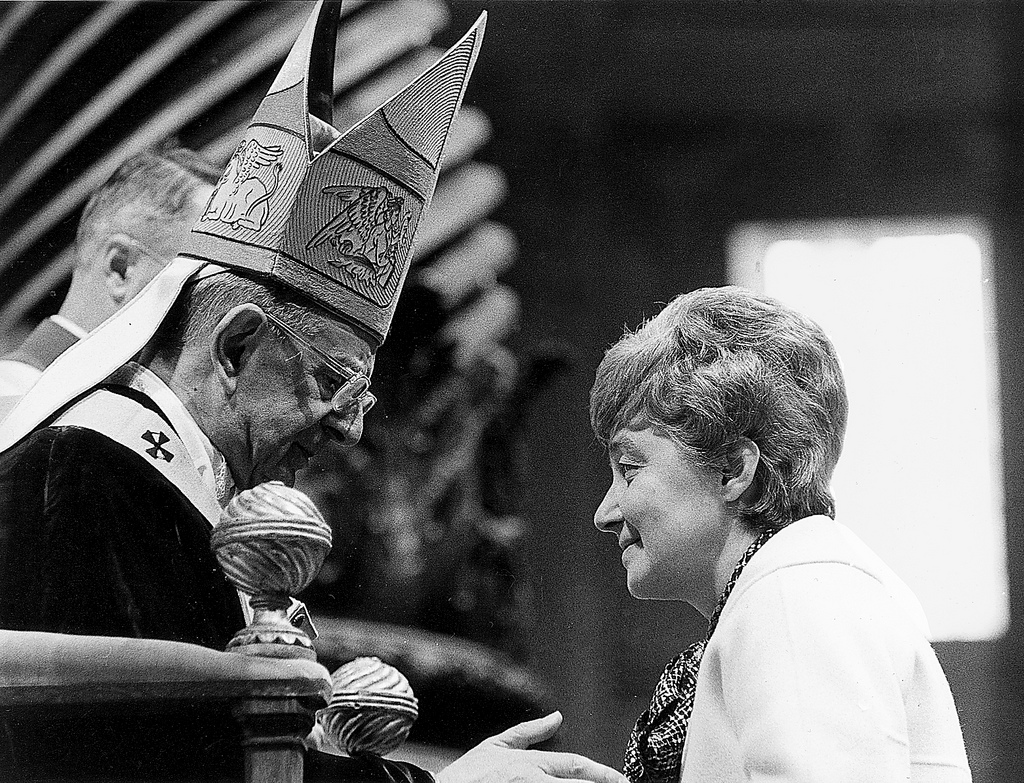 So, dear Young Gen! Encounter, know, love, follow Jesus Christ! This is your program. This is the synthesis of your spirituality which you, by celebrating the Jubilee of the Holy Year, wish to reaffirm in your consciences and translate into life. With two conclusions. The first, in order to condense the secret of your Movement in a central and mature thought try always to have Jesus as Teacher. And then the second conclusion, that we likewise listen to the words spoken by Jesus the Teacher: ‘You are all brothers and sisters’. Have the wisdom and courage to reach this conclusion which is the root of Christian social teaching. It is often disconcerting to observe how many claiming to be those who follow the Gospel are incapable of deducing from the Gospel itself a social teaching based on love. […] You, the new Generation, are faithful and coherent. If you have chosen Christ as your Master, have faith in Him and in the Church which leads and presents Him to you. Demonstrate with actions the realizing force of charity and social love, established by the Master. It will be an experience, yes, a new one, one which generates a better and more just world. It will be a strong experience; demanding resistance, sacrifice, maybe even heroism; it will demand that you too are the robust and willing Cyrenians who offer their own backs to support the Cross of Jesus. Yes, you should also suffer with Him, as Him, for Him! But do not be afraid, Gen! Be sure! You will have operated your salvation and that of our modern world. And just as you are today, you will always be good and happy!”
14 Oct 2018 | Non categorizzato
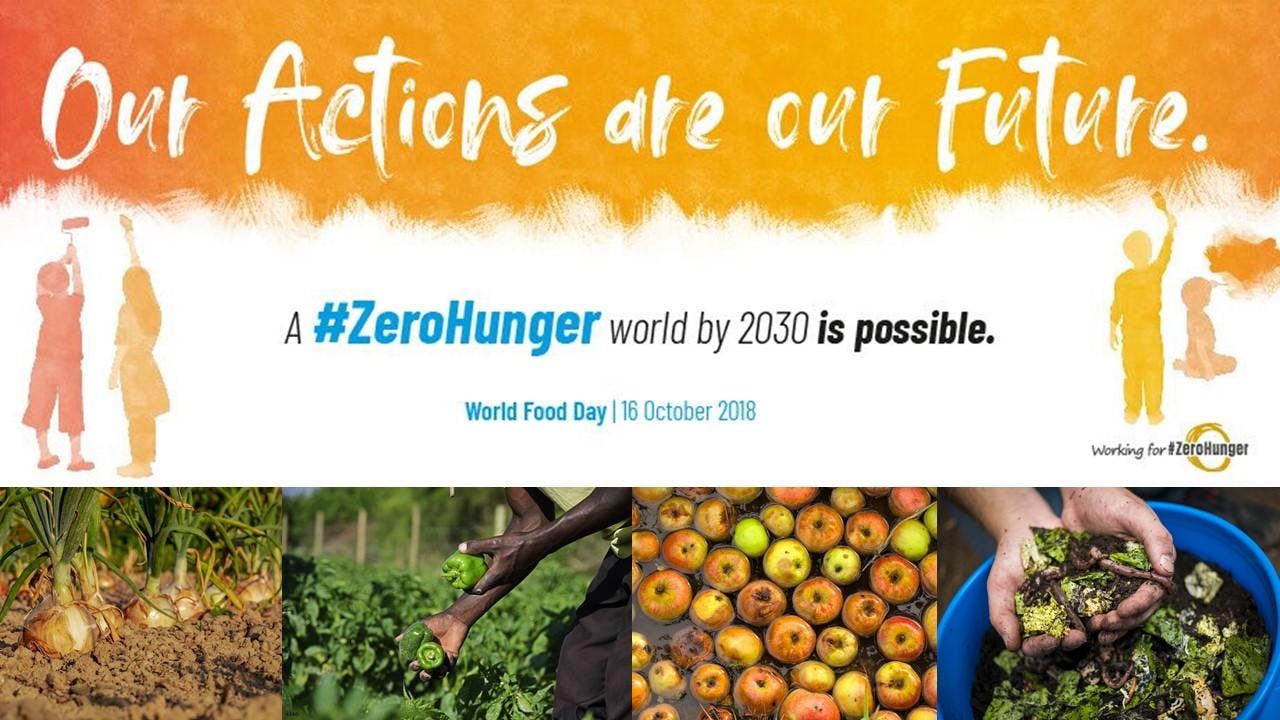 The theme of this year’s World Food Day is “Our actions are our future.” The event is held every year on October 16 by the Food and Agriculture Organisation (FAO). The day involves international organisations along with civil institutes, schools, businesses, media, research organisations and institutions in a rich program of events and public demonstrations to sensitize public opinion on topics such as poverty, hunger and malnutrition in favour of arriving at Zero Hunger, which is included among the objectives for the United Nations 2030 agenda. The teenagers of the Focolare Movement included it as one of the central points of their training and action during the whole year. Last June, a delegation of teenagers took part in a discussion at the International Headquarters of the FAO of Rome, Italy and received a “Zero Hunger Citizen” passport. The held projects around the world to raise awareness among peers and adults and dedicated the 2/2018 edition of the bi-monthly magazine “Teens” (Citta Nuova).
14 Oct 2018 | Non categorizzato
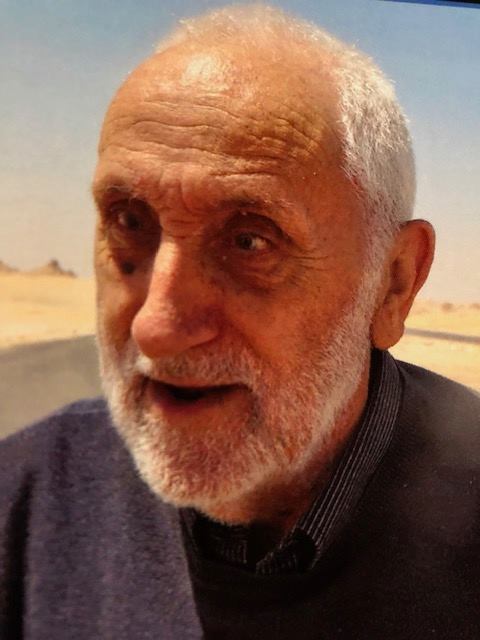
On 13 October, Ruggero Badano, father of Chiara Luce passed away at the age of 83. A good man with a simple and strong faith, together with his wife, Maria Teresa, he had witnessed the extraordinary human and spiritual experience which had led their daughter to be declared “Blessed” on 25 September 2010. “I thank Jesus for having sent you in our midst in this Journey which shall never end,” she had written on her 18th birthday. The Focolare Movement conveys its solidarity with Maria Teresa, the members of the Chiara Badano Foundation and all the friends of Blessed Chiara Badano, with immense gratitude for Ruggero’s exemplary life. For info: www.chiarabadano.org
12 Oct 2018 | Non categorizzato
Women can symbolize today’s civilization. In magazines and movie screens, in advertising and art, they reign like queens. Yet it is easy to see their royalty as artificial: divas who hold court today are forgotten tomorrow. In contrast, from this perspective the biographies of Christianity’s greatest female saints and their teachings once again become current. Teresa, the reformer of Carmel during the Protestant revolution, under the suspicious gaze of the kings and lords of Spain, faced with the threat of the Inquisition in her country, achieved her freedom through poverty. It is the unique freedom of God’s children. She remade her existence into an eminent adventure to overcome human with divine. She brought beauty, the poetry of holiness, back to the center of our individual and social existence. At the time there was a form of self-righteousness that you might just as well have called misogyny. Catherine of Siena had already suffered it and had been silenced because she was a woman – she who never stopped urging men, including the high and mighty, to not behave like little girls. St. Teresa gave herself entirely to God and inspired other women to do so. The obsession of our modern days lies in a continuous, frenetic demand for recognition and riches. Teresa taught us to free ourselves from this slavery and recover our serenity and peace. In her writings she explains her reasons with evidence, a light that enchants souls – even those of men today who are in the clutches of business. She is a strong woman who speaks only to serve God with energy and perseverance. She knew of the influence that a woman consecrated to God can have on society. Her life and writings demonstrate the essence of the Gospel revolution, in our hearts and in the people, uncovering yet again the essentials of love that, through our neighbors, opens access to God. It puts God in the spirit, in the law, in institutions, in customs. Teresa, with the grace of a mother and teacher, taught to speak continuously with God, a conversation that everyone can carry out within the temple of their souls, even while on the road, even surrounded by noise. I believe that day after day the number of women and men who are guided by Teresa’s wisdom will increase. They will rediscover their reason for being, going back with her to the source. Action will blossom more and more from contemplation. Yet here – we could say with the saint – Martha and Mary almost always align, since the interior works on the exterior … When exterior works come from these roots, there are admirable, sweetly scented flowers that blossom from the tree of divine love. Teresa was a courageous astronaut of the divine, as well as also a practical woman who knew the world. And because she knew the world, she stood out in heaven. If her teachings were to expand even to our own homes, unions, politics, factories and the world, it would become a sort of Carmel, where Teresa took on the feminine royalty of she who was blessed among women. Igino Giordani, Fides, n.7–12, 1962, pp.185–187.
