23 Sep 2018 | Focolare Worldwide
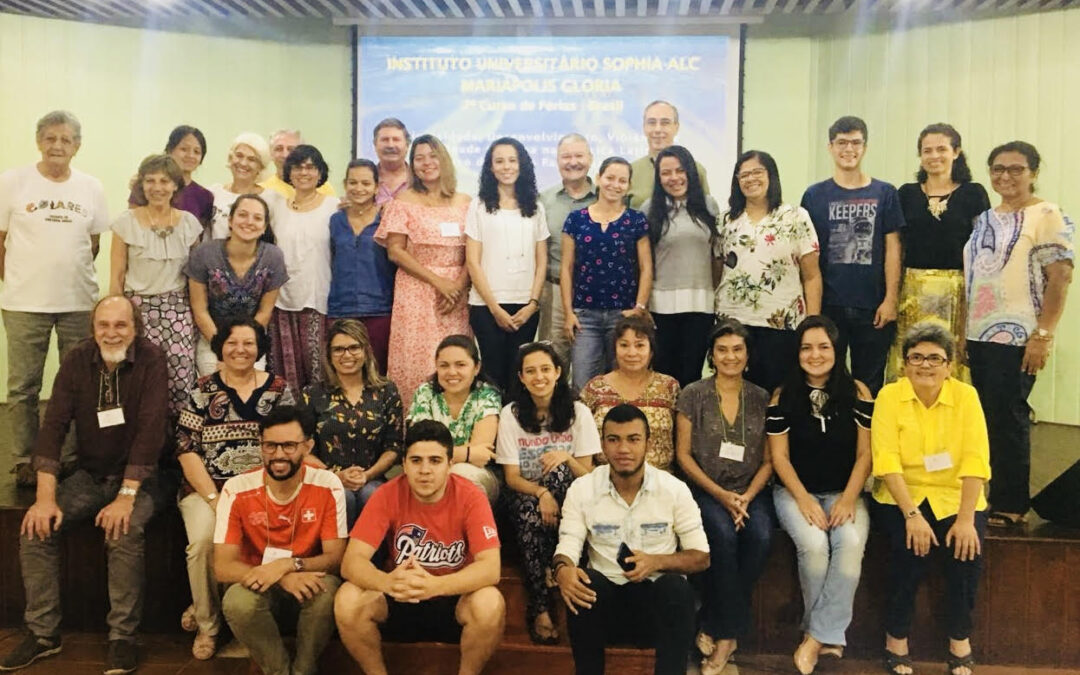
 It is an immense territory that many describe with superlatives. It includes eight countries, from the Andes mountain chain, to the Atlantic Ocean, to the highlands of Brazil. It is the planet’s largest rain forest, unique in its dense, impenetrable vegetation that holds countless animal species. Thousands of miles of rivers cross it, including the immense Amazon River (which is around 6,400 kilometers long). Many cities have sprung up alongside it, such as Manaus and Belem in Brazil and Iquitos and Puerto Maldonado in Peru. When you hear Amazon Forest you think of the “lungs of the world,” although today it is a lung that is seriously threatened by deforestation and urbanization, which year after year shrink its borders and contaminate its purity. This symbolic and cultural image that the Amazon region is usually known by, as well as its traditional character linked to its exotic nature and rich natural resources, seemed far away this summer. The “Curso de Férias” (holiday course), promoted by Sophia University Institute and ALC (the promotion agency for the institute in Latin America and the Caribbean), was held July 22–28. It was entitled “Diversity, development, violence and human mobility in Latin America: the case of the Amazon region.” The course mostly emphasized an interdisciplinary approach. It included subjects such as biodiversity, socio-diversity, the lives of local populations (indigenous, those of African origin, “ribeirinhos” who live along the river, and many others), sustainable methods in agriculture, the meeting of various forms of religion, as well as the challenges of urbanization, violence and vested interests in agribusiness.
 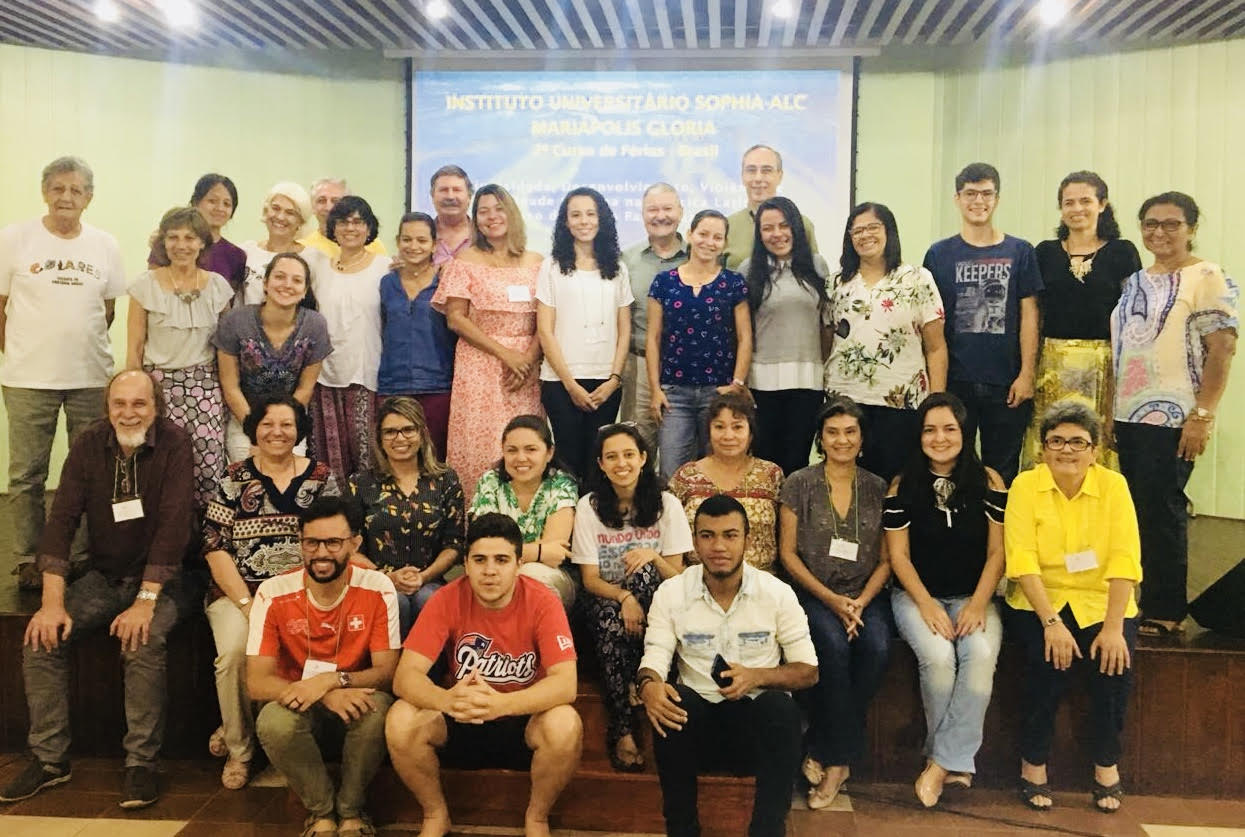 “We don’t speak of the forest; we are the forest. We don’t speak of the Amazon; we are the Amazon,” said Marcia Wayna Kambeba, from India, who was among those participating. Fifty students signed up: university students from various programs as well as teachers. The aim of the course was to invite those present to raise their knowledge of the history of the Amazon, and the responsibility of us all to face the complex reality of the region, and the cultural and historical trajectories that have been woven together there. And the importance of a respectful dialogue between the vision as the world sees it and the various religions present. “The Amazon should not only be seen only through the lens of economic interests and for its rich natural resources,” declared Belisa Amaral, a journalism student in Belem. “The world needs to explore its culture, beauty and people – rich and wise people who love this region, who defend its language, customs and identity despite being threatened widely.” “It was a real and true laboratory of humanity, researching alternatives to resolve – or at least reduce – the social and environmental problems that exist,” says Marcelo Rizzo, from Sao Paulo, an expert in human rights. For him the course was a chance to lift his knowledge and a “greater empathy for indigenous people and their culture, on questions about the Amazon, and about the environment in general.”
20 Sep 2018 | Non categorizzato
A Hidden Letter The wife of a friend of mine, Sandra, had fallen into such a depression that she didn’t want to talk to anyone. The family was feeling it. I didn’t know how to help her. One morning I asked God to give me an opportunity to do somethin. That afternoon I received a very fancy gift, a ceramic plate with fine chocolates. Thinking that this would be something that Sandra would appreciate, I sent it to her. After a while, Sandra telephone me laughing: “You send me a recycled present: in the middle of the dish I found a note addressed to you.” I starte to laugh too and the telephone call went on for a long time with hearts open wide. Sandra confided he fear to me and I encouraged her to share it with her family. A few days later my friend said that Sand had begun a new dialogue with the mother and sisters, and something melted away in her. T. M. – Slovak Republic Quality Pots I had come to know of a young married couple, just arrived from Candada. They didn’t have anything to live on and were working for work. On day asked myself what I could give them, which would be useful to them. Opening the kitchen cabinet I saw my favorite pot that cooks so well because of its fine quality. I felt Jesus inviting me to detach myself and, after polishing it, I invited the couple over for supper and gave the pot to them. They were both very happy. A few days later my father dropped by to see me. In the back of his car there was a gift for me. He had no idea what it was, becausse it was from my sister. Opening it, I saw a set of three fine quality pots, and the bigger one was the same exact size as the one I had given away. C. K. – Australia Hope I was a woman of the street. The hardest times to put up with were the holidays. That’s when I felt the most solitude that no one could fill. On day, as I was rushing to thte bus stop, the winow of car went down and a young man asked me if I needed a ride. He assured me that he hadn’t stopped with any alternative motives. That gesture overwhelmed me and I accepted. In the car, I asked him why he had done it and he replied by giving me a small copy of the Gospels. When I got home, I felt urged to read it and, the more I read it, the more I felt a new hop growing in me. Then, I went to ask a priest if I could talk with him. That’s how I began my ascent. N. N. – Italy Rent Not having the money to pay for the rent, my husband and I began to pray with faith. That same night our landlord came looking for the money. It was Thursday. When I asked him to come back on Saturday – becuase I wasn’t sure we’d get paid that day – he agreed. We prayed some more, together with our six children. Friday morning, a friend came to visit us, our fellow-countryman. As he said goodbye, he handed us an envelope. It contained four thousand shillings. We were thrilled and overwhelmed: besides the money for the rent, we were also able to buy something to eat. F. P. – Kenya
20 Sep 2018 | Non categorizzato
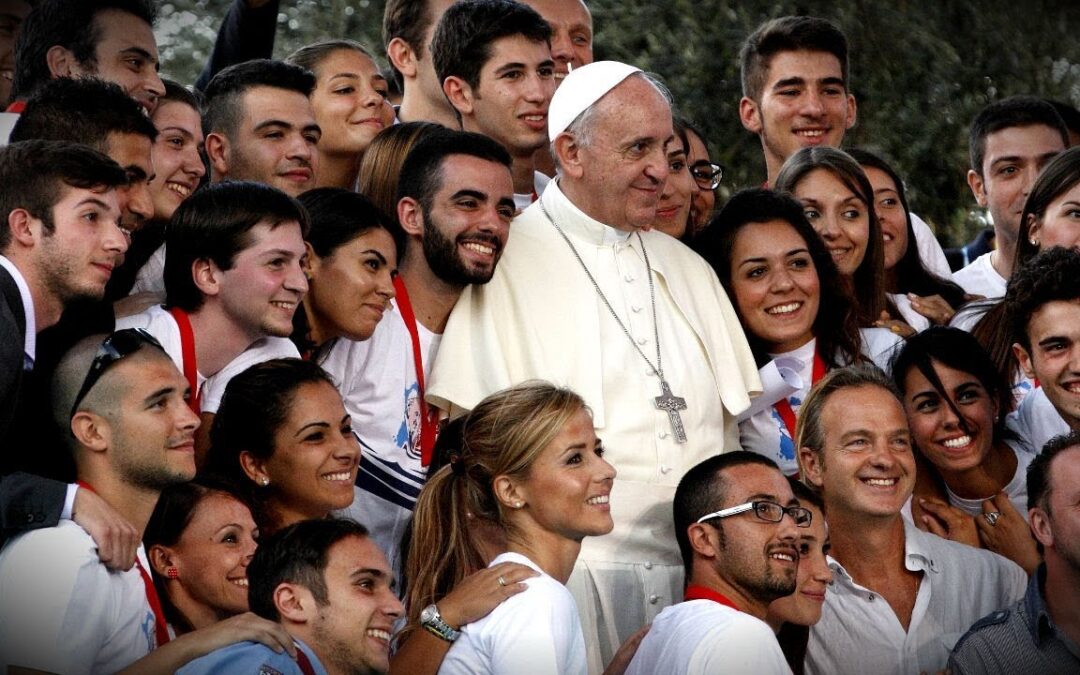
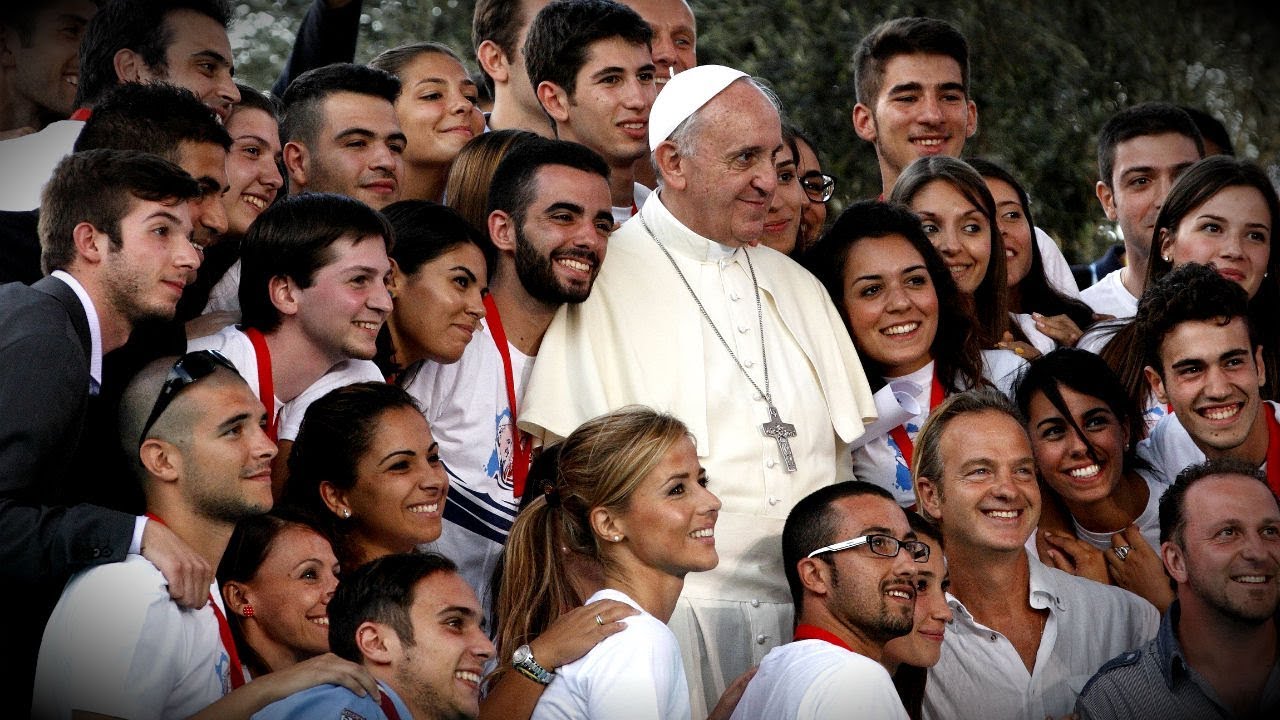 During the press release for the presentation of the Apostolic Constitution “Episcopalis Communio,” on 18 September, a new encounter of the Pope with the youth was announced, to be held at the start of the next Synod. “Once again the Pope wishes to meet the youth together with the synodal Fathers – affirmed Cardinal Lorenzo Baldisseri, secretary general of the Bishops’ Synod – to listen to them and receive their proposals to be used in the Synod’s final document.” The meeting will take place on 6 October, at 5 pm in the Paolo VI Hall.
19 Sep 2018 | Focolare Worldwide
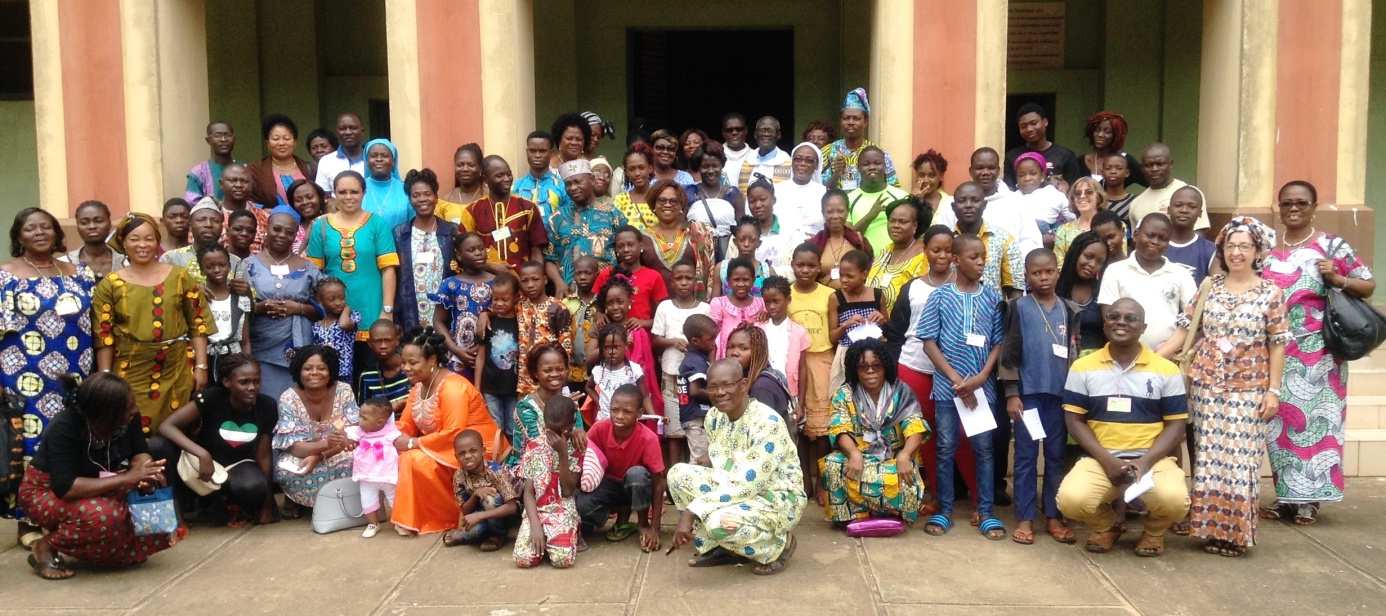 Ghana, Togo and Benin are situated alongside one another in a vertical line along the Gulf of Guinea. They are well known for their rich variety of landscape and for their ancient culture and historical ruins. In Ghana, for example, there are many colonial style buildings which remain from the time of slavery, in Bazar in Togo there are many clay settlements and in Abomey, Benin, there are the remains of the royal palace which is now a museum. The Mariapolis for this area was held in Benin. The report of this event prepared by Bernadette, Mariluz and Flora states, “Most of the people from Benin and Togo arrived wearing clothes made from the same cloth. This is what usually happens at big celebrations but what was striking was that the cloth was white.”
 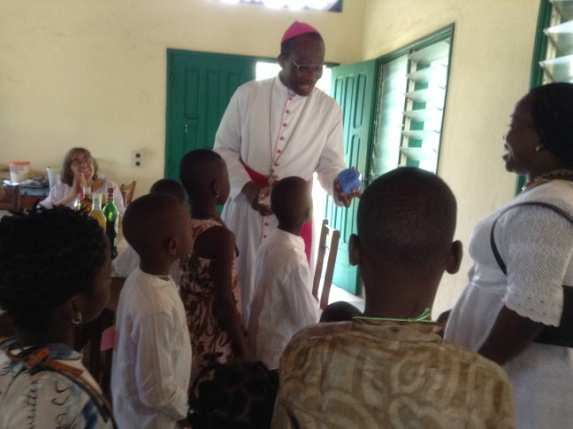 A warm welcome was given to the Archbishop of Cotonou, Roger Houngbedji, who was taking part in a Focolare gathering for the first time. There were 120 participants in total, including many teenagers and children. The programme included workshops on topics related to the practice of the ideal of unity in everyday life, improving one’s own life and making a positive impact upon society: for example, economy, the relationship between parents and children, affectivity and sexuality, handling stress. “The children played “living in the town” and took on different parts – in the hospital, at the market, on the sports pitch or in the restaurant. The young people spoke openly about the challenges they face. One morning was spent clearing the market place which was littered with empty plastic bags that had been thrown on the ground. The mayor had given permission for this public action which created a sense of beauty and harmony. In the past, slaves used to leave from the town of Ouidah for the ‘new world.’ Having been sold to white people, they crossed the ocean chained up in the hold of a ship. They took their last steps in their native land as they crossed the “point of no return” beyond which they were no longer considered to be human beings but merchandise. “We followed in their footsteps praying as we walked along this ‘way of the cross.’ At the ‘point’ we asked for an end to all forms of slavery and thanked God for the missionaries who later brought Christianity to Africa.”
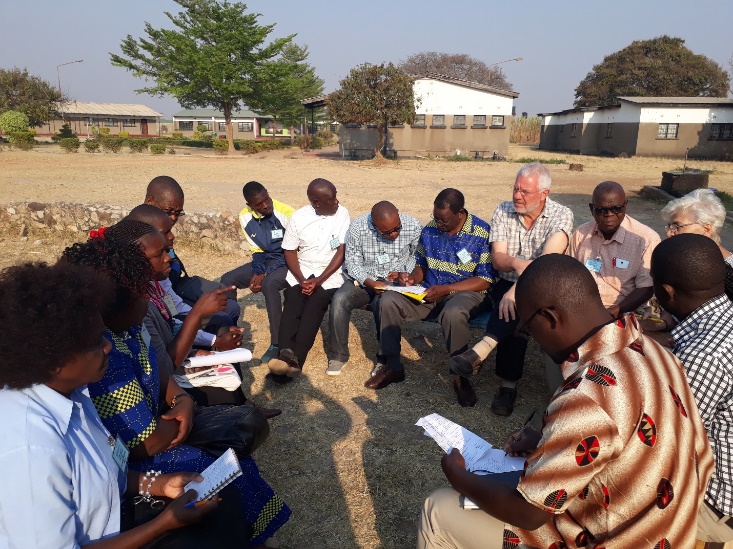
 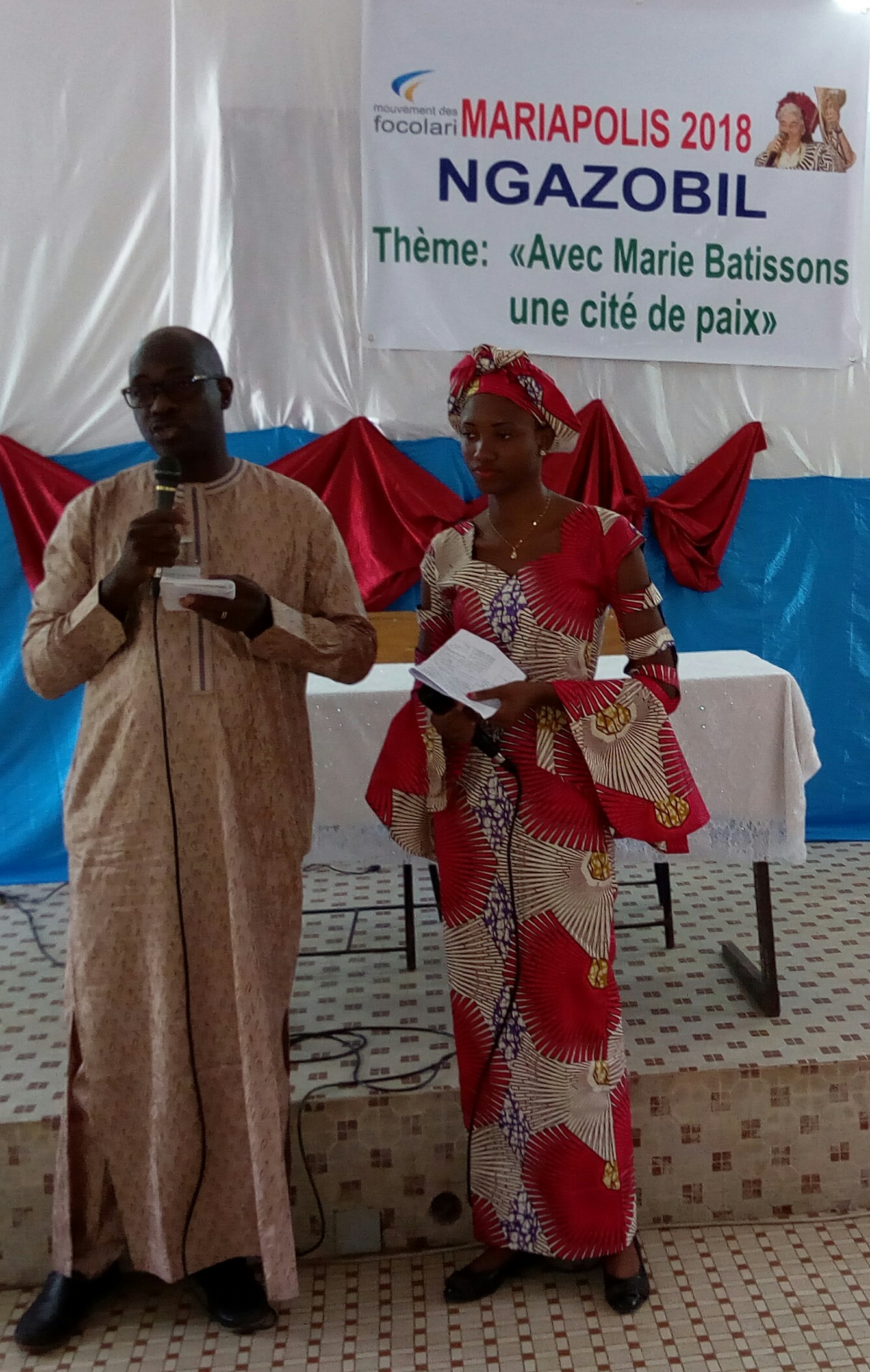 Moving west to Senegal, the Mariapolis was held in Ngazobil, 110 kilometres from the capital, Dakar. 94 people took part from Senegal, Mali and Burkina Faso: these countries lie close to the Sahel region in an area where risks to personal security are high. “It was not easy to travel to the Mariapolis. It took two days’ coach journey just to arrive for people from Mali and three days from Burkina Faso: it was really tiring for the very small children and for the older people many of whom use crutches to walk.” Aurora wrote, “The fact that people undertook such an uncomfortable journey in such difficult circumstances in order to reach a Mariapolis they called an ‘oasis’ or ‘town of peace’ is a witness to the fact that there is an enormous thirst for God in our people.” It was a beautiful experience of communion. Jean Noel Diof, emeritus bishop, attended as did Nana, a young Muslim from Burkina Faso. At the end, Nana said, “As the only Muslim, these four days have strengthened my faith and have helped me to appreciate another religion.” A Christian participant from Senegal said, “I have understood how to be with people from other Churches and with people of the Muslim faith.” A Mariapolis also took place in Zambia, a central-southern area of the continent. Zambia has often been called the “real jewel of Africa” because of its landscape, full of features of outstanding natural beauty such as the famous Victoria Falls. The theme of the Mariapolis was “Mary, mother of unity.” Celestino wrote, “This theme was perfect because of the many divisions in our society at the moment. Such a diversity of people took part and their comments at the end reveal the importance of this meeting.” “A time for reflection and change.” “I have learnt what it means to love, to care for other people and to forgive.” “I have met brothers and sisters from my own country.”
