23 Aug 2018 | Non categorizzato
Drugs in school I had to take care of a student who had been using drugs. The usual punishment for this is exclusion from lessons for a week. I didn’t want this student to spend the time in bad company and so I arranged for him to work with a community and to come to school and study on his own in the library. In school, I stayed with him the whole time and helped him with the work his group were doing in class so that he would not fall behind. I found this very demanding but it helped me realise that loving your neighbour means practical action. M.M. – Spain A new way of life at home We are part of a team that runs courses for engaged couples. One day, just before leaving for a meeting, we had a row with our son. My wife and I still left the house and began to make our way to our appointment but we didn’t feel at peace about the situation. After a few kilometres, we realised that we had nothing to offer the engaged couples. I stopped the car and rang our son saying we were sorry for the way we had behaved. We continued the journey but then my wife pointed out that I had spoken in a very curt and dismissive way on the telephone and then we too began to argue. After a few more kilometres, we realised that we were not in a position to talk about mutual love and so we called one of the other couples and said that we were going home. As soon as we set foot inside the door, we explained what we had done to our son who was amazed that we had turned back. This was a lesson that has helped us establish a different way of life at home. K.E. – Czech Republic The school trip During a school journey, some of my friends threw away food from our lunches without even opening the packaging. I was really shocked. The following day, I made plans in advance: at lunch time, I collected all the food that my friends hadn’t even touched and put it in a bag. Then I took it to a centre for the homeless that was nearby. N. – Italy A new move After thirty-five years of service, the bishop asked me to move to a new parish. At first, I felt very confused and prayed a lot. Then, I realised that I shouldn’t see things only from my point of view and said that I was ready to make this move. Straightaway, all my fears about my new role and worries about my health vanished. I saw clearly that I wasn’t doing anyone a favour; it was the opposite, I was receiving a grace. This was the solid basis upon which I began life in the new parish – it was very different from when I started my ministry as a young priest many years before. E.B. – Slovenia A little act of love I heard that a colleague had been admitted to hospital. I was following a course in another town but, for a few months, every weekend when I came home I used to go to visit him. His parents also used to come from quite a distance to see him. I thought that they might like to go for a pizza with me after one of their visits and so I invited them out. I listened to all their worries and walked back with them to the place they were staying. They said they had not had such an enjoyable evening since their son had gone into hospital. A. – Italy
23 Aug 2018 | Focolare Worldwide
The flood in Kerala, southern State of India, has wrought more than 400 victims and about 750,000 displaced. The rescue and assistance operations are brought ahead amid great difficulties due to the inaccessibility of some areas struck. In some cases, they were forced to throw food and water from the helicopters because the streets and bridges were destroyed by the devastating floods. The local Focolare communities writes: “We have returned from Trichy (about 300 km from Kerala), where the Mariapolis was held with the members of the Word of Life groups, spread out within a range of 120 km. But our hearts are with the people of Kerala struck by strong rains. We are still in the monsoon period, with hot winds that cause these tropical typhoons. For all we know, the members of the Movement are fine. A retreat had been programmed for the priests in Trivandrum (south Kerala), but we had to cancel it because it is not safe to travel and many of the priests who booked are involved in the tragedy. During the weekend, our local communities were busy collecting foodstuffs and prime commodities to be sent to the struck areas. We are counting on your prayers.” Also Pope Francis prayed for the victims so that “our brothers there may have our solidarity and the concrete support of the community.”
23 Aug 2018 | Focolare Worldwide
“We are following closely the events surrounding the Coast Guard Ship ‘Ubaldi Diciotti‘, which arrived in Catania and is in two-days stand-off with 177 people on board who are not being allowed to disembark. The umpteenth case, unfortunately, that over the past few months has put a strain on the culture of hospitality that has always been the mark of the Italian people, “says the press release of 22 August signed by Rosalba Poli and Andrea Goller who are leaders of the Focolare Movement in Italy. They support “the need for shared paths at a European level in the search for non-improvised solutions”. But they highlight “the great concern for human events such as people fleeing from hunger, war and death”. And they ask “that the human dignity of those who are in the same condition recognized either in their countries of origin, and in the countries through which they are travelling, including ours where they have now landed.” The communiqué concludes with an appeal to politicians “from all backgrounds; that they put aside disputes between sides and particular interests, and collaborate in the name of our common humanity, which comes before any other distinction or separateness”. See also: “A-mare (o amare) il prossimo” (in Italian)
22 Aug 2018 | Focolare Worldwide
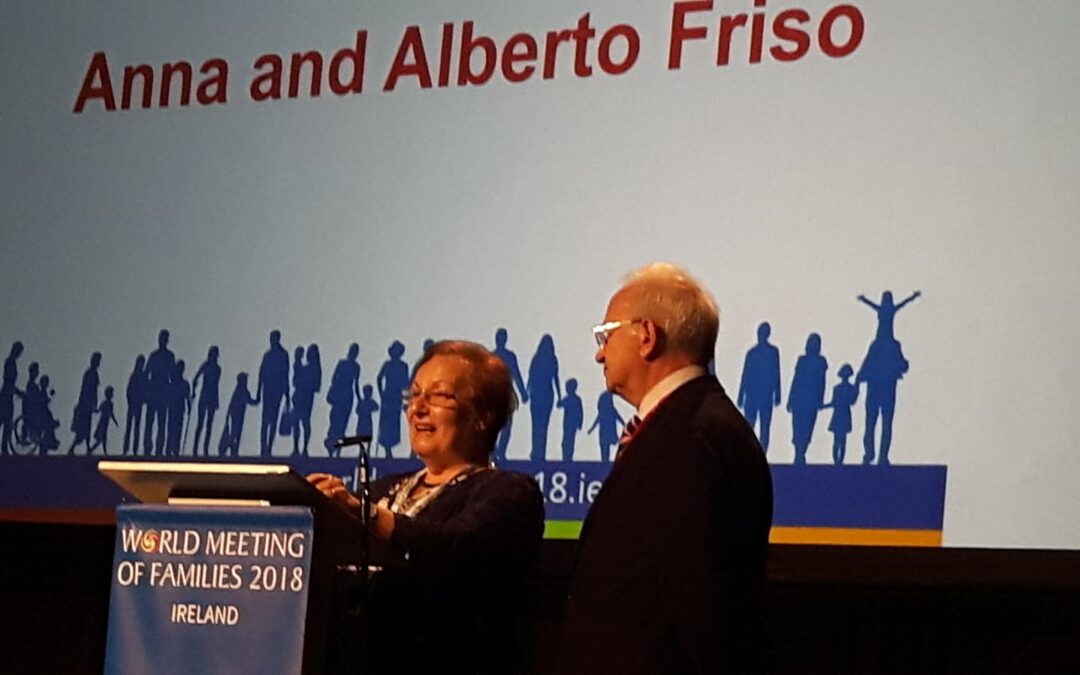
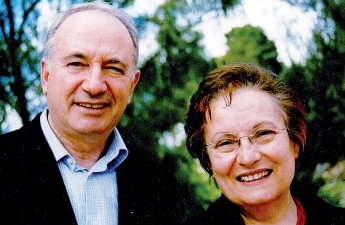 Fifty years ago we ourselves did not know the origins of our love. We were content to know that we had undertaken a journey which had no end in sight, amazed that our differences could be so balanced, so enjoyable and complementary, so much so that although we were different we felt we were wonderfully equal. We felt we were ready for everything, convinced that no one loved in the way we loved, because we had invented love. Less than a year after that wonderful ‘yes,’ some clouds already began to darken our horizon. Work, tiredness, routine… Yes, we all know that being in love ends at some point. It was then that someone revealed to us that God is the source of every love. God who is love. We should have known all this, because when we pronounced our wedding vows He was there with us and from then on he had even dwelt amongst us. But we did not realise what a gift we had, we did not know what a gift we had, we did not know his presence was part of the package! We realized afterwards, he gives the whole of himself to us asking in return just a small, agreeable, daily contribution: that we love one another with his very own love. Does being in love come to an end? [Yes but] love needs to take its place. Because if faith is, so to speak, an interior virtue, love is its outward, visible fulfilment. Love is greater than anything else: greater than faith, greater than hope. In the Next Life, there is no more need for these two virtues. On the other hand, love remains in Paradise. Love makes of the two one body. Which means one reality that is untouchable and indissoluble. It is a ‘we’’ that is open to the Absolute. Love must reach the paradox of knowing how to become nothing in order to put yourself in the other person’s shoes. Only in this way will our love mirror its original plan which comes forth from nothing less than the Trinity.
 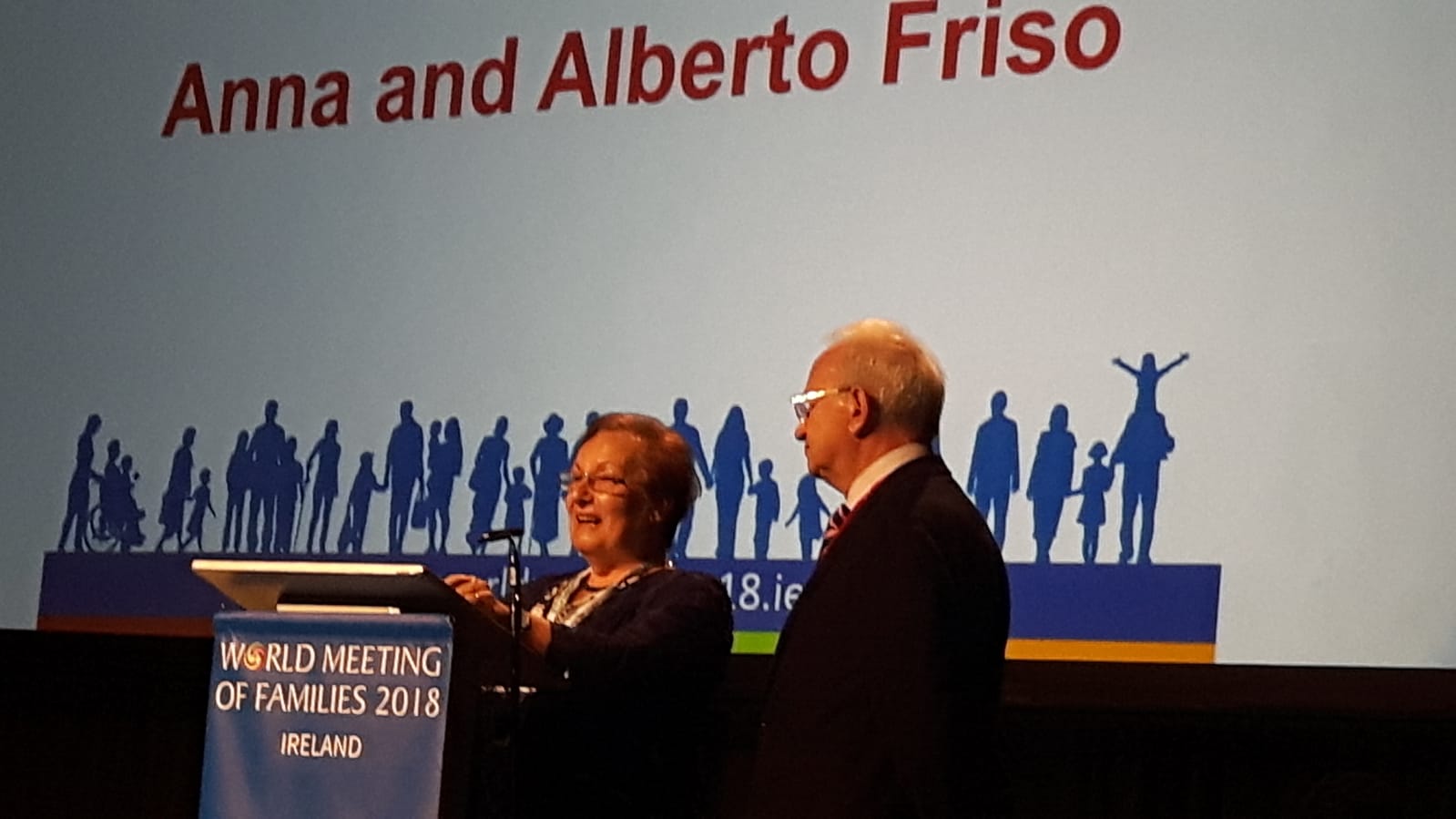 The ‘we’ formed by the couple is the first and living fruit of our love. The complimentarity of male and female expresses itself in a thousand daily gestures of mutual service and tenderness, up to the fullness of bodily intimacy. It is also expressed in sharing space, time and tasks. [The ‘we’ formed by the couple] knows how to go out first of all to their children and then towards others. The ‘we’ is the couple’s characteristic way of evangelizing, placing themselves before others as one example among many, and never as a model of the ideal family, which does not exist. Love is our unique opportunity, even if we feel that we are not perfect, even if we feel we have failed in everything. What matters is to believe that in the present moment we are the right person for the other; and that is what we are in the moment we decide to love them as they are, without any expectation that they will change, putting into action the three ‘magic’ words which Pope Francis teaches: please, thank you, sorry. It is said that today the family is going through the most tragic of all crises. Let us not regret the good old days, if ever such days existed. It is in the family that life is kindled. It is there that we learn to share, to rejoice, to suffer, to know sickness and to face death. Love makes it the most concrete of utopias. Families that welcome children even if disabled, others who adopt them precisely because they are disabled, those who welcome elderly parents, those who open their homes to migrants, those who help their children recover from addiction. In the fifty or more years that we have been together, life has taught us many things. We have cried and we partied. So many times we were wrong, but with his grace and forgiveness, we have started again. Putting our love again and again into the hands of God, who is our love, he has never hesitated, like at Cana to change our poor water into wonderful wine, making it wonderfully available also to those who are around us. And now, despite the fact that over the years our passion has diminished and the limitation of our characters are more evident, we continue trustfully to draw water from God’s unending source, happy to feel we are companions and accomplices right to the end.
22 Aug 2018 | Focolare Worldwide
