Peace begins with me!
Peace begins with me!

Peace begins with me!
The last chapter of John’s Gospel takes us to Galilee where Peter, John and the other disciples have returned to their work as fishermen. They have spent the entire night on Lake Tiberias but, unfortunately, their efforts have been fruitless.
The Risen Lord appears for the third time and encourages them to cast out their nets once more and this time they gather a large number of fish. The Lord invites them to join him on the shore and to share their food but though Peter and the others have recognized him, they dare not speak to him directly.
Jesus takes the initiative and asks Peter a very challenging question, ‘Simon son of John, do you love me more than these men?’ The tone seems solemn as Jesus continues by asking Peter[1] three timesi to care for his sheep [2]
Lord, you know all things; you know that I love you.
However, Peter knows he has betrayed the Lord, and the memory of this tragic experience prevents him from responding positively to Jesus’ question. He humbly replies, ‘You know that I love you.’
During their conversation, Jesus does not hold the betrayal against Peter; nor does he point out the mistakes he made. He reaches out to him in a way which makes Peter feels at ease and Jesus’ friendship heals his painful wound. The only thing he asks is to rebuild their relationship with an attitude of mutual trust.
Peter responds by showing not only an awareness of his own weakness but also a sense of unlimited trust in the welcoming love of his Master and Lord:
Lord, you know all things; you know that I love you.
Jesus asks each of us the same question: do you love me? Do you want to be my friend?
He knows everything: he knows the gifts we have received from him and he knows our weaknesses and wounds that may still be raw and unhealed within us. Yet he renews his trust, not in our strengths, but in our friendship with him.
This friendship gives Peter the courage to witness to his love for Jesus to the point of giving his life.
‘We all experience moments of weakness, frustration, and discouragement… adversity, painful situations, illness, deaths, inner trials, misunderstandings, temptations and failures… When people feel unable to overcome certain physical or spiritual challenges by relying on their own strength, they are forced into the position of having to trust in God. And he intervenes because he is attracted by this trust. He can achieve great things which seem all the more powerful because they spring from an awareness that we are small and incapable.’ [3]
Everyday we can stand before God just as we are and ask for his healing friendship. In this trusting surrender to his mercy we can return to intimacy with the Lord and resume our journey with him.
Lord, you know all things; you know that I love you.
This word of life can also become a personal prayer as we acknowledge the limits of our strength but place our trust in God and thank him for all the signs of his love:
‘I love you because you have entered my life more than the air in my lungs, more than the blood in my veins. You entered where no one could enter, when no one could help me, when no one could comfort me… Enable me to be grateful to you – at least a little – in the time I have left, for this love that you poured out on me, and forced me to say to you: I love you.’ [4]
We can follow Jesus’ style of loving in our relationships in the family, society and the Church. Jesus loved everyone, he was the first to love and he ‘washed the feet’ [5] of our brothers and sisters, especially the least and most fragile. By doing this, we will learn to welcome everyone with humility and patience, without judging, open to asking and accepting forgiveness and understanding together how to walk side by side through life.
Edited by Letizia Magri & the Word of Life Team
©Photo: Canva
[1] Cf. Mt 16,18-19.
[2] Gv 10,14.
[3] C. Lubich, Word of Life, July 2000
[4] Gratitudine’ Dottrina Spirituali, 2001
[5] Cf. Gv 13,14.
Accepting change
As a “distributor of tasks”, over ten years I had managed, in collaboration with our parish priest, to form the Parish Pastoral Council and the Sacristan group. As time went on, I realized my role was shrinking. Many people, previously less active, came forward to carry out various tasks and I chose to step aside to leave them space. Initially, I accepted my reduced role with serenity. Later, however, feeling excluded, I understood how easy it is to become attached to a role, but also how important it is to know when to let go. Sometimes, the Lord invites us to take a step back to prepare us for something new. It’s not easy, because it means accepting change and trusting. Today, although I feel a little on the side-lines, I remain willing to make my contribution if and when I am asked. I am convinced that every service, even the smallest, has a value and that every phase of life is an opportunity to grow in faith and love for others.
(Luciana – Italy)
God sees me
When I lived in Brussels, I sometimes went to Mass in the church of St. Michel’s College. To get there, you had to walk along long corridors with an endless series of classrooms on either side. Above the door of each one, there was a sign that read: God sees you. It was a warning to the boys that reflected a message from the past, expressed negatively: “Do not sin because, even if other people do not see you, God sees you”. Instead, for me, perhaps because I was born in another era or because I believe in his love, it resonated positively: “I do not have to do good things in front of men so that they see me, or to be praised or thanked, but live in the presence of God”. In the Gospel of Matthew 23: 1-12 speaking to scribes and Pharisees who love to show themselves off, Jesus invited them not to be called “teachers” but to have only one concern: to act under the gaze of God who reads hearts. I like this: God sees me, as the signs in the boarding school said; God reads our hearts and that must be enough for me.
(G.F.- Belgium)
The first step
My mother and her sister had fallen out over a matter of inheritance. They hadn’t seen each other for a long time and the rift grew wider, especially since we lived in the city and my aunt in a remote mountain village. This state of affairs lasted until the day, stimulated by the Words of Jesus: “If you are about to present your offering at the altar, and there you remember that your brother has something against you, leave your offering there before the altar and go first to be reconciled with your brother; then return and present your offering”, I plucked up my courage. I sought the right moment and then broached the subject with my mother. I managed to convince her to accompany me to visit my aunt. During the trip we kept quite silent so all I did was pray for everything to go well. In fact, things took place in the simplest way: taken by surprise, my aunt welcomed us with open arms. But we had to take the first step.
(A.G. – Italy)
Curated by Maria Grazia Berretta
(taken from The Gospel of the Day, Città Nuova, year X– no.1 March-April 2025)
©Photo: Gerson Rodriguez – Pixabay
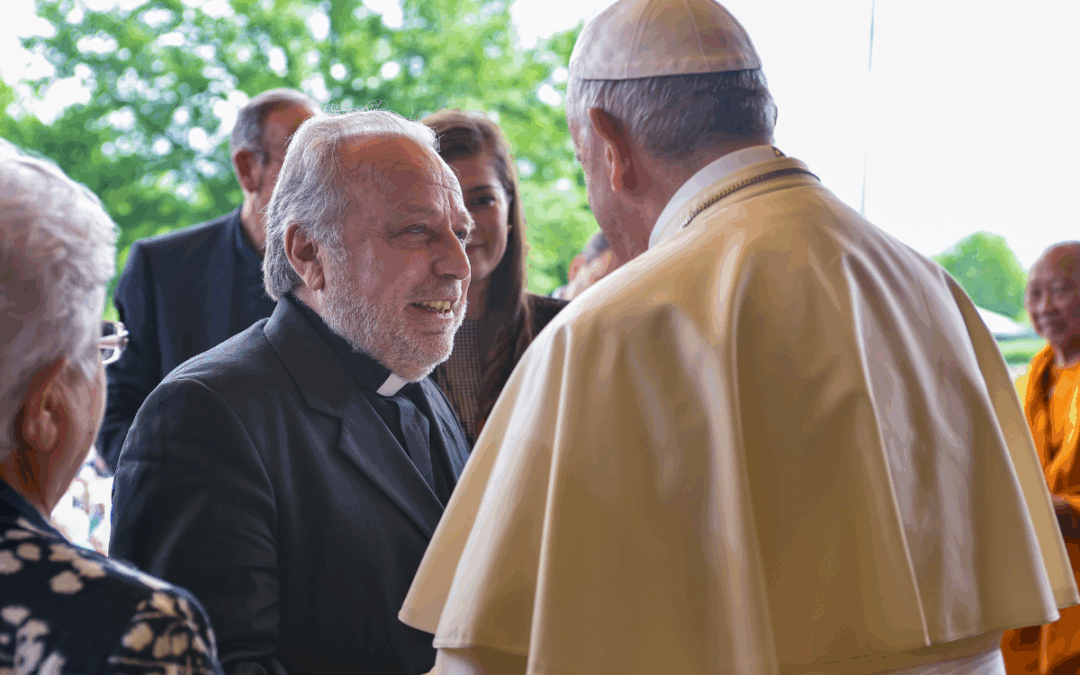
A Pope who dreamed and made us dream… what was his dream? He once said it himself, that “the Church is the Gospel”. Not in the sense that the Gospel is the exclusive property of the Church. But in the sense that Jesus of Nazareth, the one who was crucified outside the walls as if he were a criminal and instead whom God Abbà raised from the dead as the first-born Son among many brothers and sisters, he continues here and now, through those who recognise themselves in his name, to bring the good news that the Kingdom of God has come and is coming… for everyone, starting with the “least” who have been touched by the Gospel for who they are in the eyes of God, the “first ones”. This is true and not a figure of speech. This is the Gospel, that the Church proclaims and contributes to making history. This is so, the more it is transformed by the Gospel. As it happened, from the very beginning, to Peter and John when, on their way up to the temple, they met the man who was crippled from birth at the entrance called the “Beautiful Gate”. Together they looked straight at him, and he in turn looked them in the eye. And Peter said to him: “I have neither silver nor gold, but I will give you what I have: in the name of Jesus Christ the Nazarene, walk!”
The Gospel of Jesus and the mission of the Church. Make the effort to stand up and walk. This is how the Father thinks of us, wants us and accompanies us. Jorge Maria Bergoglio – with all the strength and the frailty of his humanity, which made us feel that he was like our brother – it is for this that he has spent his life and his service as Bishop of Rome. From that first appearance from the balcony of St. Peter’s, when he bowed and asked for the People of God to invoke a blessing for him, to the last appearance, on Easter Sunday, when in a faint voice he gave the blessing of the risen Christ, then went down into the square to meet the eyes of the people. His dream was that of a Church which is “poor and of the poor”. In the spirit of Vatican II, which called the Church back to its only model, Jesus: who “stripped himself, making himself a servant”.
The name, Francis that he chose expresses the soul of what he wanted to do, and, first of all, to be: a witness to the Gospel “sine glossa”, that is, without comment and without adaptation. Because the Gospel is neither an ornament, nor a filler, nor an anaesthetic: it is a proclamation of truth and of life, of joy, of justice, of peace and fraternity. So, there we have the Church’s reform programme in Evangelii gaudium, and the manifestos of a new planetary humanism in Laudato sì and Fratelli tutti. We have the Jubilee of Mercy and the Jubilee of Hope. We have the document on universal fraternity signed in Abu Dhabi with the great Iman of Al Ahzar, and there we have the countless occasions of encounter experienced with members of different faiths and convictions. There we have the tireless work in defence of the abandoned, the migrants, the people who are abused. There we have the categorical rejection of war.
Francis was very clear that it is not enough for the Gospel to speak, with all its subversive force, in the complex and even contradictory Areopagus of our time. Something more is needed: because we are not only in an epoch of changes, but we are in the midst of a change of epoch. We need to look with a new perspective. The one with which Jesus looked and looks at us, from the Father. The gaze that, with tender and heartfelt words, is described in his spiritual and theological testament, the encyclical Dilexit nos. It is the simple and radical outlook of loving one’s neighbour as oneself and of loving one another in a selfless, free, hospitable reciprocity, open to everyone, everyone, everyone. The synodal process in which the Catholic Church – and, for their part, all the other Churches – has been convened shows the path to take in this third millennium of ours: beyond a clerical, hierarchical, male-dominated Church… A new path because it is as old as the Gospel. A difficult path, costly and full of obstacles. But a great prophecy, entrusted to our creative and tenacious responsibility.
Thank you, Francis! Your body will now rest beside Mary, who accompanied you step by step, as a mother, on your holy journey. With her, you now accompany all of us, from the womb of God, on the journey that awaits us.
Piero Coda
Photo: © CSC Audiovisivi
According to the calendar of major events for the Jubilee of Hope 2025, the Jubilee for Families, Children, Grandparents and the Elderly will take place from 30th May- 1st June and the Jubilee for Young People will take place from 28th July-3rd August. These will be two major events that will bring thousands of people from all over the world to Rome.
For the occasion, the Focolare Movement is offering several itineraries to provide opportunities to get to know more about the spirituality of unity and the lives of some witnesses of hope. In particular, a multi-stop tour for young people has been created around Italy entitled Youth and Holiness. We interviewed Paola Torelli and Lais Alexandre Pessoa from the Movement’s Youth Centres to find out more.
Let’s start with the Youth Jubilee: where did the idea of the “Young People and Holiness” tour come from?
The Youth Jubilee is a unique opportunity to set out on a journey, both physically in Rome and in other jubilee locations around the world. This journey is not just about visiting places, but above all it is an experience of encounter with God and with many witnesses of hope, whose lives can help us grow in faith and hope. Hence the idea of Young People and Holiness, a journey in the company of some witnesses of hope, for all the young people participating in the Jubilee at the end of July.
What is the Focolare Movement offering?
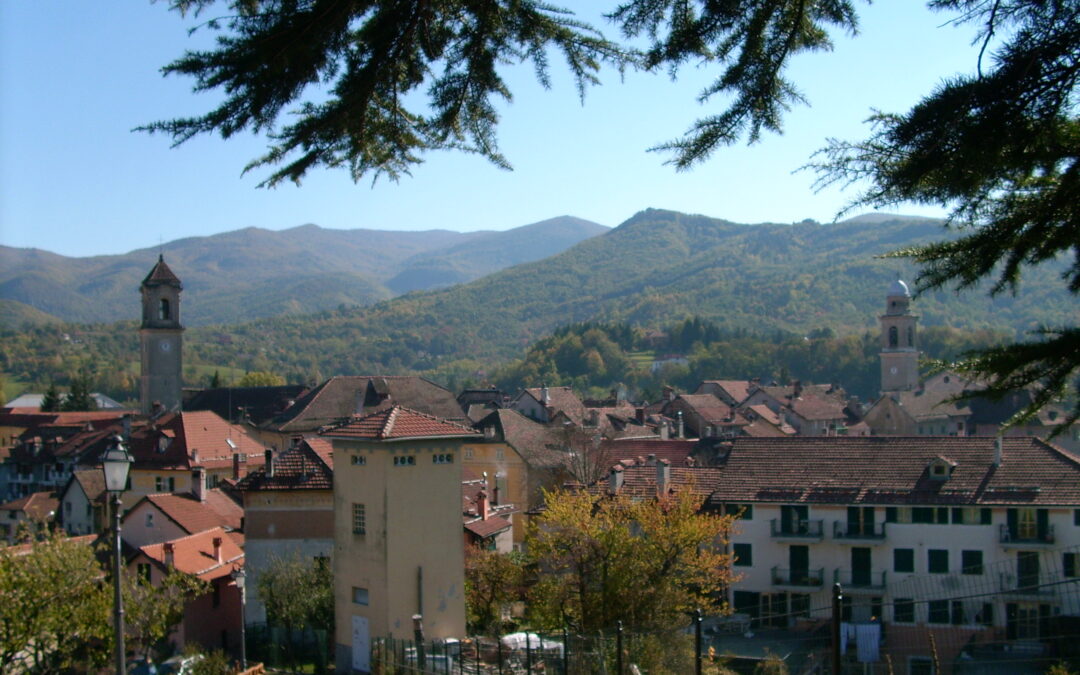
Several stops around Italy are planned:
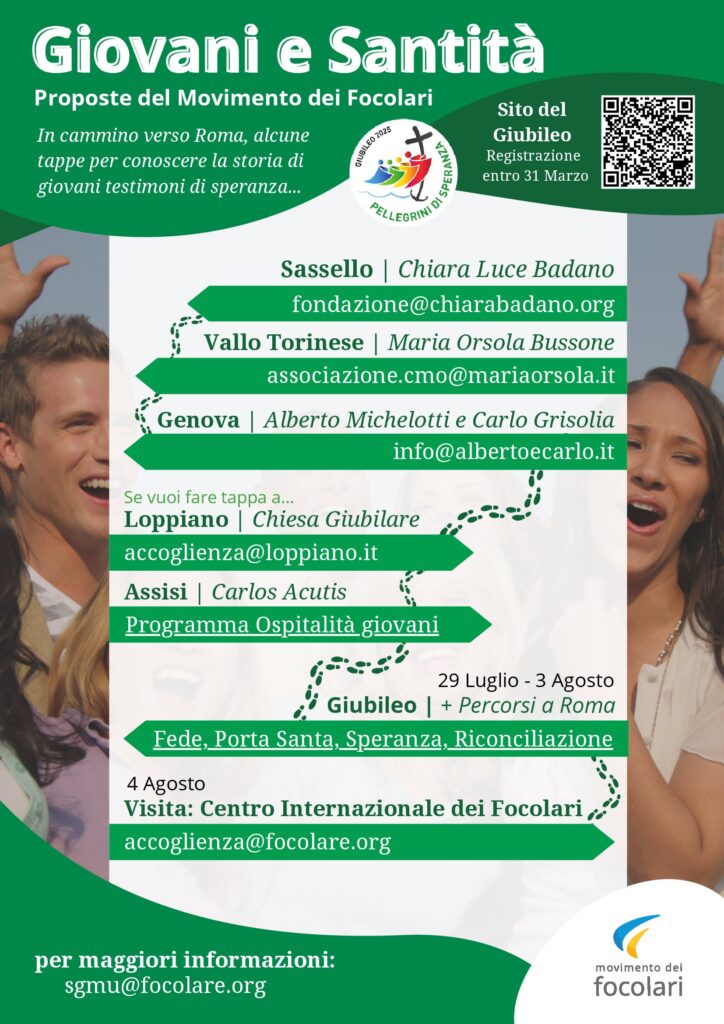
Can you choose only one stage or is it one complete journey that includes all the stops?
The proposed stages are independent, each group or person can choose which ones to participate in or, if possible, follow the entire route. Contact details are provided for each stop regarding programs and visits.
Are there any other initiatives for young people?
Every month, at the Focolare Meeting Point in Rome there is a gathering entitled Call to one hope – Young people on the Journey. Together with some other Movements and Associations, we offer a chance to nurture and strengthen “hope” through shared testimonies, reflection, silence, and prayer. It’s an experience of mutual discovery. Preparing these events together with the other Movements and Associations helps us grow and become ever more the Church.
Let’s move on now to the Jubilee for Families, Children, Grandparents and the Elderly at the end of May: what does Focolare propose?
There will be two events on Friday, 30th May. They are interactive routes to deepen the Jubilee of Hope, designed for families with children and young people up to the age of 12, They include reflections and games suitable for that age group. The first will take place at the Focolare International Centre where participants can visit several significant places, such as the house where Chiara Lubich lived and the chapel where she is buried, together with the co-founders of the Movement. The second event will take place in Rome in several churches and significant places, starting from the Focolare Meeting Point.
For more information click here or write to: sgmu@focolare.org.
Lorenzo Russo
Photo: Città di Sassello (Italia) ©Davide Papalini