It seems obvious that we are made to relate to other people: in fact, we could even say that our lives are intertwined by the relationships we make. However, we sometimes we risk spoiling the latter with our harsh or superficial judgements.
Throughout history, various images have become part of everyday language. Thus, in ancient tradition we find a well-known expression that says: ‘Why do you look at the speck in your brother’s eye and not notice the plank in your own?’[1] Equally proverbial is the image of the two saddlebags: one in front of our eyes, filled with the faults of other people which we easily see, and the other on our backs, holding our own faults which we then struggle to recognise.[2] There is also a Chinese proverb that says, ‘Man is blind to his own faults but has eagle eyes for those of others.’
This does not mean that we should indiscriminately accept what other people do and just let events run their course. Faced with injustice, violence or oppression, we cannot close our eyes. We must commit ourselves to change and start by looking at ourselves and listening sincerely to our own consciences to discover what we need to improve. Only then can we ask ourselves how we can concretely help others by sometimes offering advice and correction.
Each one of us needs ‘another point of view’ that offers a perspective different from our own, enriching our ‘truth’ and helping us to avoid self-referentiality and those errors of judgement that are part of our human nature.
The word “mercy” may seem old fashioned but it is rich with meaning relevant to today: we can be merciful first towards ourselves and then towards others too. In fact, only if we are able to accept and forgive our own limitations will we be able to welcome the weaknesses and mistakes of others. Indeed, when we realise that unconsciously we may be feeling superior and in a position to judge other people, it is vital that we are willing to take ‘the first step’ towards the other person to avoid damaging the relationship.
Chiara Lubich told a group of Muslims about her experience when she and her companions lived in a small house in Trent as they began their adventures at the start of the Movement. Not everything was simple and there were misunderstandings. “It was not always easy to love in aradical way […] “Dust” could settle on our relationships and unity could diminish. This happened, for example, when we became aware of the faults and imperfections of others and judged them, so our mutual love grew cold. One day, we decided we should try to counter this situation and we decided to make a pact among ourselves and called it a ‘pact of mercy’. We decided that every morning we would see the people we met – at home, at school, at work, etc. – as new without calling to mind their faults but covering everything with love.” [3] his is a ‘method’ worth putting into practice in groups at work, in the family and in communities of all kinds.
THE IDEA OF THE MONTH is currently produced by the Focolare Movement’s “Centre for Dialogue with People of Non-religious Beliefs”. It is an initiative that began in 2014 in Uruguay to share with non-believing friends the values of the Word of Life, i.e. the phrase from Scripture that members of the Movement strive to put into practice in their daily lives. Currently, THE IDEA OF THE MONTH is translated into 12 languages and distributed in more than 25 countries, with adaptations of the text according to different cultural sensitivities.dialogue4unity.focolare.org
[3] C. Lubich, L’amore al prossimo, Conversazione con gli amici musulmani, Castel Gandolfo, 1° novembre 2002. Cf. C. Lubich, L’Amore reciproco, Città Nuova, Roma 2013, pp. 89-90.
This month’s Word of Life is taken from a series of final recommendations that the Apostle Paul makes to the community of the Thessalonians: ‘Do not quench the Spirit, do not treat prophecies with contempt but test them all; hold on to what is good. Abstain from every kind of evil.” [1] Prophecy, discernment, dialogue and listening. These were Paul’s instructions to the community that had recently embarked on a journey of faith.
Among the various gifts of the Spirit, Paul highly esteemed that of prophecy.[2] A prophet is not someone who foresees the future but rather a person who has the gift of seeing and understanding personal and collective history from God’s perspective.
However, all gifts are guided by the greatest gift of all and that is charity and fraternal love.[3] Augustine of Hippo states that only charity enables us to discern the attitude we should take in the face of a range of different situations.[4]
Test everything but hold on to what is good.
We should consider not only the personal gifts we may have, but also bear in mind the potential and variety of views and opinions offered to us by the people around us or with whom we work or even meet by chance. It is important to always maintain a sense of honesty and to be aware of the limitations of our own point of view.
This word of life could be a motto to adopt in every situation of dialogue and even opposing views. Our hearts and minds are broadened when we listen to other people: although we may not accept everything they say, we may find something good in their ideas. When love impels us to create a space within ourselves in order to listen to other people, we have the possibility of building something together.
Test everything but hold on to what is good.
Cardinal elect Timothy Radcliffe, one of the theologians present at the Synod of Bishops of the Catholic Church, said that ‘the bravest thing we can do at this synod is to be honest with each other about our doubts and questions, those for which we have no clear answers. Then we will approach each other as fellow seekers, as beggars searching for the truth.” [5]
In a conversation with members of the Focolare, Margaret Karram commented on this reflection: ‘Thinking about it, I realised that many times I did not have the courage to really say what I thought: perhaps because I was afraid of not being understood or because I didn’t want to be different from the majority. I realised that being “beggars of truth” means having that attitude of closeness towards one another, in which we all want what God wants, and where together, we all seek what is good.’[6]
Test everything but hold on to what is good.
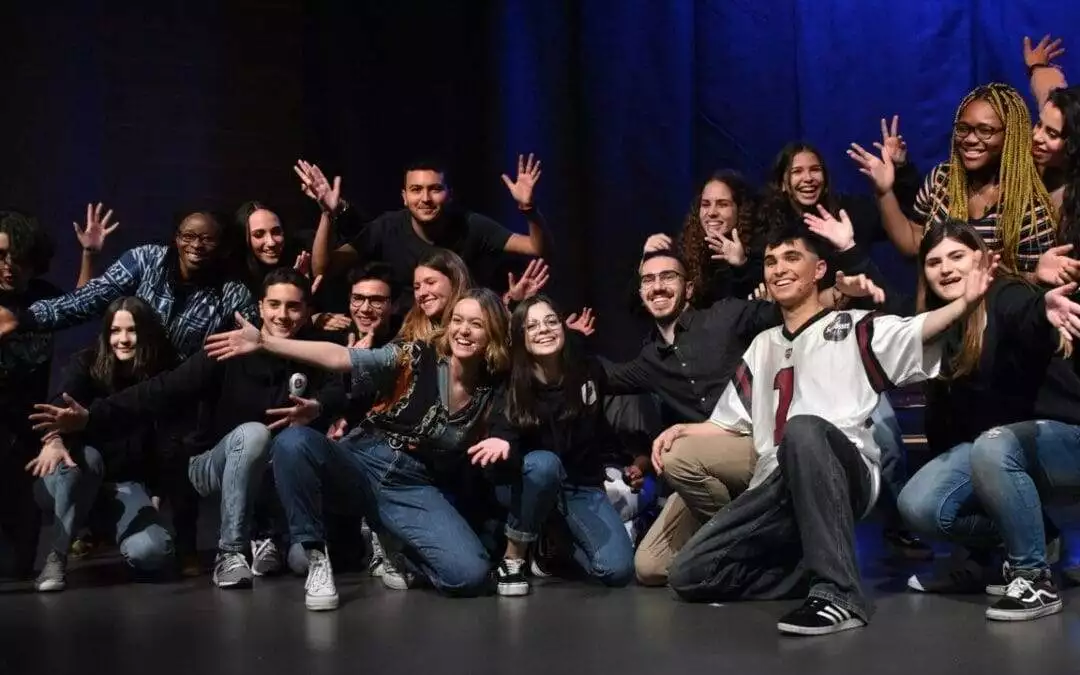
This is Antía’s, experience. She is a member of “Mosaico”, a performing arts group that began in Spain in 2017. It is a local project that has developed from the Gen Rosso music group. It is composed of young Spaniards who use their art and workshops to offer their experience of fraternity to others.
Antía tells us: ‘It connects with my values – a fraternal world, in which everyone (very young, inexperienced, vulnerable…) gives their contribution to the project. “Mosaico” makes me believe that a more united world is not a utopia, despite the difficulties and hard work involved. I grew up working in a team where dialogue was too honest at times and I often gave up on my own ideas which I believed to be the best. I see that in this project “good” is built piece by piece together, by us all.”[7]
Edited by Patricia Mazzola & the Word of Life Team
[1] Ts 5, 19-22. [2] Cf. Giovanni Paolo II, Udienza Generale, 24.06.1992, n.7. [3] Cf. 1 Cor 13. [4] Cf. Agostino di Ippona, Ep. Jo. 7, 8. [5] Padre Timothy Radcliffe, Meditazione n. 3, Amicizia, Sinodo dei Vescovi, Sacrofano, 2.10.2023. [6] Margaret Karram in conversation with focolarini, 3.02.2024 [7]Mosaic GRLP
On the 24th of January 1944, Chiara Lubich discovered what would become a key point in the spirituality of unity: Jesus who experienced the abandonment of the Father on the cross, the utmost expression of suffering, the greatest expression of love.
Jesus Forsaken was precisely the focus of an artistic moment during Genfest 2024, the international appointment of the young people of the Focolare Movement. Here, we offer you a few extracts of it.
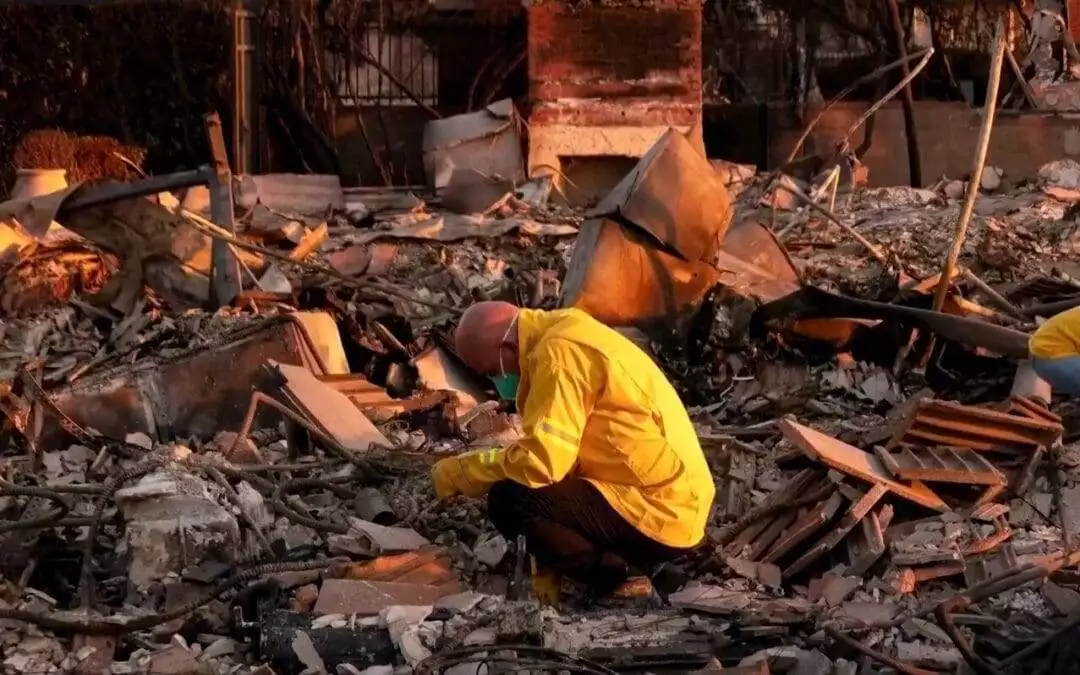
For several days, dramatic images of wildfires devastating an immense area and destroying everything from animals to vegetation have circulated around the world,. Thousands of buildings have been reduced to ashes and so far, 25 people have lost their lives. Many families have lost everything and 26 people remain missing. It is heart breaking to see these images of suffering still today. And the emergency is not over yet. We contacted the Focolare community there to find out how they are coping with this situation.
Carlos Santos, from the Focolare community in Los Angeles, told us, “The wildfires in various parts of our region are causing great anxiety because due to strong winds it’s impossible to fully extinguish the flames. The forecast is that they will continue for several more days. Many people have been evacuated and many have lost everything. However, we are also witnessing an enormous response from people who have brought food, clothing, money and other donations to those affected by the wildfires. The response has been so overwhelming that in some places TV stations have been used to ask people to stop donating because there is no more space for the items being delivered. Indeed, Providence has arrived in abundance and beyond what is needed.
The fires have not reached the homes of any members of the local Focolare community. However, some have had to move because they live in areas at risk of wildfires.
The Women’s Focolare, hosted a family for three days until authorities confirmed it was safe for them to return home. Our Men’s Focolare is also available to welcome anyone in need of shelter. This has brought more peace of mind to the community, as several areas in Los Angeles County could face evacuation orders if the winds change direction and move the fires toward them. Through their work, some focolarini have directly witnessed the suffering of many people and families who have lost everything. We want to accompany these people, offer comfort, and help them find stable solutions.” Carlos concluded thanking everyone for the many messages of solidarity and prayers during this time of great suffering.
You can read about the “miracle of the tabernacle” at Corpus Christi Church in the Pacific Palisades community of California on this link from the Focolare Media website, the communication platform for the Focolare Movement in North America,.
When people of different cultures and religious beliefs are in dialogue, a question that often comes to the fore is: “Can we always hope? And in what?” It’s a question that resonates most intensely not only in times of difficulty and painful suffering or defeat but also when we feel disappointed and deluded by the ideals and values we have held dear and which have fascinated us in the past. It is precisely during these times of doubt that we are prompted to reconsider the values and beliefs that lie at the very basis of our hopes. These values give us the strength to face our doubts and reveal the greatness of human nature: men and women are capable of falling down and rising up again, they can acknowledge that they all have their weaknesses but without succumbing to uselessly dreaming of finding miraculous solutions. Believing is much more than hoping for a solution to our problems; rather, it is the drive within that allows us to keep going. It is in those difficult moments that life mysteriously can become a real gift. Believing is like a commitment that gives meaning to life always. Unlike accepting a contract that you sign once and then never look at again, believing transforms and permeates every daily choice. One method that may help us to do so is to avoid thinking about dramatic and extreme situations which can only make us afraid and block us, but to face the small difficulties of each day, sharing them with our friends. In this way, if we do not lose heart, we will discover many new opportunities to believe and to give hope to those around us. The strength of friendship seeks the good of the other. It is easier to feel strong and courageous when everything is going well but it is when we are aware of our vulnerabilities that we can build something that will remain after us. We become aware of this through the conviction we gain when we have shared life with someone who believed beyond everything, who struggled and suffered, and whose love brought them close to everyone. When these people conclude their lives on this earth, they leave such an imprint and their memory is so vivid that -mysteriously- whether we are religious or non religious, their example makes us say, “I believe, I believe. Let us continue together!”
THE IDEA OF THE MONTH is currently produced by the Focolare Movement’s “Centre for Dialogue with People of Non religious Beliefs”. It is an initiative that began in 2014 in Uruguay to share with non-believing friends the values of the Word of Life, i.e. the phrase from Scripture that members of the Movement strive to put into practice in their daily lives. Currently, THE IDEA OF THE MONTH is translated into 12 languages and distributed in more than 25 countries, with adaptations of the text according to different cultural sensitivities. dialogue4unity.focolare.org