Trust in God
Trust in God

Trust in God
We are not alone
This sentence is taken from the story of the Annunciation. The angel Gabriel appears to Mary of Nazareth and makes known God’s plans for her: she will conceive and give birth to a son, Jesus, who ‘will be great and will be called the Son of the Most High.’ [1] The episode is in continuity with other events in the Old Testament whereby barren or very old women gave birth to children who were to play an important role in salvation history. Here, Mary, while wishing to fully and freely adhere to the call to become the mother of the Messiah, wonders how this will happen because she is a virgin. Gabriel assures her that it will not come about through the work of man: ‘The Holy Spirit will come upon you and the power of the Most High will overshadow you.’ [2] And he adds: ‘For nothing will be impossible with God.’ [3]
Such reassurance, which means that no declaration or promise made by God will remain unfulfilled – because nothing is impossible to him – can also be expressed in this way: nothing is impossible with God. In fact, the nuance of the Greek text ‘with, or near, or together with God’ highlights his closeness to men and women. In fact, when human beings are together with God and freely adhere to him, nothing is impossible.
«For nothing will be impossible with God».
How can we put this word of life into practice? We can do so by being confident in the belief that God can act even within and beyond our limitations and weaknesses and during the darkest periods of our lives.
This was the experience of Dietrich Bonhoeffer. Whilst in prison before being tortured, he wrote: ‘We must immerse ourselves again and again in the living, speaking, acting, suffering and dying of Jesus in order to recognise what God promises and fulfils. It is certain […] that for us nothing impossible exists anymore, because nothing impossible exists for God; […] it is certain that we must not expect anything and yet we can ask everything; it is certain that in suffering our joy is hidden and in death our life… To all this God has said ‘yes’ and ‘amen’ in Christ. This ‘yes’ and this ‘amen’ are the solid ground on which we stand.’ [4].
«For nothing will be impossible with God».
In trying to overcome the apparent ‘impossibility’ of short-comings and in striving to reach the ‘possibility’ of a sound and consistent life, the community dimension plays a decisive role. This developed when, as a group, the disciples lived Jesus’ new commandment and allowed the power of the risen Lord to dwell within them, both collectively and individually. In 1948, Chiara Lubich wrote to a group of young members of religious communities: ‘Let’s go ahead, not relying on our own strength which is petty and weak but with the omnipotence of unity. I have seen and touched with my own hands that God among us does the impossible: he performs miracles! If we are faithful to our task […] the world will see unity and with it the fullness of the Kingdom of God.’[5]
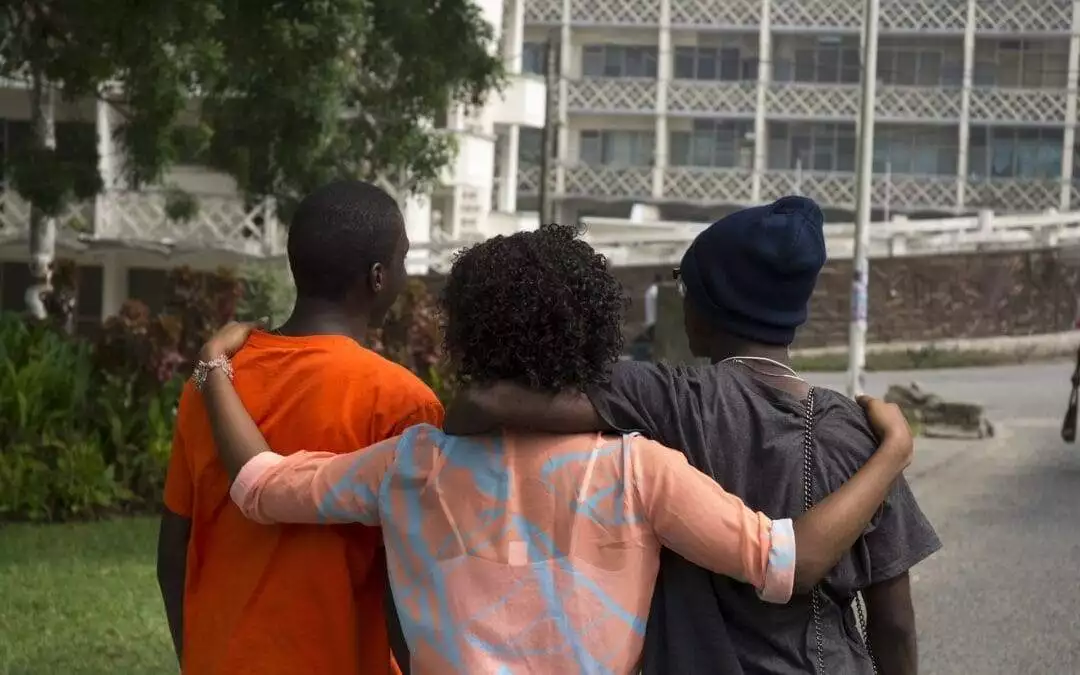
Years ago, when I was in Africa, I often met young people who wanted to live as Christians and who told me of the many difficulties, they faced each day in trying to be faithful to the commitments of faith and the teachings of the Gospel. We would talk about this for hours and, in the end, we always came to the same conclusion: ‘It is impossible if we are alone but not if we are together.’
Jesus himself guarantees this when he promises: ‘Where two or three are gathered in my name (in my love), there am I in the midst of them.’ [6] And with him all things are possible.
Edited by Augusto Parody Reyes & the Word of Life team
Photo: ©Sammmie – Pixabay
[1]Lc 1, 32.
[2] Ibid, 35.
[3] Ibid, 37.
[4] D. Bonhoeffer, German Lutheran Pastor, protagonist in resistance against Nazism
[5] C. Lubich, “Letters of the Early Times”. viCf Mt. 18:20.
[6] Cf. Mt 18, 20.
We may feel frightened when life presents us with challenging and unexpected choices but, nonetheless, it is then that our values and the desire to live with integrity clearly emerge.
It’s not always easy. When the answer to a situation requires our free and personal choice, we may feel that we are taking a difficult gamble, almost a leap in the dark, and we need the strength to go beyond our own limits.
Where can we find the strength to do this? For some people it comes from faith in the supernatural and belief in a personal God who loves us and accompanies us. For everyone it can come from the closeness of friends, of “travel companions” who support us, trust us and who we feel are near as we journey through life. They bring out the best in us and help us overcome the apparent “impossibility” of our insufficiencies to achieve the “possible” of a coherent way of life.
This happens as a consequence of relationships that are reciprocal and impacts upon us as members of a community. As Chiara Lubich said in 1948, using language typical of the time: “Let’s go ahead! Not with our strength, petty and weak as it may be, but with the omnipotence of unity. If we remain faithful to our commitment […] the world will see unity.”[1]
Going beyond our limits opens us to new opportunities and experiences that might otherwise seem out of our reach, allowing us to believe and witness that nothing we hope for is impossible.
But is it possible to believe “that everything is possible” in the face of the absurdity of Evil? This is the great question that humanity continues toask today as it has always done in the past.The absence of response unites everyone, believers and non-believers, as they search for the answeron a journey that can only be undertaken together. Because if “Evil” remains a mystery, the force of “Good” is equally powerful. There is no answer, but a way of understanding.
Edith Bruck recalled this in a recent interview.ii She was deported to Auschwitz at the age of 13 but still today, in her nineties, is a real witness of peace. When the war ended, she and her sister were faced with a dramatic dilemma. “Five Hungarian fascists who had supported the Nazis begged us to help them return home secretly and we did so by helping them on their journey. We shared bread and chocolate with them. It was one of the most intense moments I had ever experienced spiritually. I was treating someone who could have killed my father as a friend.” The decision was not easy and she argued a lot with her sister, but they did it because they thought that perhaps, this way, these people would never mistreat a Jew again. [2]
THE IDEA OF THE MONTH is currently produced by the Focolare Movement’s “Centre for Dialogue with People of Non religious Beliefs”. It is an initiative that began in 2014 in Uruguay to share with non-believing friends the values of the Word of Life, i.e. the phrase from Scripture that members of the Movement strive to put into practice in their daily lives. Currently, THE IDEA OF THE MONTH is translated into 12 languages and distributed in more than 25 countries, with adaptations of the text according to different cultural sensitivities. dialogue4unity.focolare.org
Photo: © Pixabay
[1] Chiara Lubich, “Letters of the Early Times”.
[2] Marisol Rojas Cadena SER- article on E. Bruck 26/01/2024
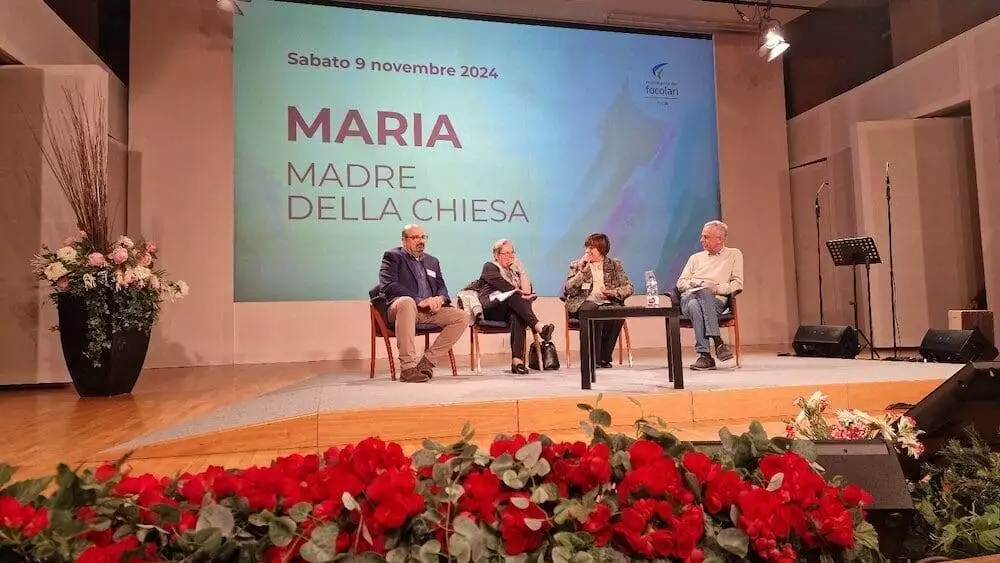
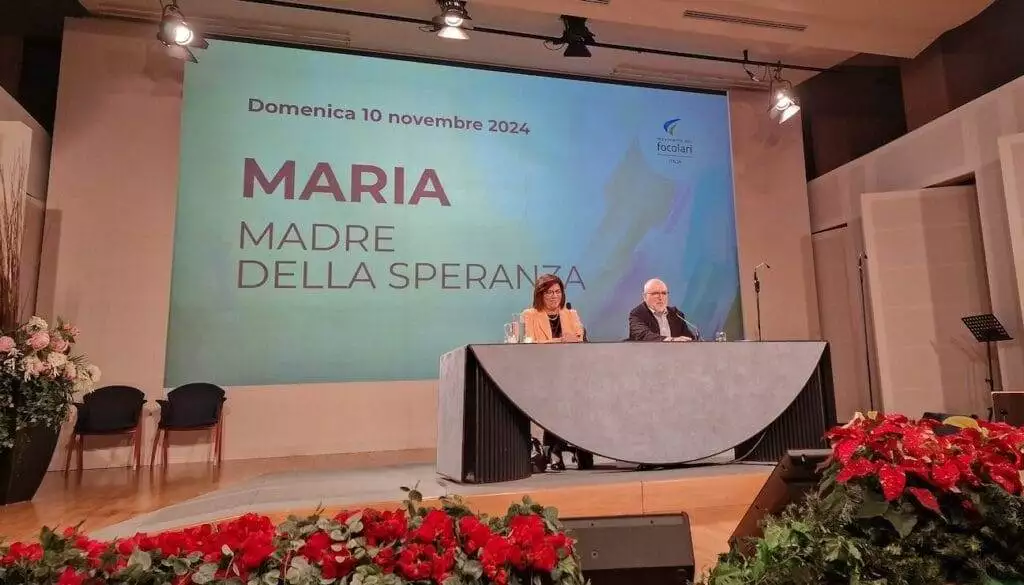
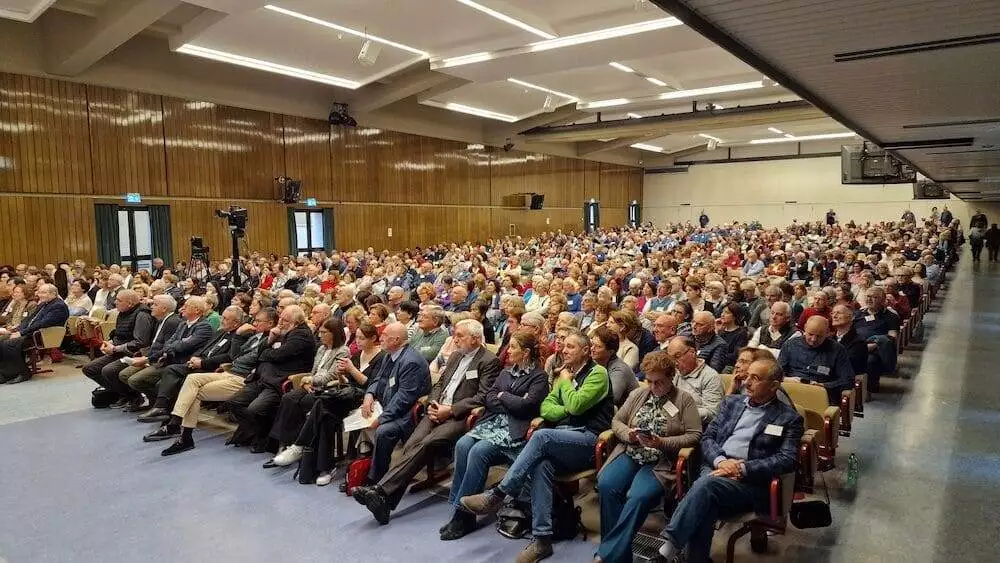
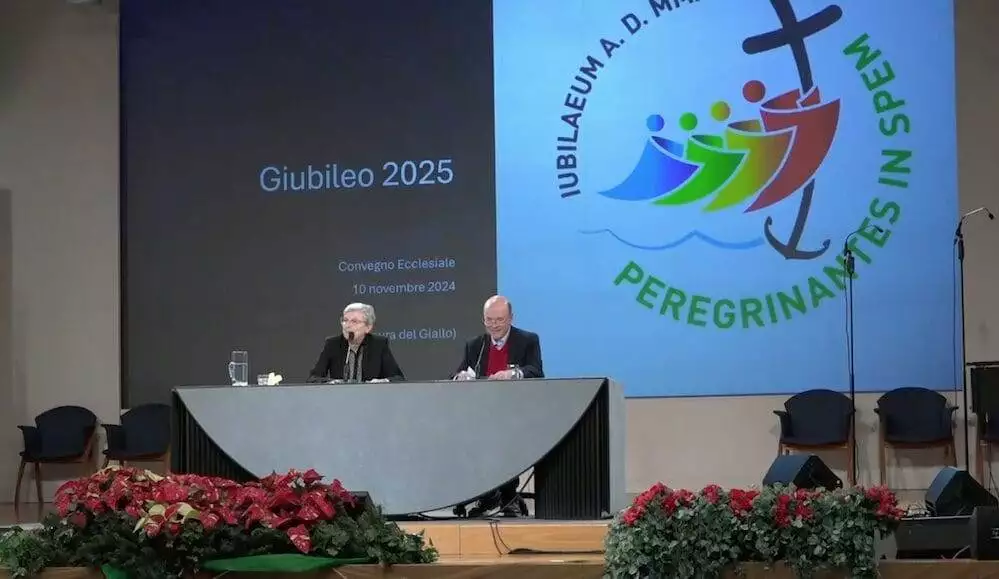
Experiencing the Church in its community dimension through the synodal method. This was one of the messages that emerged from the ecclesial convention organized by the Focolare Movement of Italy and Albania that was held in early November at the Mariapolis Center of Castel Gandolfo in Italy. An event that was attended by about a thousand people, of different ages and vocations, who adhere to the spirituality of the Focolare Movement, but also representatives of other associations.
Cristiana Formosa and Gabriele Bardo, Focolare leaders in Italy and Albania highlighted the path taken so far together with other groups of the Italian Church. It all stemmed from “a deep dialogue that grew over time, between priests and laity; a working together, people from all the branches of the Work of Mary (or. The Focolare Movement); a growing appreciation of all those who work in various capacities in the local church and in diocesan and national bodies. […] We feel that in recent years this sensitivity has grown a lot within the Movement, and both at the national and local levels there is much more collaboration with other Movements and Church Associations.”.
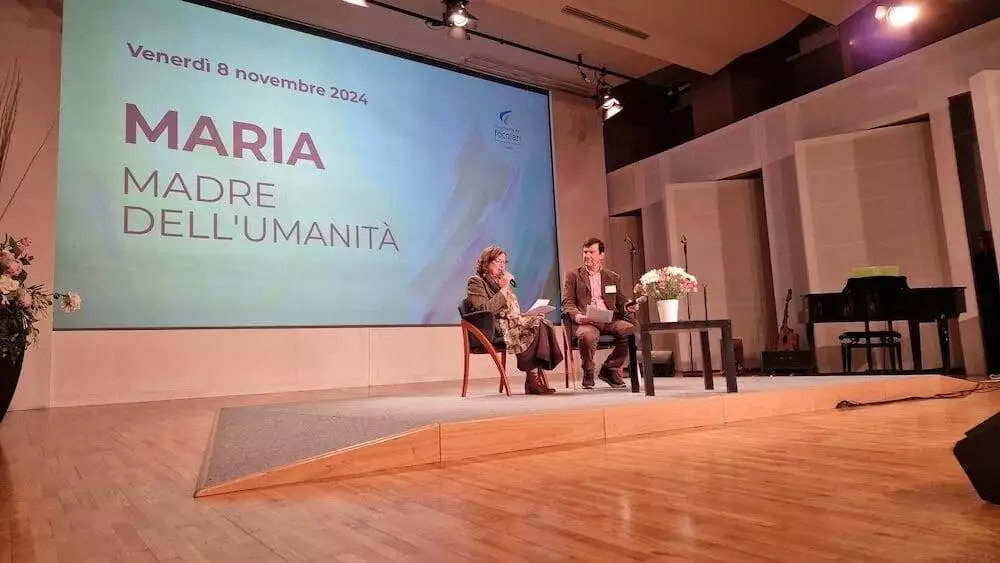
On the first day, Prof. Vincenzo Di Pilato, professor of Fundamental Theology and Academic Coordinator of the Centro Evangelii Gaudium emphasized (text) the figure of Mary as Mother of God and Mother of humanity, highlighting the Trinitarian root of the incarnation and Mary’s social dimension.
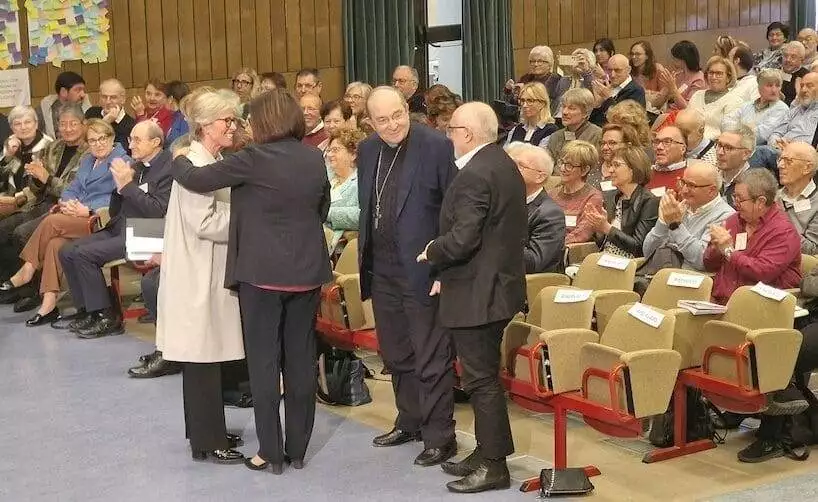
This was followed by Card. Giuseppe Petrocchi who deepened the reality of being church today, emphasizing how one needs to have a value compass to understand how to move, what church to be and how to be church. One must study and love the sociocultural context of the area in which one acts as well as being attentive to signs of the times: what the Lord is asking of us today.
Space then was given to various experiences on educational projects aimed at marginalized people, on the new generations, universal fraternity, the option for the “poor” for an inclusive synodality.
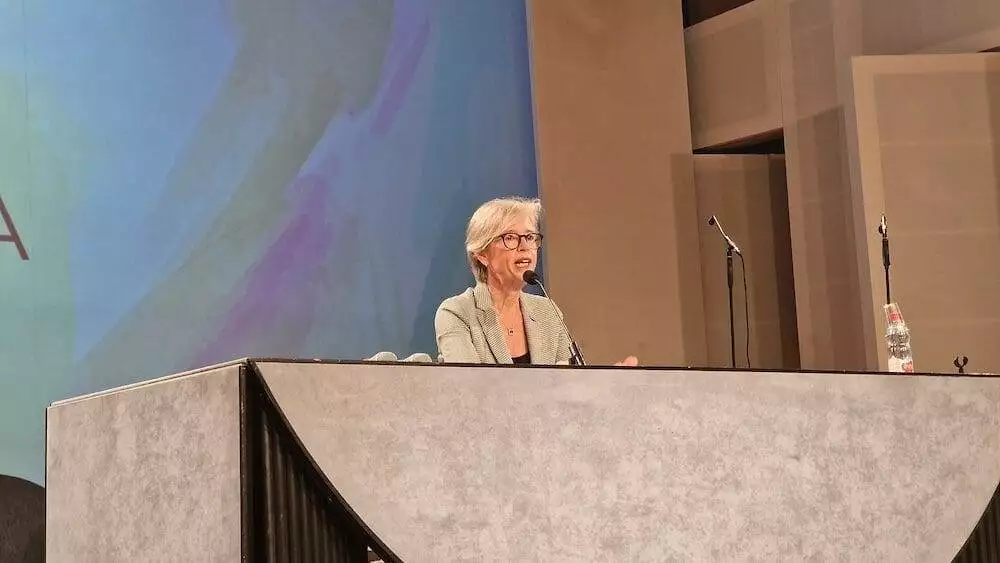
The second day was enriched with the presence of Dr. Linda Ghisoni, Under secretary of the Dicastery for the Laity, Family, Life, who brought greetings and encouragement from the Prefect of the Dicastery Card. Kevin Joseph Farrell. Dr. Ghisoni delivered a meditative reflection entitled “Marian dimension: a Church with a synodal face”. By retracing Mary’s life, she affirmed that we too must “trust God who is faithful. It’s up to us, far from all self-driven triumphalism, to be present in the face of the toughest situations in our society, in our family, in our movement. We should not be ashamed if we seem to belong to a group of failures, if we have people among us who are weaklings, and we should welcome the call to an ever-new generativity, proclaiming with closeness, care, listening, with intelligence, attention and dialogue, that God is faithful, is close, is merciful.”.
And she recalled the words that Cardinal Farrell addressed to the Focolare Movement on the 80th anniversary of its birth: “The ideal that Chiara (Lubich) transmitted to you remains ever relevant, even in today’s secularized world which is so different from that of when the Movement began. Your charism contains in itself a great life giving energy, but as the Holy Father often says: ‘it is not a museum piece… it needs to come into contact with reality, with people, with their anxieties and problems. And so, in this fruitful encounter with life, the charism grows, is renewed, and also reality is transformed, is transfigured through the spiritual force that such a charism brings with it.’”
With Marina Castellitto and Carlo Fusco the topic on the universal call to holiness was explored further through the figures of some Focolare members for whom the cause of beatification has been initiated.
This was followed by the experience of the Social Week of Italian Catholics held in Trent in July 2024. “Those days were an experience of listening and deepening the here and now of our time: questioning us about our being a community of believers in the larger ecclesial community and therefore politics as a history and network of human relationships,” stated Argia Albanese president of the Political Movement for Unity (Mppu) Italy.
The day continued with the experience of the National Council of Lay Aggregations (CNAL) in the presence of secretary Dr. Maddalena Pievaioli. The Council is the place where they live their relationship with the Italian Episcopate in a unified form, offering the richness of their associations and actively welcoming its programs and pastoral indications. The wish is that we can increasingly spread this reality within the Associations.
We concluded with the sharing of some best practices such as the Evangelii Gaudium Center, the experiences of the Diocesan Movement of Pesaro and Fermo, and insights on ecumenical and interreligious dialogue, dialogue with people of nonreligious beliefs, and dialogue with the world of culture.
Present on the last day were Margaret Karram and Jesús Morán, President and Co-President of the Focolare Movement. Margaret talked about her recent experience at the synod as one of nine specially invited guests. “The Synod, with its 368 participants, including bishops and laity, of whom 16 were fraternal delegates from other Christian Churches, offered us a perfect example of the universal dimension of this hope,” Margaret said. “We came from 129 nations and each of us was a bearer of our own experience of peace, of war, of poverty, of prosperity, of migration, of joys and sorrows of all kinds. So I would say that the first message, perhaps the most important, is the deeply missionary dimension of the Synod. […] And the first lesson we learned is: walk together, witness together, we need each other. The second lesson was the spiritual practice of discernment that requires: inner freedom, humility, mutual trust, openness to newness.” (…) Our responsibility is “to become bearers of synodality in every sphere: the ecclesial one in primis (first place), Just think of how many of us, and here you will be many! are engaged in our own local Church. But, we members of the Work of Mary, we cannot limit ourselves only to this sphere, we are a lay Movement and this lay characteristic is essential, it comes from the Charism and we cannot lose it. The Synod has stressed on many occasions that we must ‘widen our tent’ to include really everyone, especially those who feel outside.”
Jesús Morán gave a meditation-reflection on being a Church of Hope today. “Hope,” he said, ”makes us overcome fear. Hope must be united with faith and love, the three sisters of the theological life. Hope is a communal virtue; it frees us from the isolation of anguish and launches us toward ‘us’; an ‘us’ that becomes concrete love for our brother.”.
Link ai video
Lorenzo Russo
Photo: FocolarItalia