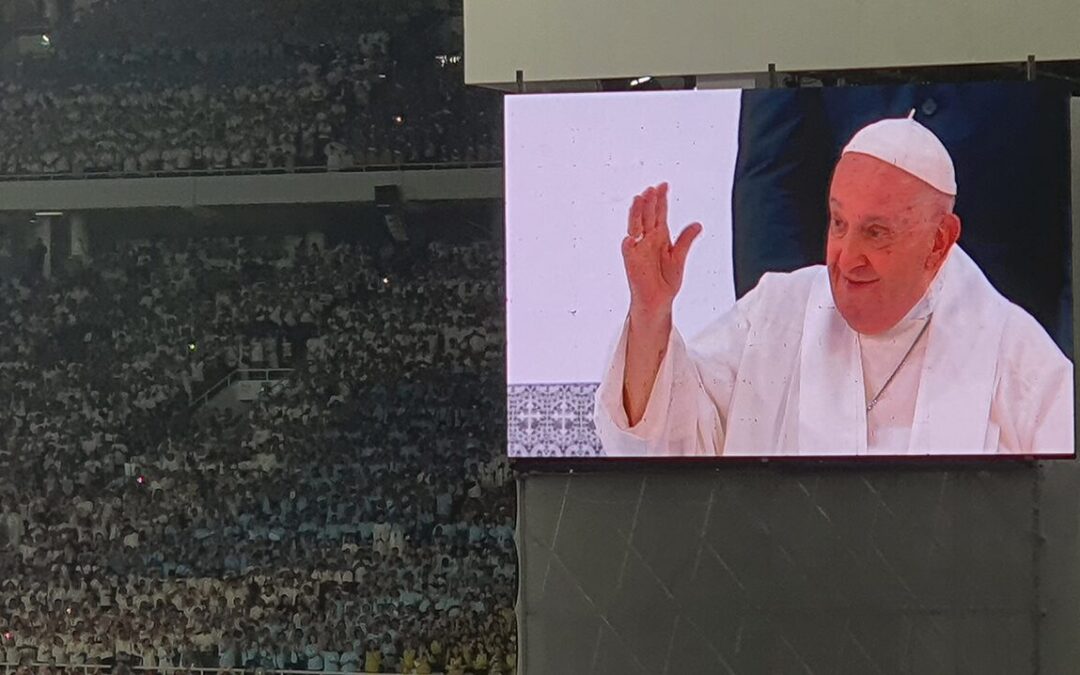
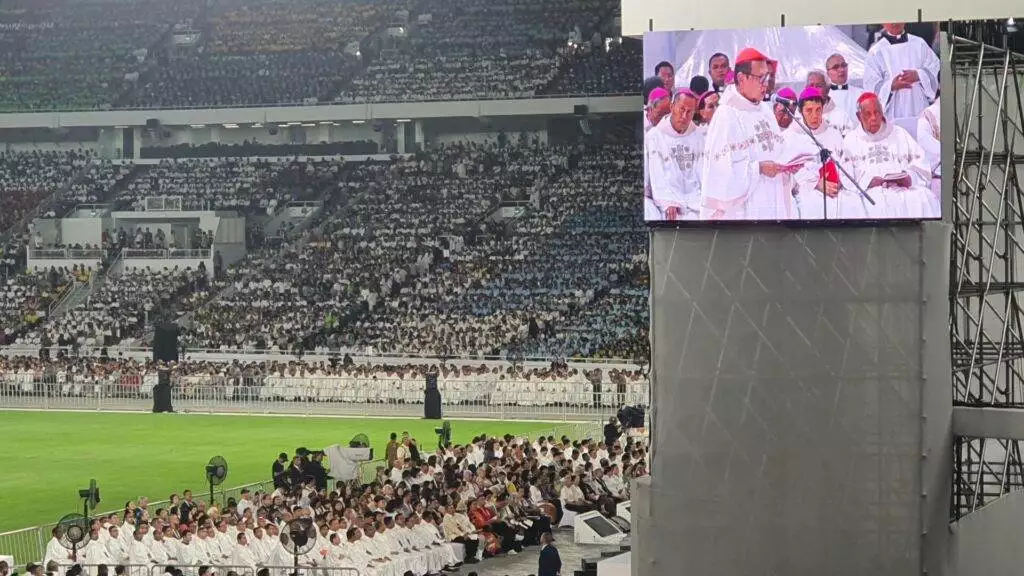
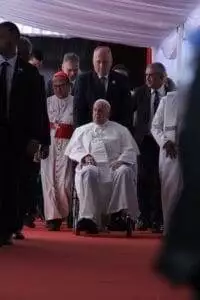
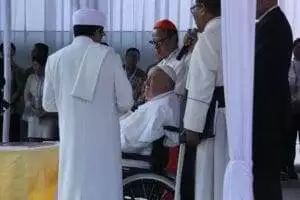
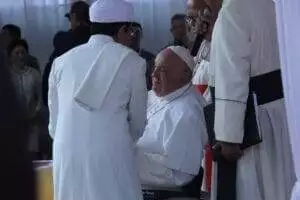
Pope Francis’ latest trip to Asia and Oceania has so far been the farthest, longest and probably the most physically demanding the Pope has ever undertaken. What does this visit mean for the local communities? We asked Paul Segarra, focolarino of the Indonesian community.
Paul, what was the significance of the Pope’s visit to your country?
“This heroic gesture of the Pope is for me an image of God’s love that knows no limits and reaches out to his most distant children, who are certainly not the least-valued in his eyes. The Holy Father took the time to look at them with love, marvel at their giftedness, share their sufferings and longings for justice and peace, then encouraged them to face their challenges together and transcend their limits. But he did not only utter words that inspired and encouraged. He also demonstrated, by example, the strength in faith, the openness to fraternity and the nearness in compassion that he invites his listeners to acquire. He did this through his planned choices and spontaneous gestures, he acted and lived from the heart”.
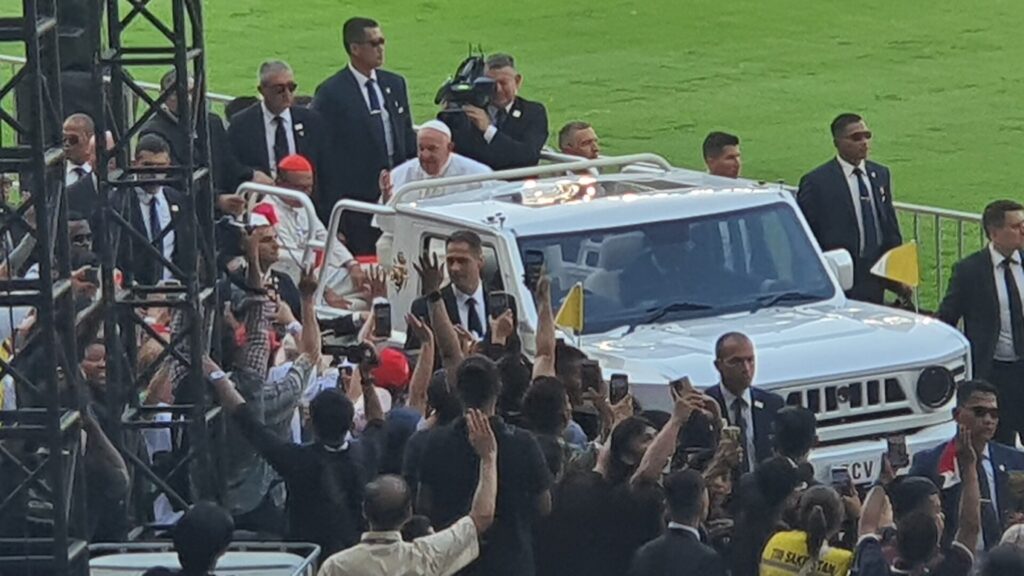
“As news of his arrival spread quickly – Paul Segarra recounts -, there were also many comments on various social platforms about his chosen means of transport: a sober white sedan, in which he preferred to sit beside his driver, instead of taking the usual presidential back-seat, I imagined because he wanted to converse with his driver face-to-face. Seeing this gesture of his, I realised with regret that I could have done the same with the driver who brought me to my accommodations in Jakarta that same evening. But thereafter, my rides became undeniably more enjoyable, as I took to the habit of getting to know my hired drivers through friendly conversation”.
Paul, how did the local Focolare community experience this event?
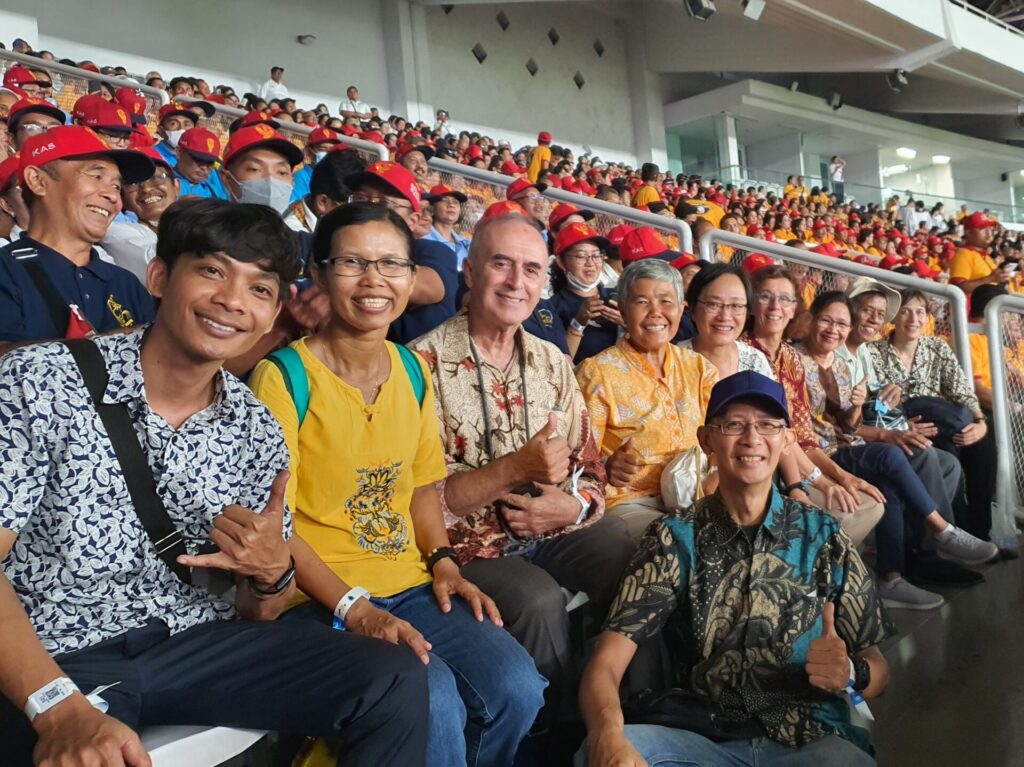
“Some members of our Focolare communities in Jakarta and Yogyakarta had the privelege of participating in some of the events that were graced by the pope’s presence. At the Jakarta Cathedral (dedicated to Our Lady of the Assumption) the Holy Father acknowledged the work of catechists, describing them as “bridges of the heart that unites all the islands”. We were moved as he drew our attention to a statue of the Virgin Mary, and gave her as a model of faith that welcomes everyone, even as she keeps watch over and protects the people of God as the Mother of Compassion”.
Pope Francis and Imam Umar signed the Joint Declaration. What future do you see for Christians and Muslims together after this signing?
“Tomy, one of our photographers who covered the pope’s visit to the Istiqal Mosque and endured long hours of waiting under the city-heat, was visibly touched as the Holy Father finally arrived and greeted them from his car. Assuming a discreet position just outside the entrance to the underground, pedestrian tunnel that physically connects the Great Mosque to the Cathedral across the street, he managed to capture the moment Pope Francis and High Imam Umar signed the Declaration of Fraternity in front of a small crowd of bishops, imams and other religious figures, and said he had high hopes that this visit would create true harmony between all people of faith. And what is faith, if not seeing, acting and living from the heart?
We have probably experienced how, at times, even though there are ideas and beliefs that lie deeply in our hearts and consciences, it is difficult to put them into action. It may help us to live an inspirational thought each day and know that other people all over the world are doing the same. We will not feel alone but part of a worldwide network. This was the intention that led to the development of the Idea of the Month: it was initiated by a few people in Uruguay who were passionate about dialogue and the ideal of unity.
This practice led to groups developing all over the world for people who want to reflect upon the Idea of the Month and share experiences of living it. Infact, in many places, these monthly meetings have become the norm. Could this become just a habit? Could the Idea become simply an all-encompassing good precept that is disseminated online like so many others on virtual groups? Certainly this is the biggest risk for initiatives of this kind. However, it is important that we do not settle for empty words and repeated platitudes. The English have the proverb: ‘Actions speak louder than words’. In the Netherlands, there is the saying: ‘Talk does not fill holes’. These expressions do not come about simply by chance. We can,however remember there is a word that guards against the risk of this happening and that word is ‘consistency’.
In the book entitled The Book Of Joy, the dialogue between the Dalai Lama and Desmond Tutu [1] highlights some points that can help us to live with consistency. First of all, we can listen to our consciences. Each person can assess what is their heart’s desire because this will almost certainly be linked to those human values that give a sense of happiness. We can also ask ourselves if what we want is just for ourselves or will it benefit others too? Will it serve a small number or many people? Now or in the future? When we have thought about these matters, we can formulate an intention for the day, with practical commitments even if they are small. For example, “Today I want to greet everyone; today I will be less judgmental; today I will be more patient…”
But how do you find the courage to follow your conscience? You need to speak to wise people about your ideas and try them out whilst remaining open to the possibility of being wrong. When you finally reach a mature decision, you can begin to put it into practice together but then regularly take time to reassess, renew and strengthen goals. You should not let setbacks, lack of cooperation or established but unhelpful habits put you off track and lose sight of what you hope to achieve.
This was seen in the actions of Piero Taiti when he began to know the Focolare Movement. He was truly a man of dialogue. This was seen in the many journeys he made to the little town of Fontem in Africa and in the personal relationship he built with the ‘focolarini’ for whom he held great respect. He saw that they were people whose actions came before their words and who worked with open minds alongside people, like him, who did not share their faith. He later found that his friendship with Chiara Lubich was a point of deep encounter and sharing of profoundly human values. Until the end of his life, Piero’s actions demonstrated and transmitted the power of this encounter in all areas of his life – as a family man, husband, doctor, politician and trusted friend of so many who recognised his moral calibre.
Not words, but actions. This gives energy to a person and makes them happy within. Living this way, we serve our neighbours.
[1]The Book of Joy: Lasting Happiness in a Changing World, Tenzin Gyatso, the 14th Dalai Lama, and Archbishop Desmond Tutu with Douglas Abram published in 2016 by Cornerstone Publishers
THE IDEA OF THE MONTH,THE IDEA OF THE MONTH is currently produced by the Focolare Movement’s ‘Centre for Dialogue with People of Non-religious Beliefs’. It is an initiative born in 2014 in Uruguay to share with non-believing friends the values of the Word of Life, i.e. the phrase from Scripture that members of the Movement strive to put into practice in their daily lives. Currently THE IDEA OF THE MONTH is translated into 12 languages and distributed in more than 25 countries, with adaptations of the text to different cultural sensitivities. www. dialogue4unity.focolare.org
The author of this month’s verse insists upon the fundamental importance of both listening and practice. The letter, in fact, continues: ‘But whoever looks intently into the perfect law that gives freedom, and continues in it – not forgetting what they have heard, but doing it – they will be blessed in what they do.’ (James 1:25) It is precisely this commitment to know God’s Word and to live it that sets us free and gives us joy.
One could say that this month’s Bible verse is the very reason why the practice of the Word of Life has spread throughout the world. Once a week, and then once a month, Chiara Lubich used to choose a sentence from Scripture and comment on it and then groups of people met and shared the fruits that living the Word had brought about in their everyday lives. This created a united community and, in a small way, revealed the social impact that living the Word can have upon society.
‘Despite its simplicity, the initiative made a notable contribution to the rediscovery of the Word of God in the Christian world of the 20th century’ [1] by transmitting a ‘method’ for living the Gospel and sharing its effects.
Do not merely listen to the word, and so deceive yourselves. Do what it says.
The letter of James takes up Jesus’ message that refers to experiencing the presence of the Kingdom of Heaven among us: Jesus declares blessed are those who listen to his Word and keep it; he recognises as his mother and brothers those who listen to it and put it into practice; iii he compares it to the seed that, if it falls on good soil – that is, on those who listen to it with a good and noble heart and keep it – they produce fruit through their perseverance.
‘In each of his words Jesus expresses all his love for us,’ writes Chiara Lubich. ‘Let us make the Word incarnate and make it our own. If we do so, we will experience the powerful life it unleashes in us and around us. Let us fall in love with the Gospel to the point of allowing ourselves to be transformed by it and enable it to overflow onto others… We will be free from ourselves and our limitations.
Furthermore, we will see a revolution of love explode everywhere because Jesus, freed to live in us, will bring about a change in society wherever we live.’[2]
Do not merely listen to the word, and so deceive yourselves. Do what it says.
How can we put the Word into practice? Let us look around us and do everything we can, to serve others in need, through both small and not so small actions. Such gestures transform injustice in society, combat violence, foster peace and reconciliation and increase sensitivity towards respect for our planet.
This can initiate a real revolution in our lives, in our work environments and in the communities in which we live.
Love manifests itself in social and political actions that seek to build a better world. The commitment of a small Focolare community towards the most vulnerable people in society led to the opening of the Chiara Lubich Centre for the Elderly in Lamud, Peru in the Amazon area, 2,330 metres above sea level.
‘The Centre was opened in the midst of the pandemic crisis and houses 50 elderly and lonely people. The building, furniture, crockery and even food came as a gift from the neighbouring community. It was a risk, not without difficulties and obstacles, but in March 2022 the Centre celebrated its first anniversary. It hosted a party and opened its doors to the city; even political representatives took part. The two days of celebrations enlisted new volunteers, adults and children, who want to enlarge their own families by taking care of lonely grandparents.’ [3]
Edited by Patrizia Mazzola and the Word of Life Team.
[1] C. Lubich, Parole di Vita, Introduzione, a cura di Fabio Ciardi, (Opere di Chiara Lubich 5), Città Nuova, Roma 2017, p. 9
[2] Lubich, Parole di Vita, Introduzione, a cura di Fabio Ciardi, (Opere di Chiara Lubich 5), Città Nuova, Roma 2017, p. 790
IDEA OF THE MONTH,based on the Word of Life of the Focolare Movement, was born in Uruguay as part of the dialogue between people of different convictions, whose motto is “building dialogue”. The purpose of this publication is to help promote the ideal of universal fraternity. The IDEA OF THE MONTH is currently translated into 12 languages and distributed in more than 25 countries
The ecumenical family from around the world comes together to listen and care for our common home. As usual, September 1 begins the Time of Creation, a period of prayer and reflection associated with concrete actions for the care of Planet Earth. This event will conclude on Oct. 4 with the feast of St. Francis of Assisi, the patron saint of ecology beloved by many Christian denominations. The Focolare Movement participates in the initiative. From the Week of Prayer for Christian Unity this January leading up to today, we have experienced the phase of “Preparation” for the Time of Creation, which is essential for creating bonds and relationships, renewing the joy of meeting and cultivating the gifts of communion and peace as the People of God together with our common home.
Theme of 2024
The theme of this year is Hope and act with Creation. Where does this theme originate? In the letter of the apostle Paul to the Romans, the biblical image depicts the Earth as a Mother, groaning as during childbirth (Rom 8:22). St. Francis of Assisi understood this when he referred to the Earth as our sister and mother in his Canticle of Creatures.
Unfortunately, the times in which we live show that we do not relate to the Earth as a gift from our Creator, rather as a resource to be used.
Can there still be hope?
Certainly, there must be, along with an expectation for a better future. Hoping in the biblical context does not mean standing still and remaining silent, but rather groaning, crying and actively striving for new life in the midst of difficulties. Just as during childbirth-taking up the apostle Paul’s depiction-we go through a period of intense pain but a new life is being born.
Hope is a gift from God. Only through hope can we fully realize the gift of freedom, which together with responsibility enable us to make the world a better place. Only when we cooperate with Creation can the first fruits of hope be born.
Hope and act
Hoping is trusting that our action is meaningful, even if the results of this action are not immediately seen. We know how urgent it is to take bold action to contain the climate and ecological crisis, and we also know that ecological conversion is a slow process as human beings are headstrong on changing their minds, hearts and way of life. Sometimes we do not know how our actions should be. There is much we can learn from other cultures and countries about how to hope and act together with Creation.
This year the 1st of September is a Sunday, we are all invited to celebrate the beginning of the Time of Creation in our respective countries and communities.
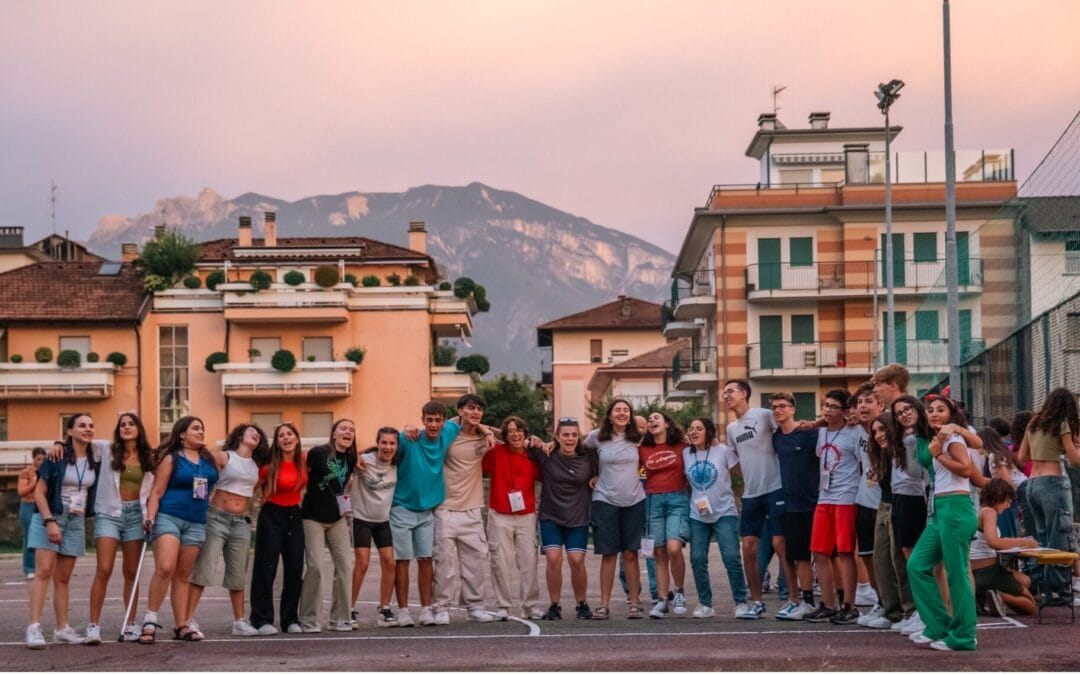
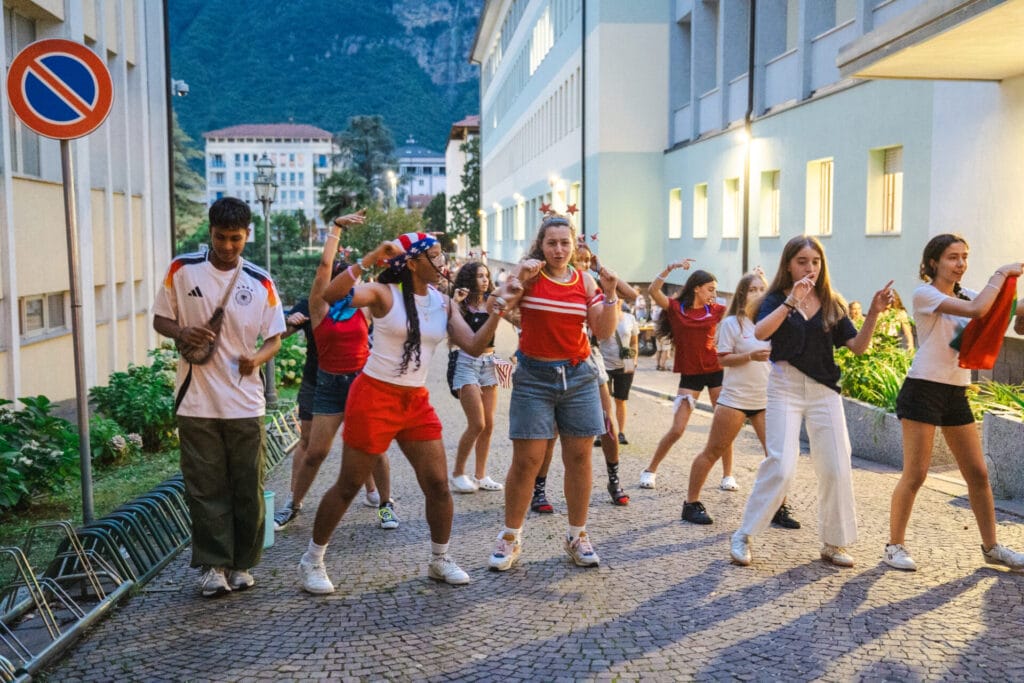
In early August in Trent, Italy, the Foco School, a Focolare Movement congress for the Gen3 boys and girls, the adolescent generation of the Movement, was held.
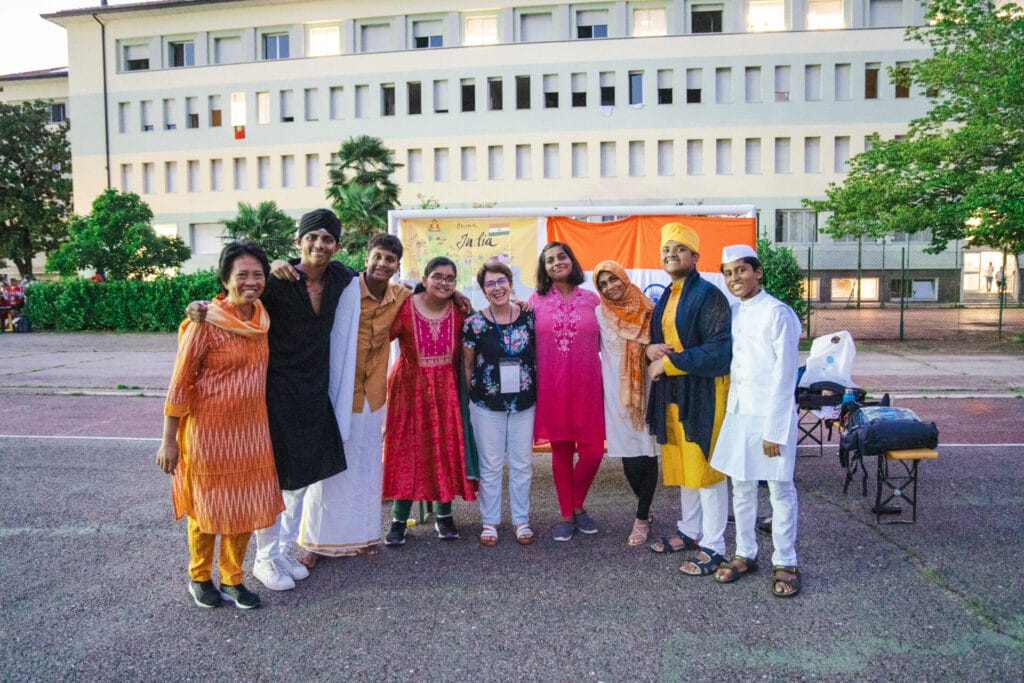
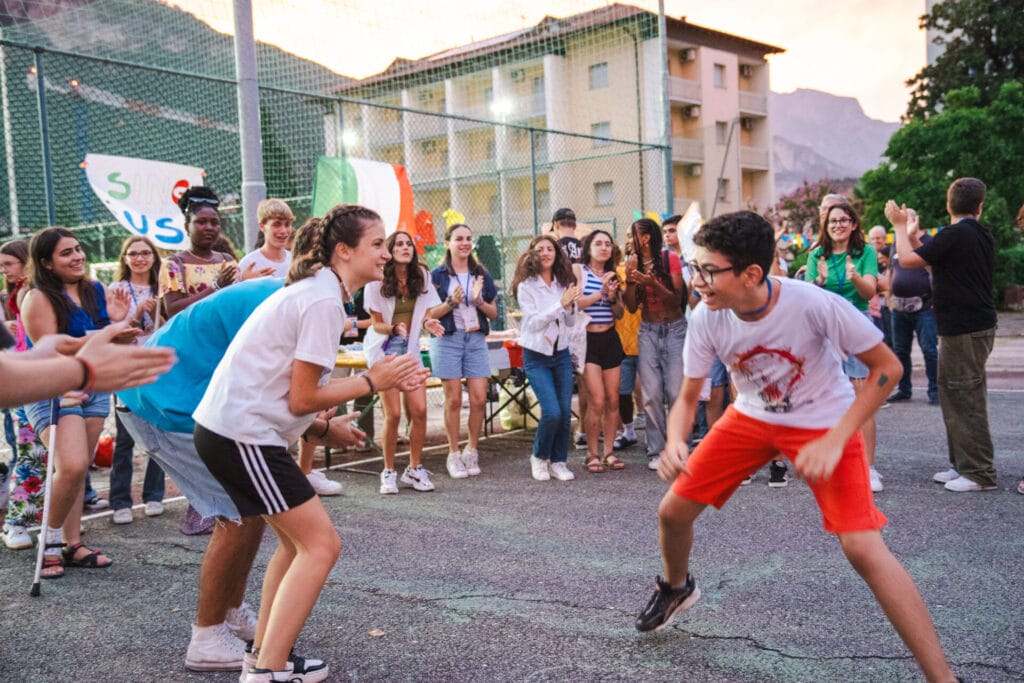
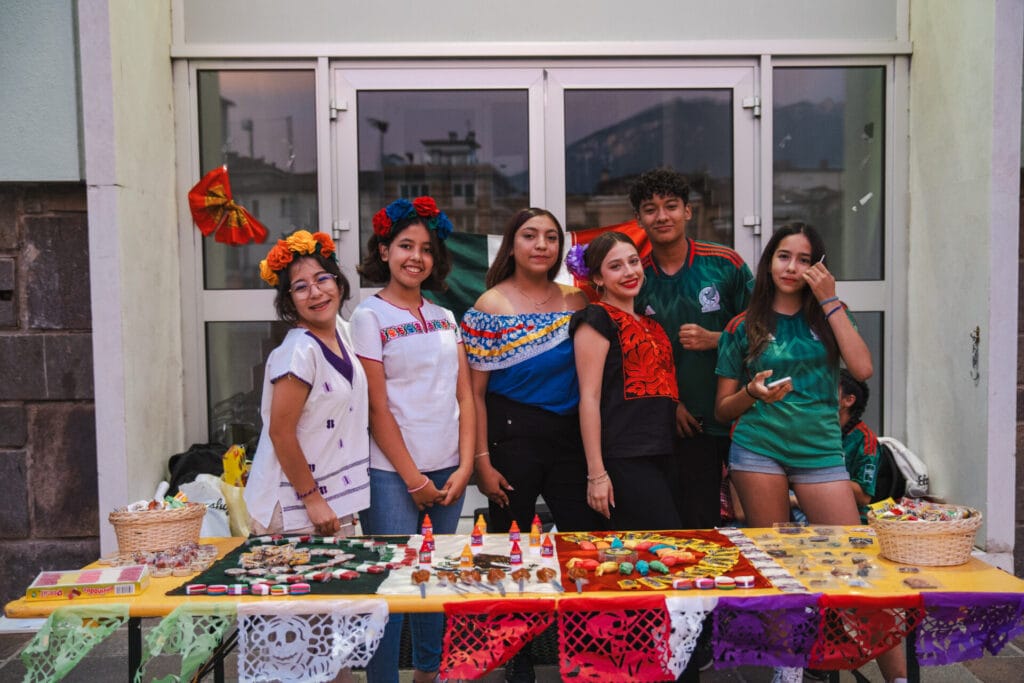
A total of 350 participants attended – ages 14 to 17 along with assistants ages 18 and older – from 19 nations with 12 different languages. A little over a week to deepen adolescent themes, experience in depth the relationship with God, discover how the Ideal of unity and universal fraternity is possible to live it and build it day by day despite the threat of wars in various parts of the world. There was also a Festival of peoples where each nation could represent itself through songs, dances, outfits, photos, and local food. A way to learn about each other’s culture and build a piece of a world that is more united and fraternal.
Here are some testimonies.
Sofia, Italy: “I decided to attend the Foco school to have a more intimate relationship with Jesus. From this school I learned the way to always love the people around me. I can better cope with moments of difficulty and pain by feeling closer to Jesus.”.
Veronika, Croatia: “I experienced a united spirit that flows from the desire for peace and community, which is based on prayer and dialogue with God. After listening to the testimonies about the violation of peace, about the struggle to keep peace in oneself, in one’s family, in one’s country, the desire to do everything to keep peace in these places was awakened in me.”.
Naomi, India: “I attended the Foco School to improve my relationship with God. At the end what I took home was how I can take comfort during times of difficulty or pain by thinking of Jesus forsaken on the Cross. But I also discovered the power of reconciliation through confession. I will always try to use my whole self to propagate the Gospel and make my city a place of love.”.
Tomás Portugal: “During the Festival of Peoples, I was proud to show our country and at the same time learn about the cultures of other countries. After this school, I miss everything I experienced there, but I also want to live what I learned there every day.”.
Emanuel, Croatia: “At Foco School, I enjoyed the Festival of Peoples. We were able to learn about different cultures and traditional dishes. I met many friends there and tried various specialties. I would gladly relive this experience 100 more times.”.
Gloria, Brazil: “I have felt changes in my relationship with God. At first I could not connect with Him and feel Him in people, but I know that after all the experiences I have heard and reflections I have experienced, I can easily feel Him in every situation. Also, I have learned to help people I don’t like, to help people with problems and to identify God in everyone.”.
Sarahi, Mexico: “I realized that even though we live in different countries and even on very distant continents, the Ideal of unity can always be lived. It was a very good experience especially to learn about other countries’ culture, food, their clothes, some words and traditions. What I took away from the school is that first of all I stopped being afraid of confession and this made my faith in God grow. Daily Mass has helped me a lot, I hope to continue going every Sunday of my own free will.”.
Sebastian, Croatia: “I liked it when we represented our countries at the Festival of Peoples: everyone showed some tradition of their country. It was a lot of fun when we played soccer in the evening and got to know each other like that. My favorite moment was the final party where we sang and had fun. My life changed after the school, now I try to live the gospel by loving the people around me.”.
Silvia, Italy: “After the school my life turned around and I began to see the world with different eyes. It was the most meaningful experience of my life and made me want to be able to resemble what Chiara Lubich always wanted from the Gen.”.
Anna, Italy: “I highly recommend Gen who have not yet attended a Foco School to do so! You will have a lot of fun, I can guarantee.”.
Jakov, Croatia: “At Foco School, I understood the importance of unity. When I arrived, everyone was welcoming, it felt like one family. Rarely have I experienced this feeling before, maybe never. Also, I understood how to love and want everyone, regardless of who they are and their background. I would like to experience more such encounters, it was an unforgettable experience.”!
Julia, Brazil: “I take home the immeasurable love of Jesus for me and for everyone, as well as the hope and the feeling of wanting a united world to become a reality. Seeing that Jesus loves each one of us and being able to feel his love at Foco School was one of the most beautiful experiences I have had and I will definitely take it with me. I found hope and faith again. Now the challenge will be to bring the love and unity I felt at school into the “real world,” at home, at school, with my friends. But it is the memories and the love of what I learned in that experience that will push me to not give up and to fight for a united world.”!
Maria Teresa, Italy: “I participated in the Foco School as I felt a desire to know more about the origins of the Focolare movement. From this School I take home the hope for a better future for our generation. My life has improved because I have realized that I have to look at it from a different perspective, make every obstacle a launching pad! Being very insecure, I am always afraid to play the violin in public. In fact, when I was proposed to play at the school I was a little unsettled. Then one day there was a talk about how each of us can give to others our own talent or quality, which Chiara Lubich calls a “pearl.” So I decided to give my pearl to others, and while I was playing with another Gen, a group of boys and girls came up to accompany us with singing, giving us support. I lived Luke’s Gospel passage (Luke 6:38) “Give and it will be given to you.”.
Elena, Italy: “At the end of this school, I take home what I understood during a day dedicated to Jesus in his pain, abandoned on the Cross. It also affected me deeply because, thanks to the testimonies of the Gen, I was able to understand how to overcome pain through love.”.
Tomás, Portugal: “I brought home the discovery of Jesus forsaken, the power of prayer, as well as confession. I will carry God’s love wherever I go, I have strengthened my faith, I have learned a lot from this school.”.