5 Feb 2024 | Non categorizzato
A webinar scheduled for Thursday 8th February, 2024, will offer insights and reflections on the Council of Nicaea and its still vibrant legacy for Christians today. In 2025, 1700 years will have passed since the first Ecumenical Council of Nicea (325 AD): a unique example of how people from different cultures were able to make shared decisions in difficult times. It was there that the foundations of Christian belief were laid: a precious heritage, to which the life and faith of the Churches have given witness over the centuries, influencing the path of human civilization. At Nicaea the method of calculating the date of Christian Easter was also decided: the Sunday following the first full moon after the beginning of spring. Later, the use of different calendars led to Easter being celebrated on different days in the East and West, so that only occasionally the date coincides (for example this year 2024 there are 15 days of difference). In 2025, all Churches will celebrate Easter on the same date. But today this anniversary assumes broader significance. We live in an age of conflict and distress. A time that needs new hope. A time that must rediscover the prophecy of a culture of Resurrection. On Thursday, 8th February, 2024, a webinar entitled: “From Nicaea walking together towards unity. The beginning of a new beginning” will take place. The webinar aims to highlight how, for the Church, the Council of Nicaea was the powerful beginning of this common witness, like a new Pentecost that illuminates all aspects of life and empowers the pursuit of universal fraternity. It implicitly calls for all the Churches, in East and West, to make a further effort to agree on a common date of Easter, which would give rise to a new beginning of shared testimony before the world. Offering a shared witness to the unity and mutual recognition of distinct and rich traditions of the one faith, would be a decisive contribution to the arduous and intense search for peace and to the challenging reconciliation between a happy global coexistence of humanity and the right to identity proper to each people. The webinar, prepared by scholars from different Churches, aims to disseminate, in a language accessible to all, the enormous legacy of the First Ecumenical Council of the Church: a legacy that, when embraced and lived out, has the strength to make a difference in the challenging times in which we live. The webinar opening will be opened by H.H. Ecumenical Patriarch Bartholomew, H.E. Cardinal Kurt Koch, President of the Dicastery for Christian Unity, Dr. Jerry Pillay, Secretary General of the World Council of Churches and Dr. Thomas Schirrmacher, Secretary General of the World Evangelical Alliance. There will then be inputs from representatives of various Churches. The webinar will take place from 13:30-16:30 CET. Simultaneous translation in Arabic, English, French, German, Italian and Spanish will be available. To receive the link, complete this form Download the full programme 20240208-WEBINAR-EN
25 Jan 2024 | Non categorizzato
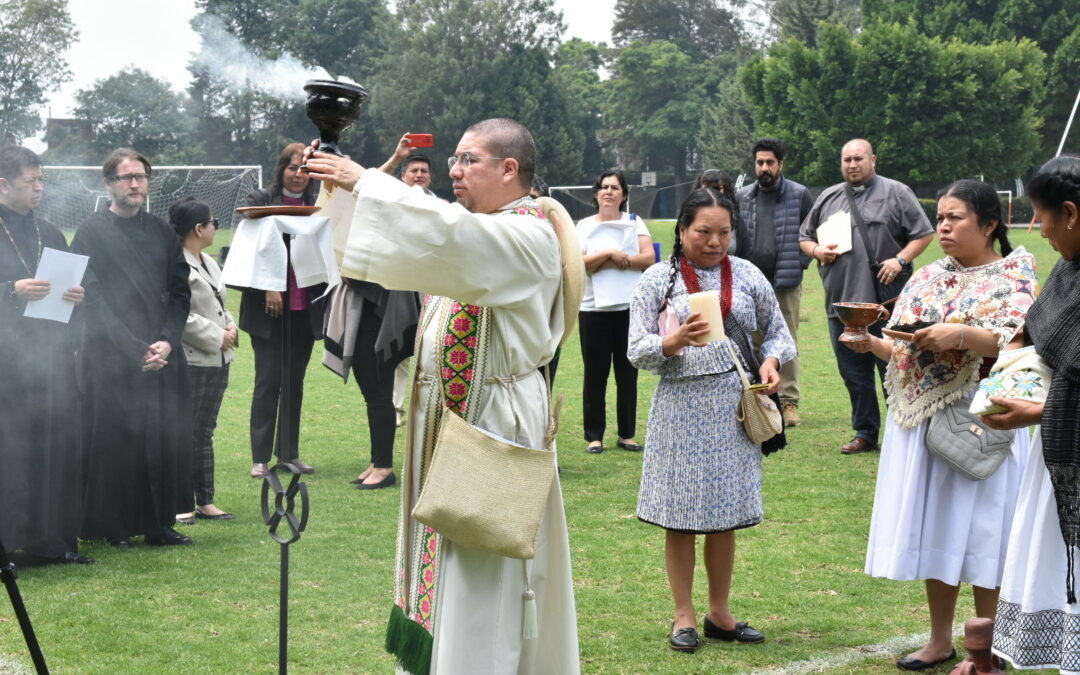
From Mexico City the story of a meeting between Christians of various Churches in which the local Focolare community also participated “Silence is essential in the journey of Christian unity. Indeed, it is fundamental to prayer, from which ecumenism begins and without which it is sterile.”[1] Pope Francis expressed himself in this way on September 30, 2023, in St. Peter’s Square, surrounded by Christian brothers and sisters of various denominations who had come for the ecumenical vigil that preceded the Synod. And this is the spirit that also animates the Week of Prayer for Christian Unity from January 18-25, 2024, celebrated around the world, invoking unity among all Churches and ecclesial communities. But unity is not to be sought only this week; it is a commitment to be lived throughout the year. 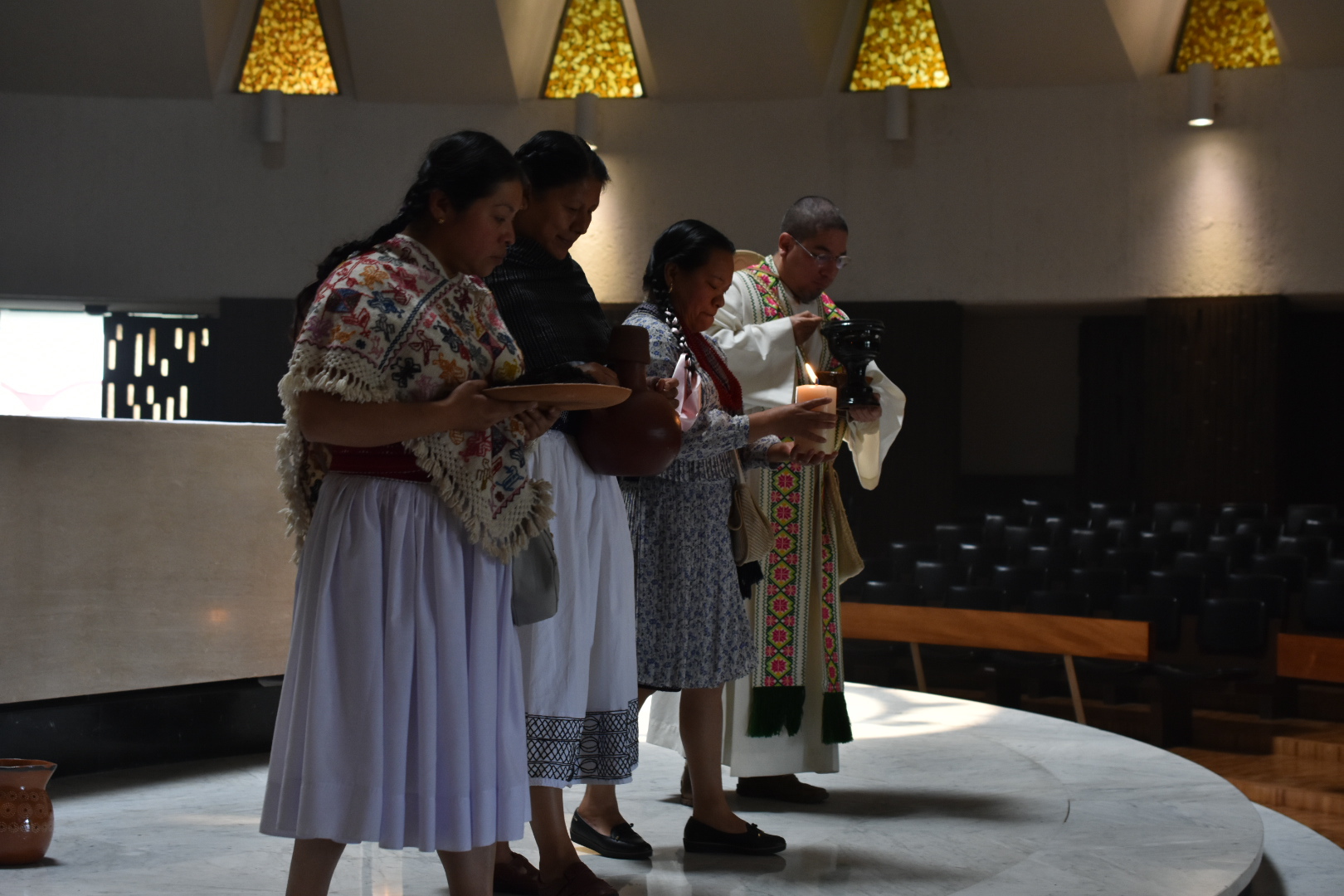 This is well known by the friends of the Focolare Movement community in Mexico City who, a few months ago, organized a day of dialogue among Christians of various Churches linked to the World Day of Prayer for the Care of Creation in collaboration with the Integral Ecology Commission of the Archdiocese of Mexico City. After an initial time of prayer in the beautiful chapel of the Archdiocesan Minor Seminary, participants went on an ecological walk led by some women from different indigenous communities. Indeed, these communities have a deep relationship with Creation, which they manifest with symbols, songs and prayers in their languages. Particularly, it became evident how water is an essential element for the life of all living beings without distinction. And the symbol of flowing water – an ecological, life-giving and synodal image – was echoed when, thirsty after the walk, the leaders of the Churches present – Anglican bishops of Mexico and priests of the Orthodox Church of America – took earthenware jugs to serve drinks to each of those present, also in small earthenware cups.
 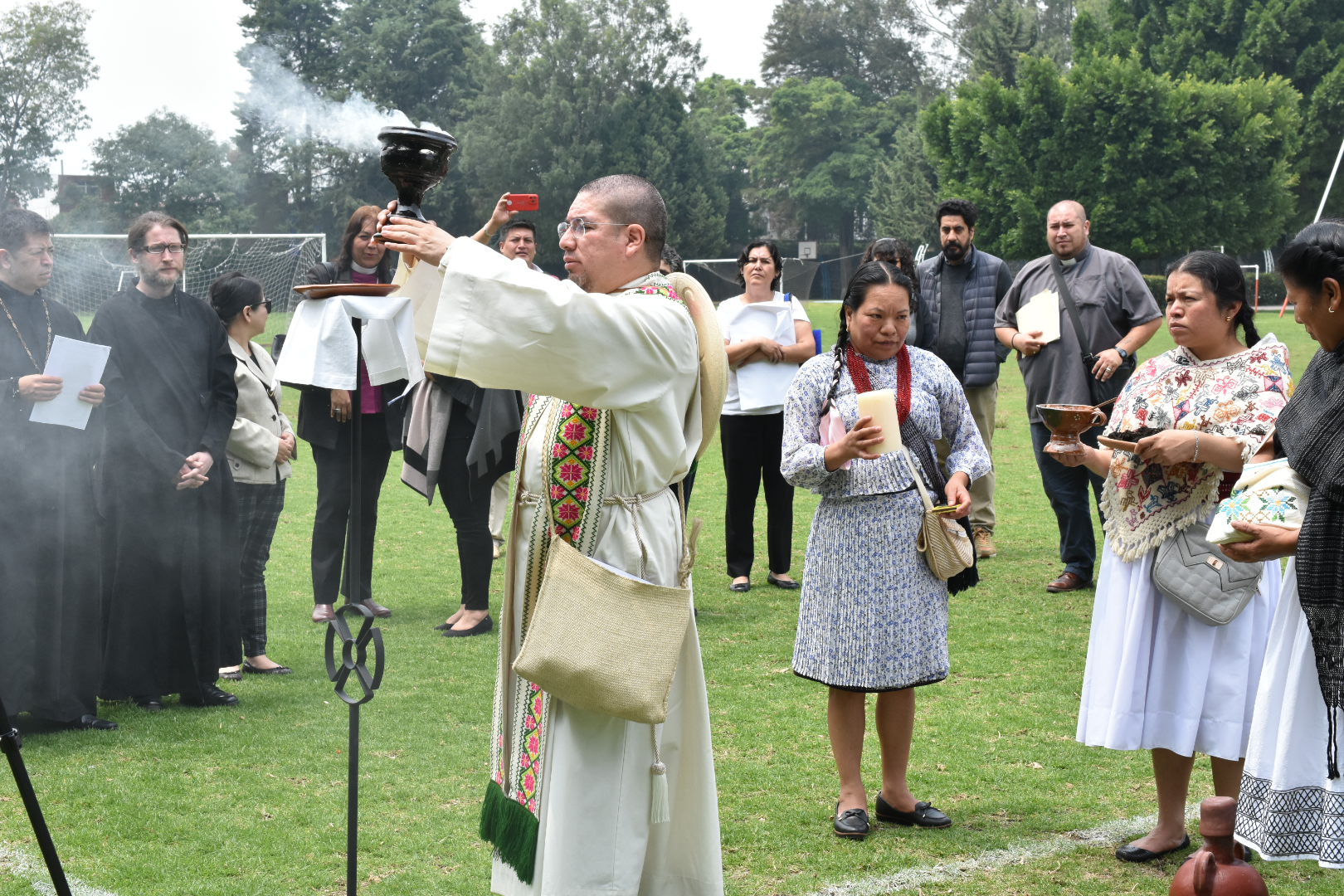 The concluding fraternal agape was a time of exchange and closeness, sharing of dreams and possible future plans. Among those present were the Anglican Primate of Mexico, the Catholic Bishop of Mexico City, an Anglican deaconess, some members of the Antiochian Orthodox Church, Catholic priests from the diocesan offices for Ecumenism, Youth Ministry and Care of Creation a group from the Community of Sant’Egidio, some members of the Commission for Integral Development of the Catholic Bishops’ Conference of Mexico, the Mexican Institute of Social Doctrine, and the Pastoral Care of Indigenous People. It was a moment of great unity in which everyone could see that it is worthwhile to spare no effort to help generate a dialogue of life in Mexico and everywhere.
Lorenzo Russo
[1] Pope Francis, Ecumenical Vigil for Peace, St. Peter’s Square, Sept. 30, 2023. https://www.vatican.va/content/francesco/it/homilies/2023/documents/20230930-vegliaecumenica.html
29 Dec 2023 | Non categorizzato
Following Pope Francis’ Encyclicals on care of our common home, Laudato Sì and Laudate Deum, a community in in Formia (Italy), has promoting greater energy efficiency and developed renewable forms of energy. “In some places, cooperatives are being developed to exploit renewable sources of energy which ensure local self-sufficiency and even the sale of surplus energy. This simple example shows that, while the existing world order proves powerless to assume its responsibilities, local individuals and groups can make a real difference.” (179). These are the words of Pope Francis in the encyclical Laudato Sì on caring for our common home, published in 2015. After the publication of this letter and in the light of the new apostolic exhortation Laudate Deum (4th October 2023), many communities around the world felt inspired to do something concrete for the care of the environment, to change their lifestyles and to take action against climate change. The Focolare community in Formia felt this responsibility and decided to instigate a positive change in the care of people and of the environment. At the beginning of 2023, after a short organisational process, with a varied group of entities, they started a Renewable Energy Community around a Parish in their Municipality. The purpose was to produce, consume, sell and share electricity. Their inspiration was the desire to implement what Pope Francis proposed in Laudato Sì. Referring to local communities, the Pope affirmed that they can make a real difference, “as they are able to instil, a greater sense of responsibility, a strong sense of community, a readiness to protect others, a spirit of creativity and a deep love for the land. They are also concerned about what they will eventually leave to their children and grandchildren” (179). Hence the idea of developing renewable and low-polluting forms of energy by promoting greater energy efficiency. And even more: on one hand there is a desire to give more attention to solving the environmental crisis while on the other, an effort is being made to address the difficulties that some citizens have in paying energy bills. The energy community involves a variety of partners: from the parish to families, from educational institutions to commercial activities. Bringing different entities together risks the occurrence of misunderstandings or different visions. This is why, from the outset, efforts were made to involve everyone and explain the objectives of the project so that everyone was aware of the path to be followed. For this reason there have been several meetings to understand the motivations, overcome doubts and difficulties. The local community then participated in a public tender for funds. The subsidies were specifically intended for Renewable Energy Communities. The contributions they received allowed them to launch the project.
Lorenzo Russo
20 Dec 2023 | Non categorizzato
An afternoon of hope and joy with the boys of the juvenile detention centre in Rome (Italy) Casal del Marmo, northwest suburb of Rome, Italy. The district is famous for the presence of a juvenile detention centre that houses boys from various parts of Italy, many of whom are foreigners. On the occasion of the Street Mission “Live for something great”, organized by several Associations and Communities including the Focolare Movement, Gen Rosso visited the institute to find about forty boys waiting for them. However, the first unexpected reaction was quite cold. Most of them speak Arabic. But Lito, a young friend of Gen Rosso, an excellent DJ, is Egyptian and speaks their language. He began to translate. They didn’t expect this. The atmosphere began to thaw with the help of the music. Time flew: rhythm, songs, applause and deep reflection. Tearful eyes, sincere smiles. The simplicity of a different kind of afternoon within those walls. Gen Rosso managed to convey a message of hope, also drawing on some interventions by Pope Francis. “Even if you make mistakes, you can always get up and start over, for no one has the right to rob you of hope”. These are the words of the Pope when in 2019 he met young people on his apostolic journey to Bulgaria and North Macedonia. He began by saying, “Dreams help us to keep alive the certainty of knowing that another world is possible (…). The most beautiful dreams can be achieved with hope, patience and commitment…” These words resonated in the juvenile institution. Then came the time to dream with open eyes. Helanio took over. He took the microphone: “We know that some of you sing…” Three young rappers jumped up. They spoke briefly to Ygor on percussion and Juan Francisco on guitar and a beat began, an improvised rhythm. The three boys, then became four and alternated with improvised verses in Arabic, French, Italian and again in Arabic. The audience went wild and clapped their hands to the beat. Then together, Gen Rosso and the rappers for the grand finale. Everyone was involved: prison guards, detainees, management. The visitors who organized the initiative also joined in the dancing: New Horizons, Focolare, Emmanuel Community, Fazenda de Esperanza Community, Shalom, Casa Do Menor, Belem Mission, the Easter Morning Sentinels, Lumen Community, Anspaz Community, in synergy with the Diocese of Rome. Hope exists and so do the talents of these young people. Dr. Maria Vittoria Menenti, Director of the Institute took the mike and thanked the youth of the juvenile institution and Gen Rosso, with the hope that such an event can happen again. The time flew. We had to leave. Farewells with handshakes, hugs, pats on the back, big smiles. Come back soon! Leaving, many were thinking of Gospel phrase, “Where two or three are gathered in my name, I will be among them” (Mt. 18:20) – when you try to love each other, the presence of God makes wonderful things happen. Even more so when you experience it in a place like this, full of suffering, anger, despair, but also and above all hope. The boys went back to their cells. Gen Rosso began a new journey. Everyone carried something profound with them: all strongly recharged by the same inexhaustible source of joy and hope.
Lorenzo Russo
4 Dec 2023 | Non categorizzato
The worldwide action “They Dislodged Jesus” to remember the true meaning of Christmas. Azur Company’s Christmas novelties: puzzles that tell the story of Jesus’ birth and the joy at Christmas for children around the world. Christmas is approaching, and as always, the Gen4 — Focolare boys and girls ages four to ten — are in the forefront of reminding everyone of the true meaning of this celebration, bringing Jesus back to the center of Christmas. In all communities around the world, the production of the small statues of Baby Jesus has begun, which, close to Christmas, the Gen4 will offer in the streets, squares, shopping centers to remind everyone of the birth of Jesus, the “birthday boy”! Any donations received will go to help many children in countries forgotten by the media, but facing serious difficulties, such as the humanitarian crisis in Venezuela or for places where children suffer from ongoing wars or other needs also identified locally. This action, entitled “They Dislodged Jesus,” was born in 1997 and has a very precise meaning: not to be conditioned by consumerism, but to bring back to the center of Christmas the positive values, of peace, solidarity, universal fraternity. The idea had stemmed from a reflection by Chiara Lubich who was in Switzerland in the run-up to Christmas. Walking through the brightly-lit streets of a large city, she had been struck by the lights, the pretty decorations, the lots of richness, but most of all by the absence of reference to the primary meaning of Christmas. And so she wrote: “This rich world has ‘grabbed’ Christmas and all its entailments, and has dislodged Jesus! (…) It is banking on Christmas for the best profit of the year. But it doesn’t think about Jesus.” So, since 1997, thousands of Gen4 around the world have accepted Chiara Lubich’s invitation to bring Jesus back to the center of Christmas. This year’s event has the theme “Let’s bring the joy of Jesus to everyone!”:. And alongside this annual custom, the Gen4 International Center in collaboration with the Azur company produced two Christmas items to bring a message of beauty and peace. These are two puzzles: “the Christmas of the Children of the World” and “the beautiful story of Christmas.” The first is the classic puzzle to be put together, consisting of 96 tiles. The second, on the other hand, consists of six puzzle cards, six drawings that tell the story of Jesus’ birth from the arrival in Bethlehem to the coming of the Magi. On the back you can write Christmas greetings, then you can unravel the puzzle and put it in the enclosed envelope and give it as a gift. But the six puzzles can also be used to retell and relive this beautiful story with the little ones, aided also by a leaflet with the text of the story. The puzzles bear the title in 5 languages (Italian, English, Spanish, French, Portuguese (Brazilian)). If you need any info on the action They dislodged Jesus you can contact the Gen4 Center, while for the two puzzles you can visit the Azur site.
Lorenzo Russo
