26 Jul 2023 | Non categorizzato
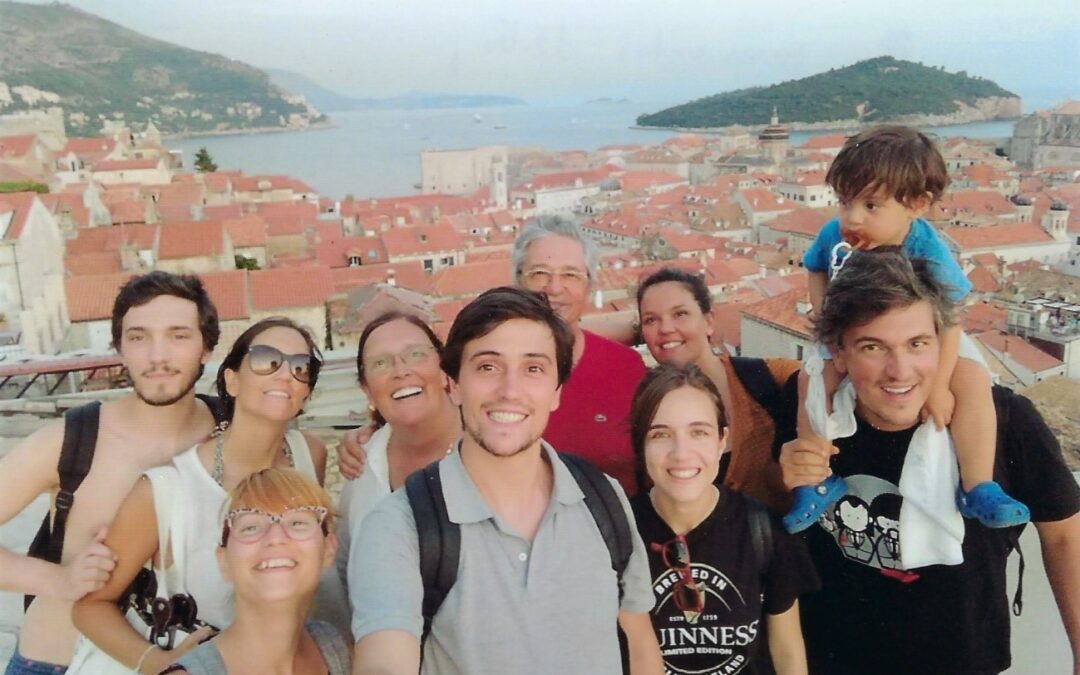
The 37th World Youth Day (WYD), which will be held from 31st July to 6th August 2023 in Lisbon (Portugal), is upon us and many young people are preparing to experience this global event with the Pope. Various initiatives have been organized and for months now, many people have been working with dedication on this moment of true family for the Church. Everything is ready. The sun is high on the seven hills of Lisbon (Portugal) and the ocean breeze brings with it an air of novelty and anticipation: the WYD is upon us and young people from all over the world are arriving. After months of preparation and having visited various stops throughout the country, last weekend the symbols of the Day, the Pilgrim’s Cross and the Icon of Our Lady “Salus Popoli Romani”, finally reached Lisbon and we are now ready to welcome the first young people arriving for the “Days in the Dioceses” which will take place from 26th-31st July 2023 in the 17 dioceses of mainland Portugal and the islands. A way to prepare pilgrims and host communities to get into the event and live it to the full. Father José Cardoso de Almeida, parish priest of Sátão, in the diocese of Viseu, a priest volunteer of the Focolare Movement told us, “When we were told that WYD would be held in Lisbon, we welcomed the news with immense joy. I am sure that it will be an occasion of grace for each of the participants, as well as for our country. In my case, I feel I have to be open to the surprises that the Spirit wants to communicate”. 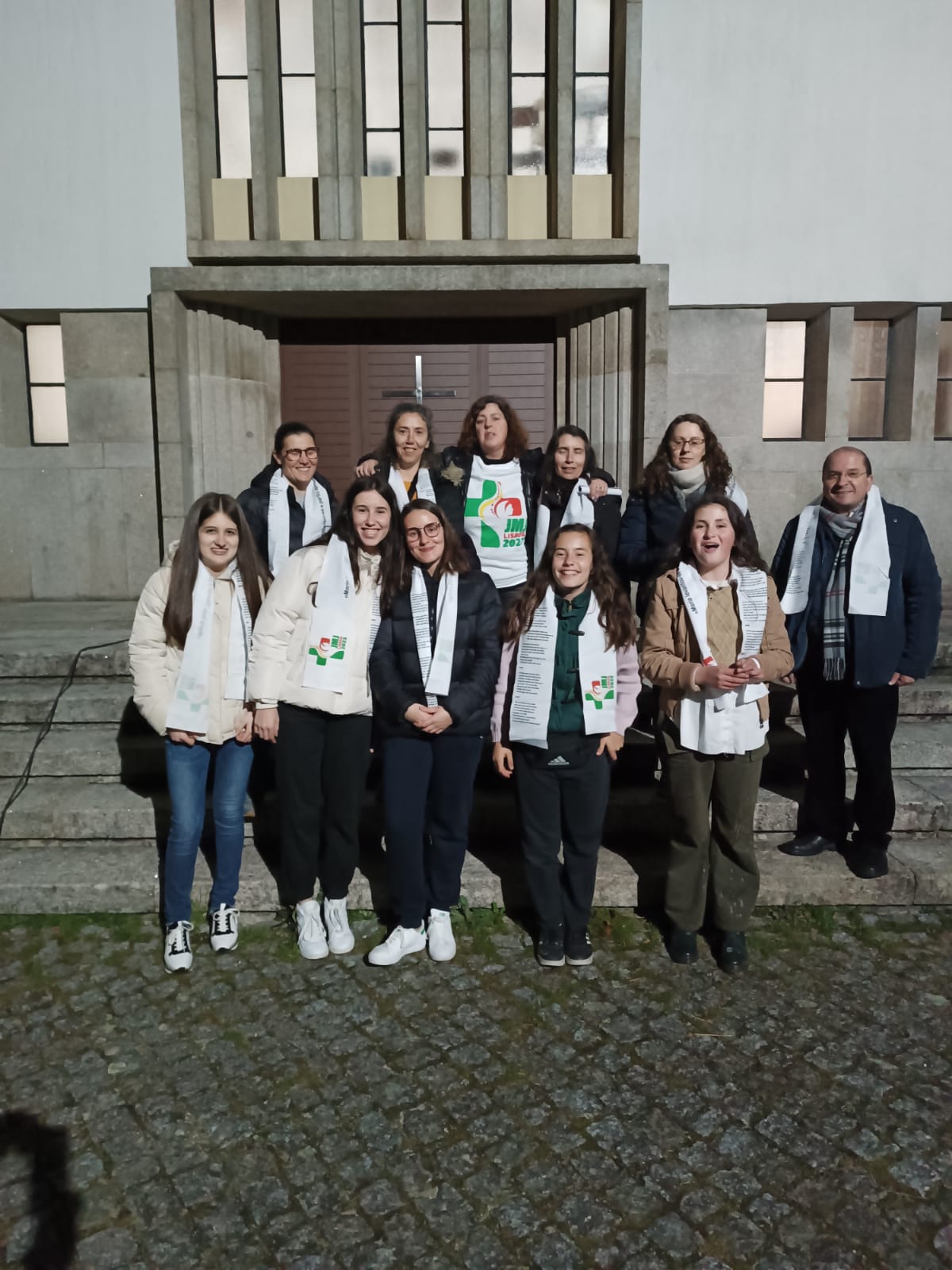 Fr. José has experienced the anticipation and enthusiasm of several WYDs first-hand. Like many other people, he immediately felt the call to get involved in organizing this Event which was taking place in his own “backyard”, by motivating young people and welcoming those who would come from various parts of the world: “This last year has been full of meetings. A lot of activities were organized to help cover the expenses of those who had greater economic challenges to get here. As a ‘little builder’ of this WYD, together with many others, I encouraged some families to open their doors to young people from other countries for the ‘Days in the Dioceses’. In our area, we will welcome about 3,000 young people, mostly French. Then we will leave for Lisbon and I will lend a hand for the sacrament of Reconciliation, during the event.” It has been a concrete experience that shows how serving others generated countless fruits in the various communities. As Fr. José said, “For example, the discovery of the beauty of working together. I think that today’s young people need to discover that the secret of happiness lies in true love, and as Pope Francis says, in the experience of “going out of oneself” and “being with and for others.” This is true unity. ” And it is in this “going out” that we find the image of the Virgin Mary, ready to “get up and go with haste”, as the motto of this WYD announces, on the way to visit Elizabeth. Ana and José Maria Raposo told us that this is an “invitation to encounter the living Jesus in the family, at work, in social and political life”. They are from the parish of Nossa Senhora da Conceição dos Olivais Sul in Lisbon and are members of the Volunteers of God of the Focolare Movement. Ana and José have been married for 45 years, have five children and four grandchildren and are one of the many Portuguese families who will host the young people who will take part in the WYD in their own homes.
 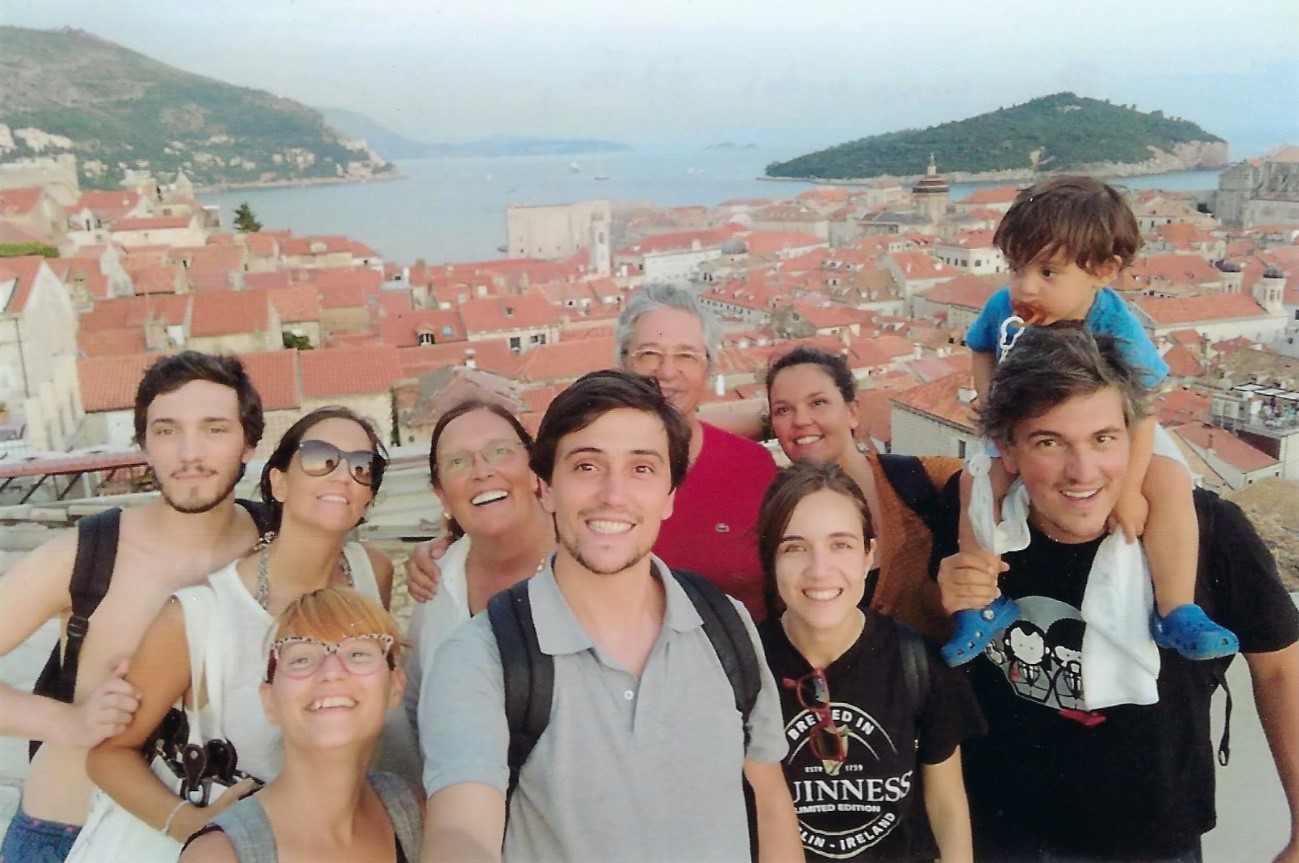 They told us, “For young people, like Mary, to live their vocation, it is necessary to believe in them and let them lead, without forgetting the importance of inter-generationality. It is necessary to believe that the world today is already changed if hearts are changed, if the mind is free, if one leaves one’s comfort zone, if one looks around and sees Jesus in everyone; we have to believe that a united world is possible”. QQ An experience that looks at this fragile time, looks at the other and is strengthened thanks also to the concrete witness of those who, believing in love, want to put it at the service in the “welcome” that, as Ana and José say, “means to be a family for those who arrive. It was spontaneous for us to immediately join in welcoming the young pilgrims who will participate in the WYD. We have always welcomed people who needed help because they were passing through or traveling. The last few months gave us an opportunity to review things and reorganize the spaces so that the young people who arrive really feel at home.” World Youth Day continues to prove to be, even today, a great event of the Church that, around the Pope and young people from all over the world, becomes “Community”. And to be, as Father José Cardoso de Almeida stated, “a workshop of the Kingdom of God and the image of that universal fraternity that derives from the Gospel”.
Maria Grazia Berretta
25 Jul 2023 | Non categorizzato
The Word of life for this month is, “Whoever gives even a cup of cold water to one of these little ones in the name of a disciple, truly I tell you: none of these will lose their reward” (Mt 10:42). This is the mission to which each of us, just like the disciples, is called: to be credible witnesses of the Love of Christ, in the concrete gestures that are part of our daily lives; a circular Love, which you give with joy and are surprised when it returns abundantly. New Car Accident When I returned to the car park, I found that the new car that my father had lent me was scratched. What could I do? I felt bad because he would be upset and I started to think about how much it would cost to have it repaired. Then I noticed a small magnet on the dashboard holding this writing: “…cast all your worries onto Him because He cares for you”. I tried to do that. And I felt a sense of peace which is what I needed in order to try to figure out what to do. I was absorbed in these thoughts when there was a knock on the window. A lady wanted to talk to me. She was the one who had scraped the car and had left hoping to get away with it, but remorse made her come back. She gave me her phone number and agreed to look after the cost of getting the car repaired. I was amazed and grateful. I told her how I had found peace reading that sentence on the dashboard. And she thoughtfully replied, “It was Him who brought me back.” (Z.X. – Croatia) The right place When I was transferred to the Intensive Care Unit, I realized that my medical competence would be put to the test there and at the same time I felt that that was “my” place. Up until then, I had not had the opportunity to work in such a department where every day, suffering appeared in the most tragic forms: people who had serious accidents, neurological problems… and they were often young people. I wasn’t sure I was up to it. However, the idea of putting myself at the service of Jesus who was present and identified with all those people gave me strength. He said “You did it to me”. After six months, the hospital management offered me the position of head of the department. The reasons for their choice included: my ability to integrate with colleagues, my attitude of calm and peace, and my professional behaviour. The next day in the chapel, I thanked Jesus: it was his words that made me be what others needed above all there, in that place. (J.M. – Spain)
The exam I was preparing for an important exam at university when a friend who was going through a difficult time with his girlfriend came to visit me. I welcomed him and while I was preparing a meal for him, we started talking. The thought of the exam was really on my mind but I tried to set it aside to concentrate on listening to my friend, who was so upset and sad that he did not realize that time was passing and it was time to go to bed. In the end, I offered him a bed for the night. It was really late and I couldn’t even think of opening a book. The next morning the alarm woke me up and a colleague reminded me that I had to turn up for the exam. Still half asleep, I quickly got ready to go out, while my friend continued to sleep. I never dreamt I would pass that exam! I was very happy. When I went back to my room, there was a note on the table: «I don’t know how to thank you. You showed me that I mean something. You gave me new strength. Like you, I want to be “completely there for others.” (G.F. – Poland)
Curated by Maria Grazia Berretta
(taken from The Gospel of the Day, New Town, year IX – n.1° July-August 2023)
13 Jul 2023 | Non categorizzato
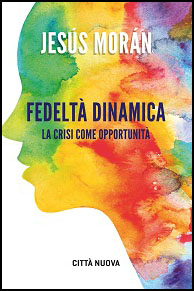
An interview with the author on his latest literary work – a book designed to give hope, to keep faith in the charism of unity. Some questions to the co-president of the Focolare Movement on his latest book, published by Citta Nuova, entitled ‘Dynamic Fidelity’. Jesús, let’s start with the title ‘Dynamic Fidelity’. I wanted to use the expression that Pope Francis used when he addressed participants at the Focolare Assembly in 2021. There he spoke of dynamic fidelity. In my opinion it is a very close thought to the concept of creative fidelity, with the advantage that ‘dynamic’ refers to the Greek concept dynamis, which means ‘force of movement’. Therefore, dynamic fidelity is fidelity in motion, which is not static, and this is very dear to Pope Francis. When he spoke to us on other occasions he emphasised that movements must be precisely ‘movement’. So it seemed to me that this title was closer to the reality that we are living today…. The book is divided into chapters. The first is ‘Taking the pulse of the times’. What perspectives does Chiara Lubich’s charism of unity have for today? How can we update the identity and history of the charism? 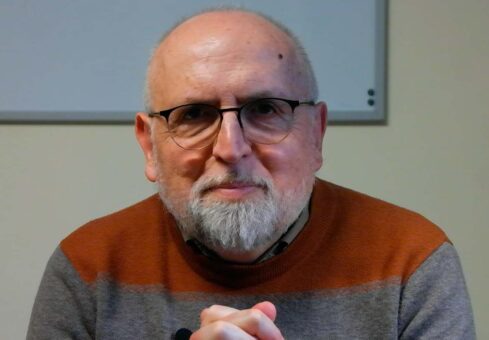 It seems to me that Chiara Lubich’s charism of unity is always topical. Regarding synodality, Pope Francis is insisting that we rediscover how we are the people of God on a journey, where we all play a lead role. Synod means ‘walking together’. He wants a Church where everyone gives their best as an integral part of the people of God, the body of Christ. Here, I think Chiara Lubich’s charism of unity can bring a lot in this sense, with her spirituality of communion, the spirituality of unity. On the other hand, today there are so many conflicts, wars, massive polarisation everywhere – in the political, moral, social spheres – and perhaps like never before we are witnessing almost irreconcilable contrasts. I believe that here too the charism of unity can contribute a great deal with the dialogue it weaves. So today the charism of unity must be modernised, rediscover its true identity, going back to the essentials, to the founding core of the charism. This modernisation requires implementing two moments, not in a chronological sense, but in a profound sense. On the one hand is listening to the signs of the times, the questions of the world, of contemporary society. On the other, going deep, fishing out all those resources that the charism has, some of which have not even been expressed. I really like this concept of expressing the unexpressed that is within us. This is how identity is updated in a dynamic fidelity. Together with the process of purifying our memory that we are going through in this post-foundational phase, I think we are ready to take this step. Modernising a charism is achieved with everyone’s contribution and a change of mentality and mindset. Besides invoking the help of the Holy Spirit, what can we do to implement this? Without a doubt, the help of the Holy Spirit is fundamental because we are in the context of a work of God. But to modernise the charism requires intelligence – not in the academic sense, but more in the sense of wisdom. It takes talent and skill to listen to the cry of humanity. What is said in the document of the General Assembly of 2021 is important: today the demands of humanity that we must listen to are the cries of Jesus Forsaken. So in addition to the Holy Spirit, we need the intelligence of the charism and the wisdom that comes from life. This is not a desk exercise, an academic exercise. One can grasp the cry of the forsaken Jesus when one is in contact with the suffering of our contemporaries. What is the ‘theology of the ideal of unity’? Why is it important for fidelity to the charism? Chiara Lubich herself said that theology would be important for the future of the Focolare Movement and the charism. This means deepening the charism of unity in the light of revelation, from where it sprang, and of theological research. It is an exercise in the intelligence of the charism that is fundamental, otherwise it is not incarnated and above all it is not universalised. Without a theology of the ideal, the charism remains within the Movement. With a theology of the ideal of unity, the charism can also go outside, as well as finding a solid foundation. The theology of the Ideal of unity helps to understand it well so that it can be passed on to future generations. Life and witness always go first, but this work is also decisive. The theology of the ideal of unity prevents possible deviations. The original kerygma, encapsulated in the Gospels, needed the arduous work of the Church Fathers, great theologians, to be saved in its integrity. Doesn’t modernisation risk causing the charism to lose its identity? Quite the contrary. It is precisely not modernising that makes the charism lose its identity, because the identity of a charism is always dynamic and creative. It is always about being the same without ever being the same. This is what I have tried to express. Being static makes a charism lose its identity because it makes it lose its connection with reality. For me this is very clear: constant updating is needed for the charism to maintain its identity. And Chiara did this throughout her life. The second chapter, ‘The house of self-knowledge’, takes its cue from a letter by Catherine of Siena. Here we discover our limitations, failures, self-consciousness, the face of Jesus Forsaken. What can we do to pass the ‘test of self-knowledge’? The second chapter is fundamental in this phase we are living through, in which we have had to come to terms with our faults, our errors in incarnating the charism. What can we do to pass the test? We must live it to the full, because it is a matter of recognising that we are not up to the charism. None of us are up to the charism. This does not give rise to a sense of dismay, but rather a new trust in God, in the Holy Spirit, the author of the charism. So the test of self-knowledge is overcome by accepting the humiliation of not being up to it and placing all our trust in God. The third chapter is ‘Discernment in the light of the charism of unity’. The pope asks us to become artisans of community discernment. How should we proceed? And above all, is Chiara Lubich’s charism of unity a charism in discernment? For Pope Francis, discernment and synodality go hand in hand, both individual and communal. It is a very delicate process, because it requires intelligence, but above all listening to the Holy Spirit. Discernment asks everything of us and everything of God. And this is not simple; it is not an exercise in consensus. It is going deep in seeking God’s will at all times. I believe that the typical dynamism of the charism of unity, which we call Jesus in the midst, that is to merit the presence of Jesus among us, is an exercise in discernment. Chiara Lubich explained it quite well: to merit this presence it takes complete detachment from ourselves, listening to the Holy Spirit. It takes mutual love. Chiara herself developed the idea of trinitarian relationships, which transform community discernment into ‘trinitarian discernment’. When we aim to have Jesus in our midst, we have a trinitarian experience, with all the weaknesses, the frailties of our humanity, physicality, psychology. But we do it, and that is where discernment happens. We can read this practice of trinitarian relationships in the light of Pope Francis’ great idea of discernment and synodality. In the book you talk about two deviations: ‘the seizure of the One’ and ‘the dissolution of the One’. What are they and how can we avoid them? These temptations are really two deviations from the spirituality of unity. In the first it happens that someone takes over the mission of the community and even the mission of each person. There is someone who centralises everything, who without realising it takes the place of the Holy Spirit in the dynamic of unity. In this case the ‘we’ is seized, which is necessary for each one to flourish and make their contribution. This is where abuses of authority, abuses of conscience, and spiritual abuses occur, and it is therefore a strong risk. In the dissolution of the One the opposite happens; the spirit of communion is lost. An exaggerated individualism prevails. If someone takes over the ‘we’ beforehand, it disappears and everyone’s individualism takes over. Community life becomes an organisation where everyone seeks their own space, their own personal fulfilment. Here too the Holy Spirit, who is the dynamism of Christian life, disappears. How to avoid these? We need a moment of self-awareness: understand the mistakes made. At the same time, we need to return to living the Gospel and an authentic life of unity. Above all, I think with humility, the ability to decentralise, love for each other, and continually thinking that the person is an absolute that cannot be annulled in any way. So I think the solution is more love, truth, transparency and concrete giving of ourselves in the life of unity, the life of communion. Unity is a gift of the spirit – no one can seize it with their power or dissolve it with their individualism. Unity is an experience of God that takes all of us. Let us realise this. Finally, what can we do to ensure that all these topics in the book do not remain the best of intentions? I think it would be useful to talk about it in the community, have moments when we read certain passages, retreats, and examine our lives in the light of these suggestions. The book is meant to give hope, to keep faith intact in the charism of unity, and if it has been lost, to recover it. I hope that by sharing experiences we can restore authentic life there where it no longer exists, because in so many places life flourishes, it generates, and there are so many beautiful things.
Lorenzo Russo
12 Jul 2023 | Non categorizzato
A theological seminar on the theme “Participate/Preside/Decide – sacramental root and communal dynamic in the journey of the people of God on mission” was held on Saturday 24th June 2023 in Loppiano (Incisa Valdarno, Florence, Italy). Over thirty academics responded to the invitation of the Evangelii Gaudium Centre (CEG) of the Sophia University Institute, to develop a proposal to revise canon law in order to rebalance, as urged by the working document (Instrumentum laboris) of the XIV Assembly of the Synod of Bishops, the “relationship between the principle of authority, which is strongly affirmed in the current legislation, and the principle of participation”. Pope Francis assures us “not all discussions of doctrinal, moral or pastoral issues need to be settled by interventions of the magisterium” (Amoris Laetizia, no. 3). It is therefore crucial to listen to the sensus fidelium of the entire People of God (clergy and faithful) with all its variety of cultures. In this way, the dialogue between theology and law is motivated by a sincere process of inculturation without which there is a real risk of laying the foundations for a practical non-observance of the general principles enunciated by the Church. Prof. Vincenzo Di Pilato, academic coordinator of the CEG commented, “The point is precisely this: how to make the active participation of all the faithful within our synodal assemblies effective? Will it just be advisory? Or will it also be deliberative? Will this mean reaching a negotiation for a juridical “concession” or “recognizing” the decision-making capacity of the collective subject of ecclesial action as it emerges from the ecclesiology of Vatican II and the post-conciliar magisterium? And therefore, will it be necessary to update the Code of Canon Law?” 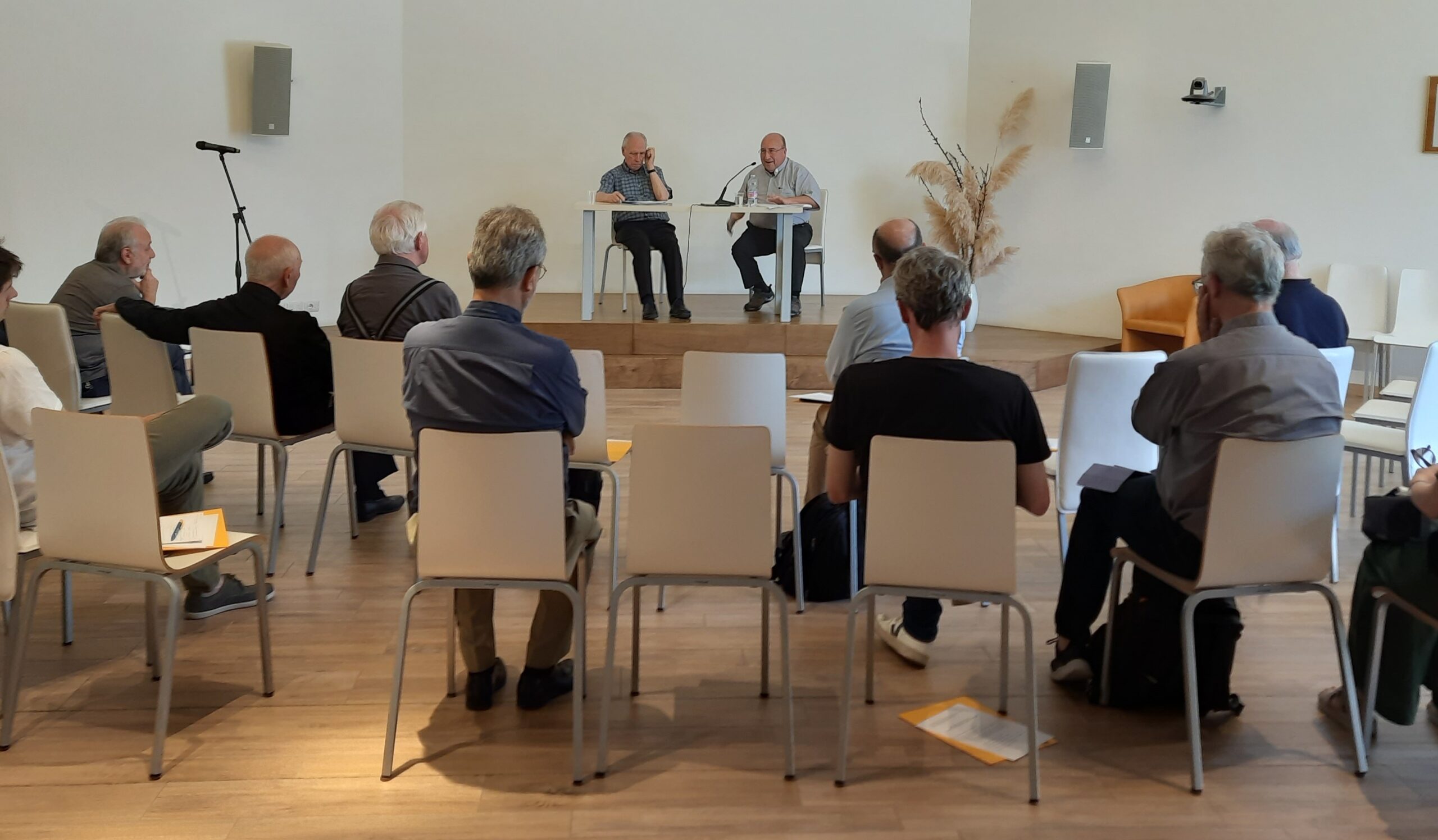 In his initial greeting to the participants, Card. Mario Grech, Secretary General of the Synod, highlighted how the synodal journey is entering a new phase: it is called to become a generative dynamic and not simply one of many events. We cannot listen to the Holy Spirit without listening to the holy people of God in that “reciprocity” that constitutes it as the “Body of Christ”. In this communal bond, the particular methodology of conversation in the Spirit, well described on the occasion of the presentation of the Instrumentum laboris, takes shape. Hence the need, referred to several times by Card. Grech, to better articulate the principle of restitution. In other words, this means that the unity of the synodal process is guaranteed by the fact that it returns to where it started, to the local Churches, and this is an important moment of the “recognition” of what has matured in listening to what the Spirit is saying to the Church today. The synodal journey seems to stand, therefore, as a significant moment in ecclesial life, capable of stimulating and activating the creative impetus and evangelical proclamation that comes from the rediscovery of the relationship with God that innervates the relationship between believers, and also as a sign for a cultural context in which it houses a silent cry of fraternity in the search for the common good. If in Prof. Severino Dianich’s report “The problems of synodality between ecclesiology and canon law” the recovery of the Pauline ecclesiology of the being-body of Christ and the enhancement of the dynamic co-essentiality of hierarchical and charismatic gifts emerged, for Prof. Alphonse Borras, this turning point requires a canonical clarification, which outlines a flexible procedural practice, capable of accompanying decision-making and participation processes through the various bodies already envisaged (episcopal council, presbytery, diocesan and parish pastoral programmes …). Cardinal Francesco Coccopalmerio, former president of the Pontifical Council for Legislative Texts, seemed to agree with this line in his speech, “Ecclesial Synodality: is a rapid transition from the consultative to the deliberative conceivable?”. In his opinion it is possible to find in canon law a clear definition of synodality, understood as “communion of clergy and faithful in carrying out the activity of recognizing what is the good of the Church and in the ability to decide how to implement such an identified good”. At the end of the seminar, many participants expressed the wish to see the speeches of the seminar published. The CEG is working to do this by September as a further contribution to the upcoming Synod.
Antonio Bergamo
27 Jun 2023 | Non categorizzato
The level reached by artificial intelligence poses new ethical questions: how can technological development be progressed on a human scale? A Call to Action for developers and innovators in the digital world. A horizon that concerns us all. June 2023, Sophia University Institute: on the screen of the Aula Magna a digital hostess elegantly opens the seminar “Towards a Digital Oath”. We are crossing a threshold: the preparation began a long time ago, but the acceleration of recent times says something new. 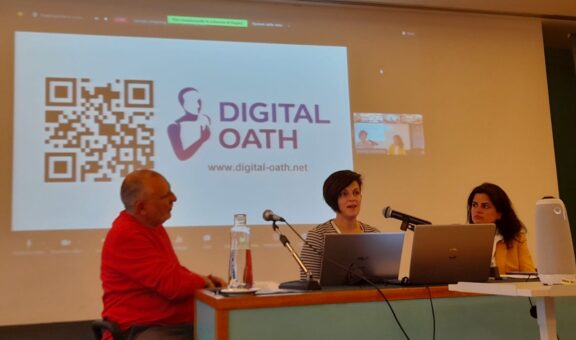 Promoted by a platform of protagonists: the Sophia Global Studies Research Centre, the Political Movement for Unity, NetOne, New Humanity and Digital Oath, the aim of the seminar is to address the pressing issues of the digital world according to different perspectives: philosophical, technological, ethical, social and political, leading up to a discussion about the proposal of an “oath”, that for professionals in the digital world would be equivalent to the Hippocratic Oath for doctors. Where does this idea come from? What are the goals? The technological world tends to change rapidly, faster than our ability to adapt. The complexity of the machines and systems that structure reality affects not only the way we live, but also the way we see the world and think about the future. The level reached by “AI – artificial intelligence”, alongside enthusiasm for its operational capabilities, presents a general concern about the new possibilities being opened up by these systems and the effects that can result from their malicious use. The recent spread of ChatGPT (November 2022) and all its spin-offs has brought AI massively closer to our daily lives, giving rise to new questions of meaning related to the understanding of what is human and what is not. In the world panorama, the evolution of these devices has produced a kind of disorientation, not only because their use appears within the reach of everyone, but above all because they
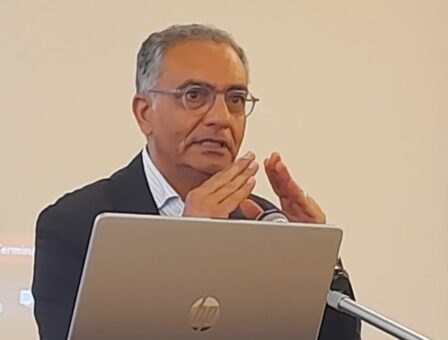
  demonstrate that they do something that was previously the prerogative of human beings, with quantitatively superior capacities. The fact that we are faced with systems that are not “intelligent” in the human sense of the term and that manage their knowledge base through statistical calculations does not change the final result: the feeling of no longer being the authors of fundamental choices, of being challenged by machines that are less like “tools” and more like “colleagues”. The “Towards a Digital Oath” seminar added an important theme to these issues which is that questioning the ethics of technologies means questioning what is human. Many people consider technological development as the human activity that characterizes us most. Digital technologies, and in particular AI, are those that most accurately reflect our way of being and of understanding our existence. The crises of the last century (of values, environmental, social and political) are closely related to them and indicate that technological development must be accompanied by an equally determined educational commitment, so that every form of progress can be guided by a deeper ethical awareness. The “oath” for the digital world goes precisely in this direction. The programme of the first days of June convened a range of experts (link to the programme). After an initial broad overview of today’s digital technologies, the discussion explored the risks and regulations related to their use in Italy, the EU, the US, Brazil and China, intertwining technological solutions with political issues, philosophical reflections and social phenomena. Fadi Chehadé, former CEO of ICANN (Internet Corporation for Assigned Names and Numbers), promoter of the “oath” for an ethics of the digital world and visiting professor at the Sophia Institute, said, “We need to make a concrete and universally shared commitment to which developers, technicians and users of digital technologies can adhere and firmly anchor their work on a human centred approach”. Fadi Chehadé has been involved in this project since November 2019, when the first group met in Trent (Italy) to shape the project. Subsequently, the group involved scholars in various countries and participated in the UN-sponsored public consultation for the Global Digital Compact 2024. The purpose of the Digital Oath is precise: to suggest guidelines and ethically motivate developers and innovators of the digital world to put the dignity and quality of life of people and communities, the sense of human existence and respect for fundamental rights and the environment, at the centre. The proposal to “translate” the Hippocratic Oath for the digital world has already emerged in various international studies, which underline the urgency of the issue and the responsibility of those who create and manage digital services and administer data. It includes not only the new neural networks but also social networks and cryptocurrencies. Our work adds to that of other networks: now we need to join forces to establish a coalition between universities, the private sector and organizations committed to writing a code of ethics, a self-regulatory protocol that can benefit people, society and the environment. There is an initial wording of the oath on the new Digital Oath website and it is attracting support; suggestions and changes to the text are welcome and it will be progressively developed. The recordings and documents of the Seminar will soon be available on the website. The road is certainly uphill but there are many of us on the journey: it is a horizon that concerns us all.
Andrea Galluzzi
