23 Jun 2023 | Non categorizzato
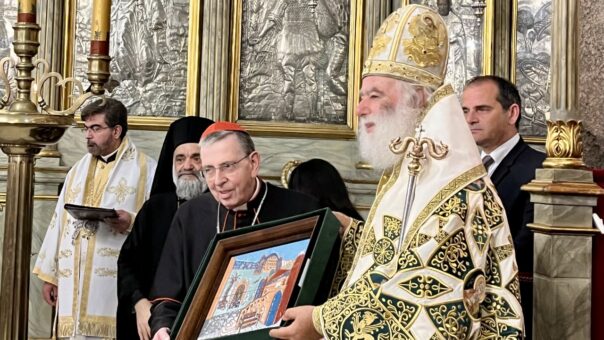
The Joint International Commission for Theological Dialogue between the Catholic Church and the Orthodox Church held its fifteenth plenary session from 1st-7th June 2023 in Alexandria, Egypt. It was hosted by the Greek Orthodox Patriarchate of Alexandria and All Africa. Agreement was reached on a new document entitled “Synodality and Primacy in the Second Millennium and Today”. We interviewed theologian Piero Coda, who attended the meeting. Fr. Coda, can you tell us how it went, who took part and what was the main objective? It was the 15th plenary session of the “Joint International Commission for Theological Dialogue between the Catholic Church and the Orthodox Church” which was held in Alexandria, Egypt, under the chairmanship of Metropolitan Job of Pisidia (Ecumenical Patriarchate of Constantinople) and Cardinal Kurt Koch (Dicastery for the Promotion of Christian Unity), with the cordial hospitality of Patriarch Theodoros II of Alexandria. It was a question of completing the stage of dialogue inaugurated by the document of Ravenna (2007). After developing the theological framework shared by Orthodox and Catholics about the interdependence of synodality and primacy in the life of the Church, it provided an historical examination of the situation experienced in the first millennium, proposed by the document of Chieti (2016) and reached a description of the situation experienced in the second millennium, which was the object of the document approved in Alexandria. Due to the well-known vicissitudes which torment the Orthodox world, the Patriarchate of Russia left the work of the Commission. There were no representatives of the Patriarchates of Antioch, Bulgaria and Serbia at the meeting in Alexandria, while the remaining 10 delegations of the other Patriarchates (Constantinople, Alexandria, Jerusalem, Romania, Georgia) and the autocephalous Churches (Cyprus, Greece, Poland, Albania, the Czech Republic and Slovakia) were present. In what terms is it possible to speak of Synodality in the ecumenical sense and what considerations emerged also taking the past into account? The theme is illustrated in the Introduction: “The present document considers the troubled history of the second millennium (…) It strives to give as far as possible a common reading of that history, and it gives Orthodox and Roman Catholics a welcome opportunity to explain themselves to one another at various points along the way, so as to further the mutual understanding and trust that are essential prerequisites for reconciliation at the start of the third millennium.” The result is a clearer and more shared understanding of the reasons that have led, not infrequently for reasons of a historical-political rather than theological nature, to encourage a distance that has not only prevented attempts at reconciliation made over the centuries from coming to fruition, but has exacerbated the polemical interpretation of the other party and the apologetic stiffening of its position. The enhancement of openness to a new situation marked by the rapprochement that occurred in the twentieth century must be noted: it favours a more pertinent assessment of the actual meaning and theological weight of what still prevents full and visible unity. What are the future prospects? The document emphasizes that the “return to the sources” of the faith and the strategy of the dialogue of charity between the “sister Churches” promoted, in the wake of Vatican II, by Paul VI and Patriarch Athenagoras, are significant. The Catholic Church’s commitment today, tenaciously desired by Pope Francis, to rediscover and reactivate the principle of synodality also stimulates hope. What lies ahead? The document states that, “The Church is not properly understood as a pyramid, with a primate governing from the top, but neither is it properly understood as a federation of self-sufficient Churches. Our historical study of synodality and primacy in the second millennium has shown the inadequacy of both of these views. Similarly, it is clear that for Roman Catholics synodality is not merely consultative, and for Orthodox primacy is not merely honorific”. Therefore, the interdependence between synodality and primacy, this was the firm point which was achieved, “is a fundamental principle in the life of the Church. It is intrinsically related to the service of the unity of the Church at the local, regional and universal levels. However, principles must be applied in specific historical settings (…) What is required in new circumstances is a new and proper application of the same governing principle.” This perspective paves the way for the continuation of the journey and the opening of a new phase.
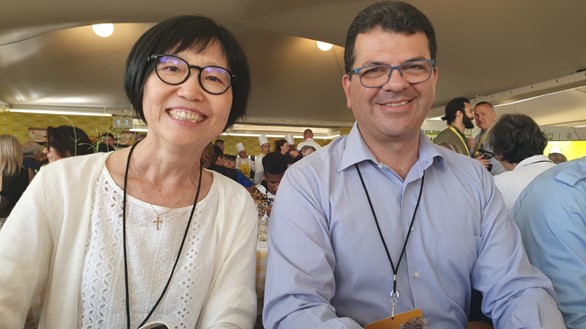
Carlos Mana e Maria Grazia Berretta (photo: ©Dicastero per la promozione dell’Unità dei cristiani)
16 Jun 2023 | Non categorizzato
Letting God dwell in us: this is the starting point to safeguard and give joyful witness of the inestimable value of unity and peace, in charity and truth; to enrich ourselves and be seeds of goodness and brotherhood for the world. Without measuring hatred I live in a Ukrainian town on the border with Slovakia. We are not being bombed but we experience the terrible consequences of the war: displaced people with all their needs, the demand for torches and candles, medicines, blankets… A great darkness has descended on our land. News about people who betray others, of those who get rich in these terrible situations, of those who exploit others are the order of the day: when it triumphs, evil has no rules, no limits. But in spite of everything, something else happens: the people here feel involved in the pain of others and look for solutions. The need for warmth, protection and solidarity has returned to families. I witness this paradox of a war of evil and of the triumph of good. We tell the story of Chiara Lubich and her first followers: they too began during a war and they did not measure hatred, but turned on good and then spread everywhere. The forces of evil will not prevail. Our gratitude is a true prayer that rises to heaven like a song of praise to the God who is Love. (S.P. – Ukraine) A chain of love In the waiting room of my shop, the customers usually exchange news and since I hadn’t seen Mrs. Adele, an elderly woman who sometimes came to us, for a long time, I asked one of them for her news. So I learned that Adele was seriously ill and, driven by the desire to see her again, one day I decided to visit her. I found Mrs. Adele, alone and without relatives, completely abandoned. I immediately I circulated a request for help, looking for someone who could keep her company. Three clients responded immediately. A kind of competition started until one of their sons worked hard to get her admitted to a home that provided assistance and care. I too volunteered to give my services as a hairdresser, not only for Adele but for anyone. Adele’s story has shown me that it is enough to begin with concrete acts of charity; the chain of love then unfolds quickly and effectively. (F.D.R. – Italy) A School of Solidarity In the desert, outside the city of Egypt where I live, there are 1000 people with leprosy. Until a few years ago no one knew about this colony. We went to check the situation and found that they lacked everything. No doctors visited them. We contacted Carita and we opened our group to other young Christians and Muslims with whom we go there on our days off work. Two of us are medical students and are in charge of medical care, so they brushed up on the methods of treatment for leprosy. Others gave their time to paint the houses and make them more comfortable. A young journalist has published some articles in various newspapers and magazines in order to inform as many people as possible and raise awareness of the problem. Above all, we realized that the patients of this colony need someone to listen to them, which for them is almost more important than medicine. This experience has become a real school for us: it has made us understand how each of us can give our contribution for others. (H.F.S.- Egypt)
compiled by Maria Grazia Berretta
(taken from The Gospel of the Day, New City, year IX – no. 1 May-June 2023)
14 Jun 2023 | Non categorizzato
The Meeting on Human Fraternity took place in the Vatican on 10 June 2023. The Focolare Movement together with a number of other ecclesial movements and international associations and organisations took part in this international event. It was represented by its president, Margaret Karram and a number of other focolarini including Christian Abrahao Da Silva who spoke about his impressions. The meeting had a number of aims: these included promoting and developing the process of participation, rediscovering the meaning of fraternity and building it together through dialogue, knowledge, opportunities for encounter and sharing words and actions. The gathering was promoted by the Fratelli Tutti Foundation and St. Peter’s Papal Basilica, under the patronage of Cardinal Mauro Gambetti, Archpriest of St. Peter’s Basilica in the Vatican and Vicar General of the Vatican State. It was inspired by the encyclical Fratelli Tutti and participants included several Nobel Peace Laureates and a number of well known people from the worlds of science, culture and law. They were given the task of creating a “Call to Commitment for Human Fraternity.” The document they produced was read by two Nobel Prize laureates, Nadia Murad and Muhammad Yunus, during the Festival held in St. Peter’s Square in the afternoon and was later signed by the Secretary of State, Cardinal Parolin, on behalf of Pope Francis as well as the group that drafted the document. Christian Abrahao Da Silva, a focolarino who attended the Meeting, tells us what an extraordinary moment it was. Christian, what did taking part in this event dedicated to world fraternity mean to you? First of all, it was a great honour. Margaret Karram, the Focolare president, another focolarina called Corres Kwak and I represented the entire Movement during this great event. Its goal was to promote fraternity and social friendship among people and among peoples, as an antidote to the many forms of violence and war taking place in the world. The meeting was held in two parts: the morning session took place in the ancient synod hall, with the presence of representatives of various church movements and associations. Instead, in the afternoon, a large Festival was held in St. Peter’s Square and this connected with events taking place in various squares around the world. How did the Meeting begin? During the morning, we took part in two working groups where we were asked to answer two questions: “What are we doing concretely to achieve social fraternity and environmental fraternity?” and “Is there still an ‘us’?” These were very good sessions in which everyone was involved. People talked a lot about the “garden” in reference to the Garden of Eden about which Pope Francis had written in Fratelli Tutti. The words used most often were were: compassion, responsibility (political and economic), sharing, integral promotion, recognition of every human person, care and welcome. It was a real ecclesial experience: there was great hope that this can grow and witness to the need to rediscover and strengthen human fraternity. What impressed you the most? In addition to the group of Nobel Peace Prize winners and the group of ecclesial movements and associations, there was also a group of 30 young students from various Italian schools who were accompanied by their religious education teachers. They had taken part in a competition to express the theme of the Meeting in a variety of different artistic forms. Their presence was an important sign of the commitment of the new generations to learning about fraternity. Other things that struck me were the experiences that some people shared on Festival stage in the afternoon and the artists who shared their talents so freely and joyfully.
What does the Focolare Movement take home after this event? Pope Francis relaunches fraternity as a new anthropological paradigm on which to rebuild actions and laws because “fraternity has something positive to offer freedom and equality” (Fratelli Tutti, no. 103). This notion brought to mind a talk by Chiara Lubich entitled, “Freedom, equality…what happened to fraternity?” It was one of those events that encourages us to throw ourselves more and more into the heart of our charism of unity. Moreover, Cardinal Gambetti really touched our hearts when he explained the inspiration behind the Meeting. He said it was both a “process and experience, a first step in rediscovering the meaning of fraternity and building it culturally.” He continued by saying that becausé it is not giveǹ biologically, fraternity needs encounter and dialogue, knowledge and shared words and gestures, common languages and the experience of beauty.
Maria Grazia Berretta
23 May 2023 | Non categorizzato
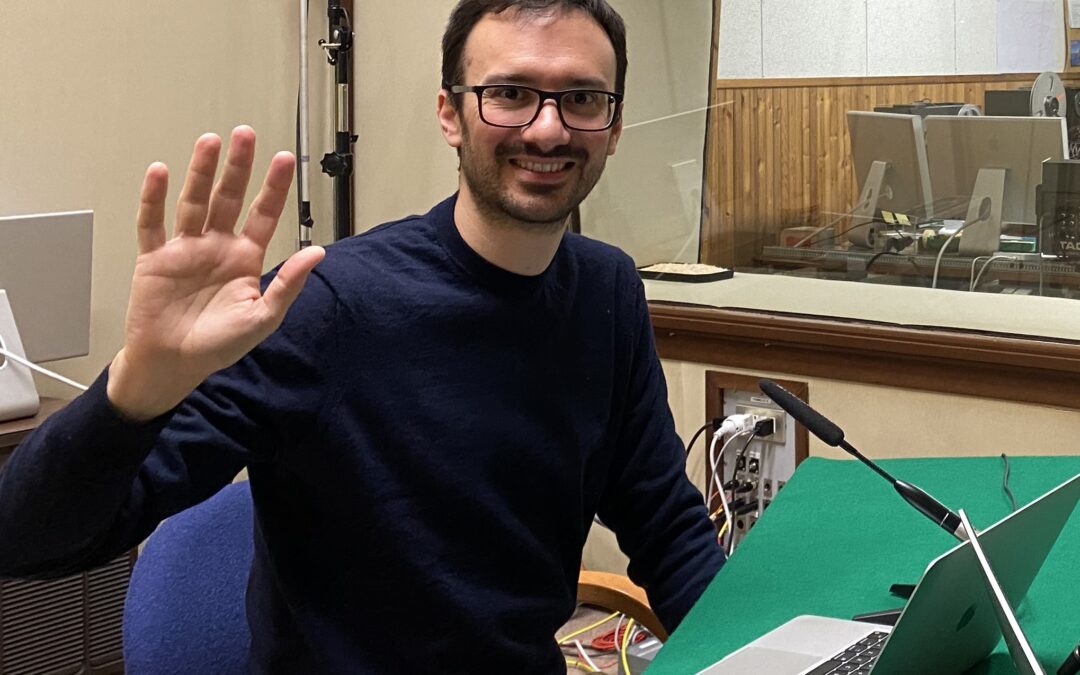
Tommaso Bertolasi and Laura Salerno are the creators of “Benedetti dubbi” (Blessed doubts) a new podcast from the young people of the Focolare Movement. The first episode will be available on 23rd May, 2023. We asked Tommaso and Laura to explain how doubts can really be a “blessing”, in order to get to know ourselves and others better. What is our calling? What is the best road to follow when we come to one of the many crossroads that life throws at us? Do we know ourselves and, above all, who has the antidote for fear? Questions like these, the kind that overwhelm our daily lives, are the subject matter of “Benedetti dubbi”, the new podcast designed for young people and by young people, released (in Italian) on 23rd May. To find out more about it, we interviewed the authors of this project, long-time friends, Tommaso Bertolasi, a researcher in philosophy at the Sophia University Institute (Loppiano, Florence) and Laura Salerno, a young member of the Focolare Movement, a writer and a student of literature. Laura, how did it all start?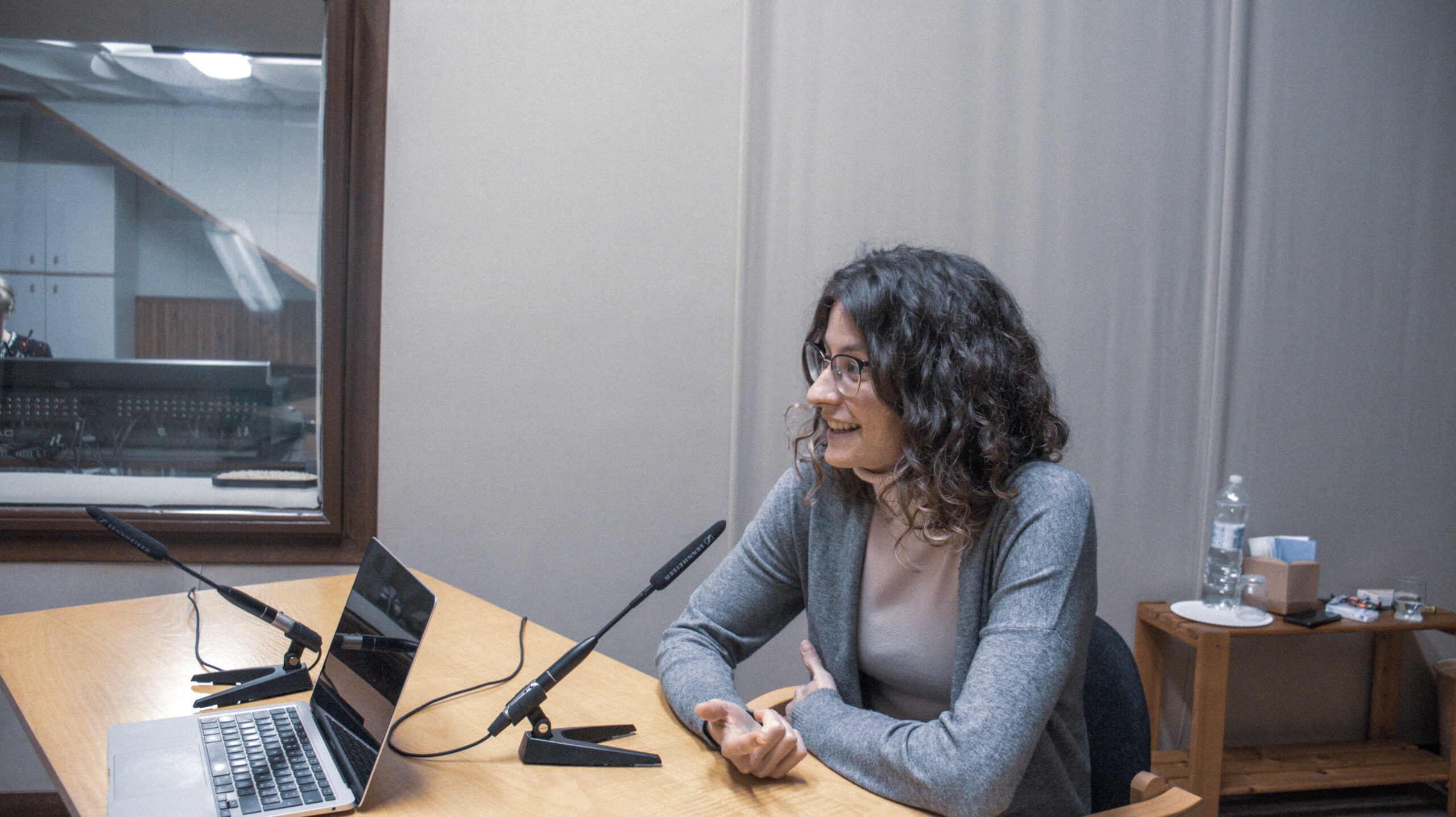 It all started in 2018. Tommaso and I were in Argentina. We met at a conference for young people of the Focolare Movement. Since he is a philosopher, he had been invited as a speaker to talk about freedom. I listened to what he said and liked it very much. Over the years he has continued to engage in dialogue with and for young people, so much so that he has decided to compile some of the exchanges in a book, entitled “The last hour of the night”, which will be released by Città Nuova in August 2023. And then came the idea: “Well if a book is coming out, why not do a podcast that deals with the same content?” And so a few months ago I got a phone call inviting me to help him bring this project to life. Tommaso, why a podcast? Sometimes ideas are like a cocktail: they come out of the union of various things. And this is what happened with “Blessed Doubts”. At a certain point I realized that I had a lot of material for meetings, workshops and dialogues, that I had often prepared with young people. Hence the idea of not restricting important themes such as freedom, choices, fragility and vocation to just one occasion but of being able to offer them to everyone. Then I thought that other languages and themes could also be explored and so here is the podcast. I wanted to create a format more suitable for young people, who often nowadays, find reading a challenge. Or at least, they read something after you’ve convinced them it’s worth it. In all this work, an additional factor was the World Youth Day that dictated the timing of this operation a little. I thought it would be nice that the Focolare Movement could offer something to those who are preparing to go to Lisbon. It will be released on the major podcast platforms (Spotify, Apple Podcast, Google Podcast), one episode per week for 6 weeks. Laura, what age group are you targeting? Our target age range is 18-30 years. This is why the main themes are questions about fragility, freedom, relationships, trying to find one’s place in the world. It’s all about trying to see doubt as a positive thing, as a springboard to live more deeply and more consciously what happens to us.
 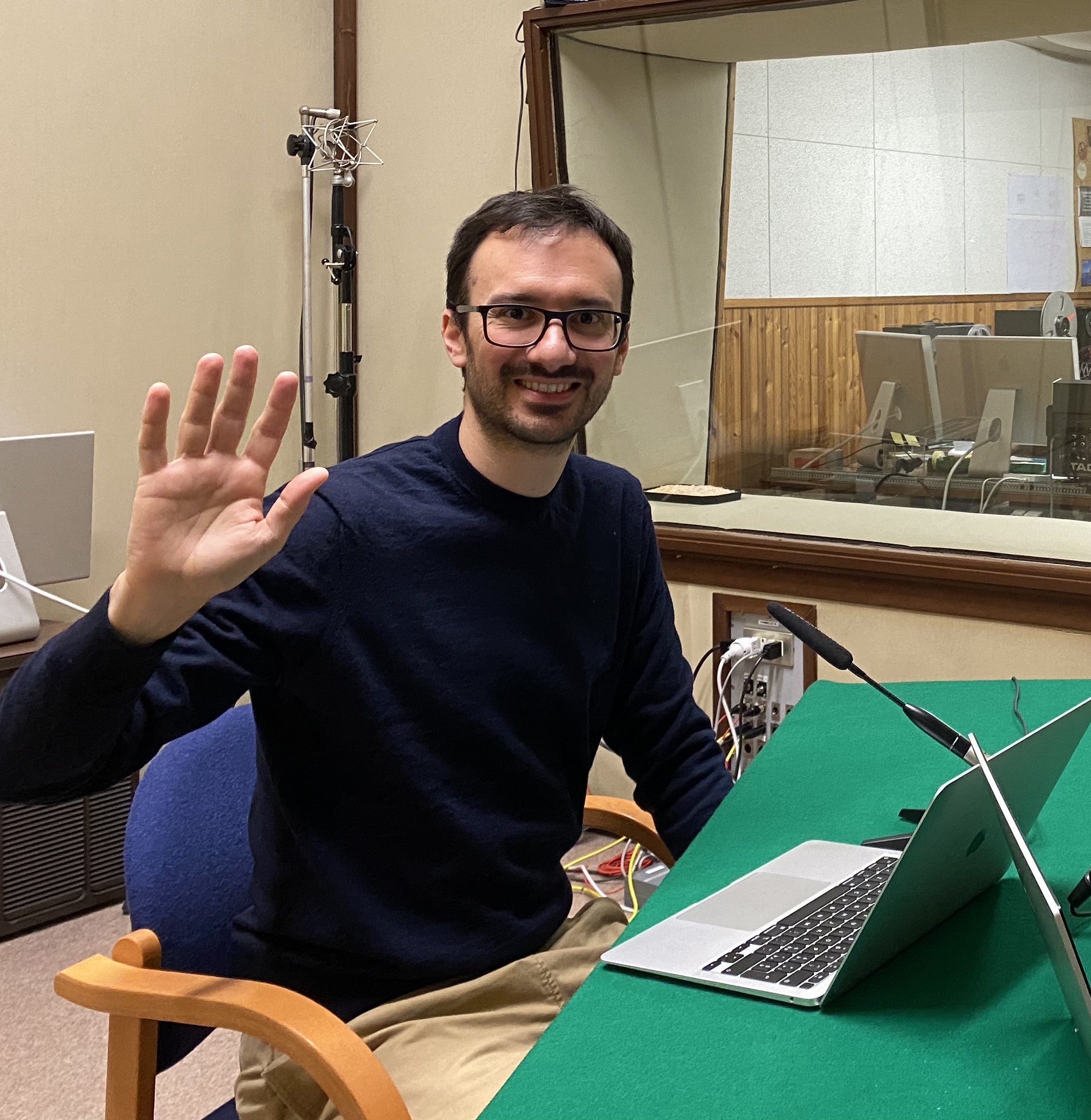 Tommaso, how did you determine the topics to be addressed for each episode? My initial idea was to replicate the contents of the book, paraphrasing it. Working with Laura, however, I realized that her questions led the conversation to other areas, that the young people she had in mind were also her university classmates who do not necessarily recognize themselves in any religious creed. I understood that Laura had deep questions that were partly hers and partly reflected her world of relationships: it was from those questions that we had to start to weave something suitable for young adults. What was the most difficult episode for you, Laura? I think the hardest was the first one. We were both a bit nervous, and then we had to introduce the podcast, make it clear why we think it is important to ask questions, not to exist in anxiety or submerged in paranoia. A further challenge was that a few days before we recorded the first few episodes, I had a bad cold and a high temperature. Everything always happens at the same time! But we managed to do it also thanks to the super team that supported us during the recording. Tommaso, what did you gain from this project? I learned a lot from all the people with different skills who worked on this project. Indeed, the realization of “Blessed doubts” was a collective operation. And after you listen to the podcast, we’d love to have your feedback, on Spotify, on our social networks (@Y4UW and Movimento_dei_focolari) or via email (ufficio.comunicazione@focolare.org). For further information about other projects in the pipeline, stay connected to the social channels of the Focolare Movement.
Maria Grazia Berretta
19 May 2023 | Non categorizzato
In these words of St Paul, fraternity is a call to goodness, to the life that is born from baptism, and this kinship in love allows us to see the other’s existence as a precious gift for us. The grade I was in the third year of high school and had an important physics oral exam coming up. I started studying hard knowing that I would be tested the following day (I was the only one in the whole class who didn’t have the end of term grade). Shortly afterwards, my little sister came to ask for help with her studies. At first I said no but then I was reminded of what St Paul tells us: rejoice with those who rejoice and weep with those who weep. So I started studying with my sister. It took the whole afternoon for her to feel prepared so I hardly managed to open my physics book. The following day I went to school, with my heart racing but convinced that God would intervene somehow. The teacher came in and started testing my other classmates. At the end of the lesson I asked him why he hadn’t called me. He looked at his register and said: ‘But you’ve already got the grade, and it’s a good grade’. I knew very well that I had never been tested, so maybe he put it there because of something I had said. (S.T. – Italy) How to get through the day A man in a wheelchair was begging near the supermarket trolleys. On my way out, I approached him and, after exchanging a few words with him, invited him to pick something from my shopping that he needed. He happily took some food and immediately started eating it. As I said goodbye to him, I experienced such a joy that it helped me face the challenges of a day that had got off to a difficult start. It made me realise that doing a concrete act of love is a good start to the day. I started doing this, overcoming many bad habits and surprising not only my husband, but especially the children who do not always appreciate what they have because they think everything is their due. One evening, hearing the news that an uncle was seriously ill left everyone in the family not knowing what to say until our eldest son, who goes to university, asked what we could do for him. At that point our youngest daughter replied: ‘We have to do what mum does who puts love into everything she does. That will help us discover what uncle needs’. (L. D. F. – Hungary) Adele “Bipolarity”… I never knew that my dear schoolmate, Adele, had such a serious illness. It was her mother who explained it to me. After spending some time in hospital, on certain days, when her centre seemed unstable, she herself did not understand what was happening to her. The medicines had to find a balanced effect, and it took time. But it did not change my affection and esteem for her. I was amazed the day she asked me to pray the rosary. It seemed she had perfect concentration when she prayed. From then on, we started reading spiritual books or stories with a positive content. I had the impression that my friend understood everything more deeply than I did. When we discussed certain topics, I saw in her a boundless altruism. Together we joined a volunteering group for the poor. Adele got back her life, balance and courage. She knew more than anyone else how to be close to those in need. My experience with her made it clearer to me that a person is truly fulfilled through charity. (P.A.M. – Italy)
Edited by Maria Grazia Berretta
(taken from Il Vangelo del Giorno, Città Nuova, year IX – no.1 May-June 2023)
