27 Jan 2021 | Non categorizzato
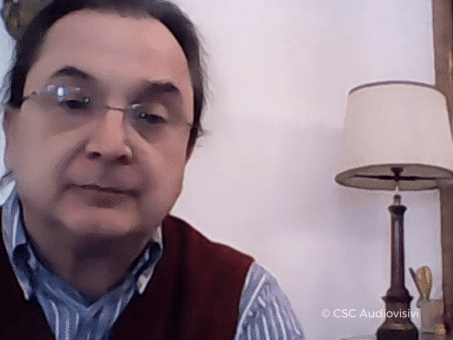
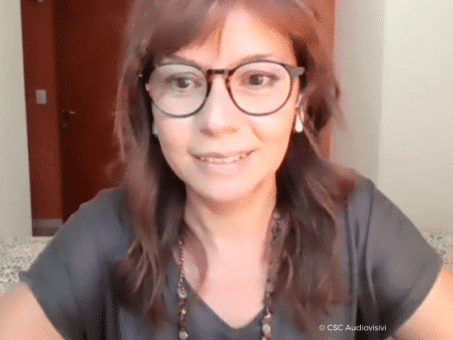
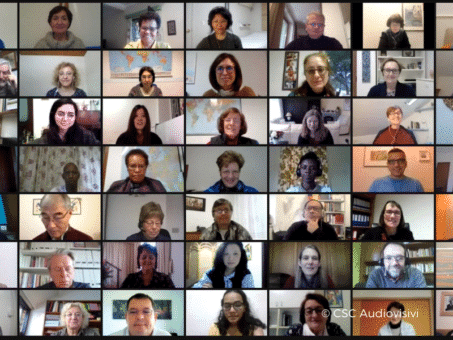
General Assembly Diary 4, 27 January 2021 At the heart of the meditations, the reflections, and the communion in this third and final day of the spiritual retreat of the General Assembly, is the icon of the Most Blessed Trinity. This was presented as the model of a “collective holiness” by Maria Voce and as relationships of love that bring out the “design of God” on every person by Claudio Guerrieri.
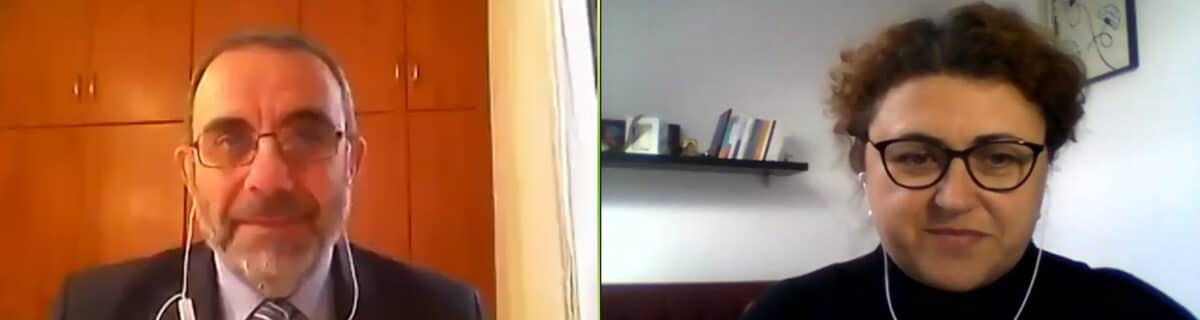
Christians from two Orthodox Churches
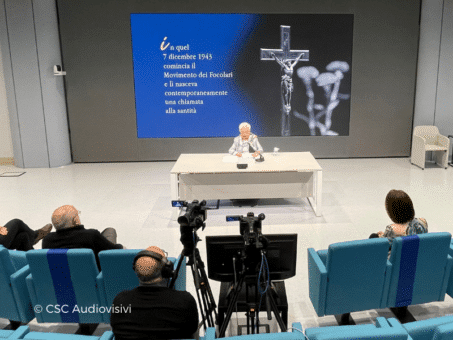
It wasn’t by chance that the ecumenical prayer at the beginning of the day was prepared by Christians from two Orthodox Churches, whose traditions include a huge treasure of reflections and contemplation of the Blessed Trinity. 
Maria Voce
In her meditation, Maria Voce, who will soon be leaving her role as President of the Focolare, once more drew our attention to the general aim of the Movement: “the perfection in love”, as Chiara Lubich wrote. This means complete personal fulfillment through the giving of oneself to others; or using a more conventional expression it could be defined as holiness. But a holiness -as Maria Voce underlines- that is typical of the Focolare: a “Collective holiness”. In order to explain this concept, the President retold the story of the beginning of the Movement where we saw Chiara with her first friends living the Gospel in a radical way. It was a life “for God and for the others -as Chiara herself explained – in a total forgetfulness of ourselves and of everything that could have made us fall into withdrawing into ourselves”. And so, a way to a new holiness was born, “both radical and light, a holiness that could be open to everyone, and could be achieved in the family, in the midst of the world, together”, a holiness in company with others. This is a holiness that always asks for a personal listening to what God wants but, to do this knowing that one is travelling with others, in fact looking at the other and the presence of God in him or her. 
Claudio Guerrieri
The Italian philosopher, Claudio Guerrieri, member of the study center of the Focolare, the Abba School, continued these reflections, focusing on one of the effects of the “collective holiness”: what emerges from this is the true personality of each one, the plan or design of God on each person. This is an aspect that is very present in the mystical writings of Chiara Lubich from 1949/1950 which offer a model of communion and of unity, “not as uniformity, but that includes a plurality of voices in which each one, as a part, expresses the whole.” This can be seen by the fact that in the Focolare Movement, as well as Chiara Lubich, also two co-founders are present, Igino Giordani and Pasquale Foresi, who through their “designs” the charism of Chiara was opened up and became incarnate.
So, these three days of deep retreat have drawn to a close, at times maybe it was also a bit unsettling but full of ideas also for the decisions that have to develop. As one of the young people described in the final session of communion: “It’s been a moment for listening to one another and for trying to understand in what direction the Holy Spirit is calling the Focolare in this future period, and to whom to entrust the tasks for taking ahead this Work (of Mary) with the challenges and the opportunities that the next six years will present.”
Focolare Communications Office
Text in PDF
27 Jan 2021 | Non categorizzato
How to watch English subtitles, click here https://youtu.be/4gp92udqK0U
27 Jan 2021 | Non categorizzato
Living for unity means contributing to it personally, on a daily basis, starting with relationships in the family, at work, certain that this transforms situations, creates communion, fraternity and solidarity. A different logic When I returned from Sunday Mass that morning I found the kitchen in complete chaos indicating that our son and his friends had been partying all night. It would have completely justifiable and serve as a lesson to leave everything it was so that it could be “seen” and we could then talk about it. However, the Gospel reading I had just listened to did not leave me in peace. It was about forgiveness. Forgive seventy times seven. As I began to clear up the kitchen, I felt a different kind of “justice” come to mind one based on a different kind of logic. It was as if the external disorder had to find space within me first. The anger and disappointment I felt towards our son gradually started to diminish. When our son woke up he asked me why I was so happy. Not registering a response, and after a period of silence, he began to open up. He had got into drugs and was asking for help. Later on we broke the news to his father. Like a seed, the Word began to germinate and as a result, our son’s situation and the whole family’s situation changed. (M. J. – Norway) A lesson from my daughter As head of a large department in the company where I work, I have always been committed to helping employees to do their best, competently and with precision. But after a few years someone asked to be dismissed and others were complaining. What was wrong? I didn’t understand…One day my youngest daughter taught me a great lesson. I was helping her with her homework and as I was scrolling through her notebook I started pointing out all the teacher’s corrections. She started to cry saying: ‘Daddy, do you only see the mistakes? Don’t you see all the pages with top marks?” I realised I was making exactly the same mistake at work: only seeing others’ faults. It was a real light for me. I realised I needed to put on a different pair of glasses, ones that give love. It wasn’t easy. I secretly started counting the times I did manage, and each day the number increased. One day one of the staff asked me why I was so happy, and it came naturally to tell him about the lesson my daughter had taught me. (J. G. – Portugal) Alcoholic husband Because my husband was an alcoholic, there were no more parties, anniversaries or friendships. All this would have been bearable were it not for the violent outbursts. We were living on his pension (when we managed to stop him spending it) and on the cleaning work I did in the apartment building. At times it demanded great heroism to keep going like this. “Why don’t you leave him?” my relatives and even our children, who had left home because of him, used to say but he would have ended up on the street and it was this that held me back. He was the father of my children. In the days leading up to an operation he had to undergo, the absence of alcohol made him even more irritable. Nevertheless, he agreed to undergo a detoxification programme. It took a long time but he did start to make progress. It was like watching a child learn to walk. After a few years, he regained the will to live, to enjoy his family and even his first grandchild. We are nearing the end of our lives but I can say that were it not for my faith I would not have had the strength to stay with him. (M. D. – Hungary)
Edited by Stefania Tanesini
(taken from Il Vangelo del Giorno, Città Nuova, year VII, no.1, January-February 2021)
26 Jan 2021 | Non categorizzato
General Assembly Diary 3, 26 January 2021
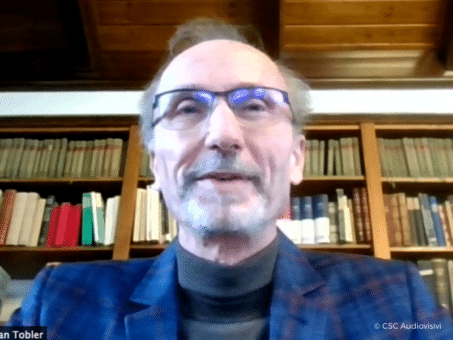
Stefan Tobler
“Who knows if our role is not so much to give ‘light’, but rather to enter into the darkness, into the mud, into the desperation of lack of dignity, […] into the thousands of different kinds of poverty of our times?” This provocative question may best capture the second day of the spiritual retreat of the Focolare General Assembly. After the opening ecumenical prayer which emphasized the need for a profound conversion of hearts, Stefan Tobler, theologian of the Swiss Reformed Church and Paula Luengo, psychologist from Chile, presented the central theme of ‘incarnation’: what does the fact that God became man, least among the least, actually mean? And what does living and implementing the spirituality of unity mean for the Focolare today? 
Silvina Chemen
The academics presented their reflections from two complementary points of view. Stefan Tobler turned to the mysical writings of Chiara Lubich in order to highlight the value of the incarnation. “For Chiara, it is not just a past moment in history, but rather a fact that permanently changed the meaning of all creation, giving a value of eternity, of highest dignity to the things of this earth”. And, Dr Tober concluded, the incarnation will continue if we’re able to “have simple eyes which can discover God under the reality of this world”. 
Paula Luengo
The new dignity which the world assumes when seen from this viewpoint, should provoke a change of perspective in us, explained Paula Luengo. “We’ll never find our identity by navel-gazing. But rather, as Chiara says, by embracing ‘all those who are alone’.” We must – continued Dr Luengo – “take humanity, in all its depths, as our starting-point. So incarnation is a movement seeking out closeness and a going down deep”. Two other contributors reached the same conclusion. Luigino Bruni, Italian, Professor of Political Economics and the History of Economic Thought, and Silvina Chemen, Argentinian, Rabbi in Buenos Aires, offered their reflections on “charism, prophecy and incarnation”, posing the question: is it still possible to speak of the prophetic dimension of a charism today? “Where there are brothers and sisters,” argued Silvina Chemen, “there is prophecy. Where there’s fraternity, the voice [of God] appears; when we’re truly together, God manifests himself”. 
Luigino Bruni
Many questions about the present and future of the Movement came up in the group meetings, such as what it means today to remain faithful to the roots. Luigino Bruni offered, “It’s always particularly difficult for a charismatic community to be able to understand that the first story, the wonderful story which made us day-dream and showed us heaven, is over. But the story will continue because the promise was far greater than the first form our faith adopted in the first part of the journey”. Focolare Communications Office Text in pdf
25 Jan 2021 | Non categorizzato
General Assembly /25 January 2021
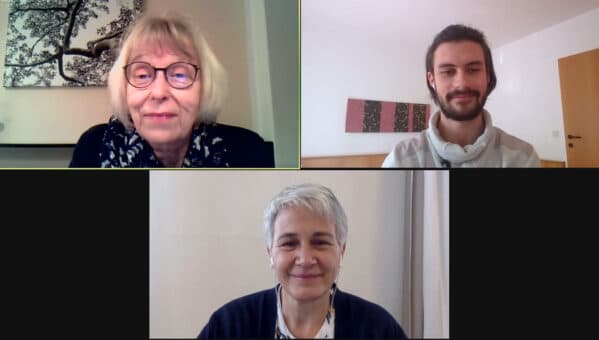
The second day of the General Assembly of the Focolare began with an ecumenical prayer presented by participants from various Churches. It was addressed to Jesus in his forsakenness on the cross, so that he would help each one to “grow in listening to one another”; teach us to “welcome together the Holy Spirit” and “the cry of today’s humanity” so as “to become instruments of unity”. Then there were further votes which had been put off from yesterday and which are necessary for adapting the regulation of the Assembly to an on-line format. So, the spiritual retreat for all the participants started a little late and it will finish on Wednesday 27th January. This is an essential moment in the Assembly, as it says in the Movement’s Statutes, “so that the voters…may be docile to the grace of the Holy Spirit.”
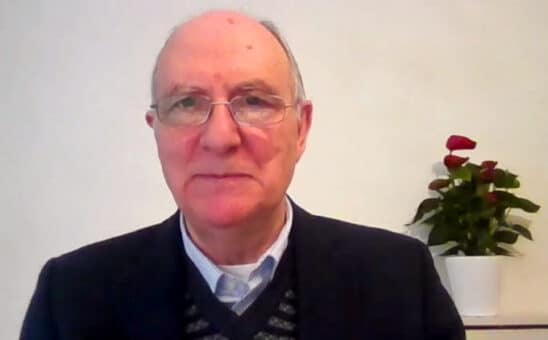
The first topic chosen, put the participants in front of what could be defined as the entrance key into the mysticism of Chiara Lubich: a solemn pact made by the foundress on 16th July 1949 with the politician and author Igino Giordani, co-founder of the Movement, in the Dolomites. In that pact – as was emphasized by Fr Fabio Ciardi, Oblate of Mary Immaculate and theologian in consecrated life – Chiara Lubich and Igino Giordani, asked Jesus who they had just received in the Eucharist to be the one to create unity between them. They asked him to use their full and mutual readiness to welcome the other, to value the thought of the other and in this way to open up a space to allow the Holy Spirit to enter.
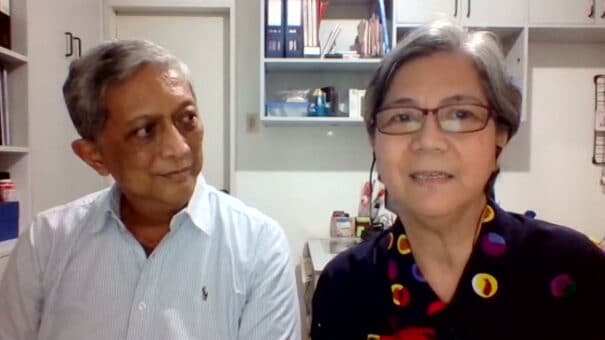
Vicky and Vic

Moreover, it was emphasized that forgiveness and mercy lie at the basis of this pact and the participants were immediately invited to put this premise into practice. In fact, anyone who wanted to, could contact another participant with whom they wanted to be reconciled, before formulating this pact – all together and each in their own language – in a global prayer that went beyond every boundary. 
Somjit, a Buddhist from Thailand
Several stories and experiences showed us how this communitarian mysticism can become life: Vicky and Vic, a married couple from the Philippines shared how they lived and overcame Vic’s Covid infection; Somjit, a Buddhist from Thailand shared how he tries to live the gift of self, according to the teachings of Buddha. Also, Jordi an agnostic from Spain, spoke of his commitment together with his wife who is Christian, to coordinate various groups for dialogue. 
Rassim, a Muslim from Algeria
And Rassim, a Muslim from Algeria, found in the Koran the encouragement to put up with others and to declare that he was ready to live mutual love without conditions. As a conclusion to this day of retreat the participants were divided into 34 virtual rooms for group meetings, in which not only were they able to share thoughts and reflections, but also to put into practice what had been presented during the day: mutual deep listening and the complete welcoming of one another. Focolare Communications office General Assembly /25 January 2021
The second day of the General Assembly of the Focolare began with an ecumenical prayer presented by participants from various Churches. It was addressed to Jesus in his forsakenness on the cross, so that he would help each one to “grow in listening to one another”; teach us to “welcome together the Holy Spirit” and “the cry of today’s humanity” so as “to become instruments of unity”. Then there were further votes which had been put off from yesterday and which are necessary for adapting the regulation of the Assembly to an on-line format. So, the spiritual retreat for all the participants started a little late and it will finish on Wednesday 27th January. This is an essential moment in the Assembly, as it says in the Movement’s Statutes, “so that the voters…may be docile to the grace of the Holy Spirit.”
The first topic chosen, put the participants in front of what could be defined as the entrance key into the mysticism of Chiara Lubich: a solemn pact made by the foundress on 16th July 1949 with the politician and author Igino Giordani, co-founder of the Movement, in the Dolomites. In that pact – as was emphasized by Fr Fabio Ciardi, Oblate of Mary Immaculate and theologian in consecrated life – Chiara Lubich and Igino Giordani, asked Jesus who they had just received in the Eucharist to be the one to create unity between them. They asked him to use their full and mutual readiness to welcome the other, to value the thought of the other and in this way to open up a space to allow the Holy Spirit to enter. 
Vicky and Vic
Moreover, it was emphasized that forgiveness and mercy lie at the basis of this pact and the participants were immediately invited to put this premise into practice. In fact, anyone who wanted to, could contact another participant with whom they wanted to be reconciled, before formulating this pact – all together and each in their own language – in a global prayer that went beyond every boundary. 
Somjit, a Buddhist from Thailand
Several stories and experiences showed us how this communitarian mysticism can become life: Vicky and Vic, a married couple from the Philippines shared how they lived and overcame Vic’s Covid infection; Somjit, a Buddhist from Thailand shared how he tries to live the gift of self, according to the teachings of Buddha. Also, Jordi an agnostic from Spain, spoke of his commitment together with his wife who is Christian, to coordinate various groups for dialogue. 
Rassim, a Muslim from Algeria
And Rassim, a Muslim from Algeria, found in the Koran the encouragement to put up with others and to declare that he was ready to live mutual love without conditions. As a conclusion to this day of retreat the participants were divided into 34 virtual rooms for group meetings, in which not only were they able to share thoughts and reflections, but also to put into practice what had been presented during the day: mutual deep listening and the complete welcoming of one another. Focolare Communications office General Assembly /25 January 2021
The second day of the General Assembly of the Focolare began with an ecumenical prayer presented by participants from various Churches. It was addressed to Jesus in his forsakenness on the cross, so that he would help each one to “grow in listening to one another”; teach us to “welcome together the Holy Spirit” and “the cry of today’s humanity” so as “to become instruments of unity”. Then there were further votes which had been put off from yesterday and which are necessary for adapting the regulation of the Assembly to an on-line format. So, the spiritual retreat for all the participants started a little late and it will finish on Wednesday 27th January. This is an essential moment in the Assembly, as it says in the Movement’s Statutes, “so that the voters…may be docile to the grace of the Holy Spirit.”
The first topic chosen, put the participants in front of what could be defined as the entrance key into the mysticism of Chiara Lubich: a solemn pact made by the foundress on 16th July 1949 with the politician and author Igino Giordani, co-founder of the Movement, in the Dolomites. In that pact – as was emphasized by Fr Fabio Ciardi, Oblate of Mary Immaculate and theologian in consecrated life – Chiara Lubich and Igino Giordani, asked Jesus who they had just received in the Eucharist to be the one to create unity between them. They asked him to use their full and mutual readiness to welcome the other, to value the thought of the other and in this way to open up a space to allow the Holy Spirit to enter. 
Vicky and Vic
Moreover, it was emphasized that forgiveness and mercy lie at the basis of this pact and the participants were immediately invited to put this premise into practice. In fact, anyone who wanted to, could contact another participant with whom they wanted to be reconciled, before formulating this pact – all together and each in their own language – in a global prayer that went beyond every boundary. 
Somjit, a Buddhist from Thailand
Several stories and experiences showed us how this communitarian mysticism can become life: Vicky and Vic, a married couple from the Philippines shared how they lived and overcame Vic’s Covid infection; Somjit, a Buddhist from Thailand shared how he tries to live the gift of self, according to the teachings of Buddha. Also, Jordi an agnostic from Spain, spoke of his commitment together with his wife who is Christian, to coordinate various groups for dialogue. 
Rassim, a Muslim from Algeria
And Rassim, a Muslim from Algeria, found in the Koran the encouragement to put up with others and to declare that he was ready to live mutual love without conditions. As a conclusion to this day of retreat the participants were divided into 34 virtual rooms for group meetings, in which not only were they able to share thoughts and reflections, but also to put into practice what had been presented during the day: mutual deep listening and the complete welcoming of one another. Focolare Communications office