19 Dec 2020 | Non categorizzato
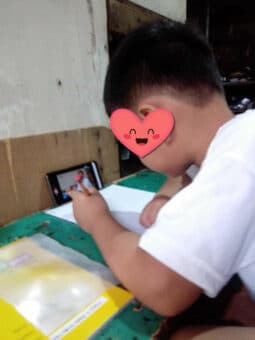
The commitment of Youth for a United World in the Philippines to promoting initiatives to help students through the #daretocare project. “Online learning” has now become a feature of this pandemic. Governments all over the world are putting measures in place to reduce the risk of infection from Covid-19 whilst trying to maintain continuity with children’s education. Children no longer go to school physically but “meet” teachers and other students in “virtual classrooms”: the internet has become the new setting for their education. This new model has highlighted a number of difficulties for developed countries. Losing a direct relationship has a negative impact on the quality of teaching and deprives children of a “place” for growth and development which is human relationship. What is also significant is the discomfort that arises from a kind of enforced “cloistering” and the need to reorganize one’s daily life between smartworking, babysitting, medical appointments and various other commitments. 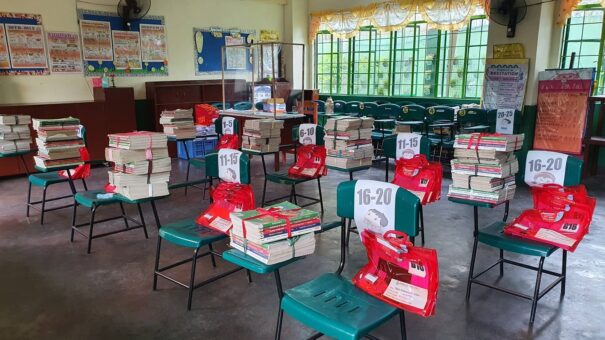 In developing countries and in rural areas which lack IT infrastructures, these social problems are further compounded by structural ones. Many regions have no internet connection and conditions for families who were already in financial difficulty have worsened because of the pandemic. These families can’t afford to buy educational materials, PCs or internet subscriptions for their children. All this has meant that the risk of an “educational catastrophe” that Pope Francis spoke of on 15 October in his Message for the event dedicated to the “Global Pact for Education” is very real. These difficulties are being felt by people in many parts of the Philippines. There, some of the Youth for a United World are teachers who have developed initiatives to help their students, putting into practice the #daretocare initiative which is about daring to take care of others, being active citizens who take an interest in everything that is happening around the world to try to build a united piece of the world. Frances Roble teaches primary school children. Some of her pupils come from the poorest families who do not have the educational materials they need to follow classes. To make sure their studies could continue, Frances appealed to the whole Focolare community to give them everything they need: “We pick ourselves up again together,” she explains, “by helping others in need to pick themselves up again. Ronald Allan Relador teaches in a public school. Unlike in previous years, his students had to register online at the beginning of this year to attend classes. Most, however, had neither a PC nor an internet connection. Ronald also worked hard to raise enough money to buy computers and register some of the students himself. However, the money raised was insufficient to cover all their needs. Then a well-known music band in the country decided to help by making a major donation. “I felt fulfilled and blessed to have done this,” he says, “God’s generosity is immense!” Jaquilyn Marie P. Jumuad also teaches in a primary school. She said that moving to online self-study has not been easy and has highlighted the difficulties many parents experienced of taking the place of teachers because they lacked a basic education themselves. “The help Youth for a United World offered,” she says, “has enabled us to give our students the level of education they needed.
Claudia Di Lorenzi
15 Dec 2020 | Non categorizzato
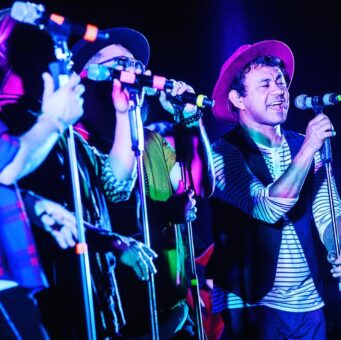
On 19 and 20 December the international performing arts group Gen Rosso will hold three Christmas concerts entitled “Life, Love, Care” at three different times to benefit different parts of the world. The pandemic we are experiencing is disrupting the way we live, as well as how we relate to others and the world. Its impact calls us to deeply reflect on global issues, such as the challenge of implementing a project of human coexistence together that brings a better future for us all. In recent years, the international performing arts group Gen Rosso has taken its celebration of life around the world through its “Life” concert. Now is a time for rebirth, and Christmas is the symbol par excellence: Jesus, the Son of God, is born. And it is also the opportunity for a new rebirth to begin to build a better future, one that will only be possible if each of us gets involved by taking care of who and what is around us through gestures of love. They might be small, but they can be daily and concrete. Gen Rosso is personally committed to this challenge, reaching everyone’s homes to help them feel less isolated and bringing a message of fraternity. Through their Christmas concerts, Gen Rosso hopes to celebrate life in all its facets (Life); spread love and beauty, and remind us of the importance of small daily gestures (Love); help everyone feel close to each other, and spread the message of taking care of those around us (Care). Much like what the Gen 4 (the children of the Focolare) will do all over the world with their activity called “They evicted Jesus”, Gen Rosso will contribute part of the ticket proceeds – a spontaneous, freely given donation – to the Fiore Educational Center in Mixco, Guatemala. The school for children and young people has been seriously challenged and compromised by the Covid-19 pandemic, and offers qualification programmes in the field of education with an emphasis on human development. The concert dates are: – Saturday 19 December at 1pm and 9pm (Italian time) – Sunday 20 December at 11:59pm (Italian time) For more information, visit genrosso.com.
orenzo Russo
14 Dec 2020 | Non categorizzato
The President and Co-President of the Focolare returned to the subject of sexual abuse by consecrated members of the Movement and asked for forgiveness from all the victims. “We must do all we can to ensure that traumas of this kind do not happen again in the future”. Last Sunday, December 13th , at 12 noon there were several thousand people connected from all over the world for the Link Up, the customary appointment in video-conference that for over thirty years has brought together the members of the Focolare Movement. Jesús Morán and Maria Voce, respectively Co-President and President of the Focolare Movement, took the opportunity to look back at the serious and painful issue of sexual abuse of minors, in which consecrated persons of the Movement are also involved. Already in March 2019 Maria Voce had written a letter to all the members worldwide to inform them of this serious scourge. Below is their address during the Link Up: Jesús: Yes, unfortunately – as you rightly say – we have to admit that this scourge of abuse, not only child abuse but also abuse of authority, and other kinds of abuse, has also occurred among us. In this sense, we would like to take this opportunity of a worldwide link to ask for forgiveness wholeheartedly, sincerely, of all the people who have been victims of any form of abuse. This is the first thing we would like to say one year after that letter. Then, as we know that this is never enough, we would like to reaffirm our commitment to the work we are doing, and that we want to improve more and more, in terms of prevention and training, so that these things don’t happen anymore, because they are so contradictory to what Chiara gave us, that they really shouldn’t happen anymore. And then we reiterate the accompaniment of the victims, which is the most important thing and we hope to be able to do it even better, even more effectively. Emmaus: Certainly, of course. It is a suffering that we live together, that we take on together, all together, and only together can we overcome it, because it is a great suffering for everyone. I remember we wrote in that letter that every single case for us means a profound purification of the Movement, and we consider it as such. We accept it – and we said so – with humility and deep compassion for those who have suffered indescribable traumas perhaps because of our lack of attention, and we commit ourselves to directing or refocusing our conduct as individuals and as a Movement towards an ever more conscious and mature commitment to the safeguarding and well-being of minors in particular. But we added at the time – we stressed this in that letter – that we must also be careful to look beyond our Movement, because of course we want to contribute to the fraternity of all, and therefore we must take on board the cry of pain of all those who suffer abuse, especially children but not only, children and young people of the world. And this attention must lead us to see all these people as the Spouse we have chosen, as Jesus forsaken. So we should feel drawn to go and console this pain and to do everything possible to ensure that traumas of this kind do not happen again in future. This applies to the abuse of children and minors, as well as to all the other types of abuse, even of older people, disabled, of those who suffer abuse of any kind, of their rights, their personhood, and their dignity. We should feel drawn to go and love and relieve these wounds, to respond as far as possible with our attention and love for the victims, for all those who suffer, and to ensure that these traumas never happen again.
Edited by Stefania Tanesini
https://vimeo.com/491123510
14 Dec 2020 | Non categorizzato
Suffering, any kind of suffering, is a reality that people naturally reject and try to avoid at all costs. Yet it is part of human life. Integrating it into our existence is a pathway we must follow towards a life that is fulfilled. Chiara Lubich accepted suffering as a sign or like a “bell” calling her to an encounter with God. I have found you in so many places, Lord! I have felt you throbbing in the perfect stillness of a little Alpine church, in the shadow of the tabernacle of an empty cathedral, in the breathing as one soul of a crowd who loves you and who fills the arches of your church with songs and love. I have found you in joy. I have spoken to you beyond the starry firmament, when in the evening, in silence, I was returning home from work. I seek you and often I find you. But where I always find you is in suffering. A suffering, any sort of suffering, is like the sound of a bell that summons God’s bride to prayer. When the shadow of the cross appears the soul recollects itself in the tabernacle of its heart and forgetting the tinkling of the bell it “sees” you and speaks to you. It is you who come to visit me. It is I who answer you: “Here I am, Lord, I desire you, I have desired you.” And in this meeting my soul does not feel its suffering, but is as if inebriated with your love: suffused with you, imbued with you: I in you and you in me, that we may be one. And then I reopen my eyes to life, to the life less real, divinely drilled to wage your war.
Chiara Lubich
Chiara Lubich, “I have found you”, in Chiara Lubich: Essential Writings, New City Press, Hyde Park, New York 2007, pp 91-92.
12 Dec 2020 | Non categorizzato
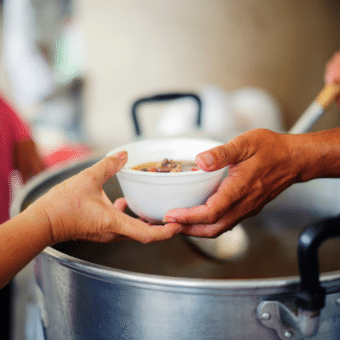
Stories of mutual aid from Central America. A communion of goods that generates hope Because of the pandemic for Covid-19 the countries of Central and South America are going through a moment of great economic fragility: many jobs have stopped, as well as school, social relations, personal affections. In spite of everything, the communion of the goods of the various Focolare communities has never stopped – as Pope Francis asks towards those in difficulty, to generate a culture of fraternity day after day.  Carolina from Guatemala bears witness to this: “many people are losing their jobs. Among them is one of my cousins. In order to continue generating income he needed a laptop computer. So, without thinking about it, I decided to give him the one I use. He was very grateful to me and I was happy for helping him”. Zarita, a Gen3 (boys from the hearths) from Oaxaca, Mexico, in a zoom meeting learned that the “extraordinary communion Covid-19” had begun. The proposal was to make a piggy bank using recyclable material. Her aunt says: “When Zarita helps me with something she says: ‘give me a coin for my piggy bank’. She also lost two teeth and sent the prize she received for her courage”. In Mexico City, in one of the most marginalized areas, the Águilas Integral Social Centre has been carrying out its mission of promoting human rights and a culture of peace for over 30 years. Some of the Focolare community carries out assistance activities. With the lockdown, the Centre has had to close. Through the extraordinary communion of goods, however, it has continued to respond to the basic needs of the population of the neighbourhood, helping in particular 120 families and ensuring an orderly reopening of the facility in accordance with the hygienic and sanitary measures required by the authorities. In Guatemala, on the other hand, the Fiore Educational Centre, linked to the Focolare Movement, has for years welcomed students of different origins, language and culture, especially from the poorest and most vulnerable groups. The economic crisis generated by COVID 19 has hit the already weak economy of the country very hard. Many families have been left without work and have had to cut education costs in order to have what they need to live. This has forced the Educational Centre Fiore to close, thus putting at risk the education of many children from the most disadvantaged groups. However, thanks to the extraordinary communion of goods, both local and global, it has been possible to intervene to start a requalification project that will allow the reopening of the school. The Gen4 (children from the hearths) from all over the world will also donate to the Flower Centre the offerings collected from the action “They have evicted Jesus“. Moving to Honduras, Javier writes: “Cristina, my neighbour works in a public school but it is now closed. Her husband instead works as a private security agent in a shopping centre, closed for Covid. They can’t pay their rent and bills and have a 13-year-old son. I put myself in their shoes and it is really distressing”. Javier has involved them in small jobs in the neighbourhood and is constantly taking an interest in their situation, without ever failing to provide them with food. And Luis, from Costa Rica says: “some farmers from San Vito, 100 km from Buenos Aires, have donated their harvest to their community affected by the pandemic. Learning this experience, motivated by the great act of love of these people, I immediately organized the pineapple donation at the private company where I work. In response, some of these farmers gave us some of their vegetable, rice and corn seeds, thus being able to continue this experience, which has become a chain. Twelve officials of this company, in their spare time, sowed these seeds so that the harvested products would also be delivered to this area. Given the availability of pineapple that was available, when the European market (which buys them) was closed, we also dedicated ourselves to bartering”.
Lorenzo Russo
If you want to make your contribution to help those suffering from the effects of the global Covid crisis, go to this link
