
Come exiled brother, let us embrace. Wherever you are, whatever your name, whatever you do, you are my brother. What does it matter to me if nature and social conventions try to separate you from me, with names, conditions, restrictions or laws?
The heart cannot be restrained, the will knows no limits and by making an effort to love we can overcome all these divisions and reunite as a family.
Don’t you recognise me? Nature placed you elsewhere, made you different, within other borders, you may be German, Romanian, Chinese, Indian… You may be yellow, olive-skinned, black, bronze, copper-toned… but what does it matter?
What does it matter that you are from a different country? When this small, still-glowing globe consolidated, no one could have imagined that for such accidental outgrowths, people would kill each other for ages.
And even today, in the face of our political systems, do you think that nature ever asks our permission to express itself through volcanoes, earthquakes or floods? And do you think it cares about our disparities, appearances or hierarchies?
Unknown brother, love your land, your fragment of the shared crust that supports us, but do not hate mine. Under all the trappings, under the all the social classifications, no matter how codified, you are a soul that God created as a sister to mine, to that of every other person (there is only one Father) and you are like every other person who suffers and perhaps you cause suffering, who needs more than he possesses, who falters, who gets tired, hungry, thirsty, sleepy, like me, like everyone else.
“Unknown brother, love your land, your fragment of the shared crust that supports us, but do not hate mine. (…)
In you I recognize the Lord. Free yourself and even now, brothers that we are, let’s embrace. “
You are a poor pilgrim following a mirage. You believe yourself to be the centre of the universe and yet you are nothing more than an atom of this humanity that from millennia to millennia struggles more through sorrow than through joys.
You are a speck, brother, so let’s join forces instead of fighting. Do not be proud, do not isolate yourself, do not accentuate the marks of differentiation devised by man.
Didn’t you cry when you were born, as I did? Will you not groan when you die, as I will? Whatever its earthly shell, the soul will return to be naked, equal. So come. From beyond all seas, climates, all laws, from beyond every social, political or intellectual compartment, from beyond all boundaries (man knows only how to circumscribe, divide and isolate) come, brother.
In you I recognize the Lord. Free yourself and even now, brothers that we are, let’s embrace.
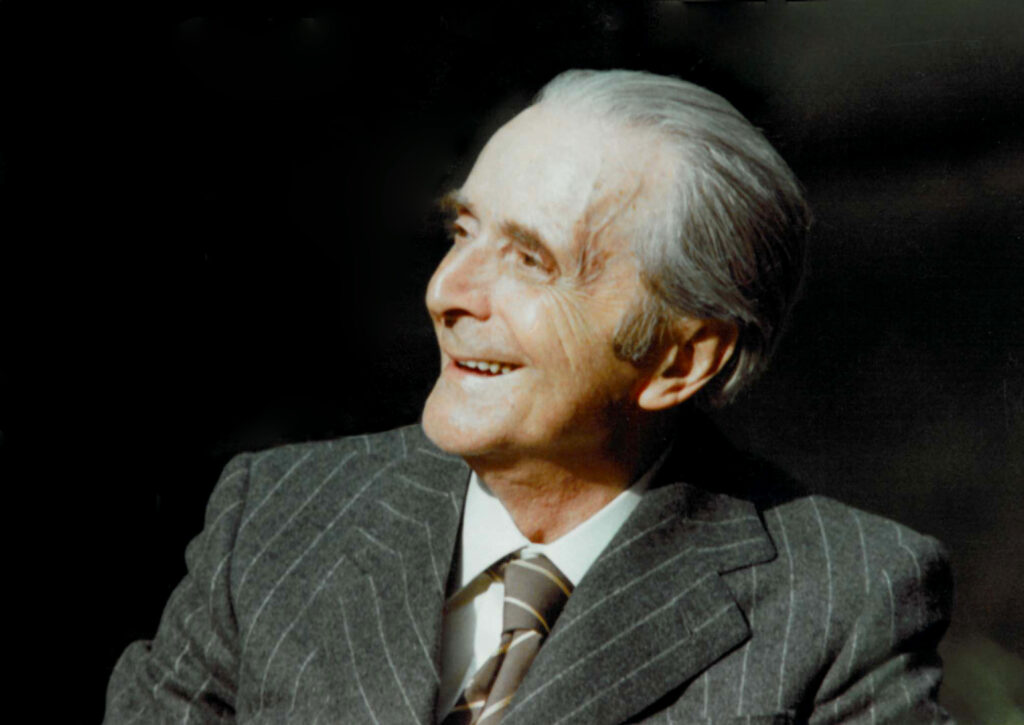
Igino Giordani
in: Rivolta cattolica, Città Nuova, 1997 (ed. Piero Gobetti, Torino, 1925)
Compiled by Elena Merli
Photo: © CM – CSC Audiovisivi
0 Comments