Focolare Movement
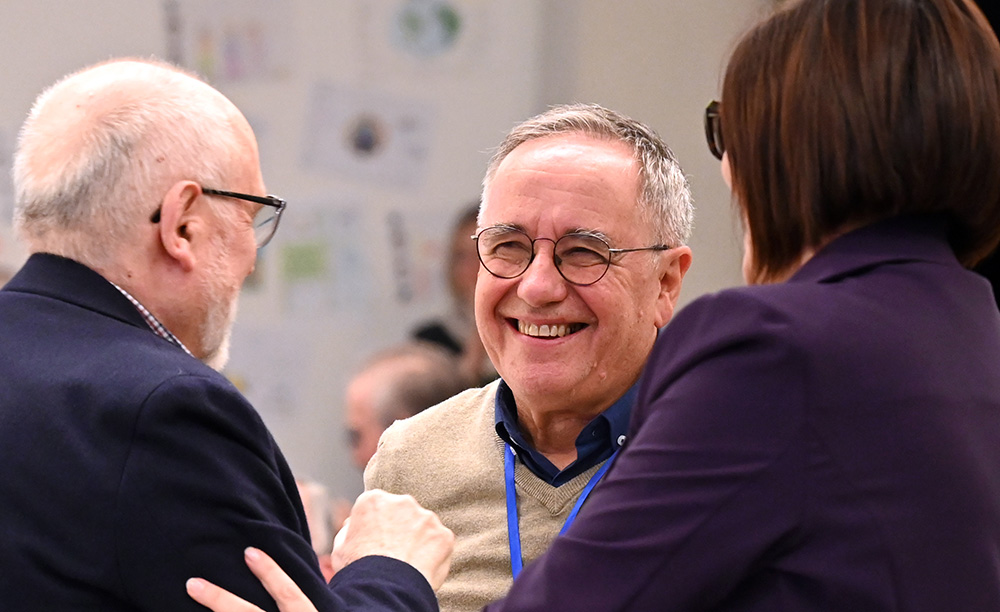
The General Assembly of the Focolare Movement is about to begin

The General Assembly of the Focolare Movement is about to begin

According to Article 1 of the Regulations of the General Assembly of the Focolare Movement, participants will live this event in profound communion, so as to help unity grow in the entire Movement and guide it toward the fulfilment of its aims. The Assembly is in fact one of the most important moments for the Focolare Movement and takes place every five years, as established by the Decree of the Dicastery for the Laity, the Family and Life (2021).

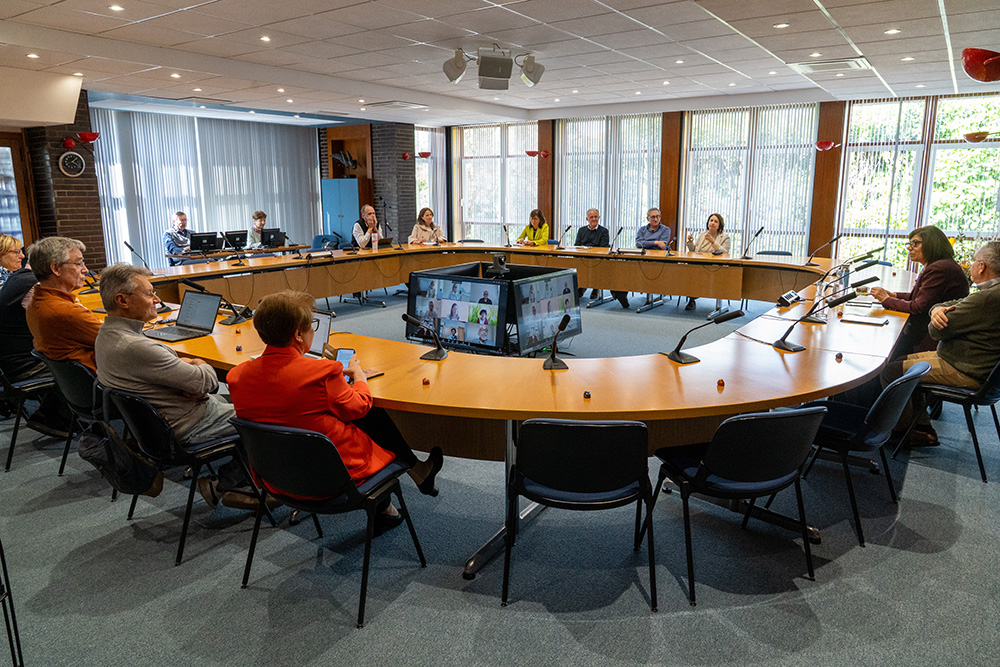
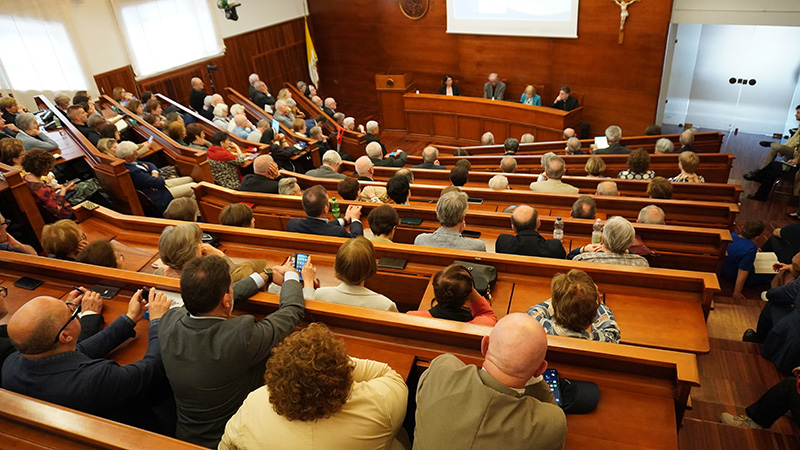
It will be held at the Mariapolis Centre in Castel Gandolfo (Rome, Italy), where 320 participants – including about 50 observers – from different countries, cultures and ecclesial and religious contexts are arriving. They are brought together by their adherence to the spirit and values of the Movement founded by Chiara Lubich (1920–2008) and recognised by the Catholic Church as a private, universal association of pontifical right.

The Assembly will begin with three days of spiritual retreat. On the 5th of March, the current President, Margaret Karram, will present her end-of-term report, accompanied by some reflections from the Co-President, Jesús Morán. The following days the programme will alternate between plenary sessions and work in 30 groups, dedicated to studying in depth the topics raised by the Focolare communities around the world.

The subjects that will guide the work will focus on the question of how to implement the charism, or rather how to create relationships of fraternity and unity, in the current global context through a commitment to peace and social justice, dialogue in a polarised world, the responsible use of technology, dialogue as a key instrument between Christian Churches and with people of various faiths and convictions, integral ecology, and participatory governance. One of the topics will also be the transmission of the charism of the Focolare Movement to future generations. There will also be sessions for discussion on the proposed amendments to the General Statutes and to the Regulations of the various branches of the Movement.

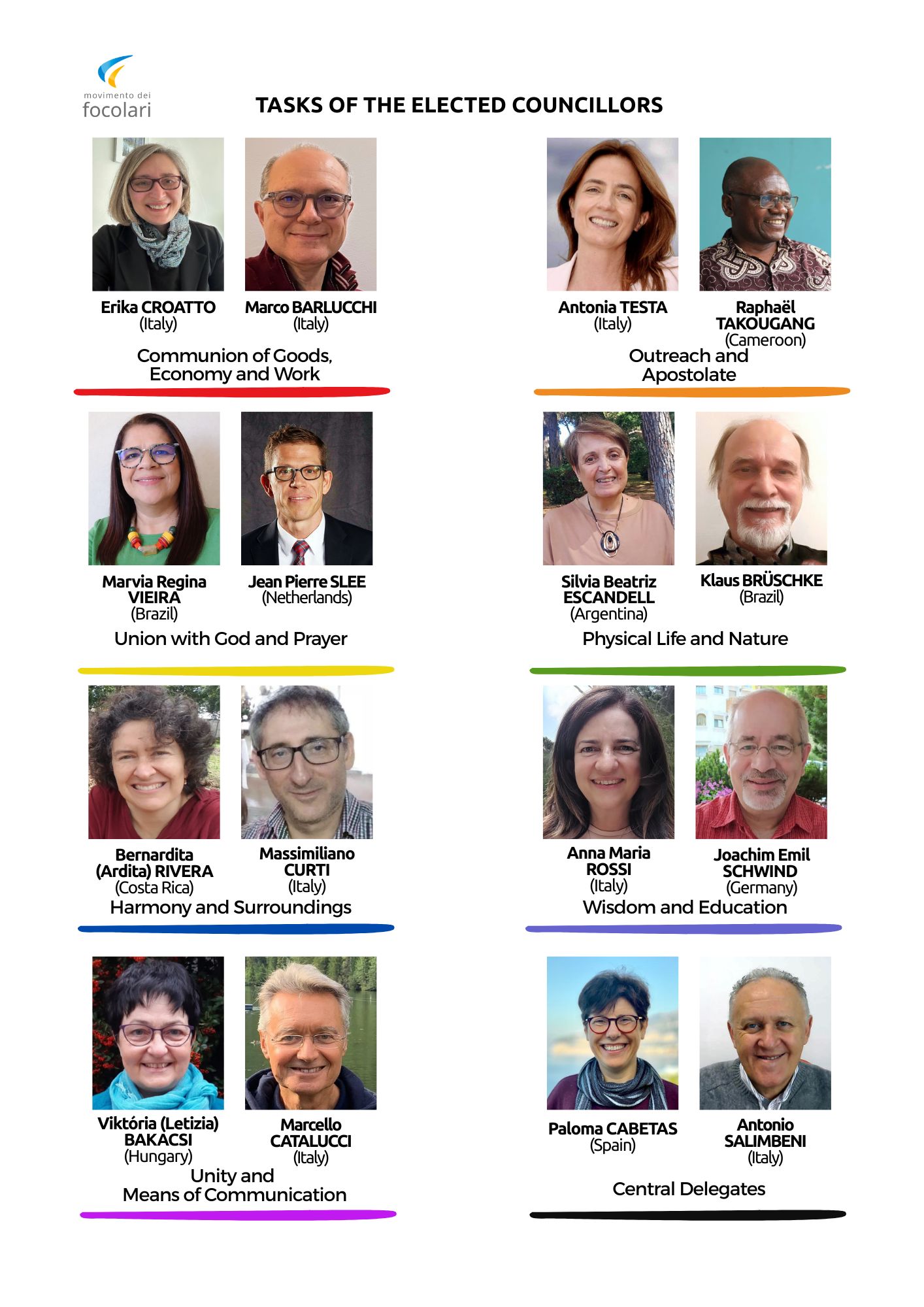
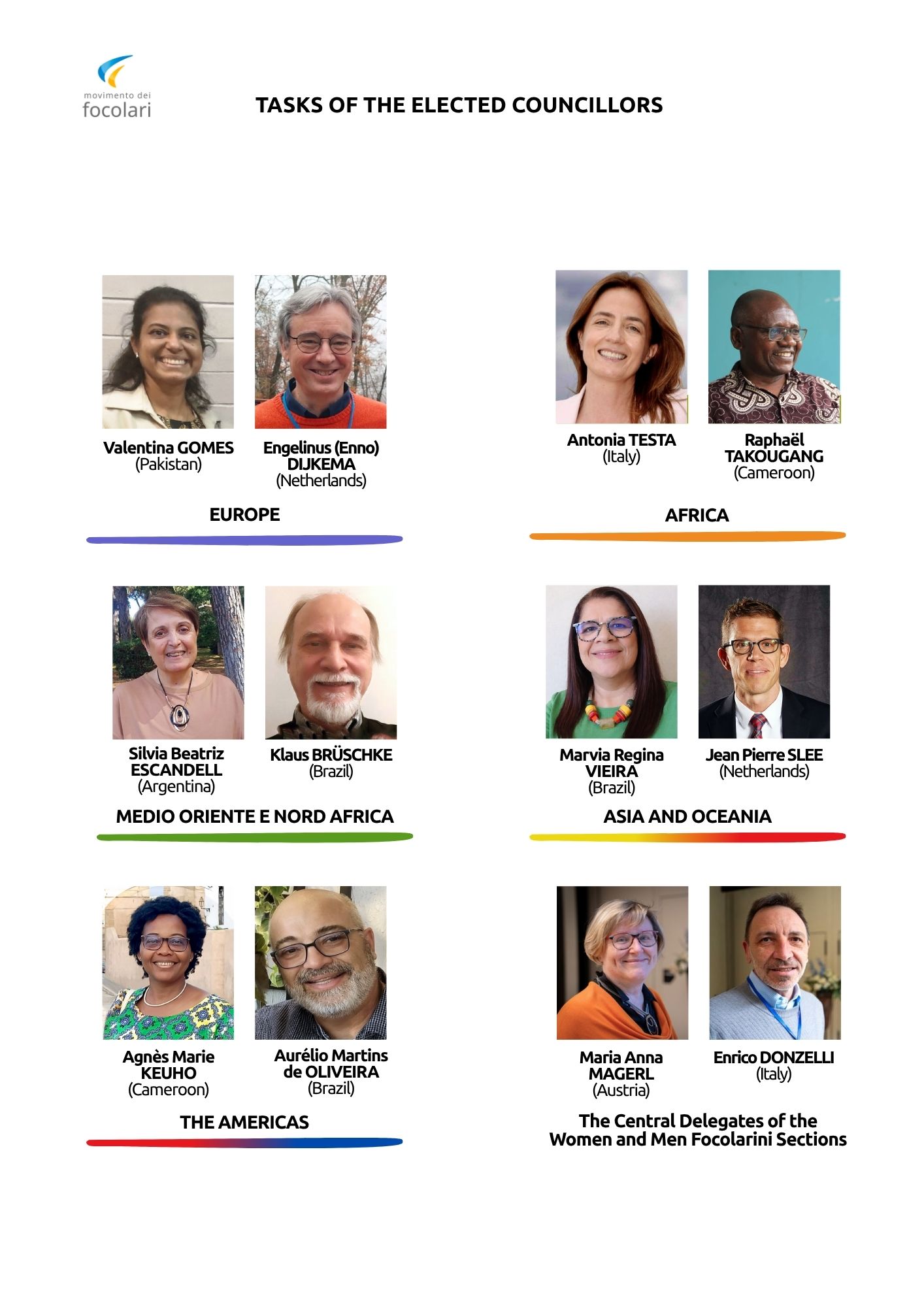
Thursday, the 12th of March, will be dedicated to the election of the President and the Co-President, positions which, according to the General Statutes of the Focolare Movement, must be confirmed by the Holy See. Then, on the 15th of March, the General Assembly will proceed with the election of the general councillors, thus completing the composition of the new governing body of the Movement.

In preparation for this Assembly, communities of the Focolare Movement in 150 countries took part in an extensive process of listening and synodal discernment, offering ideas and priorities for the future. This resulted in hundreds of contributions on key issues as well as challenges that the Movement is facing internally and in the global context. Local communities also expressed their preferences for candidates for the governing body of the Movement.

Stefania Tanesini
Photo Mariapolis Centre in Castel Gandolfo: © CSC Audiovisivi

2025 Annual Report: moving from policy to culture

2025 Annual Report: moving from policy to culture

In 2025, the Focolare Movement took additional steps to make its commitment to safeguarding both structural and verifiable, with particular attention to children and vulnerable adults. This was carried out in three areas:

  • consolidation of regulations
  • organisational strengthening
  • educational and cultural growth

Regarding regulations, the Movement has drawn up and approved the Safeguarding Policy of the Focolare Movement, which came into effect on the 1st of January 2026. The Policy brings together values, responsibilities and practices, connects procedures and guidelines, defines codes of conduct, criteria for safe spaces with a clear focus on people who have suffered abuse, providing for listening, accompaniment and – in specific cases – support and measures for compensation.

On an organisational level, on the 2nd of September 2025, the Safeguarding Office was established, with the task of coordinating safeguarding activities, monitoring commitments and deadlines, supervising official communication and supporting local safeguarding officers. It is supported by the Advisory and Action Board: a body composed of experts in the fields of formation, communication, law, and accompaniment of people who have suffered abuse. Its task is to assess the compliance of the actions undertaken according to the founding values of the Focolare Movement, to propose guidelines and strategic plans, and to promote collaboration with external experts and networks, ensuring constant updates on current regulations and best practices in the field of safeguarding.

View and download the 2025 Report by clicking on the image

In dialogue with the Catholic Church, in the two-year period 2024-2025, a collaboration with the Pontifical Commission for the Protection of Minors (PCPM) was developed. The Commission examined the Procedures for handling cases of abuse, making several observations; it also requested information to include an analysis of the Movement’s policies in its own 2024 Annual Report. The PCPM’s recommendations have led to a process of implementation that has already been partially completed (including the publication of the Internal Regulations of the Independent Central Commission and the reporting of dedicated resources) and, for the remaining part, is in the process of being defined or developed (additions to be made to the General Statutes of the Focolare Movement, IT tools and institutional channels for data confidentiality).

The commitment to integral formation in safeguarding was outlined in an initial document summarising the courses and initiatives planned for the two-year period 2024–2025. The information shows the work being done to make formation more widespread, strengthen local commissions and coordinators, and at the same time highlights some critical issues that need to be addressed: continuity of formation, intercultural adaptation of materials, and improved flow of communication.

All of these steps – Policy, Safeguarding Office, collaboration with the PCPM, formation and transparency in reporting – express the desire to continue with determination on the path of prevention, shared responsibility and listening to those who have suffered an abuse, in the belief that safeguarding is an integral part of the Movement’s mission and a service to the common good.

In this perspective, the words that the Pope addressed to the participants at

the meeting ‘Building communities that safeguard dignity’ also resonate for

the Focolare Movement as a guideline to follow:

“I therefore appreciate and encourage your intention to share experiences and learning processes on how to prevent all forms of abuse and how to give an account, with truth and humility, of the steps taken to protect minors. I urge you to continue this commitment so that communities may increasingly become examples of trust and dialogue, where every person is respected, listened to, and valued.

Where justice is lived with mercy, wounds are transformed into openings for grace.”[1]

Stefania Tanesini

Interview with Bishop Alí Herrera, Secretary of the Pontifical Commission for the Protection of Minors of the Catholic Church

Download the 2025 Report


[1] Message of Pope Leo XIV to the participants at the meeting “Building Communities that Safeguard Dignity”, promoted by the Pontifical Commission for the Protection of Minors, Rome, 15 November 2025.

The Pre-Assembly Process

The Pre-Assembly Process

The ‘Pre-Assembly Process’ is currently underway in preparation for the General Assembly of the Focolare Movement, which will begin on the 1st of March 2026 in Castel Gandolfo (Italy) with the participation of representatives chosen from different geographical areas, branches and movements; the members by right (those who are part of the current government, the General Council and Zone Delegates in the geographical areas), and those invited by the President.

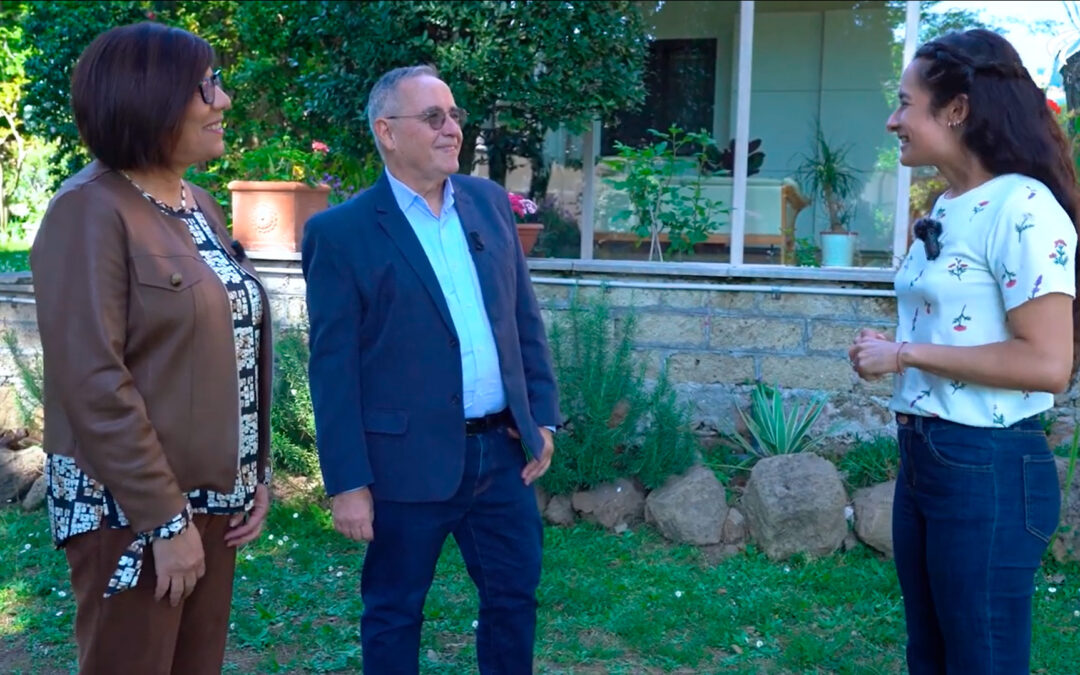
We interviewed Prof. Vincenzo Di Pilato, professor of Fundamental Theology and a member of the Preparatory Commission for the 2026 General Assembly, about the preparation process and his personal experience.

Activate subtitles and select the desired language.

Cover photo: © Joaquín Masera – CSC Audiovisivi

Pre-Assembly process: a journey of conversion and sharing

Pre-Assembly process: a journey of conversion and sharing

“My prayer, my hope is that these months ahead of us may truly be months of spiritual growth, of conversion …, personal conversion, but also collective conversion …. May there be mutual love, which makes us free to give everything and to have esteem for one another, respect for one another, knowing that each one of us has different ideas, different perspectives, different concepts about the Movement, different dreams… However, my conviction is that together we can have the light, together we can allow the Holy Spirit to guide this new stage of the Movement.”

These are the words with which, on 7 December, Margaret Karram, President of the Focolare Movement, addressed those present at the annual retreat of the men and women focolarini in Castel Gandolfo. She invited everyone to look towards the General Assembly that will take place in March 2026 (2026GA), a milestone in a journey that continues the development of the Focolare Movement.

Chiara Lubich, foundress of the Focolare Movement, included a premise “to every other rule” in the General Statutes, which certainly also applies to the General Assembly, because a governing body can only be rooted in mutual love: “Mutual and constant love, which makes unity possible and brings the presence of Jesus among all, is, for those who are part of the Work of Mary, the basis for their life under every aspect.”
As we announced in a previous article, following the various Zonal Assemblies that took place around the world, the consultation phase on proposed topics and amendments to the Statutes and the first phase of consultation on nominations concluded in November 2025. The list of participants and invitees has been finalised and is now definitive.

From 20 December 2025, preparations will continue with a series of meetings known as the pre-assembly process, aimed in particular at those who will be participating as elected members, members by right (ex officio), substitutes and guests at the 2026 General Assembly.

More specifically, there will be five Zoom meetings during which participants can explore various topics in depth:

20 December 2025: “Conversation in the Spirit”

17 January 2026: “How to prepare and how to live at the Assembly”

31 January 2026: “Presentation of the proposals concerning the General Statutes”

7 February 2026: “Main topics that have emerged”, Part 1

21 February 2026: “Main topics that have emerged”, Part 2

The Preparatory Commission for the Assembly (CPA) stated, “This will be a time of preparation, discernment, but above all, of sharing and will involve many people from the most diverse parts of the world. It is exciting. The participants of the Assembly will be meeting for the first time. There are certainly many challenges related to the physical distance, language and culture, but this reflects the intent of the process, which is to build unity. It is a moment in which we will truly begin to live the Assembly, in which this experience will begin to take shape.”

The aim of this pre-assembly process is to help participants to arrive at the Assembly as well prepared as possible, primarily through formation in Conversation in the Spirit, which will be adopted as a methodology in certain moments.

One of these meetings will be dedicated to a practical explanation of how the Assembly works and the legal requirements that must be fulfilled. It will also be dedicated to what should be the spiritual attitude of those who participate, in the awareness that each person represents their own context, their own communities and geographical areas, but at the same time, should keep an open mind to the Movement as a whole. There will then be a focus on the proposed amendments to the General Statutes to be presented to the Assembly. The final two meetings in February, dedicated to the main topics that have emerged from the consultations, will subsequently be made available to all those belonging to the Movement.

Ángel Bartol, coordinator with Cecilia Gatti of the CPA, said, “This pre-assembly process that is about to begin is not an isolated phase leading up to the 2026 General Assembly, but rather a new phase, an instrument to accompany us and help us continue walking together. It is like the image of a zoom lens that gradually focuses on the experience we want to live. In this process of coming together, in addition to learning what is important to the entire Movement throughout the world, it is also important to ‘get to know each other,’ to get to know the people who can fill the elected positions, to get to know their perspective and to enter into a dimension of listening and openness. It is a process in which it is important to allow ourselves to be converted and purified in order to discover what God is asking of us today.”

Preparing for the Assembly is therefore a journey that we want to undertake by committing ourselves daily to living mutual love, to the point of being worthy of the presence of Jesus in our midst. It is a process of gathering the fruit of months of work, drawing together a plurality of voices, ideas and souls and becoming a real expression not of individuals but of a body, of an entire family throughout the world, which together is taking steps towards the future.

Maria Grazia Berretta

50 Years of the Diocesan Movement: A Trail of Light

50 Years of the Diocesan Movement: A Trail of Light

Fifty years ago in Ascoli Piceno, a town in central Italy, two Focolare priests, Fr Pino and Fr Mario, decided to begin a simple apostolic activity together, proposing a series of meetings for young people. After just a few weeks, they were surprised to find hundreds of young people gathering around them, eager to live the Gospel in their everyday lives. It was the birth of the Diocesan Movement: an expression of the Focolare Movement, entrusted with animating the various expressions of the local Church through the spirituality of unity. Over these fifty years, it has seen works of God flourish in dioceses and many vocations emerge to priestly, lay and religious life.

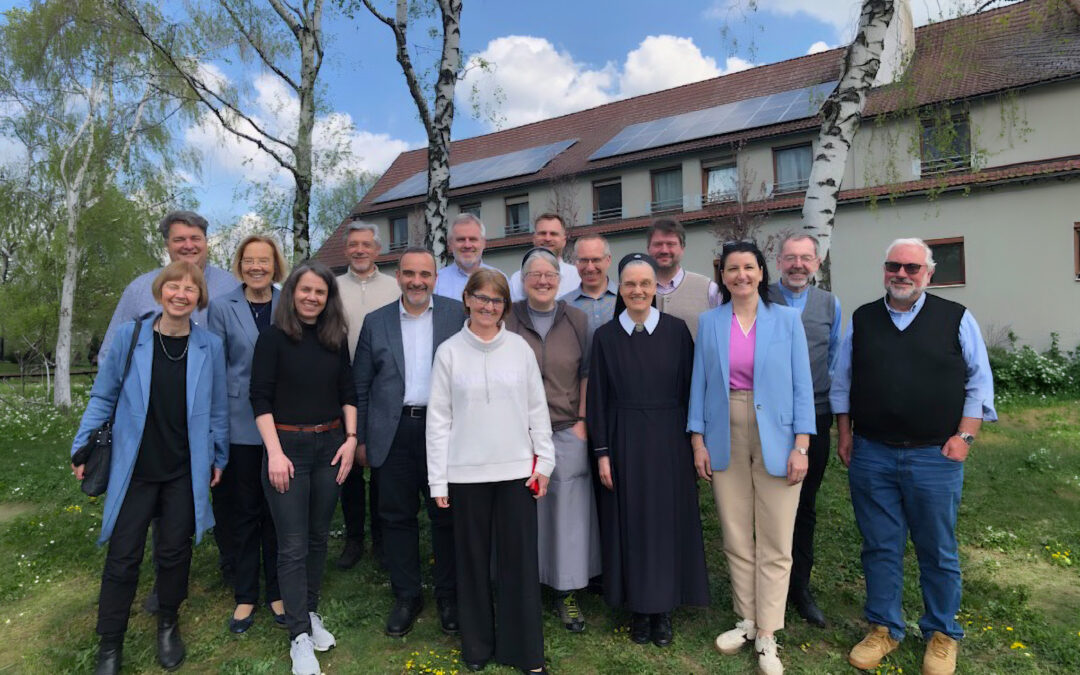
On 13th-14th December 2025, a commemorative celebration took place in the city. It was attended by Margaret Karram and Jesús Morán, President and Co-President of the Focolare Movement, along with Cardinal Giuseppe Petrocchi who, with Chiara Lubich, was a co-founder of the Diocesan Movement. Several bishops, Focolare priests and focolarine from the area were also present.

During the meeting with Margaret and Jesús, Bishop Gianpiero Palmieri of the diocese said, “The relationship I have with the Diocesan Movement is a very positive one, because it is deeply rooted here in Ascoli. The priests, lay people and deacons of the Diocesan Movement contribute to the life of our diocese in its missionary and evangelising task. What the Diocesan Movement can offer—and will continue to offer, now and in the future—is precisely this contribution, according to its charism, which is unity, to evangelisation itself, with the ability to dialogue with everyone.”

On the afternoon of 13th December, the Focolare communities of Ascoli Piceno, Teramo, Fermo, Pesaro, Macerata and Cuneo—dioceses in northern Italy where the Diocesan Movement has recently taken root—gathered together. Margaret said, “I am always struck by the vitality and joy of your communities because you have been able to go beyond the doors of churches and parishes and build networks with people and secular organisations in your cities. You have shown coherence in your evangelical choices, multiplying initiatives of closeness to the poorest, migrants and those on the margins. Thanks to the faithfulness of so many of you, today we can say that the Diocesan Movement is a grace for the Church and for the Work of Mary.” Jesús added: “The Diocesan Movement is the fruit of Chiara Lubich’s ecclesial genius. It is the ability to give birth to the Church within a group of souls in the community. Here in Ascoli we have seen this lived experience. With her ecclesial genius, Chiara brought about a community that is fully Church, at the service of the Church.”

The Card. Giuseppe Petrocchi , known to all as Fr Pino, retraced some of the early stages of the Movement, identifying the signs of the Holy Spirit. He added: “The spirituality of unity that the Lord gave to Chiara Lubich, and her witness, offer an intense charismatic light for exploring new theological, pastoral and social horizons, with the humble Virgin of Nazareth at our side as mother, teacher and model. For her and with her, we raise our Magnificat of praise and gratitude. Today, you yourselves are this Magnificat.”

In the various testimonies shared by members of the local communities, the experience of Church-as-communion was evident: the ability to build bonds of charity among the structures and members of the local Church, between charisms and ministries, and with everyone.

On 14th December, a round table entitled “The Charism of the Diocesan Movement in the Church and Society Today” was held at the city’s prestigious municipal theatre. Representatives of both civil and religious institutions took part, including the mayor and the bishop, as well as members of Catholic movements and associations, representatives of other Churches, and many citizens eager to learn more.

Mons Piero CodaSecretary General of the International Theological Commission of the Holy See, stated: “The Diocesan Movement presents itself as an original and timely expression, a concrete ‘grounding’, of the renewal set in motion and guided by the Council. It begins with the recognition and appreciation of the local Church—the diocese—as the concrete and irreplaceable place of communal experience of the Gospel, lived in its prophetic incarnation at the cultural and social level. With hearts and minds open to all, in harmony with the spirit of Vatican II and the charism of unity, Christians of other Churches or ecclesial communities can belong to the Diocesan Movement and people of other religions or of non-religious convictions can also take part. Is this not exciting?”

The Diocesan Movement can therefore be a bridge between the Gospel and the city and among the various social components of society. Margaret added, “This is its relevance today: to safeguard and ignite relationships, to open paths of mission in our Churches and in the many civic and social contexts. Everything begins with mutual love which, when lived, generates greater communion in the Church, greater fraternity in our environments, and greater hope for the world.”

An experience born fifty years ago not by chance, but through a journey that nourished the soul of the local community in Christ. Jesús Morán emphasized, “Chiara Lubich did not found the Diocesan Movement sitting at a desk. Rather, she recognised in the experience unfolding in the Church of this city (Ascoli) in the 1970s the unmistakable mark of her ecclesial soul, of her charism. Chiara was able to recognise it because here, also through that group of priests and young people, the Church of Ascoli was experiencing Christ within itself. That is how it was—and that is how it must always be.”

Already in the 1970s, the Diocesan Movement was initiating a process of synodality in the local Church. Today, it can and must be an instrument to ensure that the synodal journey the Church is undertaking becomes lived reality in local Churches. “The synodality of the Church requires not only well-equipped doctrinal classrooms, but also practical training grounds,” said Cardinal Giuseppe Petrocchi in his address. “In this sense, the Diocesan Movement can be a laboratory where we learn to live this communion as the Holy Spirit designs it before our eyes in the Church of today.”

Luigino Bruni, economist and university professor, said, “I am one of those young people who encountered the ideal of unity of the Focolare Movement in Ascoli through the Diocesan Movement. I went to the parish because I was searching for God. The experience of those years—there were about 200 young people—was very intense and rich in ideals. You didn’t become part of a movement but of the future of the Church and of the world. From Ascoli, we felt we were changing the Church, the world and the economy, so much so that I chose this path in the years that followed.”

Marie-Thérèse Henderson from the Ancona focolare added, “It is striking to see different generations living and working together to support and contribute to parish life in the everyday life of the Diocesan Movement and then to see, in the relationship between lay people and priests, that simple and prophetic reality the Church longs for and hopes for: the dimension of synodality and unity that belongs to the Church itself.”

The speakers’ contributions were interwoven with artistic moments featuring Alessandro Cappella, Enrico Mazzuca, Silvia Capponi, Elena Piermarini and Laura Ubaldi.

Lorenzo Russo
Photo: © Joaquín Masera-CSC Audiovisivi

Turn on subtitles and choose your desired language