Sister Tina Ventimiglia, a Franciscan Sister of the Poor, and Resi and Alessandra, volunteers of the Randi Association, find unimagined ways to contact and accompany victims of human trafficking, and to rescue them. Prevention plays an important role, through the creation of opportunity for development in the southern hemisphere of the world.
Yesterday, February 8, 2015, coincided with the liturgical feast of Saint Josephine Bakhita, a Sudanese woman who, as a child, had a dramatic experience of slavery. This was the day chosen as the day for the first International Day of Prayer and Awareness Against Human Trafficking. It was meant to break the silence on this “shameful wound that has no place in civil society.” That is how Pope Francis defined the phenomenon during the Angelus, with his heart full of sorrow for the multitude of “men, women and children,” “who are enslaved, exploited, abused, used as instruments of work or pleasure, and often tortured and humiliated.” He called on governments to eradicate the causes.
It is significant that the first to raise the voices against this ‘modern’ and unacceptable form of slavery were the Religious men and women who are spread across the world, and often the first and only ‘Good Samaritans’ who are able to reach out to those whose personal freedom has been violently robbed from them by those who have taken taking full possession of their lives and made them slaves.
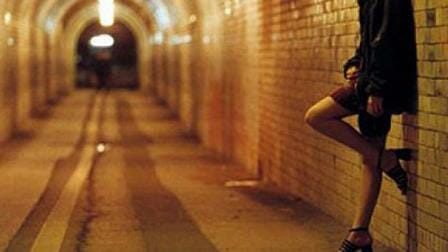
The experience of Tina Ventimiglia, a Franciscan Sister of the Poor was particularly meaningful. For twelve years she and her community have taken on the task of reaching out to girls living on the streets in Pistoia, Italy. “Illegal immigration and forced labour,” she says, “often has the countenance of a woman, the victim of so-called ‘protectors’. These fearful, suspicious or dismissive faces of those who no longer trust anyone strongly challenge us. In the light of what our founder taught and the charism of Chiara Lubich, we don’t see them as something to run away from, to cast off, throw away or, even worse, to condemn – we see them as ‘wounds’ of Christ in need of healing. You don’t need to ‘fight’ evil, but ‘pass over it’ by exercising ‘emptiness’, accepting the person just as she or he is, worthy of love, regardless of the situation they are in. Love never counts the cost, but loves without measure and continues to love even when it is not accepted or understood. And love also makes us understand which concrete steps we can take, like the path of health care, or legal assistance in order to restore someone’s identity by obtaining legal documents for them. We also offer support in processing their experiences and discovering inner resources for carrying on with their lives, making them feel that they are both worthy of love and capable of loving. We never neglect to help them find a network of people with whom they can have healthy relationships that will allow them to insert in local community, workplace and independent living.
Alessandra: “Randi is the baby girl who was born to Rebecca twenty two years ago in the hospital where I was working. She immigrated illegally to Livorno, Italy, and didn’t speak any Italian. But her anguish was apparent since, not having a Visitor Visa, she feared baby would be taken away from her. Welcoming her without judgement or prejudice, we were able to work out a solution for her. After a very short time more than seventy girls in similar or worse situations knew they could count on our association, which we named ‘Randi’.”
“What do we do?” Resi asks. “We often find ourselves in front of situations of slavery for economic gain. This is a business that moves a market of 24 billion euros and involves between 27 and 50 million human beings across the globe, most of them women and children. It is a real and very frightening trafficking that creates fear, isolation, and the inability to defend oneself against it in any way. Around half of the trafficking involves young women forced into prostitution. It really is not easy to draw near to these enslaved individuals who are carefully prevented from contact with the outside world. Sometimes we meet them by accident, when they come for treatment at hospital, or when we meet on a train. When they do come into contact with us, the spirituality of unity helps us to convey to them that they finally have someone they can trust. And this is where the miracle occurs, because perhaps for the first time they aren’t being asked for anything in return.”
Healing wounds is the great challenge of the Gospel. But we should also prevent them whenever possible. And this is the side that has been taken by crowds of men and women Religious who travel with the Good News to foreign lands where they promote the dignity of the person. The Focolare is doing the same in 53 countries on 4 continents, they are operating more than 100 development interventions that allow 15,000 children and their families to create concrete development opportunities that are spent in their own lands, in freedom.
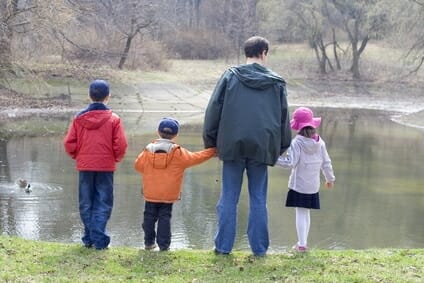
“Because of my professional military training and also because of my overly rigid personality, it was very difficult for me to relate with my children. I was aware that I had to correct my attitude, but I didn’t know where to begin from. The words of the Gospel invited me to place love at the basis of my child-raising, and therefore to make a change in my relationship with them, a major breakthrough, not halfway, but radical. Beginning, constantly beginning again, little by little, the path of communication was opened. I tried to enter into their world, to be more interested in their aspirations and concerns. I came to know their problems, we suffered and rejoiced together and, in that way, the distance between us disappeared even with the one with whom it was most difficult. My role as a father took on a new dimension: now I’m also their counsellor, friend and brother. (F. U. – Perù) “I’m 29 years old, and I come from Sri Lanka. In my country I was a cook and fought for greater justice among social classes, but that was looked upon with suspicion and I was obliged to leave my country and go to Europe where everything is quite different for me. As soon as I arrived I felt tremendously alone and filled with rancour towards everyone. Then, someone in the refugee camp told me about some young Christians with the same ideal as mine: to make the world a better place. Amazed at the thought that others could share my dream, I felt heartened and began to look at the people around me, to be more cordial with others, to greet people. A lot of human relationships were begun among the people, to the social worker’s great surprise. I’m a Buddhist and through my relationship with Christians and with the West my own faith has grown.” (S. – Sri Lanka) “I thought that by deciding to go to Lourdes as a stretcher bearer for the UNITALSI Lourdes Association in service to the sick, it would make me really experience a pilgrimage filled with surprises, with ‘special effects’. Actually, accepting my good will and this not-so-disinterested intention, God used my circumstances to make me understand what He wanted; that is, that my service to the sick , yes, is important for them, but also and especially for me. I am the one in need of them. Because – I share this as the synthesis of my experience at Lourdes – if I am fortunate enough to give away what I have freely received from God, the sick repay with the maximum that they have to give: a smile, a gesture of gratitude, a warm greeting. . .” (M.G. – Italy) Source: Il Vangelo del giorno, febbraio 2015 – Città Nuova Editrice
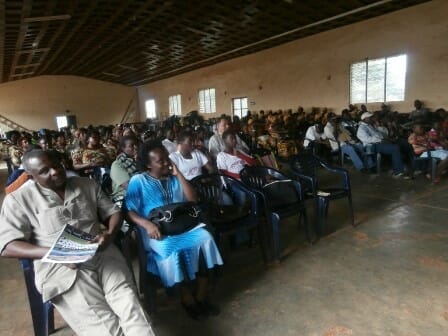
A school of the Gospel:an appointment that takes place every two months and involves the entire village, including the parish priest and the Fon, the royal authority of the place. The subjects? Studies on phrases of the Gospel, from various perspectives mostly in relation to their application to daily life. A phrase is chosen as the motto for the week, up to the next meeting during which, in a spirit of communion, all will share their efforts to put it into practice, to encourage one another to continue the experiment. This experience which started in Fontem – the Focolare town of Cameroon – was an idea of the Fon and was also launched in Akum, another village in Cameroon. Initially, those who attended were mostly women. But as time passed, there was also an increased participation of men, struck (though they did not admit it publicly) by the changes they saw in their wives. Here are some of their stories.
“My name is Suh Nadia,” a girl said, “Some of my schoolmates and I agreed to meet for the world prayer of the youth of the Focolare called Time-out. At first, there were six of us, and then 12. At a certain point, the Headmaster found out about it and called me to his office. I thought that we were out for a punishment since we would interrupt our studies for a few minutes to pray. I tried to be brave and to explain the importance of this moment of prayer. In fact, even if Cameroon is a peaceful place, there are many countries around us beset by war, and we have to pray for them. After listening to me, the Headmaster thanked me and said that he would change the schedule of the lessons so that all the students could join us.”
Then Evangeline speaks up: “While on my way to my aunt’s house, I noticed that the neighbours were maltreating a girl who had gone to sleep in Church to escape. On accompanying her home the parish priest tried to convince her family to treat her well. But the moment the parish priest left, they started to scold her again. She cried so much. I approached her, tried to listen to her with love, and decided to go and speak with her family. Even if my aunt tried to dissuade me from doing so, remembering what the Gospel says, the next day I went just the same. The lady said that the girl was not their daughter, but one who worked for them as a nurse. “Precisely because she helps you,” I said, “you should treat her like a daughter.” The woman did not seem to be paying attention to my words, but her husband was listening: “Who are you?” he asked, “Who sent you?” When he found out that I had gone there on my own initiative, he thanked me and promised that they would not maltreat her any more. Seeing that the girl had almost nothing to wear, I brought her some of my clothes.”
Veronica usually also cooks for her mother-in-law. One day the woman told her that she had a problem with her eyes and could hardly see what she was eating, and that perhaps, it was best she stopped bringing her food. Veronica made an appointment at the hospital and on the evening prior to which, went to sleep in her house. Two sons of the woman live in that city, but they did not show any interest. The doctors decided to operate on her immediately, and so Veronica, despite her job commitments, remained with her in the hospital for a week. On returning home, not even her other sons cared for their mother, so Veronica continued to go to take care of her and bring her food, dismissing the fact that her children would go to visit only when she was there, to take advantage of the food she brought. “It is the fourth time I am participating in these ‘new evangelisation’ meetings,” Veronica concluded. “I am only trying to put into practice what I learn here.”
“Only 2000 Cameroon francs remained (circa 3,00 Euros) and I still had to buy some things,” Marie says, referring to the phrase of the Gospel ‘Give and you will be given’. “In order to save I went to the market which was six miles away, with the 700 frs. I still had. On my return I noticed that I had forgotten to buy oil, and decided to do so near the house: my 700 frs were just enough. I was about to cross the street when a girl patted my shoulder: help me to buy some spices, she asked. A voice inside me said: give! So I paid for her spices: 250 frs. With what remained I could only buy half a litre of oil. A man I knew, asked me to buy him some salt: it cost 100 frs. Lastly, a boy approached me and also asked if I could pay for some spices too: another 200 frs. With the money that remained I could no longer buy any oil. When I got home I asked the children to heat the tins to see if any oil still remained, but they were completely empty. So I sent them to the shop dealer to ask if we could have some oil on credit, but he didn’t have any. Not even my next-door neighbour had any. How would I manage to cook for my kids? At that instant, my close friend’s son arrived with a basket on his head. “I’m here,” he said, “because my mother couldn’t come for your mother’s death and now she wanted to send you this basket.” When I opened it, there were some coconuts, dried fish and… five litres of oil!”
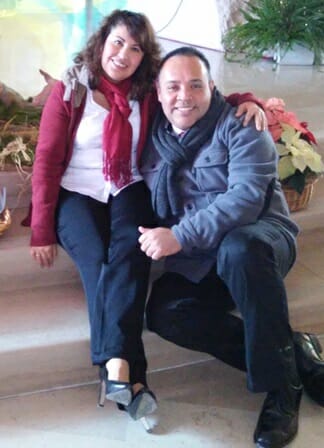
Two voices intertwine in a crescendo of suffering and of hope, of deep emotion and of wonder. They lead us to discover the secret which has brought them to recompose that unity which seemed to be irreparably broken. It is Fili who begins their story: “Nacho and I have been married for 24 years and we have two children. I am the sixth of eleven siblings. There were many sufferings in my family, like that of discovering that my father had another wife and other children and this made me suffer a lot.” “Me, too, as a child,” Nacho continued, “I suffered due to the absence of my father and the lack of attention from my mother. It was my maternal grandmother who took care of me. With Fili we were in love when we got married, but there was a great existential emptiness wherein each one of us identified with the other. We united our solitude, but we didn’t know each other deeply and soon enough we realized that we didn’t know how to love and even what love means.” “Our problems started from the very beginning of our marriage – Fili continued. I was very jealous and possessive, up to the point that Nacho had to continuously change jobs». «Her attitude – Nacho followed – caused feelings of resentment, anger and frustration in me and the discussions between us were never-ending. Our children were born and grew up in this kind of unhospitable atmosphere. Both Fili and I loved them very much, but since there was no love between the two of us, we thought that we could fill this up by showering them with material goods, when instead we should have given them a listening ear, tenderness and affection. Thus 15 years passed. Disappointed by this situation, I left our home. I had already done this before, but every attept to come back and rebuild our relationship failed. What could I do, I asked myself, when a relationships is completely broken?” Fili continued: “In fact for me it was impossible to rebuild it, so much so that I allowed him to return only because I saw how the children suffered because they needed him. One Saturday evening,” Nacho said, “I was watching a boxing match on TV. It didn’t seem to be interesting so I changed the channel. I happened to see a religious program and out of curiosity I continued to watch it. There was a woman (later on I learned that it was Chiara Lubich) who was speaking about Love. Her word had such a strong impact on me. At the end of her talk, they showed some images of the little town of the Focolare Movement in Mexico, that is situated near our town, but which I didn’t know about». “So, the next day,” Fili continued, “we went to Mass at the El Diamante (this is the name of the little town) with the whole family. There I was struck by the way they welcomed us, it was as if they had known us from the beginning. The Mariapolis, a gathering which was going to be held precisely there, was just a week away but we decided to go. The proposal on the first day was the phrase from the Gospel: “Forgive seventy times seven times”. I asked myself: is it possible to forgive always? I found the answer when they spoke to us of Jesus Forsaken: He didn’t only forgive us but he gave his life for us. I realized that in front of such a love, my sufferings were very small. It was not easy to start again, but the Word “Forgive seventy times seven times” has always helped me to do it.” “For me too,” Nacho confided, “‘that Mariapolis turned my life upside down. I learned how to have faith in God for whom everything is possible. With Fili we have learned how to love each other in our diversity. Slowly we have fallen in love once again with one another. We discovered a fullness of love that we have never experienced before, not even when we were engaged, because now we love each other in freedom, in God.”
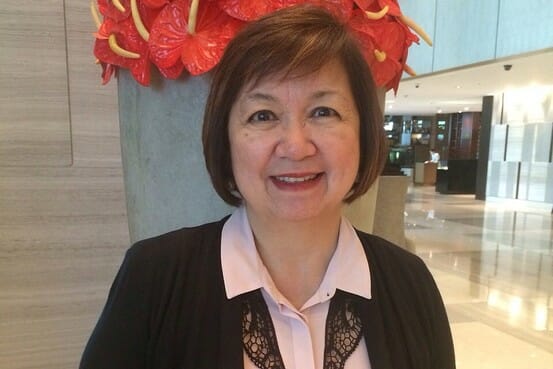
Teresa Ganzon and her husband bought a controlling interest inBangko Kabayan Inc.in 1989, when it had only one branch, and it now ranks as one of the biggest rural banks in the Philippines.The Ganzon have faced the usual array of developing country business risks, but in an unusual way, because she is also a leader in the Economy of Communion, an international network of more than 800 businesses committed to putting into practice the Catholic social doctrine behind Pope Francis’s controversial comments about business and the economy. In a press conference during his recent trip to the Philippines, the Pope condemned corruption, and even spoke of kicking corrupt officials “where the sun doesn’t shine.” Ms. Ganzon discussed with Risk & Compliance Journal how Bangko Kabayan has grown while doing business in a manner consistent with that doctrine, in one of the world’s more corrupt countries. What are the main points of friction for a business managed in accordance with Catholic social doctrine in the Philippines? Ms. Ganzon: Compliance is the biggest problem we talk about. For example, people excuse their noncompliance by saying we have corrupt politicians that just steal from public coffers, or we don’t see commensurate benefits getting down to us as citizens so, why should we support the government with our taxes? Paying the right amount of taxes is a sign of contradiction, especially among small and medium-size companies. Bribery is rampant and unfortunately is embedded in certain government offices so that a businessman feels the only way his business can survive is to do as everyone does and simply input the bribe or grease money as a “normal cost” of doing business. This contradicts the Catholic social doctrine and Pope Francis. How do you deal with such embedded corruption?Ms. Ganzon: An Economy of Communion business upholds adherence to ethical standards and is conscious that it has a vocation to change the way things are done, to be more aligned with Christian values. For example, some years ago we were all set to offer a certain loan product we were sure would have a big demand and good margins, easy collection, etc. But when we faced a government bureaucrat whose signature and cooperation were indispensable to the collection process, he asked for a percentage of each collection to be paid to him. We could find no way around this obstacle and eventually, we had to think of another loan product. Also, in the Philippines, tax compliance for enterprises big and small has been almost nonexistent. We received an award certifying us as one of the top five tax payers in a region where there are some large manufacturing firms – much larger than our bank. You walked away from a business opportunity rather than engage in corruption?Ms. Ganzon: Yes, but then we learned about microfinance. It addressed financing needs of a segment of society considered “unbankable” then by many formal financing institutions. We developed a microfinance program instead, and discovered we had a bigger segment to be served, albeit not as easily as that of the former, which was a simple salary loan to a government sector. Many times over, this hard choice is presented to us. Often, we have to give up an original idea or product that might have given us good margins, just because somewhere in the process, petty bribery (or not so petty bribery!) was necessary to get the loan collateral registered. But somehow, we get more original ideas about other products where no bribery is necessary and we end up serving a sector that would otherwise have remained underserved, just because we looked harder for alternatives. How Pope’s criticism of business and the economy affected your business?Ms. Ganzon: He talks about having more empathy for people at the bottom of society, and for us, in the microfinance area, it helps us to have greater resolve. This is very difficult business to do, because it entails a lot of field work and usually young people, when they apply for work in a bank, think they are going to be working in a very comfortable environment in an air conditioned bank branch. After six months or so they decide they don’t want to do this kind of demanding fieldwork job. So for us, recruiting the correct people who will stay and love what they are doing because of empathy towards the poor is very challenging. We don’t meet efficiency standards that easily and you cannot help but look at performance standards if you want to stay in business. But the Pope’s message is very clear that this is a business we cannot give up on, a vital service for the poor. Source: Wall Street Journalhttp://blogs.wsj.com/riskandcompliance/2015/01/26/serving-god-and-the-law-at-a-philippine-bank/

 Alessandra: “Randi is the baby girl who was born to Rebecca twenty two years ago in the hospital where I was working. She immigrated illegally to Livorno, Italy, and didn’t speak any Italian. But her anguish was apparent since, not having a Visitor Visa, she feared baby would be taken away from her. Welcoming her without judgement or prejudice, we were able to work out a solution for her. After a very short time more than seventy girls in similar or worse situations knew they could count on our association, which we named ‘Randi’.”