20 Jun 2020 | Non categorizzato
Chiara Lubich wrote “Jesus was the manifestation of the Heavenly Father’s fully welcoming love for each one of us and of the love that, consequently, we should have for one another. (…) The welcoming of the other, of the one different from us, is the basis of Christian love. It is the starting point, the first step in the construction of that civilization of love, of that culture of communion, to which Jesus calls us especially today”[1] . Research Worker I was working on a research project for which there was a deadline, when my neighbor knocked: she asked me to keep her sick husband company while she went shopping. I knew their situation and I couldn’t say no to her. He started talking to me about his past, about his years of teaching… While I was listening, from time to time I was distracted thinking of the work I had interrupted. Then I remembered the advice of a friend: being able to listen to a neighbour out of love is an art that demands emptiness. I tried to do this by being entirely present to the man. At a certain point he, in turn, took an interest in me in turn, asking me about my work. Knowing what I was dealing with, he suggested that I look in the library for a notebook in wihch he had taken notes at a conference on the very subject I was dealing with. I found it and we started discussing the subject. In short, I acquired new elements to see more clearly how to conclude my research. And to think that I was afraid of wasting time! (Z. I. – France) Prepare to live… When the doctor announced to me that there was nothing more to be done, it was as if every source of light switched off and I was left in the dark. On the way home, I took the road to the church. There I paused in silence, while my thoughts swirled in my head. Then, like a voice, a thought formed in my mind: “You must not prepare for death, but for life!”. From that moment on I tried to do everything well, to be kind to everyone, without being distracted by my pain but ready to welcome others. My days became filled with life. I don’t know how much time I have left, but the announcement of death was like waking from a sleep. And I’m living with unexpected serenity. (J.P. – Slovakia) The Transfusion I’m a nurse. I happened to know of a patient who was seriously ill. In order to try to save her, we needed blood of a certain group that had been unavailable for several days. I tried to find a donor among my friends and acquaintances and then I continued my research at work. There was nothing to do. I was about to give up when I decided to ask Jesus: “You know I’ve tried to do my part, but if you want, you can do anything.” After my shift , the doctor I was assisting had just left when a young woman arrived for a consultatio. I couldn’t let her leave, who knows how far she had travelled. I rushed to call the doctor, who unlike on other occasions was willing to return to the clinic. I started to write the prescription and, asked for an identification document. The lady handed me a card from the Association of Volunteer Blood Donors. With bated breath, I asked myself: what if she has that blood type? What if she’s willing to donate blood? She agreed, and a few hours later, the woman was at the patient’s bedside for a direct transfusion. (A. – Italy)
by Stefania Tanesini
(taken from Il Vangelo del Giorno, Citta Nuova, year VI, n.3, May-June 2020) [1] cf C . Lubich , Word of Life December 1992
19 Jun 2020 | Non categorizzato
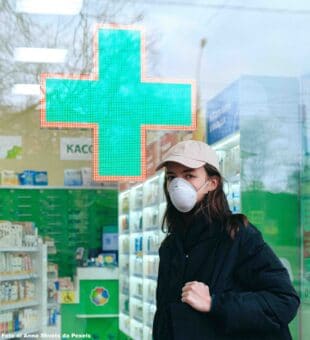
We continue to share stories of solidarity from Focolare communities in countries that are still facing the battle against covid-19. While in some countries we have “almost” returned to normality, in others the level of the pandemic is still high. Nonetheless, stories of fraternity continue to arrive from Focolare communities around the world. Brazil is currently the country most severely affected by covid. The Focolare community has continuously shown concern for the people in the greatest difficulty and has collaborated with other organisations in offering help. The various communities scattered throughout the country have also tried to assess who was suffering amongst their own members. They made a quick census and calculated that needs can be met for 2-3 months through a “communion of goods” and some extra economic support. Economy of Communion entrepreneurs have also begun a fundraising campaign to help some of the most disadvantaged communities. From the United States Matteo reports: “When covid-19 began its terrible and rapid diffusion here, we, the staff of Living City magazine and New City Press, asked ourselves what we could do, besides following all the guidelines of the civil authorities? How could we help people to overcome the crisis? It was immediately clear that “social distancing” should not prevent us and others from loving. So we created a series of videos, webinars and interviews with the hashtag #DareToCare, to inspire and encourage everyone to get in touch during these challenging weeks. We asked people to share in a 1-2 minute video how they “dare to care”. One woman said that while she was shopping she saw people panicking. So, instead of buying two large packages of chicken that had just arrived at the supermarket, she only took one to leave some for other customers. One pharmacist decided to stay open to serve his customers, but he had no protective equipment. ‘When the crisis started, we had almost no masks and gloves,’ he said. He shared his concerns with his customers and they brought him masks themselves and so saved him money. Another family of five people recorded their new daily routine: they work and follow lessons online from home, the daughter trains to keep fit for next year’s track and field events, and everyone is trying new recipes to share with one another. And the videos keep coming!” Ulrike, a psychiatrist, says, “I work in a clinic in Augsburg, Germany. At the moment, my job entails responding to phone calls from the public. When one lady called, I realised that it was going to be very difficult to respond to her requests and I needed to make a special effort. Eventually, I was able to give her the important information that she wanted.. An e-mail arrived in the afternoon: ‘Dear Doctor, my husband and I would like to express our heartfelt thanks for your extraordinary efforts. If everyone was as helpful as you during these difficult times, there would be fewer problems.’” From Buenos Aires, Argentina, Carlos tells us, ” Following the death of a homeless person from the cold, in July 2019 the Bel El Jewish community began a campaign to help the poor: the campaign was entitled ‘Don’t be cold in front of the cold.’ Our Christian friends, especially from the Focolare Movement, have come to help us distribute food to the homeless people. We are not talking about “dialogue” here – it’s a matter of sharing our lives. Then the coronavirus meant that homeless people could no longer live on the streets, so what were they meant to do? This was the beginning of the project ‘Another meal for hungry people in lockdown.’ Once again, Jews and Christians together, the Bet El Community and the Focolare Movement have embarked on the sacred task of loving our neighbours and not neglecting them.” The head of a junior school in Montevideo, Uruguay, tells us, “State funding enables us to provide free school meals for children from 48 different families who attend our school. Feeding these children became a big problem when classes were suspended due to covid. I started to pray and have more faith in God. Then, thanks to a foundation and some friends from Inda (National Institute for Food), resources arrived and we are able to distribute food baskets that will last for at least a month.”
Lorenzo Russo

18 Jun 2020 | Non categorizzato
Gen Verd’s new music video dedicated to Chiara Lubich Saying thank you to someone is a simple yet profound gesture. That’s the reason behind Gen Verde’s new video of the song entitled “Che siano uno” (May they be one). In this centenary year of her birth, the song is dedicated to Chiara Lubich and her ideal: universal fraternity. “With this video – says Adriana from Mexico – we don’t want to just celebrate Chiara Lubich by simply flipping through a family photo album and remembering the stories behind them. Instead we want this to be a living encounter with her today for many people, a chance to get to know her ideal which has permeated various aspects of life in civil, religious and political spheres. We want to dedicate the song to her because she is the one who gave life to Gen Verde, guided us in our first steps, and gave us the band’s first instruments from which it all began. Many of us have been fascinated by her words, actions and most of all by her life. Today we feel that we need to be authentic and credible witnesses of her message.” This powerful ideal, born during the destruction of the Second World War, is still very much relevant today when we see waves of racism and discrimination on TV and social media. While the emergency of Covid-19 has been handled with apparent success in some countries, it is also true that in some it has also widened the gap between the rich and the poor, between people of different races, between those who can afford necessary medical care and those who have nowhere to bury the bodies of their loved ones. “We are convinced – says Beatrice from Korea – that universal fraternity is possible and is not a utopia; this is what we experience everyday, and we try to translate those experiences into music. Often it is about doing simple acts that tear down cultural barriers and prejudices.” Since 1943, the year in which the Focolare Movement was founded, this is what Chiara Lubich did. Step by step with great tenacity, together with her friends she built new and profound relationships that became revolutionary, first in her city (Trent, Italy) and all over the world. Gen Verde’s music video captures some important images of historical moments: Chiara together with Jewish, Sikh, Hindu and Muslim people, or between the leaders of two different tribes in Cameroon. “Surely the best way to say thank you to Chiara – explains Nancy from the United States – is to live for her ideal; but with this video we also want to express our immense gratitude to her. She’s the one who formed us. Without her Gen Verde simply wouldn’t exist.” To see the video, click here! https://youtu.be/A3xuaqtkOj8
Tiziana Nicastro
16 Jun 2020 | Non categorizzato
Maria Voce is also among the signatories to the appeal promoted by the Community of Sant’Egidio to re-humanize our societies. An invitation to spread it and to sign it in order to draw attention to the serious condition of the elderly following the “massacres” carried out by the pandemic. No to selective health care, no to a “culture of abandonment”, no to any expropriation of individual rights; yes, instead, to equal treatment and the universal right to care. “The value of life remains the same for all. Whoever deprecates the fragile weakness of the elderly, prepares to devalue all lives”. The international appeal “Without the elderly, there is no future, to ‘re-humanize’ our societies – Against ‘selective health care'” supports a culture of life without exception and it was on June 15th , on the occasion of the World Elder Abuse Awareness Day , which Sant’Egidio celebrated in all the countries where it is present. Among the many high profile endorsements is that of the American economist Jeffrey Sachs, the Italian-British writer Simonetta Agnello Hornby, the German philosopher Jurgen Habermas, the Spanish sociologist Manuel Castells and then Stefania Giannini, UNESCO’s Deputy Director General, as well as the founder of the Community of Sant’Egidio, Andrea Riccardi, who is also the first signatory. The president of the Focolare Movement also joined in and signed, inviting the communities of the movement worldwide to do the same, to draw attention, especially in Europe, to the condition of the elderly. “I share what the appeal denounces, namely the emergence, in the face of the dramatic health conditions that Covid-19 has brought to light, of a dangerous model that promotes selective health care that would in fact justify choosing to care for the young, sacrificing the elderly. A society without the elderly cannot be said to be such; a society that cannot benefit from the indispensable intergenerational relationship is a poor, monotonous society, incapable of planning and achieving a better future for all, of being inclusive, because it is the result of the diversity that one encounters”. In a note circulated by the Community of Sant’Egidio we read: “The appeal stems from the bitter observation of the very high number of victims of Covid-19 among the elderly population, in particular among people in institutions and nursing homes, and it proposes a radical change of mentality that leads to new social and health initiatives”. A WHO report noted, as early as 2018, that precisely “in institutions abuse rates are much higher than in community settings” including various maltreatments including “physical restrictions, deprivation of dignity, imposition of daily chores, intentional provision of insufficient care, neglect and emotional abuse”. The situation worsened during the Covid-19 pandemic resulting, as is known, in a very high death rate in institutions, about twice as high as among the elderly living at home, according to data held by the Higher Institute of Health. For this reason, on the World Elder Abuse Awareness Day , the Focolare Movement joined the Community of Sant’Egidio in supporting the international appeal and the promotion of a “moral revolt to change direction in the care of the elderly”, proposing to the state and local administrations the implementation of a system that privileges home care and assistance for the elderly population.
Stefania Tanesini
Sign the appeal here

16 Jun 2020 | Non categorizzato
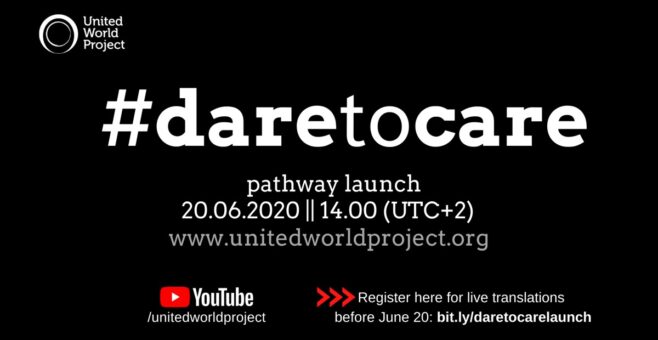
This week on 20th June the young people of the Focolare are launching #daretocare via YouTube livestreaming – their new campaign to “take responsibility” for our society and the planet. Jesús Morán, co-president of the Focolare Movement commented as follows: “We need a new ethical agenda; care has a strong political vocation and a strong planetary dimension. “#daretocare“. The young people of the Focolare Movement have taken seriously the words of Pope Francis and many other religious and civic leaders to find concrete ways of working together to care for our Common House. Through this new pathway they want to be active citizens, taking an interest in everything that is happening in the world to try and build a little bit of united world. As Jesús Morán, co-president of the Focolare Movement explained: “In this time of deep humanitarian crisis due to the Coronavirus, a new vision is emerging which is the need for a new way of behaving and living, a new kind of ethical agenda, as some experts call it. And one category which is proving central to this context is caring, taking responsibility and taking care of others, society and the planet”. Daring to take care therefore means being protagonists in everyday life to solve problems, initiating dialogue for a better society and being attentive to the environment and to all people whatever their colour, religion or culture. Especially today where racism is re-emerging, where human freedom is once again being undermined by totalitarian regimes, where weapons and wars are trying to impose their dominion on peace and unity among peoples. “Care is a vast, beautiful and multifaceted category,” Morán continues. The ethics of care has to do with the dignity of the person. This is fundamental. It is at the very heart of caring; it is not an intimate, private thing. On the contrary, care has a distinctly political vocation and a strong planetary dimension, whilst not forgetting the local dimension because it is at a local level that we take care of others, in personal relationships, in society and in the local environment. Neverthless, the planetary dimension is important.” Pope Francis spoke about this on 24 May on the fifth anniversary of Laudato si’, calling for a special year of reflection – ending on 24 May 2021 – to bring the theme of caring for creation to everyone’s attention. And by creation we mean not only the environment that surrounds us but also the people, the economy, politics, the social aspect, etc. Chiara Lubich, the founder of the Focolare Movement, defined politics as “the love of all loves”. A politician is someone who is at the service of their people, and Morán concludes, “today more than ever there is a need for this kind of love, and the category of care expresses it well. It is precisely a concentration of this love we are talking about. So the proposal of the young people of the Focolare Movement is this: to put care at the centre of politics and of our lives as citizens”. So, after a year dedicated to actions and projects on peace, human rights and legality, the young people of the Focolare will add another tile to the mosaic on 20 June with the #daretocare campaign, that of “care”, developed and refined around five main themes: listening, dialogue and communication, equality, fraternity and the common good, participation and care for the planet. And will this be done? By following the typical “pathways” methodology, the paths they have been following for three years: learn, act and share. So: let’s take courage and dare. Make an appointment for 20 June at 2pm (GMT + 2) with a worldwide online event on Youtube channel to launch this great idea #daretocare. For more information, visit the United World Project website.
Lorenzo Russo
15 Jun 2020 | Non categorizzato
One of the things that the pandemic has drawn to our attention is the importance of the bonds that form the social fabric in which each of us is located, the quality of the relationships that unite us with one another. They are an antidote to loneliness, poverty and discouragement. The following writing by Chiara Lubich is an invitation to strengthen these bonds. There is a page of the gospel which resonates with us in a special way. Jesus says, “If you keep my commandments, you will abide in my love. … This is my commandment, that you love one another as I have loved you”. (Jn 15:10 and 12). Therefore, everything depends on mutual love. … Just as you have to poke the fire in a fireplace occasionally so that it doesn’t get smothered in ashes, so too, in the great brazier of our Movement, it is necessary from time to time to deliberately revive mutual love among us, to revive our relationships, lest they become smothered with the ashes of indifference, apathy and selfishness. In this way we will truly love God and be the living Ideal. We will be able to hope that charity lived like this will generate solid virtues in us which, almost without noticing it and with God’s grace, will reach the point of heroism. In that way we will become saints.
Chiara Lubich
Taken from a telephone conference call, Rocca di Papa, Rome, 26th May 1988