29 May 2020 | Non categorizzato
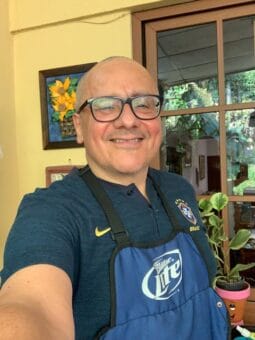
An experience from Rolando, manager of a company in San Salvador: concerns and expectations for his country during this time of pandemic and the decision they made, as a family, to live for others. In San Salvador, we are under lockdown, just like the rest of the world. Fear which is understandable but, in my opinion, exaggerated, has taken hold and measures to contain the virus are being introduced which contravene human rights. The emergency is being exploited to undermine democracy and, once again because of fear, much of the population is calling for strong leadership. The pandemic has consequently generated a return to authoritarianism as a way to combat the virus. This in turn has led back to intolerance and a break in dialogue which has generated feelings of anger and revenge. On top of this is the negative impact that the closure of non-core activities, the high percentrage of informal economy and the reduction in remittances is having on the economy as well as the high level of debt caused by the emergency. This situation is a huge desolation for me. I experienced civil war as a young man and, despite many illusions, the arrival of dialogue and the signing of peace. I followed the slow process towards democracy, never completely satisfied but always hopeful. I never imagined that I would see armed forces dominating the political stage again and the collapse of constitutional order. It is a personal suffering and a suffering for society which has at times impacted negatively on my optimism. I think we are heading for an economic and social crisis in the near future that will affect democracy and especially the most vulnerable. The spirituality of unity we try to live as a family urges us all to take concrete action in favour of those close to us. On a personal level, as I am now working fulltime from home, I try to love Irene, my wife, in the first place by appreciating all her efforts to cope in this difficult situation, helping her and covering the gaps caused by the pandemic because there is noone to help us at home. With joy I try to prepare the dishes that Roxana, our youngest daughter, likes, and I offer encouragement to Irene Maria, our oldest daughter, who studies abroad. Every day I hear from my parents and take care of their needs. We try to support and offer reassurance to the people who normally help us at home, by guaranteeing their salaries, for as long as we can… Together with employees of the company where I work and other managers, we are introducing policies offering economic support and making it easier for employees to work remotely to secure their jobs. I am committed to dealing with my team as best I can and being understanding about their lower productivity. With a number of experts in different fields we share experiences, study the crisis, economic models, market development and politics, aware of the opportunity this is offering to learn new things and find innovative ideas to face the future. Without realizing it, the days pass quickly, and a feeling of peace often floods my soul. I continue to worry about the country’s health situation, its precarious democratic situation and the economy but I feel an ever-increasing strength to continue fighting for the values in which I believe, despite the fact that the storm is raging outside.
Rolando, El Salvador (received by Gustavo E. Clariá)
27 May 2020 | Non categorizzato
One way to remain united with Jesus is to welcome his Word. It allows God to enter into our hearts and purify them – cleansed of selfishness, they are able to produce an abundance of quality fruit. Giving confidence He was a man in his 40s, a bit sad, who didn’t look so good: dirty, shabby clothes smelling of alcohol and nicotine… But he didn’t ask me for money, just work, any job. He clearly needed help. What would Jesus have done in my place? I decided to invite him to my house, where I needed some repairs. He had told me that he just got out of prison and had expenses while on probation, but he had nothing. His wife had left him, too. He did the job I asked him to do, which I paid for. Before taking him back to where he was spending the night, he asked me if I had any other work. After we talked to some friends, we found other things for him to do. He came back several times, and our mutual trust and respect grew. After about a month or so, he never showed up. I was afraid he had ended up back in prison. Then one day he called me on my mobile. “Thank you for everything you’ve done for me, for the trust you’ve given me. I was able to pay my probation and buy a phone. Now I have a steady job. I’m very happy!” W., U.S.A. What I believe I’m a hairdresser, and I do home service. One day I was called by a young recently married lady who was expecting a baby. Sadly, she confided in me that she was planning to divorce her partner. Her mother-in-law made life impossible for her. I listened to her for a long time, then I advised her to wait. After a few days, her mother-in-law called me to get a haircut. Immediately she spoke badly of her daughter-in-law. “How strange,” I replied, “just two days ago I was at her house and only heard her say nice things about you.” When I met the daughter-in-law again, I told her, “Your mother-in-law spoke well of you, she loves you very much.” A few days later, the family got together at a party. After months, mother-in-law and daughter-in-law were meeting once more. As they described it, it was a beautiful moment. And they thanked me. “Who teaches you the beautiful things you tell us?” they asked. So I was able to explain to them what I believe in: a Gospel that teaches us to be peacemakers. F., Pakistan Practically for fun My husband and I noticed that our children lacked knowledge in the basics of Christianity. So we asked ourselves, “Why not start a sort of catechism course at home?” I began with Mary, Jutta and Ruben, making sure that the concepts were simple and related to daily life. Then we added Jeroen and Rogier, Rose and Michel. The result was a new experience that was both fun and engaging. It was truly fun to prepare a sort of lesson each week, which some of the children wrote out on the computer and copied, while others put together some nice folders to keep the handouts in. Our children were so enthusiastic that many times they spontaneously would invite their friends to participate, which they did. When we covered the sacraments, we saw again how little they had understood. Yet now they have become a treasure in our life of faith. And this catechism course, which started practically for fun, continues. W., Holland
by Stefania Tanesini
(from “The Gospel of the Day”, Città Nuova, VI, n.3, April–May 2020

26 May 2020 | Non categorizzato
The experience of a community in Bangalore, India, during the covid-19 lockdown. What do you do when you suddenly find that everything is closed for three weeks and you don’t know what the near future will be like? What do you do when the work that has kept you going up until now ends and you don’t know if it will start again? I think this is an experience that is not limited to India at the moment but is being lived by many people in different countries all over the world. The Italians, unfortunately, were the first to experience this sense of bewilderment and now here in India we are in the same situation. However, here, as you may have seen on the news, there are 450 million people who work as day labourers, without any security, and most of them without any savings. Therefore, not being able to go to work means eating less every day and trying to survive.  The Focolare community in Bangalore asked themselves how they could help people in need and how they could involve others people who were at home during lockdown. It all started with a WhatsApp message that someone in the community sent to Kiran who is a seminarian and lives in a village we visited a while ago. “Are there families in need in your village?” we asked. The village, which is in the Indian state of Andhra Pradesh, has a population of about 4560 families of which about 450 are Catholic. That same evening, Kiran (which means “ray” in the local language) had been out walking and visited various families who had confided in him and spoken about their fears for the future. They were already eating kanji (boiled rice with lots of water: you eat green chili pepper with it to give it some taste) and did not know what they would do during the 21 days of lockdown. It’s not normal for adults to talk to a young person about their problems and so Kiran had come home feeling worried. When he looked at his phone and saw the message, he realized that God was giving him a solution for those families who needed help. And so, we set to work. Kiran knew how many families were in trouble. We prepared a message to send to all the people we know, with details and information about where to send help. Our target was to help at least 25 families by providing a 25 kg bag of rice and a bag of vegetables – enough food for a family for about two weeks. This would cost about 1500 rupees, about 20 euros. The response was immediate. Many people participated – families and many young people. Some gave a thousand rupees, others three thousand, and others five thousand rupees. Within a few days we reached the target set. But the contributions continued and so we were able to help more than 30 families. There was an average of four people per household and so this support has reached at least 120 people. However, there are many other villages where people we know are in need and so we started to help in other places too. Now there are three villages that we are supporting. We always work in collaboration with local people who know the situation well and know how to help in the most appropriate way. Chiara Lubich taught us to love people one by one and it seems we are doing just this: we are trying to love one village at a time, but without stopping! What we are doing is very small – it’s only a drop in the ocean – but many people have become involved. Here in the diocese of Bangalore, the Archbishop has worked extremely hard to help workers blocked in the area due to the lockdown. We have also collaborated in this initiative. Now Bangalore is asking Mumbai, New Delhi and Goa to take up the challenge and do everything possible to help circulate whatever we have so that no one is in need. We are all realizing that, in the end, everything passes and all that remains is the love we share: this love fills our hearts.
The Focolare community Bangalore, India
25 May 2020 | Non categorizzato
To cope with the pandemic, individuals and associations, health workers and scientific communities, governments and international organizations are responding in a variety of ways. Creativity and generosity, which are often heroic, are never lacking. To all these efforts should be added the decisive contribution that comes from prayer that is able to move mountains. […] Just as each child in this world trusts his or her own father, believes in him, relies completely on him, lets him take care of every worry and feels secure with him, even in difficult, painful or impossible circumstances, the very same thing is what a “child” of the Gospel does and should do with our heavenly Father. This childlike attitude is very important, always, because we are often overwhelmed by circumstances, by things that happen or trials that we cannot overcome only with our own strength, but which call for help from above. At this very time we are particularly aware of our need to have a great faith in the Father’s love and in his Providence. … We have been worried and we still are; and we have been wondering what we could do. … The first answer that took root in our hearts was to pray: to unite all together and pray so as to avert disaster. And everyone – to a greater or lesser extent – has surely begun to do this. … To pray. But we need to pray in a way that will obtain results. … In the first letter of St John we find a very beautiful and encouraging expression: “… If we love one another, God lives in us, and his love is perfected in us (1 Jn 4:12). “His love is perfected in us.” But if His love is perfected in us, and as long as his love is perfected in us, we are perfect. Therefore, we have this perfection of love by living mutual love. In the last few days … we have introduced [into the Regulation of the focolarini] a norm which is basic and essential for them. It’s the duty … to make a pact with the other focolarini, to be ready to die for one another, as required by Jesus’ commandment. But this decision, this pact, is certainly not the monopoly of the focolarini who live in community. It is the law for all the members of our Movement. Living out this pact ensures that love in us is perfected and that we are perfect in love. Thus we are pleasing to God and in the best condition to obtain the graces we desire, even the ones needed to move mountains. I think that if we want to work effectively for a united world, then in the next few days we need to renew with one another and with all the people we meet who know our Movement, our readiness to give our lives. Of course, we must first prepare the ground and create the right atmosphere, so that we can courageously say to the other person: “With God’s grace, I want to be ready to die for you” and so that we can hear the other person say: “And I for you.” Then we must act accordingly, stoking up the fire of love with regard to every neighbour. … On this basis, we can pray being sure that our prayers will be answered.
Chiara Lubich
(From a telephone conference call, Mollens, Switzerland, 13th September 1990)

24 May 2020 | Non categorizzato
A global campaign that involved thousands of faithful through interactive and educational seminars on the care of our common home. Launched by the Pope, it was organized by the Department for the Service of Integral Human Development with the support of a group of Catholic partners. From May 16th to 24th the Laudato Si’ Week was held under the title “Everything is connected”, a global campaign on the occasion of the 5th anniversary of Pope Francis’ encyclical on the care of the common house. The event engaged Catholic communities worldwide involving dioceses, parishes, movements and associations, schools and institutions to deepen their commitment to safeguarding Creation and promoting an integral ecology. Strongly desired by the Pope, it was organized by the Department for the Service of Integral Human Development with the support of various Catholic partners including the Global Catholic Climate Movement which includes more than 900 Catholic organizations worldwide among which the Focolare Movement. During the Week there were various online initiatives following the indications of Laudato Si. In fact due to the Covid-19 emergency, the event took place entirely online through interactive and formative seminars. On Sunday, May 24th the event concluded with a world day of prayer: at 12 noon (local time in each time zone), everyone was invited to pray for the Earth with this prayer. In March the Pope sent a video message in which he encouraged the faithful to participate in protecting our common home. Together, through action and faith, we can solve the ecological crisis. “What kind of world do we want to leave to those who will come after us, to the children who are growing up? – says the Pope – I renew my urgent appeal to respond to the ecological crisis. The cry of the earth and the cry of the poor can no longer wait. Let us take care of creation, a gift from our good Creator God “. In these 5 years, the Pope’s encyclical has stirred the consciences of many citizens. People have formed communities with the aim of doing something for the environment, driven by the Pope’s words on a more attentive ecological vision of our Common Home. Yet after five years these words resonate very topical in today’s world torn apart by the Covid-19 pandemic. The Vatican Department for the Service of Integral Human Development also stresses how the teachings of the Encyclical are particularly relevant in the current context of Covid-19 that has brought life to a standstill in many parts of the world. “The pandemic has struck everywhere and teaches us how only with the commitment of all can we rise up and defeat even the virus of social selfishness with the antibodies of justice, charity and solidarity. To be builders of a more just and sustainable world, of an integral human development that leaves no one behind”- underlines Don Francesco Soddu, director of Caritas Italiana – During this week we have not only talked about ecology. The organizers asked themselves: what role does the economy play in terms of safeguarding Creation? In fact, on Thursday May 21st an online meeting was held with the English economist Kate Raworth, from Oxford University and Cambridge University, one of the most influential economists internationally. This meeting was also part of the preparation and formation process for “The Economy of Francesco”, the event wanted by the Pope to be held in November in Assisi for which 3000 young entrepreneurs from all over the world have already registered. On the subject of safeguarding Creation, ” the economy is responsible for at least 50% if we consider each individual’s economy, the economy of enterprises and the economy of States and the effects that all this has on the pollution of the Planet . Then there is politics, our lifestyles, etc…. (…) If we also look at what has contributed to the the failures of these decades , global warming, for example, we realize that in short, the capitalist economy really has a great responsibility. So if we want to make a change we have to change the economy”- says the economist Luigino Bruni – Therefore, to live Laudato Si means to show our sensitivity to the theme of safeguarding Creation but it also means we make life choices in the economic sphere. We can contribute to a profound economic and ecological conversion through practical experiences. We also need to understand what political change we need to promote in order to truly listen to the cry of the earth and of the poor.
Lorenzo Russo
23 May 2020 | Non categorizzato
The testimonies that Card. Désiré Tsarahazana, President of the Madagascar Episcopal Conference and Mgr. Christoph Hegge, Auxiliary Bishop of Munster ( Germany) shared during the internatiional meeting that brought together 7 cardinals and 137 bishops, friends of the Focolare Movement. The meeting was held last February in Trent and at the international small town of Loppiano. https://vimeo.com/415940273

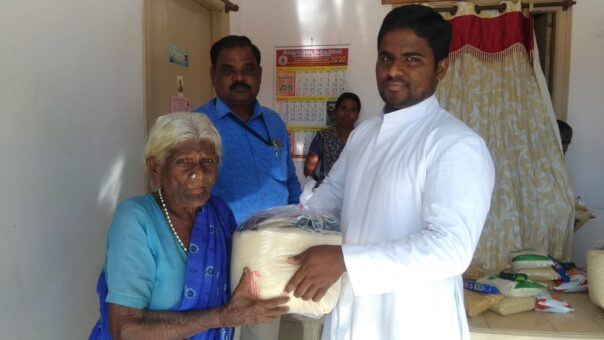
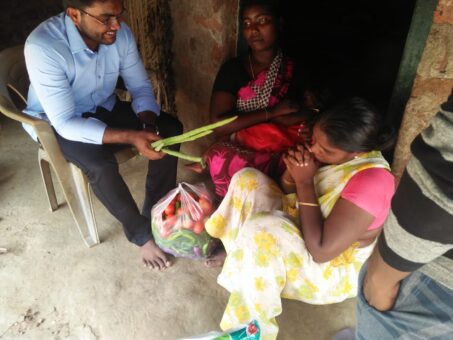 The Focolare community in Bangalore asked themselves how they could help people in need and how they could involve others people who were at home during lockdown. It all started with a WhatsApp message that someone in the community sent to Kiran who is a seminarian and lives in a village we visited a while ago. “Are there families in need in your village?” we asked. The village, which is in the Indian state of Andhra Pradesh, has a population of about 4560 families of which about 450 are Catholic. That same evening, Kiran (which means “ray” in the local language) had been out walking and visited various families who had confided in him and spoken about their fears for the future. They were already eating kanji (boiled rice with lots of water: you eat green chili pepper with it to give it some taste) and did not know what they would do during the 21 days of lockdown. It’s not normal for adults to talk to a young person about their problems and so Kiran had come home feeling worried. When he looked at his phone and saw the message, he realized that God was giving him a solution for those families who needed help. And so, we set to work. Kiran knew how many families were in trouble. We prepared a message to send to all the people we know, with details and information about where to send help. Our target was to help at least 25 families by providing a 25 kg bag of rice and a bag of vegetables – enough food for a family for about two weeks. This would cost about 1500 rupees, about 20 euros.