Trent, Italy: the President of the Italian Republic at Chiara’s centenary event
President Mattarella took part in the “Trent meets Chiara” event at the Mariapolis Centre in Cadine. https://vimeo.com/389431100

President Mattarella took part in the “Trent meets Chiara” event at the Mariapolis Centre in Cadine. https://vimeo.com/389431100
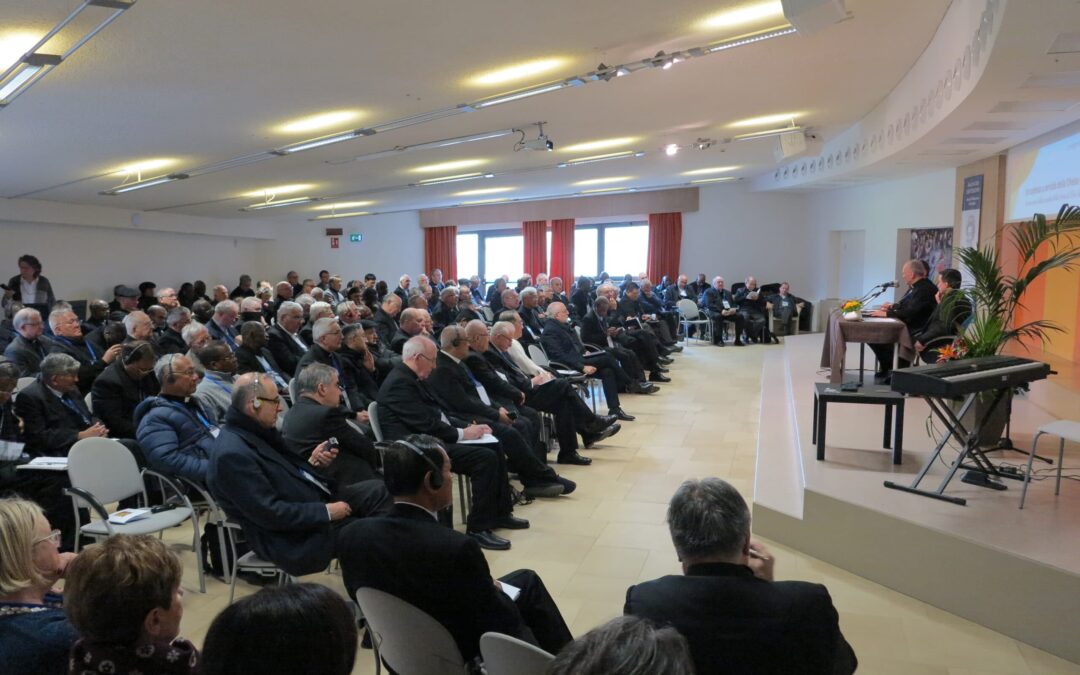
The international conference entitled “A Charism at the Service of the Church and Humanity” showed interesting perspectives for the Church. The participants, 7 Cardinals and 137 Bishops, friends of the Focolare Movement from 50 countries, gathered first at Trento and then at Loppiano It was a symbolic and solemn scene on the sanctuary of the Theotokós of Loppiano, that is, in a church dedicated to Mary, Mother of God. Surrounded by the inhabitants of this little town of the Focolare Movement who represented the people of God, a large assembly of Cardinals and Bishops declared to each other that they lived fraternal love according to the commandment of Jesus, ready to share each other’s joys and sorrows, to love the community of the other as their own, in short, to love each other to the point of giving their lives for one another. This solemn “pact”, formulated on Tuesday, February 11th, was the culmination of an international conference entitled “A Charism at the Service of the Church and Humanity” which gathered 7 Cardinals and 137 Bishops, friends of the Focolare Movement, representing 50 countries, first at Trento and then at Loppiano. 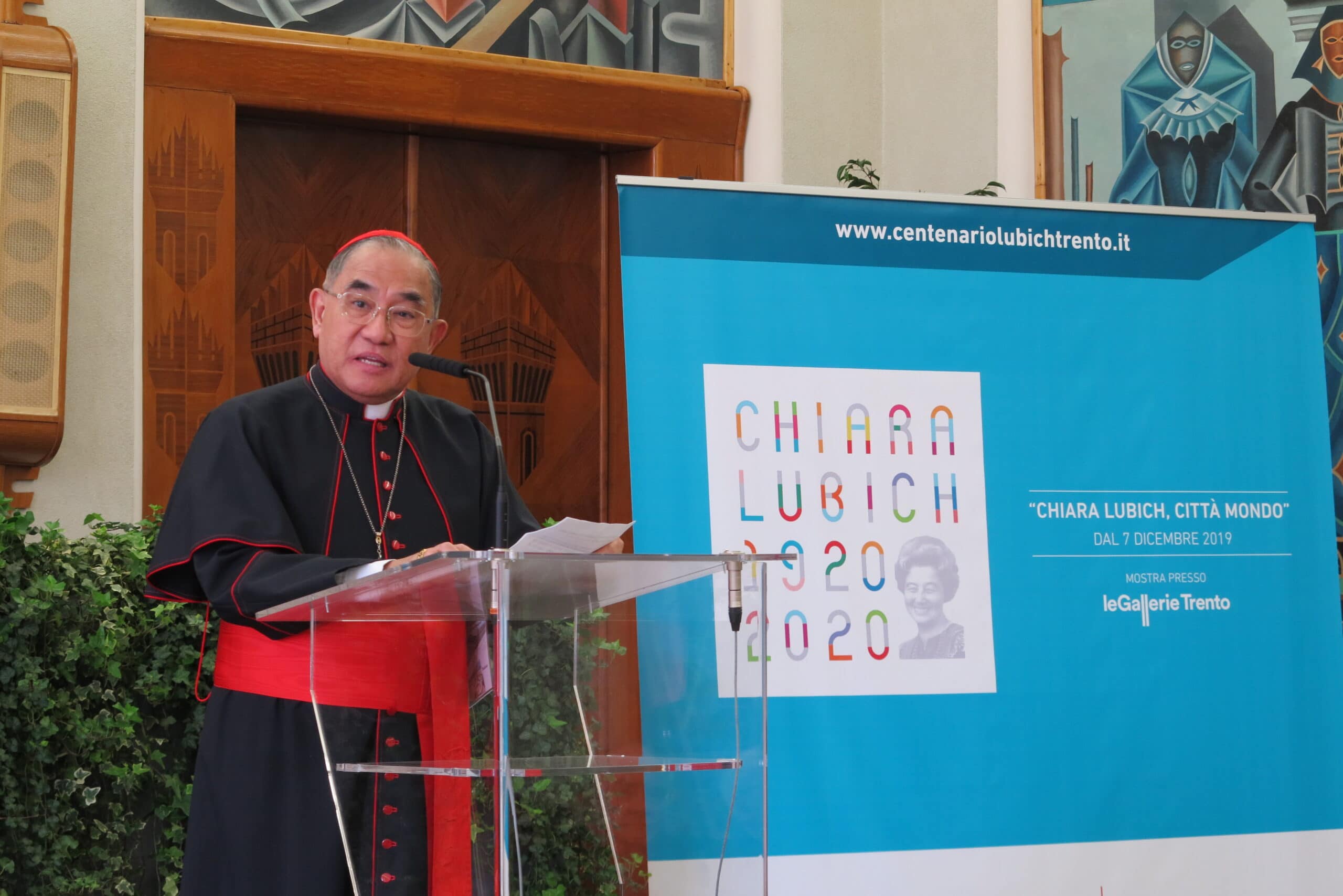 Never before has participation in this annual conference been so numerous, due also to the fact that the meeting took place in the year of the Centenary of Chiara Lubich’s birth. The programme reflected the motto chosen for the Centenary: “Celebrate to meet”. The first part of the conference, which took place in Trento, the birthplace of the founder of the Focolare Movement, was in fact dedicated primarily to the celebration of this event: the visit to the exhibition “Chiara Lubich City World” at the Galleries of Trento; the greeting of the authorities at the headquarters of the Autonomous Province of Trento; the Eucharistic celebration in the Cathedral of the city and the artistic re-enactment “From the Tridentine Council to Tridentine Chiara ” held in the church of Santa Maria Maggiore, where the Council was held and in which Chiara Lubich received her baptism. Celebratory moments that were not characterized by the simple nostalgic memory of a historical figure, but opened our eyes to the relevance of Chiara’s charism, such as its global, ecclesial and ecumenical dimension. This was strongly underlined by a long message from Pope Francis, who warmly welcomed this conference expressing “gratitude to God for the gift of the charism of unity through the witness and teaching (…) of Chiara Lubich”. The Pope’s invitation to the Bishops, to “always put themselves back in the school of the Holy Spirit” and to live the main points of Chiara Lubich’s spirituality, was achieved in the second part of the programme held in the International Focolare Little Town in Loppiano near Florence. The context of a small community of 800 inhabitants, who see in Jesus’ commandment of mutual love the law of their living together, stimulated the prelates to do the same. The scenes of communion and sharing were moving, beginning with the small things: mutual help, deep listening, attentive reception of the requests, needs and ideas of each one. True “ministers” at the service of one another.
 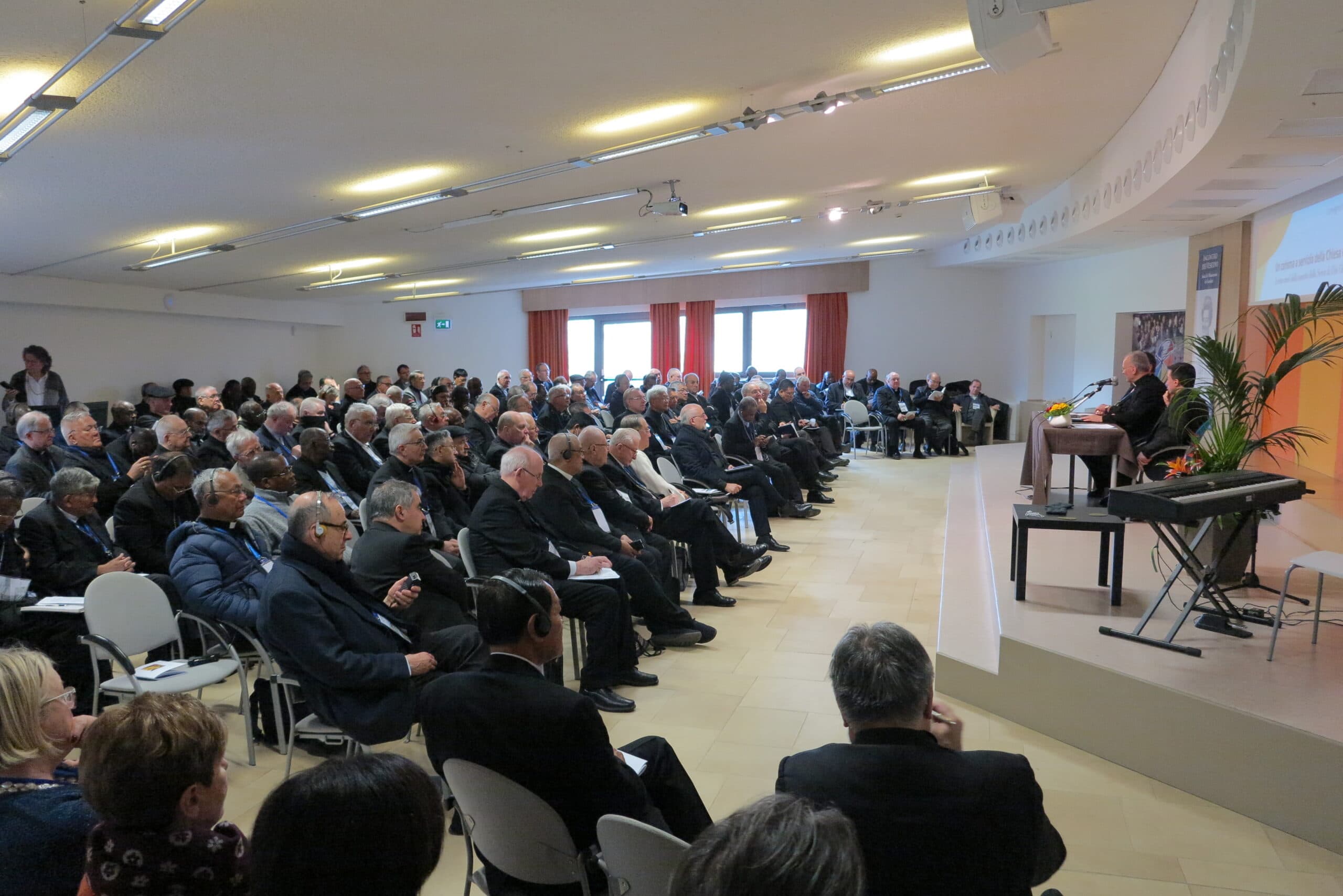 Against the background of a profound and rich analysis of the historical context in which Chiara Lubich lived and worked, presented by Andrea Riccardi of the Sant’Egidio Community, the ecclesial dimensions that flow from Chiara’s charism were deepened: a Church that becomes dialogue; the ‘mysticism of us’ that is achieved in a Church-communion; the ecumenical dimension; the different formation paths offered by the Focolare Movement to deepen and spread these dimensions. The lived experiences of Bishops from all over the world illustrated the possibility of achieving this in their personal life and in their service to the Church. “It was not a matter of looking back,” an African bishop emphasised at the conclusion of the conference, “but an overture, that is, a beginning and an opening to the future. The “pact” that the Bishops made in Loppiano, in the Church of the Mother of God, had been signed, in the very same place, by Pope Francis together with the inhabitants of the Little Town during his visit to Loppiano. It is a pact, signed with the support of the People of God who implement it and continually draw strength from it, which can also be for the Bishops a beginning, a starting point, an overture which makes one glimpse the playing of new notes on the path of dialogue, of new harmonies on the path of communion of the Church of the future.
Joachim Schwind – Anna Lisa Innocenti
Jesus taught us with his life the reason for service and for choosing the last place. It is the best way to transform apparent defeat into a victory which is neither selfish nor short-lived, but shared and lasting. Alcoholic Having both experienced the tragic effects of alcohol in our families, my boyfriend and I decided to make a pact. He promised me his commitment. Everything went well for a few years. However, suspicions surfaced from time to time: money missing from our account, a delay that couldn’t be justified… The real tragedy was not discovering that he had always been an alcoholic but that we, his wife and children, had not been able to get him out of that situation. I felt humiliated. I spoke to my parish priest about it. He recognized the seriousness of a deception that had been going on for years but he asked me if, for the children’s sake, I was ready to start again, but not alone. The community would support me. With what at times demanded heroic strength, I stayed with my husband. I was able to convince him to agree to seek help and supported him in his alcohol withdrawal crises. Two years have passed. The family has suffered a lot from these tumultuous times, but my children and I have gained new strength. Everyday life has become a wonderful gift. (J.K. – Romania) Refugees We lost everything in the Rwandan war: our home and several relations. From Kigali we moved back to my native town but later had to leave there and go to a refugee camp. We took just a few things with us, including clothes for the baby I was expecting. There were thousands of desperate, destitute people in the camp. After a number of nuns arrived in the camp, I volunteered to help with first aid. I was entrusted with providing social care but we had no money, nothing to give to the refugees. Among a group of orphans there was a seven-year-old boy who was separated from his family. His mother eventually found him after many days’ walk but was totally exhausted when she arrived at the camp. All I had was 300 francs, the equivalent of about a dollar: it was a fortune. I really needed it myself but she needed it more than me. I gave it to her convinced that God would think of my family too. With the money she was able to buy food and a small hut. Shortly afterwards, I met my elder sister, who had spent three days looking for us in the camp: she brought me 1,000 francs. (C.E. – Rwanda) Scars It wasn’t easy knowing how to treat Martha, our fourth daughter, who had been entrusted to us by the juvenile court. She totally rejected the suffering she had experienced following an incident that had left scars on her body, which she hid from everyone as marks of disgrace. Only with the patient love, dialogue and collaboration by everyone in the family was she able to overcome that trauma and discover and appreciate her talents. So, little by little, this difficult child was reconciled with her own body and the environment around her. We were so relieved to see the love of life growing in her. Gradually, with time, we were also able to share with her the value of pain. One day, as soon as she arrived home, Marta told us about a companion who looked shocked when she noticed her scars; but, instead of feeling hurt, she rolled up her sleeve to show the marks more clearly, and explained how she got them. At that point her companion apologized and since then they became good friends. (O.N. – ltaly)
Edited by Stefania Tanesini (taken from Il Vangelo del Giorno, Città Nuova, anno VI, n.1, gennaio-febbraio 2020)
Few weeks before the global event that will bring together thousands of young economists with Pope Francis, we met the team organising the event. What are they hoping for? That the world will change direction. https://vimeo.com/389431214

An evening in the Italian capital was dedicated to Focolare’s founder and her close relationship with Rome, where she 20 years ago became an honorary citizen. The book Conversations: via telephone link-up was also released. January 22 is an important day for Rome, not only because it is Chiara Lubich’s birthday – she was born in 1920, and her centenary is being celebrated this year – but also because on January 22, 2000, in the midst of the Jubilee Year, the then Mayor of Rome Francesco Rutelli decided to give her honorary citizenship. On that occasion Chiara pointed out that the name of Rome (“Roma”), read in reverse, is “amor” or “love”. Since then her vision of a capital invaded by evangelical love, through what was later called “Roma-Amor”, launched a new phase for the Focolare community in Rome, with greater witness and commitment to the city. Twenty years later, this year on January 22 an evening was dedicated to Chiara in her memory. “In my opinion there is an element of Chiara’s experience that connects with the experience of St. Paul, with both of them becoming citizens of Rome,” said Rutelli. “Chiara mentioned St. Paul several times, and this link between the two has an extraordinary strength and symbolism. “And Chiara, since January 22, 2000, committed to dedicating herself to Rome in a better and more complete way, embodying mutual love everywhere. What could be more beautiful than to make these words ours, today?” During the course of the evening there was also an in-depth look at the book Conversations: via telephone link-up by Michel Vandeleene, which contains 300 spiritual thoughts from Chiara. These were texts that she communicated, connecting regularly by conference call initially from Switzerland (which is why it is called the “CH” link-up) with the most important centres of the Focolare Movement scattered throughout the five continents. It was also an opportunity to hear news and about events in the life of the movement throughout the world. “We find ourselves at the source of a sort of personal and collective diary, in which Chiara’s experience is linked to the life of the members of the movement,” said Professor Maria Intrieri, professor of ancient history at the University of Calabria in Italy. “There are two types: the great story of Chiara and her work in the Church, and with the Church in the streets of the world, but there is also the micro-history, the small experiences, the meetings she has at the Focolare’s international headquarters, her travels, or a letter that comes to her from a child. Chiara did it to be more and more a single family.” “We realize that these two terms – conversation and connection – share deep roots: to be in the same place and to be linked together,” said Professor Cristiana Freni, professor of the philosophy of language at Salesian University. “This is what Chiara wanted to do back in 1980: to make people feel members of the same family and establish profound ontological ties through the link-up.” Michel Vandeleene stressed the importance of the language used in Chiara’s spiritual thoughts. “A person’s vocabulary reflects her soul, and when you see Chiara’s vocabulary you see an open, joyful, evangelical, determined person. Even how someone’s words are used helps us understand so much about her. She uses the word “sweetness” to refer to union with God, or the loving presence of God in our midst. Editing this compilation, I was struck by Chiara’s vision of Christianity: a positive, fascinating spirituality that cannot but be attractive.” Director Marco Aleotti explained what the link-up is today. “Since Chiara’s death, we asked ourselves: what will happen to the link-up? We continue to produce it every two months, and anyone can connect with it through the web. The feedback afterwards from the live broadcast,” he concludes, “shows that many people continue to have the same experience of being one family, just like the link-ups with Chiara.”
Lorenzo Russo

A message from Pope Francis and a greeting from Focolare President, Maria Voce opened a conference of 7 Cardinals and 137 Catholic Bishops, friends of the Focolare from 50 different countries. The meeting in Trento, Northern Italy is entitled “A Charism at the service of the Church and humanity”. “It’s good for Bishops too always to go back to the school of the Holy Spirit”. This encouragement from Pope Francis on 8 February opened the international conference “A Charism at the service of the Church and humanity” in Trento. Taking part are 7 Cardinals and 137 Catholic bishops, friends of the Focolare Movement, representing 50 countries. In this centenary year of Chiara Lubich’s birth, the meeting explores the significance and contribution of the Focolare charism of unity at the service of the Church and of humanity. On 6 February a delegation of conference participants had an audience with Pope Francis, who exclaimed, “You’ve brought me joy, go ahead!” The Pope’s full message to the conference was read by Cardinal Francis X. Kriengsak Kovithavanij, Archbishop of Bangkok. Pope Francis affirmed charismatic gifts like that of the Focolare spirituality are “co-essential, together with hierarchical gifts, in the mission of the Church”. He continued, “the charism of unity is one of these graces for our time, which is experiencing a change of epoch and calls for a simple, radical, spiritual and pastoral reform that brings the Church back to the ever new and relevant source that is the Gospel of Jesus”. Pope Francis went on to encourage the Bishops present to live the cardinal points of Chiara Lubich’s spirituality: commitment to unity, preferential choice of the crucified Jesus as their existential compass, making yourself one “starting from the least, from the excluded, from the discarded, to bring them light, joy and peace”, openness “to a dialogue of charity and truth with every man and every woman, of all cultures, religious traditions, and ideal convictions, to build up, in meeting with them, the new civilization of love.”, to listen like Mary from whom “we learn that what matters and what remains is love” and who teaches us how to bring Christ to the world today, Christ “who lives Risen among those who are one in his Name (cf. Mt 18:20)”. Maria Voce, President of the Focolare Movement, sent a video message in which she underlined the fact that this spirituality aims to be, as proposed by the conference title, “at the service of the Church and of humanity”. In an era in which “We know that there are challenges for the Church all over the world, we are called to a new inculturation of the Gospel of Jesus,” affirmed the Focolare President. “An inculturation which treasures the experience of the past but knows how to express it anew, prophetically, in our times. For this reason we must also open up and discover the power for renewal inherent in many of the new charisms present in the Church today.” Maria Voce continued, “ the reality of Bishops, friends of the Focolare Movement ” – affirmed the Focolare President – wants to promote “ a lifestyle of fellowship and communion with Jesus in the midst among Catholic bishops from all over the world – and then also among bishops of various Churches. Such a lifestyle contributes to making collegiality ever more effective and affective”. The program continued with an afternoon visit to the “Chiara Lubich city world” exhibition in the Galleria Bianca of Piedicastello, in Trento. The bishops then attended a performance of “From the Tridentine Council to Tridentine Chiara”, a special artistic event at the church of Santa Maria Maggiore. From there, the bishops proceeded to Cadine Mariapolis Center for the celebration of Mass, presided by the Archbishop of Trento, Mons. Lauro Tisi. On Sunday 9 February they were welcomed by the Archbishop of Trento to the city’s Cathedral to celebrate the 10am Mass, presided by Cardinal Francis Xavier Kriengsak Kovithavanij. This was streamed live on TV2000 and via the website www.centenariolubichtrento.it . It was followed by an official reception hosted by the Presidents of the Provincial Council Walter Kaswalder, of the Provincial Administration Maurizio Fugatti, and the Mayor of Trento Alessandro Andreatta. From 10-12 February, the conference moves to Loppiano, near Florence, Italy, the little town of the Focolare Movement. In collaboration with the “Evangelii Gaudium Center” of Sophia University Institute based in Loppiano, there will be sessions on a range of current issues facing the Church and society today, involving reports, round-table discussions and dialogue. Topics include: “The Church and its currrent challenges” with historian and founder of the Sant’Egidio community Andrea Riccardi, “The Church becomes dialogue” focussing on the four dimensions of the life of the Church (kerygma, communion, dialogue e prophecy). With Cardinals and Bishops from so many different parts of the world, the input promises to be wide-ranging and dynamic. Here is the text of the message of Pope Francis Here is the text of the video message of Maria Voce
For more information contact: Focolare Communication Office: ufficio.comunicazione@focolare.org Anna Lisa Innocenti – +39 338 3944209