30 Dec 2019 | Non categorizzato
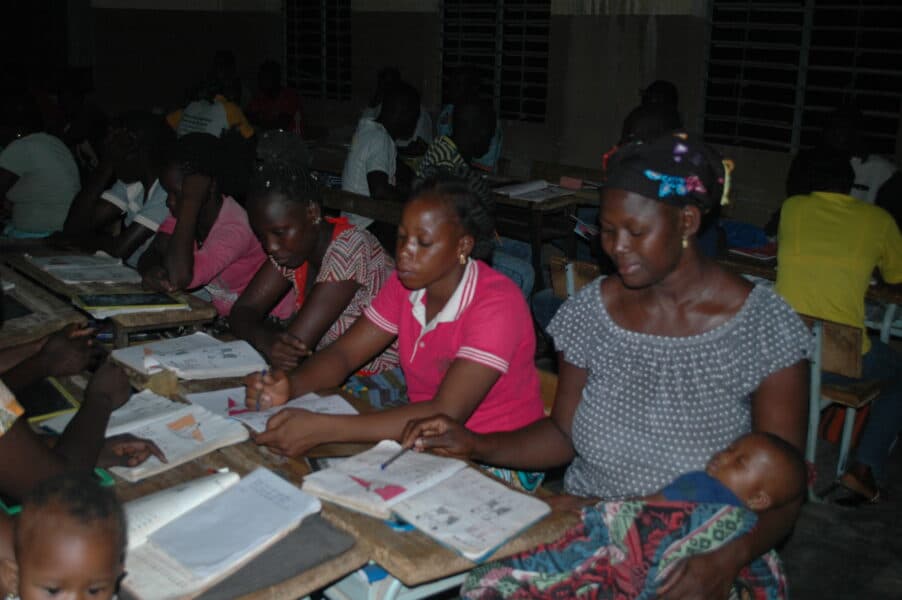
The relationship built with Focolare members and communities worldwide is one of the most beautiful experiences for us who work at focolare.org. We take the opportunity of this Christmas Season to thank all those who send us news, and thus allow the life of the charism of unity to inspire many. An email we received from Fr. Domenico De Martino, a 36 year old priest from Naples, who is a missionary in Burkina Faso, has really been a great gift. It has brought us closer to people who live in a part of the world where peace, dignity and religious freedom are seriously threatened and where the use of telecommunications is extremely low. Violence by extremist groups, that hit Burkina Faso during the past five years, caused hundreds of deaths, a wave of kidnappings and the closure of many schools and churches. It has also led to a massive and continuous displacement of people who moved from the affected regions to the capital and other large urban centres. According to the latest information by the UN, 486,360 internally displaced persons (IDPs) were registered at the beginning of October, more than twice the number displaced in July. Numbers continue to grow steadily, and there are even reports of one million IDPs. 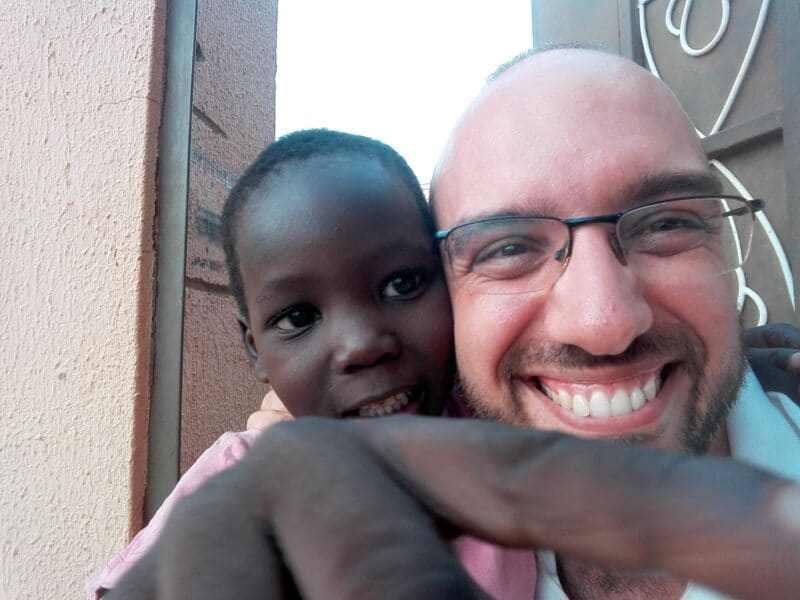 Fr. Domenico, a member of the Missionary Community of Villaregia , came to know the Focolare Movement at the age of 12, when he came across the Word of Life, a monthly commentary on the Scriptures in the spirit of the charism of unity. Chiara Lubich started this commentary more than 40 years ago, and Domenico came to know about it during his visits to the missionaries. He related: “When I was 17 years old, I wrote to Chiara Lubich and asked her for a Word from the Gospel that could be a light to guide me in my life. I also wanted to share with her all about my vocation. I still treasure her answer to my letter; I keep it in my Bible and every now and then I read it again. She indicated words from St John’s Gospel: ‘If anyone loves me, he will keep my word and my Father will love him, and we will come to him and make our abode with him’ (Jn 14:23). I always try to go deeper into these very stong and demanding words, to find the meaning of my life. I was ordained priest in 2012 after a year’s experience in Lima, Peru”. For the last two years, Fr. Domenico has been doing missioniary work in Ouagadougou, the capital of Burkina Faso. He is involved in a number of projects that aim at integral human promotion. He told us: “Burkina Faso literally means ‘the land of upright people’; family and a sense of community are among the most treasured values of the Burkinabé people. Most of the 160 students, who attend the school we have started to promote literacy, are girls and young mothers who had no opportunity to study before. We have also set up a project to help women start small businesses to make ends meet. Many present their projects to ask for our support but it is not always easy to choose. The Gospel and the desire to be part of this people guide us in our choices. In recent months, schools in the capital city have started to function again, but unfortunately, it is not the same for schools in other parts of the country. Terrorist groups burnt many schools in the North, North-East and North-West of the country, and at the end of the last scholastic year several teachers were killed. “The tactics used by the bandits or terrorists are always the same; they arrive in the villages, take everything – cattle and crops – empty the small shops, and then they look for teachers and tell them that if they don’t leave, they will be the next victims unless they teach Arabic or what they call ‘the true religion’. I had the opportunity to talk to some teachers, who despite this desperate situation still have to report to work because the state obliges them to do so, but there is great fear. Our area is quiet, but we try to be close to our people and share in their fears and anxieties. Last September, 40 soldiers lost their lives during an attack on a military base. Among them, there were 3 of our young parishioners. We were particularly close to one of them, who was the eldest son of a family we know quite well. When we went to visit this family to offer our condolences, we met the grief-stricken widow and her two sons, and it was extremely difficult to understand why so much hatred and horror. Jean, the soldier’s father, who always tells me: ‘You priests are God’s sign for us; we can ask you everything because you give us God’s word, his comfort and his will’, was also there. This time, I could only shake his weak hand without uttering a word, and make him feel that God is near”. In this serious situation of great instability, one perceives a sign of hope in the communion that continues to grow among different Christian churches and people of other religions, especially Muslims. They get together and unite in prayers for peace. Fr. Domenico spoke about another sign of peace when he related about a project to help with the payment of school fees. To date, 96 children have benefited from it. “We were shocked when we found out that many children do not have a birth certificate; it seems as if they do not exist at all. We encounter various complex situations that require our attention and assistence. It is amazing to discover that placing God at the centre of our activities leads us to deeper understanding and better organization, because we look at the person as a whole. We are trying to get organized about birth certificates, and this will allow us to give back dignity to the children of our neighbourhoods”. It was evident that Fr. Domenico had so many other things to relate. His words full of love for the Burkinabé people brought us closer to this country. He concluded: “Communion helps us to be Church in the real sense of the word; we actually know what is happening around us and we become fully committed to help all God’s children who suffer and are in need”.
Stefania Tanesini

28 Dec 2019 | Non categorizzato
A non-profit organization that has been operating in the Italian capital for thirteen years. It collects surplus or unsold food, prepares 250 meals a day for the poor and, simultaneously, works to promote social inclusion.  Over-buying food and consequent wastage are modern-day plagues that affect society in many parts of the world. However, there are also people who, silently, collect food that would otherwise be thrown away and give it to people who are most in need. They do so not only to offer immediate help to people who are hungry but also as a practical means of accompanying people as they rebuild their lives. This is what RomaAmor does. This is a non-profit organization that was founded by Dino Impagliazzo in Rome in response to the invitation of Chiara Lubich, who in 2000, receiving the honorary citizenship of the city, asked others to cooperate in bringing a “revolution of love” to the capital. For 13 years RomaAmor has been offering 250 meals a day to the homeless people around the Tuscolana and Ostiense railway stations and in St. Peter’s Square in Rome. Dino is now 90 years old: serving others still fills him with joy. “There are sometimes many difficulties in helping others,” he explains, “you have to make sacrifices but then you feel a great joy for having done something worthwhile. Christ taught us that the essence of Christianity is to love God and our neighbour, and Chiara Lubich invites us to live for universal brotherhood: this is the foundation of our service to the poor.” Dino received the International Carthage Award in 2018 for his longstanding service to the community because “his work increases public awareness and provides formation thus contributing to the ethical dimension of the city.” The project also “provides valid alternatives to the value attributed to people and material goods.” The following is taken from an interview with Dino. How did RomaAmor begin? It began almost by chance. I started on my own by preparing a sandwich for a poor person I used to meet at the station, and gradually I thought of involving as many people as possible in doing something similar – my wife, people living in my block of flats or from my neighbourhood. We have always regarded our neighbours as our brothers and sisters irrespective of whether they were poor, healthy or sick or in trouble. We try to treat them as members of our family For Food Day 2019, the Pope stressed the need for a return to sobriety in lifestyle and he spoke about the importance of cultivating healthy relationships with ourselves, our brothers and sisters and the whole of the created world… It’s essential that we make this choice. You cannot reason in any other way if you are a Christian and know that each person is your brother or sister because Jesus has told you this very clearly: as a consequence, you live not only for yourself but in relation to others. You cannot think in any other way if know that among us there are people who are healthy and well placed and others who are sick and struggling. You must always be ready to help and do so with joy. The “culture of waste” tends to dominate our society; you choose to serve the poor and needy and so you are going against the tide of public opinion… This aspect of what we do is important, but we don’t just collect the food on its date of expiry, cook it and bring it to people in need. We also try to create relationships with them. That way we do more than just feed them. We try to adapt the meals to the people we help: children, the elderly, women, the sick have different needs, and for our Muslim guests we prepare meals without using pork. Our goal is also to promote inclusion: I invite volunteers to try to establish a close relationship with at least some of these people. When they offer the meal, I ask them to bring two trays, one for the person in need and one for themselves so they can sit down and eat together. Is the group important? It’s fundamental, we do everything as a team – decide the menu, cook and share tasks. One of us looks to see if there are sick people, someone else is busy in maintaining the link with the local authorities and we encourage one another. We spend a lot of time together: we start cooking in the afternoon, we finish at eight o’clock in the evening and then we go out for two hours. We share everything, both the joys and the difficulties. Have any of the people you have helped become volunteers? They certainly have! One third of the volunteers are foreigners who are living in reception centres and are waiting to be recognised as political refugees. Some of them are referred to us by social services. There are also the seminarians sent by the dioceses. We are from different backgrounds but all work for the same purpose. What attracts young people to RomaAmor? There are lots of young people who are volunteers – in fact, the number increases steadily. They come and are so happy that next time they bring their friends.

26 Dec 2019 | Non categorizzato
Partnership agreement signed between FAO (Food and Agriculture Organization of the United Nations) and New Humanity, the international NGO of the Focolare Movement. Objective: to continue to work together to defeat world hunger by 2030.
©FAO/Giulio Napolitano.
Stefania Tanesini

23 Dec 2019 | Non categorizzato
A Christmas greeting from Maria Voce, President of the Focolare Movement Christmas is, for all of us who celebrate it every year, a long-awaited moment, full of emotion, joy and relationships. But in the midst of such a joyful and happy Christmas atmosphere, we often forget that this feast day is rooted in a mysterious event, I would say an almost scandalous event: the scandal of a God who lowers himself and becomes human; the scandal of the Almighty who becomes a weak child; of the Unlimited One who enters the limits of human flesh. God does not do this only out of solidarity, to be close to us and to share our existence. He enters our human condition to show us, through our own language, gestures and emotions, his own life, the life of God: a life capable of repairing rifts, healing wounds and rebuilding relationships. God did this 2,000 years ago and wants to do it again today. In a month, January 22nd 2020 marks the centenary of the birth of Chiara Lubich, the founder of our Focolare Movement. On this occasion I cannot help but remember the core of her message, of her spirituality of unity: the discovery that Jesus can be born today too, where two or more people love each other “with the love of service, understanding, and sharing in the sufferings, burdens, anxieties, and joys of our brothers and sisters; with the love that covers everything, that forgives everything, typical of Christianity”. Hence we resolve to make all our relationships become the crib, the cradle that welcomes Jesus in our midst, who wants to rebuild our fragmented world today. My wish for Christmas is that this celebration will bring deep joy to all, in the commitment to train ourselves every day to attract, through mutual love, the presence of Jesus among us, thus allowing him to transform the world.
22 Dec 2019 | Non categorizzato
A top figure in Thai Theravada Buddhism, the Venerable Ajahn Thong died on 13 December at the age of 96. Together with Chiara Lubich, they experienced the highest level of Buddhist-Christian dialogue. Midway through the 1990s, Phramaha Thongratana, a Thai Buddhist monk, had the opportunity to meet John Paul II and get to know the Focolare Movement and Chiara Lubich. He became known in Catholic circles as Luce Ardente. Thanks to him, the great master Ajahn Thong spent some time at the Focolare’s little city of Loppiano together with his young follower. After the early meetings that they had with Focolare’s founder, there was great hope for further dialogue between Buddhism and Christianity in Thailand, which, in the monks words, needed to be accomplished “gently, with exquisite compassion, with much love and caring for it with our hearts.” To this he added a fundamental consideration for dialogue: “These two terms – Buddhism and Christianity – are only two words … it is the good and love that unites all people of every race, religion and language, and helps everyone to meet and coexist together.” From that moment his commitment was decided and at times astonishing even: “As long as I breathe and live, I will try to build true and beautiful relationships with everyone in the world.” Chiara Lubich confirmed these sentiments with an invitation and a prediction: “Let’s continue to prepare the way, living according to the light we have received, and many will follow.” With this background the elderly, venerable monk Ajahn Thong arrived at Loppiano, where he stayed at the Claritas spirituality centre, which regularly welcomes those from religious orders of various congregations, who come for an experience of communion between charisms. Two Theravada monks together with Franciscans, Salesians, Jesuits, Dominicans and others: it was prophetic. Venerable Phra Phrom Mongkol was deeply touched by the welcome he received and, meeting Chiara, he commented, “The fact that you invited Buddhist monks to come here to be among your people is something so beautiful.” This was not just simple formality or politeness, although those are characteristic of the Thai people. These were the early steps of a profound spiritual experience, which the monks were already quite aware of. Chiara’s expectation of that first meeting was one of an attitude of listening aimed at learning, not teaching. “I am happy with this visit in order to learn something beautiful.” she said. “What is the heart of your teaching?” From that point, an unforeseen path unfolded. At the start of 1997, in fact, the Catholic leader was invited to Thailand by these top figures of Buddhist monasticism. It was not to be just a courtesy visit. Chiara was invited to address and share her Christian experience with various groups of monks, nuns and lay Buddhists, both in Bangkok and above all in Chiang Mai. It was there, at the Wat Rampoeng Temple, that the great master introduced her with these remarkable words: “All of you, my followers, might ask yourselves why this mother, who is a woman, was invited. I would like you monks and seminarians to forget this question and not think of her as a woman. Those who are wise and able to point to the correct path for our lives, whether woman or man, are worthy of respect. It’s like when we are in the dark: if there is someone who comes to bring us a lamp to guide us, we are grateful, and it doesn’t matter to us whether that person who came to bring us light is a woman or man, a child or adult.” These few words seem to be a condensed version of the great wisdom of this capable man, together with others, who was able to walk the way of dialogue fearlessly, bringing others along with him on this prophetic experience. Lubich herself, touched by this sensitivity and openness, noticed a higher presence in this relationship and turned to the great master with words that feel like a prophecy: “Let’s continue to prepare the way, living according to the light we have received, and many will follow.” And so it was. For 25 years this dialogue has continued and developed. Even in death, there was something in common between this ancient monk from the thousand-year-old Theravada tradition with a Catholic woman who recently founded a movement in the Church. On 7 December, in fact, the celebrations for the centenary of the birth of Chiara Lubich opened in Trento, including an interfaith event on 7 June 2020.The venerable great master had expressed his desire to attend. Theirs is a friendship now destined to continue in eternity.
Roberto Catalano (Co-director for Focolare Interreligious Dialogue)
A conversation with the Great Teacher Ajahn Thong a service of the Collegamento CH of 13 February 2016 https://vimeo.com/155543298

20 Dec 2019 | Non categorizzato
During the past 15 years, the Focolare Centre “Nueva Vida” has carried out a very important social action, that supports young people and their families in an area on the outskirts of Montevideo,Uruguay. Luis Mayobre, director of this centre has been interviewed about this activity. “The youth are the driving force of ‘Nueva Vida’. This social action challenges and stimulates us not to lose sight of what is most important: mutual love, which we want as the only law for our centre”. Luis Mayobre said these words at the beginning of the interview. He has been the director of Nueva Vida almost since it was started in 2004, when the Archbishop of Montevideo asked the Focolare Movement to continue a social activity started by a religious woman in one of the suburban districts of the Uruguayan capital. This is how Nueva Vida began. Its objectives are inscribed in its name: it wants to instil hope of a new beginning in all those who go to the centre, which forms part of the CO.DE.SO Association (Communion for Social Development established by the Focolari) and collaborates with the INAU, the institute for children and adolescents, a public entity that manages policies for Uruguayan children and adolescents. Mayobre related: “Violence marked the year 2018 and the inhabitants of Barrio Borro lived in anguish and fear. Their life was at risk due to clashes between two families of rival drug traffickers. Shootings took place day and night, and educators and staff at Nueva Vida, together with the rest of the people, had to face this terrible situation. As families were seeking for shelter, the number of people at our centre almost doubled itself. Many were robbed and their poor homes were occupied by drug traffickers”. How did you manage to cope with such a hostile situation? “We reported the situation to the Minister of Internal Affairs, but we had to wait for a reply, which took quite some time to arrive. So we offered shelter and support to some of these families. Later we obtained state services for them and they were given new homes. One of these families – two of their children participate in our youth centre activities – was being threatened with death. Our coordinator contacted another daughter of this family to ask for help, even though she knew there were family problems between the daughter and her parents. Luckily things turned out well; the daughter provided her parents with a piece of land where a new, more dignified and safe house could be built. I also remember a case of family violence. When our team came to know about the situation, the intervention of the local authorities was sought to safeguard the children and their mother. Regardless of threats and insults, we carried on with our work to help the family regain its peace and security”. Who are the ones that come to the Centre and what services do you offer? “Our three projects are: the CAIF, the Children’s Club and the Youth Centre. Living in an atmosphere of violence made us decide to be builders of peace, hope and, above all, joy, so as to overcome hatred and fear. We have tried to create a pleasant environment where 48 children between the ages of 2 and 3 years and 60 younger ones – from 0 to 2 years – participate in various workshops with their mothers. We also organize educational excursions to create spaces of beauty and harmony. This proved to be a very positive experience in which even the so-called “rival” families participated and relationships improved considerably. In our Children’s Club we take care of 62 school-age children, ranging from the age of 6 to 11 years. We are committed to fight early school leaving and we work to ensure that everyone moves on to the upper classes. In 2004, 36% of the children were early school leavers, now there are only 5%. We encourage children to take part in art and music workshops and in other recreational activities to help them become aware and develop the cultural values of coexistence and attention to others, and also to learn the ‘culture of giving’. We educate to abolish violence from all forms of behaviour. Swimming lessons and outings help to promote education in health care and hygiene. 52 young people, between the ages of 12 and 18, come to our Youth Centre. During this year, about 95% of them have participated in after- school activities. We have been organizing these activities and considering them as part of our programme since the very beginning. 6 of these young people attend high school: quite a big success when you consider that most of the children attend classes only during the first school years. We also organize complementary workshops, such as fabric processing, carpentry and communication, to enhance their formation. All these ativities are prepared by Focolare Members on a voluntary basis.”. What kind of relationship is there between the centre and other associations in this area? “Over the years, a network of all institutions that work in Borro has been set up; we collaborate with all of them and we support one another. We also participate in the life of Our Lady of Guadalupe parish, which.is the parish in our area.The parish priest and another priest come to visit us once a week. There are also volunteers from other countries who come to give a helping hand. Elisa Ranzi and Matteo Allione, the two Italians, who visited us this year, left an indelible impression. We thank heartily all those who come to help us; their collaboration is of great importance to us. Every help, no matter how small, is very precious to us”.
Stefania Tanesini
