
14 Jul 2019 | Non categorizzato
Jews, Muslims, Hindus, Buddhists and Christians, members of Chiara’s family, got together for the first time and spent a week together. Liridona is a Sunni Muslim from the North of Macedonia. She was asked to share her experience during an interreligious meeting for youth when Pope Francis recently visited her country. She spoke about her experience with other Christian and Muslim Focolare youth, and at the end she asked the Pope: “Am I dreaming too much?”(1) Liridona, who was at Castelgandolfo from 17 to 23 June, discovered that others shared her dream. She was there with a group of forty people who follow 5 different religions and come from 15 different countries. A team of people, responsible for interreligious dialogue at the Centre of the Focolare Movement, welcomed these members of Chiara’s family, and the first item on their programme was a visit to the chapel where Chiara Lubich is laid to rest. (2) There, Vinu Aram, the Indian leader of the Shanti Ashram Movement, sang a song through which she expressed the love of all of them, a love that binds them to the “source” that has changed their lives.  And Dr. Amer, a Muslim, professor of comparative theology shared: “I come from Jordan, where the Jordan river flows and reminds me that our journey starts with the purification of the soul. Very often I wonder why radical extremism incites people to kill others and themselves. I ask God for the courage needed to give our life for what is Good, to be witnesses of this love among us and to all”.
  One fourth of the participants were younger than 35 years. Among them, there were Kyoko, a Buddhist from Japan; Nadjib and Rassim, Muslims from Algeria; Israa and Shahnaze, Shiite from USA and Vijay, a Hindu from Coimbatore. They lived days of “prophecy” while they delved deeply into the mystical experience of summer 1949. Shubhada Joshi, a Hindu, related: “The first time that I heard someone speak of “Jesus Forsaken” I was going through great suffering and I could not manage to understand. I started to look at him as the other side of the coin of love. Now I understand my tradition in a better way”. On the fourth day, another hundred people joined the first group who were participating in this “workshop”. These were mainly Christians involved in the Movement’s journey of fraternity The message delivered by Msgr. Ayuso Guixot, the new President of the Pontifical Council for Interreligious Dialogue expressed a sign of profound “harmony” with Pope Francis’ work. When Rita Moussallem and Roberto Catalano spoke about this dialogue in the teachings of the last Popes, they highlighted the openness and prophetic spirit of Vatican II.
Although each participant arrived for this meeting with a bagful of one’s own experiences, they discovered that sharing with brothers and sisters of various faiths is “the best school”; they experienced a “presence of God”. They realized that this goes beyond dialogue and that they can look ahead together. Hence the need of training and change.
After all, Pope Francis told Liridona that we need to “become expert carvers of our own dreams (….) with concentration and effort, and especially with a great desire to see how that stone, which no one thought was worth anything, can become a work of art” .(3)
Gianna Sibelli
(1) www.vaticannews.va/en/pope/news/2019-05/pope-francis-travels-north-macedonia–meeting-young-people.html (2) In the chapel, at the Focolare Movement Centre at Rocca di Papa, one finds Chiara Lubich’s tomb and those of the two co-founders of the Work of Mary: Igino Giordani and Fr. Pasquale Foresi (3) www.vatican.va, apostolic journey in North Macedonia, Discorso di Papa Francesco all’incontro ecumenico e interreligioso con i giovani, Skopje, 7 maggio 2019.
12 Jul 2019 | Non categorizzato
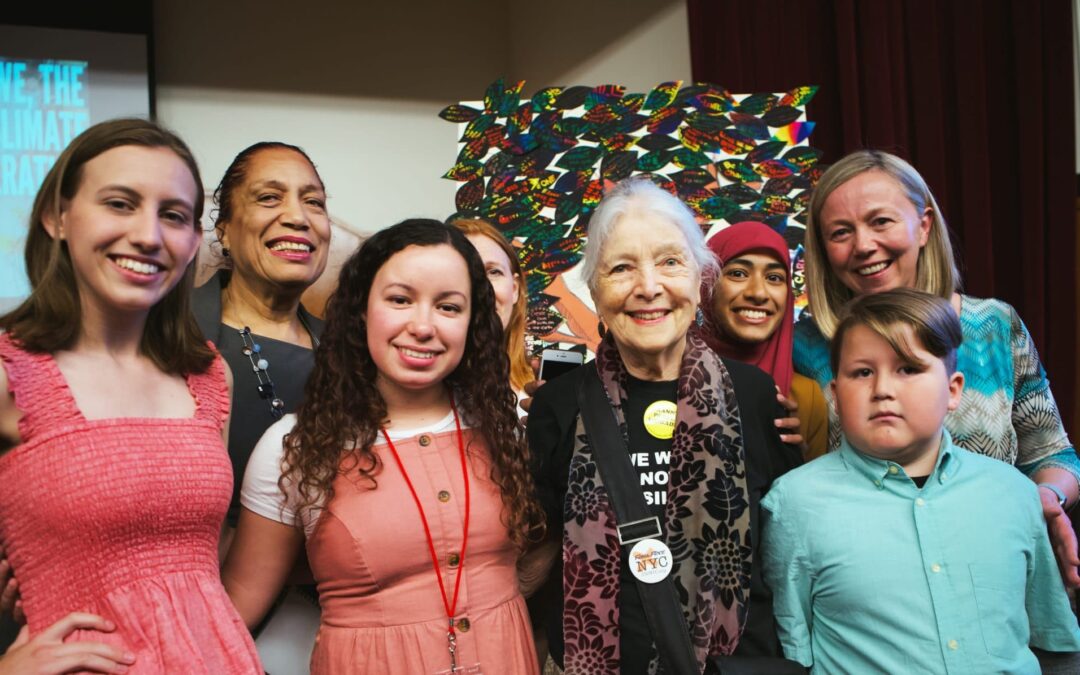
Seventy young people gathered in the U.S. for one of the international events that is part of United World Week 2019. It was the first of the six “Pathways for a United World” launched by the Focolare’s young people, focused on work and economy, and also opened up the next one on peace, law and justice. 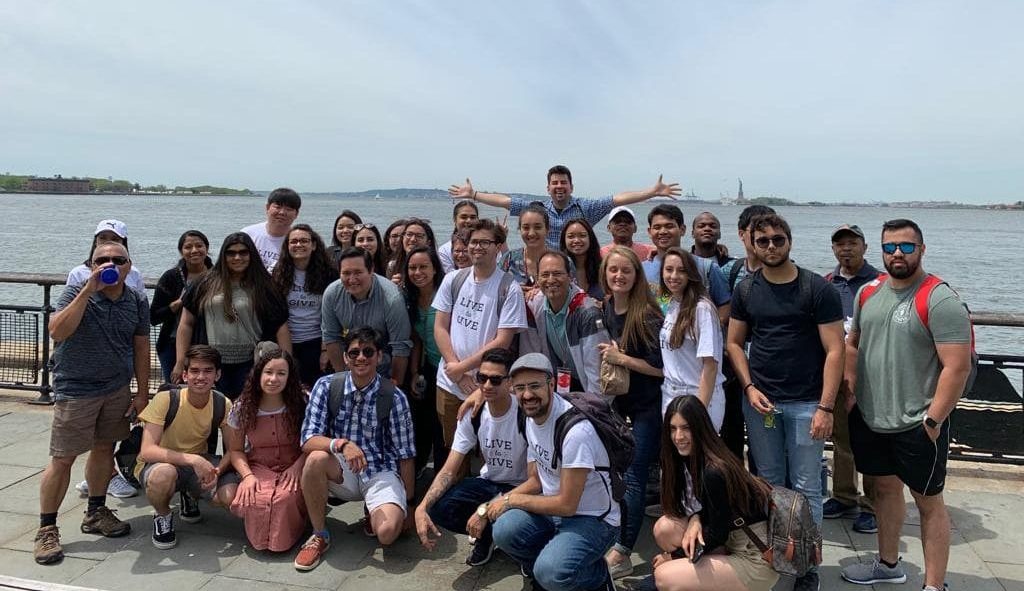 They are leaves from the same tree, threads of the same fabric. They are different, yet linked to the same dream of fraternity, and united by the same commitment to achieve it. And the more than 70 young people from the U.S. Canada, Mexico, Paraguay, Italy, Brazil, Lebanon and the Czech Republic certainly experienced it when they came together June 9–16 just north of New York City at Mariapolis Luminosa, the Focolare’s international centre for North America. We asked Chris Piazza, a young American who was there, to tell us about this event, which was just one of those scheduled internationally for United World Week 2019. What was the main theme of the meeting? Last year, at Genfest 2018 in Manila, Philippines, the Youth for a United World (Y4UW) launched “Pathways for a United World”, which are six themes to go deeper into and live over six years. The first, which includes the topics of economy, work and communion, was at the core of the event at Mariapolis Luminosa. How did you take it on and develop it? We had a number of workshops to go deeper into topics such as finance, leadership and resource poverty, and in small groups we reflected on how to live and spread a culture that is based on giving and sharing. We also participated in an exercise on consumer awareness called “Into the Label.” The final day was titled “Live to give until no one is in need,” which sums up what we lived.
 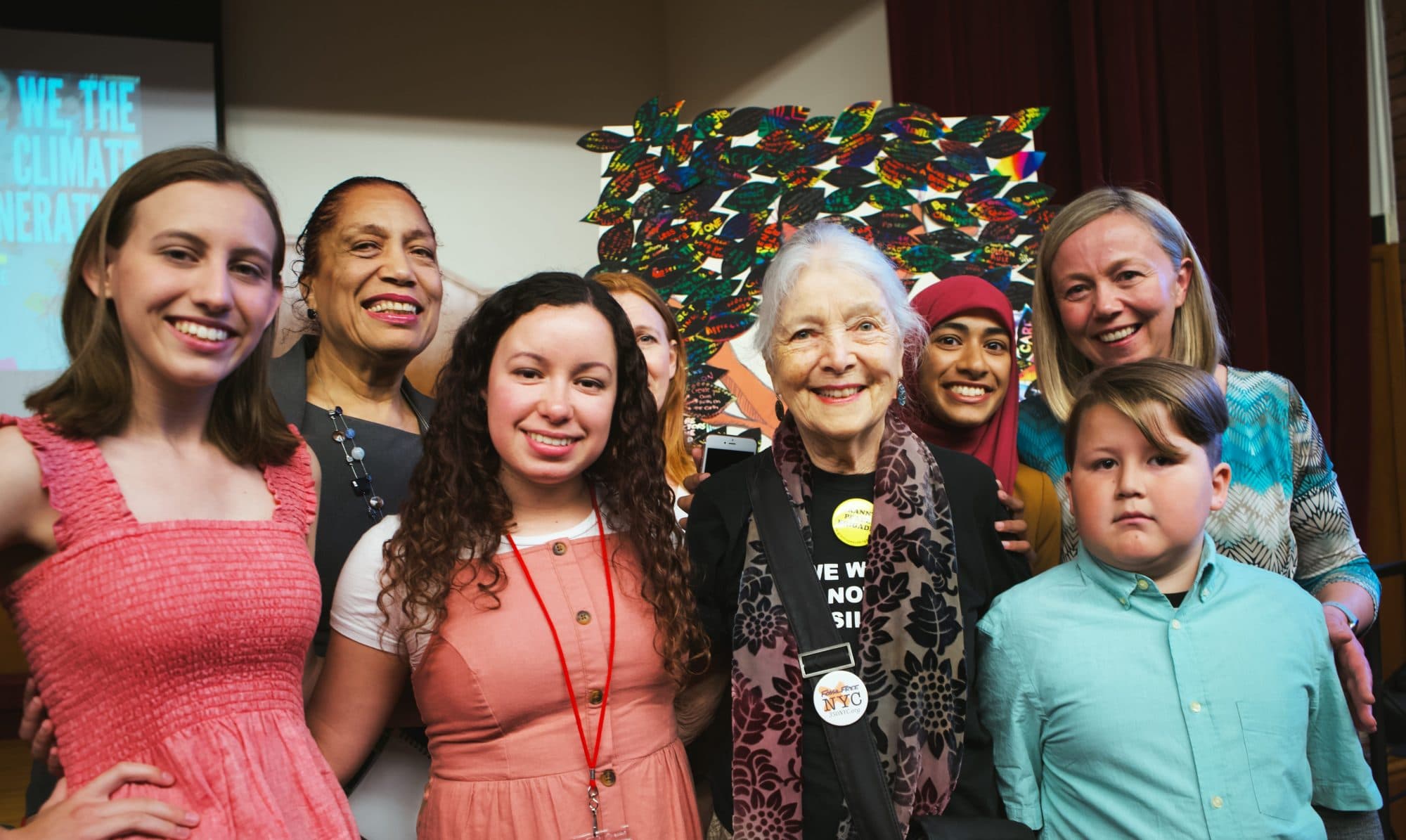 Also present were a number of entrepreneurs from the Economy of Communion, a new economic model that promotes fraternity in all aspects of business. Two of them, from competing firms, spoke about how they tried to not compromise their personal relationship despite the cutthroat competition at work. “Hands 4 Humanity” was another of the week’s events – visiting a nursing home. Then there were conservation activities promoting recycling, and an art exhibit called “Fabric of fraternity,” which was a journey towards how to form a symbolic fabric that leads to universal brotherhood. One day you were in New York City – what did you do? That day was dedicated to the climate crisis. Together with Lorna Gold, author of the book Climate Generation, and other environmental activists, we discussed how to fight climate injustice. Each person wrote their related hopes or contributions on a leaf and placed it on a design of a huge tree trunk. Our commitments became a great tree – an individual and collective call to action. “This event helped me realise that a united world is not only possible, but it’s already becoming a reality!” said Mary Bisada of Toronto, Canada. “Even though this pathway may be ending, our mission does not end here.” Treasuring the commitments taken and putting them into practice, we have now opened up, with all the young people of the Focolare, the second “Pathway for a United World,” which focuses on peace, human rights, justice and a lawful culture.
Stefania Tanesini

11 Jul 2019 | Non categorizzato
Maria Voce and Jesús Morán were in Birmingham (UK) from 29 June to 4 July to take part in the meeting of the General Secretaries of the European Bishops’ Conferences (CCEE). They also met with the Focolare community and visited one of the Sikh centres in the city. Known for centuries as the “city of a thousand trades” and “workshop of the world”, Birmingham is the second most populated city in the United Kingdom. It currently has a youthful appearance with 25% of its inhabitants under 25 and is markedly multicultural – largely due to the movement in and out of Birmingham of workers from all over the country and the world who have walked and built its streets and the country’s economy since the Industrial Revolution. It was here that the meeting of the General Secretaries of the European Bishops’ Conferences (CCEE) took place from 1 to 4 July on the contribution of Christianity to a re-awakening of consciousness that can truly be described as European. Maria Voce was invited to give her testimony on the importance of charisms within the Church, with a report entitled “Petrine profile and Marian profile: together for a new Pentecost”. Despite it being a lightning visit, the president of the Focolare Movement still managed to get to know the small community of the Movement that also reflects the variety of nationalities and cultures present in the city. There were people from Burundi, Uganda, India, Malaysia and the Philippines alongside those born in Great Britain. They were Sikhs, Muslims, Christians from the Catholic and Anglican Churches as well as those of non-religious convictions.  In a simple and spontaneous dialogue, Maria Voce showed them a way: “Universal fraternity is our goal and each one of us has to follow our own path; and we do so when we love because love makes us see what others need. This city of a thousand trades can become the city of a thousand faces, a thousand flavours and a thousand encounters with the many people you meet. I hope everyone you meet will really be touched by the love you have for everyone.”
  She also visited the Guru Nanak Nishkam Sewa Jatha Gurdwara, the centre for one of the city’s Sikh communities. The President, Bhai Sahib Bhai Mohinder Singh, warmly welcomed her together with a group of children from two secondary schools in the city, the Sikh Nishkam High School and Catholic Saint Paul’s School. The Catholic Archbishop of Birmingham, Bernard Longley, and a representative of the Anglican Bishop David Urquhart, were also present. For years the two communities – the Sikh and the Focolare – have been working side by side for peace, to bear witness to the fact that there is much more that unites us than divides us. The visit to Birmingham of the international group Gen Verde last November was an example of this. Many young people of different faiths participated in the workshops organized by the band and performed in the final show. During the visit to the Gurdwara, Maria Voce was given the “Peace Charter for Forgiveness and Reconciliation“, signed by several leaders and international religious organizations which seeks to “foster healing, harmony, justice and sustainable peace in our world”, as the preamble itself states. “Division is not God’s plan; God’s plan is unity and we believe in this” – Maria Voce concluded – “what binds us are not only the efforts of collaboration for the common good. We are bound by a gift from God: the dream of unity for the whole human family”. She then stressed the centrality of forgiveness in a way of life and relationships centred on dialogue and mutual acceptance: “Only by taking these small steps will we be able to overcome even the conflicts that every day try to divide us. Bhai Sahib Bhai Mohinder Singh then gave the President of the Focolare a passage from the Sacred Sikh Scriptures that speaks of the love and union between God and creation, with the wish to continue to walk together for peace and harmony amongst all people. On July 2, the President of the Focolare gave her speech at the meeting of the General Secretaries of the European Bishops’ Conferences; Jesús Moran, Co-President, was also present and participated in one of the dialogue sessions. Maria Voce stressed the “co-essentiality between hierarchical and charismatic gifts in the Church”. For the President of the Focolare, the different realities “arising from a charism need to live strongly grafted onto the whole ecclesial structure of which they are a part and cultivate a fruitful exchange with all the other realities.” “It is not a question of everyone doing the same thing together, staying ‘at home’, but of setting out in the most varied directions, driven by a shared eagerness to reach the ends of the earth”. Finally, she indicated the Marian profile of the Church as a dimension that “teaches how to give life to pastoral care which is authentically generative.
Stefania Tanesini

9 Jul 2019 | Non categorizzato
For the first time the historical meeting of the Focolare is organized on a continental level and Europe will be the forerunner. From 14 July to August 11, 3,000 people are expected in the Italian Dolomites. For the first time in 70 years, the Focolare organize their historical gathering, the “Mariapolis” (city of Mary), for an entire continent, Europe. The European Mariapolis with the title and motto “Aim high” will take place from July 14 to August 11, 2019 in Fiera di Primiero, in the Italian Dolomites, just where this experience began 70 years ago, inspired by the charism of unity. According to organisers, the event is arousing much interest. In just a few weeks, early bookings have far exceeded available accom modation. As of 31 January, the closing date for pre-registration, almost 3,000 people had registered. There will be about 600 people per week. The European Mariapolis comes against the background of an increasingly fragmented continent of Europe. “Our dream is to have an event which underlines the beauty of the European continent in all its diversity, where the richness of every culture emerges in the splendid tapestry that is Europe,” said Peter Forst from Focolare. “We believe that through sharing our stories, our cultures and our histories – getting to know each other – we can lay the foundation for a more united Europe.” A Mariapolis is a gathering where the citizens of a temporary ‘town’ try to build a new type of human society based on the relationships in a family – fraternity and mutual respect, as they holiday together. Participants will be accommodated in hotels, a religious institute, houses and self-catering apartments in the Fiera di Primiero region. A team made up of people from a number of European countries has prepared the programme for the four week-long Mariapolis events, which will include a variety of key inputs, moments of cultural exchange, workshops and round table discussions. “We hope that there will be something for everyone! And of course, it will also be a holiday – participants will have many opportunities for walking, hiking and other cultural events,” commented Ana Siewniak from the UK, a member of the group preparing the programme. She told CatholicIreland.net that one of the aims of the European Mariapolis was to have loads of “spaces in which to exchange the richness of our cultures and our experiences”, for example learning each other’s national songs or dances. In a recent interview, Maria Voce, President of the Focolare Movement, described her own first experience of the last Mariapolis at Primiero 70 years ago in 1959. “I remember it well – we slept in school halls – all the mattresses on the floor. There was a chair between each bed and that was the extent of the furniture for the participants. There were no wardrobes, no mirrors for doing your hair. Yet none of this took from the experience of the life of the Mariapolis.” Although the Mariapolis was materially poor, she continued, it was “very rich in spiritual grace – the divine, which was built up and shone out among the people of the Mariapolis, involving all the participants”. Among the 12,000 people who passed through the final Mariapolis at Fiera di Primiero in 1959 were people from all walks of life, she explained, and from many countries. “Poor and rich people came” through a large communion of goods among everyone. “It was truly the coming together of a town rich in these relationships of mutual love. People were all equal in a love that gave everyone the same divine life and full joy.”
Susan Gately
Fonte: Catholicireland.net Per informazioni: mariapolieuropea.org
7 Jul 2019 | Non categorizzato
The logic of Jesus and the Gospel is always to receive so as to give. Never accumulate for oneself. It is also an invitation to all of us to recognise what we have received: energy, talents, abilities, material goods and to use them for the good of others. The registration fee I am in charge of a hostel for students in a village in the Punjab. On the day for registering for the final exams two brothers came to tell me that they did not have the money to register. Unfortunately I did not have the means to help them. But I was not at peace thinking about these boys. Two days later having made a few savings, without their knowledge, I sent the respective applications for registration to the office of the superintendent. On that very same day I was offered a big farming job using my tractor. (M.A. – Pakistan) The extra change I don’t often check the change at the cash desk because I am always in a hurry. However one night I was already on my way home when I did a check. There was not much change left over but I thought the cashier might have problems if, at the end of the day, the figures did not tally. So I went back to return what was not mine. (Annalisa – Switzerland) All that I have I am elderly and live alone. I don’t manage to get to the end of the month with my small pension but God’s providence makes sure I don’t lack the essentials. One day I had to go for a check up at the hospital and I had only 2 euro in my pocket for the bus ticket. A poor man was begging and so I gave him the 2 euro. I am known around the area so maybe someone will give me a lift. After only a few steps I met someone I knew very well: without my saying anything he took out his wallet and offer me 50 euros. (Tonino – Italy) Picnic We went on a walk out of town with our four daughters. We played, ate lunch, sang songs all with great joy. Towards the evening we went home tired but happy. At the front door however we could not find the keys. Who had the keys? Who had locked the door? My wife and I began to argue when our second child said: ‘Why are you arguing? Didn’t Jesus tell us to love one another?’ At these words our attitudes changed . Immediately afterwards we found the keys in the picnic basket. (T.V. – Madagascar)
Edited by Chiara Favotti

4 Jul 2019 | Non categorizzato
Emotions, sexuality and relationships are at the heart of this course for teens and families. This year it will extend to smaller children as well. We discuss it with Barbara and Paolo Rovea. Let’s be honest: building relationships that can really be called “true” has never been easy, especially not these days, when most of our relationships are filtered through technology beginning at the earliest ages. Children and teens learn much from their smartphone screens, while today’s parents are more or less left floundering and, with various levels of awareness, continually searching for the key to understand and educate their children about their emotions and sexuality. It is an immense challenge when faced alone, although it does become possible through the synergy of family, youth facilitators and professionals. The Up2Me Project (with the tagline “It depends on me”) began by reorganising the educational pact entirely. It started by offering teens, tweens and their families a personal, shared space that was also qualified to recognise and deal with emotions. This was in order to bring about positive relationships at home, school and in groups, and ultimately to offer tools to build purpose over a lifetime. Begun within the Focolare’s education environment, the project grew and is spreading to a number of countries. We talk to Barbara and Paolo Rovea, a physiotherapist and doctor couple in Italy who are on Up2Me’s expert panel and members of the New Families International Centre.  Up2Me began in 2016 with two pilot courses in Italy and a few trials in various countries. Where did the idea come from? The project aims at holistic training, including emotions and sexuality. This is in order to shape the basic choices in life – which our children need to deal with and for which they are often not adequately prepared for with the right tools. Many parents even do not feel sufficiently prepared for the role of educator, and the information teens get at school or through the media in many cases does not shape them to place value on people, nor educate them to take responsibility for their choices and behaviours. At the core of the project is the idea to contribute to create a “person-relationship”. What’s that about? To relate to others is the essence of being human, an ontological foundation to promote complete development, which sees children and teens, according to their age, play a lead role in making their decisions, aware and able to experience positive relationships, all for the harmonious development of their physical, emotional, intellectual, social, environmental, historical and spiritual sides. In order to become an Up2Me tutor and start teaching a course, you need to attend an international school. When are the next ones scheduled? For 2019 there are three new courses planned. One will be launched in the Philippines and is especially for Asia and Australia. Another in Argentina will be for participants from the Americas. Finally, one in Prague is aimed at Europe. There will also be a specific course in Prague for facilitators of the Up2Me course for young children. Up2Me has three courses for tweens and teens (ages 9-11, 12-14, 15-17) and one for children. What methodology is being used? Employing inductive reasoning, under the guide of a tutor, this method helps young people develop their capacity to gain a conscience autonomously. Through video, role playing and group activities, teens and tweens discover fundamental principles so they can shape their personal consciences. Up2Me also offers their parents, if they wish, a parallel course with educational topics that correlate to those taken on by the teens. Alongside a married couple, they exchange experiences of life and find that education is actually “mission possible”. Finally, in the course for younger children, their parents are actively involved alongside facilitators and experts. Together with their children, through games, they open up to specific subjects. All of this is to build up people who are able to recognise emotions within themselves and others and learn how to manage them, as well as take on subjects such our bodies, living and even dying.
Stefania Tanesini
Download the Up2Me flyer in English here.
