27 Apr 2019 | Non categorizzato
While the world is still struck and the people of Sri Lanka are tightening to mourn the victims of the terrible Easter attack, Suchith Abeyewickreme, a young activist for peace and co-founder of an inter-religious network of young people, has written a message to all the Focolare members in the world. What can we do for the people of Sri Lanka, after the horror they have experienced in the wake of the terrorist attacks last Easter? Looking at those horrible images, we ask ourselves how often we have experienced that sense of impotence towards the ongoing violence, or the impossibility to relieve the pain of those who mourn their dead. Yet there is a path: ” It challenges us to believe in God’s love and pray with faith that new hope will be reborn again and the courage to proceed on the way to peace and unity”, as the president of the Focolare Movement, Maria Voce, wrote to Suchith Abeyewickreme, a sri lankan young leader of a youth inter-religious network. On April 25, he wrote a message to all the members of the Focolare Movement in the world. We publish the whole message below: Dear Friends from Focolare, I write to you as we here, in Sri Lanka are mourning the loss of our people due to the recent attacks on Easter Sunday in our beautiful Island. We are shocked, saddened and shaken up by these unprecedented events. Our first priority has been to care and support the victims and their families. We are trying to support each other across Communities in these efforts. Following the attacks with immediate response many stepped out to donate blood, help victims and donate relief and medical supplies. We are now in the process of supporting each other in our farewells to those who we have lost. We stand together at this time understanding that these acts of terrorism aim to cause havoc and spread fear, suspicion and divisiveness through our communities. By standing together Sri Lankans of Christian, Buddhist, Hindu, Islamic and other various spiritual and cultural backgrounds, are saying to those who impose terror upon us that we will not let them succeed in their aims. We understand that in such attacks, what follows the physical destructions and death is fear, suspicion, hate and divisiveness. While there has been some reactive forces at work lashing out with hatred, majority of the Sri Lankans have been responsible for showing empathy and care towards one another. We are working hard to ensure that these acts by few extremists do not end up being used to discriminate and alienate innocent people or entire communities. These events occurred when we in Sri Lanka were about to commemorate the 10 years since the end of the 26 year long armed conflict on the 18th of May, 2019. As a society we had many wounds yet to be healed from past experiences, but we are now wounded again. But I believe that the Sri Lankan people are strong and resilient, we will work together to heal ourselves and our society over time. It is at this difficult time we must practice the virtues of compassion, love, empathy, responsibility and peace that our spiritual teachings guide us towards. We must rise above the divisiveness to acknowledge our interconnectedness and shared humanity. Our main appeal to you is not for donations. Our appeal is for your time and commitment. Time and commitment to strengthen your work in your own communities to build bridges of understanding across divides, to intensify moderate voices and to stand for non-violence. Around the world there is a lot of polarization, discriminations, hate and violence that offer ideal breeding grounds for violent extremism. We must work together to be the sensitive, empathic and responsible leaders this world needs to heal its wounds. “Darkness cannot drive out darkness; only light can do that. Hate cannot drive out hate; only love can do that.” Thank you for your solidarity at this difficult time. May you be well, happy and peaceful. Thank you,
Suchith Suchith Abeyewickreme Peace Activist, Co-Founder – Interfaith Colombo and Interfaith Youth Network Global Council Trustee, United Religions Initiative
26 Apr 2019 | Non categorizzato
There have been tensions and conflict for a long time in central and northern areas of Mali between the Fulani and the Dogon ethnic groups. The recent massacre of 160 Fulani pastors is just one example of the continuing violence. The United Nations have begun to ask for urgent action to restore peace. Father E.M.S. is a member of the Focolare community in Mali: this is an excerpt from an interview with him. 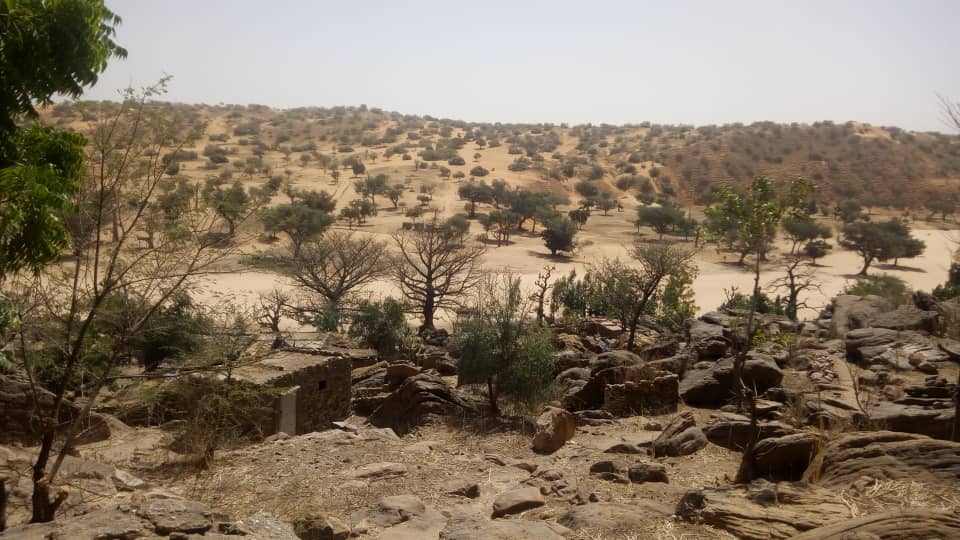 The media refers to episodes of violence between ethnic groups: what do you think is the cause of the conflict? The violence began in northern Mali in 2012 and, more recently, it has spread to central areas of the country, particularly to the Mopti region which has a high number of Dogon inhabitants. I know this area very well. Many armed groups and terrorists have moved to this part of the country and they have been welcomed by both the Fulani and Dogon communities. Gradually, the terrorists who speak the Fulani language have begun to attack the Dogon villages and, given that there is no military presence in this region, the Dogon people have begun to retaliate in defence. The terrorists have colluded with some of the Fulani and have begun to ask the Dogon to leave. In reality, this is not ethnic conflict: the terrorists are trying to make it appear as such in order to gain more land for themselves After the recent massacre, the Catholic and Evangelical Churches sent a joint message of sympathy to Mali which was read to the people as they gathered for religious services. What was the reaction to this gesture? Every nation finds consolation when other groups express their solidarity during a time of difficulty and suffering. The messages and prayers of members of the Catholic and Evangelical Churches and of the Muslim community were greatly appreciated by everyone. This is a sign that everyone longs for peace: the people of Mali want an end to violence. This is why there are many meetings and discussions in an attempt to restore calm to people on both sides of the conflict; in fact, people are uniting to overcome violence. Everyone knows that this is not just conflict between the Fulani and Dogon peoples; it is a problem involving the whole country. What is the Focolare community in Mali doing during this difficult period? In Mali, there is a really beautiful Focolare community spread across several different dioceses. All the activities are coordinated by the group in Bamako. There are no Focolare houses in Mali but we have very strong links with the houses in Bobo-Dioulasso and in Burkina Faso. In this situation, what helps us – just as it helped Chiara Lubich during the conflict she experienced – is to know that God is the only ideal that will not pass away. There are many groups that are working hard to restore peace. In my diocese, we members of the Movement are searching for every opportunity to live out fraternal love – to love one another and to love the people around us. We are praying for peace and we are asking other people to do the same: we believe that if we ask God for this gift, he will hear our cry. I would like to ask everyone to remember Mali in their prayers. What I say to the people of Mali – to the Evangelical and Catholic Christians, to the Muslims and to people of no religious faith – is that commitment to our country and to human fraternity should prevail over our differences. We should never forget that what we have in common is far greater than what divides us.
Anna Lisa Innocenti
24 Apr 2019 | Non categorizzato
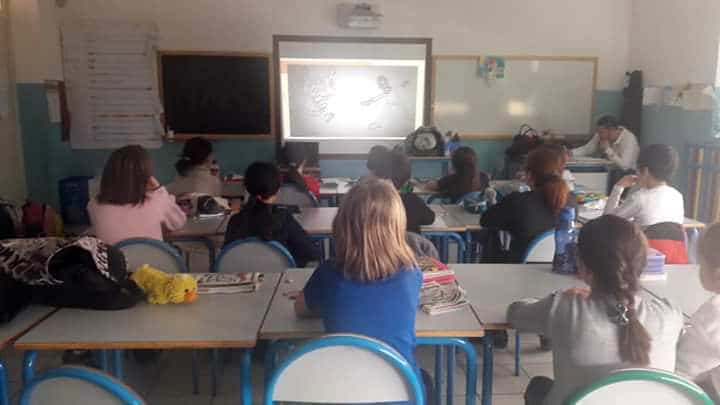
Enhancing the educational potential of the Internet – the work of Daniela Baudino It’s not a new phenomenon, but we are not yet fully equipped to deal with it. For years now our friendships, family, professional and emotional relationships have taken place not only in our common living environments, but also on the web. Through social media, chats and online communities we can form relationships with anyone, acquaintances or strangers. This is no small thing, because even though we surf the web we have not yet learned to swim there safely. We don’t always know what rules we have to follow so we can stay afloat, and keep away from the hidden “traps” on the Internet, in order to benefit from the opportunities it offers. This applies to adults but above all to young people, who are less aware of the consequences of their actions. Young people struggle more with feelings and emotions as they develop their own personalities and need safe direction and guidance – especially to avoid the concrete risks of online abuse and bullying. Educating young people in emotional maturity today includes learning to explore the universe of digital relationships, which are not only virtual but also real – although limited in time and space. Undoubtedly, the Internet has changed the nature of social relationships. We explored the topic with Daniela Baudino, a digital education expert and tutor in the Up2Me project for emotional and relationship education for children which is promoted by the Focolare Movement in various continents: The most obvious thing is that with the digital environment we have all become “neighbours”, and therefore it is easier to enter into a relationship, even just once, with people with whom we might never have entered into a relationship in the real world. This however means that relationships often risk being quickly over and done with, and therefore more fragmented. There is a risk that this leads to superficiality and that this attitude will then spread to real life relationships. What are some of the illusions that the online environment gives us? First of all, there is the idea that it is the number, or the quantity, of friends, or “likes” that we have that tells us how much we are worth. Then there is the belief that maintaining a relationship requires very little effort, and that there is no need to really get involved. Then there is the belief that we can truly get to know another person simply through contact on a social network. How can we deal with these online relationships in a more aware, informed and positive way? We must become aware of what each of our digital actions entails, for example, in terms of our privacy, our reputation and our relationships. We have to understand that the digital environment is only one way of maintaining relationships. It can enhance the other ways, but it must not replace them. Teenagers in particular are exposed to the dangers of the web. They can become victims of cyber bullying, revenge porn and grooming by adults. What sort of media education helps young people in these situations? I believe we need to re-propose the models we already know in “real life.” We have to help young people to understand that not everyone we meet wants what’s best for us and that there are real dangers online, and that everything we do in the digital environment stays there forever. We have to teach them to think very carefully before clicking. Sexting is a common practice among young people in which they take erotic videos and photos and send them to their boyfriends or girlfriends or even just friends. It’s a game that becomes dangerous if those who receive them, either for revenge or for fun, share these images on public platforms. This puts their friend at risk: it’s called “revenge porn.” Once online, these images can bring the young people to the attention of adult criminal elements. But why do children and young people ignore these dangers? How can we educate them to have real self-respect? These dangers are ignored because they young people have no perception of the reality of the risks they are taking. They completely lack awareness that their actions on the Internet can have real consequences. We need to help them to understand that online interaction affects our whole self – and therefore the consequences of the actions we carry out are very real and lasting. We have a lot of work to do to convince young people of the significance of everything they do online. You are involved in media educational activities, including the Up2Me project promoted by the Focolare Movement. In your experience, does living online have educational potential or is it just a possible trap? I believe that the digital dimension can be a fertile ground for education, because it is a meeting place where we can find different people with different ideas, and this gives us the opportunity to grow in our own humanity. For example, this growth might mean developing a critical approach to things and the ability to question one’s own point of view, or learning to choose the right words so as not to hurt another’s feelings. These are things that adults often don’t know how to do, so it’s good when young people can become specialists in this.
Claudia Di Lorenzi
22 Apr 2019 | Non categorizzato
This is Jesus’ clear invitation in April 2019’s Word of life. He was the first to wash his disciple’s feet so that everyone would understand and live like this in every situation and in every social and cultural context The Missing Component I work in a company that makes computers. I’d been looking for a particular electronic component for months which would hugely reduce the cost of a product but not a single supplier had found it for me. So, I decided that I would design it myself and at the next weekly meeting, being aware of the long hours of work ahead of me, I asked that the order be postponed for another week. However, during that meeting, one of my colleagues who was going through a bit of a difficult time in his family, told us that he hadn’t managed to finish a piece of work which had been entrusted to him. The boss started to shout at him so I offered to finish his work for him. Immediately afterwards, thinking about it, I knew that I wasn’t going to have time to finish my own project and that I was going to be late home for the rest of the week. But on getting back to my office, I found a supplier waiting for me, without appointment, who had come to give me the very component I had been looking for. (M.A.Italy) The Courtyard Many young people from the area play in the courtyard of the apartment building where we live. One of these is Robert, a young guy with problems, who passes the time roaming the streets, often getting into arguments with others. We knew that his parents didn’t have time for him and that he was under the care of a psychiatrist. One day, while he was arguing again, my wife and I went down to the courtyard and invited Robert to come up to our house, where he stayed for the rest of the afternoon, playing with our two children, who were younger than him. In the days that followed, every time things became difficult for him, they brought him to us. We soon learned that Robert had told his psychiatrist how he was spending his afternoons. From the time he started coming to our house his behaviour improved, so much so that he was able to stop his medication. (D.H. USA) The Easter Egg Following a visit to my friend, who was ill, as I was leaving, his wife gave me an Easter egg for my son, Cesare. When I got home I found him playing with my young nephew who was often with us due to the difficult atmosphere in his family. With a wink to my son the egg went into the hands of his younger cousin, who was so happy. Cesare kept playing and when we were on our own I explained to him that when we give a gift we feel closer to Jesus. That afternoon his grandmother arrived with an even bigger Easter egg. Cesare was delighted and said, ‘Dad, why don’t you tell everyone this secret?’ (Z.C Italy) One Big Family After many attempts, an African immigrant which we had welcomed into our parish had managed to get his wife and children to join him from Africa but they didn’t have any of the things they needed. Their accommodation was a building site, with no electricity. So, I offered to do their laundry and others offered food and other necessities. This family, our brothers and sisters, experienced the joy of having found the large family they had thought they’d lost forever having left their own country. (F.F Belgium)
edited by Chiara Favotti
20 Apr 2019 | Non categorizzato
The Resurrection! John and Peter go to the empty tomb and find the linen cloths on the ground, the shroud on one side. Mary Magdalene remains there weeping and sees two angels, one where Jesus’ head had been and one where his feet had been. She talks to them and then, turning, she sees Jesus. The apostles didn’t see him, and among them was the one Jesus loved in a special way on account of his innocence as well as for other reasons. Mary, the sinner, saw the angels and Jesus. «Blessed are the pure in heart, for they will see God.» (Mt. 5:8) Who saw the most on this occasion? Mary Magdalene. The tears which flowed continually from her eyes, and her vigil outside the tomb, were the signs of a love which believes everything and wants everything. Then later her conversation with the angels and with the person she thought was the gardener, almost as though Jesus were a person in whom she alone was interested. These two things had purified her heart perhaps more than the hearts of the others, to such a degree that she merited seeing heavenly beings and the risen Jesus. This is the meaning of the Resurrection. Redemption is completed. Death is conquered. Sin is overthrown by mercy poured out in superabundance from the tree of the Cross.
Chiara Lubich
(From: Chiara Lubich, Knowing How to Lose, New City, London, 1981, pp. 84-85)
19 Apr 2019 | Non categorizzato
Igino Giordani wrote many pages on Mary, on understanding her mystery. Below is one of these in which he invites us to look to Mary at the foot of the Cross, to be like Her. Let your model be Mary Desolate. After having given life to Jesus, she loved and served him, and although she felt detached from him and rejected by the crowd that was not yet Church, her faith never wavered. In the supreme trial, she did not miss the appointment at the foot of the cross. She was as the Holy Spirit had formed her: a heart in which people’s offenses were extinguished; a centre from which only love poured forth. She was complete self-giving. Dead to herself, she lived of God: Only God lived in her. (…) People leave you alone, so that you can be alone with God. Then your soul is no longer distracted or stolen from you: then, in the silence, you converse with the Eternal. You stay, with the Crucified One, on God’s level.
Igino Giordani
(Igino Giordani, Mary, the Perfect Model , New City, Rome, 1989, 131-133)
