
11 Apr 2019 | Non categorizzato
Roberto Catalano of the Focolare Movement’s Centre for Inter-religious Dialogue offered his insights into the context and geo-political events leading to the drawing up of the historic DOCUMENT ON HUMAN FRATERNITY FOR WORLD PEACE AND LIVING TOGETHER, co-signed by Pope Francis and The Grand Imam of al-Azhar, Ahmed Al-Tayeb in Abu Dhabi on 4th February this year. How can we possibly identify universal fraternity as a primary objective of today’s humanity? Are we not in an age dominated by digital bubbles, with ever more divisive personal and collective boundaries, and new forms of economic protectionism and so on? However, the declaration signed in Abu Dhabi by Pope Francis and the Imam of al-Azhar places the values of fraternity at the heart of the geo-political and media agenda. With a clear and practical approach, the declaration proposes fraternity as the guiding objective, not only for the Christian and Muslim religions, but for the entire human family. Roberto Catalano outlined the steps leading up to this important document which is being recognized as a foundation step in dialogue towards world peace. How significant is the declaration signed by Pope Francis and Imam al-Tayeb in Abu Dhabi on 4 February this year? This document on fraternity represents a significant milestone and the text will remain as a reference point for the future. It’s impossible not to see how profoundly innovative it is. Once more we find ourselves before one of Pope Francis’ “absolute firsts”! Never before in the history of the Church has a pope co-signed a shared document with the leader of another religion. This document was signed in a very precise context, a meeting between the leaders of the Catholic Church and of al-Azhar, characterized by a mutual embrace, talks, and even walking hand in hand. The agreed text addresses not only religious leaders or interested parties but all believers and in fact everyone in the world. The United Arab Emirates can be seen as a cross section of the globalized world: the Arabian Peninsula is the heart of Islam, but there are a growing number of workers from other countries and cultures…. Abu Dhabi, the capital of the United Arab Emirates and the venue for the signing of this declaration, is on the Southern Coast of the Persian Gulf. All the Gulf States are significant due to their economic and geo-political status. In only a few decades, their oil reserves have permitted a dizzying rate of progress, facilitated also by workers from countries such as the Philippines, India, Pakistan, and Bangladesh. The Arabian Peninsula is the heart of Islam, but it also presents a true Muslim mosaic. Saudi Arabia dominates the region, as the image of Sunni Islam which identifies with Wahhabism, which on the international level supports the Salafi movement. Within this context, there is the emerging phenomenon of new Christian communities. Whereas the traditional apostolic Christian Churches of the Middle East continue to live through dramatic events which often cause them to flee the region, the area of the Emirates is becoming populated with a new set of Christians, a real cross-section of today’s Christianity. The majority of these Christians are from the Philippines and India, but also from other parts of the Middle East. We are living in a period of globalization, and the Church in the Emirates is a striking example of this. During Pope Francis’ recent visit to Morocco, the 800th anniversary of the meeting between St Francis of Assisi and Sultan Malik al-Kamil was celebrated. It seems this pope has embarked upon something of a “pilgrimage of peace”. Absolutely. And the Abu Dhabi declaration fits in with this anniversary, as a sign of the desire to be a “brother who seeks peace with his brothers” and “to be instruments of peace”. The Second Vatican Council Declaration Nostra Aetate states that “in the course of centuries not a few quarrels and hostilities have arisen between Christians and Moslems” and so the Council strove to urge “all to forget the past and to work sincerely for mutual understanding and to preserve, as well as to promote together for the benefit of all mankind, social justice and moral welfare, as well as peace and freedom”. In 2006, a passage from Benedict XVI’s Regensburg lecture sparked controversy in the Muslim world. Many took offence at the quotation, even though it referred not to the Quran but to the relationship between faith and reason, and between religion and violence. It led to a period of stormy relationships, during which the University of al-Azhar cut off contact with the Vatican. In the years that followed, with great patience and diplomacy, these relationships have been rebuilt, in the spirit of Evangelii Gaudium, which after defining inter-religious dialogue as a “duty for Christians as well as other religious communities” (EG 250), affirmed the importance of Christian-Muslim relations. Finally, in May 2016 Imam al-Tayeb came to the Vatican. On his arrival, he made a significant comment: “We are taking up the way of dialogue once more and we hope it will be better than before”. The invitation and welcome was soon reciprocated. In 2017, the Imam invited the Pope to Cairo for an International Peace Conference. On that occasion the Pope strongly affirmed: “Peace alone is holy and no act of violence can be perpetrated in the name of God, for it would profane his Name”. He went on to propose three basic areas which, if properly linked, can “assist in this dialogue: the duty to respect one’s own identity and that of others, the courage to accept differences, and sincerity of intentions.” From then on, a deep spiritual understanding has grown between the two religious leaders.
Interview by Stefania Tanesini
9 Apr 2019 | Non categorizzato
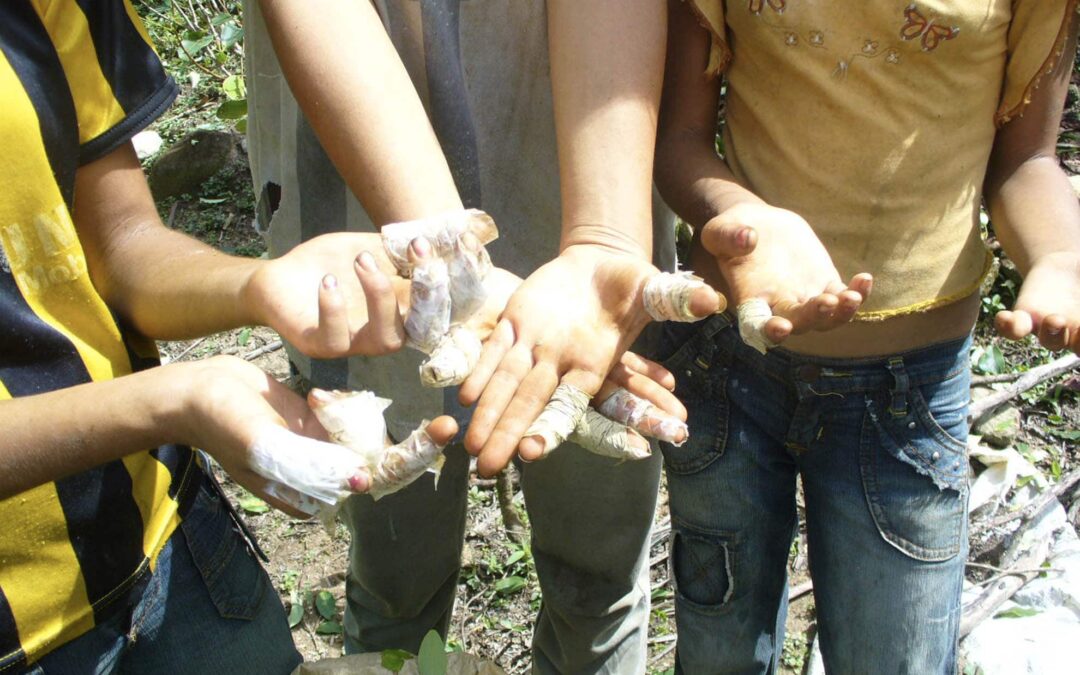
A Foundation set up in Colombia to help children who are forced to fight or work on coca plantations “We would like to create a safe haven where poor children can experience dignity, realize their dreams and grow up in an environment that promotes a mentality of peace and justice”. These were the objectives of Fr. Rito Julio Alvarez, a priest from the Ventimiglia-Sanremo diocese, when he set up the Oasis of Love and Peace Foundation in 2006, in the Catatumbo region of northeast Colombia.  This NGO was set up in one of the poorest areas of the region where Fr. Rito was born and lived for twenty years. It aims at offering an opportunity that safeguards children in this country from being recruited by the rebels or forced to work on coca plantations. This idea matured from Fr. Rito’s personal experience, that can be read on the Foundation’s website http://www.oasisdeamorypaz.org/ – “He came to know about the guerrillas when he was a child. Very often these illegal revolutionary groups came to the village and tried to persuade children to join them. Some of his companions, even 11 or 12 years old, were enticed by the offer of these rebels, joined them and died in clashes with the regular army.This is what happened to his childhood friend who was killed at the age of 14. Nothing was known, not even about his abandoned body”. He relates: “In the 90’s, the peasants in the territory were made to believe that planting Coca would change their lives, but instead the situation got worse. In 1999, paramilitary groups came into the scene and great massacres ensued”. Rito Julio Alvarez became priest in 2000. From Italy he followed his people’s suffering owing to the war that broke out because of the control of the coca plantations, that involved paramilitary groups, government armed groups and guerrillas. In a few years, in a territory of 250,000 inhabitants there were about 13,000 deaths. Even his family members had to be evacuated and many of his friends were killed.
 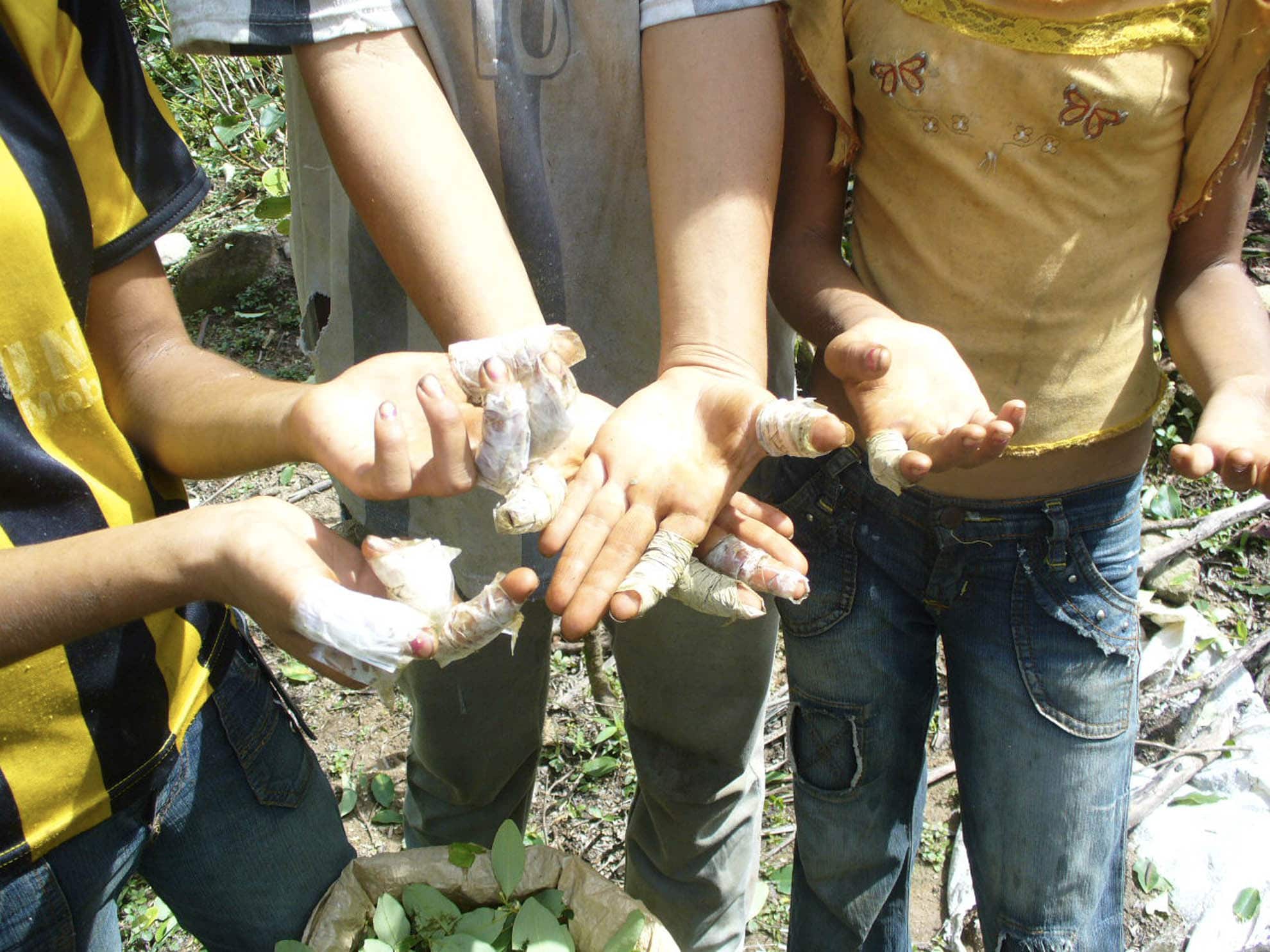 The need to help these people was great. Together with his relatives at Catatumbo, he decided to set up a home for child soldiers and for those who came from the coca plantations. He recalls: “We started in 2007, in a small shack where we welcomed the first 10 boys. We had no money but we had a lot of goodwill. We prepared their beds; my sister was a mother to them and she saw to their food. My mother lent me cutlery, dishes, pots and blankets. This is how we started this adventure”. Today, the Foundation handles two projects that comprise the breeding of fish and livestock and banana and coffee plantations. Hundreds of children have been welcomed by the Foundation; some of these have become educators and NGO managers. One of them, whose relative was a drug trafficker in the area, is involved in politics. “I am so pleased when the Foundation welcomes those children whom I have seen harvesting coca leaves with their sore hands”, says Fr. Rito very emotionally, “and here they grow up and live in an environment of peace; they feel safe and can think of a different future. All this encourages me to look ahead without fear. My trust in the Lord assures me that this work can proceed”.
Claudia Di Lorenzi
7 Apr 2019 | Non categorizzato
Amine Mohammed Sahnouni, a young Algerian sociologist, sees education as a process. “We need to give the children more responsibility, trust in them and guide them so that their leadership abilities develop from an early age.” “Children are the pillar of our work, and we dedicate ourselves to them with the aim of helping them grow up strong, since they are the future.” For an education conference promoted by the Focolare Movement in Italy on 2 March, Amine Mohammed Sahnouni, a young Algerian sociologist, spoke of her commitment to education that benefits young people. To build a better world, she said, we need to start with the children. Amine, you said that in order to get results it is important to have a vision, long-term objectives, and if possible, share them with others. What is your vision for the field of education? I believe that we sociologists are doctors for society, and as such we need to go into the field and take on social phenomenon of all kinds. With that perspective, my vision is to “make the world a better place,” not only for us, but for future generations. We all can do this, but only if we start by changing ourselves, even by starting with the small things. If we hope to build a more just society, it’s essential that we dedicate ourselves to training young people. What are the main resources, competencies and methods you propose? My parents always encourage, support and guide me. Ever since I was young, they gave me a sense of responsibility. I still remember the words of my father: “Amine, make us proud of you.” He was always saying to put “Allah,” “God,” in the first place in everything I do; only by doing so would I be able to be a successful person. So to me the first pillar of education is family. There are also various competencies to work on: we need to give the children more responsibility, trust in them and guide them so that their leadership abilities develop from an early age. We need to give them our trust, support and use positive words in a way that they can develop their self-esteem, hopes and objectives. We need to encourage critical thinking in children and teach them to share their opinions in front of others. All these competencies can be acquired by working in the field, through exchange programs where they meet young people from different countries, and by changing traditional teaching methods to make learning easy and enjoyable. Religious leaders, institutions and non-profit organisations call for safeguarding the environment, but their efforts are not enough. Meanwhile it is said that the young Swede Greta Thunberg, who called for young people marching in all of Europe, may be nominated for a Nobel Peace Prize. Does this mean that we need young people to awaken the old? I truly admire the courage and determination of that girl, who, despite being quite young, is completely aware of environmental issues, and this is extremely rare today, even among adults. This great “battler” is sending a strong message to the world, and I have a lot of respect for her. We all need to take inspiration from her example. I believe, in fact, that great victories begin from the small things. Getting on a bicycle and crossing Algeria from the Moroccan to the Tunisian border seems a way to inspire commitment for the environment. Can you tell us how it went? We were a group of friends, passionate and motivated, hoping to inspire young people. Since 2012 our philosophy has been: if you want lasting change, start by changing yourself. In time our goals expanded, and we decided to take up a new challenge: cycling across Algeria from east to west over 15 days. It was a project aimed at raising awareness for safeguarding the environment, promoting the values of citizenship, and educating through sports. My two friends, Elhadi and Naim, and I created a video about our activity, and in just one week the video spread so quickly that people started to contact us offering their help. We received so much support during the trip itself in August 2017, and the results were incredible: two million followers on social media and television. We collaborated with more than 15 associations, children’s organisations and cycling clubs. We felt “Allah,” “God” with us each day and we asked him for courage, support and strength to complete our mission. It was a spiritual experience, and we received prayers from many Algerians and support from our families. Just in two weeks we were able to spark other awareness campaigns, and after the initiative many people followed along our same path.
Claudia Di Lorenzi
4 Apr 2019 | Non categorizzato
At the end of March, the Emergency Coordination Section of the Focolare Movement took action to help the communities affected by the flood in south-eastern Africa, in particular a mission to Dombe. Ildo who is responsible for this mission, sent us this message: “Here we have four houses of rehabilitation, an agricultural school and a day center, which have been completely submerged in water. We have lost everything: furniture, documents, animals, tractors. We are now housed in our small hospital, which was saved along with the church, the nuns’ house and the college. We are taking care of 1,300 people housed in two schools. We are in great need – especially of tents, food, blankets, and simple boats to cross the river. Many people have died in the area surrounding our mission, especially children. There are many more deaths than have been reported. When the water level dropped, bodies were found hanging from the trees. Yesterday I found a desperate young man on the street, who didn’t know where to go, looking for who knows who. When he told me his story I couldn’t stop myself, I just took him with me to the mission to live with us. “The waters rose suddenly,” he told me. “I took my eight-month-old baby, my wife and my two brothers and we climbed a tree. Suddenly the tree fell down and one by one I saw them being dragged away by the water. The only reason I was saved was because I was hanging on to the tree trunk. I was in the water for 30 hours – just three miles from my house.” His name is Silvestre and he is 22 years old. We hear stories like this all the time. We will stay here, determined to help these people who were already suffering before the flood. Something tells me that something great, something really good is going to happen to us. We ask you to pray so that we have enough health and strength to carry on this mission that God has entrusted to us. A big hug from all of us!” Those who wish to can contribute in the following ways: Action for a United World ONLUS (AMU) IBAN: IT58 S050 1803 2000 0001 1204 344 Banca Popolare Etica BIC: CCRTIT2T Emergency Mozambique Or: Action for New Families ONLUS (AFN) IBAN: IT55 K033 5901 6001 0000 0001 060 at Banca Prossima SWIFT / BIC code: BCITITMX Emergency Mozambique
2 Apr 2019 | Non categorizzato
With his profound knowledge of Asia, where he lived for almost 30 years, learning to speak several languages, Silvio Daneo who died recently, has given a unique contribution to the inter-religious dialogue of the Focolare Movement and beyond. His later years were dedicated to helping the lonely and those on the margins of society. He is buried in the cemetery at Loppiano, Italy. “It’s not easy to capture in a few lines a life as intense and full of adventure as Silvio’s. In one of his recent books, he reflected that he had lived seven lives! all “in a continual discovery of the divine treasure in each person in every encounter”. With these words, Focolare President Maria Voce recalled Silvio Daneo. He spent his life spreading the spirituality of unity in many different countries in North America and Asia: USA, Philippines, China, Hong Kong, Macao, Taiwan, India, Thailand, Pakistan and later Singapore, Malaysia, Indonesia and Vietnam. He embarked on the first of these journeys in 1962, at just 21 years of age. His destination, the United States, where together with two other focolarini, he launched the Movement’s first men’s centre in North America. Four years later he flew to another continent, this time to the Philippines, with Guido Mirto (also known in Focolare circles as “Cengia”). Over the course of many years in Asia, Silvio contributed to the beginnings of Focolare communities in many countries. He demonstrated unconditional love for people, he had an open mind and heart, and was totally dedicated to the wellbeing of each person he met. He would help everyone he could in a spirit of true generosity, which led people to experience and recognise divine love through his practical way of serving in the things of daily life. He was less for giving talks and more for giving practical assistance. For example, a young member of the Focolare Movement was once going to a Buddhist temple to be ordained. Silvio accompanied him, sleeping on the ground for days on end, eating whatever was offered to him by the monks, in sweltering tropical heat, under constant attack from mosquitoes. This act marked the beginnings of the movement’s inter-religious dialogue in Thailand. Silvio’s contribution was fundamental in introducing the Focolare to the country’s Buddhist monks. In 1995, he organized the first meeting between Phra Mahathongrattanathavorn and Focolare foundress Chiara Lubich, keeping in touch with developments for as long as his health permitted. Silvio knew Muslims, Hindus, Parsi, Gurus, and he knew how to identify with the good in the heart of each person he met. Silvio did a lot for me too. To him I owe the openness I find within myself towards the other great religions, and the experience of not noticing the barriers when with someone whose beliefs are different from my own. Silvio wrote in one of his books, “Again and again I must acknowledge how in every Asian country I’ve lived in – wherever I’ve tried to assimilate the culture and traditions of the place – I’ve found myself enriched by the knowledge of the various religious traditions. I’ve had many real opportunities to get to know people in the practice of very differing faiths, and from the witness of their lives, of their prayer, meditation, their coherence, dedication to others, and honesty in their daily action, I’ve gained a fascination to get to know the content of the doctrines taught by the different religions”. In Vietnam, back in 1990, I worked with Silvio on opening up a trading enterprise, which proved surprisingly successful. I also remember one particular day when we were in Bangkok, Thailand. We could not believe our eyes as we saw him down on his knees in the street outside our house. He was treating the bleeding knees of the workers who were building the road, disinfecting their wounds and applying bandages. Nothing like this had ever been seen before, and those labourers were touched to the heart. A few days later, these same workers set themselves to build a ramp linking our house to the new road, and they refused any payment! Silvio spent time with bishops, priests, Imams, Rabbis and monks, often greeting them in their own language, to their obvious delight. “Should it ever cross anyone’s mind to praise me – Silvio wrote in the introduction to his last book – they would, however unknowingly, be committing an error. I am convinced, at least I hope I am, that I’ve been nothing other than an instrument, and all too often a less than docile one at that! … All the merit and acknowledgement is due to Him, to God, the only One capable of achieving such great things”. Silvio spent his later years in Rome, and even though his health was compromised, his commitment to live life wholeheartedly never was. He dedicated his time to prisoners, to those experiencing loneliness and different forms of abandonment, collecting food and other useful goods on their behalf. About a year ago I met him when I was accompanying a group of Thai Buddhist monks to Rome. With that unmistakable smile of his, Silvio greeted us all, and his luminous countenance conveyed a sense of how he had been purified by his illness. This encounter left me with the conviction that life signifies this: to reach the end well, conserving what really counts, knowing ever more powerfully how to transform every suffering that comes our way into Love.
Luigi Butori

31 Mar 2019 | Non categorizzato
“What is important to God is that we are human beings and that we live in mutual love.” Interview with Claude Gamble, pioneer of the Focolare Movement in Morocco. After his apostolic journey to the United Arab Emirates, Pope Francis himself said that his trip to Morocco was another important occasion “to further develop interreligious dialogue and mutual understanding among the faithful of both religions”. Claude Gamble, who was there at the beginning of the first Focolare communities in Morocco, offers us a few brief glimpses into his experiences… What are the challenges for Christians in Morocco today? The challenge is to build bridges. Today we are going through a phase of extremism that involves everyone, Christians and Muslims. In poor neighborhoods it is very dangerous because people are being radicalized into following extreme ideas. For example, a few times in Tangiers, while we were going to mass with a group of people who share the spirit of the Focolare, stones were thrown at us in order to intimidate people outside the church. But we believe in universal brotherhood. We have to bear witness to it. It might take a long while for some people to accept our offer of friendship. In Algeria, where I lived, I found many examples of brotherhood. Every time I went to visit a family I felt at home. They were all Muslims but we were brothers. Friendship is the antidote to extremism. What is important to God is that we are all human beings and that we live mutual love between us. What can we expect from this journey on the pathway to dialogue? Dialogue is not the search for those who have the truth, because God alone has the truth. I believe that the Pope, as a representative of the Catholic Church, can show how he lives as a Christian. This is his experience and, as such, it is not something to refute or argue against. Especially since it is clear that he comes in peace. The beauty of the Arab way of being is their hospitality. Therefore they will welcome the Pope as a dear brother. The meeting between the Pope and the King is an invitation to go ahead together for the good of all humanity. In the Focolare Movement we talk about dialogue but also about “communion”. Living in communion means that I can speak as a Christian, and you can speak as a Muslim, but it is by sharing experiences that we can live together. This is something that can only be done at the level of personal relationships – because dialogue has to be one to one, face to face. How can people of different faiths and beliefs feel as if they are brothers and sisters? At the human level it is necessary to value what we have in common. In the Koran all the suras, except one, begin with the phrase, “In the name of God, the Merciful.” With the word mercy a Muslim comes very close to what we mean by love. So with Muslims we can share the word mercy, which comes from the term rahma which means the mother’s womb, the cradle of life. And God, who is mercy, reminds us of the love of a mother who takes care of her child. It’s the same with the Hebrew word rehem, which has the same semantic root as rahma, and also refers to the mother’s womb. So for the Jews, too, the mercy of God means that we must have the love of a mother for the others. For atheists it is the same: an atheist who believes in humanity, believes in motherly love for others. It was 800 years ago that St. Francis met the Sultan al-Kāmil as a sign of peace. St Francis then sent the first friars to Morocco. Since then the presence of the Franciscans in that country has always been met with great respect. It was in Morocco that the Friars Minor let them be put into prison in order to give courage to the other prisoners. Two of them were martyred. Recently the Vicar General of Tangiers rediscovered more than 160 letters in the Spanish and Moroccan libraries that had been written between the Franciscans and the Sultans of Morocco. In these letters the Sultans expressed appreciation for the work done by the Franciscans and thus a deep respect for the Catholic Church. The current King of Morocco has asked for the book in which these letters are collected in order to learn about this ancient relationship. Ultimately, what common ground can there be between Christians and Muslims? What we do have in common is God. Here is my answer to those who say that we do not have the same God. It’s like in a family where there are several children. When disciplining his first child, the father may have been fairly tough or severe. The last child may perhaps have been treated like the favorite. If you asked both of these children to describe their father, the first might describe the father as someone who inspired fear, while the second might only give examples of the father’s love. They are both describing the same father, but they have each seen him from different angles.
Claudia Di Lorenzi
