9 Nov 2018 | Non categorizzato
One unforgettable night, 29 years ago, the citizens of East Berlin started to hammer down the wall that had divided them from the Western side of the city, since 13 August 1961. The Berlin wall was just a tract along the border line that divided all of Europe into two parts during the cold war: the zone under US surveillance to the west and the Soviet zone to the east Today, other walls still remain, like that between North and South Korea, and new ones have been built. These walls violate the people’s fundamental rights to health, education, employment, water and food. And which, at times separate communities and families, like those between Israel and Palestine, between Egypt and Israel, between the USA and Mexico, between India and Bangladesh, between Morocco, Algiers and Mauritius. Also in Europe new walls divide, like those between Ceuta and Mellila, or, or between Greece and Turkey. Lastly, a wall of water, is the Mediterranean sea, which continues to swallow up victims. The unexpected fall of the Berlin wall however, had triggered a hope which is still actual today: that all the walls, thanks to the commitment of man men and women of good will, may one day collapse.
9 Nov 2018 | Non categorizzato
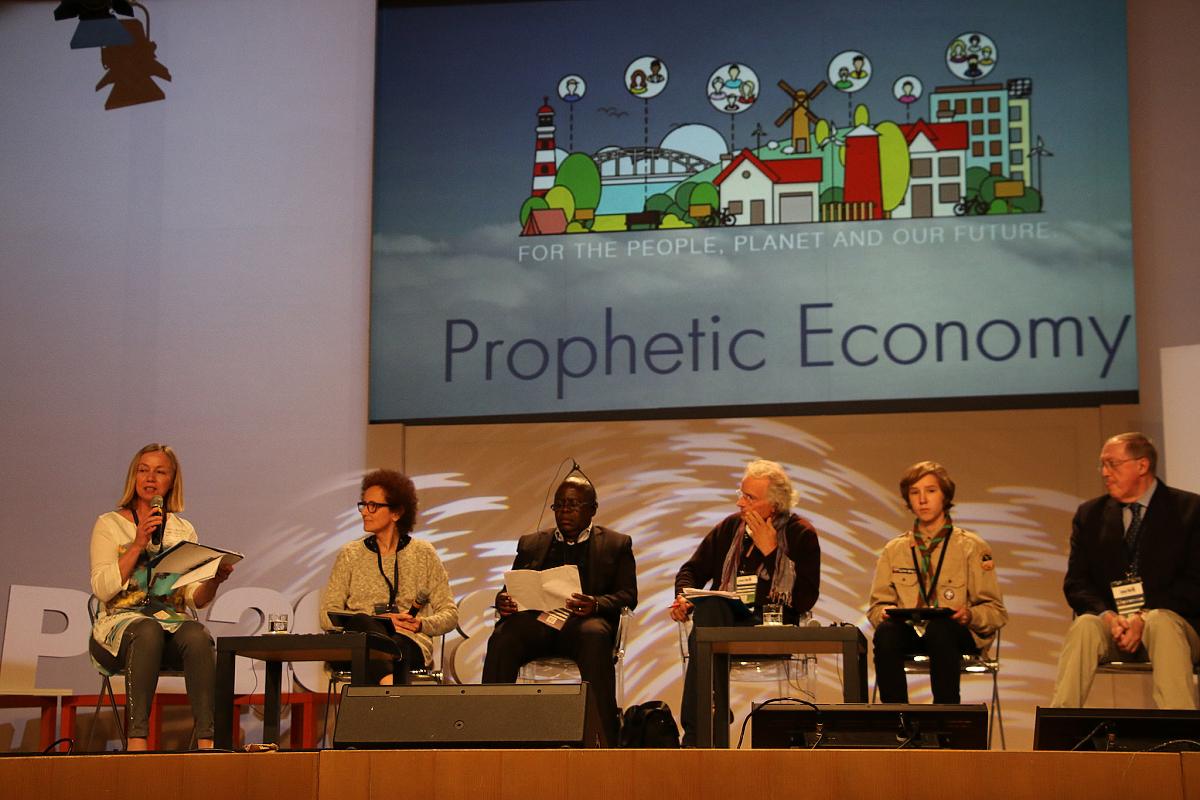 500 “Prophetic Economy” participants from 40 countries and all five continents were gathered from 2 to 4 November at the International Mariapolis Centre, CastelGandolfo, near Rome, Italy. The event facilitated interactive and intergenerational exchange through a program of inspiring contributions, work groups and creative workshops. What began as an international platform of encounter, exchange and encouragement, the event went far beyond the limits of mere networking, to become a driving force of energy and commitment for initiatives and actions at local, regional and international levels. Internationally-renowned economist Jeffrey Sachs, a key speaker at the event, affirmed, “Prophetic economy means an economy that operates in the vision of the prophets, of justice, of peace, a vision of meeting the needs of the poorest people, a vision of protecting creation.”.
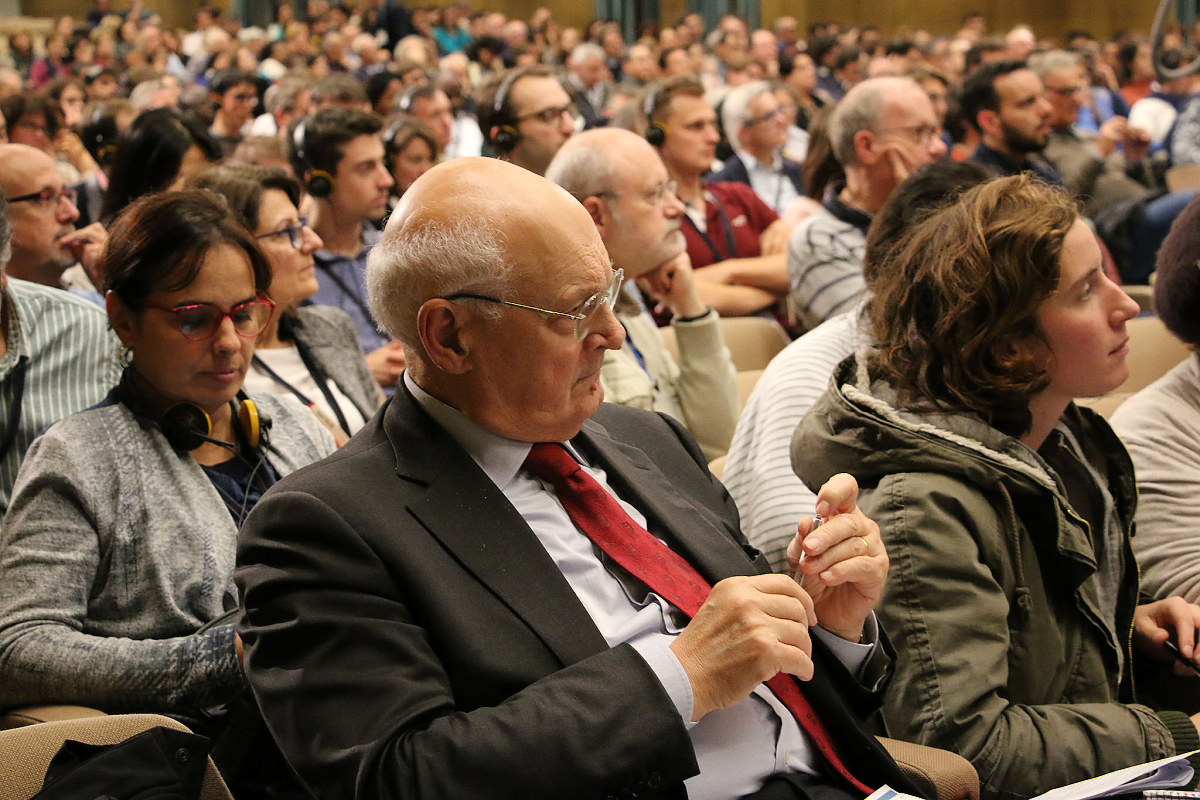
 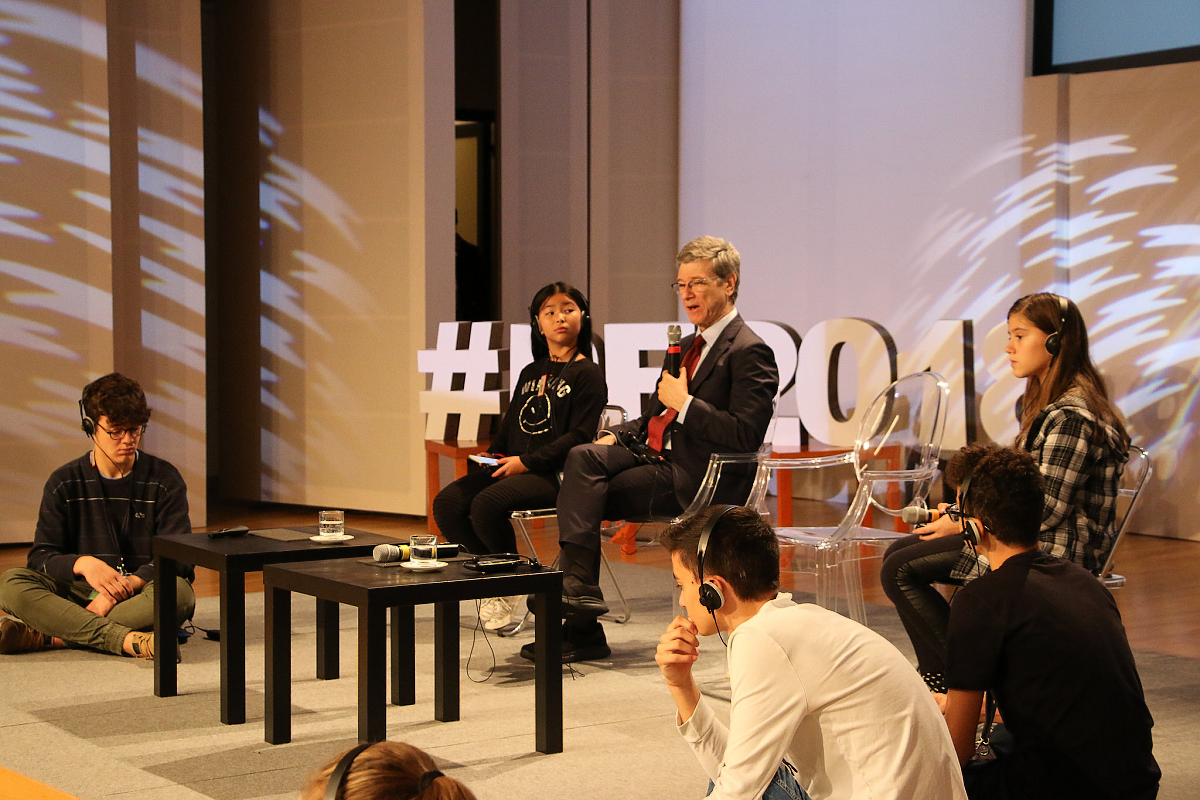 Diversity characterized the participants: economists, ecological activists, experts from the financial sector, students, entrepreneurs, people from a variety of different cultural and religious backgrounds, with a wide age range – the youngest being only 9 years old! The younger attendees were protagonists both in age-specific sessions involving interaction with experts in the fields of economy and ecology, and in cross-generational panels, contributing their own distinctive questions, proposals and life experiences. “How good it has been to have the children and young people with us” said Josiane Gauthier, Secretary General of Catholic Development Alliance CIDSE. Inspiring us with their profound intelligence and grace and truth”. The event highlighted examples of good economic practices. As Italian economist Stefano Zamagni explained, “It‘s those who look ahead and dare to gaze beyond the obstacles. The current economic and social models no longer work”. “These kind of economic practices already exist”, observed Lorna Gold, economist with Trocair, the Irish development agency, “but all too often they’re invisible in the media and our culture.”
  The “Prophetic Economy Award” was launched to promote good practice through examples of the prophetic economy in action. Carlo Petrini, founder of the Slow Food Movement, acknowledged the award winners. “They practice a form of economic reality different from the norm, they see beyond the pervasive economic modes. They are not so much prophetic in vision, as in their daily practice.” “This is not about utopias or ‘small islands’ within an unjust and unchanging system. Here, we’re looking at signals of tangible change,” observed Argentinean economist Cristina Calvo. “In the face of massive global financial mechanisms, we run the risk of feeling powerless. The antidote to being static is to widen the spectrum of action on all levels: micro, medium and macro.” A significant element within this event was the space given to those living in situations of poverty or social exclusion to make their own voice heard. “The time has come to rethink our economy and rethink our world, not ‘for’ the poor, not even with their participation, but starting from them,” concluded Jean Tonglet of ATD Fourth World. “Our knowledge is incomplete until it includes the knowledge of those we want to liberate from poverty, who struggle with its effects on a daily basis.” The challenge launched by this event is to invent new ways of collaboration, in order to be stronger and more creative in efforts to change to lifestyles based on a more sharing, more just and more sustainable economy. “The new idea at the basis of this event,” explained Italian economist Luigino Bruni, “was to bring ecology and economy together. In today’s world, we cannot speak of poverty without mentioning climate. One of the great messages of Pope Francis’ pontificate is the invitation to activate processes, not occupy spaces, because time is superior to space. Here, we can say that a process has been started”. The younger participants spent time considering and embracing the challenge launched by the World Food Organization to work to eradicate hunger in the world by 2030 (#zerohunger),formulating their own proposals: – to promote the idea of a “deferred meal”, asking restaurants and bars to encourage their clients to buy an extra meal for someone in need, and issuing a #zerohunger sticker to participating businesses; – to campaign for a new subject in the school curriculum teaching the Sustainable Development Goals promoted by the United Nations. Prophetic Economy is an international project jointly run by seven organizations: Pope John XXIII Community Association, Nomadelfia, The Global Catholic Climate Movement, ATD Fourth World, Associazione Mondo di Comunità e Famiglia (World of Community and Family Association), SlotMob initiative and the international Focolare Movement represented by its Economy of Communion project and ‘Teens for Unity’ youth section.
Photo album on Flickr 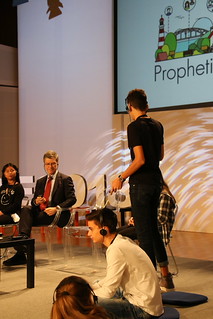
8 Nov 2018 | Non categorizzato
7 Nov 2018 | Non categorizzato
A learning community I’m the headteacher of a school in an impoverished and isolated town with high rates of both unemployment and school absenteeism. Over the years, I have tried to create strong and deep relationships with my pupils, their families, my colleagues and all school empoyees. And I’ve had the joy of seeing a real “learning community” spring up, joined together to promote the dignity of each person, in a spirit of openness towards others. In our attempts to help our pupils not to abandon school, we have welcomed the “adoption at a distance” of pupils with their families, but we’ve also made our own contribution: setting up a traditional handcrafts workshop. This project actually attracted presidential acknowledgement. Recently ill health has forced me to limit my activities, but as long as I have breath in my body I will fight for education to help people discover their own value and the love of God. (I. – Argentina) Take on another’s pain Our family was shaken to the core by the suicide of my brother. Life was never the same again for us. I myself began to doubt my faith. My days became emptier and lost their meaning, until one day I realised that my attitude was not helping my parents at all. I gathered up all my strength in order to take on their terrible pain, so that by sharing it with them, their tragic burden might be lightened. Gradually, in this way, I found that my own wounds began to heal. It was not easy, but it’s helping me too, now that I have myself become a mother. (O.M. – Germany) Making space for others I married Marcello when I was 24 years old. We had so much in common, including our faith and we dreamed of the beautiful family we would have together. 15 years later, Marcello was taken from me in an accident. For six years I remained trapped within the unanswerable “why me”? Until the day I accepted an invitation to a meeting, where they spoke of God Love. This disturbed me but gradually the words sank in and began to change something within me. When I heard how, out of love for us, Jesus on the cross experienced abandonment from the Father, crying out “My God, why have you forsaken me?”, my own forsaken cry began to make sense. My situation did not change, I was still a widow, but within me I was able to begin to love once more. Looking around, I noticed how many people were experiencing a void as great as my own. The more I was able to make space for them, the more God filled me with His peace. (A. – Italy) Thinking of those who come after me I’m a teacher. At the end of each lesson, I try to leave the classroom in good order for those who will use the room after me. I leave the desk tidy, the teaching board clean, the windows open to let in the fresh air. Each room has two baskets for waste: one for paper and one for all other discarded items. Often, when I find them mixed up, I try to sort the rubbish so it is all in the correct basket. This means I often lose a few minutes of my break time, which should be to regain strength for my next lessons, but I believe it is definitely time “lost” well! (A. – Switzerland) Keep the conversation going When our children entered adolescence, we found it harder and harder to understand one other. This led to tensions between me and my husband because we had very different approaches to their behaviour. When we realised that our relationships with our children were under threat, with one son in particular, we understood that we had to go beyond the limits of our own ideas and set ourselves to be the first to love, constantly keeping a conversation going between us and with our children. Now they have all grown up, but we know that our role in educating our children is far from over! (Mariolina – Italy)
3 Nov 2018 | Non categorizzato
“In Jesus, God simply made himself our brother. He did not only stand beside us, but he entered into us, into our hearts, into our wounds. In doing so he made the wounds of man his own, and thus the wounds that burn in humanity became God’s in this man, Jesus of Nazareth. When he says, ‘I am the way,’ all we need to do is look to the open wound in his side, and there we will find the way. This is certainly not easy; it’s not obvious, either. Yet if we try, if we attempt it, if we risk it, we will realize that he is the way.” (from a homily in 1993) “In Jesus in shows how God, who up to now in the history of his people seemed to have been silent, had not fallen asleep, had not fallen mute. He comes, gathers his poor people and takes them in. He doesn’t do it, however, with lightning action produced by his omnipotence, but in a smaller way, the way of Jesus, the hidden way of service: the way of the cross.” (from a radio interview on September 17, 1978) “Jesus was accused of being a friend to sinners and tax collectors, for having kept ‘bad company.’ His behavior certainly left himself open to misunderstandings. You might say it was a simple criticism of the established order, simple likable eccentricity, or simple protest against the establishment and fixed values. But no: for Jesus, in whom God’s heart beat, he cared for everyone and everything. He didn’t care about those on fringes just in themselves, but rather in that they were part of the whole. “He too is a son of Abraham” (Luke 19:9) is how Jesus himself justified, to the so-called ‘gentlemen’ and those who pretended an external legality, his friendship with Zacchaeus the tax collector.” (from an article in December 1973)
1 Nov 2018 | Non categorizzato
The saints are great men and women who, having seen their greatness in the Lord, risk for God, as his children, everything that is theirs. They give, demanding nothing. They give their life, their soul, their joy, every earthly bond, every richness. Free and alone, launched into infinity, they wait for Love to bring them into the eternal kingdom; but, already in this life, they feel their hearts fill with love, true love, the only love that satisfies, that consoles, that love which shatters the eyelids of the soul and gives new tears. Ah, no one knows who a saint is! He or she has given and now receives, and an endless flow passes between heaven and earth, joins earth to heaven, and filters from the depths rare ecstasy, celestial sap that does not stop at the saint, but flows over the tired, the mortal, the blind and paralyzed in soul, and breaks through and refreshes, comforts and attracts and saves. If you want to know about love, ask a saint. Chiara Lubich, Essential Writings, New City Press, Hyde Park, NY, 2007, p. 116
