5 Oct 2018 | Non categorizzato
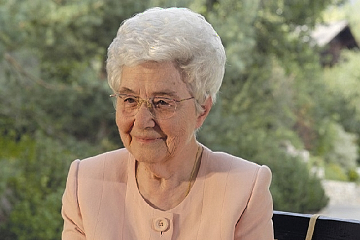
“Seeing what the Holy Spirit has done with us and with many other spiritual and social “enterprises” that are at work the Church today, I cannot but hope that He will continue to act now and always with the same generosity and magnanimity. And this holds true not only for brand new works that will arise from his love, but also for the development of those that already exist, like our own. Meanwhile, I dream that the atmosphere in our Church will be more suited to her identity as the Bride of Christ; a Church which can be seen by the world as being more beautiful, more one, more holy, more charismatic, more akin to Christ her Spouse. I dream of her being a beacon for humanity. And I dream of seeing in her a holiness of the people, never seen before. I dream that the lived siblinghood, that is gaining momentum today in the consciences of millions of people, will be practised more widely across the globe, so that in the third millennium it will be a general, universal reality. Consequently, I dream of fewer wars and conflicts, less hunger, and the reduction of the thousand other evils in the world. I dream of an ever more intense dialogue of love among the Churches so that the formation of the one Church is seen to be close at hand. I dream of a more living and active dialogue among people of the most varied religions linked to one another by love, by “the Golden Rule” present in all their sacred texts. I dream of greater encounter and mutual enrichment among the various cultures in the world, so that they may give rise to a world culture that highlights those values which have always been the true wealth of individual peoples, and I dream that these values will be seen by all as global wisdom. I dream that the Holy Spirit will continue to enrich the Churches and strengthen the “seeds of the Word” beyond them, so that the world may continually receive new light, life, and works which He alone can is able to give. So that ever-greater numbers of men and women may set out towards straight paths, converging on their Creator, and putting their hearts and souls at his disposal. I dream of Gospel-based relationships not only among individuals, but also among groups, movements, religious and lay associations; among peoples and among States, so that it becomes logical to love other people’s countries as our own; and logical to tend towards a universal communion of goods, at least as a goal to reach. [..] In a word, I dream of already witnessing the new heavens and new earth, as far as this is possible here on earth. I am dreaming of many things, but we have a millennium to see them come true.” Chiara Lubich Extract from: “Attualità. Leggere il proprio tempo”, Città Nuova, Rome 2013, pp. 102-103
4 Oct 2018 | Non categorizzato
Also the scientists say that smiling does us good. It lengthens life, reduces stress and brings people closer. At times it can also change your life. The World Smile Day created by Harvey Ball has been celebrated every first Friday of October since 1999. He was also the creator of the “smileys” that inspired the emoticon. Giving a smile is not always easy, but necessary. “I do not know of any other sign of superiority in man except that of being kind,” Beethoven affirmed. And according to Plato: “Every person you meet is fighting a battle you know nothing about. Be kind, always.” Hunter Doherty Adams called “Patch” is a doctor, activist and writer who is known worldwide for his practice of and support for clown therapy. Strongly convinced that joy and creativity are integral parts of the therapeutic process especially for children, Patch and his colleagues fight against suffering and disease by wearing a red clown’s nose, now the distinctive element of a new way of practicing the medical profession. Adams dedicated his life to the study of the human being under ever aspect and in the creation of a healthcare system within everyone’s means. His philosophy of healing starts with the mind, and the action which stimulates in the patients the construction of positive thinking that can make our lives better.
2 Oct 2018 | Non categorizzato
Economy is a Greek word that directly refers to the home (oikos nomos, rules for running a house), on the family. But the modern economy, especially contemporary economy, is governed by other principles, distinct and in many ways opposed to the ones that govern a family. A founding principle of the family, perhaps the primary one that underpins all the others is gratuitousness, which is the farthest from a capitalistic economy that is more familar with the surrogates of gratuitousness (discounts, philanthropy, sales). These serve the purpose of immunizing the markets against true gratuitousness. The family, in fact, is the main place where we learn from childhood on and for the rest of our lives, what Pavel Florensky calls the “art of gratuitousness”. It is especially in the family that we learn as children to work, and that no work can be done well without gratuitousness. But our culture associates gratuitousness with “for free,” the discount, the half-hour of overtime without pay, the zero price ( Saint Francis instead told us that gratuitousness is an infinite price: it can’t be sold or bought, because it’s unpayable). Gratuitousness means giving freely; it is a type of behaviour and a lifestyle that consists in approaching others, oneself, nature, God and things – not to use them in a utilitarian way for one’s own advantage, but to acknowledge their “otherness” and in their mystery, to respect them and serve them. To say gratuitousness means, therefore, to recognize that a certain way of acting done because it is good, and not because of recompense or sanction. […] If the family wishes to cultivate the art of gratuitousness as it should, it should be careful not to import into the home the logic of incentive which is rampant in today’s world. […] One of the tasks of the family is the formation of a person’s work ethic, which is precisely the result of gratuitiousness. If, instead, you begin to practice the logic and culture of incentives, and money becomes the reason for doing things, children will not be good workers when they become adults, because the work well done of tomorrow will always depend on the gratuitousness that is learned especially during the first years of life and especially in the home. The absence of gratuity in the economy also depends a lot on the absence of a feminine gaze. […] Women look at the home and at the economy and first see the connections of human relationships that that are happening. The first goods they see are the relational ones and the communal goods, and within these they also see the economic goods. It is certainly not by chance that the Economy of Communion was the result of the vision of a woman (Chiara Lubich), nor that the first theoritician of the common goods was Katherine Coman (1911), or that Elinor Ostrom was the only woman so far to receive a Nobel Prize in ecomony because of her work on common goods. And there are two women at the root of the theory on relational goods: Martha Nussbaum and Caroll Uhlaner. When the feminine gaze is missing from the economy, the only relations that can be seen are instrumental ones where it is not the relation that is the good, but where relationships with people and with nature are seen as the means used for obtaining goods. If the feminine gaze and genius of the home (oikos), had perhaps been present in the theoretical foundation of modern economy, we would have had an economy that was more attentive to the relationships, to the redistribution of revenue, to the environment and perhaps to communion. Communion is the great word that the family has to pass on to the economy. The prophetic role of the family in today’s world, to be believed, must take on the form of the children and the form of the economy and, therefore, of sharing, welcoming and communion. Because the children and the economy are nothing more than the ordinary life of each and of all, which is the only place where prophecy is nourished and grows. Source: www.avvenire.it, “Così lo sguardo femminile può cambiare l’economia”, 23 August 2018.
30 Sep 2018 | Non categorizzato
“You who have gone through so many seasons are the living testimony of constancy in adversity, but also of the gift of prophecy that reminds the young generations that the care and protection of the ones who preceded them are gratifying and appreciated by God, and that they cry out to God when they are disregarded.” When Pope Francis spoke these words last September 24th, he was speaking to the elderly audience in front of him in the Cathedral of Saint James in Riga (Republic of Latvia). But he was also speaking to the elderly of the whole world, in view of the international day dedicated to them on October 1st. “You that have spent yourselves, body and soul, that have given your life in the pursuit of freedom for your country, are now often left feeling that you have been forgotten. Although it sounds paradoxical in today’s world, in the name of freedom, free people subject the elderly to solitude, ostracism, lack of resources, esclusion and even misery. […] You that have gone through many seasons, never forget that you are the roots of a people.”
30 Sep 2018 | Non categorizzato
Hope I never would have thought that our parents would separate. But when it happened, and we were faced with an uncertain future that was completely unknown and the fact that life would never be the same again, I began having many sad and confused thoughts. We three brothers stayed with our Mum,“Our super-Mum,” as we called her. But everything was different. Even though we never had problems at school before, now we were beginning to have them. As soon as we noticed it, we began trying to give her some joy. Living with Papa wasn’t easy, but ever since we were small, our parents and grandparents had taught us not to judge. One of our nicest times together is when we gather to pray, asking God to accomplish his plan for each one of us. J. P. L. – Colombia Difficult Student Many years ago a particularly difficult student arrived in my class, because of some family problem. Since he had violent outbursts, some of the other parents protested with the director. Faced with the possibility that he might be expelled, I obtained permiission to take him into my personal care, advising my colleagues of the situation and receiving help from the students.Simultaneously, a family of friends made contact with his parents to help them until their situation was worked out. A long time later I returned to that city, which I hadn’t been to in many years. I saw my student again, now all grown and turned into the proud father of a family. T. M. – Italy Cake One of our neighbors was opposed to the restructuring work we were doing on our little house, expressing objections that were obviously unjustified. Tired of receiving his letters and protestations, my husband consulted a lawyer with the thought of bringing a case against him. But then, as we talked abou it, we decided on another path which seemed to be suggested by our heart. We would try to create a bridge between us and him. I baked a cake and we went to see him. He asked: “How did you ever know that today was our daughter’s birthday?” The expected clash had been transformed into an encounter. A few days later they visited us and now we have some new friends. M. – Spain The Wall Seven years of marriage had not led to the desired union of our hearts. Sand and discouraged, we thought that the reason was immaturity and incomptability of character. In this atmosphere we were led to judge and the wall of non-communication between us had grown higher and higher. Moreover, we were also burdened with feelings of guilt for not having been able to convey to our children the love that a husband and wife should give witness to. When we had already given up, some friends sho live the Gospel helped us to break down that wall. Also, there were signals coming from my wife that made me very hopeful. We learned to accept one another, to say sorry when we failed, to see look upon each other as a gift and to consider our failures as an opportunity to begin again. Helped by the friendship and prayers of others, we could feel that God loved us and had kept our family going. L. – Italy
28 Sep 2018 | Non categorizzato
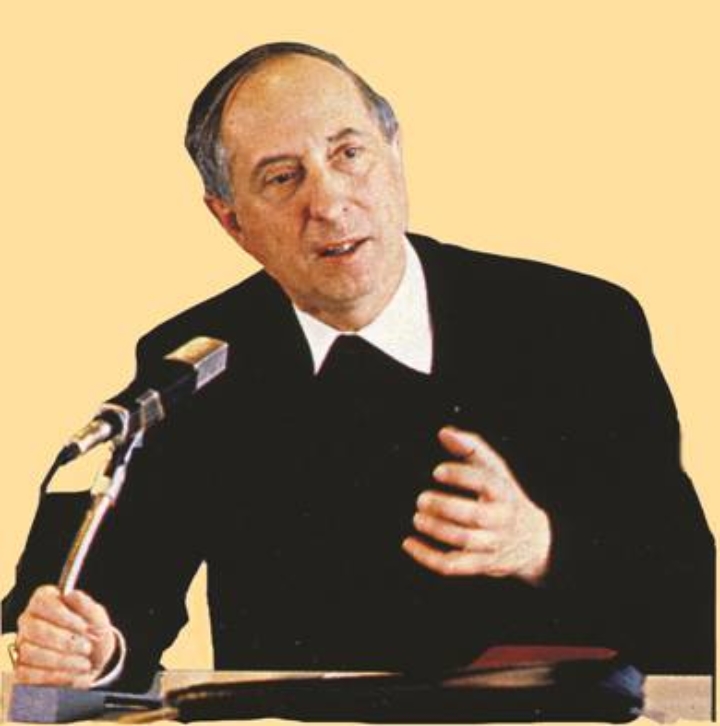 “Whatever you did to one of the least of these brothers and sisters of mine, you did it to me” (Mt 26:40). This sentence from the Gospel is the most definitive word on what a human being is. This definition is no less scandalous than Jesus declaring himself Son of God. In the name of their personal freedom, identity and uniqueness, human beings think that they have a right to contest the fact that they are so identified with Jesus Christ. Human beings want to be loved for themselves, for who they are, and not to be degraded as some sort of mask for Jesus. Human beings fear that the “bit more” of love that they receive out of love for Jesus might not take them into account, might rob them of the love they need and desire for themselves. But who could neglect their neighbours while trying to love Jesus in them (and in this way also neglect Jesus)? And who could claim that acknowledging the presence of Jesus in others means diminishing their human dignity; in that case they have not understood the presence of Jesus in their neighbours. Since Jesus has identified himself with humankind – God himself who is Love – he has also identified himself with every individual human being. But love is never an affirmation of oneself that consumes and annihilates others. It’s something that gives of itself, and, in its self-giving, provides others with the freedom to be themselves. Jesus never leaves me alone. He is on my side, he accepts me just as I am, and whatever concerns me, also concerns Him. I remain myself. Indeed, I become my fullest self precisely because I never remain alone. The mystery of Christ is the mystery of every human being. What does this mean for the people I meet, and what does it mean for me and my life? For what regards other people, it means that I am never dealing merely with a link in the chain, a cog in the wheel, or just a number in the huge numbers of people that exist. Each time I look upon a human face, I meet God in his unconditioned state, I encounter that voice that still declares over the face of every human being, what was said of Jesus during the Transfiguration on that mountaintop: “This is my beloved son!” (Mk 9:7). There are no exceptions… A human cannot rob itself of its ultimate reality. Whether he is a criminal or a scoundrel, I can never again write him off as a lost case. I encounter Christ in every person not because the person is good or deserving, not even because he or she draws upon the divine light in their personal lives, but because God has irrevocably adopted them as his own sons and daughters. Certainly the human being is immense because of the Divine life that he and she have let into their souls because of their personal choice to believe, which took place in baptism in the name of Jesus. Belonging to Jesus is something “automatic.” When a person is born, Christ has already assumed into himself that person’s living and dying, fault and self-inflicted wounds: everything is assumed into the life and death of Christ who gave his life for each one of us. This is why we encounter Jesus in every human being. And we encounter him in a particular way in the least, in those who seem to be farthest from Him, in the people in whom his face seems to be most overshadowed. Why? Because on the cross, during his abandonment by God, even becoming sin (2 Cor 5:21), Jesus identified himself with what is farthest from God, what seems most opposed to God. [It is only by] discovering Christ in our neighbours and giving to each of them that human love with which you turn towards every neighbour, with an indivisible love that is therefore directed to Christ himself, that will enable every neighbour to discover his and her own identity with Jesus, their own nearness to Jesus, being completely assumed by Him.” (From “Offene Weltformel”, by Klaus Hemmerle, Neue Stadt, 1970)
