17 Aug 2018 | Non categorizzato
The celebration of the World Humanitarian Day, chosen by the UN Assembly in 2009 on the anniversary of the air raid of 19 August 2003, at the seat of the United Nations in Baghdad, is an occasion to pay tribute to the humanitarian operators who daily risk their lives worldwide to deliver their services in difficult and dangerous conditions. According to international law, this service is based on a series of principles, such as humaneness, impartiality, neutrality and independence. The operators are guaranteed access to countries affected by humanitarian crises, conflicts or climate disasters, to furnish immediate assistance, which for many, makes the difference between life and death, and through time a psycho-social support to rebuild the communities and maintain a durable and sustainable peace in the areas of conflict.
16 Aug 2018 | Non categorizzato
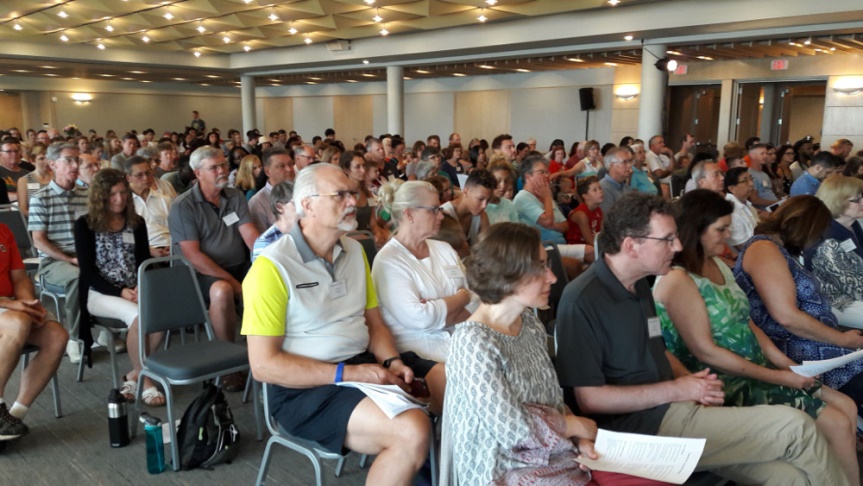
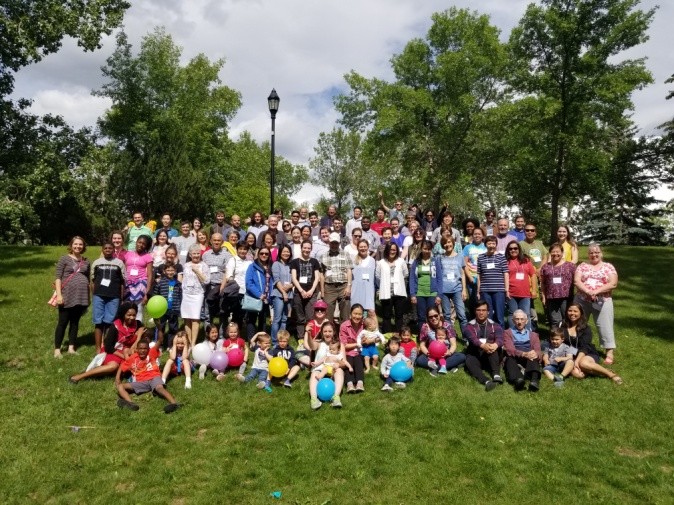 “Our Mariapolis in Calgary,” wrote Alizza and Norio from Canada, “was attended by about 120 people, particularly young people and families, mostly from the provinces of Alberta, Saskatchewan, but also from Manitoba and the British Columbia. The program included the presentation of Pope Francis’s Apostolic Exhortation on the call to sainthood today (“Gaudete et exsultate”), followed by an open dialogue. The presentation, prepared by Rev. A. Martens of the diocese of Calgary, aroused in all the desire to read it personally. Another novelty in the “city founded on faith,” as a participant defined, was the prayer for peace soiree. The community of Chicago wrote: “We are at the conclusion of our Mariapolis which was held for the entire Midwest community. Already last year, we had felt the need to change the location and style of our traditional event, which has been held up to now always in a university campus in the city. The choice fell on the pleasant banks of a lake.
 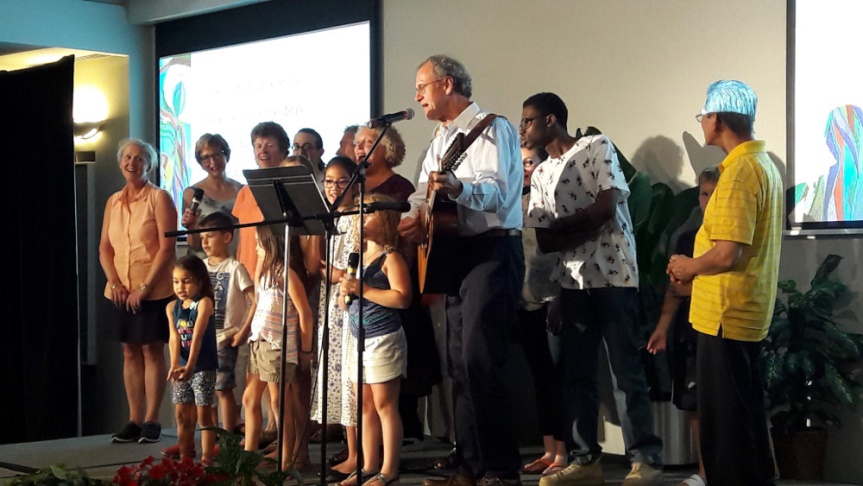 The program entitled: “Mary: her experience, our experience,” reminded us that no one is immune to the trials and uncertainties which Mary of Nazareth had undergone, and showed us how to face them. The results?“The atmosphere of the Mariapolis seemed like that of a family luncheon: relaxed, with a lot of flexibility, improvisation (which also meant having a good sense of humour) and an overall sense of peace.” “The themes focused on and the sharing of experiences helped me to understand Mary more deeply, in the difficult times in which she lived and the way in which she managed to overcome the trials. I liked the group which shared about ’knowing how to lose’. This type of mentality is not popular in today’s world.” “Our Mariapolis was held in West Virginia, wrote the Focolare community of Washington DC, with 160 participants. The youth, who made up more than half of the participants,from being guests turned into protagonists and placed their numberless talents in the technical field at the service of the reception and management of the groups.” In Tennessee, USA, around 70 participants were from various southeastern States: Maryland, Georgia, Tennessee, Arkansas, Alabama, Florida, and Texas, besides those from Indiana and New York. “We dedicated much time to building relationships, and even watched some soccer world championship matches… The presence of the little ones was a gift, and they were always among the first one to recount their concrete acts of love. We delved deeper into Mary’s ‘yes’, and her “bring Jesus to the world.”During the final closing program, a boy who was accommodated in the same centre wanted to give his share of experiences. A Father said: “I was struck by the love of my son, who is 7. While I was busy preparing the final program, he went to fetch dinner for me.”And a child: “Why don’t we stay for a whole month?” From Bulgaria, a letter full of photos arrived: “It is the second time we are holding the Mariapolis in the central Balkan region, with about 80 people from 1 to 85 years of age. Before it started in the next-door Orthodox Monastery, there was a feast dedicated to Our Lady. Upon meeting us there, the Abbot insisted on meeting all the Mariapolis attendants on the next Sunday. We were a sole family: Catholics, Orthodox and Protestants (Baptists).” In Bolivia the Mariapolis, characterized by the numerous presence of young people, concluded with the young people’s Genfest. “The great mutual love between adults and the youth enabled the success of the two events. In the Mariapolis we held workshops on ecology, the economy of communion, dialogue and even choreographed dances and games for the last day’s Genfest, a great occasion to go well beyond our limits as the title of the event said, and to speak of God to many young people!”
14 Aug 2018 | Non categorizzato
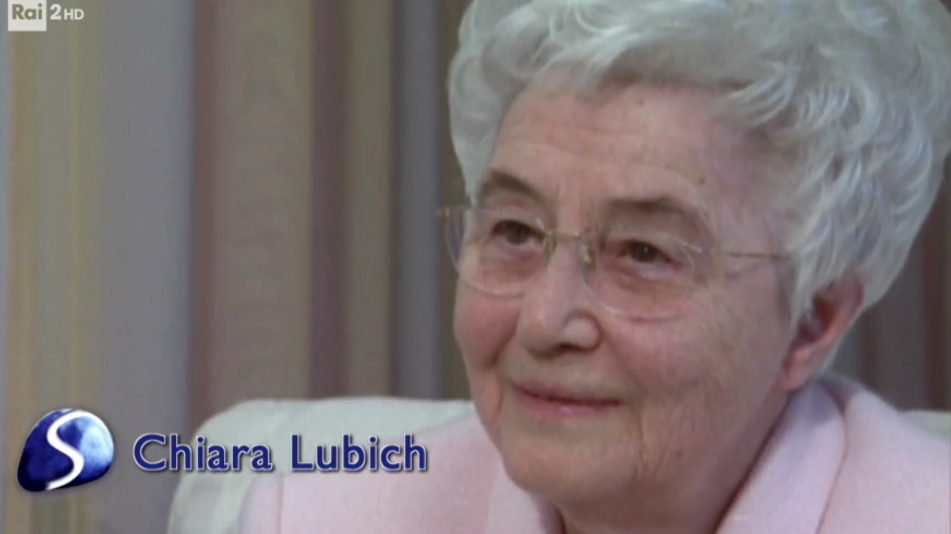
«Mary is not easily understood even though she is greatly loved. In a heart that is far from God, one is more likely to find devotion to her than to Jesus. She is universally loved. And the reason is this: it is Mary’s nature to be Mother. Mothers, in general, are not “understood,” especially by younger children; they are “loved.” And not infrequently, indeed often, one hears that an eighty-year-old man dies saying as his last word: “mother.” A mother is more the object of the heart’s intuition than of the mind’s speculation. She is more poetry than philosophy, because she is too real and profound, close to the human heart. So it is with Mary, the Mother of mothers, who the sum of all the affection, goodness, and mercy of all the mothers in the world cannot manage to equal. Jesus, in a certain sense, confronts us more: his divine and splendid works are too different from ours to be confused with them. Indeed they are a sign of contradiction. Mary is peaceful like nature, pure, serene, clear, temperate, beautiful — that nature which is distant from the world, in the mountains, in the open countryside, by the sea, in the blue sky or the starry heavens. She is strong, vigorous, harmonious, consistent, unyielding, rich in hope, for in nature it is life that springs up perennially generous, adorned with the fragrant beauty of flowers, kind in the abundance of its fruits. Mary is too simple and too close to us to be “contemplated.” She is “sung” by hearts that are pure and in love, who express like this what is best in them. She brings the divine to earth as gently as a heavenly plane sloping from the dizzy heights of heaven to the infinite smallness of creatures. She is the Mother of all and of each human being, who alone knows how to burble and smile at her child in such a way that, even though it is small, each knows how to enjoy her caress and respond with its love to that love. Mary is not understood because she is too close to us. She, who was destined from eternity to bring graces, the divine jewels of her Son, to humanity, is there, near to us, and waits, always hoping for us to notice her gaze and accept her gifts. If any are fortunate enough to understand her, she carries them off to her kingdom of peace, where Jesus is King, and the Holy Spirit is the life-breath of that heaven. There, purified of our dross and illuminated in our darkness, we will contemplate her and enjoy her, an added paradise, a paradise apart. Here, let us be found worthy of being called along “her way” to avoid staying always immature in spirit, with a love that does not go beyond supplication, petition, request and self-interest, but knowing her a little, may we glorify her.» Source: Centro Chiara Lubich
10 Aug 2018 | Non categorizzato
“Mary Most Holy is the Seat of Wisdom because she welcomed Jesus into her womb and he is the Incarnate Wisdom. With her fiat at the Annunciation, Mary consented to the divine will and Wisdom made its dwelling in her womb, making her Wisdom’s most exemplary disciples. The Virgin was blessed, not so much for having suckled the Son of God, but for having nourished herself on the wholesome milk of God’s Word.” (Pope Saint John Paul II, Angelus, September 4, 1983) In order properly to understand this sacred hymn of praise, we need to bear in mind that the Blessed Virgin Mary is speaking on the basis of her own experience, in which she was enlightened and instructed by the Holy Spirit. No one can correctly understand God or his word, unless he has received such understanding immediately from the Holy Spirit. But no one can receive it from the Holy Spirit without experiencing, proving and feeling it. In such experience the Holy Spirit instructs us as in his own school, outside of which nothing is learned except empty words and prattle. When the Holy Virgin experienced what great things God was working in her despite her insignificance, lowliness, poverty, inferiority, the Holy Spirit taught her this deep insight and wisdom, that God is kind of Lord who does nothing but exalt those of low degree and put down the mighty from their thrones…” (Martin Luther, Commentary on the Magnificat of Mary, Introduction). “The Madonna is Seat of Wisdom not because she had spoken, not because she was a Doctor of the Church, not because she was seated on the cathedra, not because she founded a university: she’s Seat of Wisdom because she gave Christ to the world, who is the Incarnate Wisdom. She accomplished a fact. The same for us: we’ll have wisdom if we live in such a way that Jesus will be in us, among us, in fact.” (Chiara Lubich, Una via nuova, Citta Nuova, 2002) “Mary doesn’t live of herself only, but from far more profound depths: the Holy Spirit in her. From him emanates not only her Son, the content and fruit of her being; from him emanates the fulfillment and the form of his very life.” (Klaus Hemmerle, Brücken zum credo)
8 Aug 2018 | Non categorizzato
Instituted by the United Nations in 1994, the Day memorialises the rights of all people to live according to the customs and traditions of their origins, with particular focus on the 370 million members of indigenous people living in 90 countries of the world and representing 15% of the world population while remaining 15% of the world’s poor. The UN document is intended to “incarnate the global consensus on the rights of indigenous peoples, and to establish a framework of minimal norms for their survival, dignity and well-being.” In the last ten years – the UN reports – the Declaration has had several successes at different international level, national and regional levels, but there continues to be a gap between the formal recognition of the indigenous peoples and that actualization of politics on the ground.
3 Aug 2018 | Non categorizzato
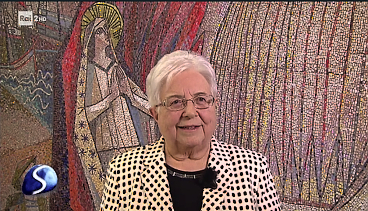
Maria Voce
