17 Jul 2018 | Non categorizzato
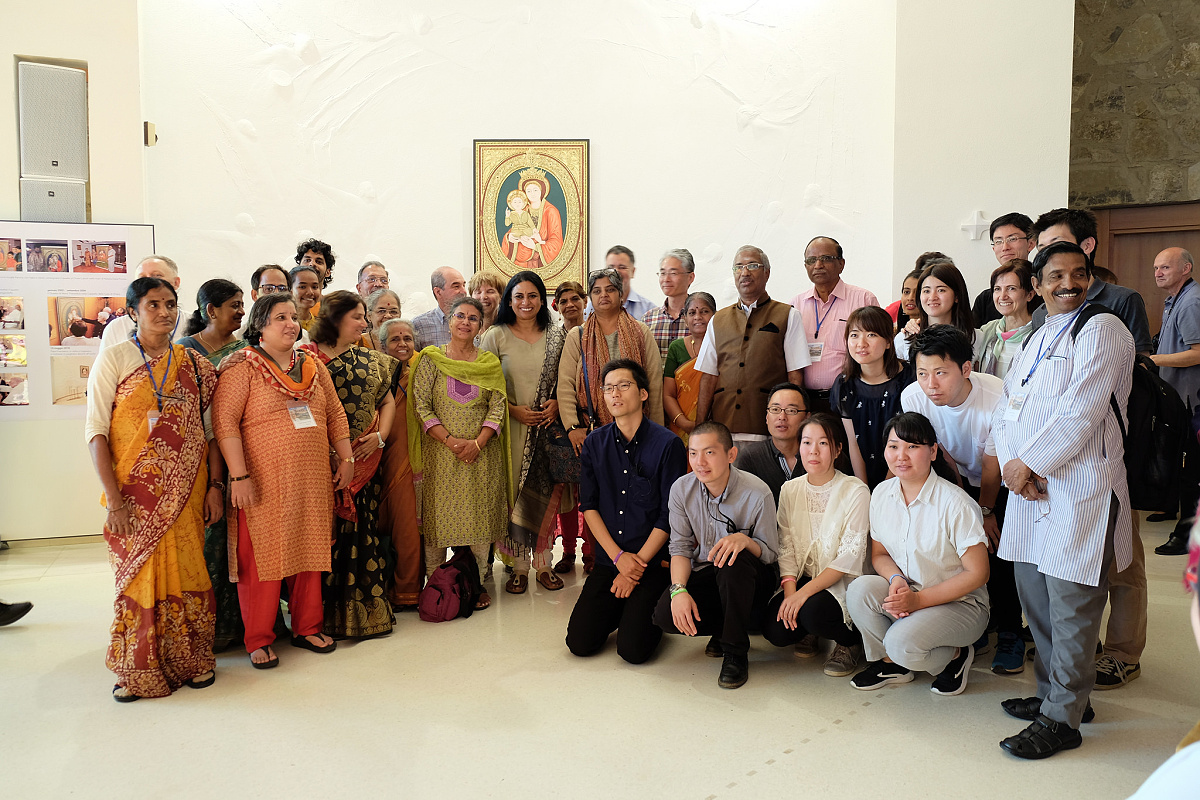
 “Our Hindu-Christian delegation had two motives for visiting Loppiano. They hoped to explore and deepen their understanding of the very original experience that the Sophia Institute offers. They also wanted to commemorate the fifteenth anniversary of their presentation to the Movement of a painting of the Virgin Mary. The painting is the work of a Hindu artist and is now adorning one of the walls of the Theotokos Church in the little town. The dialogue with the staff and students at Sophia was deep and enriching. Indian academics have a considerable interest in inter disciplinary formation in dialogue. The exchange and thoughtful comparisons made by the participants increased understanding among everyone present and it became obvious that Sophia Institute is similar to some of the academic centres that inspired Mahatma Gandhi. We hope that we will soon be able to introduce courses on this great apostle of dialogue at the university in Loppiano.
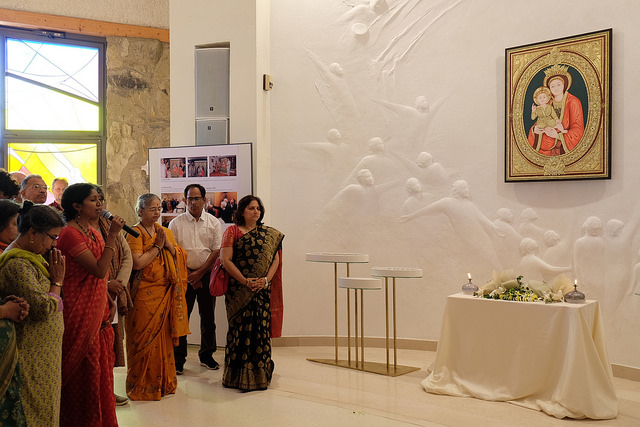
  The seminar on Theology and the Practice of Dialogue was very interesting. There were not only the members of the delegation present but also many students and adults from the little town. Even though the subject is very topical, it was completely new to some people. In the evening, the Hindus came in procession to the Theotokos bringing flowers and garlands for the image of Mary. Gen Verde sang in the background. The reverence and solemnity created a deeply spiritual atmosphere. They spontaneously prayed in Sanskrit, Tamil and English and then there was the sacred moment of silence. Silence is an essential part of being oriental: in contrast, how uncomfortable it is for people from the west! It is as if people are not used to it or they are afraid to think too deeply about themselves. When cultures and religions meet with men and women of true faith, there is no need for compromise, syncretism or anomaly of any kind. Each gesture, each word, each moment of silence speaks of the Absolute. Everyone listens to it on their own wave length but the vibrations – as the Indians say – are always the same and penetrate the depths of the heart.”
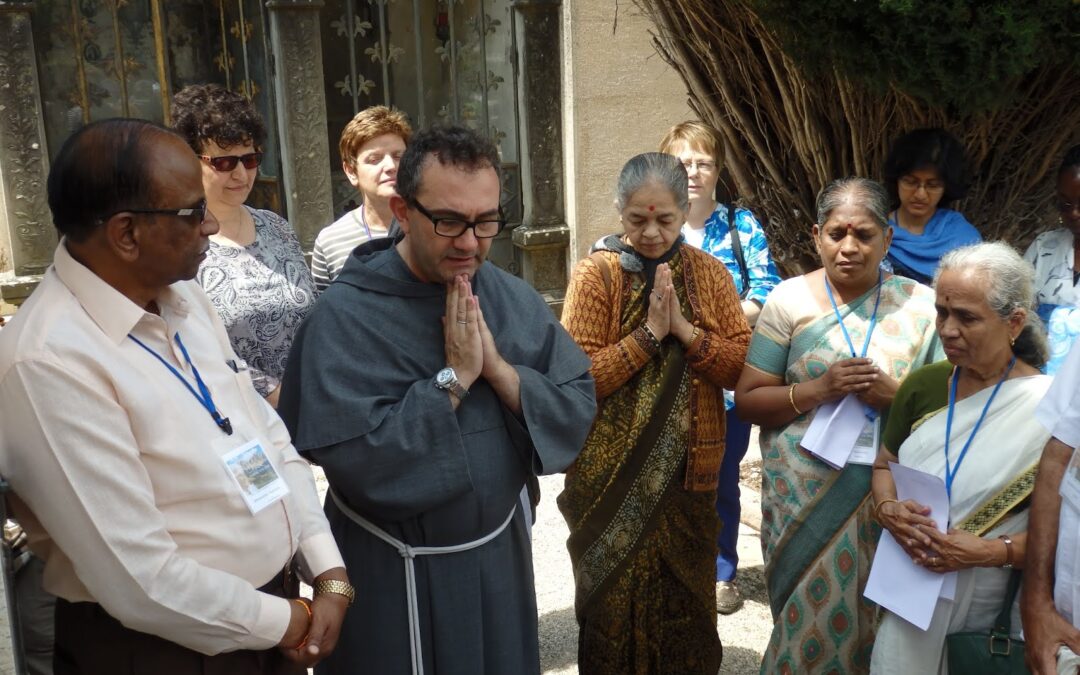
 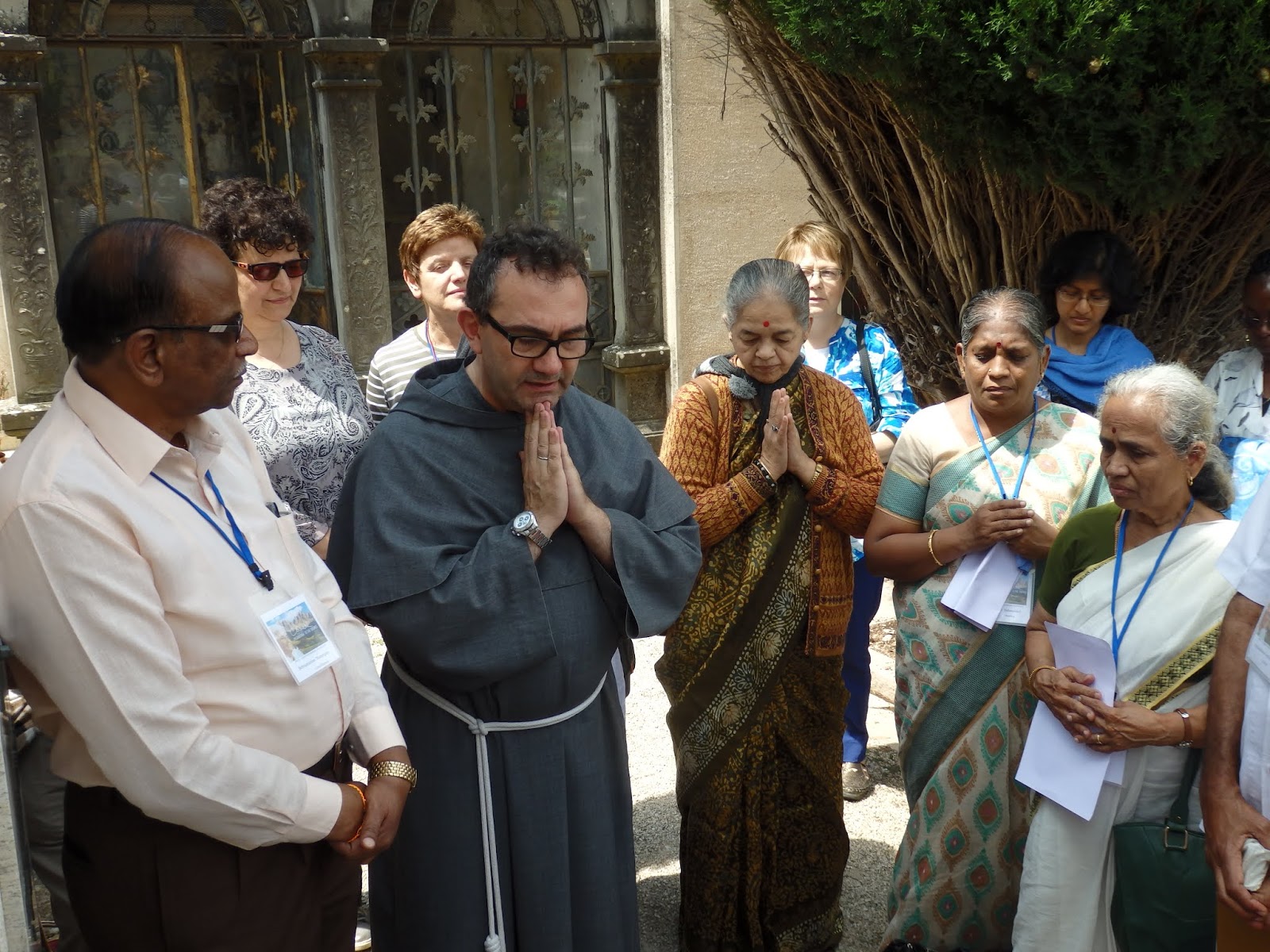 The last stage was Assisi. “We arrived at about 10.30 am. We walked up to the St. Francis Basilica and then on to the cemetery. I could not help but think back to the autumn of 1997 when the town has been hit by an earthquake and many people had been seriously injured. We had climbed to the top of the same hill with Vinu and Ashok, Dr. Aram’s daughter and son. Dr. Aram, a Gandhian teacher, had died some months before and had wanted some of his ashes to be buried in the land of St. Francis who he had greatly admired. Every evening, he used to recite his prayer, ‘Make me an instrument of your peace.’ The pilgrimage then continued to the crypt of the Basilica where we joined the monks as they recited the prayer of the ‘sixth hour’ in front of St. Francis’ tomb. There was a great sense of reflection, fraternity and spirituality. Our friends listened in silence as we prayed: it was a sign that they respected and valued our prayer as much as their own. The story of St. Francis, a man of peace and dialogue, continues to attract people of all faiths and from all over the world. Assisi is the perfect place for dialogue.” Source: blog by Roberto Catalano
15 Jul 2018 | Non categorizzato
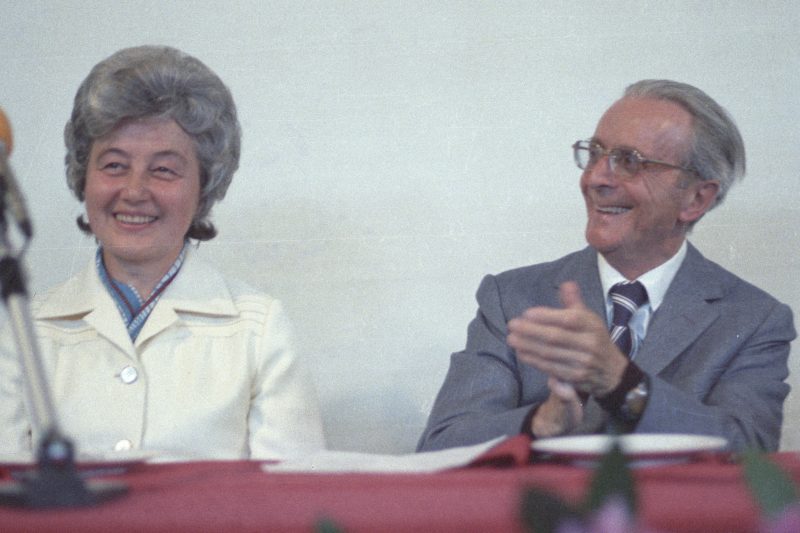 The beginning of a period of major illuminations (of Chiara Lubich) can be said to have begun on July 16, 1949. Igino Giordani had arrived on that day in Tonadico, Italy. He was staying at the Orsinger Hotel and was to hold a conference in the meeting hall of the Capuchins. “Enamoured with Saint Catherine of Siena,” Giordani had always dreamed of finding a consecrated virgin like her whom he could follow. Certain that he had found that person in Chiara, he proposed making a vow of obedience to her, thinking that in this way he would be obeying God. He went on to say that then, the two of them would be able to become saints as a duo like Francis de Sales and Jane Frances de Chantal. Chiara didn’t understand. The Movement didn’t exist and they didn’t talk about their vows. She felt that she had been born for Jesus’s prayer to the Father “May they all may be one”. She was tempted to let go of his idea, but she had the feeling that his words were rooted in a grace that shouldn’t be lost. So, she said to him: “I am nothing. In fact, I want to live like Jesus Forsaken who made himself nothing. You’re also nothing because you live the same way. Well, then, tomorrow we’ll go to church and I’ll say to Jesus Eucharist who will come into my heart as into an empty chalice: ‘Upon my nothingness, you establish unity with Jesus Eucharist in the heart of Foco. And do it in such a way, Jesus, that what comes out is the bond that you have in mind between us.’ And you, Foco, do the same.” That is what they did. Giordani headed for the hall where he had to give his conference, as Chiara felt driven to return to the church. In front of the tabernacle, she was about to pray to Jesus, but, in that very moment, she felt like she couldn’t. She felt that she was totally identified with the Son. She heard herself pronounce the words: “Abba-Father.” She realized that her religious life would have to be different from the way she had lived it up until that moment: no longer turned towards Jesus, but beside Him, her Brother, turned towards the Father. Armando Torno, “PortarTi il mondo fra le braccia. Vita di Chiara Lubich”, Città Nuova, Rome, 2011.
14 Jul 2018 | Non categorizzato
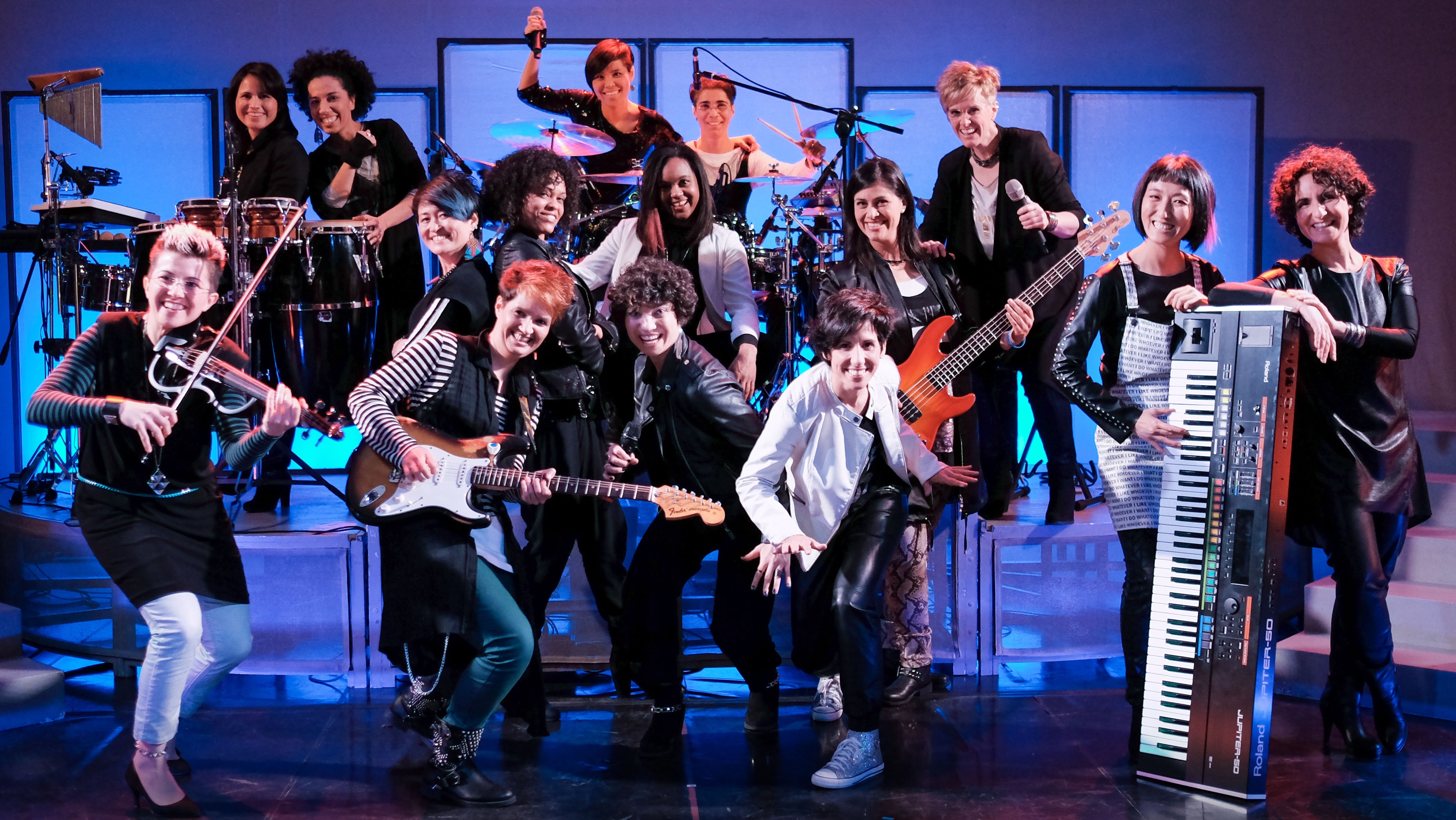
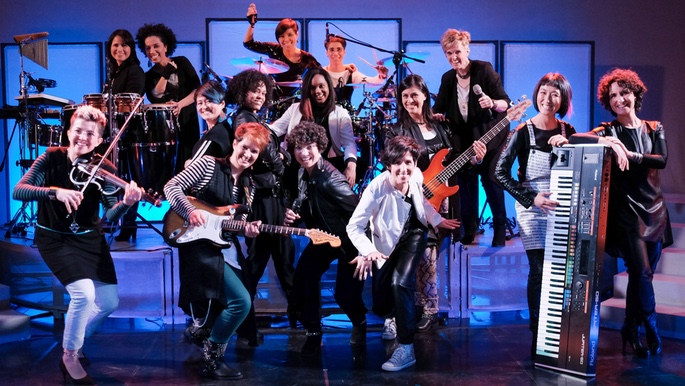
Dates: August 14th and 15th: workshop with young people August 16th: Concert “On the Other Side + young people of the Start Now project” GenVerde Tours

13 Jul 2018 | Non categorizzato
The Focolare recalls July 16, 1949 as the day on which Chiara Lubich and Igino Giordani made a “pact of unity” which would be the basis of the growth of the Movement. That day marked the beginning of the period of intense mystical contemplation for Chiara, which is known as “Paradise of 1949”. “[…]We were living these experiences when Foco arrived in the mountains. Foco, who loved Saint Catherine, had always searched in his life for a virgin he could follow. And now he had the impression that he had found her among us. So one day he proposed to make a vow of obedience to me thinking that by doing so, he would be obeying God. He also added that in this way, we could become saints, like Saint Francis de Sales and Saint Jane de Chantal. In that moment, I didn’t understand the reason for the vow of obedience or this unity between two people. At that time the Work of Mary didn’t exist and we didn’t speak of vows. Moreover, I didn’t share the idea of unity between two people because I felt called to live “May all be one” (Jn 17:21). At the same time, though, it seemed to me that Foco was under the action of a grace which should not be lost. And so this is what I said to him, more or less: “It could be that what you feel truly comes from God. So we should take it into consideration. However, I do not share the idea of unity between only two people because all must be one.” And then I added: “You know my life: I am nothing. In fact, I want to live like Jesus forsaken who annulled Himself completely. You, too, are nothing because you live in the same way. “Well then, tomorrow we will go to church and to Jesus in the Eucharist who will come into my heart, which is like an empty chalice, I will say: ‘On the nothing of myself, bring about unity with Jesus in the Eucharist who comes into the heart of Foco. Jesus, bring about the bond between us that you want’.” Then I added: ‘And you, Foco, do the same.’ […]” See full text at: Chiara Lubich Centre
13 Jul 2018 | Non categorizzato
God is not a distant person who can be approached only by queuing up. He listens with particular attention to those who are particularly poor, and particularly humble. From the volume Scelto per gli uomini (“Chosen for mankind”), p. 113. The busier I am, the more I need time for prayer. It is then that I discover one thing. When I use, or “waste” my time to remain in God, a sort of “miraculous multiplication of time” comes about. Thanks to the time given to God, I end up having more time at my disposal, or at least, quality time, more available and denser with love to donate to the others. Time becomes like a pearl necklace composed of many precious moments which I am able to live, and bring to fulfilment in meditation and commitment to others. From the volume Scelto per gli uomini (“Chosen for mankind”), pp. 109-110. We could define the “grain of salt” of Christian prayer as the point in which the distinctive characteristic of the Christian appears clearer and more evident: the fact, that in praying to God the other, our neighbour, is always included; and the fact that the praying person’s “I” always intrinsically includes a “we.” From the volume Scelto per gli uomini (“Chosen for mankind”), p. 114 At times it would be good not to say anything but remain in silence. It is only then, in fact, that we denote how many flows of thoughts, impressions and ideas cross our minds. It is as if we are immersed in a tide that intensifies and unceasingly distances us from ourselves, not allowing us to reach ourselves. In prayer it is not decisive for us to reach this absolute silence. It may even seem “right” if despite every effort, we are unable to reach it. In fact, somehow we understand that also in that indistinct, confused flow, so devoid of perfection and integrity, I am however myself, I who have been given and abandoned to myself, and I, the one who constantly slips away from myself. And so we can say: I have no power over me, and it is not I who knows and possesses myself but you in the innermost of me, and you who knows and scrutinizes me. You know who I am and what is good for me, and you answer with your “yes” and address me with the word: You. From the book Das Wort fur uns (“The Word for Us”), p. 91. Source: Klaus Hemmerle, “La luce dentro le cose, meditazioni per ogni giorno” (“The Light within things: Daily Meditations”), Città Nuova, 1998.
10 Jul 2018 | Non categorizzato
It’s entitled “May it be done to me according to your word” and its international version was launched on 4 July. The next World Youth Day in which Pope Francis will participate will be held in Panama from 22 to 27 January 2019 and will have an official hymn in five languages. The music was composed by Abdiel Jimenez, and the Italian version was composed by Maestro Marco Frisina. Interpreters of the international version are Gabriel Diaz, Marisol Carrasco and Masciel Munoz in Spanish; Lucia Munoz and Pepe Casis in Italian; Naty Beitia in French; José Berasategui and Eduviges Tejedor in English, and Erick Vianna and Kiara Vasconcelos of the Shalom Community of Brazil in Portuguese. https://www.youtube.com/watch?v=SXlYt_JjftE