
26 Jun 2018 | Non categorizzato
NetOne is an international network of people involved in communication and media. “Media for a united world” is his mission.
It is an international network of professionals, students and media workers, born in Italy in June 2000as a result of the Congress ‘Communication and unity’ promoted by the Focolare Movement.
25 Jun 2018 | Non categorizzato
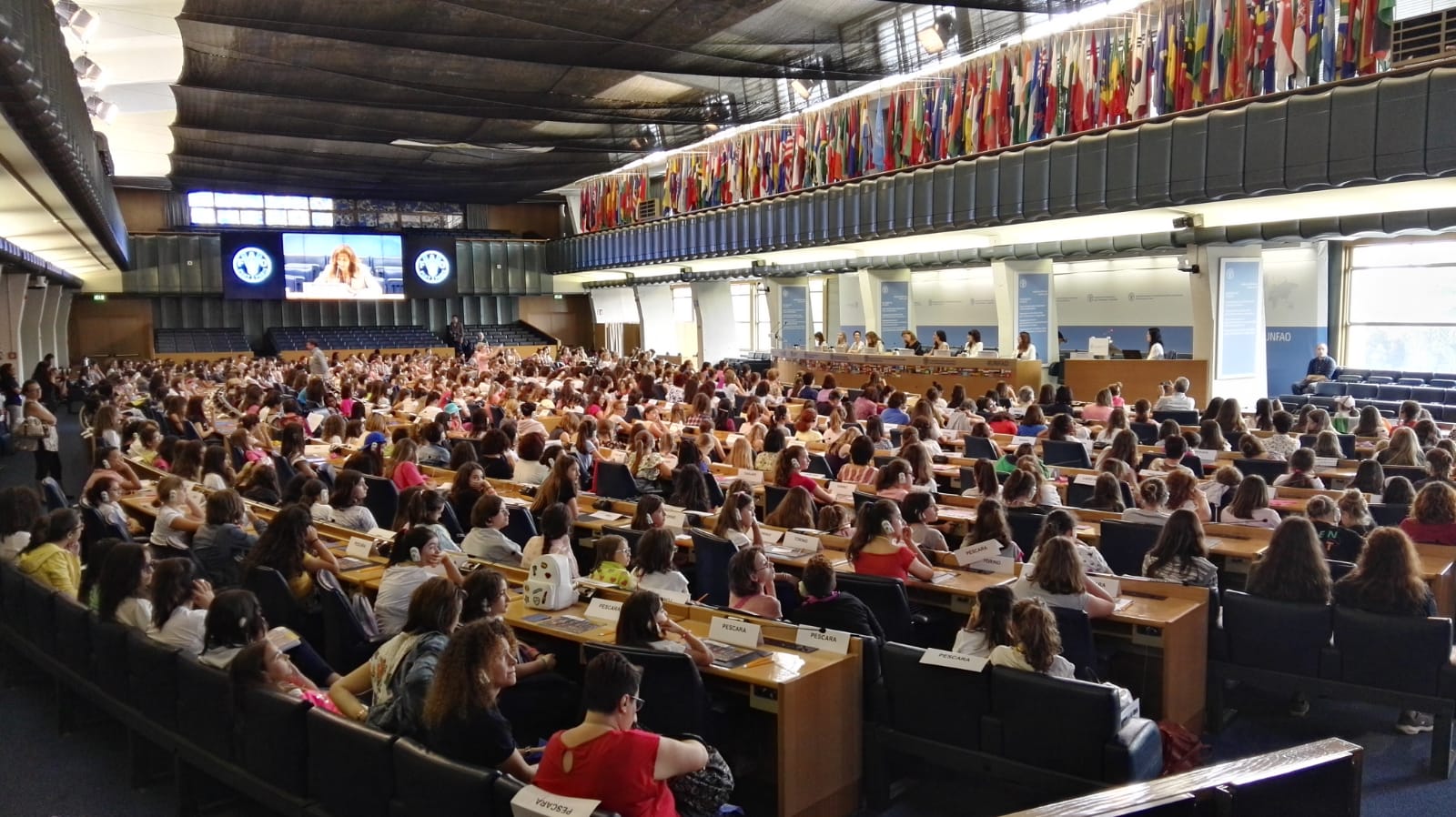
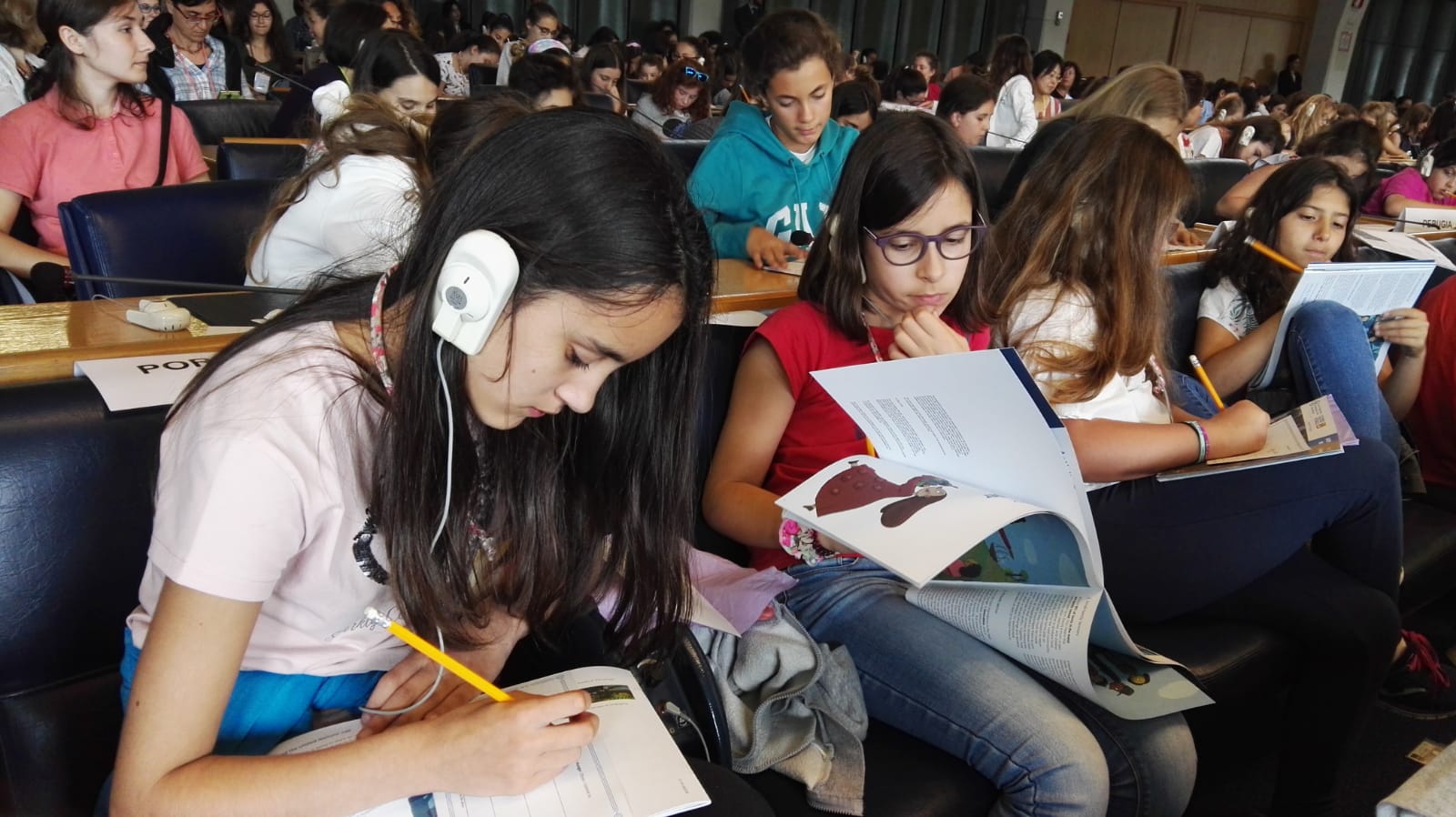 Today’s youth can become the first generation that will manage to eradicate hunger in the world. This is indicated by the 17 Sustainable Development Goals approved by the 193 United Nations Member States on September 25, 2015. The Member States agreed on the commitment to implement these goals within 15 years (2015-2030), and the “Zero Hunger Goal” is at the heart of the whole programme. The United Nations Food and Agriculture Organization (FAO) is very keen on achieving these objectives, so 630 young girls, aged 9 to 14 years, were gladly welcomed at its headquarters in Rome. This group of girls that belong to the Focolare Movement visited FAO on June 22, 2018. Many others worldwide followed this event through live streaming, and among them there were 400 young boys taking part in a congress at the Focolare International small town of Loppiano in Tuscany. It was the first time that the Movement’s young generations, who owe their origin to Chiara Lubich, were favoured with such an opportunity, that thrilled not only the girls seated in the prestigious plenary hall, but also FAO. “I’m so pleased to see this hall so full of young women”, commented Marcela Villareal, the FAO director for the division of partnerships and South-South cooperation. “I’ve been working here at FAO for more than 20 years and I have delivered many speeches in this hall, but I’ve never seen it so beautiful, so full of young ladies. Thank you for your all support towards the Zero Hunger goal”. Today, there are 800 million people in the world who suffer from hunger. After steadily declining for over a decade, owing to violent conflicts and climate change, global hunger appears to be on the rise. Villareal said: “For us here at FAO, this is the biggest scandal and we struggle daily not only to provide the necessary food but also a decent living, where children can live a full life. We are convinced that through our work we can achieve a world without hunger”. The United Nations signed the sustainable development agenda in September 2015; this includes 17 goals that are to be achieved by 2030. Sabina Zaccaro, from the FAO office for institutional communication said: “Never before have world leaders pledged to commit themselves together to such a wide and universal agenda. To defeat world hunger (objective no.2), we need to overcome poverty (objective no.1). But to do this we must all live a sustainable way of life (objective no.12), while we combat the climate change through specific means(objective n.13)”.
  The first Zero Hunger citizens The Focolare youth, scattered all over the world, can give a strong personal daily contribution towards the achievement of the Zero Hunger goal by 2030. On October 16, 2018 FAO will celebrate its 73rd year and it will have the opportunity to re-launch this objective. Clara Velez, Head of the FAO office for the dissemination of promotional activities confirmed: “We will avail ourselves of this occasion to speak about various topics on newspapers, TV, in schools, on streets. Each year we are focussing on a particular issue (immigration, climate change…..), and this year our focus will be on zero hunger. It’s marvellous having you here with us today. On October 16, representatives from all countries will be seated in this same hall and they will be given the book you have received today.This book explains how we can combat hunger through our daily actions. The passport on its last page entitles you to become the first Zero Hunger citizens, with rights and duties that need to be respected”. But what are the duties of Zero Hunger citizens? Laura Hernandez from the FAO office for dissemination and promotional activities maintained: “One third of the food produced in the world is wasted and thrown away. I’m convinced that you do not want to participate in this scandal. There are certain things we can do at home. For example, when food is left over, one can freeze it or eat it the next day. When we go to a restaurant and do not manage to finish eating all the food, we can consume it later at home. Then, do check the food labels and do not be deceived. The expiry date indicates the date when the food ceases to be good for consumption; but if the label states that the food is “preferably consumed by…”, this means that it can be consumed even a few days after that date. Another important and precious commodity is water. We must not waste water, so the tap should be closed while we brush our teeth. And mum and dad should be reminded to use the dishwasher at full capacity, or to use the dryer only when needed”.
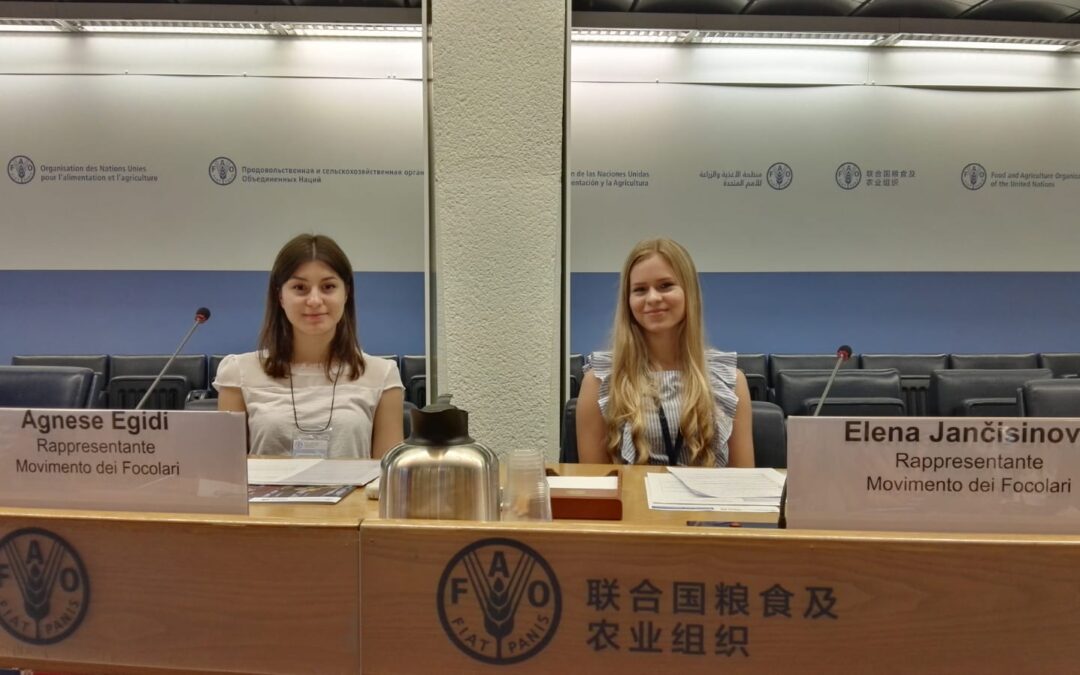
 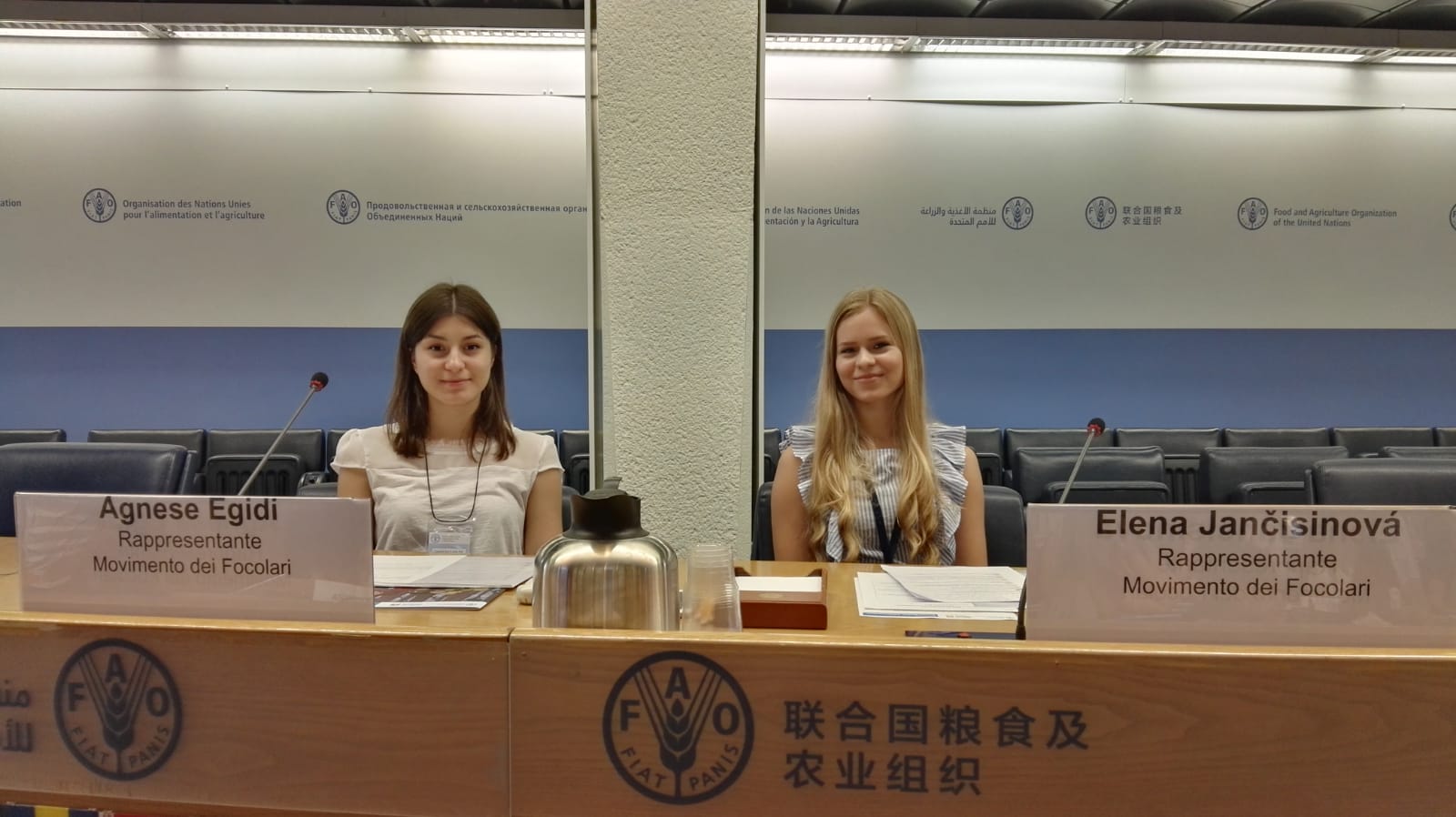 The Commitment Statement Finally even the girls voiced their thoughts. Elena and Agnes, who represented them said: “We are very honoured and happy to be here. From now on we will definitely contribute towards this goal with greater enthusiasm. We do feel part of the zero hunger generation. And what a great dream it is to imagine a world without hunger, even thanks to our contribution towards it! We are so happy to collaborate with FAO, because it is only by joining forces that we can manage to achieve such a high goal as Zero Hunger by 2030”. Focolare children and teenagers in 11 countries have been gathering ideas to try and find out how the problem of world hunger can be solved. “Our three H motto: head, heart and hands originated from these ideas, and our Commitment Statement came into being. Head for us means that we have to inform ourselves and study the problem both at a global and local level. Heart means that we that we have to make ourselves and others aware, and involve as many people as possible to achieve our goal. Then we need to act, so we have to make use of our hands” At the end of their visit, the girls handed over their Commitment Statement to FAO and there was the symbolic gesture of the passport: the girls wrote their commitments on this small document and signed it. They became the first #Zero Hunger citizens. Lorenzo Russo
22 Jun 2018 | Non categorizzato
http://vimeo.com/69074558 «The secret of true love is this, the secret lies in this: that the love we speak of is what is truly understood by the Gospel. The Gospel is the good news that Christ brought on earth, so it’s a love as it is conceived in God, not on earth. It’s a love that we see being lived by the persons of the Most Holy Trinity. For example, the Father loves everyone and lets the rain fall and makes the sun rise on the good and on the bad, he loves everyone. So it’s a love that puts us in the disposition to love all our brothers and sisters, so not only our relatives, friends or the ones we like, but we have to love everyone. Therefore, during the day, in order to love them, we have to single out every person we meet. A second requirement of this love, which does not exist on earth precisely because it comes from Heaven, is that we must be the first to love and not wait to be loved. Generally, one waits to be loved in order to love. Instead it must be like this: we must be the first to love and this is shown by Jesus, the second divine Person who became man, who died for us when we were yet sinners, which means that we certainly were not loving then. It’s a tangible love, like that of Jesus, who gave his life. It’s not a sentimental, platonic love, but one that becomes real. It’s a love that “makes itself one” with the other, with those who suffer and those who rejoice, and participate in the suffering and helps those who suffer or participates in the joy. If this love is practiced in the world, and the Movement lives it, … it’s the secret of the Movement. The Movement has lived it in all the nations of the world. Generally it has been reciprocated because people feel loved and get along well with us. So they ask us, “But why?” And we explain why we love. So a dialogue between us and others begins, and they are not all Christians, not all Catholic, but many times belonging to other religions, even non-believers. But even non-believers, in their DNA, have the idea of loving and the strength to love because they are created by God who is Love. This is something about love». Chiara Lubich Translation of an interview given by Erik Hendriks, Sylvester Production, May 24, 2004, for Belgian TV. www.centrochiaralubich.org
21 Jun 2018 | Non categorizzato
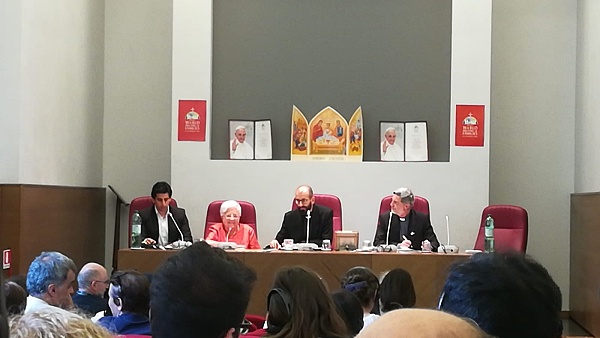 Organized by the Catholic Church’s Dicastery for Laity, Family and Life, the meeting coincided with the publication of the “Instrumentum laboris” of the next Synod of Catholic Bishops in October, which is dedicated to youth. This thought-provoking document includes the input of young people from around the world.. Kevin Farrell, the Dicastery’s Cardinal Prefect introduced the meeting. Msgr Carlos Simón Vázquez, delegate for the Family and Life section presented the latest developments concerning the IX World Meeting of Families which will be celebrated in Dublin from 21 to 26 August. Fr Alexandre Awi Mello, the Dicastery’s Secretary reported on the preparations for next October’s Synod of Bishops. Giovanna Guerrieri Nalin, of the Youth Office spoke about the next World Youth Day, scheduled to be held in Panama in January 2019. In the afternoon, the General Secretary of the Synod of Bishops, Cardinal Lorenzo Baldisseri, presented the aims, the expectations, and the prospects of the upcoming Synod.
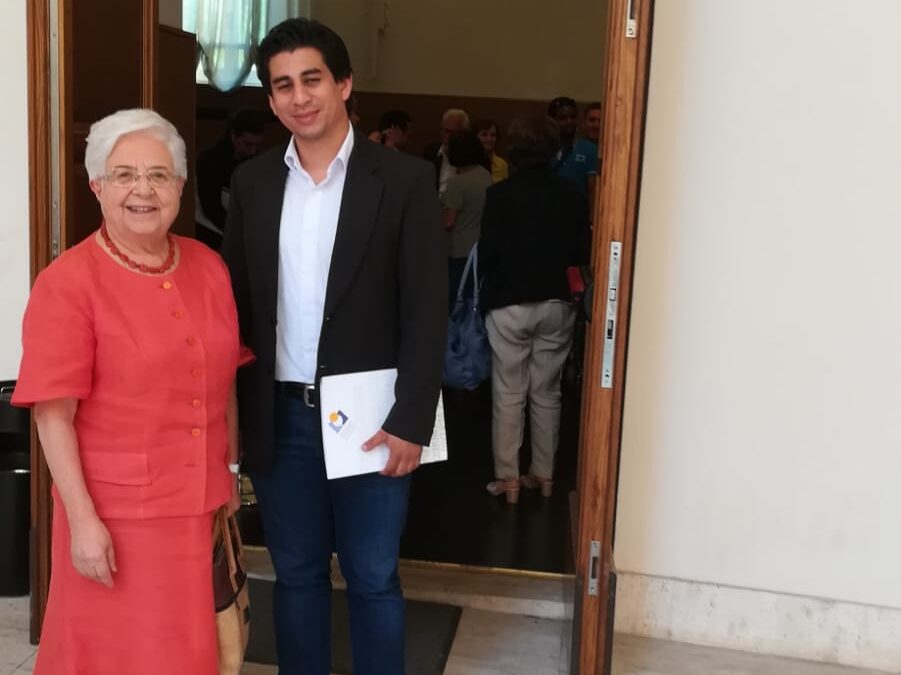
  The contribution of the Focolare Movement The Focolare Movement was among the participants, represented by a young person from Salvador, Nelson Vanegas and Focolare President Maria Voce, who reflected on how “apostolic initiatives directed towards young people in the areas of announcing the faith and of vocation, can be rooted in the characteristic experience born from the charism of unity”. Back in the 1960s young people turned to Chiara as she called for a new type of revolution, inspired by Gospel love (“Youth of the world unite!”). This has led to the development of new ways and centres of formation and witness, shaped together with the young people themselves. These cover areas such as the gift that the young and older can be for one another, the link between life and thought, the living out of fraternity to respond to the challenges and problems of today’s world.
 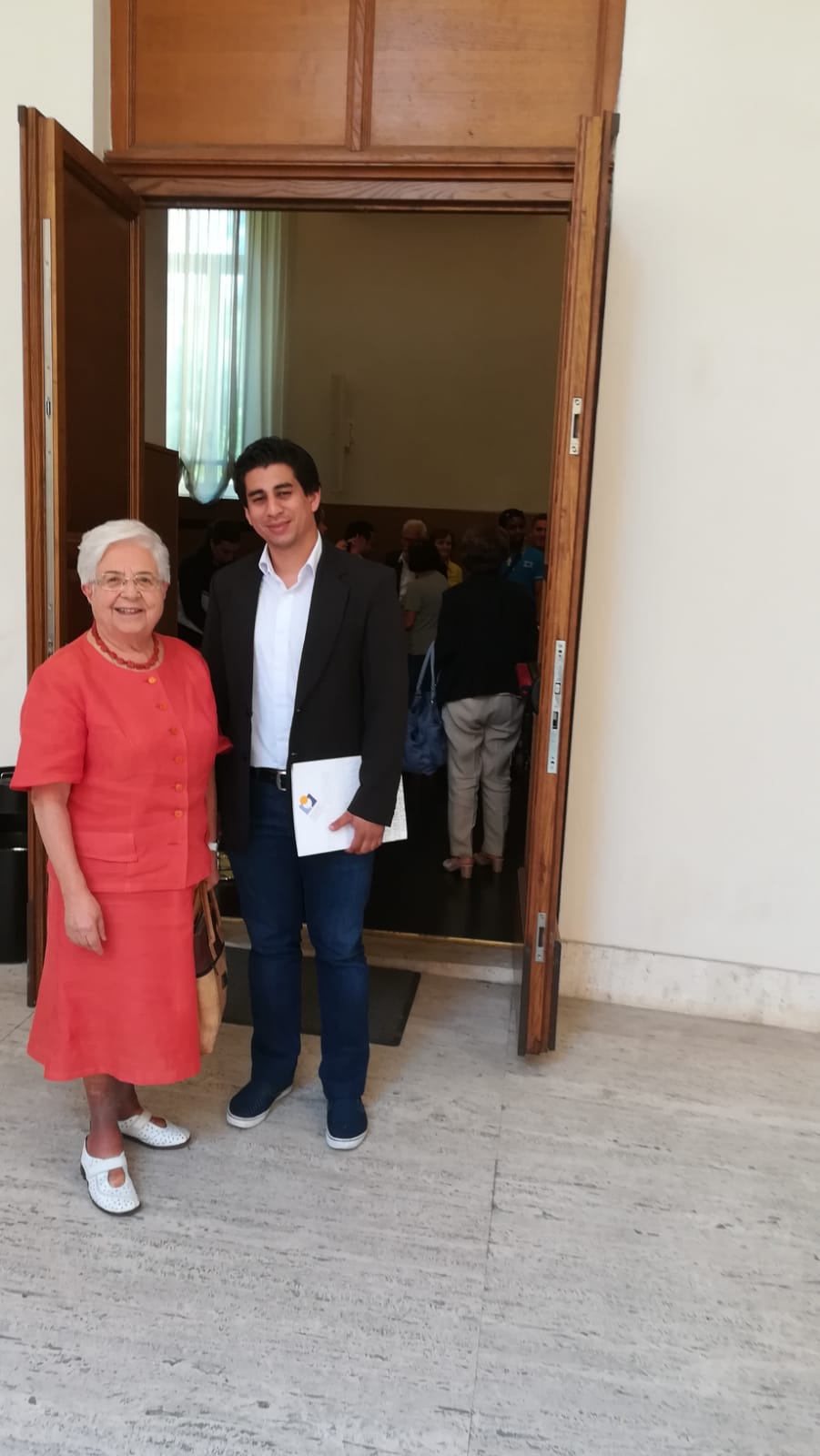 Nelson had participated in the presynodal meeting in March. He presented the Focolare’s youth-focused activity. “In annual summer schools of formation for young people, we cover theological and moral formation. This involves a style of accompanying the young which is in tune with Pope Francis’ suggestions. Schools of vocational discernment offer a real pathway for young people aged between 23 and 30 years, a crucial age, to face up to making definitive choices for their personal life plan”. There are also opportunities for young people to experience the link between life and study. He explained how “the University Institute of Sophia, based in Loppiano (near Florence, Italy), aims to enable the interaction of areas of knowledge through an academic project centred on the experience of a studying community. Research, ideas and life are shared not only between students from different countries and backgrounds, but also between students and academics”. Other opportunities for youth formation are offered in national and international congresses and “schools” for the Gen (the young generations of the Focolare Movement). Finally, Nelson announced the Genfest. “It is a formative experience, based on a widespread ongoing commitment to inclusion, welcoming and listening to others, which leads to true dialogue and to the construction of deep relationships. A Genfest is above all a profound spiritual experience, through which in past years, many young people have heard or reheard the call of God, to live for something great, to fulfill the last prayer and dream of Jesus”. The next Genfest is almost here: in Manila, the Philippines, 6-8 July, with the title “Beyond all borders”.
19 Jun 2018 | Non categorizzato
The adolescents and youths can become the first generation to succeed in uprooting hunger in the world. This is stated in the 17 Sustainable Development Goals (SDG), approved on 25 September 2015 by the 193 Member States of the UN, with the commitment to achieve them in 15 years (2015-2030). The second objective, “Zero Hunger,” is the core of this programme. To be able to reach it, the UN’s Food and Agriculture Organisation (FAO) places its bet on the new generations. The boys and girls of the Focolare Movement have decided to make this the key theme of their annual training congress, from 20 to 24 June. While 630 girls will meet at the International Mariapolis Centre in Castel Gandolfo, 250 boys will hold their meetings in the international town of Loppiano (Florence). The participants shall come from various countries of Europe and South America. In Loppiano, the 250 boys will deepen the “Zero Hunger” theme and try to see how to actualise it in daily life, rediscovering values like courage, forgiveness, service, endeavour, spirituality, responsibility, loyalty, and acknowledgment of the capacities of others. The girls instead shall live a special day on 22 June, when they will visit the international headquarters of the FAO in the centre of Rome, to participate in the discussion on the “Zero Hunger” goal. At the end of the session, they will receive the “Zero Hunger Citizens” passport. Replay the streaming on 22 June 2018, at 11 am (Rome). Lorenzo Russo
19 Jun 2018 | Non categorizzato
World Refugee Day will be celebrated on June 20th at the behest of the UN General Assembly to highten awareness of the conditions of millions of refugees seeking asylum, as they flee war and violence in their own countries. The UN Agency for Refugees has launched the “#With Refugees” campaign, to give visibility to the gestures of solidarity towards refugees, giving voice to those who welcome and strengthen the encounter between local communitites and asylum seekers. But “#With Refugees” is also an appeal, by the UN’s High Commissioner for Refugees (UNHCR) that calls upon governments to ensure that every refugee child receives an education, that every refugee family has a safe place to live, and that every refugee can have access to a job or acquire new skills that will allow them to contribute to the community. The petition will be presented to the UN Assembly in 2018 at the adoption of the Global Compact for refugees. “Today,” says Carlotta Sami, spokesperson for the UNHCR for South Europe, “being on the side of the refugees is not only a humanitarian act; unfortunately, it is an act of bravery. It has become uncomfortable to be on the side of those who have chosen to leave their own countries and face a very heavy challenge – tha of starting again from zero in a new environment, often indifferent and, in the worst cases, hostile.” There have been numerous events at the end of this month. See: www.unhcr.org/withrefugees
