6 Jun 2018 | Non categorizzato
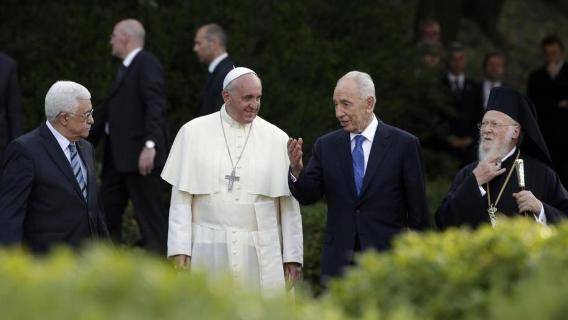
Also this year, the initiative, “A Minute for peace”, is being renewed, and promoted by the Catholic Action International Forum, together with the Italian Catholic Action, the Argentinean Catholic Action and the Justice and Peace of the Argentinean Bishops’ Conference and other entities, on the fourth anniversary of the encounter of Pope Francis with the Israeli President, Shimon Peres, and the Palestinian President, Mahmoud Abbas, that took place in the Vatican Gardens on 8 June 2014. To relaunch the message of peace of that day, the proposal is to stop at 1 pm (in every time zone) on 8 June, for a minute of prayer and silence, alone or in groups. The proposal addresses the faithful and the nonbelievers. “At work, on the road, or at home, all are invited for a minute of prayer “that travels far,” embracing the world. It is a simple way – the promoters affirmed – of remembering that each of us can be instruments of peace each day.”
4 Jun 2018 | Non categorizzato
The cake Family life is not always straight forward. An argument can break out when you least expect it. Last weekend we were in the car on our way to visit friends. My wife had spent a whole day in the kitchen preparing a really special cake. Just as we were about to arrive I realised I had missed the turning to their road and I put my foot down hard on the brakes. As the car came to a sudden halt, the cake propelled forward onto the floor. A heated “discussion” ensued. I wanted to make the point that the cake had been left in the wrong place where it could fall, as in fact it had done. However, I managed to stop myself and instead I apologised. Eventually the tension eased, and when we arrived at our friends’ house, bearing no gift and with our clothes covered in cake, we were nevertheless in harmony with each other. Enrique – Spain Someone less fortunate I had just got off the train when a youth pushed passed me, chased by three men shouting «Stop thief!». They caught up with him and started to beat him. On seeing this I rushed in and tried to shield him. He was just a young boy, he looked about 16 years old. Curled up on the ground he tried to say in broken Italian that he had stolen food because he hadn’t had anything to eat for days. When the police arrived, he explained that he was a refugee from Congo, where all the members of his family had been killed. I asked to be allowed to accompany him to Accident and Emergency. “You have saved my life,” he said along the road, “you are my Italian mother!” He was diagnosed with cranial trauma and three broken ribs, and admitted into hospital. As he didn’t have the clothing he needed, I went to buy some for him. On my return, someone asked me why I was going to so much effort for a stranger, and for a thief at that! I replied without hesitation, «I’m a Christian and it’s my duty to help a neighbour who is less fortunate than myself». Anna Maria – Italy A bessing denied G.’s life ended in the most shameful and miserable way, following a night of alcohol and prostitutes. At that was not all. The night before he died, he had taken his fifteen year old son into this dark world to, as he said, teach him how to “be a man”. When I was called to bless his dead body, I immediately responded that he did not deserve the Church’s blessing. I felt I was doing the right thing in the name of justice and in order to give a good example. However, afterwards I didn’t feel at peace in myself. I thought of the man’s widow and children. Was I right to deny them this small comfort? Didn’t I only know the man’s story superficially? And yet I had set myself up as his judge, in the place of God. After a sleepless night, I made a decision. I went to visit the man’s family, to ask their forgiveness and to make arrangements for a Mass for the repose of the soul of their loved one. Maybe this gesture brought a little peace to them. E. P. – Italy Aquiline nose Among my group of friends, we always talk about things like fashion and make up and so on. One day, one of the girls started mocking me, saying I had an “aquiline” nose. This made everyone laugh. I rushed away, feeling humiliated and I stayed in a bad mood for days. My family saw the state I was in, but nothing they could do could make me feel better. Then one evening my sister invited me to go with her to a meeting of people who base their actions on the Gospel. I agreed and when I got there, I felt as if I had entered another world, one in which important things really had value and not just banalities like the shape of a nose or of a dress. Since then, I have experienced profound peace within me. I now feel truly myself. C. K. – Poland
1 Jun 2018 | Non categorizzato
DATES
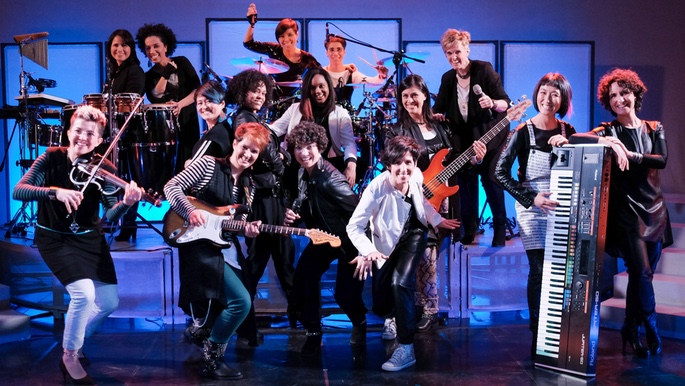
From July 1st to 5th: Workshop with young people
From July 6th to 8th: GenFest
GenVerde Tours
31 May 2018 | Non categorizzato
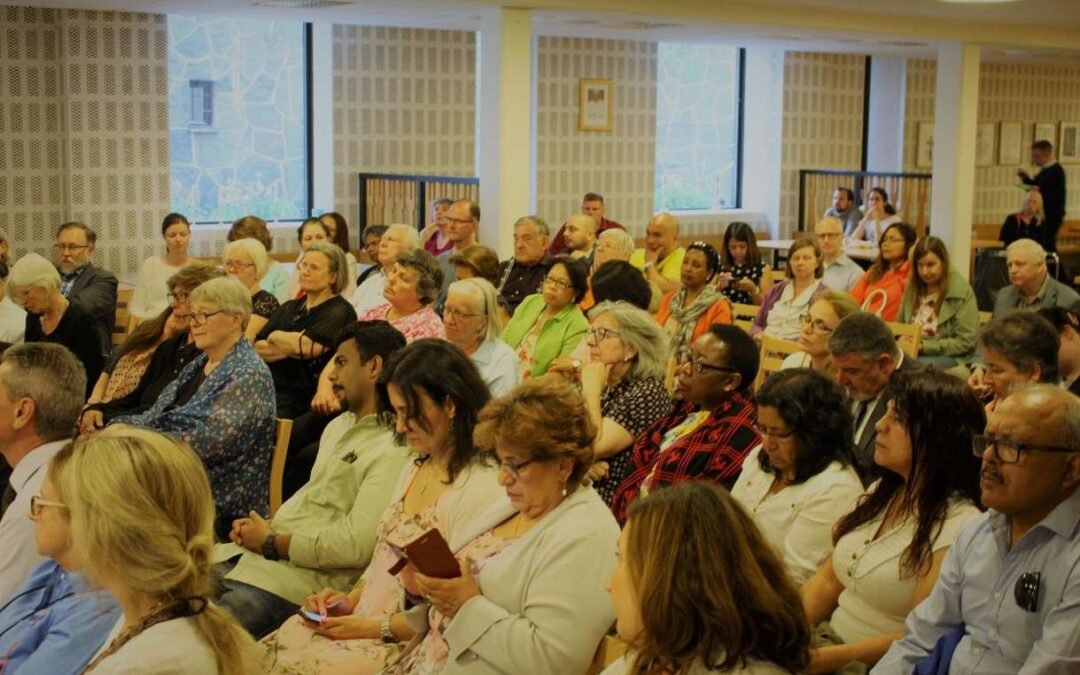
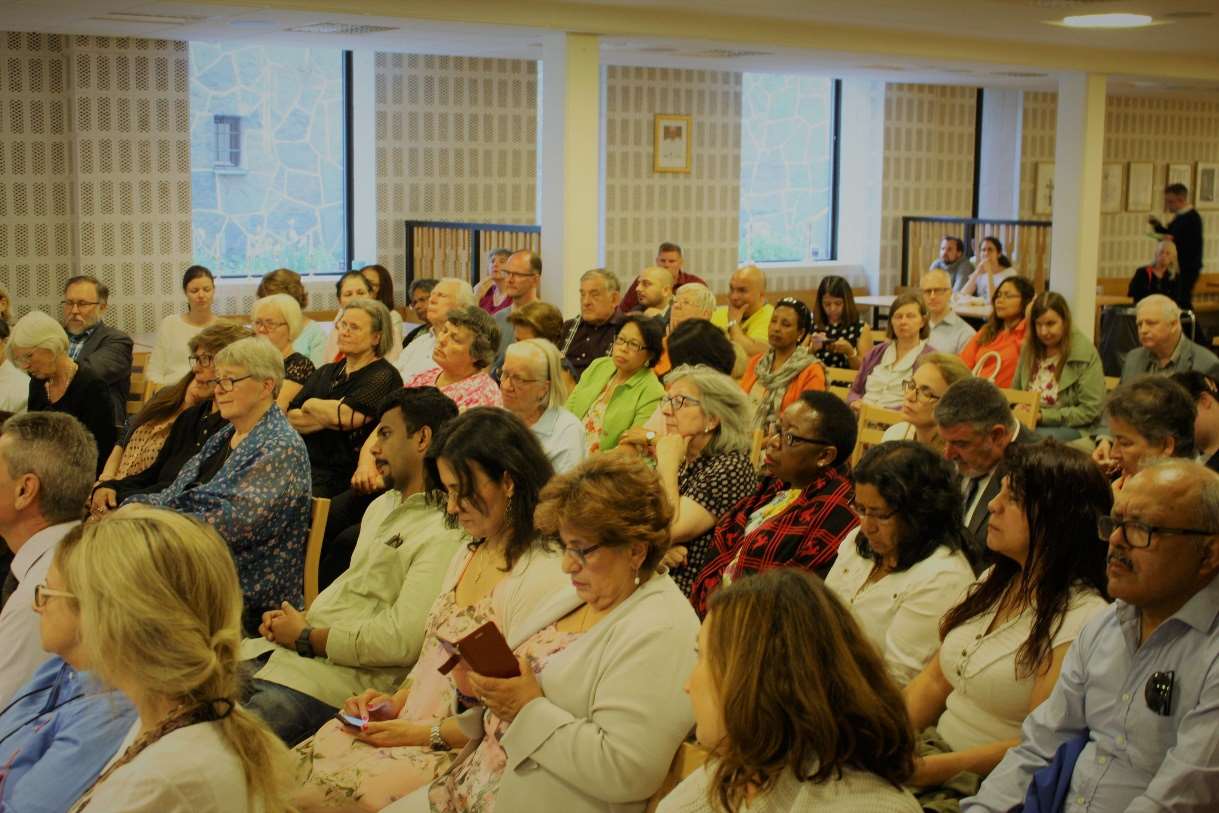 On the eve of the feast of Pentecost, 19th May, the Diocese of Stockholm hosted a meeting of movements within the Catholic Church, including the Focolare Movement, the Charismatic Renewal and the Neocatechumenal Way. Over one hundred people attended. Pope Francis’ Apostolic Exhortation “Gaudete et exsultate” was presented, provoking an enriching exchange among those present. During the celebratory Mass, Cardinal Anders Arborelius of Stockholm expressed how precious he considers the presence of ecclesial movements in the local Church. The Focolare community responded: “We all felt co-responsible for the meeting, and by the end of the day we were all so joyful and grateful. We think this was a sign of the tangible presence of Jesus guiding his ‘little flock’. Every year, this meeting is becoming more and more enthusiastically received, and we feel the communion among us all is truly growing”.
29 May 2018 | Non categorizzato
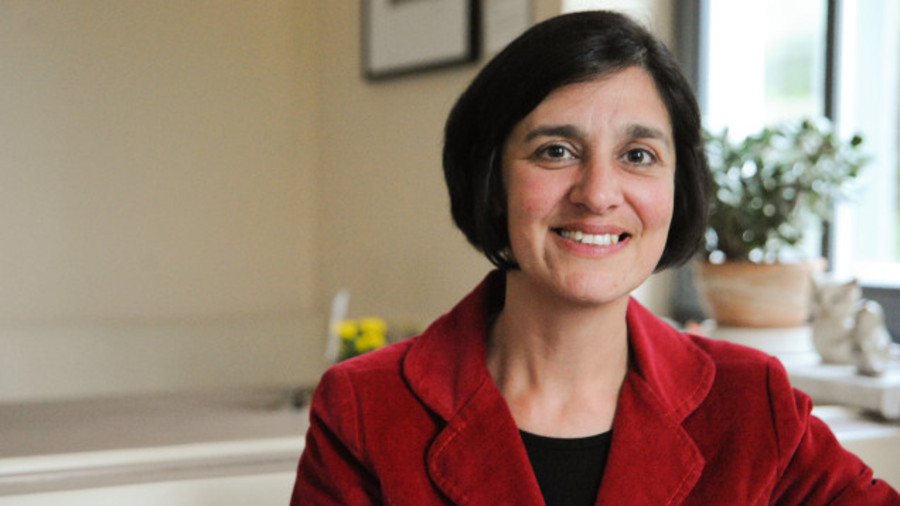
Beatriz Sarkis
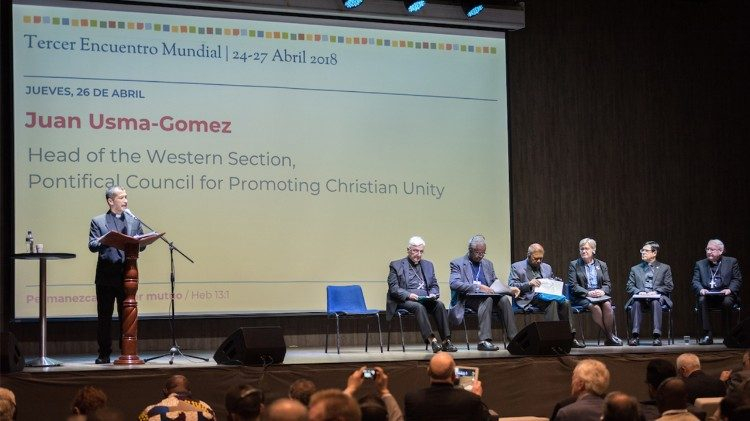
Photo credit © Albin Hillert/WCC
Photo credit © Albin Hillert/WCC