21 Apr 2018 | Non categorizzato
Earth Day is celebrated yearly, the day after the spring equinox. It is the biggest environmental manifestation of the planet, promoted by the United Nations to encourage the protection of the Earth. The idea of creating an “Earth Day” was discussed for the first time in 1962, and finally took form in 1969, following the environmental disaster caused by the seepage of oil from a well in the open sea of Santa Barbara, California. In the last editions, the Day involved up to a billion people in 192 countries in the world, and became a planetary, educational and informative event on themes of pollution, desertification, destruction of the ecosystems, and the depletion of nonrenewable resources. But also included is individual responsibility towards sustainable consumption, as inspired by the idea of the “Common home” of mankind.
21 Apr 2018 | Non categorizzato
“We are not victims of chance or swept up in a series of unconnected events; on the contrary, our life and our presence in this world are the fruit of a divine vocation!” This is what Pope Francis reminds us of in the very first words of his message for the 55th World Day of Prayer for Vocations, which is addressed in a special way to young people. The Day of Prayer is scheduled for April 22, and its theme will be: “Listen, discern and live the Lord’s call.” The relationship between young people, faith and vocations will also be central to the upcoming synod in October. “On that occasion,” the Pope observed, “we’ll have an opportunity to see how at the centre of life there is a call to happiness that God extends to us.” The young people and youths of the Focolare were reminded of Chiara Lubich’s words, which she spoke to them in 1998: “God calls to a variety of different paths: He calls to a variety of missions and tasks; for example, he calls young men to the priesthood, to be another Christ; he calls men and women to all those colourful flowerbeds that are the Religious Families in the Church; he calls men and women to the modern ecclesial movements, to consecrate themselves to God both individually and communitarily, or to start families that are actually many little churches. And remember: God calls at all ages; he also calls teenagers and children. He calls everywhere on earth.”
21 Apr 2018 | Non categorizzato
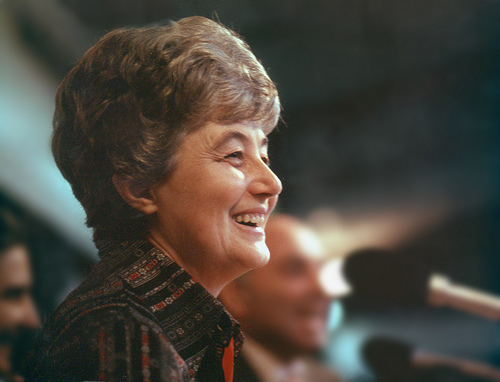
We must not cease praying for peace to return. … In this moment, we should all feel called to follow determinedly a life style which corrects, at least within us (and through the communion of saints in many others) the mistake that has been made. Human beings have not done the will of God, the will of the God of peace. They did their own will. We must do all we can, as never before, to carry out God’s will perfectly. “Not my will but yours be done”. Today these words of Jesus acquire an altogether special importance for us. Compared to His word, everything else must become secondary. We shouldn’t give much importance in our lives to being healthy or sick, to studying or serving, to sleeping or praying, to living or dying. What matters is to make his will our own, to be his will lived out. This is how we lived at the beginning of our Movement when, in the setting of another war, the Spirit gave us the light to understand the true value of things. Faced with the destruction caused by hatred, God revealed himself as the one ideal that does not pass, that no bomb could destroy. God Love. This was the great discovery, a spiritual bomb of such power that it made us literally forget all the bombs falling around us in the war. We discovered that above and beyond everyone and everything there is God who is love. There is his providence which makes all things work together for the good of those who love him. We discovered the signs of his love in each circumstance, even under the lash of suffering. He loved us immensely. How could we love him in return? “It is not the one who says Lord, Lord, who loves me, but the one who does my will.” We could love God by doing his will. Living like this we got used to listening ever more attentively to “the voice” within us, the voice of our conscience which emphasized the will of God expressed in different ways: through his Word, in the duties of our state in life, through circumstances and inspirations. We were certain that God would draw us into a divine adventure, at first unknown, where, as both spectators and actors in his design of love, we could give the contribution of our own free will, moment by moment. A short while later he let us perceive something of our future, helping us see clearly the purpose for which the Movement was coming about: to fulfill Jesus’ prayer in his testament, “Father, may they all be one”, working together to achieve a more united world. We can live like this now too. Have we experienced an abrupt and painful change? … Are we at times fearful and anguished, even wondering whether we are going to be killed? Or are we living life as usual, with all our daily tasks, far from any danger? For all of us what matters is what has most value: not one thing or another, but God’s will. Let’s seek to ‘listen’ putting his will in the first place in our heart, our memory, our mind. Let’s put, before all else, all our strength at his service. … In this way, Christ will remain in our hearts and we will be more together, more united, more ‘one’, sharing everything, praying powerfully for one another and for peace to return.”
20 Apr 2018 | Non categorizzato
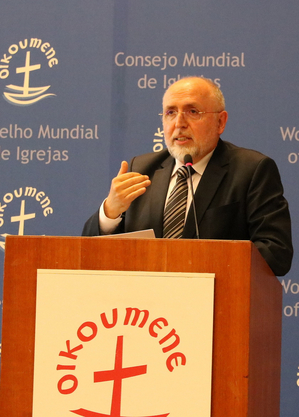
Jesús Morán. Photo © 2018 World Council of Churches
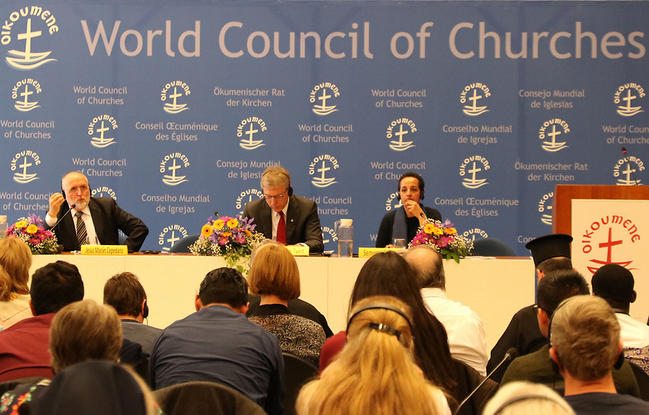
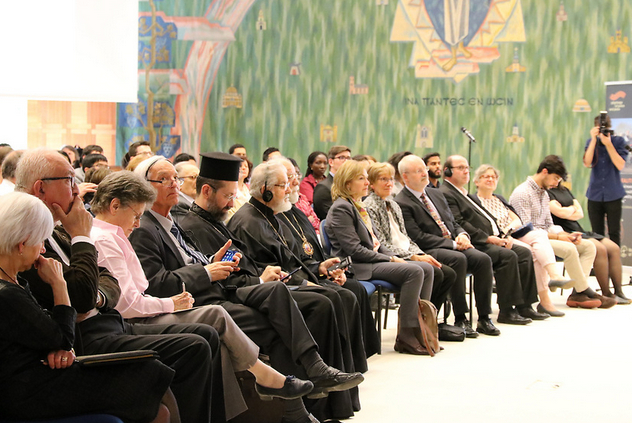 Secondly, «in dialogue, each person is made complete by the gift of the other. We need each other in order fully to be ourselves. In dialogue, I make a gift of my ‘otherness’, of my being different to the other person». Indeed, «every occasion of dialogue is a personal encounter. Hence, it’s not so much about words or thoughts, but rather a matter of giving our very being. Dialogue is not simply ‘conversation’, even less ‘discussion’, but rather it’s something which touches at the very heart of those involved». «Dialogue requires silence and the ability to listen», he continues. It is «an existential factor, because (in dialogue) we put at risk our very selves, our vision of things, our own ‘identity’, our cultural identity and even our ecclesial identity. Yet none of these, in fact, is lost but rather enriched by such openness». «Authentic dialogue deals in truth. It always goes more deeply into the truth. […] Everyone who participates puts in common with the others their own participation in the truth, which is one for everybody». Such dialogue, continues Dr Morán, requires great strength of will, what Chiara Lubich referred to as “making yourself one, as deeply as possible”. «The sublime and mysterious model of this dynamic of love is, as we know, Jesus Forsaken. He truly represents the risk of ‘otherness’ which brings us to reciprocity. […] His ‘losing’ won for us – and in us – an eternal space of light and Truth: the Holy Spirit». Another point to note is that «dialogue is only possible among real and true people» in accordance with a particular law, the law of reciprocity which confers legitimacy and meaning. Jesús Morán goes on to outline a further aspect, one that characterizes the Focolare’s contribution to progress towards Christian unity, namely “the dialogue of life”. This encourages «relationships to be based on the Gospel, on the exchange of experiences, on sharing what is most precious with brothers and sisters of another Church». He quoted Catholic theologian Cardinal Walter Kasper, President Emeritus of the Pontifical Council for Promoting Christian Unity: “Ecumenism of love and ecumenism of truth, important as they are, must be implemented by means of an ecumenism of life”. Dr Morán observes, «we must recognise that this dimension – vital to dialogue – is not devoid of theological thought. Rather, it is situated on a more primal, deeply rooted level of it. Only through this dimension, in fact, can one then gain access in a truly beneficial way to the level of theological reasoning». «Dialogue – concludes Dr Morán – is the ‘rhythm’ of trinitarian relationships, a continual exchange of roles and of gifts. […] Nothing gets lost. Dialogue’s risk contains all of ourselves and all of the other, in the transcendent ‘space’ of the Holy Spirit which we all share. This includes the whole of humanity. Those who dialogue are making history». Photo gallery: https://oikoumene.photoshelter.com/galleries
20 Apr 2018 | Non categorizzato
On 16 April, the Sophia University Institute welcomed the fifth edition of the Wings of Unity dialogue and collaboration project, which involves teachers and experts from the Christian and Muslim community.The promoters of this project, in addition to Sophia University, are the Islamic Centre of England (London) and the Risalat International Institute (Qum). Through the initiative, co-directed by Piero Coda and Mohammad Shomali, several innovative ideas have been developed in the context of interreligious dialogue through seminars, public conferences, summer schools and publications. The day of study took place in the broader context from 15 to 18 April, in Loppiano, where Sophia University Institute is located. During these days the group of Muslim friends had the opportunity to discover more in depth the roots of the original multi-cultural co-existence born from the charism of Chiara Lubich. https://vimeo.com/265783668
19 Apr 2018 | Non categorizzato
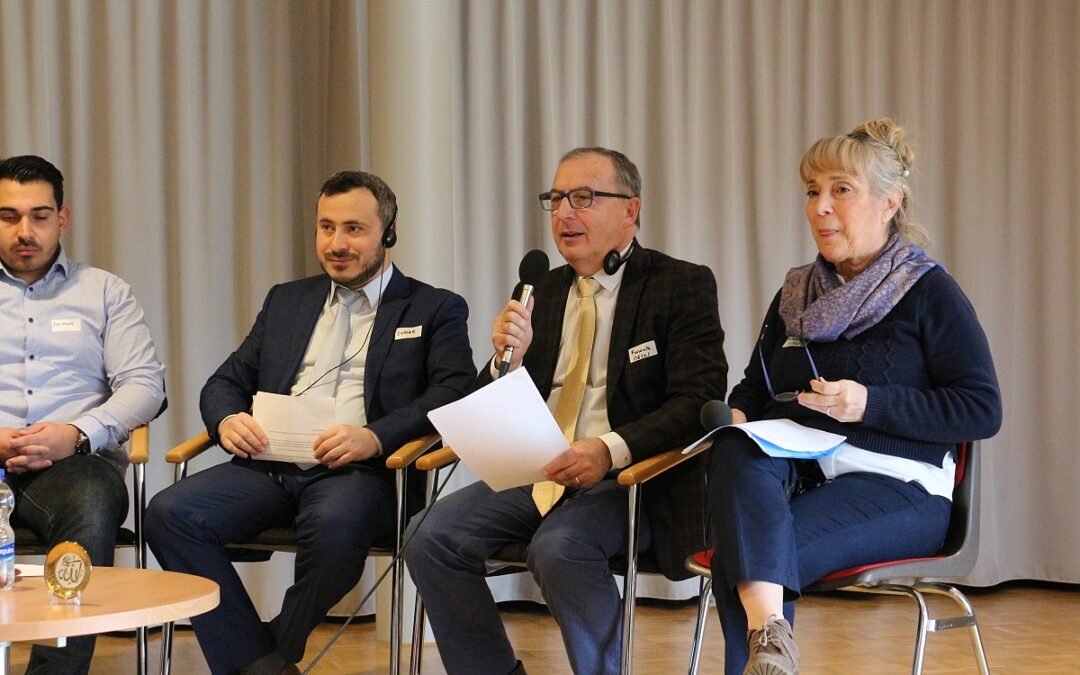
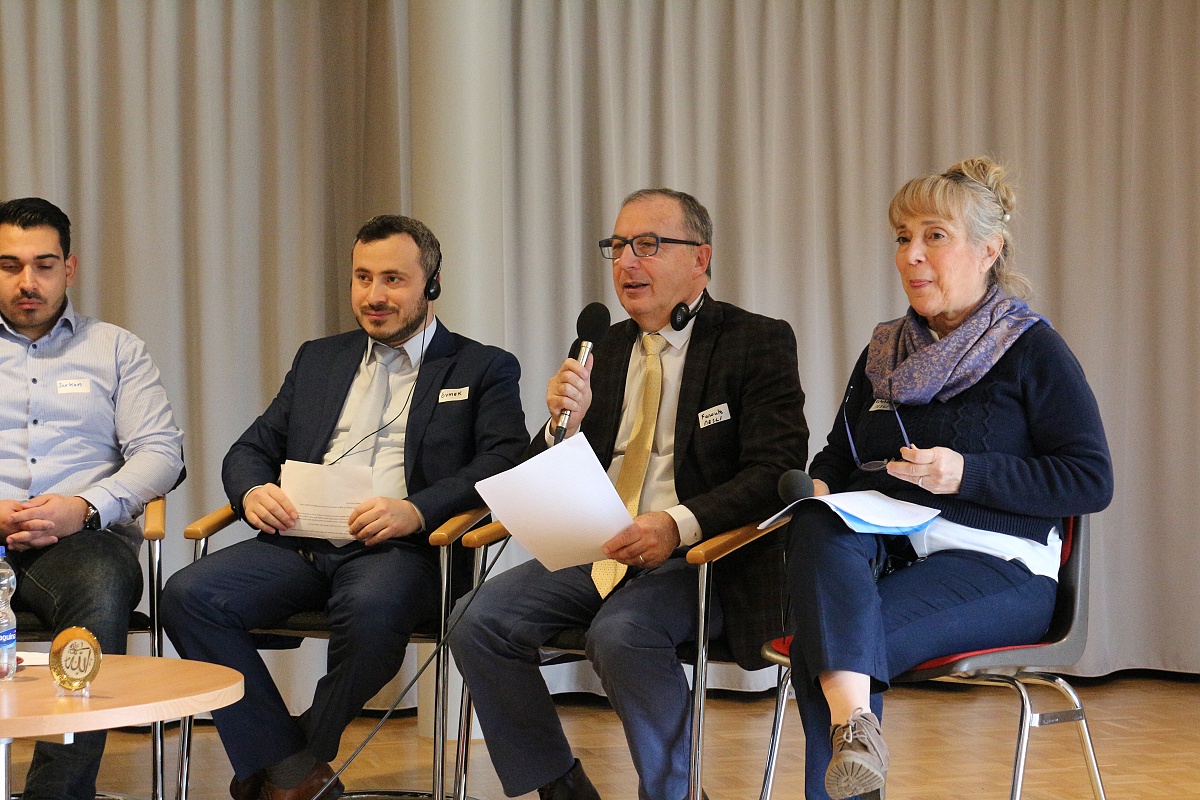
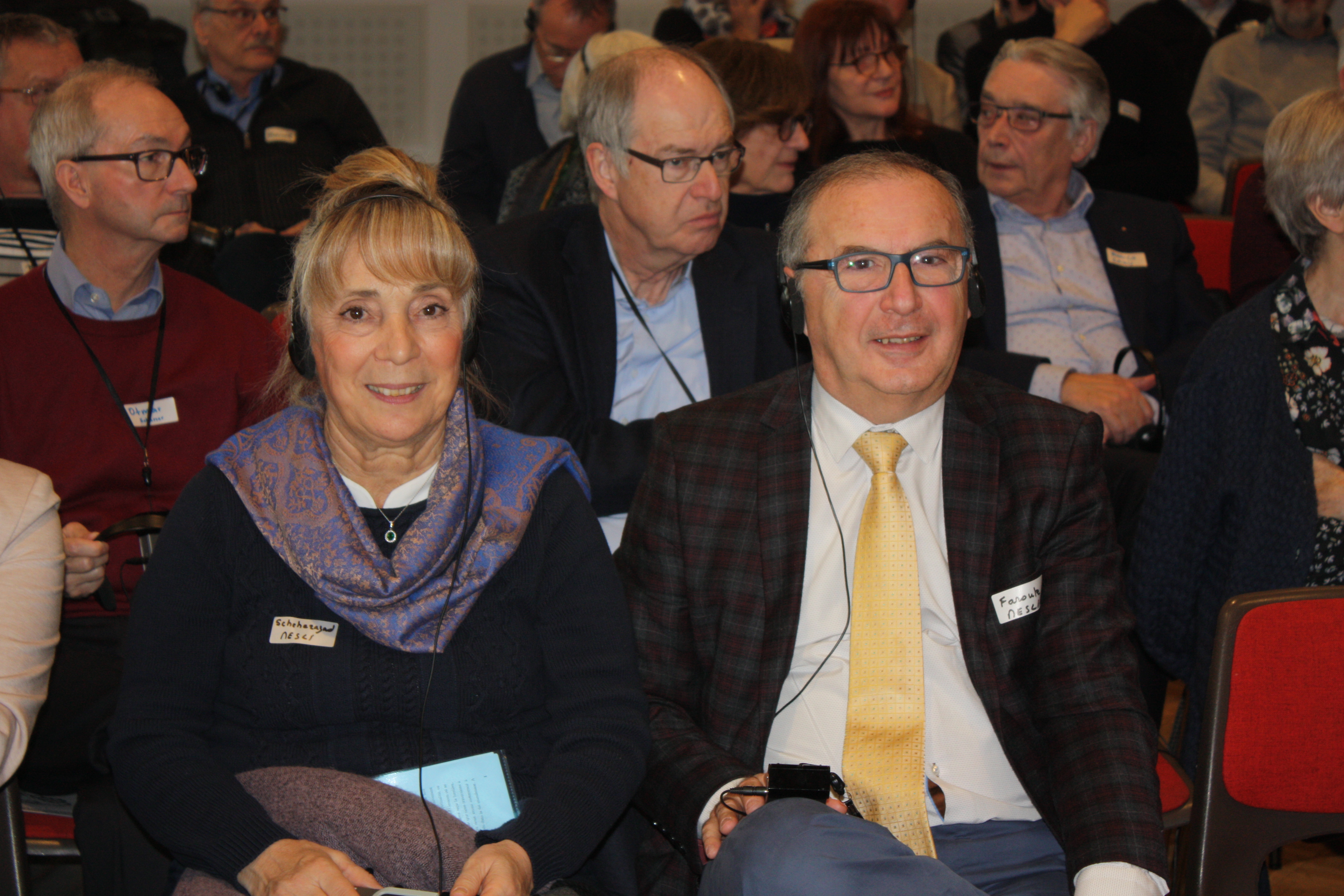 “We were born in two traditionally conservative families from Tlemcen, an ancient city, the cradle of Arab-Muslim culture,” says Farouk. “We’ve been married 42 years, have three children and two grandchildren. “During the first year we were married, like many couples, we discovered that we had very different personalities, and this caused friction between us. “Meeting the Focolare Movement helped us understand that we needed to start on the path to true love. This experience showered us with God’s love and helped us take early steps toward each other. We really wanted to learn all about the spirituality of unity deeply, to the point that our lives began to be between Orano, where we live, and Tlemcen, where the Focolare center is. “We started sharing our Muslim faith and understanding how to embody the spirituality of unity within our beliefs. A small community took shape around us at Orano, where our house became a gathering place, a “beacon,” as Chiara Lubich herself named it. “Many Muslims met the Focolare, and we started to share more and more, nourished and enriched by a supernatural love. In the early 1990s, the guerilla war in our country reminded us of the similar circumstances when the movement was born, and that same discovery of God as the ideal of our lives.”
  Schéhérazad continues: “We went through a pretty turbulent stage when our children were teens. We tried to debate and dialogue with them, but above all, love them. We can now say that with the two eldest we were able to create a relationship based on sincerity. “In the Focolare community I heard experiences about the love of God. Little by little I learned to trust faithfully in God, in his mercy. “Taking up this spiritual path freed me from my ego and fear in my relationships with people. The commitment to put God in the first place in our lives is certainly personal, but we chose to live it as a family. “Realizing one’s own limits and those of the other is a never-ending exercise. We need to constantly begin again, ask for forgiveness and start again.” “In Islam,” explains Farouk, “prayer is a solemn moment. Our prayers didn’t used to be that regular before, and each of us prayed alone. Now we try to pray together, out of love, not obligation. “In Algeria there are many sub-Saharan young people who come to study. Some come to the Focolare. We try to meet their needs, since they often don’t feel integrated socially. “One of these young people, who is Christian, lived with us for a year and a half. We built a relationship so profound that he considered us his second parents. We often gave him our car so he could go to Mass.” “In the Focolare community,” says Schéhérazad, “there is a sincere exchange, with out any misunderstandings about faith. Any introduction is done with respect for everyone, with love that has no agenda, with no intent to convert the other, but instead to help them be more authentically themselves. “When we meet a Christian, for us it is natural to see him as a brother to love. We are not made to compete, but to work on a common project. Building unity cannot be taken for granted; it is a commitment that needs to be constantly renewed. “Together, Muslims and Christians, we can go toward the unifying One. In our life, thanks to Chiara Lubich, we have understood that this unifying One can be reached when at least two of us love each other, ready to give our lives for each other.”
