17 Mar 2018 | Non categorizzato
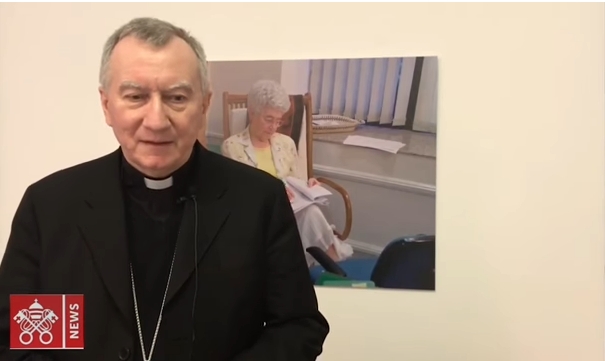
A great spiritual force capable of drawing crowds of different ages, social backgrounds, cultures: this is what animated Chiara Lubich and the fruits are still seen today, even in the Church. Cardinal Pietro Parolin, recalling the obedience and docility shown by the Focolare towards the Church – even in the most difficult moments – remarked how the Pontiffs, from Paul VI onwards, always gave their support and encouragement to the Movement. “A constant commitment to communion within the Church, in ecumenical dialogue and in striving to build the human family”, Benedict XVI spoke in the telegram sent on the occasion of Chiara’s funeral, whose “existence”, he continued, “was spent listening to the needs of contemporary society in full fidelity to the Church and to the Pope “. The specific contribution that Chiara has offered to the Church, according to the Vatican Secretary of State, Cardinal Parolin, is having deepened and brought to the fore the “Marian profile of the Church, as well as the apostolic one” and the strong and innovative call to unity: “May all be one for the world to believe”, built and made possible by the “secret” of mutual love found in the “Golden rule” that Jesus himself taught us in “not doing to others what you would not want done to you“.
17 Mar 2018 | Non categorizzato
Christians are not allowed to despair; they’re not allowed to accept defeat. Their homes can fall apart, their wealth can be lost, but they get up and continue to fight against all adversaries. Lazy spirits, nestled in their comfortable ways, become frightened at the idea of a struggle. But Christianity will be around for as long as faith in the Resurrection resists. The Resurrection of Christ, which inserts us in Him and makes us sharers in His life, obliges us to never despair. It gives us the secret for getting up again after every knock down. Lent is also an examination of conscience, through which we can consider what is buzzing around in the depth of our soul and of our society in which Christianity has become business as usual for many of us, without any pulse or impetus, like a sail without wind. Lent prepares us for the Resurrection of Christ, which is the reason for the rebirth of our faith, hope and charity: the victory of deeds over negative tendencies. Easter teaches us to overcome our mournful passions in order to be reborn, each one of us, in a unity of affections with our neighbor and with every population, in a harmony of good works in order to establish ourselves in the kingdom of God. This is translated into a social constitution that has authority, laws and sanctions, actions in favour of the good of the people. It reaches to Heaven, but passes through the world. And it is modelled on the Divine Order. It’s law is the Gospel that contains unity, solidarity, equality, paternity,service, justice, rationality, truth, the battle against the abuse of power, against enmity, error, stupidity… Seeking the kingdom therefore means seeking the happiest conditions for the free expression of the life of individuals and of society as a whole. The reason is obvious: Wherever God reigns, the human person is like a son of God, a creature of infinite value who treats others and is treated by them as a brother [or sister]. And he treats them as he would like to be treated. The goods of the earth are shared in a brotherly way. Love and forgiveness flow. Barriers don’t matter, because they don’t have any meaning within the universality of love. Putting the kingdom of God first, therefore, means raising the goal of human life. Those who seek first the kingdom of Man, seek a goal that is subjected to rivalry and dispute; whereas, the Divine objective draws people higher than their fights, and unites them in love. Then, within that unification, in that higher vision of the things of the earth, matters such as eating, clothing and enjoying take on the right proportions. They’re coloured with new meaning, are simplified in love, and you have the full life. Also in this sense Christ has conquered the world for us. Igino Giordani. Le feste, S.E.I. (Società Editrice Internazionale), Turin, 1954, pp. 110-125.

16 Mar 2018 | Non categorizzato
Foto: Pixabay
15 Mar 2018 | Non categorizzato
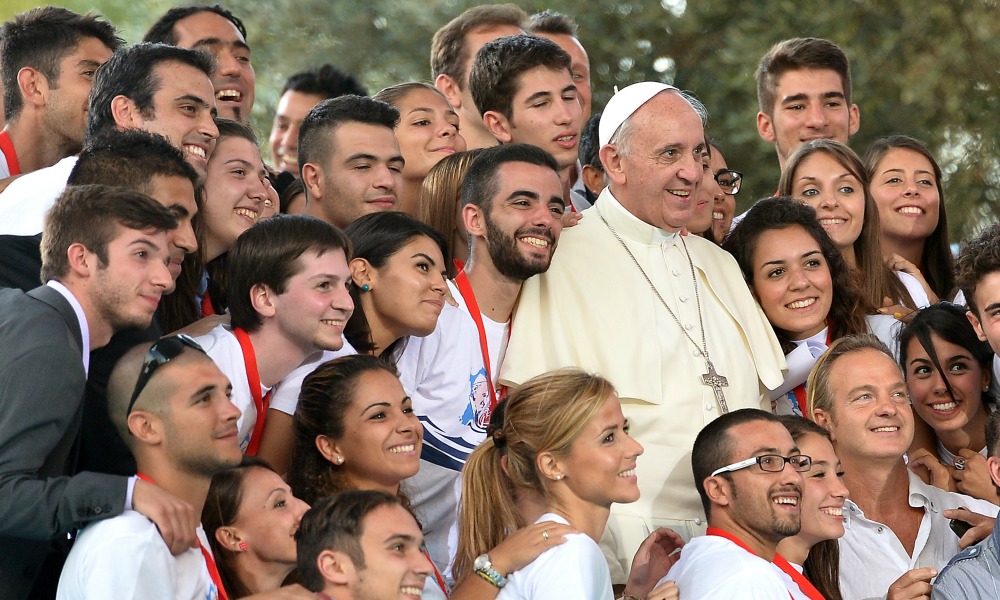
If you are between 16 and 29 years of age, you can contribute to the next pre-synod Meeting to be held in Rome from 19 – 24 March. How? Through the site www.synod2018.va. From the site you will be able to sign up on the Facebook group under one of the 6 languages. Within these groups the members will have the chance to express their own ideas on the themes proposed by questions – that will “launch” the discussion of the youths present in Rome – each of which will be matched with a hashtag. In the end, a final document will be drafted with these ideas, containing the view points and proposals that emerged, and will be presented to the Synod Fathers who will gather in Assembly in October 2018 on the theme “The youth, faith and vocational insights.”
15 Mar 2018 | Non categorizzato
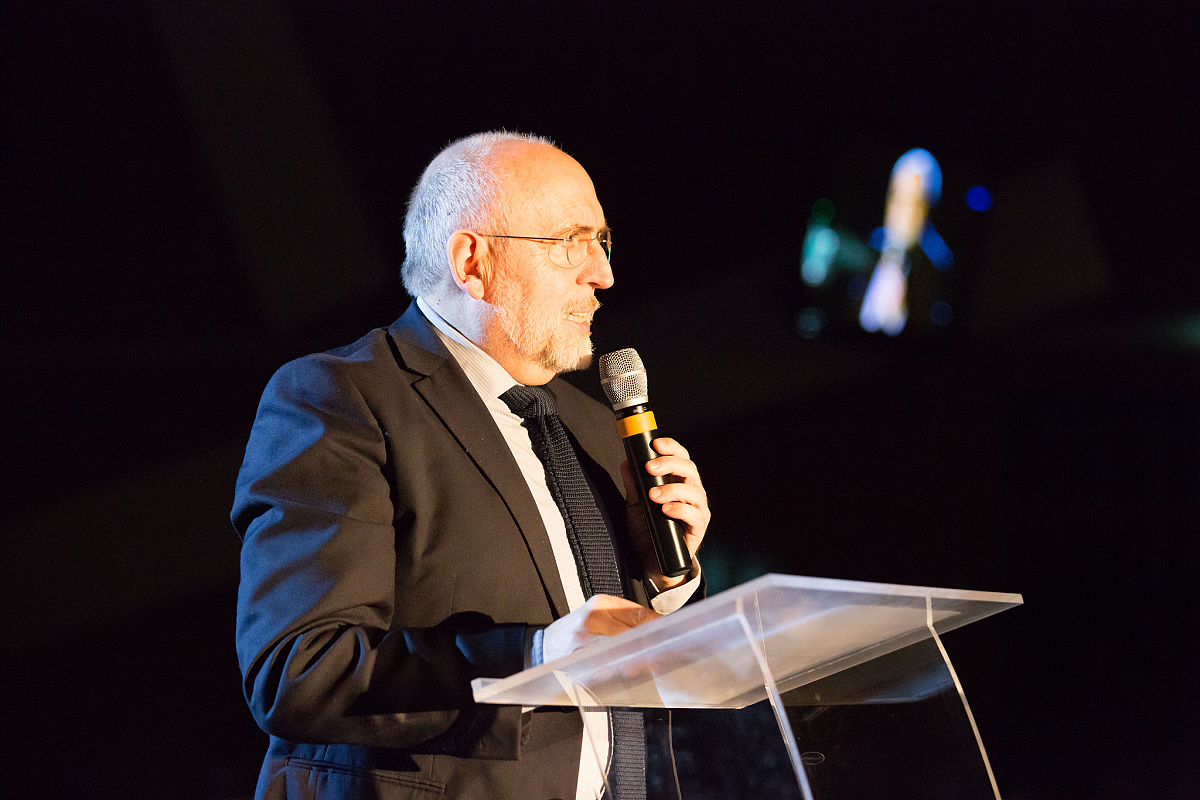 “… On your day, my God, I will come toward you… I will come toward you, my God (…) with my wildest dream: to bring you the world in my arms.” 1. The address given by Jesús Morán, co-president of the Focolare Movement, starts with this citation of the theologian Jacques Leclercq on the occasion of the event ‘The Great Attraction of Our Times’. We are once more astonished by the prophetic vision for society of this extraordinary woman whose ideal of “May they all be one” (Jn 17:21), started out from her own city of Trent and reached the whole world. Morán starts with a story of the protagonist of a fable, who lives with other personages thought of but then discarded by the authors of the stories, destined to live on another planet. He reflects on the role of the prophets: they are as big as they are small or they make themselves so in the eyes of human beings. Discarded by them, mocked, often killed, they are chosen by God to do that which nobody else can do. The prophets are in fact, the little people of God: this is where their greatness lies, even if sometimes they seem to be living “on another planet”. As we know, the word ‘prophet’ comes from the Greek and indicates not so much those who foresee the future but the mouthpiece, the messenger of God. In the Bible we also find prophetesses2. The prophets of Israel spoke to the people in the name of God; and everything could become an object of their words, because the word of God knows no limits. [….] In the midst of the historical context of her time – which evoke, in fact, not only the story of the prophets, but also biblical wisdom and the wisdom of ultimate goals – there manifests in her, a specific charism, that of unity, which led her to aim clearly and decisively towards universal brotherhood.”
 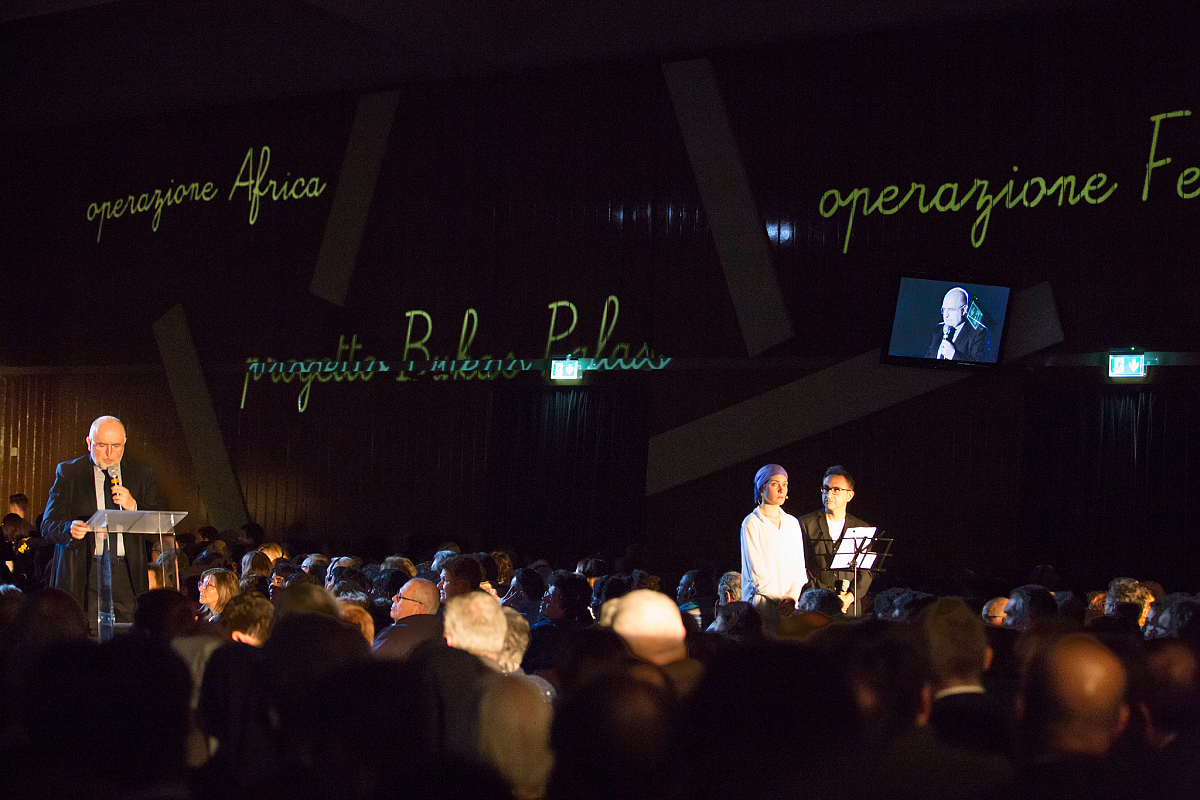 Morán underlines that in some of her notes of December 1946, “one can see the key pillars in Chiara Lubich’s prophetic vision for society. She, in fact, was not a social reformer, just as Jesus wasn’t. Chiara’s dream, in effect, aims much higher and more profoundly, and that is to the anthropological and theological foundation underlying every kind of social reform: universal family and unity as envisaged by the man-God, Jesus.” “This is why we could say,” Morán explains, “that the first social project that Chiara founded was in fact the first community of the Focolare that began in Trent immediately after the war. This community took the Acts of the Apostles literally (Acts 2, 42-48); they practised a radical communion of goods and did all they could to care for the poor and the thousands of suffering people the war had left in its wake. This underlying experience has never been lost. Indeed it is the inspiration behind all the activities and social projects that have been undertaken over the years by Chiara herself and all those who, in following her, have made their own the Ideal of unity. In all of this Chiara’s human and ecclesial genius is clear.” Even we, continues Morán, “have a story in front of us. Chiara is that author who has taken us out of anonymity to make us protagonists of a dream; we are all protagonists, nobody excluded.” Citing Guislain Lafont, the great Domenican theologian who, in a summary of the philosophy of Pope Francis, he speaks about the “principle of littleness” (salvation comes from below rather from above). Jesús Morán concludes: “Chiara knew how to magisterially apply this principle of littleness in the work of a real social change which she set in motion, with and from the paradigm of unity. This is her greatness.” 1 J. Leclercq, cited in W. MÜHS, Dio nostro Padre, 365 pensieri sulla paternità di Dio, Rome 1998, p. 64, published in: C. LUBICH, Il grido, Città Nuova, Rome, pp. 129-130. 2 Cf. 2 Re 22, 14; Lc 2, 36.
