9 Nov 2017 | Non categorizzato
On November 9, 28 years ago, the Government in East Germany declared the opening of the borders with the Federal Republic. To this announcement, tens of thousands of people in East Berlin descended on the streets armed with pick-axes, to demolish once and for all the wall dividing them from the West. The collapse of the wall was universally interpreted as the sign of a new era that had started. The East Berliners were greeted with huge jubilation by their brothers and sisters in the West, so much so that bars and cafes offered free beer for everyone! Less than a year later, on 3 October 1990, Germany was reunited definitively, thus becoming the Federal Republic of Germany. Today, the few features of what remained of the Berlin Wall have become the symbol of a historic era and a memorial to the 170 people who were killed in their desperate attempt to cross the border.
9 Nov 2017 | Non categorizzato
Georges “Yorgo” Lemopoulos
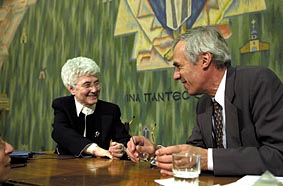
Geneva, October 2002: Chiara Lubich and Dr Konrad Raiser, who was then Secretary-General of WCC.
8 Nov 2017 | Non categorizzato
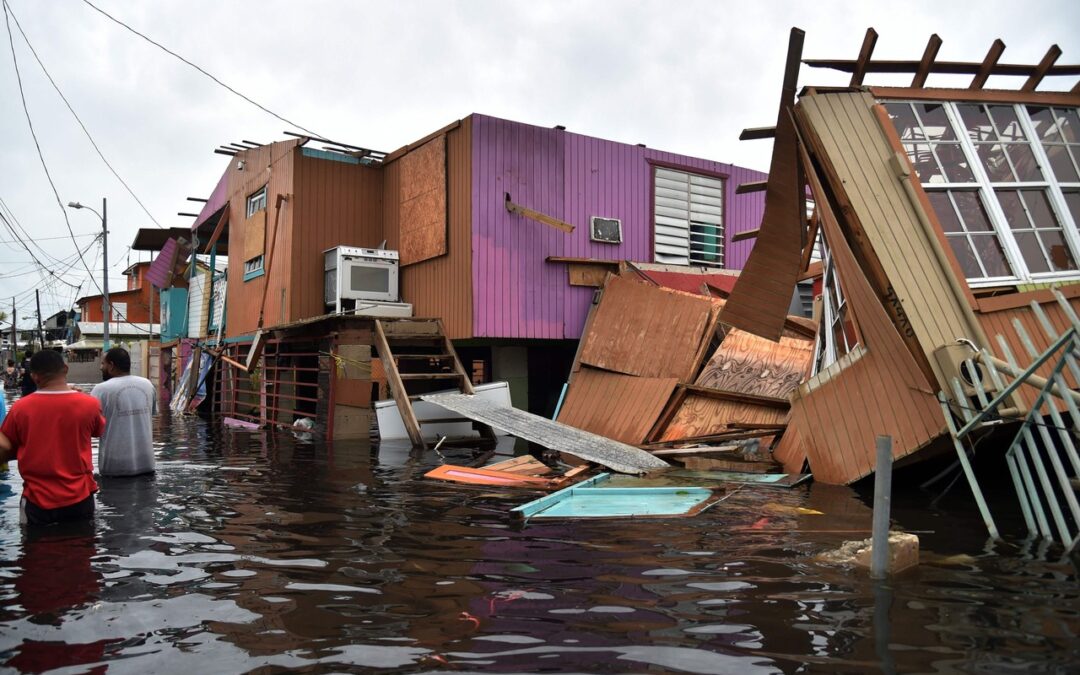
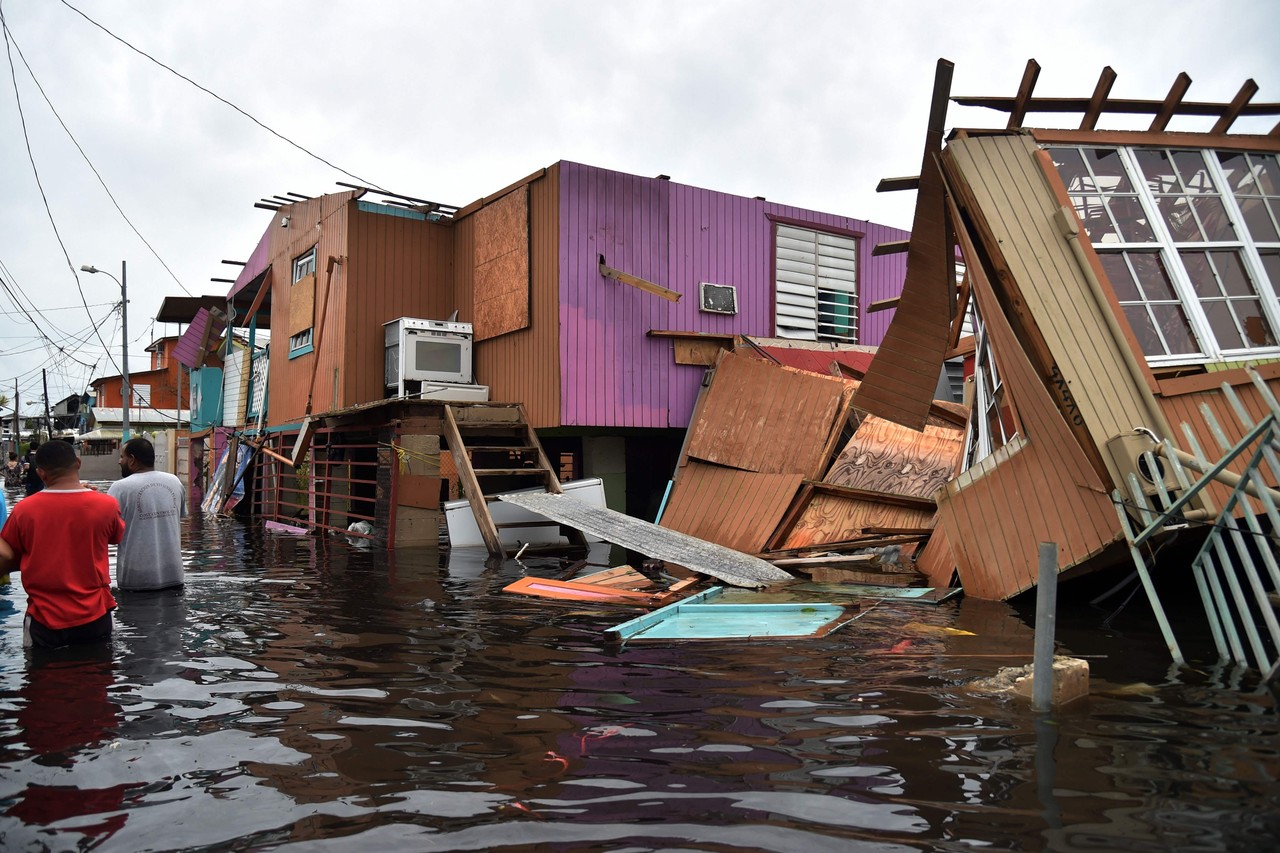 A month and a half has gone by since the passing of Hurricane Maria, which caused the death of ten people and the destruction of thousands of homes, with its 250 km winds and torrential rains. Puerto Rico hasn’t had such a wave of bad weather since 1928 when it was overwhelmed by a category 5 hurricane. From that day on, the island, with more than 3 million and a half inhabitants, suffers from a great problem with the water supply, food, medicine and electricity. The problems are not over, and it could provoke an exodus never witnessed before, further reducing the possibility of mid-term recovery. In the midst of these huge difficulties, the local Focolare community has also contributed its share, with collections of food and clothing to lift up the local population. “Some of us had some physical damages,” they write “especially in one family that lost everything, managing to salvage on a few small objects from the fury of the hurricane. At the moment they are in a small apartment that was placed at their service, but the entire community is conducting a communion of good to support them. The reconstruction of the area will be slow, but we have faith in God and have placed ourselves in His hands.” There have been many experiences with neighbours and people in difficulty. “Yesterday, for the second time, a well-dressed woman was walking down my street in a confused, aimless state. She was obviously lost. I followed her, without letting her out of my sight, until she was met by another person who had been looking for her. She explained to me that the woman suffered from Alzheimer’s and had come out of the institution she was staying in, because the back door had been opened by the hurricane, the electrical generator wasn’t working and it was just too hot. When I got back home I spoke with a friend who distributes benzene. He promised me that he would take some to them. Other people I contacted went to repair the door. Now the door is secure again.” “Yesterday I got in line early, at five o’clock in the morning, to buy some petrol. I saw a bus in the rear-view mirror of my car. It was a long wait, so I was able watch the scene. In the driver’s seat, a very angry man who continued to curse and swear. Next to him, a woman, perhaps his wife. An awful smell of tobacco smoke was pouring out of the driver’s window. The line was moving slowly in front of me – around twenty cars. As if that wasn’t enough, the news began to spread that the gas station would open only at eight and not six as I had thought. As I waited, the woman approached me and asked if I would help her to move the bus, because her husband had left and her feet didn’t reach the pedals. At first I refused, with the excuse that I wasn’t able to drive a bus. But the real reason was something else: I really didn’t like the way that man was acting. I realized I had to change my attitude and welcome her request as if Jesus himself had made it. When the driver returned, I explained that I was the one who moved his bus at the request of his wife. He began to let it all out, describing all his problems to me, for the next three hours. By the time we were finished filling up on gas, he was a completely different person, We shook hands. I had managed to overcome my prejudice.” “The street I live on was completely blocked with debris and uprooted trees. The majority of my neighbours are old and in frail physical health. I began wondering what would happen if there were need of an ambulance. I began to saw tree trunks and move them off the road. In the end, we had lunch together with whatever anyone had to share.” “We wanted to share water and food provisions with neighbours. Our own reserves dwindled, but the rapport among us intensified”
7 Nov 2017 | Non categorizzato
A friend falls ill Our friend Lia, who still has teenage children, was diagnosed with a malignant tumour. The whole community banded together around her with a prayer chain and gestures of solidarity. Once a week we got together at church for an hour of adoration and to ask the gift of healing for her. We tried to understand how to lighten those difficult days. We took on a number of tasks: someone made food, carefully choosing the appropriate ingredients for her; someone else put money in common to pay for medicine. These were small actions that helped her not to feel alone, but part of a community. When her health permitted, she would tell of her experience at community meetings. After a round of chemotherapy, any trace of the tumour had disappeared. For us it was an answer to our prayers and our commitment to love and serve her in a privileged way. (C.V., Brazil) Despite the wrongs done After my husband died I had to put up with tiresome humiliations from his relatives, who wanted me out of the room we had always lived in. One brother-in-law in particular, despite being the godfather of one of our four children, started making quite a few problems. Suddenly this brother-in-law got sick. Each time he fell ill, I ran to buy him medicine to ease the pain and brought it to him. My neighbours asked, “Why are you doing this, after everything you went through?” I responded that for me, to love means to put myself at the service of others. A few days later my brother-in-law died, and I stayed there and comforted his wife, helping her with all the things that her husband used to take care of. She later thanked me publicly. Now she lives with us and we are truly one family. (R.P., India) The mushroom expert As I was walking through the woods gathering mushrooms, I came upon a man lying on the ground. I went to him and helped him get back up. He was trembling. He pointed toward where he lived – a rusted out container among the trees. I tried to get him to lie down on some kind of bed. I later went back a number of times to see him, bringing him food and medicine. He was a great expert on mushrooms and made a living selling them. In the time we shared, he taught me where to find the best ones and how to dig them up. He started to tell me about his life, business failures and abandonment. One day I found him with a high fever, and I brought him in. He was in serious condition. He told me: “By now you know all about me, but the most important thing is that I always had faith in God. To have met you was a sign from him.” He then told me he had money hidden and gave me the task of getting it and giving it to someone who needed it. Now, each time I go gathering mushrooms, I think of him like a guiding angel. (R.S. Poland)
4 Nov 2017 | Non categorizzato
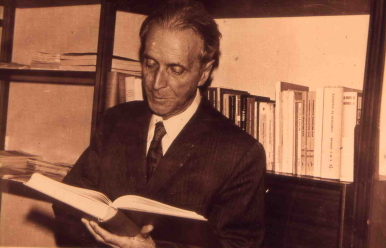
Just as war is ignorance, instinct and darkness, peace is science, civilization and light. Expecting – as we did – to have a better society from carnage, good from evil, black from white, is the same as expecting a better education for the heads it severs. Science, which was meant to devise exciting tools, will make the next war an exquisite case of refined, methodological stupidity. Fear is the great regulator of human relationships. Stimulated by fear, drained and exhausted lands keep disproportionately large and costly armies standing. There would be a solution: to substitute fear with mutual trust, indifference with friendship. But the solution would be too . . . easy; that is why it is so difficult. And it would bankrupt various oligarchies. I would have a good solution for the impulsive and powerful youngsters, deputies and public figures, improvised journalists and bank rats, for the tatsteless little misses to the spinsters on the committees, for speculators both high and low, for the generals and the professors, for the supporters of war – I would leave them in one of the trenches for ten minutes under a debilitating bombing, as all reason is lost and all nature rebells. When they come out of that, they’ll understand what war is – and they’ll curse it. This honoured society of ministers, deputies and journalists who presume to explain the significance of war to the rest of us, should understand once and for all that all their discourse turns our stomachs. We want peace and serenity, and we want the violence that they would unleash to be gone. Is that asking too much? Igino Giordani, from Rivolta Cattolica (Rome: Edizioni Gobettiane, 2016), 10-13.
4 Nov 2017 | Non categorizzato
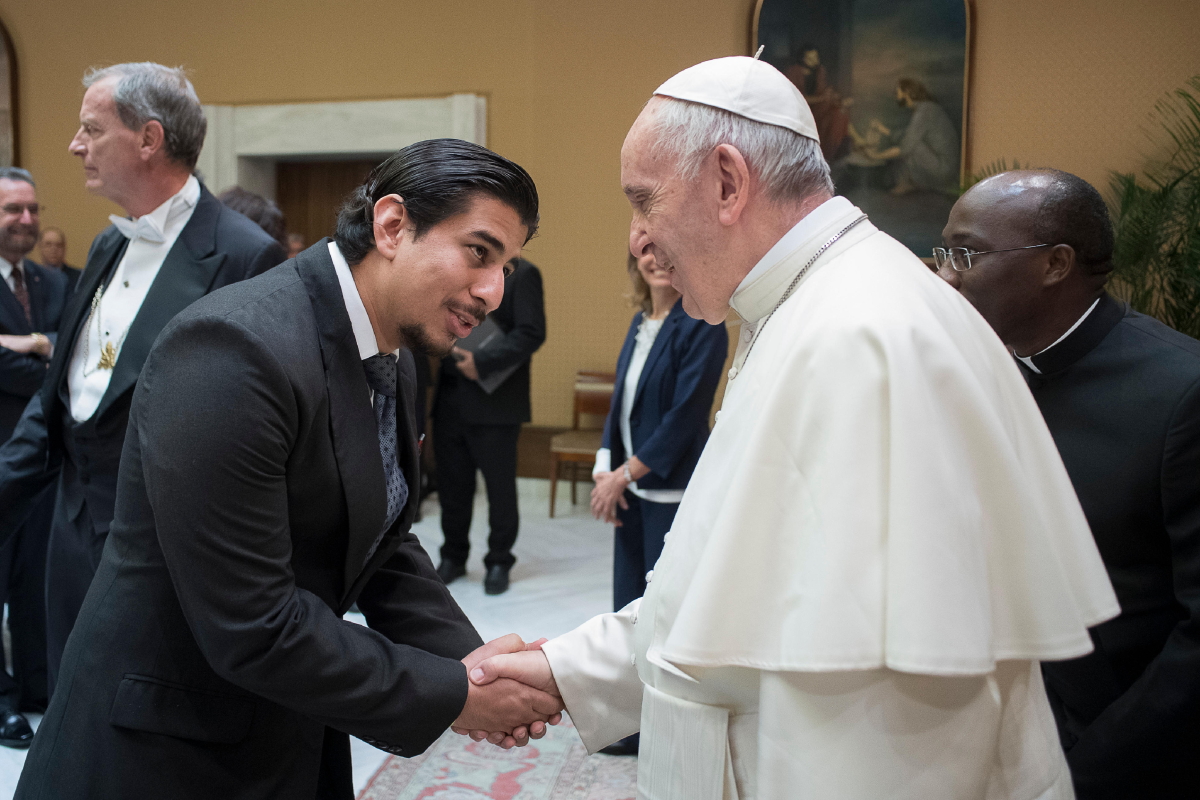
Nelson from El Salvador greets Pope Francis. Photo credit: © Osservatore Romano
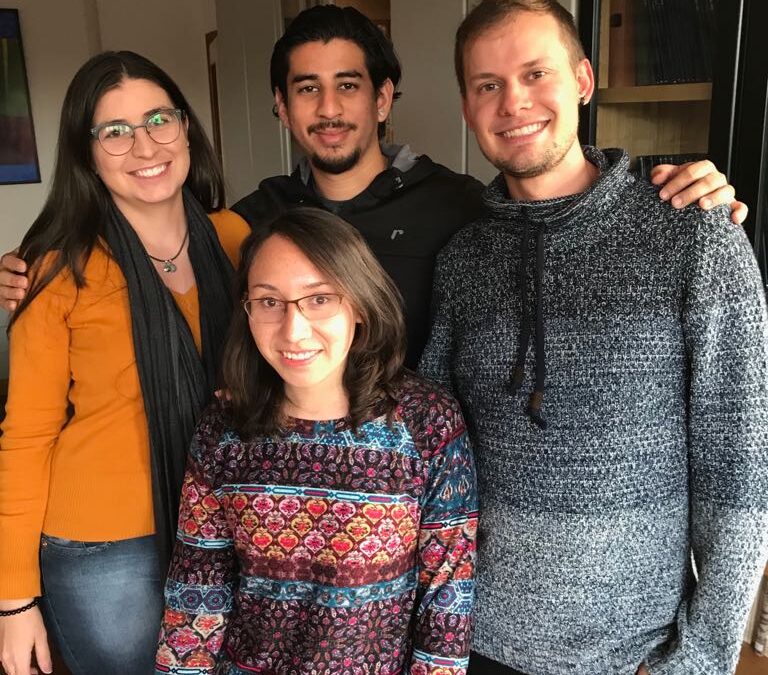
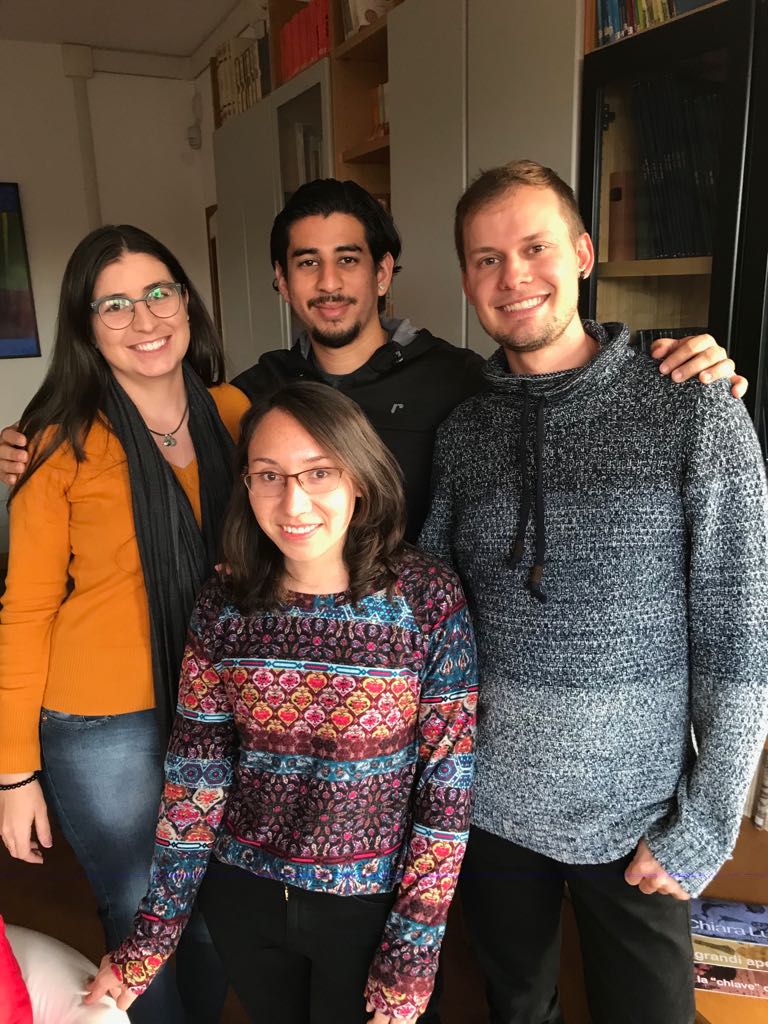 “We had the opportunity to build a rapport with many of the leaders attending. They were interested and asked us many questions. Two of them told us about projects that they hope to accomplish. “Raissa and I,” says Nelson, “were busy translating for a Brazilian cardinal into Portuguese. We rejoiced when they said they hoped that young people would also attend the next meetings, which was in sync with what the pope had said about the upcoming Youth Synod in October 2018. “For us it was really great to see that Religions for Peace is not really about the different faiths facing off, but a place to cooperate in favor of peace and saving the environment. To work for peace means to work for the planet: often wars are caused by inequality and poverty and produce ecological disasters. “In her address, Focolare President Maria Voce announced that Genfest 2018, ‘Beyond all borders,’ would take place in Manila. ‘Ten thousand young people will gather from all latitudes, ethnicities, cultures, religions – motivated by the idea of building a united world.’ “To see these important religious leaders together seemed like we were already participating as observers at a tiny Genfest where people work for peace and unity. “We went to carry out a service, but we didn’t expect to receive such a great gift: to greet the pope and receive, in the name of all the Gen and young people of the Focolare, such encouragement from him: ‘Adelante!’”
