19 Oct 2017 | Non categorizzato
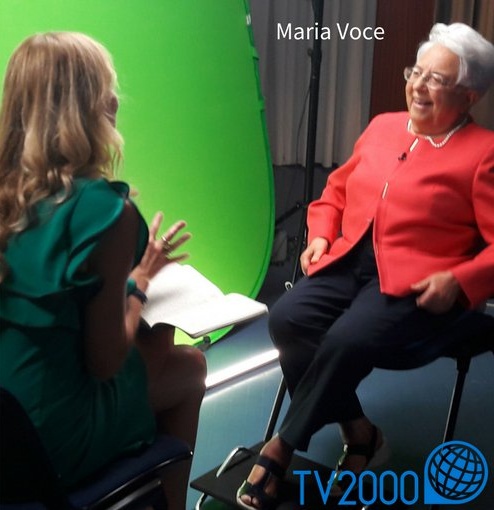
“Soul” is the name of a television program that seeks “to go deep into the soul” of key figures of our times who have a great depth of human and cultural experience. On Sunday, September 24th, Monica Mondo, the show’s presenter, conducted an interview with Maria Voce. A group of girls in Trent . . . a disastrous context of war. “An inspiration had made Chiara Lubich understand the need for an eternal ideal that doesn’t pass away. This ideal is God.” These were the first words by the Focolare president, Maria Voce, during an interview that ranged from the origins of the Focolare Movement to its current challenges. It is the only Movement in the ecclesial world that, according to its Statutes, must be led by a woman. “The recognition of women is much simpler than we think. It means recognizing their specific characteristics without which people cannot express themselves. God created humankind in his image and likeness, and he created it distinctly, man and woman, to create humanity in them. The woman’s role is very important. It’s her femininity, her capacity to give herself and be disposed to sacrifice.” Referring to her personal experience, Maria Voce explained, “I come from a traditional practising Catholic family. The problem started when I decided to give myself to God. My father was quite attached to me and had many plans for me. Being the first of seven children, it was also normal for me to think; I will get married and have many children. The Movement made it possible for me to live the Gospel in its entirety. It changed my life. I continued to practice law in my region, but I began to meet my clients seeing them as neighbours I could love. This was the transformation in my life. When I was in the focolare community in Turkey, my father wrote me for the first time on my birthday, ‘Best wishes! Dad’. A few days later, he died of a heart attack. I felt it was God’s love that had reconciled him to my choice in life.” What is a “hearth” (focolare), a house? “It’s a group of people who live together, all called by God to the same vocation, each being ready to give their life for the others, moment by moment – in order to be Work of Mary. The greatest work Mary did was to give Jesus to the world. The men and women focolarini want to relive Mary by having the living presence of Jesus among them through mutual love.” Virginity is a word that is not in vogue nowadays. “Virginity is the answer to a calling. Out of love, Jesus calls someone to an infinite love; and infinite does not have parts, the infinite is everything. If God calls with this love, the answer can only be an all-encompassing love. To live marriage, too, you need to be virgins at heart.” Chiara Lubich gave you another name. A strange name, the name of a place? “Yes. Emmaus. It expresses the desire and the effort to enable Jesus to be present even after his death and Resurrection, and to walk with Him.” Succeeding a founder is not easy. It is difficult to reconcile faithfulness and contemporising of a charism. “The inspiration lies in the charism. The charism is eternal; people pass away. Chiara Lubich lived this charism to the full in her times, and she has handed it on to us. We are united to the source, but now the question we ask is; ‘What would Chiara say today?’ This is what guides my actions. It’s not repetition; there are many things now that weren’t there in Chiara’s day.” Is this still the age of Movements? “The Movements have characteristics that foster Christian life. They still have much to say and give, not only for young people but for the health of families.” Catholics involved in politics and Europe. What is your view? “If Europe forgets its Christian roots, it will disappear. Therefore, it is important for Catholics to work in politics, to revalue their Christian roots, recognizing the equal dignity of other people, because we are all sons and daughters of God. You can dialogue with everybody, whatever their creed, because you dialogue with people. Loving our enemies is still part of the Gospel!” Is there still the capacity to come up with places, experiences, and new ways? “We don’t need to create new things, but to renew the world with the charism we have. I think of the people from the Movement, from all walks of life, who decide to give up their vacations to travel to the Amazon, to share the Gospel life with people there; or who move to another place in order to build a school for poor children.” How do you distinguish between witness, evangelization and dialogue, without imposing ideas or being combative? “We should proclaim Christ first and foremost with our life. If our life witnesses to Christ, eventually other people will become interested in knowing what is at the root of it. The unity [we speak of] is the one the Gospel talks about, it is unity in God, with which each one identifies, because all are children of God and brothers and sisters to one another. If there is not this foundation, then you cannot talk about unity, but mutual understanding. Unity comes from God and is in God. You can experience it with people who aren’t of the same faith or do not have the same way of seeing things, but who are willing to join together for a greater ideal, that of being brothers and sisters.” Do Catholics hide themselves too much? “They need to be more incisive. Perhaps one of the fruits of the Movement is to reawaken the Christian DNA we bring with us from Baptism.” You still have a lawyer’s attitude! If you had to defend a cause right now, what cause would you devote yourself to with the greatest passion? Maria Voce did not hesitate to say, “Universal brotherhood.” Read the full interview https://youtu.be/WzIuz75PTMM

18 Oct 2017 | Non categorizzato
We wish to express our joy and relief to hear about Fr Maurizio Pallù‘s release last night, shortly before midnight,in Nigeria, The Italian priest, who belongs to the Neocatechumenal Way, was abducted on 12 October on his way to Benin City. He has been working in the African nation for three years following a long experience as a missionary in different parts of the world. The confirmation of his release was announced by the Italian Foreign Minister.
17 Oct 2017 | Non categorizzato
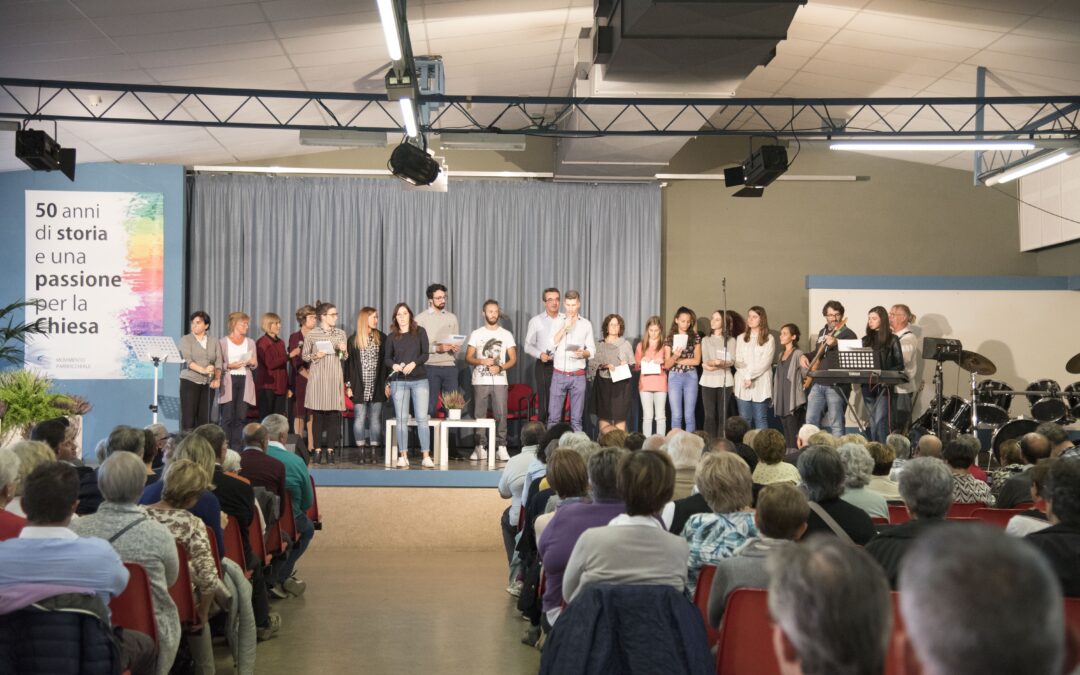
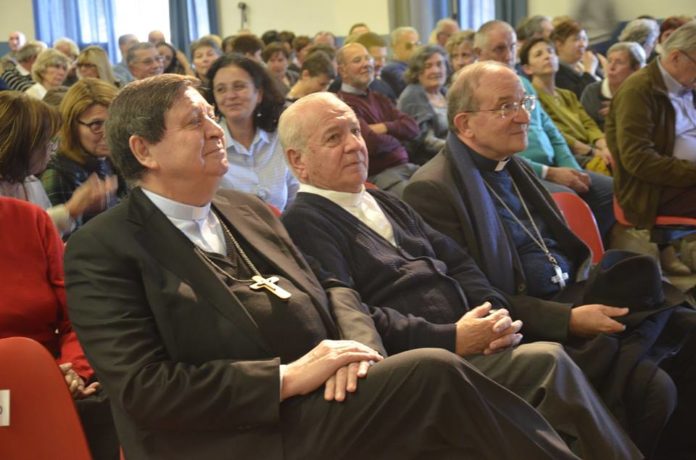 The picturesque setting with mountains all around was a welcoming scene that embraced all the people that went up the Val di Lanzo for the celebration of the 50th anniversary of the founding of the Parish Movement. The event was titled 50 Years of Passion for the Church and was held at the Maria Orsola Centre, which was filled to the brim with people from the area. Among them was Cardinal card. João Bráz de Aviz, Prefect of the Congregation for Institutes of Consecrated Life and Apostolic Life; along with Giuseppe Petrocchi, Archbishop of Aquila. In her message, Focolare president, Maria Voce, mentioned how fifty years before, in Vallo, one of the first communities gathered with Archbishop Vincenzo Chiarle to live the Focolare’s spirituality of communion and give “witness to an authentic lifestyle of the Gospel in the context of a parish, renewing spirits and structures.” They were a model of a “living church,” according to the definition of Archbishop Petrocchi, small in size, but great in spirit and in service. An example of holiness emerged from the community, the sixteen year-old Maria Orsola, now on her way to official recognition as a model of holiness.
 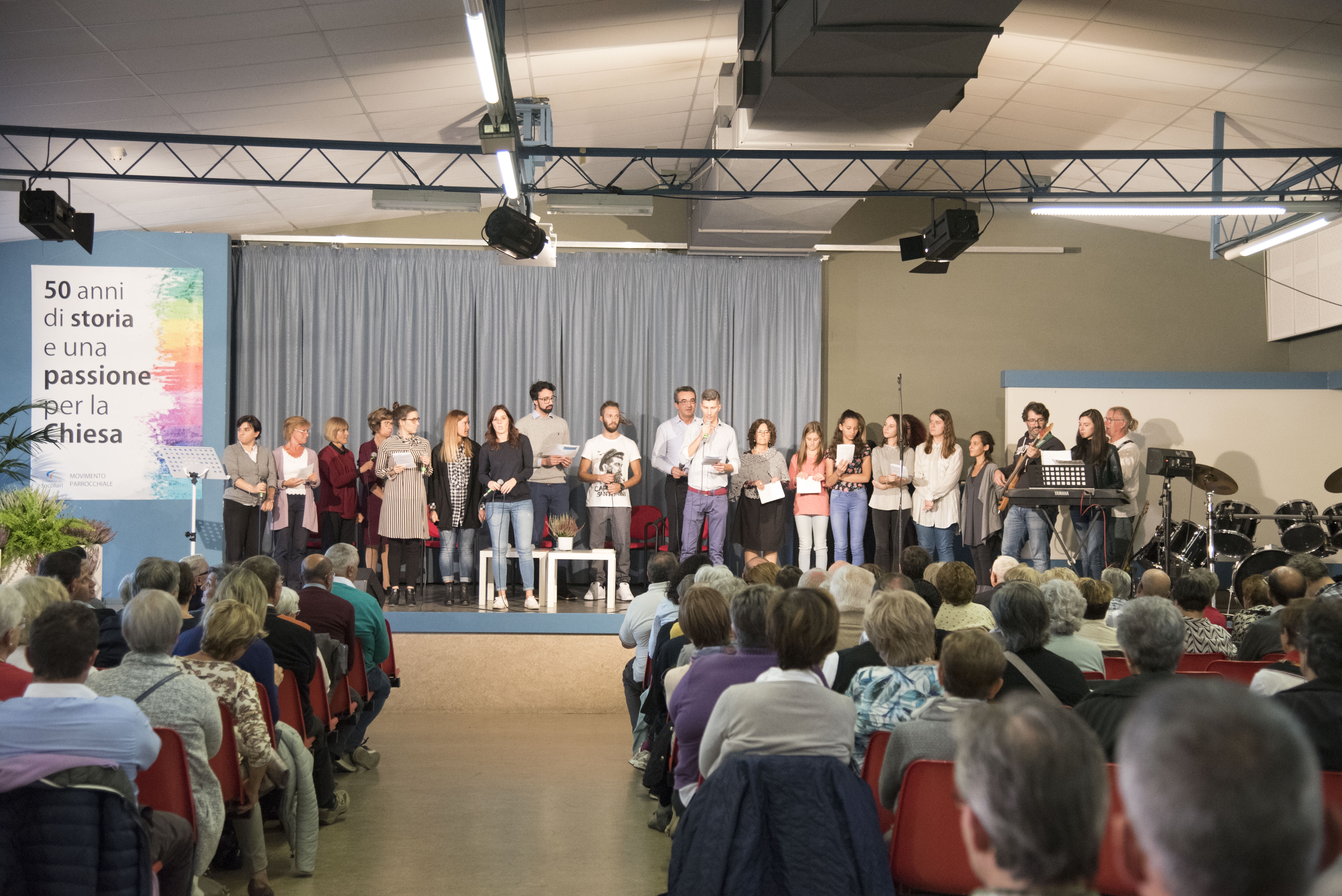 From the intuition of Chiara Lubich going back to the late 1940s regarding the influence that the spirituality of unity would have on parish communities, to the historic meeting with Paul VI in 1967, which marks the official beginnings, the history of the Parish Movement was described by the first witnesses. The commitment continues. Vallo continues to be a popular destination for groups of young people and communities because of the spirituality of communion that is lived there. Today Vallo welcomes many communities from all the regions of Italy and the world. Bruno and Luisa, one married couple from Genoa, Italy, share their testimony of active involvement in strict unity with their pastor. The experience of Luca was very touching. Thanks to the support of the young people from his parish, he was able to transform the unexpected side effects of a road accident, into a rediscovery of prayer and the precious value of life. As Archbishop of Turin, Cesare Nosiglia commented in his open address, celebrating 50 years of life means to go back to the roots and keep moving on towards the new challenges. Carla Cotignoli

16 Oct 2017 | Non categorizzato
Established by FAO (Food and Agriculture Organization) of the United Nations, World Food Day is celebrated annually on 16 October to raise public awareness regarding poverty, hunger and malnutrition in the world, as well as issues regarding food safety and methods to improve agricultural productivity. This year the theme is focused on: “Change the future of migration. Invest in food security and rural development.”. During an official visit to the FAO headquarters in Rome, Pope Francis reminded everyone this morning that “all human beings have the right to, without having to part from their loved ones.” “Faced with such a goal,” he said, “the credibility of the entire international system is at stake. (…) It is therefore urgent to find new paths, to transform the possibilities available to us into a guarantee that permits each person to look to the future with well-founded trust and not only with desire.” Significantly, In the entrance hall, the sculpture donated by the Holy Father to the FAO was unveiled, depicting the small Syrian who drowned at the beach in Bodrum,Turkey. A warning not to forget.
14 Oct 2017 | Non categorizzato
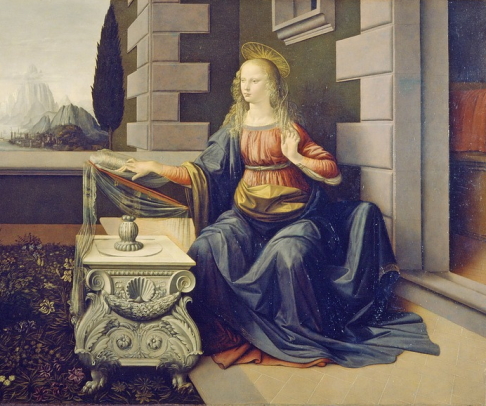
“Mary treasured all these things and pondered them in her heart” (Lk 2:19). This statement is from Luke’s Gospel where the evangelist includes it in the wonderful description of the shepherds at the grotto of Bethlehem where Jesus was born. An angel had informed the shepherds of the amazing event: “Fear not! I bring you tidings of great joy that will be for the whole people, for unto you is born this day in the city of David, a Saviour” (Lk 2:10-11). As soon as they reach the place, “they told all that had been said to them concerning the boy; and all who heard it were amazed at what the shepherds said. But Mary treasured all these things and pondered them in her heart” (Lk 2:19). Luke gently contrasts the outward amazement of the others who are at the grotto – shepherds, perhaps townspeople – to the dense loving and faith-filled silence of Mary. The words of those simple pilgrims to the first Marian shrine on earth, enter her soul, taking their place alongside the other revelations that she had received, and they make her understand more and more the mystery that is unfolding before her very eyes, a mystery she shares in as Mother of God. One can only Mary’s instant willingness to respond to God’s word and loving guardianship of the sacred gifts she received, but never disclosed to anyone for many years. Perhaps it was only to Luke that Our Lady personally told about this attitude of her soul during the days around the Saviour’s birth. Only she could have known it. We are so in need of the comforting sweetness of God’s gifts today. In the stressful, frenzied rhythm of these times, we run the risk of materialising everything even the life of the spirit. Silence, humility, reserve, meekness, patience in trial, can seem like obsolete virtues that are no longer viable, no longer able to allow the presence of Christianity to be felt in this century. We believe more in loudspeakers than in an edifying sentence from the Gospel. One believes more in the speeches of orators than in the prayerful silence of souls consecrated to God. First of all, the aggressiveness of the wicked and the power of their possibilities attempts to to leverage the aggressiveness of the good with their capital and power. It’s materialism that seeks to demean the values of the spirit, turning them into external expressions that will no longer carry any weight amidst the deafening deafening noise all around them. Only what is the fruit of the spirit has value in front of a world flattened by materialism; only what is part of our deep and personal love for God. For this reason humankind must once more fix its gaze on Mary.” Pasquale Foresi, “Parole di vita”, (Rome: Ed. Città Nuova, 1963) 15-17.
