8 Oct 2017 | Non categorizzato
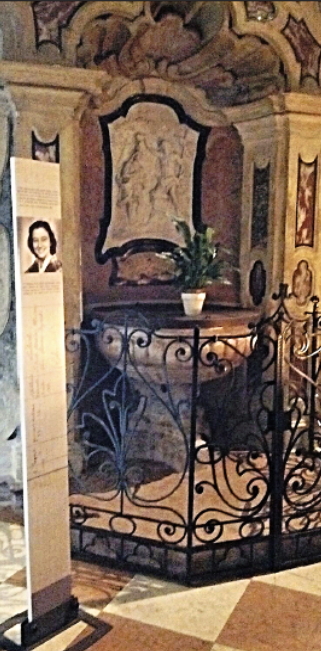
For some time, the church of Santa Maria Maggiore in Trent, Italy, has been wanting to install a commemorative plaque to show visitors from around the world that Chiara Lubich was baptized there. The request from the parish priest was received favourably by Focolare’s president, Maria Voce, and so a commemorative plaque (stele) was created near the baptismal font. It is a simple, meaningful sign that, along with a photo of the young Chiara Lubich, there is also one of her inspirational sayings that sums up the charism she received: “One thing is clear in our hearts: God wants unity from us. We live to be one with God, with each other and with everyone. This splendid calling connects us to heaven and immerses us in a universal brotherhood.”
7 Oct 2017 | Non categorizzato
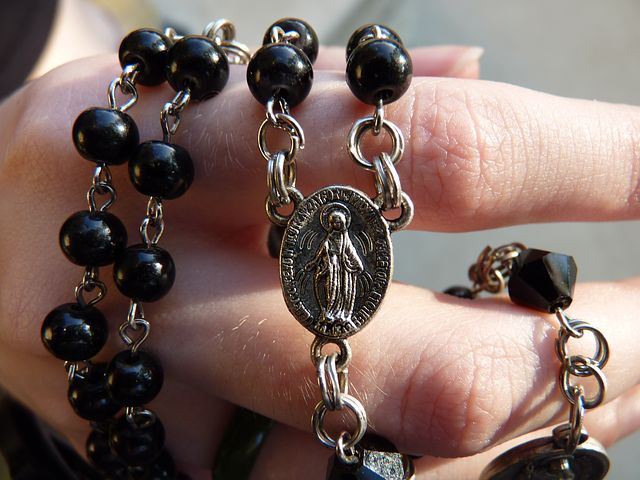
“The rosary is the drama of the Redemption seen through the eyes of Mary, virgin and Mother: the joys of Nazareth, the light of Bethlehem, the actions of Joseph, then the tragedy of the cross, and finally the heavenly glory. These are made family patrimony, they belong to us. They are our story, our life.” (Igino Giordani, Una stella accesa nella notte, (A star shining in the night) Città nuova, Roma, 2004, p. 81). 1922-1925. “If it is not possible in the pure stillness of vespers in our grandparents’ house, with a great blaze in the hearth, to gather in prayer with forefathers, grandchildren, children, and relatives: let us pray the Rosary in trams, in steamships, in the rumble of a tunnel and in the agitation of a locomotive: our effort to escape in an impetus of spirituality from the rampage of mechanized matter will be more commendable. A quarter of an hour in church will not be a sleepy habit and our prayer will be a fountain of respite in the gruelling heat of the civilization forced upon us.” (Igino Giordani, Diario di fuoco, (Diary of Fire) Città Nuova, Roma, 2005 [1980] p.19). 1933. “The Mother…There is an especially appreciative prayer to her, which represents a series of the mysteries of the life of Jesus cited with titles in her honour: the Rosary. It leads to serenity in the tired and sombre evening hours, in the arduous hours of life, and gives strength to hope in tomorrow and begin again: that coarse chain of cheap pearls transmits currents of celestial life into the poor bones exhausted by effort, lighting once again the only light in souls bombarded by social injustices or multiple misfortunes. It also gives to whoever lives, the hope of reaching the Father, of death with immortality, of the finite with Eternity.” (Igino Giordani, Diario di fuoco, cit. p.28) 1 October 1945. “Why does Mary mean so much to us? Because for us, those who truly follow the Gospel feel and act as children, for whom their mother is everything, and fills their every need. She is sought after because she leads them to God. They take her hand, they hold onto her skirts, because she leads them to the Father. There is no more reassuring, more loving or more beautiful way to present oneself to Him. Furthermore, in our Mother’s company, everything in life is more beautiful: Nature laughs, men themselves no longer seem savage.” (Igino Giordani, Diario di fuoco, cit. p.68) 9 October 1965. “I have only to see an image of Mary, so that the most beautiful things in my life come to mind. I then see that the joy of existence is called Mary for me; my glory is She, my strength is Her motherhood; the beauty that fascinates me is Her virginity; the acceptance of sorrow is the participation in Her trials as the Desolate. I see no positive aspect of my existence in which She does not enter: my life is Mary. And Mary is the Mother of Jesus: it is She who gives me God, weds the soul with the Holy Spirit, bringing it closer to the paternity of the Eternal. Who will thank you, Mama?” (Igino Giordani, Diario di fuoco, cit. p.180).
6 Oct 2017 | Non categorizzato
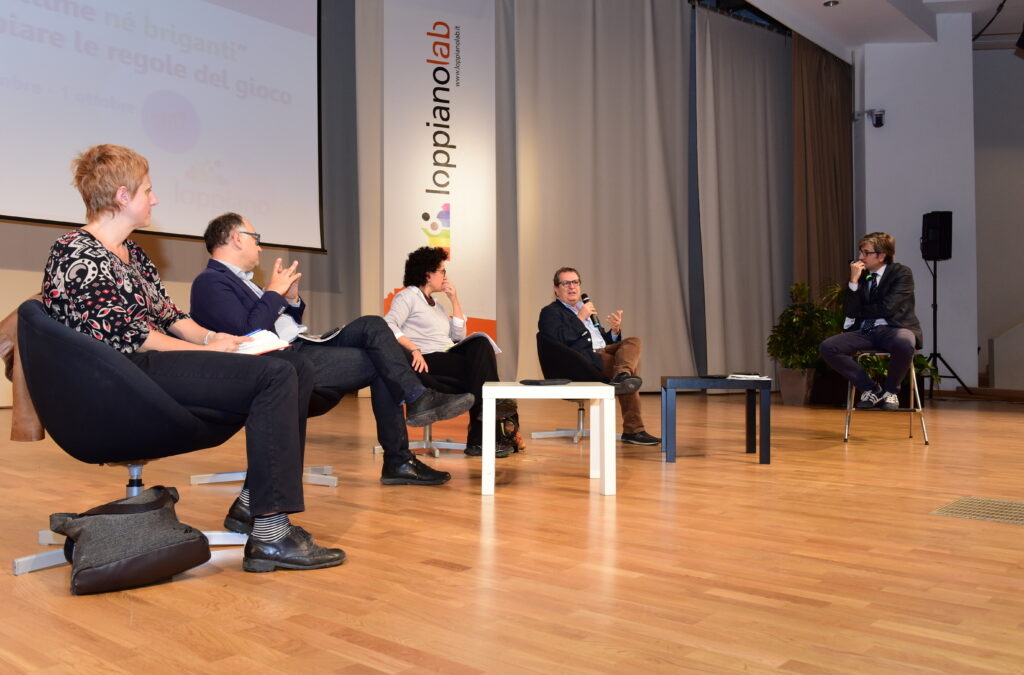
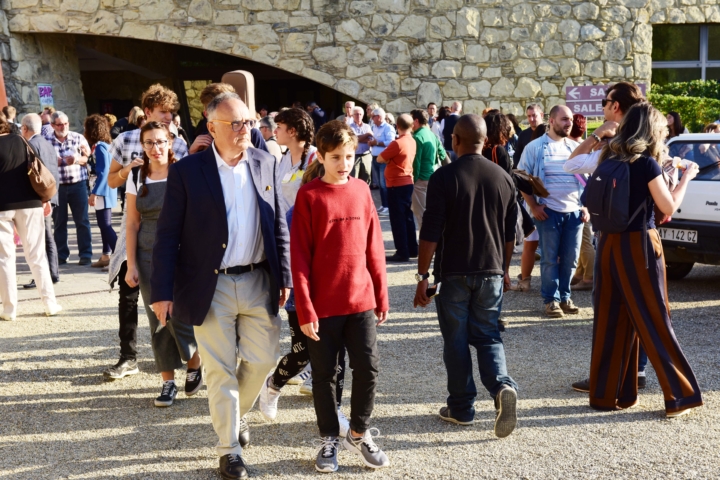 The choice of the title Neither victims nor bandits had been inspired by the words of Pope Francis during the audience last February before the representatives of the Economy of Communion (EoC), when he affirmed that it is no longer enough to imitate the Gospel’s good Samaritan who saved a man from bandits, but that there is need to act “especially before the man bumps into the bandits, to thus fight the structures of sin that produce bandits and victims.” We need, therefore, to do some soul searching and run the risks in order to change the rules of the game imposed by capitalism and globalization. World experts of culture, the media, economy and politics took turns in the various moments of the programme, along with the many representatives of civil society.
 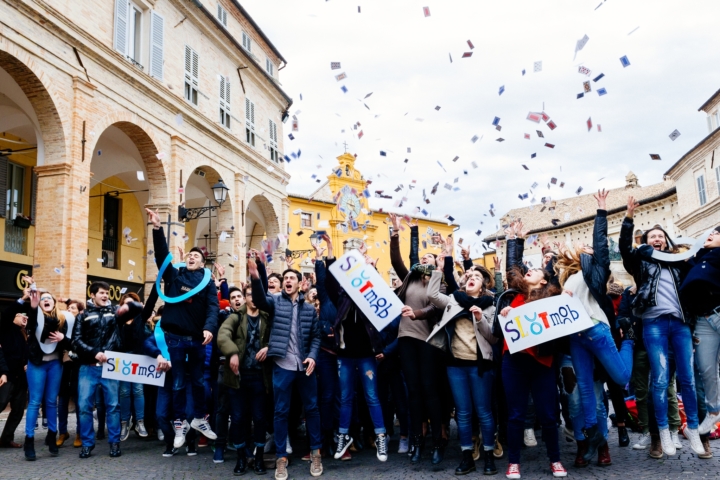 Pressing issues were discussed such as migration and reception, the reconversion of war industries and at the same time the paradox of arms exported by Italy for the war in Yemen where 15 million people have been suffering from the worst cholera epidemic over the last years and have no access to water. Another burning issue discussed was slot machine gambling, and the Slotmob movement created four years ago to stop this social wound promoted by the State itself. There were various stories: from the reports of harassment and injustice, to the efforts of those who have to fight daily against the wall of indifference and meanness, those who have decided not to allow gambling machines in their bars, and those who have promoted with friends a real march against the culture of gambling in their countries.
 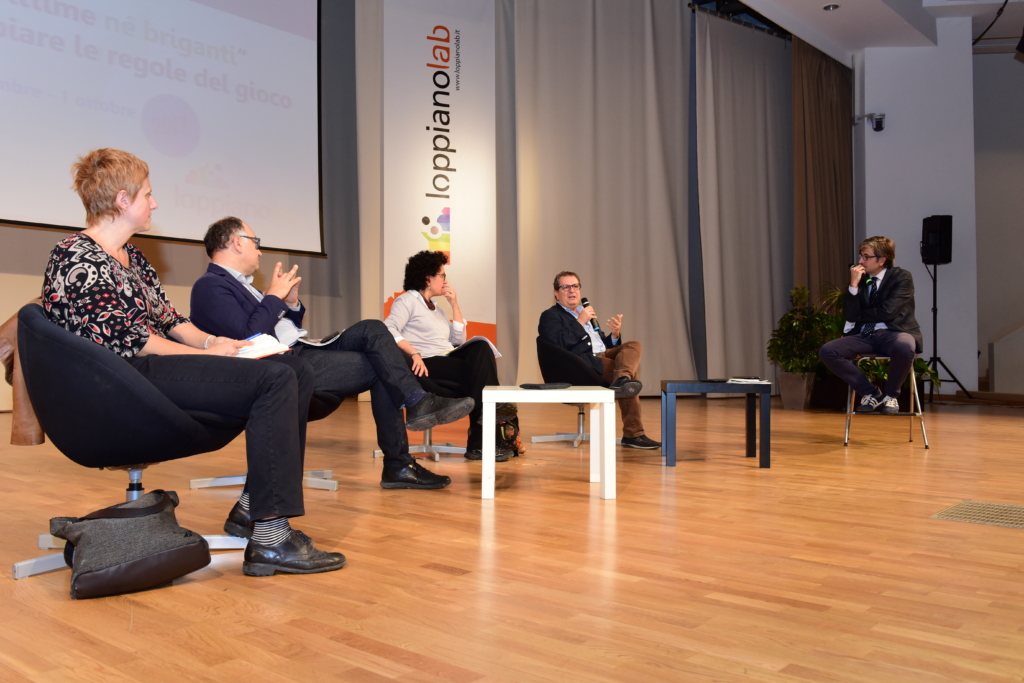 Vincenzo Conticello, a former businessman and justice witness in Palermo, spoke about the reality of a company that was reduced to bankruptcy by the racket and mafia, and how he was forced to leave his city after undergoing injustice and abuse of power. Chiara Peri of the Astalli Center for refugees, underlined that currently there is a widespread cultural commercialisation of the migrations due to which “the migrants and the poor, treated like merchandise and at times like rejects,” are to be blamed for their poverty and condition.. So here lies the paradox, “the Italians fear the victims more than the bandits.” The round table on Relational assets and work, one of the items of the event highlighted the importance of friendship, trust, company, cordiality, support, sense of belonging, and involvement – all factors that determine satisfaction in the workplace, said Prof. Benedetto Gui. What counts is not only the salary or work schedule, but to recognise the economic dignity of relational assets. Jesús Morán, Co-President of the Focolare, was at the presentation of Bernhard Callebaut’s book The birth of the Focolare. History and Sociology of a charism (1943-1965), for New City. He analysed all the work under the viewpoint of implementation as the “creative reinterpretation of tradition.” Shahrzad Houshmand, an Iranian and a Muslim theologian, also attended the book launching and gave a testimonial of how in all these years, Chiara Lubich and the Focolare Movement did not establish dialogue with religions, but with people. Chiara for Shahrzad was “a woman with the visionary faith of a person who feared nothing,” and was never afraid of meeting “the other” even if this could lead to “death of oneself.” Lastly, in the face of the continuous and obstinate aggressions to peace, the EoC economist, Luigino Bruni, and Marco Tarquinio, director of the newspaper Avvenire asked Pope Francis to write an encyclical on peace that is able to “shake off inertia.” This is what we are all hoping for!
5 Oct 2017 | Non categorizzato
The Commonwealth of Puerto Rico with its more that 3 milion people was devastated last week by a double-edged sword when it was hit by hurricanes, Irma and Maria in what has been consdidered the worst natural distaster in 90 years. Governor Ricardo Rossello announced that the death toll has risen to 34. The Carribean island is currently in a state of chaos and suffering from further emergency because of the scarcity of food, electrictricity – also in hospitals – and potable water. Two regions have not yet been reached by emergency responders, and many mountain villages on the mountains have been left to themselves. The small local Focolare community has been involved in helping. The situation remains critical.
5 Oct 2017 | Non categorizzato
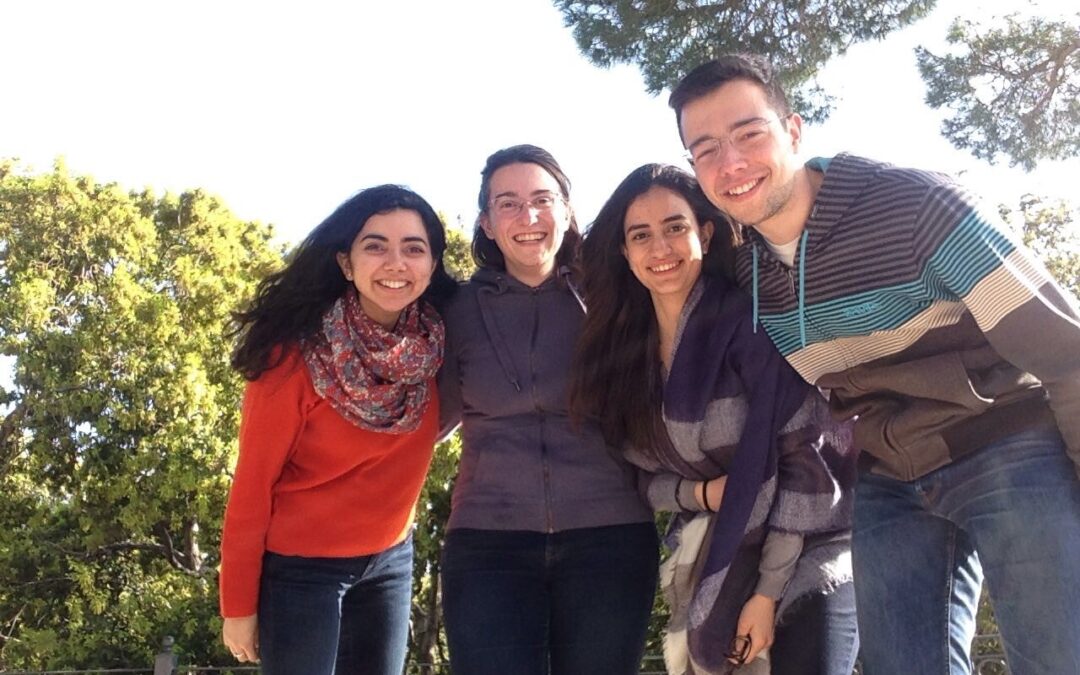
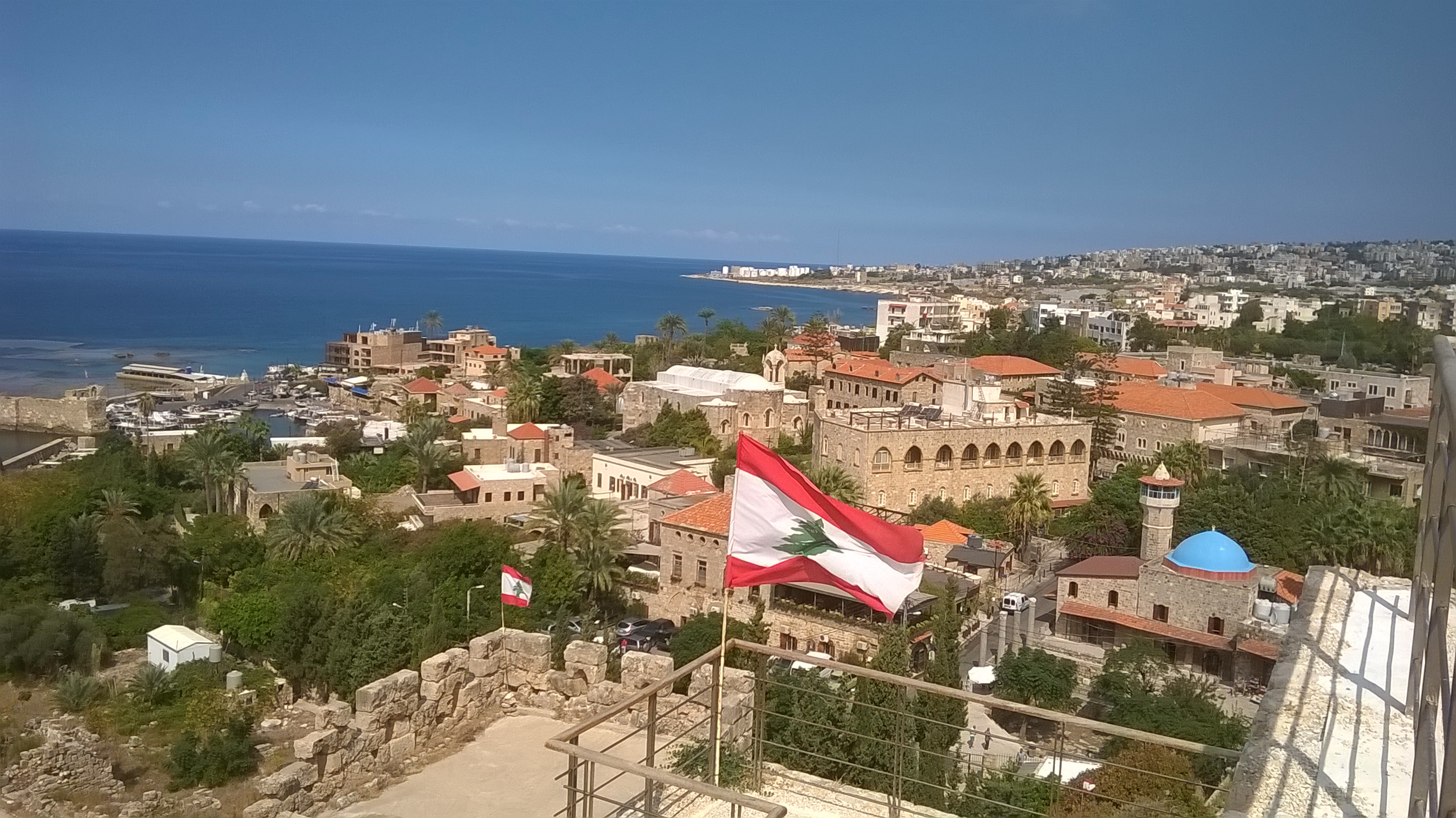 After graduating in languages and international relations, I took off for Lebanon to continue my studies of the Arab language and, at long last, to immerge myself in Middle East culture that fascinated. It might seem odd to tell the story of an experience beginning from the end, from when I had to leave the Middle East, but that was when I grasped the importance experience. As I prepared to return to Italy, my thoughts went back to when it all began, and I asked myself if my long-awaited stay in the Middle East could already be over. I remembered myself as the girl who was taking her first steps into the choas of Beirut, who felt like everbody was staring at her because she was a foreigner. In a matter of a very little time, however, people began to stop me on the road and ask me in Arabic for directions, mistaking me for Lebanese. Perhaps it was more my prejudiced view towards them, rather than the opposite! In the beginning, the indifference towards the new environment was involuntary, which prevented me from getting out of myself and loving the people walking by. I hadn’t yet understood that the environment around me was just different, not dangerous.
 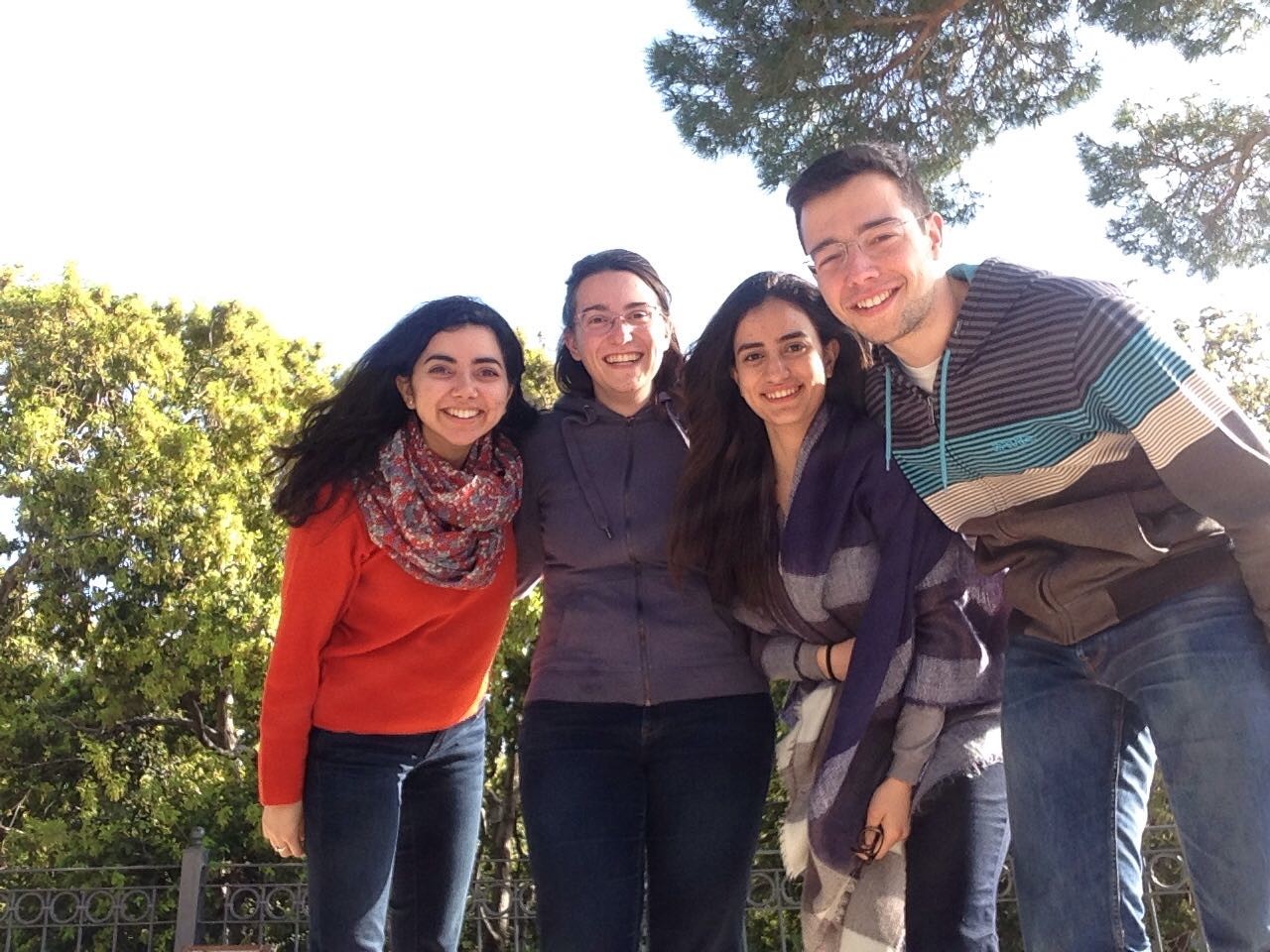 I realized how much my vision of Lebanon changed over the course of the year. At first I had mostly perceived the differences with respect to Italy. Then, I quickly fell in love with the land, its richness, the variety of religions, cultures, scenic landscapes and history. I had fallen in love with the people who, in spite of their recent painful past, was able to live again, Christians and Muslims shoulder to shoulder. I had fallen in love with a people that was spontaneous, welcoming – and had a fantastic cuisine! Then I had to recuperate a bit of objectivity in looking at a land that like every other had its own contradictions, such as the great poverty and ostentatious wealth that live not far apart. In my mind I went back over the year in Lebanon during which many aspects of life that once seemed dangerous or odd, unfortunfortunate or disappointing compared to Italy, have become part of my daily life (not at all infelicitious – on the contrary!). When I said good-bye to the Sryian refugee children whom I had helped with homework, they only said “ciao,” showing how we’re all important and none of us is indispensible. Realizing that I’d probably never know what had come of them was rather painful. I had to say goodbye to the friends that I had made, to whom I owe so much and hoping with all my heart that I would see them again, but never really knowing if I would. It was quite an effort to embrace the thought that distances was coming between us once again, not only geographically, but mostly bureaucratically. To leave each other, knowing that borders, visas and distance were about to fall on us was, at times, exasperating and even unbearable. But now I know that this is the price you pay for being a global citizen as we Gen say. Now, after having left pieces of my heart around the world, a united world is no longer merely something that would be nice if it were really true: a world without borders has become a need.
4 Oct 2017 | Non categorizzato
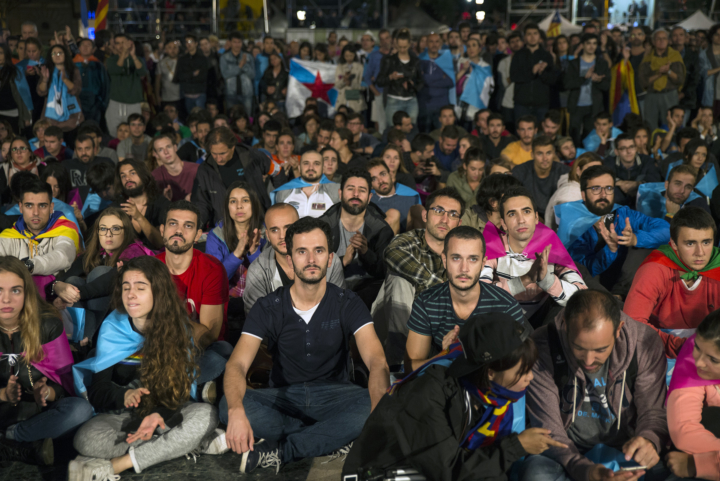
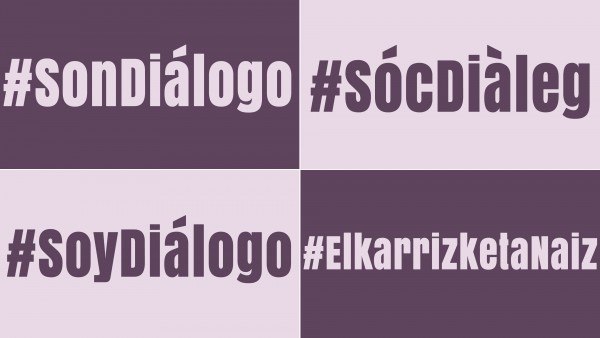 SoyDiálogo (I’m dialogue) is meant as a personal challenge in the face of the situation that has come about in Spain, the proposal to reject every form of violence and to live for the concrete promotion of a culture of dialogue. The challenge is both need and courageous. There have been many efforts in this direction. On the 26th of September, the Focoalre Movement in Spain had proposed a document and gathering of signatures with the intent of promoting opportunities for dialogue, listening and respect. It is an appeal to find peaceful solutions for harmonious coexistence in diversity, recognizing the human dignity of all people and institutions that represent them. The proposal, marked with the hastag #SoyDiálogo, which is in full agreement with the recently relaunched invitation of the bishops to “advance the path of dialogue and mutual understanding,” seems even more timely now, following the results of the referendum vote that opens great unknowns on the future of Catalonia, from Spain and from Europe. The promoters of the effort write: “Dialogue is a powerful tool that makes interest in others possible, entering into their reality, to live it, embrace and, inasmuch as possible, comprehend it. Among us, Focolare members all over Spain, there are people with different cultural and political identities. We’re directly involved in building bridges, convinced that there is an element of truth in the vision and choices of the other. But we condsider diversity to be a positive challenge and enrichment.” “Comments from signers on Twitter: “A signature never decides, but it’s better than crossing your arms and watching the river go by.” “We are as we discuss, enriched by the gift of diversity.” “I believe in dialogue, which presupposes respect, transparency and acceptance that there is a bit of truth in the other tha I can totally embrace.” “It’s not a bad thing to think differently. It’s the way you evolve. It’s the opposite of uniformity and immobility.” Some considerations from those who believe in dialogue. Girona: “These are strange times, a mix of sadness, helplessness and worry. At the same time it’s clear to me what I should do. In any event I wonder what I can do, with my limited possibilities. I make an effort not to judge. Opportunities for listening with an open mind are never lacking.” A young woman from Seville writes: “With a Catalan friend we try to keep the dialogue open. I take an interest in her family. When you get to know the other person’s background, you can change a bit of your idea and love that person more, even though we have differing ideas.” From Barcelona: “These events offer many possibilities for keeping the dialogue going with those who think like me, and also with those who don’t think like me.” “Up until now I limited myself to praying and cancelling the chain of photos, jokes or doubtful news that circulate online and don’t favour positive feelings,” writes a woman from Toledo. “Then I wondered to myself: what more can I do? I tried to make it known to the people I know in Catalonia that they can count on me to build dialogue. Perhaps that was obvious, but I felt like I had to come out and say it.” Girona writes: “In my opinion when we’re not able to see the bit of truth that is there in the other, we already demonize them. This gives us free rein to write or share whatever incendiary comment that enters our mind. We’re immersed in all this, at times without realizing it, and that’s what’s worse. We forget that our challenge is more heroic and difficult than just making propaganda out of our ideas and disparaging those of others. The real challenge is to build bridges.” From Seville: “I have a lot of friends in Catalonia, brothers and sisters who have decided with me to work at building a new humanity. We share each other’s worries and pain. For this reason, when we write to each other, they’ve felt free to tell me: we hope that the next time, when we see each other again we’ll be independent. And they in turn have listened to me when I answered: I wish for us all that the next time we see one another reason and good thinking will have won.”
