20 Sep 2017 | Non categorizzato
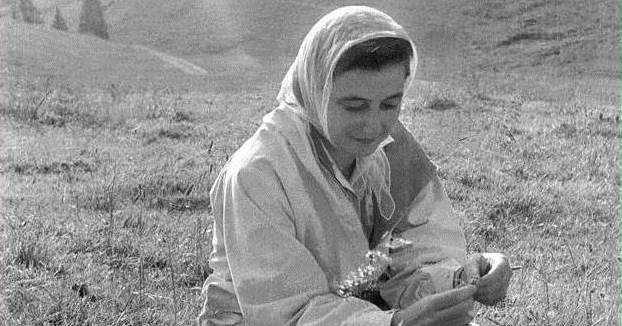
During a meeting in 2000, Chiara recalled her first “discovery” of Jesus Forsaken: “We understood something new about Him through an event that happened in January 1944. Through a particular circumstance, we came to realize that the greatest pain Jesus had suffered – and therefore the moment of His greatest love for us – was when He experienced the abandonment of the Father: ‘My God, my God, why have you forsaken me?’ (Mt 18:20). It touched us deeply. Being so young, so enthusiastic, but especially because of the grace of God, we felt urged to choose Him precisely in His abandonment, as the way to achieve our ideal of love. From that moment on we saw His face everywhere.” Another key moment in the understanding of this “mystery of suffering-love” was in the summer of 1949. Igino Giordani went to visit Chiara Lubich who had gone for a period of rest in the Valle di Primiero in the mountains of Trent, Italy. This small group of first followers that accompanied her was living with intensity the Gospel passage about the abandonment of Jesus. And those days in the mountains turned out to be days of such intense light that when it came time for them to leave their “little Tabor” and return to the city, Chiara quickly penned a text that has now become famous “I have only one spouse on earth, Jesus Forsaken. . . I will go through the world searching for him in every moment of my life.” Many years later she would explain: “Right from the start we knew that there was another side to it all, that the tree had its roots. The Gospel covers you in love, but it demands everything from you as well. ‘If the grain of wheat, which falls to the ground, does not die,’ we read in John, ‘it remains alone; but if it dies, it produces much fruit’ (cf Jn 12:24). This is personified in Jesus Forsaken, and the fruit that he bore was humankind’s Redemption. Jesus Forsaken! Who had experienced within himself the separation of humankind from God and from each other, and had experienced the Father far from him, was seen by us not only in all of our personal sufferings, which were never lacking, or in the sufferings of our neighbors who often were all alone, abandoned and forgotten, but also in all the divisions, the traumas, the splits, the mutual indifference whether large or small: within families, among generations, between rich and poor, at times in the Church itself; later, among the different Churches; and then, among religions and between believers and those who have no religious faith at all.” “But all of these lacerations,” Chiara continued, “never frightened us. Rather, for love of Jesus Forsaken, they attracted us. And he is the one who taught us how to confront them, how to live them, how to overcome them when, after the abandonment, he placed his spirit in the Father’s hands: ‘Father, into your hands I commend my spirit’ (Lk 23:46). And this is how he offered humankind the possibility of being recomposed within itself and with God, and he us showed how. He was the one who recomposed unity among us each time it was cracked. He became our only Spouse. And our life together with such a Spouse was so rich and fruitful that it pushed me to write a book, as a love letter, a song, a joyful thanksgiving song to Him.”
18 Sep 2017 | Non categorizzato
See Program of the convention

18 Sep 2017 | Non categorizzato
The unexpected We were expecting our first child. Immediately after this news came an unexpected discovery: I had a small nodule in my breast. The tests showed that it was cancer. For me and for my husband, who is a physician, it was a terrible blow. Three days after the visit with a specialist, I had an operation. In his opinion, keeping the baby was an aggravating factor: we should have immediately proceeded with a therapeutic abortion in order to start chemotherapy. We didn’t want to give up. Trusting in God, we consulted other doctors, seeking an alternative solution. In the end we decided to have a Cesarean section in the seventh month of pregnancy, when the baby would be perfectly able to survive. Only afterwards would I start the chemotherapy and radiation. Since then, 8 years have passed and we are expecting our third child. M. D. – France The stranger One day I was in the car with a man who had asked me for a ride. It was noon, and I asked him where he was going to have lunch. He answered, “I haven’t got a penny, and I have no idea how I’m going to eat.” I was overcome with suspicions and indifference. But I pushed these thoughts away, saying to Jesus in my heart: “It doesn’t matter who he is, what I do for him, I do for you.” I fished in my pocket and gave him all I had, adding, so as not to humiliate him, “Pay me back whenever you can.” A few days later, I received an envelope from a client with the exact amount that I had given that stranger inside. For me, this situation was the confirmation that the Gospel is true. A. G. – Italy A family party We had an idea, with several other families that are friends of ours, to organize a party for the Senegalese in our city. We were all committed to making these young immigrants feel the warmth of the family. Afterwards, one of them commented: “Everything went beyond our expectations. No one made us feel different and because of this, we felt at home. We have the same God who makes us brothers and sisters.” The party had finished, but the friendship continues. G. L. – Italy We have a Father By chance, we met again after many years. I hadn’t seen her since my high school years. Although she had a degree in mathematics, after a very sad sequence of events she now found herself in my city without even a penny, living the life of a beggar. She was desperate, and I listened to her story. At that moment, I had nothing to give her, but I promised to help her: I told her she must be certain of this, because, “We have a Father in heaven.” We made plans to meet again the next day. In the meantime, with the help of some others, I found a temporary accommodation for her and gathered some money: at least enough to live on, to be able to eat and to bathe. After two days she contacted me again, and returning the money, she explained that she had been offered a job in a place that also provided room and board. She added, “I have to thank you, not only for the money, but because that day you gave me back what I needed most: the hope and the certainty that I have a Father who cares for me.” Franca – Italy
16 Sep 2017 | Non categorizzato
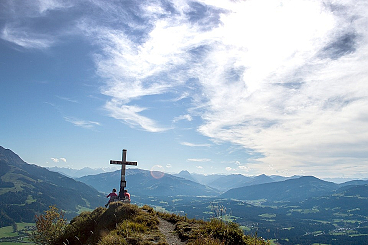
“In Jesus Forsaken, God’s infinite love is manifested, and is placed by the Father in the hearts of believers to bring about, right now, his plan for humanity: unity. To love Jesus Forsaken means to relive his Passion within ourselves, that continuous passage (for those of us still on our journey) from death to life, from the absence of God to his presence, which characterizes the Christian existence. This does not mean to give up or to want to suffer as Jesus did, but rather to retrace his steps along the Way he opened, and to recognize – beyond appearances – his active presence in everything that is not God in us and around us. It means saying ‘yes’ to Him and like Him, so that the Holy Spirit can break through the nothingness we have created for ourselves and increase the gift of divine agape (God’s love) which opens us up to the future, eternal life, and allows us to share in it. Jesus Forsaken, simultaneously, pushes us to go towards humanity, there where it suffers most and lives in darkness. This is how Jesus Forsaken, embraced and loved, brings love where there is hatred, life where there is death, communion and unity where there is division. Loving Jesus Forsaken therefore means hoping against every hope, nearness to God where God is not, the presence of God where there is God’s silence. And this hope is certainty in a world and in a human history which do not close in on themselves, but open themselves to the ever-new encounter with God. In Him, they open themselves to the ever-new encounter among humans, in a fraternal communion with truly universal dimensions. From Pasquale Foresi – LUCE CHE SI INCARNA – Città Nuova 2014 pp. 172-3

15 Sep 2017 | Non categorizzato
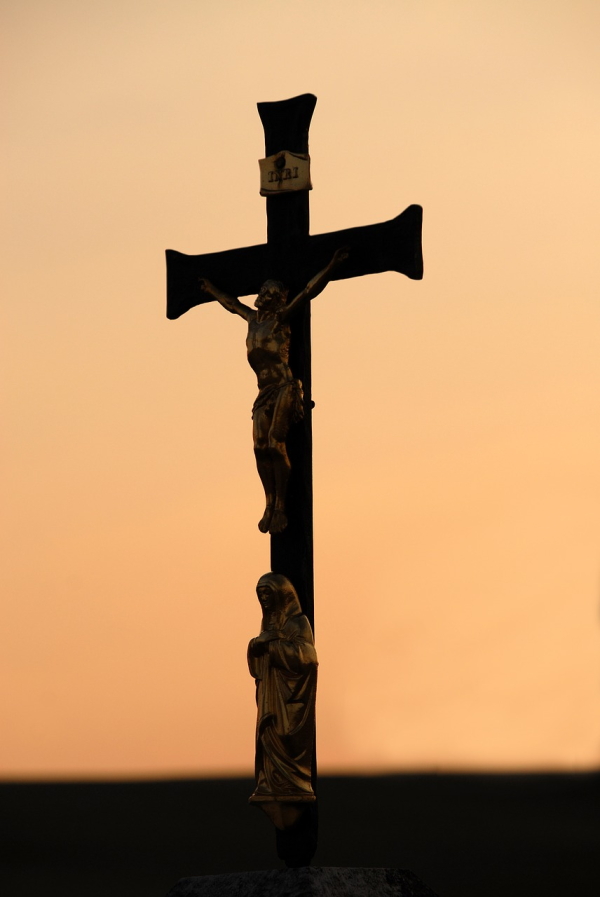 “Mary stood at the foot of the cross in her heart-rending stabat, which transformed her soul into a bitter sea of anguish. She is the highest expression in a human creature of the heroism of every virtue. She lived meekness to perfection; she was poor to the point of losing her Son who was God; she was the embodiment of justice, not lamenting the loss of what was hers only because God chose her; she was pure in her emotional detachment from her Son, God… In Mary Desolate, we see the triumph of the virtues of faith and hope, through the love she nourished throughout her whole life. In that moment, this love blazed forth in her active sharing in the work of the Redemption. In her desolation, which adorns her with every virtue, Mary teaches us humility and patience, prudence and perseverance, simplicity and silence, so that on the background of the ‘darkness’ of ourselves, of all that is merely human within us, the light of God living in us may shine out for the world. Mary, Our Lady of Sorrows, is the perfect saint, a monument of holiness towards whom all people may look in order to learn how to clothe themselves with the self-denial taught by the Church down the centuries, and which the saints, in different tones, have echoed throughout the ages. We do not think enough about Mary’s “passion,” about the swords that pierced her Heart, about the terrible forsakenness she felt on Golgotha when Jesus entrusted her to others… Perhaps the reason for this is that Mary knew all too well how to cover her living, anguished agony with sweetness, light and silence. Yet, there is no suffering similar to hers…. If one day our sufferings reach such depths that make everything in us rebel because the fruit of our “passion” seems to be taken out of our hands and even more so from our heart, let’s remember her. This ice coldness will make us a bit like her, and the reality of Mary will become clearer in our souls: the All-Beautiful, the Mother of all because by divine will she was detached from everyone, most of all, from her divine Son. Mary Desolate is the Saint par excellence. I would like to relive her in her mortification. I would like to be able to be alone with God like her, in the sense that, even when I am with others, I feel drawn to make the whole of my life an intimate dialogue between my soul and God. I must mortify words, thoughts, and actions that are outside the moment of God, to set them into the moment reserved for them. Mary Desolate is the certainty of holiness, a perennial source of union with God, a cup overflowing with joy.” Chiara Lubich, La Dottrina Spirituale, Città Nuova Editrice 2006 (Roma), pp.183 – 184
14 Sep 2017 | Non categorizzato
Info: segves@focolare.org – tel. +39/06 947 98150
