26 Mar 2017 | Non categorizzato
At the Angelus on March 19, Pope Francis affirmed his “closeness to the dear people of Peru, who have been struck hard by devastating floods. I pray for the victims and the rescue workers.” The Focolare community is praying and is on site bringing relief as well.
25 Mar 2017 | Non categorizzato
Message from Cardinal Francis X. Kriengsak Kovithavanij, Archbishop of Bangkok, for the funeral of Cardinal Miloslav Vlk – Prague, 25 March 2017.« I bring a message on behalf of the bishop friends of the Focolare – Catholic bishops and bishops of various Churches in many parts of the world. For us, Cardinal Miloslav was a friend, a brother and we could say even a father. “His life mirrored Jesus’ life in so many ways”, a Lutheran bishop wrote recently. At our bishops meetings he helped us experience the freshness of Gospel life and the joy of being a family of true brothers, united in Jesus. In the spirit of the Second Vatican Council, he worked tirelessly for Christian unity and for communion among bishops and with the Pope. Thank you, Miloslav. Through your heroic witness you showed what it means to have God in the first place and gave us the key to making the Church ever more beautiful, united and alive.»
24 Mar 2017 | Non categorizzato
Pope Francis writes to the Bishop of Westminster: “I commend the victims to the loving mercy of God and invoke divine strength and peace upon the grieving families.” Solidarity from all over the world with all those affected by this tragedy.
24 Mar 2017 | Non categorizzato
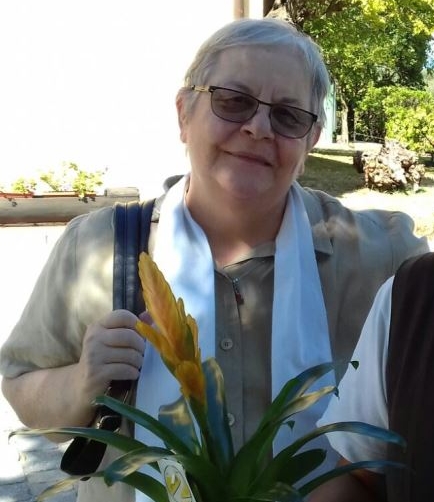
At the harshest and most dangerous frontiers, the Consecrated Women are there. Danger doesn’t stop them from even risking their lives, trusting only in the Spouse of their soul. The annual retreat of Women Religious from several congregations who find strength in the spirituality of communion that reinforces their consecration to God and gives meaning to their service to the least. Each of them has her own fascinating story to tell which flows from the charism of the religious family she belongs to, says sister Viera from the Franciscan Sisters of the Poor: “At 9 years old, I helped my Dad to build a house, and at 14 I was already working in a winery where ambiguity and vulgarity was the order of the day, which I soon picked up and it became part of my life. Thirsty for justice, I joined an extremist party, but at the age of 22 and tired with it all, I found myself on the third-floor balcony ready to end it all. The only thing that kept me from jumping was the thought of my mother who would have gone into despair. In the days that followed, at the bus stop I met a sister I had never seen before who, sensing my general discomfort, invited me to a meeting of young people from the Focolare. I went because I wanted to get over the idea of suicide that continued to torment me. Listening to their experiences of living the Gospel, I thought they were all crazy, that they were just wasting their time. But that evening I felt a happiness I had never experienced before. God was taking me by the hand and showing me who He really is: Love. At work – not without a bit of difficulty – I began to put the commandment of mutual love into practice, to use softer tones and to show attention to the older workers, to smile more. Through the meetings with the Focolare youth and with Cristina – the sister who had first spoken to me – I felt drawn to a more serious walk with God. After a course of formation, I left home and work to enter the Franciscan Sisters of the Poor, a congregation that serves the poorest of the poor, including girls living on the streets who are heading for prostitution, jails, and so on. I’ve been working for 23 years in jail ministry, in contact with detainees, regardless of their beliefs and cultures, at the Rebibbia Jail in Rome, [Italy]. Recently I’ve also begun work in Pistoia, [Italy]. I only go to listen to them, without expecting anything. I put myself at their service to make telephone calls to their relatives, to lawyers … I bring them everything they need to write letters. I work with the teachers, checking with them especially when there are problems. Every time I step into one of those environments I think of Jesus’s words to the Pharisees who wanted to stone the woman caught in adultery: ‘Let the one who is without sin cast the first stone.’ Living the mercy of God firsthand, I try to possess a deep sense of acceptance towards each one of them, just as they are, with total trust. The only one to judge is God, a God who loves everyone. Often the trust becomes mutual and then they feel urged to talk about their lives, their dramas, their difficulties living together, the suffering of being deprived of even the most basic needs. This attitude of making ourselves one, which Chiara Lubich taught to us, is the golden key that allows me to build a peaceful and respectful dialogue with everyone. In Pistoia there are around 200 detainees between young people and adults, with more so-called Minors who have committed serious crimes. At first it was hard for me to face them because, in Rebibbia I only met with women. But then I saw that ‘there is neither woman nor man’ as Saint Paul says – and that everyone is a candidate for unity. I go to visit them three or four times a week. We chat in the chapel right in front of Eucharistic Jesus, and generally all of them tell me that they want our little chats to continue and that they look forward to my return. They tell me about their anguish, their fears – feelings that I try to alleviate by reminding them that each one of us is the very focal point of God’s love. Some of them tell me about their return to God, as a detainee from Rebibbia recently wrote to me: ‘I’d like to make up for all the time I threw away. I hope that life gives me a second chance to save myself and my family, to show that I matter too, that I can also do something good. Dearest Sr Viera, I hope that you will allow me to continue to have your friendship. I thank God that he made me meet you.’
21 Mar 2017 | Non categorizzato
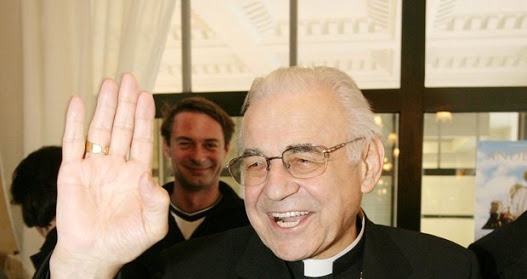
“A precious gift,” a “strong witness of the Charism of unity,” and “a Word really lived,” was how Maria Voce, President of the Focolare Movement spoke of Cardinal Miloslav Vlk, who passed away on Saturday, 16 March in Prague. In a communication to all the members of the Movement, Maria Voce highlighted the “edifying” way in which Vlk lived the last period of his life, marked by a great weakening but at the same time by “a continuous attitude of gratitude to God for the gifts he had received from Him.” She underlined the “very deep bond” the Cardinal had with the Focolare Movement “since the start of his clandestine ministry in the time when Czechoslovakia was under the communist regime.” She expressed immense gratitude for his commitment and devotion with which for 18 years, he carried out his role as moderator of the group of Bishops who declare themselves “friends of the Movement,” activities he followed with great interest and participation even from the hospital. Maria Voce denoted that Cardinal Miloslav was “surrounded by prayers of the Diocesan community, members of the Movement, friends of other Christian denominations, and both Jews and Muslims with whom he had undertaken years of dialogue.” She also cited the “many testimonials of his example of humility, communion and evangelical wisdom, which underlined the way he made himself simply a “brother” to all, and also his authority as a “father” who was able to give enthusiasm and motivate those around him.” “We have a great heritage before us,” Maria Voce concluded, and it is “A heritage to treasure and discover more deeply.”
