
19 Jan 2017 | Non categorizzato
Download brochure with program Live streaming event 11 Mach 2017 16:00-18:30 (CET, UTC+1): http://live.focolare.org/FamilyHighlights/
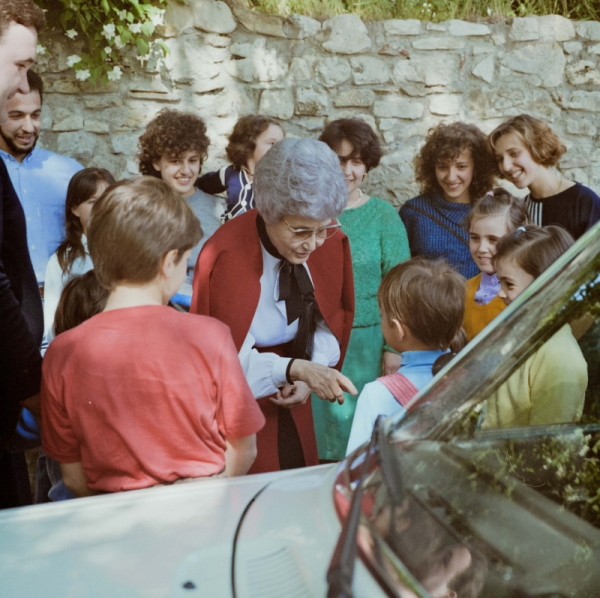 A series of events are to be held around the world in 2017 that will highlight the value of the family from the perspective of “universal brotherhood” and will bear witness to the richness of cultural diversity, through the ideal of unity incarnated in family life. The main event will be held in Loppiano from 10-12 March 2017, where about 800 participants from all over the world are expected. The families will be able to delve into the life of the international town of the Focolare and testify to the dream of Chiara Lubich which has reached all the continents. In the morning, there will be workshops for adults, young teenagers and children, in collaboration with the Parish Movement, the Gen3 and Gen4 centres, the New Families Association (AFNonlus) and the New Humanity Movement (AMU). In the afternoon there will be larger gatherings in the hall, with direct streaming. Presentations will be given by experts in family life, who are involved in the Cultural Seminar to be held at Sophia University Institute on March 10-11. The seminar will mark the opening of the Centre of Family Studies whose objective is to examine the contribution of the spirituality of unity to the family in today’s world. Three topics will be examined: Family, a story of relationships that evolve from ‘me’ to ‘us’ (relationships between the couple, with the children, among generations) Love as the appropriate measure for responding to critical problems in the family (wounds, challenges, sufferings: the reality of life and the sharing process). The family as a creative resource within the social fabric of any nation (life, family networks, solidarity and hospitality, social involvement and work) New logo. Fifty years after its founding, the New Families Movement changes its image with a new logo. It represents a tree, a sign of the growth of the tiny plant that over the years has produced many fruits of life that have been offered to families, to the Church and to the world. The plant is strong, which grew from the first seed that was welcomed by the good soil. Opening itself to others, the family has contributed to the birth and development of many seeds of brotherhood and peace that are sprouting a new society. Chiara Lubich (1920-2008) always paid particular attention to the family and, with the precious contribution of Igino Giordani, writer, Italian politician and first married focolarino, she lifted up his “bold, beautiful and demanding example” as a shining model for the construction of a peace in our world. In 1967 Chiara founded the New Families Movement that it might always keep love enkindled in the home, along with those family values that are so needed by today’s world. She saw the family has the best channel for reaching young people who will one day enter into married life; for broken families, widows and widowers, abandoned children – and every other form of marginalization. For more information: www.famiglienuove.org famiglienuove@focolare.org tel. 069411565
19 Jan 2017 | Non categorizzato
https://vimeo.com/171535556 Copyright 2016 © CSC Audiovisivi – All rights reserved
18 Jan 2017 | Non categorizzato
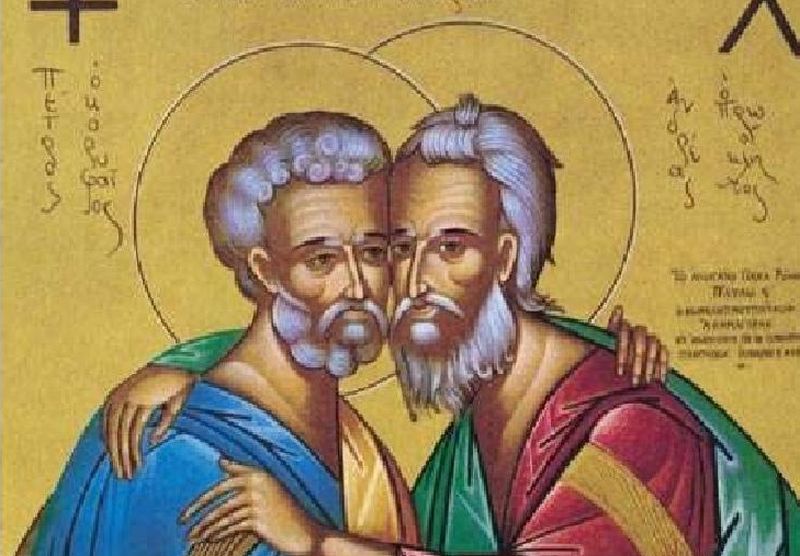
“The theme chosen for the 2017 Week of Prayer for Christian Unity is: “Reconciliation: The love of Christ compels us” (2 Cor 5:14). The Week was called for and organized by up to the most important organizations involved in ecumenism, including the Ecumenical Council of Churches and the Pontifical Council for the Promotion of Christian Unity: It was a propitious choice, especially after the celebration of the 500th anniversary of the Reform when many leading representatives of the Lutheran World Federation and Pope Francis gathered around the same altar in prayer at the Cathedral of Lund in Sweden. Alongside such highly significant ecumenical gestures another ecumenism has been spreading that could be called the ecumenism of the people. It is comprised of initiatives by the faithful of different confessions who want to recognize one another more and more as brothers and sisters. It is made up of small gestures that, thanks to the Holy Spirit, are already spreading in many places of the world. They show how far the irresistible journey of unity has come. We present a few examples from Latin America. “Many of us from the Focolare Movement in Peru had established friendships with the faithful of other Churches. Now, ever since an ecumenical group was begun in the Diocese of Arequipa, we have been collaborating with them in organizing the Week of Prayer. There will be daily events in several of the different Churches that visit the focolare regularly. Our centre was chosen for the final event of the Week of Prayer, which will include Catholic bishops, Lutheran pastors, Anglicans, Evangelicals and Pentecostals. Every month we attend an ecumenical breakfast at the YMCA, and a young Evangelical from a city in the north, with the permission of his Pastor, is attending a course of formation in the Focolare town of Loppiano, Italy.” The focolare community in Brazil reports: “We have relationships with Anglicans, Methodists, Presbyterians and Seventh Day Adventists that are truly significant. Sometimes we meet to dialogue about specific topics as we did at a conference held last August at Mariapolis Ginetta in san Paolo where we discussed the topic of peace.” “Because of our friendship with Methodists and Waldensians in Buenos Aires, Argentina, we set up on the square an ecumenical Nativity Scene that had been created by the children. It was visited by over a hundred and fifty people. It concluded with a moment of prayer with lit candles as a sign that each one of us can bring the light of Christmas into our own world.” From Venezuela: “Our sharing in the various celebrations of the Week of Prayer is an opportunity to deepen friendships that have existed for many years and to make new contacts. These friendships do not end when the celebration ends – on the contrary! The acquaintances most often lead to concrete assistance projects that we do together.” In conclusion, from Lima, Peru: “Following the ruinous floods on the outskirts, several young people from the Focolare and Methodist Church went to shovel away the mud that had covered the homes of so many humble folk. It was hard work, but we were all so happy to bring our love concretely to those families, to recognize that they are our brothers and sisters, and that we are also brothers and sisters.” Compiled by Anna Friso

16 Jan 2017 | Non categorizzato
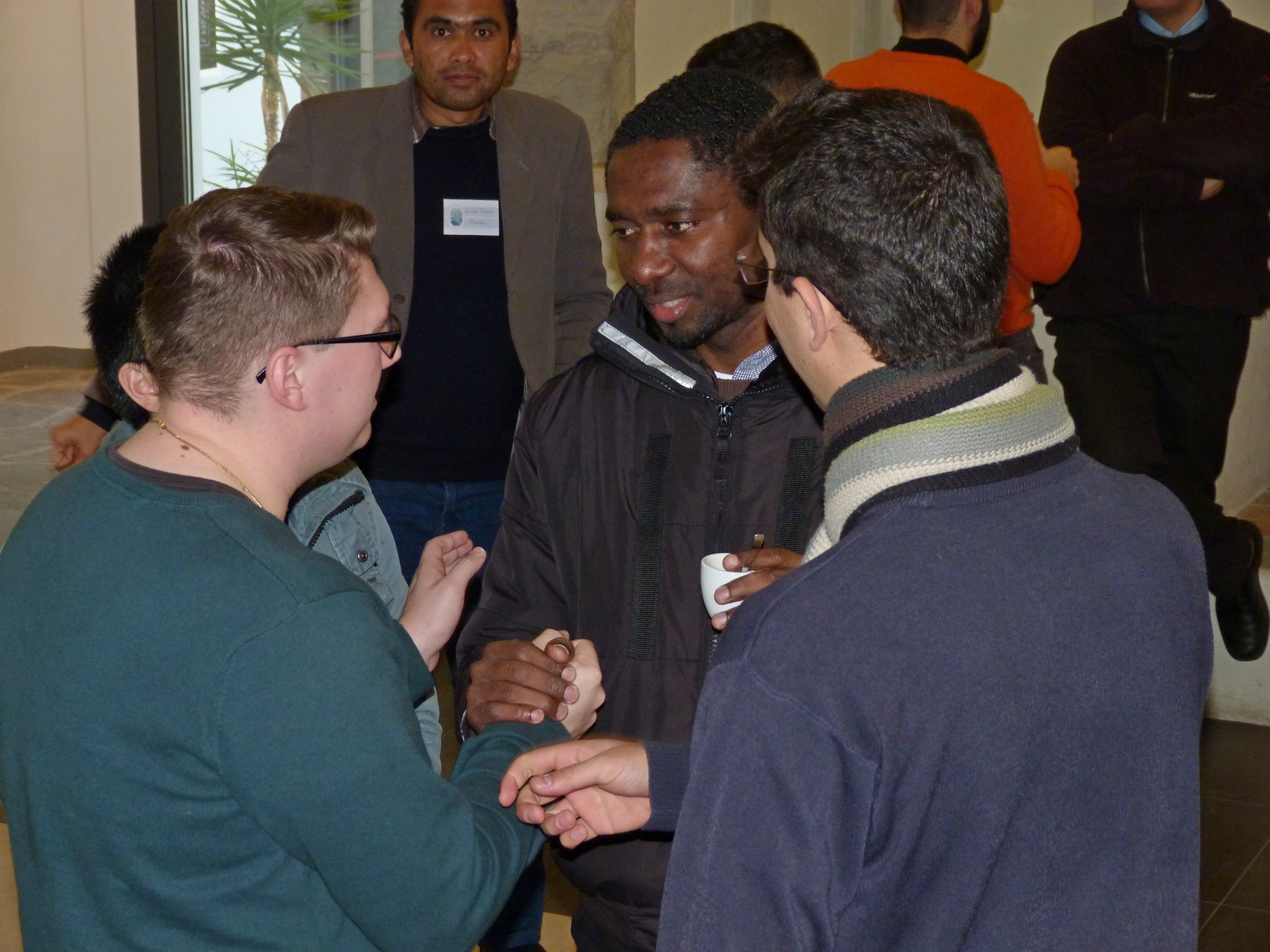 Over 40 seminarians and several priests from 17 countries on the 5 continents took an end-of-the-year holiday trip to Loppiano. “We chose the Focolare’s international town to have an experience of God in the communion among us,” they write, “and to go deeper into that radical choice of the Gospel that our heart burns for.” It was precisely the Gospel that they wanted to have as the basis of their stay in Loppiano, starting from the Golden Rule, that mandate which can also be found in the sacred writings of all the Great Religions: “So in everything, do to others as you would have them do to you” (Mt 7:12). The group stayed at Vinea Mea, the permanent residence of the School for Priests from different parts of the world who wish to be formed in the Focolare’s Spirituality of Unity and to experience a Church that St. John Paul II described as “Home and school of communion” (Novo Millennio Ineunte, 43). The seminarians were accompanied in their experience by the priests at Vinea Mea and by experts from Loppiano. The method used in presenting the topics – including some that were theologically quite dense – was dynamic and experiential and even included personal examples from their own lives, which helped the young men to come to terms with where they stood personally with Jesus’s message
 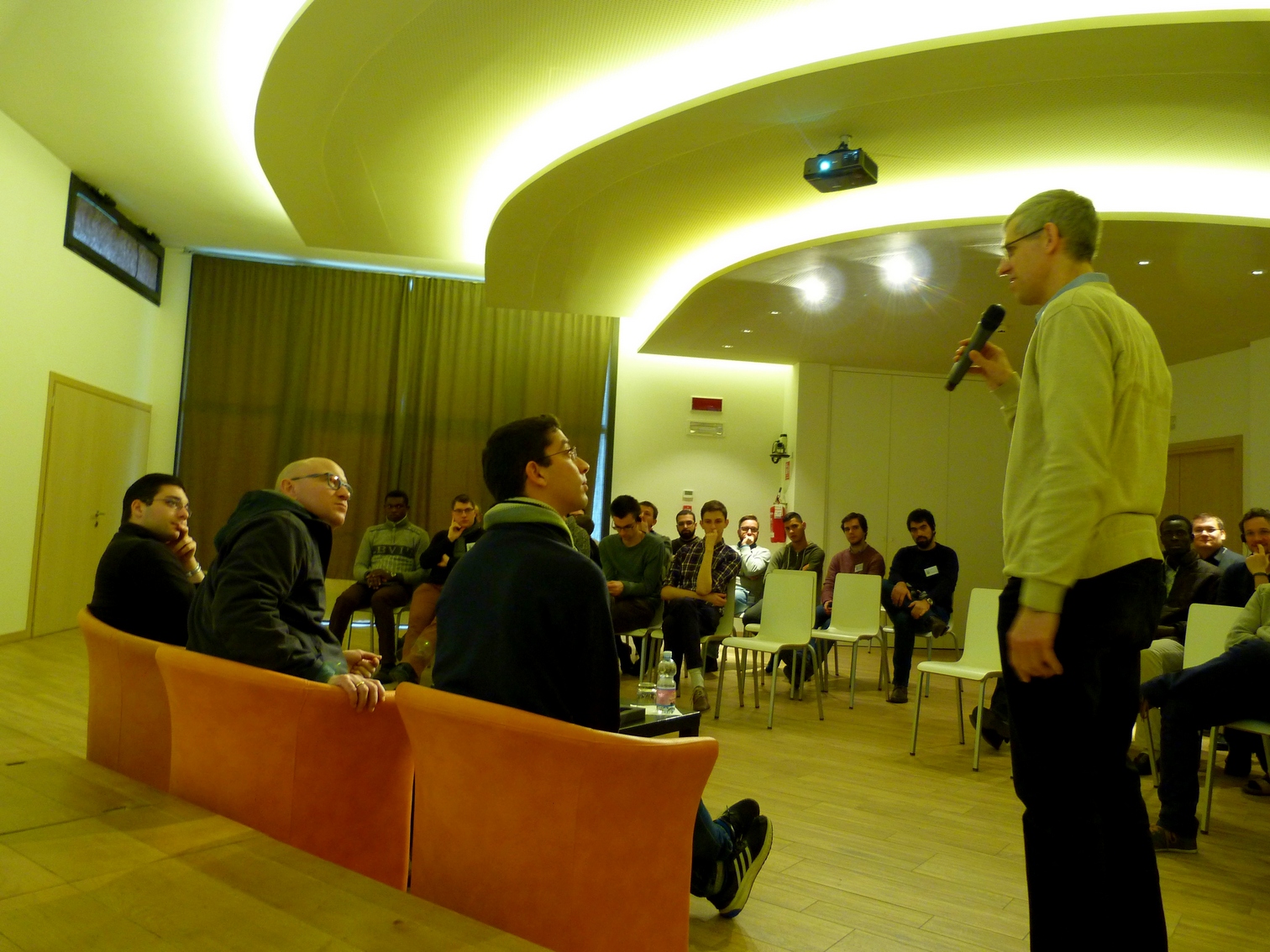 One of the seminarians writes: “I was very struck by one of the main points of the spirituality of Chiara Lubich, which was presented in the talk on ‘Jesus Forsaken, God’s window on the world and the world’s window on God’. I realized that his gaze of love opens the way for humankind toward God, but also opens God’s path toward humankind in a way that is ever new.” Another writes: “I understood that the Jesus who became a man out of love and expressed the culmination of that love in the abandonment on the cross, is not only a beautiful theological concept, but should become life in me, in love and service for whoever is near to me.” Their interaction with the citizens of Loppiano enhanced their understanding of how to build unity among themselves in spite of the many differences. Some impressions from at the concluding session: “In these days I discovered that even in our interpersonal relationships the key is being able to make myself nothing in front of the other person, as Jesus Forsaken did, burning the difficulties involved in the life of unity in Him.” “What struck me the most was the joy with which the inhabitants of the Mariapolis [Loppiano] face weariness and service, and transmit God to everyone else.” Compiled by the Gens Centre
14 Jan 2017 | Non categorizzato
[…] When God created humankind, he formed a family. When the Word of God came on earth, he chose to be born in a family. Jesus began his public life during the celebration of a new family. God had the family so much at heart; he considered it to be of such importance that he impressed on it his own image. In fact, the family reflects God’s very own life, the life of the Holy Trinity. […] So what was God’s plan for the family? God who is love, thought of the family as an intertwining of relationships of love: nuptial love between the couple, maternal and paternal love towards the children, filial love toward the parents, the love of grandparents for their grandchildren, of the grandchildren for their grandparents, for their uncles and aunts and vice versa. The family is therefore a treasure chest, a jewel, a mystery of love. This is how God thought of and created the family. Moreover, his Son, in redeeming the world, turned this natural love, which permeates the members of a family, into something sublime through the divine love he brought on earth, through the fire he wants to set alight everywhere. Through him, the family has become not only the primary cell of humanity created by God, but also the basic cell of the Church founded by his Son. Because of the supernatural love that the members of the family have for one another ‑ through baptism and the other sacraments, particularly the sacrament of matrimony ‑ they are called individually and collectively to the sublime heights of making the family a small church, an “ecclesiola”. […] Jesus wants the husband to see and love in his wife, not only the person with whom he shares his life, but to see and love Christ himself in her. In fact, Jesus considers done to him the way the husband treats his wife and vice versa. Furthermore, Jesus in the husband or wife must be loved in the measure that Jesus requires, as he expressed with the words, “Love one another as I have loved you” (John 13:34). They must love one another to the point of being ready to give their lives for one another. If parents keep this in mind throughout the day, whether they are praying, working or sharing a meal, whether they are resting or studying, laughing or playing with their children… every moment will be an opportunity for bearing witness to God. Morer: The Family and Prayer From Chiara Lubich’s talk to the international congress “Family and Society: The Family Centred on God is Open to all Humanity”, Castel Gandolfo, 8 April 1989.
12 Jan 2017 | Non categorizzato
https://vimeo.com/192602876 Copyright 2016 © CSC Audiovisivi – All rights reserved
