22 Jun 2016 | Non categorizzato
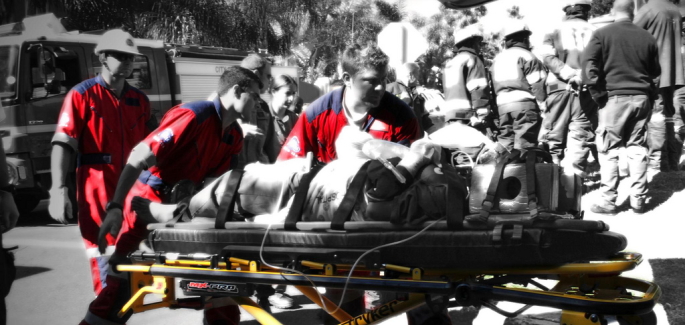
To New Life I’m a doctor working in emergency services. One morning I got called to help an elderly man who wasn’t feeling well. He was living in the midst of a lot of disorder, crushed by the death of his only son under mysterious circumstances. When I looked at his documents I realized that during the Communist Regime he had done a lot of evil things to people. I put aside all my judgements and tried to help that suffering man in front of me who was in need of affection. Beyond it all, now, for me, he was a neighbour that Jesus was inviting me to love. He spoke to me often of his past whenever I went to visit him at the hospital. Sometimes it was hard for me to listen to him, but when I was able to tell him about my own faith, I saw hope switch on in the man: It was as if he was being born to new life.” M. U. (Czech Republic) The Contract “I’m in charge of sales at the business I work for. We were competing for the contract with a major supplier and we had all the credentials to get it: design, price appeal . . . But to get the contract we would have to pay a bribe. Another Christian and I decided not to continue with the deal even at the cost of losing a significant percentage of that month’s sales. But the following month sales exceeded projections and covered the previous deficits. For us it seemed like a confirmation that it always pays to trust God. J. P. (Panama) The Translation “I had to finish a translation before the end of the evening. It was to be used for one of the presentations at a conference. Then, the telephone rang. It was a friend telling me that he needed my help right away, and it was urgent. I assured him I would help him. Only that when I received the text of the letter he wanted me to work on, I saw that there were certain technical terms that turned out to be difficult for me to translate. Only with the help of internet and several telephone calls to specialists in his field was I able to finish the translation for him, even though it was at the cost of my own work. Still, I was at peace for having helped my friend. At that point, I telephoned the association that had assigned me the translation, to explain that I would send it them on the day after, thinking that I could stay up all night and work on it. But they replied: “You can sleep soundly. That presentation has been postponed.” T. M. (Slovak Republic)

21 Jun 2016 | Non categorizzato
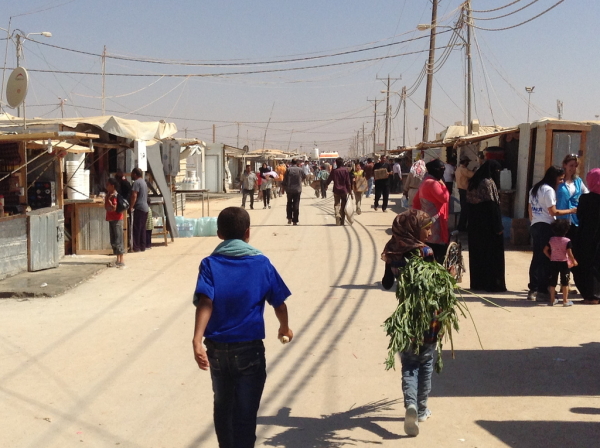
Refugee camp, Jordan. Photo credit: Flickr
19 Jun 2016 | Non categorizzato
“Ever since the beginning of the Movement, especially because of the sad circumstances of the War, Chiara and her companions were very attentive to the poor of their city, taking them into their house, visiting them, providing them with the basic necessities and assisting them in many other ways. Through this loving exercize toward their neighbours who were in need, they later realized that their heart shouldn’t only be turned towards the poor but towards all people without making any distinctions. (…) Chiara mentions the works of mercy in several letters, which she wrote in those early days to people who had drawn near to the Movement. We present a letter she wrote to her friend Anna, inviting her to live out the works of mercy that God puts before her in every moment of the day. “Remember that at the end of life you’ll be asked for the 7+7 works of Mercy. If you did them, you did everything. And I’d like you to join us in living the present moment and, in the present moment, the work of Mercy that God requires of us. Do you study? = You instruct the ignorant. Do you tutor a classmate? = You counsel the doubting. Do you eat or give food to others? = You feed the hungry. Do you drink or give someone a drink? = You quench the thirst of the thirsty. The 14 Acts of Mercy should determine each of your actions. And each of your actions should be turned towards Jesus who should live and grow in you and in your neighbour. Mutual Love, the Pact of Mercy and Pardon Jesus’s new commandment: “Love one another as I have loved you” (see Jn 13:34), which highlights what is specific about the interpersonal relations of Christians and the ultimate goal of mercy, is another cardinal point of the spirituality of Chiara Lubich. Mutual love lived out with an attitude of being the first to love, of free and unconditional self-giving one to the other, was what characterized the life of the first focolare. Chiara herself described its radicalness, when she spoke to a group of Muslim friends about the Pact of Mercy. (…) On other occasions Chiara reiterated the opportuneness of this practice, underscoring the value of pardoning, and describing it as a real act of freedom: “Pardon. Always pardon. Pardon is forgetting, which often means not wanting to look at reality in the face. Pardon is not weakness, that is, not taking into account a wrong for fear of the stronger one who committed it. Pardon doesn’t consist in carelessly signing on to what is wrong, or in calling good what is evil. Pardon is not indifference. Pardon is a lucid and willful decision, an act of freedom therefore, which consists in welcoming our brothers and sisters as they are, in spite of the wrong they have done, as God welcomes us sinners in spite of our defects. Pardon consists in not responding to an offence with another offence, but in doing as Paul says: ‘Never let yourselves be overcome by evil, but overcome evil with good.’ Pardon consists in opening the possibility of a new relationship with you to anyone who has done you wrong, the possiblity therefore for you and him to begin life again, to have a future in which evil will not have the last word. (…)” Chiara returns to the topic of this relationship that we should have with every brother and sister, specifying the need of starting over: “Perhaps that brother – like all of us – has commited errors, but how does God see him? What really is his condition, the truth of his state? If he’s right before God, God no longer remembers anything, He’s already cancelled everything with His blood. And we, why should we remember? Who is in the wrong in that moment? I who judge, or my brother? Me.” And so I have to move myself to seeing things from God’s eyes, in the truth and accordingly with my brother, because, if for misfortune he is not yet right with the Lord, the warmth of my love, which is Christ in me, would lead him to contrition as the sun heals and absorbs and heals many wounds. Charity is maintatined with the truth and truth is pure mercy, with which we must be clothed from head to toe so that we can call ourselves Christians. Does my brother or sister return to me? I must see him new as if nothing had happened, and begin to live with him again in the unity of Christ like at first, because there is nothing anymore. This trust of mine will keep him from other falls and I too – if I have used this measure with him – will be able to hope that God one day will judge me.” Source: Centro Chiara Lubich Part 1: Mercy in the Spirituality of Chiara Lubich Complete text by Alba Sgariglia (Italian)
12 Jun 2016 | Non categorizzato
“Merciful Like the Father” is the motto chosen by Pope Francis to summarize what the Year of Mercy is all about. “In mercy,” the Bull of Indiction declares, “we find proof of how God loves us. He gives his entire self, always, freely, asking nothing in return. He comes to our aid whenever we call upon him. (…) And his help consists in helping us accept his presence and closeness to us” (MV, 14). It is this Face of Love-Mercy that fully reveals the Fatherhood of God. God is Love was the inspirational spark that lay at the origins of the charism of unity which the Holy Spirit bestowed on Chiara Lubich in our time (…) Chiara therefore does not show us a God who is far away, inaccessible and foreign to our existence, but a God with a fatherly face (…) So, everything that happens can be seen as the fulfilment of his loving plan for each one of us, as the tangible proof of his watchful care, of his closeness. “Even the very hairs of your head are all counted” (Mt 10:30). This is a fatherly love that anticipates every need, even the smallest, even filling the void left by our small and great imperfections, by our shortcomings and our sins. It is the face of the merciful Father who manifests himself and fully reveals his merciful love through the incarnate Son. Episodes from the Gospel. The magisterial documents that deal with the topic of mercy always cite the Gospel passages that best illustrate it. A classic example is the story of the Prodigal Son (Lk 15:11-32) (…) One day, Chiara found herself talking about this parable in front of a large crowd of young people in the Dome Church of Paderborn, Germany. It was June 12, 1999. Here is what she said to them: “The father of the prodigal son would have had many things to do: Look after the business, the employees, the family; but his main attitude is his longing for the son who had taken off. He goes to the top of the tower of his house and looks out as far as he can see. The Heavenly Father is like this: imagine if you can, dear young people, his divine, most high and dynamic Trinitarian life, how He is constantly engaged in sustaining all creation, in giving a place to those who are going up to Heaven. And yet, above it all, He does one thing especially: He waits. For whom? For us, me, all of you, especially when we find that we’re far from Him. One fine day that son, whom the earthly father loved so much, returned after having squandered everything. The father takes him into his arms and hugs him, covers him in a valuable robe, has the fatted calf prepared for a feast. What must we think? That he longs to see his son all new; he doesn’t want to remember him as he first was. And not only does the father long to forgive him, but even to forget about his past. This is his love for the son in this parable. This is the love of the Father for us in this life: He always forgives us and forgets.” Source: Centro Chiara Lubich Complete text by Alba Sgariglia (Italian)
10 Jun 2016 | Non categorizzato
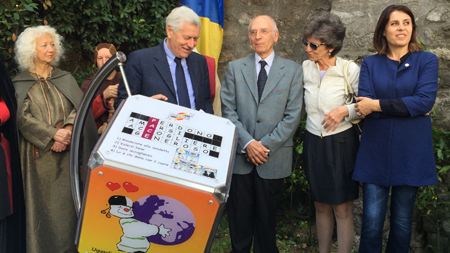
On June 4th the Porta della Verità Garden in Viterbo, Italy, was dedicated to Chiara Lubich, to show how her message of unity amongst peoples has been welcomed by the capital city of the Province of Viterbo. It is “a message of interculturalism,” one local newspaper writes in its large coverage of the event, “that when lived out is enriching because of its call for mutual respect of diversity.” The Porta della Verità Garden is a small plot of green just inside the city walls in the historic district of the city of Viterbo. The event was attended by many young students, several costumed characters in a historical parade, as well as city authorities: Mayor Leonardo Michelini and Bishop Lino Fumagalli. The Solidarity Dice project was promoted by the municipal council in 2014 and conceived and carried out by the Christian Associations of Italian Workers (ACLI) in collaboration with the L. Fantappiè Comprehensive Institute. “The idea behind this project was born through a trip to Trieste where saw the Solidarity Dice for the first time. We wanted it in our city because it is a concrete sign of solidarity. It was all achieved thanks to the collaboration from all sectors of the city administration,” explained Renzo Salvatori, president of ACLI in Viterbo. “Solidarity regards all of us,” Bishop Lino Fumagalli emphasized. “You can measure the growth of a society by the number of its works of solidarity. The sentences written on the sides of the dice warm the heart when they are implemented.” Some of the young participants recounted their own daily experiences with solidarity and explained what guided them in coming up with the sentences that were chosen for the Dice of Solidarity through an inter-mural competition with 120 entries. “The Dice of Solidarity is a project that gives meaning to the work of the school that begins inside the classrooms and continues after the final bell,” added Alessandro Ernestino from Fantappiè Institute. “The school is an important part of a community, capable of working on the environment together with the different associations like ACLI and the organizations of the administration. In his concluding remarks Mayor Leonardo Michelini said: “This day is a moment that enters into the history of the city. In the beginning the project didn’t seem to be doable, but the messages that the Dice of Solidarity transmits have universal value.” Sourcee: ViterboPost
