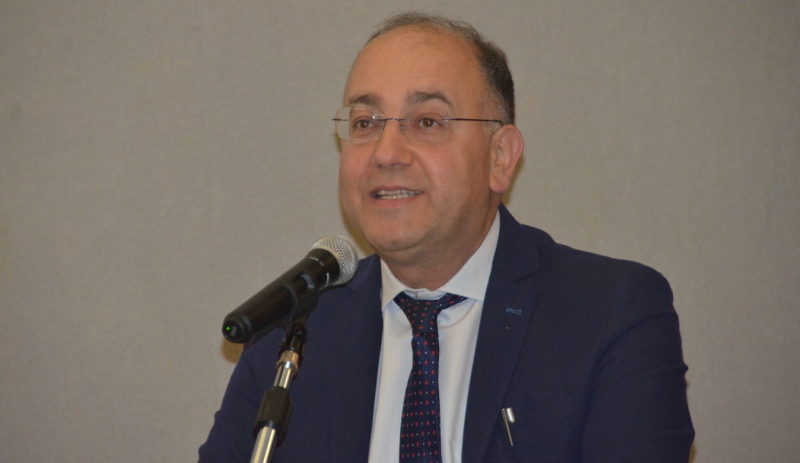
In Philippines celebrating the 25th anniversary of the Economy of Communion (EoC)
Luigino Bruni

Luigino Bruni
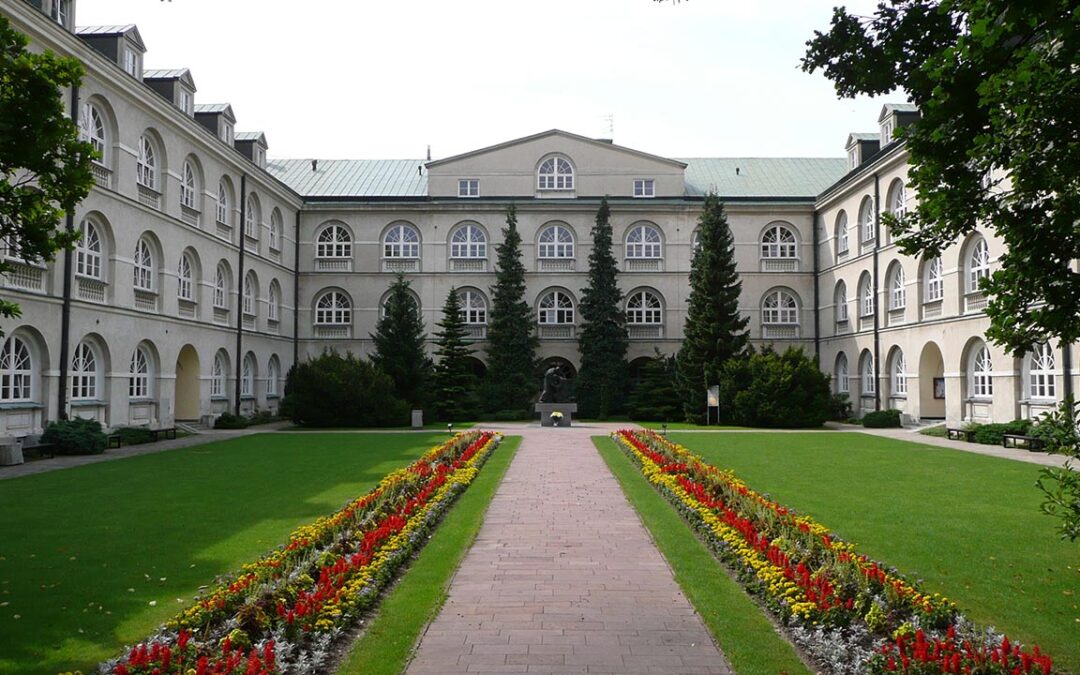
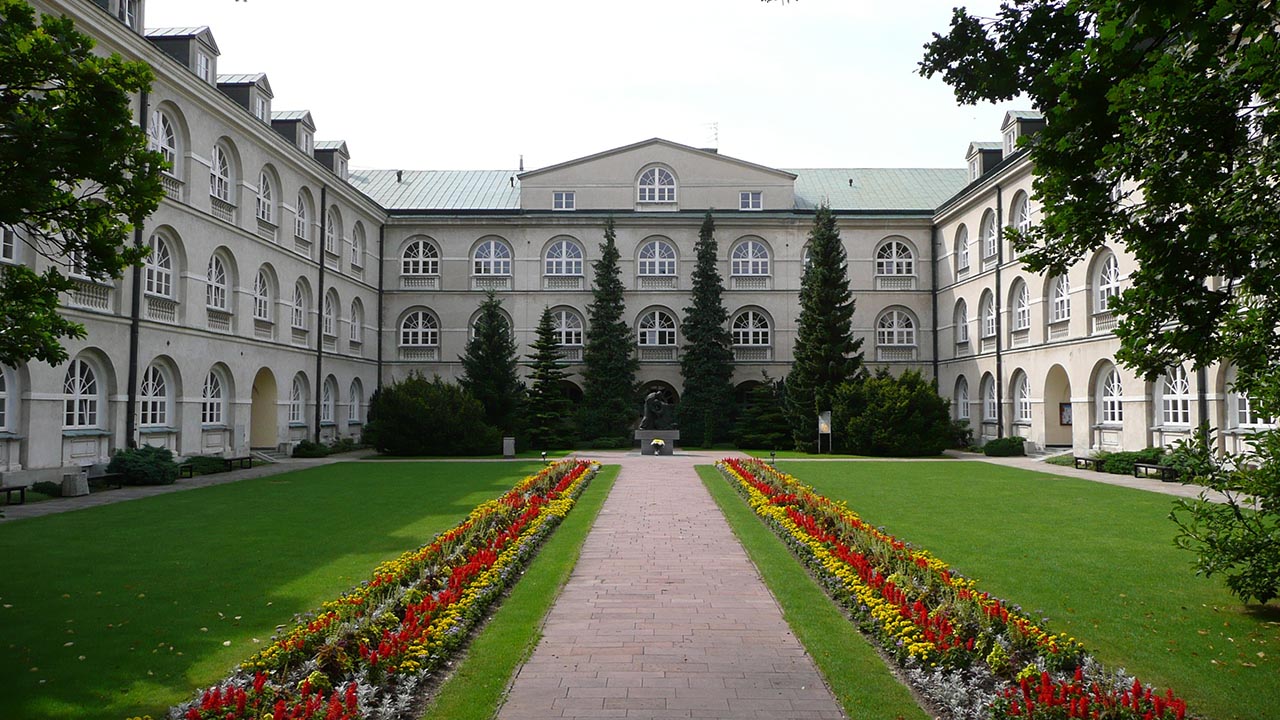
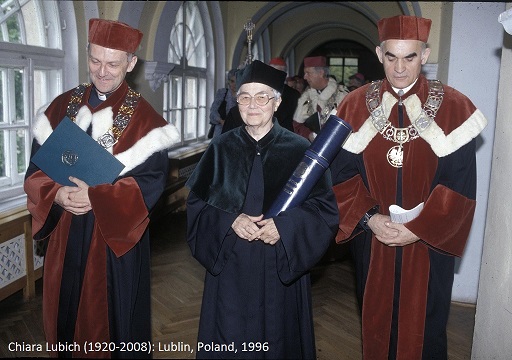 “Through the work of the Focolare Movement, Chiara Lubich created a new social inclusion phenomenon inspired by the evangelical charism of unity, revealing new psychological, social, economic and religious- spiritual dimensions”. Prof. Adam Biela said these words during the official ceremony held in June 1996 when Chiara Lubich was awarded an honorary doctoral degree in Social Sciences by the John Paul II Catholic University in Lublin. He also explained that such a message “does not only prove that a new paradigm in social sciences is possible, but also shows how necessary it is to implement it”. While speaking about its inspirational role in social sciences, he defined it as a “paradigm of unity” and compared to “the Copernican revolution in natural sciences”. Fifteen other honorary degrees, from various universities in different parts of the world, were awarded to Lubich after this first one. Twenty years passed and the John Paul II Catholic University of Lublin would like to take stock of the situation, so a conference is being organised in collaboration with the Focolare Movement’s Centre for Dialogue with Culture and the Sophia University Institute. This conference will reflect and research on “Conflict, dialogue and the culture of unity” through the perspectives of pyschology, economy, education, political science, sociology and communication. Prof. Biela declares that this conference “will analyse the contribution that the research and practice inspired by the paradigm of unity, based on the spirituality of unity, can offer to the conceptual and applied issues concerning the building of social, economic and political integration in today’s Europe and in the world”. He also claims that particular attention will be given to “Chiara Lubich’s social activity and that of the Focolare Movement to build psychosocial structures for unity in various social spheres”.
  More than 90 researchers and scholars from different parts of the world answered a call for papers and sent in their abstracts on the five themes to be discussed during the conference: dialogue in the communities: charism and institution; solving conflicts through dialogue; accomplishing political change and participatory processes; individual, interpersonal and intergroup processes in managing and preventing conflicts; interdisciplinary dialogue. Prof. Adam Biela and Jesús Morán, co-president of the Focolare Movement, who will give the opening talk, will be joined by other main speakers, namely the professors Bernhard Callebaut (Sophia University Institute in Loppiano, Italy) Mauro Magatti (Catholic University of Milan, Italy), Bogusław Śliwerski (University of Lodz, Poland), Marek Rembierz (University of Silesia, Poland), Stefano Zamagni, (University of Bologna, Italy), Krzysztof Wielecki (Wyszynski University of Warsaw, Poland), Catherine Belzung (University of Tours, France), John Raven (University of Manchester, United Kingdom). The conference starts on the feast of the Sacred Heart of Jesus, patron of the University. The University celebrates this feast with an official ceremony which will precede the conference. The Rector Prof. Antoni Dębiński will preside over this ceremony, while Archbishop Celestino Migliore, the Apostolic Nuncio and other civil and religious personalities are expected to participate. Info: http://psychointerwencja.wix.com/congress Source: Press Release SIF – Focolare Information Service
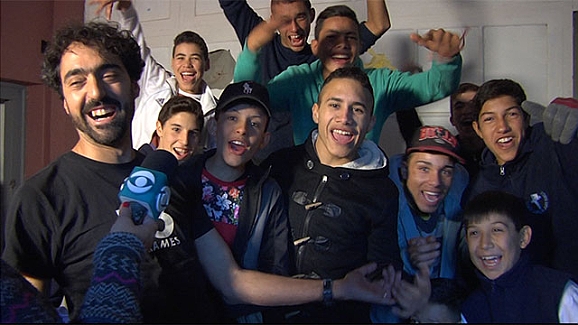
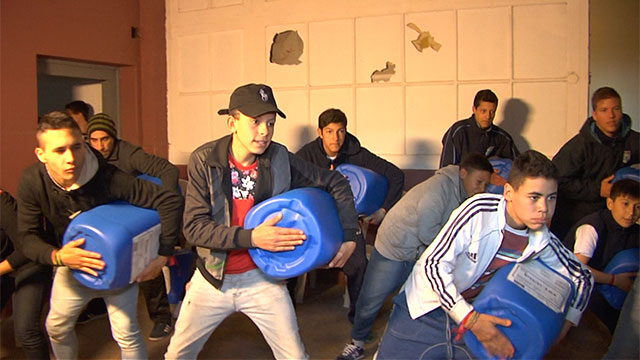 “The most important thing I experienced during these two days with Gen Rosso was to see my dream come true: to feel strong and alive without the need to use violence.” This was the impression shared by Veronica, one of 200 teenagers that took part in a three-day workshop organized by the international band during its tour through Montevideo, Uruguay. The tour also took in Argentina, Bolivia and Paraguay. Fazenda da Esperança was the promoter of this initiative. The Gen Rosso Band members explained: “Strong Without Violence is a project geared towards teenagers and young people, offering formation in a culture of peace, legality, preventing all forms of school violence, revenge, bullying, teenage suicide, teenage issues and dropping out of school. With positive success in several other nations, this time the project gathered 200 young people from at-risk areas in the capital of Uruguay. One of these associations is the Nueva Vida Centre: “I remember when we arrived in this area on the outskirts,” recounts the director, Luis Mayobre. “We were welcomed by stones that were being launched at us by teenagers. Seeing our young people today in full action onstage, together with their peers and launching a message of non-violence has really moved me.” The novelty of the Strong Without Violence Project lies in the fact that the teenagers are actively Involved in a stage performance, with a workshop on dance, music, set design and set-up. They go onstage with the professional artists as main actors in the show. “Awesome! It was amazing,” says Inés overcome with emotion. “We did two concerts, May 21 and May 22 with the Clara Jackson Theatre (capacity1,200) completely filled, quite an uncommon thing in our parts; and you couldn’t tell the kids apart from the artists: they were completely integrated.” Laura had watched those children grow up and knew well the great work that is done at the Focolare’s Nueva Vida Centre and at other institutions in the area, to provide a positive future to the young people that is far removed from drugs and other dangers. The setting of this “Streelight” Show is Chicago in the 1960s. It tells the true story of Charles Moatz, a young Black American from the Focolare who was murdered by a gang because of his efforts to build a world that was more united. With his choice of non-violence Charles had sealed his fate. But his radical lifestyle would lead his friends to discover new and unimagined horizons for their own lives. “Phrases like: ‘If you want it, you can do it,’ ‘Love conquers all,’ ‘Love can do all things’ and ‘If you want to win over a city to love, get together with friends who think like you do’ . . .” continued Laura. “It all seemed to fall like drops of due upon the hearts of the people here. And it all came out with such a force that I was trembling. There was such great sympathy between the audience and the people on stage. I had invited a friend who, after a short while was so moved that she was sobbing. I think God has hit hard at our very doorsteps.” Uruguay press, which is strongly secular, mentioned the unusual event in a news article boastfully titled: “200 young Uruguayans prepare at an intensive workshop to go onstage with a musical performed with the international Gen Rosso Music Group” “So happy to see my son on stage!” wrote the mother of one of the boys who had become an instant artist. “I thank the Nueva Vida Centre that has always aimed to give the opportunity to him, to grow as a person.” And Patty: “That ‘If you want it, you can do it’ will remain forever burned into the hearts of each of these teenagers and of all those who were here. Thank you! You’ve charged our batteries and transmitted a very contagious energy.” https://www.youtube.com/watch?v=s5eR25VL53M&feature=youtu.be

“I was employed as a merchandise inspector, that is, to control the quality, quantity and weight of goods, but for corporate reasons I had been fired. I lost everything: my job, family and dignity. After a few months my wife sent me a separation letter, taking with her my five-year old daughter. What’s more, after having followed the advice of my father-in-law, I was sued for swindling, bribery, and criminal conspiracy. Actually, I hadn’t done anything! I felt so much shame also for my loved ones, and infinite anger! I asked myself, where is that God who proclaims to be good and instead allows similar injustice? I was in jail for 15 days, out of which five were in isolation, enclosed in a cell of 2×2 meters, deprived of everything: the freedom to open a window, to see or speak with anyone. Then, when I got out of the isolation cell, I had to face pushers, drug addicts, rapists, and robbers. They were men. In jail I was respected by all because they were certain – even without knowing me – that I was completely innocent and that I shouldn’t have been put in that place. It was their way of restoring the dignity I had been stripped of. I learnt a lot from the convicts. When I was on parole, my relatives convinced me to participate in a Mariapolis, saying that we were going for a four-day holiday. I met a grandma with very white hair who spoke about God who is Love, precisely to me who had strongly doubted that good God. A new and immense world lit up before me, as if I already had met it, but had never experienced it before. I realized that to be able to walk along the path of love, we cannot forego what I then called suffering and which I now identified with the suffering of Jesus on the Cross. When we live in deepest pain, we are more prepared to listen to God who gives us a greater and fuller life. Today I no longer hold any grudge against my ex-wife, father-in-law and daughter who never wanted to see me I was fully absolved of the charges, because three years later they discovered that I had absolutely nothing to do in the lawsuits filed against me. I could not keep to myself what life had taught me and felt the great desire to share it with others, especially the youth. I started with five boys aged 11/12 who knew nothing about faith, or their parents. I started by playing soccer for hours, and then upon accompanying them home, asked them if they wanted to do a simple act of love towards the family. Today these young boys have grown up and some have entered the employment world, but above all, also they wanted to donate in turn to others what they have received, bringing the certainty of God’s love to many. I will never stop thanking God for having given me the chance to love without prejudice, and meeting Him who is Love, and who loves each one of us personally, and that we, his children, are all equal.” (Erasmus – Italy)
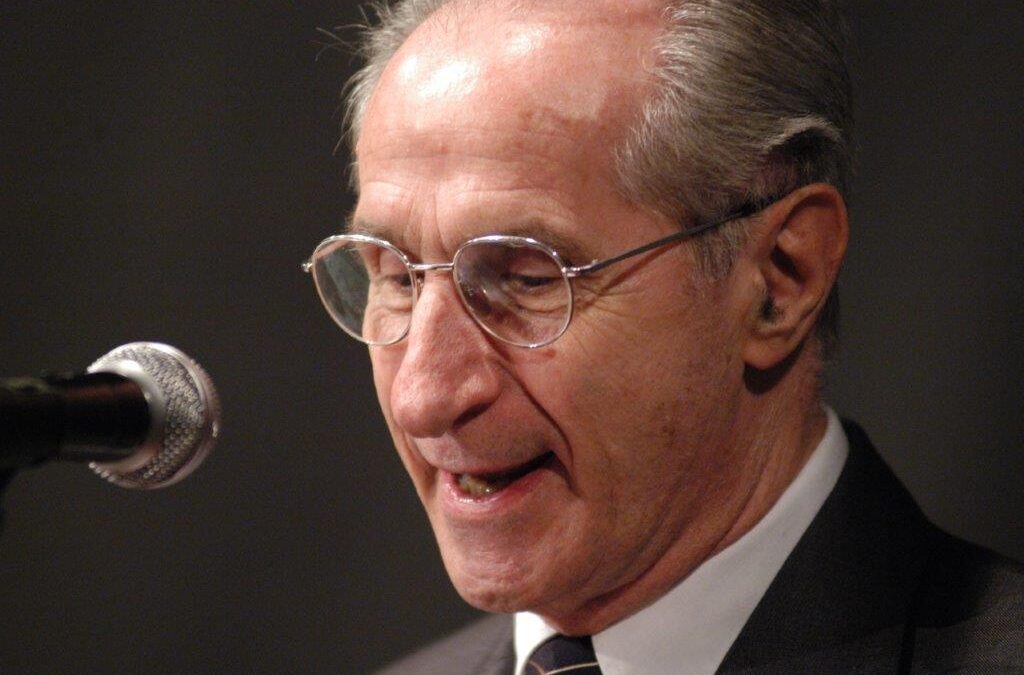
 “Here in Africa we got the news at one o’clock this morning, May 20th, the feast day of Corpus Domini. He had more than once expressed his desire to join Chiara Lubich in Heaven. We rejoice with him and pray for him.” Maria Voce wrote these words to all the members of the Focolare Movement, while on a visit to Kenya where she has been since May 14th. Giorgio Fede Marchetti was born in Padua, Italy, on October 16, 1929 where he was amongst the first people to become involved in the adventure of unity, as Chiara Lubich called it. But he also continued to accompany the growth and development of the Focolare around the world. The director of Città Nuova, Michele Zanzucchi, writes: “Many of us will remember his staunch loyalty to Chiara Lubich as he followed the path traced out by the charism of unity during the first months of the Focolare town of Loppiano in Tuscany, Italy, surrounded by mud but also genuine enthusiasm. He’ll be remembered in Brazil where he came face to face with the hard reality of the shanty towns. We’ll remember how he supported the Movement, always on the frontlines, always looking forward.” Ángel Bartol, who was with him in his last moments: “Fede continued to give of himself, body and soul, to the very end. He was a doctor, psychologist and theologian who had trained and accompanied hundreds of young men on the path of the focolarini. Intelligence and generosity were his main traits. Much more could be written about him, and much more will be in the coming days. For now we simply say: Thank you, Fede, for your life that was centered on the unity of the human family! A funeral will be held at the Mariapolis Centre of Castelgandolfo on Tuesday, June 1st at 11:00 am.