The profession of educators is a poorly paid one. This speaks volumes about the regard given to education by society and by governments. From November 18th to 21st, 2500 people gathered in Rome for a convention organised by the Congregation for Catholic Education, to commemorate the 50th anniversary of the Vatican Council II Declaration on Christian education, and the 25th of the Apostolic Constitution on Catholic Universities. “I came here with a Jewish colleague, and from India there were Catholics and a few Hindus,” said Nieves Tapia from Argentina, director of CLAYSS (Latin American Center for Service-Learning). “I felt that this was already a fruit of the Council: the Church in dialogue. With the motto, ‘Educating today and tomorrow: a renewing passion,’ we came together from all over the world, from very different situations.” The experiences from Catholic schools in frontier locations demonstrated the challenge of dialogue in action. As in Morocco, where teachers and students are Muslims; or in the Philippines, a Catholic country by majority, where the universities, also open to Muslims, encourage students to fast during Ramadan and reserve a place of prayer not only for Christians but also for Muslims. “It was an experience in a universal context,” affirmed Nieves Tapia, “not only because of our geographical origins, but also because of the types of schools and universities represented: public, private, and many schools who also work with the poor.” Pope Francis’ passion for education shone through in his address: “The pope responded to a few questions, and he spoke off the cuff, from his heart and with passion. He highlighted the need to go to the periphery, not to do charity, but because there, a new culture will be born. There we learn what profound wisdom there is in suffering. If we think about the great educational reforms (Don Bosco, Freire) we can say that they all came from the outskirts. Francis stressed furthermore the importance of working for the unity of the person, taking into account the mind, the heart, the hands; the importance of rebuilding the educational pact, that is the unity between the school and the family, the school and the community, the relationship with real life without closing oneself in the classroom. In addition, the importance of going out, which is also a response to the culture of the elite, the great danger of many educational systems, with the risk of leaving people out.” Among the subjects discussed in the convention, the pope implicitly underlined that of service learning, an educational program which actively involves the individual in the frontline… “It is a pedagogy that we have sought to enrich with the Latin American experience and with the spirituality of unity: service learning. It is necessary to allow the student to leave the classroom and begin to serve: to learn to do, to live, to be a better citizen. Research demonstrates that the learning cycle is not completed until the individual is able to practice what he has learned.” “This is confirmed when the teens learn to use their classroom knowledge to serve others. For example, in a technical school, instead of making a robot prototype, the youth construct wheelchairs for people who need them.” Service learning has been in use for almost 50 years, and there are thousands of universities and schools throughout the world that put into practice what is learned in order to serve others.” What prospects have emerged from the Convention? “The guidelines are those which the pope gave us. Above all, the necessity to renew our passion for education came into relief. ‘We must change education in order to change the world,’ said Pope Francis. We are already on the way and this is a sign of hope.”
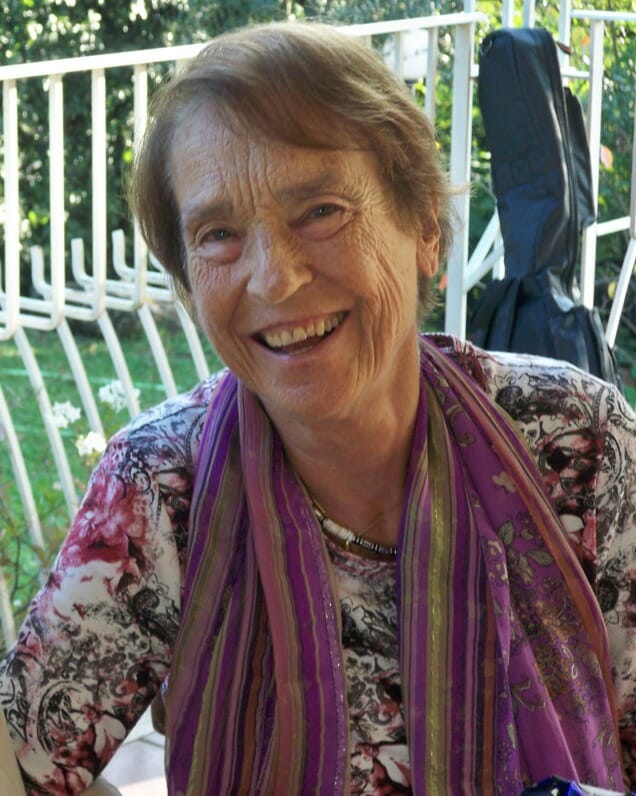
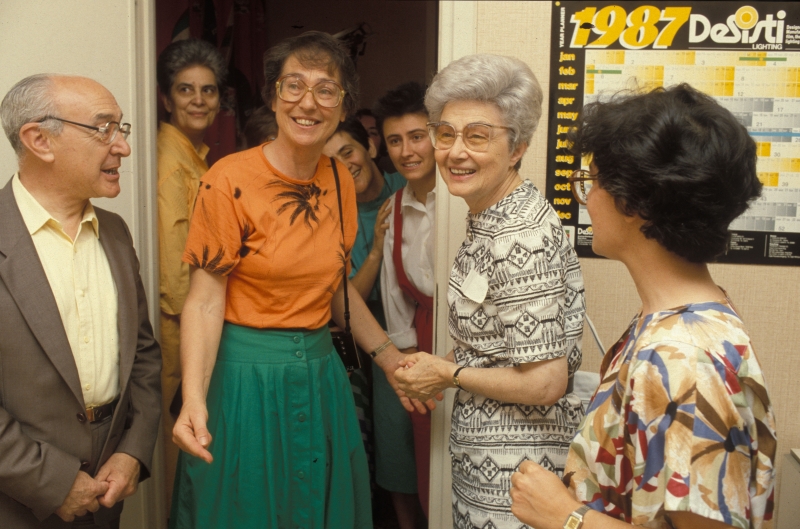
Silvana Veronesi has passed away at the age of 86. She was one of the close collaborators of the founder of the Focolare, Chiara Lubich. The news of her passing was communicated by Focolare president, Maria Voce, to the worldwide Focolare Movement: “We accompany her with the certainty that there will much rejoicing in heaven.” Her first meeting with Chiara Lubich was in 1945. She was only 16 years old and in search for something great to live for. From that moment, fascinated by the spirituality of unity, she entered the initial group that gave life to the Focolare Movement. In 1949, she moved to Florence, Italy, to attend Medical School. With great simplicity she bore witness to the novelty of her new life to young men and women, giving rise to the first Focolare community in Tuscany. She then spent some time in Turin and Milan.
From 1955 she was with Chiara Lubich in Rome, Italy. In November 1960 she travelled to the United State and Canada where she planted the foundations for the Movement in North America. From 1961 to 1972 she was in charge of the branch of the women focolarine worldwide, a role that she took on once from 1990 to 2002. In 1972 she was entrusted with the youth of the Movement and would be on the front lines accompanying the new generations for nearly two decades. She recalled to them her impressions of the first encounter with Chiara: “We realized that we have only one life. If we had 3 or 4 we could spend them in more than one way. But since we have only one life, it’s better to spend it well, for something great, for something worthwhile, for something that will remain; that is, God. And we chose God as the Ideal of our lives.” This is the legacy she leaves to anyone would accept. A funeral Mass will be held at the Mariapolis Centre of Castel Gandolfo, on Sunday, December 6, 2015 at 9:00 am.
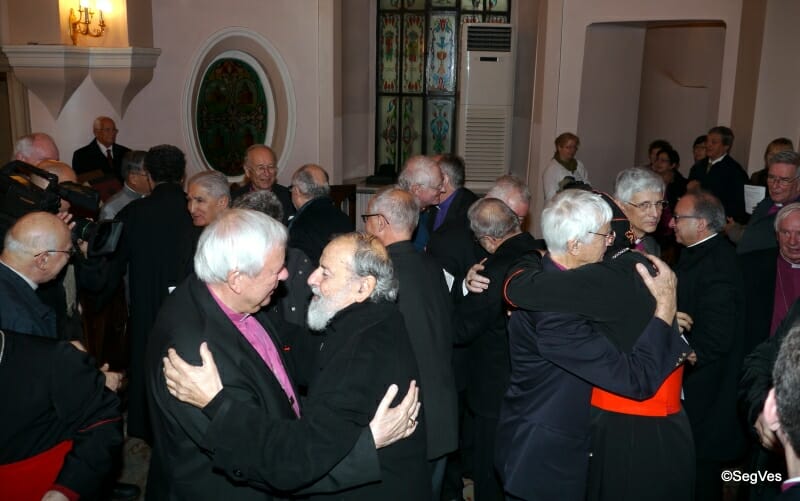
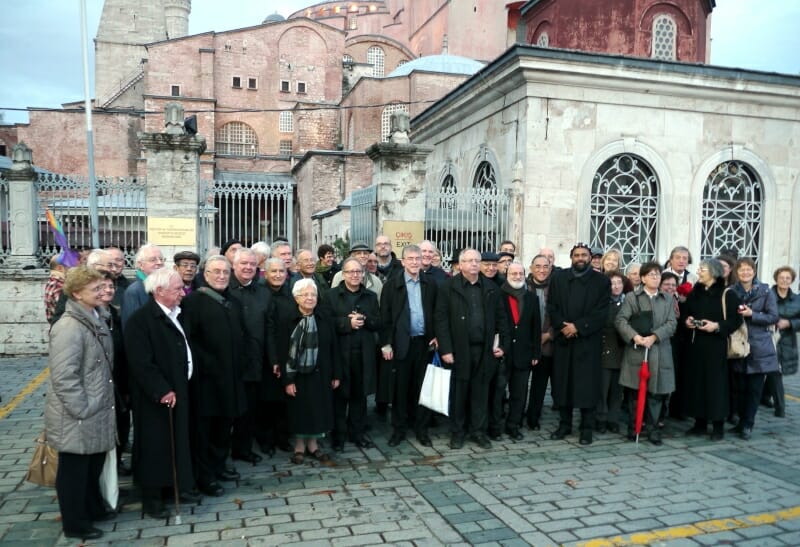
The course of the 34th convention of Bishops of various churches promoted by the Focolare, is heading towards solid ground. A rainy and gloomy day saw the relocation from the Monastery of Halki towards Chalcedon. It took an hour by boat to reach Kadikoy, Istanbul, the old Bithynia where the 4th Ecumenical Council took place in 451. The group of 35 bishops of 16 churches were welcomed in the Church of Christ the King, which is in charge of a vast area with a population of 3,000 people of the local Armenian community. The parish priest explained why the Council of Chalcedon was held, not far from this Church. They had to discuss a fundamental issue for Christianity regarding the human and divine nature of Christ. Since the pre-council fathers could not reach an agreement, they entrusted the resolution to the Holy Spirit, which the people in the East perceive as a feminine being. Such a significant and historical site is a source of inspiration in comprehending the “journey toward unity in diversity” – which, as Cardinal Francis Kriengsak explained – is at times difficult and painful, but if we remain faithful, can generate fruits for centuries to come.».
As tradition would have it, these bishop conventions are followed by a solemn pact of mutual love amongst all present, with the promise to “be ready to give one’s life for the others” according to the commandment of Jesus “love one another as I have loved you.” This inspirational motto was accompanied by the reading of the words of Patriarch Athenagoras: «If we disarm ourselves, if we strip ourselves of all things, if we open out to God-man who makes all things new, it is then that He can cancel the evils of the past and restore a new era where all things are possible. » Before a Marian icon, each bishop signed the pact. «The pact of mutual love between bishops of various churches – explained Brendan Leahy, Catholic Bishop of Limerick, Ireland –is a constant reminder to open out and not lock myself up in my diocese. It means avoiding superficiality in order to get to the roots of our being Christians and bishops.» Michael Grabow, Lutheran bishop of Augsburg said «it is a commitment to live the radicalism of love and a reminder that if we belong to different churches, we are brothers and sisters.» Geoffrey Rowell, Anglican bishop and theologian from England, recalled «we are united by the same pact also with the Orthodox bishops who were kidnapped in Aleppo, Syria, and of whom we have not received any news. While the media has forgotten, we always remember them since we are bound by a common fraternity.» Theophilose Kuriakose, the Indian Metropolitan bishop of the Coptic-Orthodox Syrian Church commented – we listen to many people in order to solve their problems, but at times we feel lonely because no one is there to listen to our own problems. We need to feel the unity and brotherhood that bind us, of course without falling short of our communion with God and our choice of Jesus crucified and abandoned. This pact will be sealed in my heart and gives me strength and makes me feel also responsible in communion with others.». Written by : Aurelio Molè
“We often have the tendency, due to the language we use, to have an inexact notion of what happened in Nazareth when the angel relayed to the Holy Virgin that the Word had become flesh. An anthropomorphic mentality makes us think of God as a distant person up there in the heavens, who sends his Son to a far-off place to become man. It is not so. God is everywhere. He is in heaven, on earth and in every place. God was thus in the little room of the Virgin in Nazareth, when the angel appeared to her. He was, however, infinitely distant from mankind due to the abyss of sin and because of their natural smallness. The instant in which the Virgin pronounced her ‘fiat,’ God espoused human nature in her pure womb, espoused the creature, and undertook an unimaginable act of bridging the divinity withthe universe. Since then, he is always in our midst.That infinite distance which our imagination expressed, almost placing God far from us, above in the heavens, has been negated: he is on earth, he is our co-citizen.” Pasquale Foresi, Theology of sociality (Teologia della socialità), Città Nuova 1963, p. 66
We are offered the possibility of meeting Jesus in our daily lives and among us. If we take it, we will experience a living Christmas. The words are spoken to me. The Lord is coming and I must be ready to welcome him. Every day I pray, ‘Come, Lord Jesus.’ And he replies, ‘Yes, I am coming soon’ (see Rev. 22:17, 20). He is standing at the door and knocking. He asks to come in (see Rev. 3:20). I cannot leave him outside my life. The invitation to welcome the Lord came from John the Baptist. It was directed to the Jewish people of his time. They were asked to confess their sins and be converted, changing their lives. He was certain that the coming of the Messiah was about to happen. Would the people, who had been waiting for him for centuries, recognize him, listen his words and follow him? John knew that to welcome him they had to get ready, hence his pressing invitation: ‘Prepare the way of the Lord, make his paths straight.’ These words are spoken to me because Jesus continues to come every day. Every day he knocks at my door and for me too, as for the Jews at the time of the Baptist, it is not easy to recognize him. So, contrary to what was commonly expected, he presented himself as a humble carpenter from Nazareth, an unimportant village. Today he presents himself under the guise of a migrant, someone with no work, an employer, a schoolmate, relatives, even of people who don’t always seem to shine with the face of the Lord, indeed where his face seems hidden. His subtle voice, which invites us to forgive, to give trust and friendship, to refuse to give in to choices against the Gospel, is often drowned out by other voices that incite us to hate, get our own back, become corrupt. This is the basis for the metaphor of tortuous and impenetrable paths that recall the obstacles hindering God’s coming into our everyday lives. It’s almost pointless to list the baseness, the egoism, the sin that dwells in our hearts and makes us blind to his presence and deaf to his voice. Each one of us, if we are sincere, knows what are the personal barriers obstructing our meeting with Jesus, with his word, with the persons with whom he identifies himself. Hence the invitation in the Word of Life that today is spoken directly to me: ‘Prepare the way of the Lord, make his paths straight.’ Correcting that judgement which makes me condemn the other person, ceasing to speak to them, so that instead I come to understand, to love and put myself at the other’s service. Correcting a twisted way of behaving that makes me betray a friendship, makes me violent, cheating civil law, and instead letting myself be converted into a person who is ready even to put up with injustice so as to be able to salvage a relationship, someone willing to pay in person the cost of encouraging fraternity in my neighbourhood. It is hard and a strong word, the one we have this month. But it is also a liberating word, one that can change my life, open me to meeting Jesus, so that he may come to live in me and it be he who acts and loves in me. This word, if it is lived, can do even more. It can give birth to Jesus among us, in the Christian community, in our families, in the groups where we are active. John spoke it to the whole of the people. And God came ‘and lived among us’ (Jn 1:14), in the midst of his people. For this reason we want, by helping one another to straighten the paths of our relationships, to wipe out any kind of distortion there may be between us, and so live out the mercy we are invited to have this year. Like this we will become, together, the home, the family, that is capable of welcoming God. It will be Christmas. Jesus will find an open highway and will be able to stay in our midst. Fabio Ciardi