In 5 September the Gen RossoInternational Performing Arts Group started its tour with the Fazenda da Esperança which is celebrating in 6 different cities the definitive approval of the work of Frei Hans, Nelson, Lucy and Iraçi called Familia da Esperança. First stopover: Palmas, at the geographic centre of Brazil, a recently built city and capital of the new state of Tocantins. 9 workshops (stage scenery, theatre, music, hip-hop gang, hip hop combination, Festao, strong moves, percussions and broadway) and 2 concerts with a total of 2,300 people. Also the National network TV Globo, the Director of the TV Anhaguera channel, the Director of the local newspaper, the Prefect, Archbishop and 2 bishops will be present. The second stopover from 14 to 20 September: Caxias in the state of Maranão which is a state with prevalently farming activities. Third stopover in Manaus (21-25 September) and Garanhuns in the State of Pernambuco. In October the group will be in Casca in the State of Rio Grande do Sul, up the 17th after which, in Guaratinguetá in the state of San Paolo and Guarapuava in the State of Paraná. TOUR Programme in Brazil
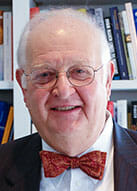
The 2015 Nobel Prize awarded to Angus Deaton for his studies on economic development, wellbeing, inequality, consumption choices and the determination of poverty is a very important sign: after years of the financial crisis, Stockholm and its consultants continued to award economists who had studied and promoted economy and finance that contributed to generating the crisis. In this most important seat of contemporary science and social sciences, the awarding of the Nobel Prize to Deaton has returned to promoting the really all-around social scientists of the world, and advocates of a political or civil science which is at the origin of modern economy. Stockholm’s policy has been somewhat bizarre over the last years: from 2010 to 2013, while capitalism was running the risk of an implosion under an unprecedented financial crisis, the Nobel Prizes for Economy were awarded to some economists who were among the major advocates of the economic and financial paradigm that was revealing all its tragic limits. It was almost as if during a summer with the highest number of arson crimes ever, the award was to go to those who studied sophisticated fire-lighting techniques. This is why the Nobel Prize this time, and in some way that of last year assigned to the Frenchman, Jean Tirole, could be a sign of a reverse trend since the award to Deaton closely resembles the awards given to Amartya Sen, Joseph E. Stiglitz, Elinor Ostrom and more recently to Eugene Fama and Lloyd Stowell Shapley. We must not forget that the financial and economic crisis we experienced and are still undergoing, is not independent from the economic theories of the last decade, since unlike the astrophysicists whose theories do not modify the orbit of the planets, economists and their theories strongly impact on economic choices. Over the last years the best of the world’s economic departments were increasingly filled with more mathematicians with increasingly scarce humanistic backgrounds, and experts of hyper-specialised models most of whom were no longer capable of having an overall view of the economic system and thus associate their models with the socio-economic reality. Besides the award to Deaton following that given to Tirole, this could indicate a return to a more European economic theory, which pays greater attention to the social dimension of the profession, and more sensitivity to the themes of collective wellbeing and not only individual profits and turnovers. This probable dawning will, however, reach its peak if the next Nobel prizes highlight more philosopher economists and less mathematician economists, as once described by the British economist, Robert Sugden, in 1991: “The economist today needs to return to being more of a philosopher and less of a mathematician.” It was an invitation which at that time was hardly noticed by professionals of the sector, but we may still be on time to do so. Angus Deaton is furthermore, an economist who not only writes mathematic articles but also books. We recommend his latest work, “The Great Escape: Health, Wealth, and the Origins of Inequality,” in which the new Nobel laureate and authentic social scientist and rightful heir of this co-citizen, Adam Smith (philosopher and economist), asked himself whether humanity will, in the future, enjoy a period of progress without inequality, a fundamental issue today when we are paying the price for progress with growing inequality in the world and a decrease in happiness. Economics could return to being a moral, society-friendly science if it will start again to ask itself questions which were too rapidly abandoned to respond to easier queries, less useful to human progress. Luigino Bruni
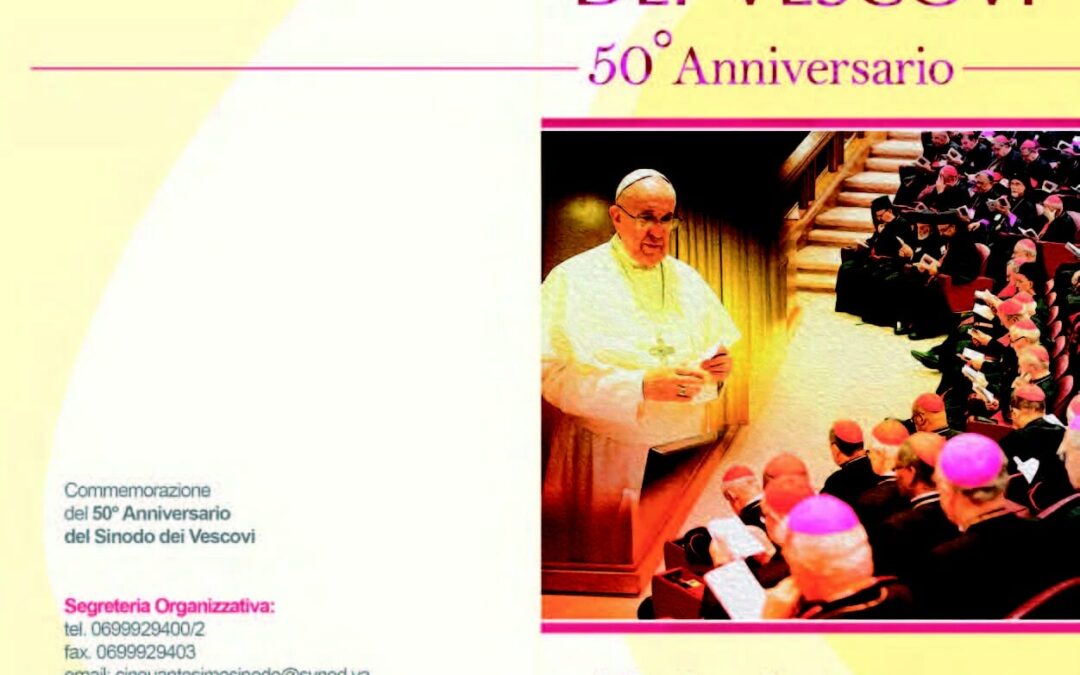
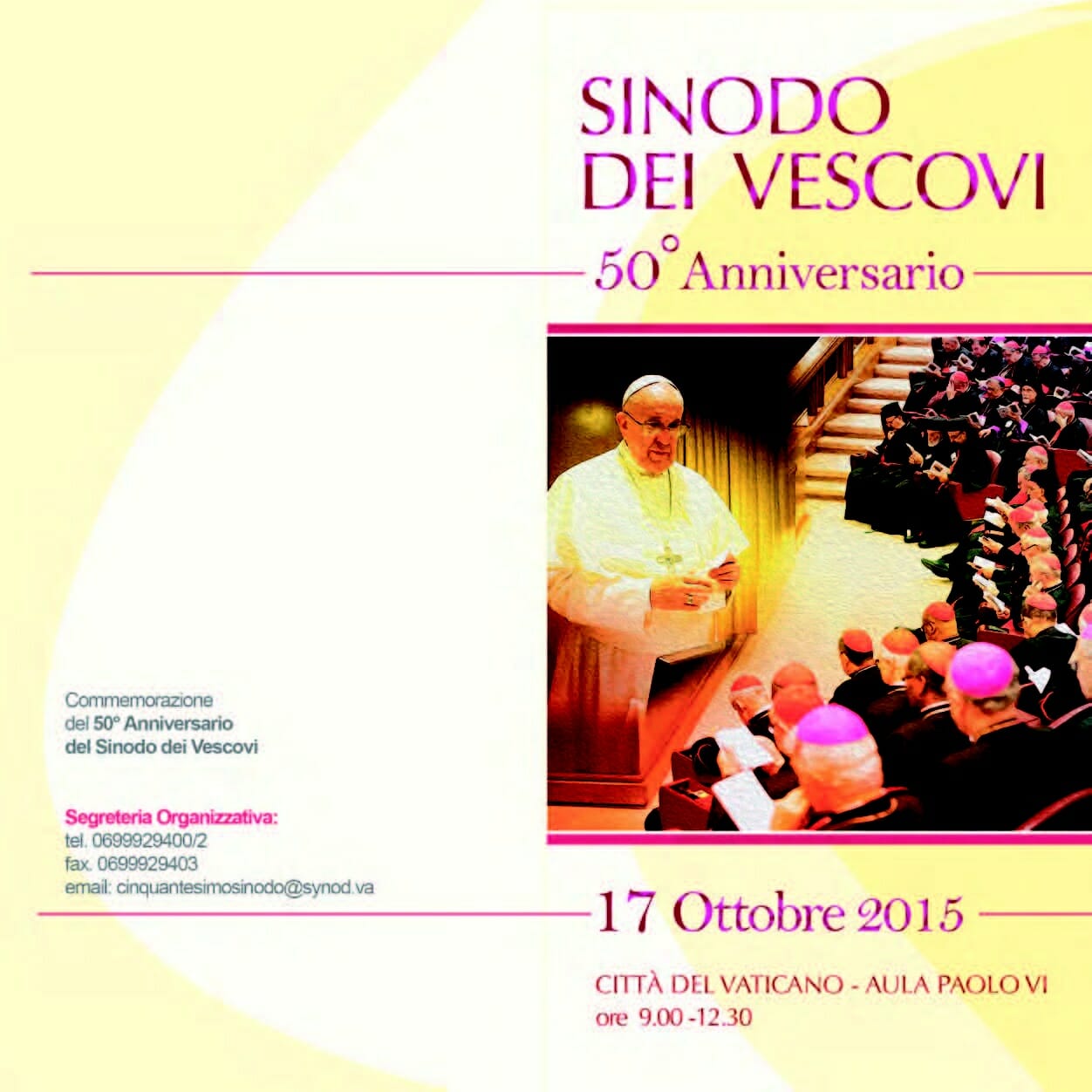
The Synod of Bishops is a permanent institution that was created by Paul VI on September 15, 1965, to keep alive the spirit of collegiality of the Second Vatican Council. This year marks the 50th anniversary of the institution, and the Catholic Church remembers it during the ordinary assembly of the Synod of Bishops, on “the vocation and mission of the family in the Church and in the contemporary world (October 5-25, 2015). On the morning of October 17, in the presence of Pope Francis, interventions will be given by Cardinal Lorenzo Baldisseri, General Secretary of the Synod of Bishops, and Cardinal Christoph Schönborn, President of the Bishops Conference of Austria. This will be followed by messages of bishops from the five continents, and the concluding address by the Holy Father. There is a large delegation from the Focolare amongst the invited guests, including Focolare president Maria Voce who described the Synod of Bishops as “one of the best fruits of the Second Vatican Council for a new sense of collegiality and deeper communion for the further building up of the Universal Church.” Synod comes from the Greek word “syn-hodos” which means “meeting” or “together”. The original meaning of the word, which is to “walk together”, expresses the essence of the Synod: a place for the bishops to encounter one another with the Pope, to share their thoughts and experiences in the common search for pastoral solutions that can be offered to the Church around the world.
“If one day all people, not as individuals but as nations, learn to put themselves aside, to put aside the idea they have about their own country, … and if they were to do this as the expression of the mutual love between States that God wants, just as he wants mutual love among individuals, that day will mark the beginning of a new era. For on that day, Jesus will be alive and present among peoples. … Now is the time for every people to go beyond its own borders, to look farther. Now is the time to love other countries as our own, to acquire a new purity of vision. To be Christians it is not enough to be detached from ourselves. The times we live in ask something more of the followers of Christ: the awareness of Christianity’s social dimension. … … We hope that the Lord may have mercy on this divided and confused world, on peoples closed within their own shells, contemplating their own beauty – so special to them – although it is limited and unsatisfying. With clenched teeth they hang on to their own treasures, those very treasures that could help other peoples, where many are dying of hunger. May the Lord cause the barriers to fall, and charity to flow unhindered between one land and another, in an endless stream of spiritual and material goods. Let us hope that the Lord brings about a new order in the world. Only he can make humanity one family and cultivate the distinctive characteristics of each people, so that the splendour of each, placed at the service of others, may shine with the one light of life. By making each earthly country beautiful, this light will make each one a foretaste of the eternal Country”. Chiara Lubich
Excerpt from “Mary, bond of unity among nations”, Summer 1959 – Published in “Essential Writings”, New City Press, New York, 2007. pp. 231-2
JUNTOS POR MEXICO (Together for Mexico) is a venue for meetings and mutual respect in order to facilitate joint actions for the spiritual and social good of the country. The event will have a festive but also reflective nature, with formation and education dedicated to the whole family. More than 10,000 people are expected to attend, and will reflect on the theme of the family and the role of the lay person in society according to different perspectives: anthropological, spiritual, social, and political. One of the most anticipated and important topics is the vision of young people. On the list of international speakers are Dr. Giovanni Impagliazzo (Italy), Coordinator for Latin Americaof the Community ofSant’Egidio; Mr. Ricardo Sada L.C., the local director of Regnum Christi; Dr. Maria Consuelo Queremel, the Vice Minister General of the Secular Franciscan Order. Speaking for the Focolare Movement are the co-president, Dr. Jesús Morán (Spain) and spouses Anna and Alberto Friso (Italy), members of the Pontifical Council for the Family. Also present will be Margaret Karram (Israel) and Marc St-Hilaire (Canada), who are responsible for the dialogue with other ecclesial movements. The event will be transmitted in streaming at www.juntospormexico.org.mx