13 Jun 2015 | Non categorizzato
“… One way of applying this faith in God is when we are worried about something that makes us anxious. Sometimes it is fear for the future, or concerns about our health, we are frightened about suspected dangers, we are worried about our relatives, apprehensive about a job we have to do, we are uncertain about how to behave, there is the shock of bad news. There are fears of various kinds. Well then, at times like these, precisely in times when everything is uncertain, God wants us to believe in his love and asks of us an act of trust. If we are really Christians, he wants us to make good use of these painful situations to prove to him that we do believe in his love. This means believing that he is a Father to us and he thinks of us, and casting upon him every anxiety we have, burdening him with them. Scripture says: “Cast all your anxiety on him, because he cares for you.” (1 Pt 5:7). … The fact is that God is our Father and he wants his children’s happiness. This is why they unload every burden onto him. Besides, God is love and he wants his children to be love. All these worries, anxieties, and fears block our soul, shutting it up in itself, and get in the way of our opening up towards God by doing his will and towards our neighbours by making ourselves one with them so as to love them in the right way. In the early times of the Focolare, when the Holy Spirit was teaching us our first steps on the path of love, “casting all our anxiety on the Father” was something we did every day, and often several times a day. In fact we were leaving behind a purely human way of living, even though we were Christians, so as to move into a supernatural, divine way of living. That is, we were beginning to love. Worries are stumbling blocks to love. So the Holy Spirit had to teach us how to get rid of them. And he did. I remember we used to say that just as you cannot hold a hot coal in your hand, but you would drop it at once so as not to get burned, so too with the same speed we had to cast every worry onto the Father. I can’t remember any worry cast into the Father’s heart which he did not take care of. … So let’s cast every anxiety on him. We will then be free to love. We’ll run faster on the path of love which, as we know, leads to holiness.” C.Lubich, Cercando le cose di lassù, Roma 19924, p. 26-29. Read the whole text: Chiara Lubich Center
9 Jun 2015 | Non categorizzato
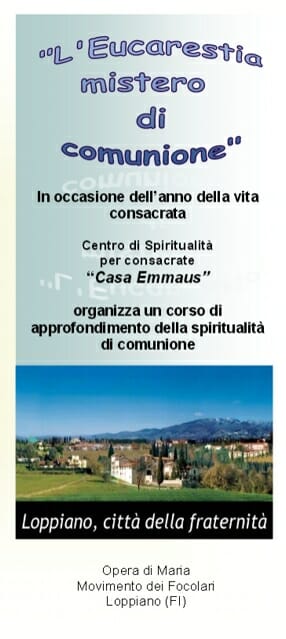
“Casa Emmaus,” located in the international town of Loppiano – Incisa Valdarno (FI), wishes to be a “school of communion” and a “school of life” for all the religious worldwide. The course will offer some tools to help participants acquire a deeper knowledge of the spirituality of communion the Church has proposed for the Third Millennium, in the light of unity and life of the Gospel. All are advised to bring along their own Constitutions, to be able to compare their own charisms and share with the others the innate treasures within, in a spiritual climate of reciprocity. See: Brochure
8 Jun 2015 | Non categorizzato
In the face of immense challenges which also the European society has to tackle – particularly this year, after the attacks in Paris and Copenhagen – one can feel the growing distrust within and between communities. Already at the start of the 1990s, on the initiative of Jacques Delors, the EC President at that time, dialogue with the Churches and the non-religious organisations had been an occasion for an exchange of views on European politics between institutions and the main players of civil society. How can we live together and build a society in which every person and community can feel at home and safe? How can we find ways of accepting the differences when substantially there is no agreement? These are some of the open questions the religious leaders will confront together.. Also the President of the Movement, Maria Voce has accepted the invitation to participate, underlining how the priority of the Focolare is to “build bridges through respectful dialogue at various levels, and to contribute to the peaceful coexistence and fraternity between people of diverse faiths and the most varied ethnic and social origins.”
8 Jun 2015 | Non categorizzato
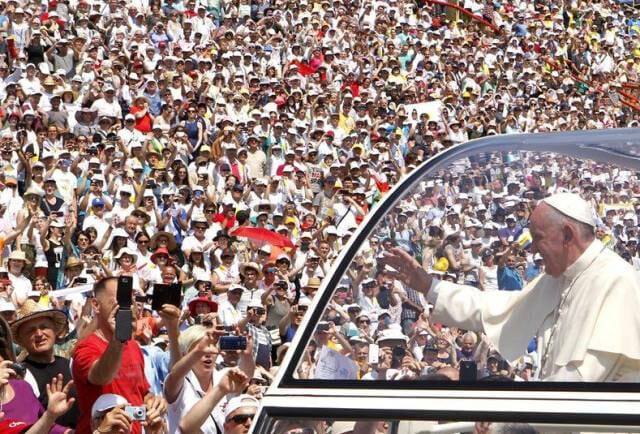 We are breathing an air of peace,” Cardinal Puljic had exclaimed on the vigil of the Pope’s arrival. The city was expecting him with much joy and had begun preparing for his visit several months in advance. Rumuors that had put the security on guard were put to rest by the concerted preparatory efforts Church and State working in harmony. This effort and the willingness of the citizens in following the rules allowed everything to turn out quite well.” Sarajevo, the city that John Paull II called the European Jerusalem was festively awaiting sthe Pope. Peace be with you was the motto of the Pope’s visit to Bosnia and Herzegovina, “a land tested by conflicts, the latest of which is still very present in the memory of “Bosnians, Serbs and Croats,” as Novi Svijet Gina Perkov (Croatia) writes. “The war has indeed had tragic consequences: death, destruction and the exile of so many people. The number of Catholics (primarily Croation) has been reduced by half.” The population was grateful that, this time, the eyes of the world were fixed on them for a happy reason, and hopeful that this fact might help in resolving several political questions; one being that “several EU countries are culpable for having permitted and assisted the ethinic cleansing,” as attested to in a recent book by Bishop Franjo Komarica, Bishop of Banja Luka, Serb Republic. During the Eucharistic Celebration at the Olympic Stadium of Kosevo in the presence of 70 thousand people – 23 thousand of them, Croation – the Pope offered a strong message of peace. “Peace is the dream of God, the plan of God for humankind. . . Today, the cry once more arises from the people of God and from all people of good will: War never again! Making peace is an artisanal task: it requires passion, patience, experience, tenacity. Blessed are they who sow peace through their daily actions, with attitudes and gestures of service, fraternity, dialogue, forgiveness. . . Peace is the work of justice. . . practiced, lived out justice. True justice is doing to the other person, to the other people, what I would want to be done to me, to my people. Peace is a gift from God, because it is the fruit of his reconciliation with us. . . Today let us together ask the Lord for a simple heart, for the grace of patience,” he concluded. In the afternoon, Pope Francis met at the cathedral with priests, men and women Religious and consecrated people and, in the end, with young people. The Focolare Movement offered gifts to the Pope and attended all the moments of encounter. The spirituality of unity arrived in Bosnia and Herzegovina in 1975 through several young people who had attended the Mariapolis of Zagabria, Croatia. In 1992, war broke out: countless were lost, destruction, death and refugees. Many, many people fled to the different countries of Europe. There was a huge effort to continue to support those who had stayed behind, but since roads were closed only a few letters and foodstuffs were able to reach the people. Through the love of the people who lived the spirituality of unity, many Muslims and Christians found a point of encounter in the Ideal of unity. When the war ended and they returned to Bosnia, they themselves became the bearers and witnesses of this new spirit. “At the beginning of 1996 it finally possible to go to them, in spite of the war,” say some witnesses to the events. We were met by rubble everywhere, crumbling houses, armoured vehicles, constant police surveilance and, once in a while, an exploding grenade. . . The city of Sarajevo was treeless because they had all been burned by the people who tried to warm themselves during the freezing winters.” The first spark of the Ideal of unity that had been welcomed by several people many years earlier, and treasured in their hearts, burst into flames during the war among a people marked by suffering, in need of so many things, who were able to intuit what was essential, thirsty for something true. They were Catholics, but also Muslims and Orthodox, all of them grateful for the discovery of God-Love which had transformed their lives. The current situation Bosnia is still unresolved. The Catholics emigrate, especially the young, and their is fear of future conflict. The Focolare community draws its strength from unity, a small sign of that unity which was desired by John Paul II in 1997 when he visited and wished for Sarajevo that after the war, it would become the convincing model of the third millenium.
7 Jun 2015 | Non categorizzato
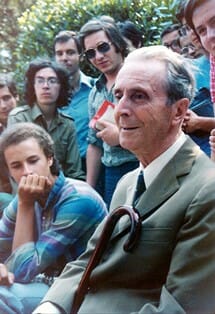
“To me, Chiara Lubich’s talks on the Eucharist were like a revelation that led me to a broader and more precise knowledge of the Eucharist’s deep impact not only on the individual but on society. I saw that the progress of Christian conscience in the individual and in society depends on the depth of the knowledge Christians have of the Eucharist. In other words: if we know what the Eucharist is, and we live its reality as such, we can draw forth from Christianity the deepest value our soul and society needs. In fact the Eucharist unites man with God and is the mystery of Christ’s love for humanity. It is communion with Christ and our brothers; it is unity with both. If we want to see the progress of society’s highest communitarian and universal aspirations that oppose egoism, racisms, tyrannies of sorts, etc., we have to make the Eucharistic conscience grow, and live it profoundly. We can say that the relationship with God and man himself is a Eucharistic mystery in which God makes himself man because man can be like God. It is nothing less than that. With her explanations, Chiara makes us consciously enter not only into the mentality of Christ, but into his humanity and divinity. She wants us to coexist, through the sacramental communion, with both the divinity and humanity of Jesus. It is a revolution that defies man and sets him in contrast with and above the process of moral degradation besetting society today. The revolt against death starts from the Eucharist. Chiara has thus stamped on our lives a mark of heroism and sanctity. There is no need for mediocrity to be able to live within human coexistence. What comes to mind is the question the angel asked the souls that entered Dante’s purgatory: “Oh you humans who have been born to fly – why have you fallen under the breeze?” Meaning to say, oh man, why do you, who are born to fly to God, let yourself fall into sin so easily and lose this chance to fly? Sanctity is heroism, but which is immensely facilitated by daily nutriment of the Eucharistic bread. It implies a daily, assiduous devotion, going one step higher each day, beyond the mediocrity in which a greater part of humanity lives in today. This mediocrity consists in lies, lust, thefts, and violence which is not a way of living but of stupidly organising our own agony. The Eucharist gives us wings to fly!” Igino Giordani, The Eucharist gives us wings to fly, «GEN» November 2004, pp.10-11
4 Jun 2015 | Non categorizzato
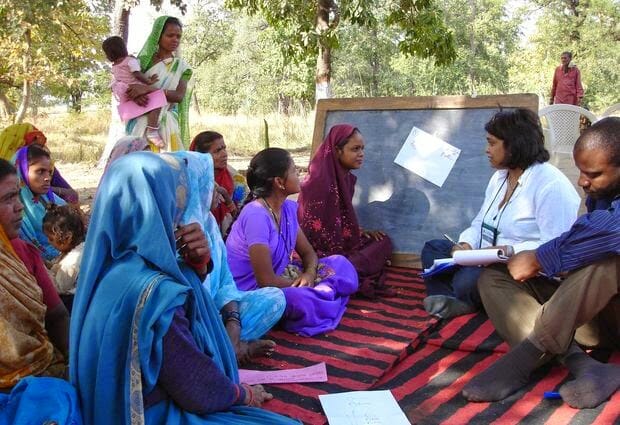
While gender is the topic under discussion in the Western world, in developing countries the concern is for the tragedy of exploitation; in the Middle East the rights of women, and peace. Still in the West, women forced to choose between work and family; lives that are subjected to violence… These are a few of the challenges and problems – differing according to the various geographical areas – in discussion at the United Nations, in view of the new agenda for the Sustainable Development Goals, to be carried out after the year 2015 (the date by which the 193 member states hoped to achieve the famous Millennium Development Goals). These challenges and problems were also discussed during the three days sponsored by the Pontifical Council for Justice and Peace (Rome, May 22-24, 2015), in collaboration with the World Union of Catholic Women’s Organizations and the World Women’s Alliance for Life and Family. Not only an overview of the most urgent issues linked to woman’s conditions, nor a mere moment of condemnation of the violations of her dignity and her rights. The 120 women from different countries wanted to offer a contribution of experiences and ideas, then synthesized in a final document towards the new United Nations Post-2015 Development Agenda. In his message to Cardinal Turkson, president of Justice and Peace, Pope Francis wanted to give voice to the petitions promoted by the Catholic feminine world in international proceedings, inviting those who are “engaged in defending the dignity of women and promoting their rights,” to allow themselves “to be constantly guided by the spirit of humanity and compassion” in the service of their neighbours. “In this way,” continues the pope, “you will manifest the countless God-given gifts which women have to offer, encouraging others to promote sensitivity, understanding and dialogue in settling conflicts big and small, in healing wounds, in nurturing all life at every level of society, and in embodying the mercy and tenderness which bring reconciliation and unity to our world.” The contributions ranged from: feminine anthropology, women and education, women and interreligious dialogue, technologies related to life and to procreation, human rights, women and agricultural work, to business and finance etc., followed by work in thematic atelier, or workshops (a term which recalls the “artisan work” of finesse and industriousness, typical of women) on the Sustainable Development Goals, for an elaboration of proposals. Rita Mousallem, co-director of the Centre for Interreligious Dialogue of the Focolare Movement, spoke on the subject of “Interreligious Dialogue, means for a lasting peace. The roll of women,” taking inspiration from her personal experience as a Christian in the Middle East. In the various interviews to which she responded, she stressed the ability to listen, a typical characteristic of women, which provides the possibility to enter into the innermost part of oneself and of others; to know how to suffer and how to hope until the end, because – being a mother – she well knows the value of life. These aspects and others are part of that “feminine genius” – also quoted by Pope Francis – the gift and beauty typical of woman, called to give her contribution to today’s society, for the benefit of all. Read more: Aleteia
