13 Nov 2022 | Non categorizzato
The Focolare Movement adheres to the “Fossil Fuels Non-Proliferation Treaty,” signed by the Vatican’s Dicastery for the Service of Integral Human Development, the European Parliament, the Parliament of World Religions and more than 2900 scientists, academics, associations and representatives of different religious beliefs. “We, the undersigned, call on governments around the world to adopt and implement a Fossil Fuel Non-Proliferation Treaty, as a matter of urgency, to protect the lives and livelihoods of present and future generations through a gradual and equitable phase-out of fossil fuels in line with the scientific consensus not to exceed 1.5ºC warming.” These are the words of introduction to the letter signed by more than 2900 scientists, academics, associations and representatives of different religious beliefs, the Vatican’s Dicastery for the Service of Integral Human Development and the European Parliament. The Focolare Movement has also joined the effort to ask world leaders for a Fossil Fuel Non-Proliferation Treaty. Oil, gas and coal are the main cause of the climate crisis. The world already has enough renewable energy potential to comfortably expand energy access for all. Yet dependence on fossil fuels continues as experts sound the alarm about how coal, oil and gas are a detriment to our public health, biodiversity, world peace and our climate. Although the Paris Agreement set a crucial global climate target, many governments have continued to approve new coal, oil and gas extraction even though burning these fossil fuels would result in emissions seven times greater than those consistent with keeping warming below 1.5°C. To achieve the goals of the Paris Agreement there is a need for international cooperation to explicitly stop the expansion of fossil fuels. This is why considerable momentum is building behind the proposal for a Fossil Fuels Non-Proliferation Treaty. On Monday, Nov. 7, 2022 in Sharm-el-Sheikh, Egypt, COP27, the global climate conference began with the participation of more than 140 heads of state and government. During this event, a conference entitled “The Right to a Healthy Environment: Faith and Ethical Perspectives” was held, organized by the Parliament of World Religions, in collaboration with UNEP Al-Mizan (a UN project with several Islamic organizations on the environment). The right to a healthy environment is supported by the ethical teachings of the world’s faith traditions on justice and valuing nature. Experts and religious leaders discussed this topic from the perspective of religious ethics and shared values, culture and advocacy, and call on world leaders gathered in Egypt to sign the Fossil Fuel Non-Proliferation Treaty.
Lorenzo Russo
12 Nov 2022 | Non categorizzato
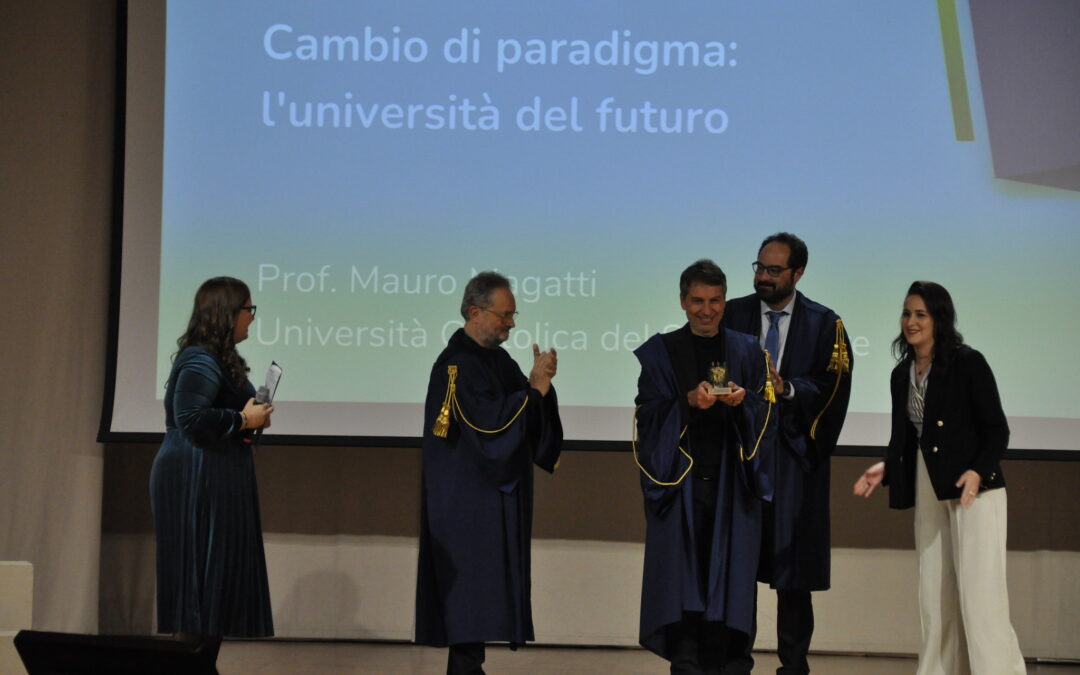
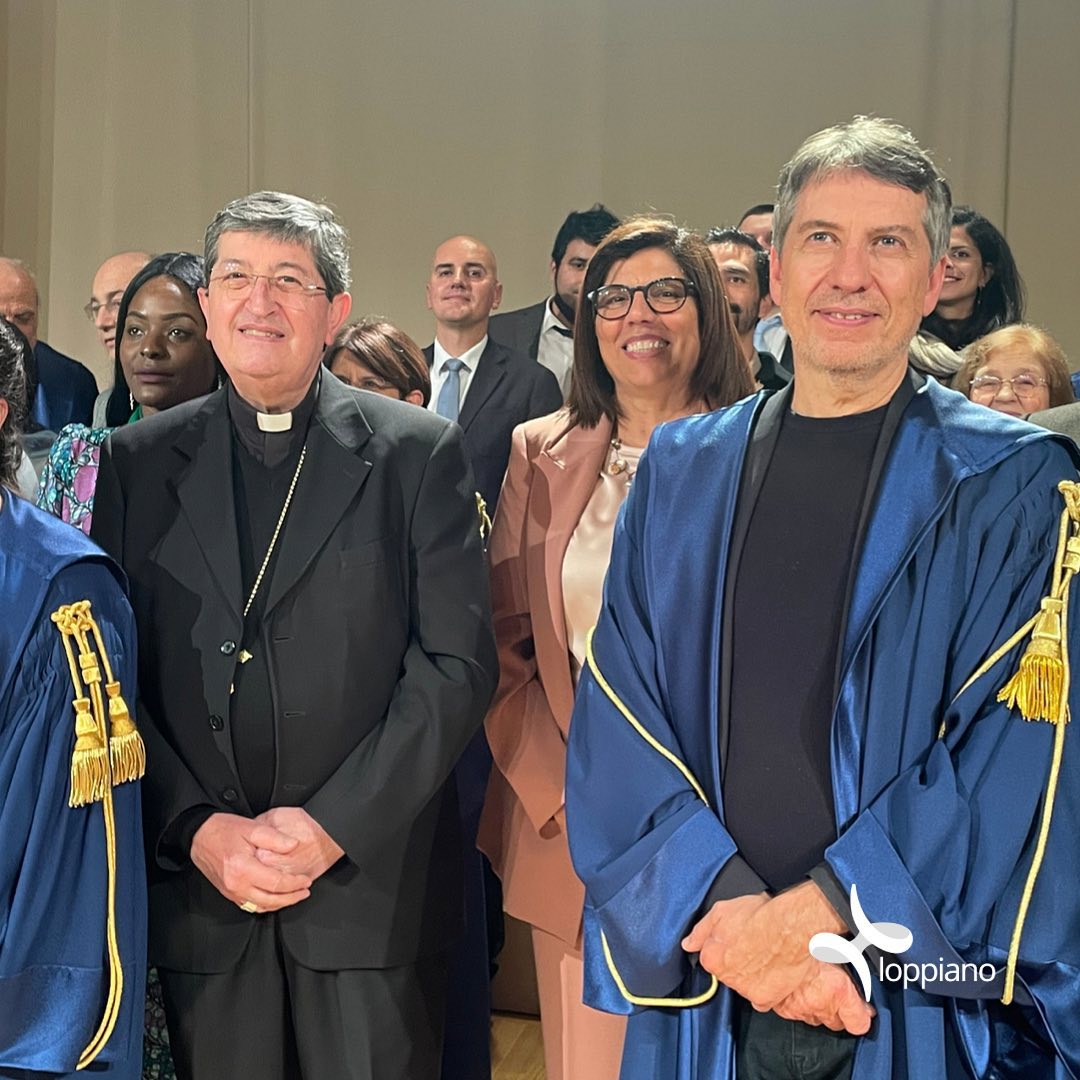
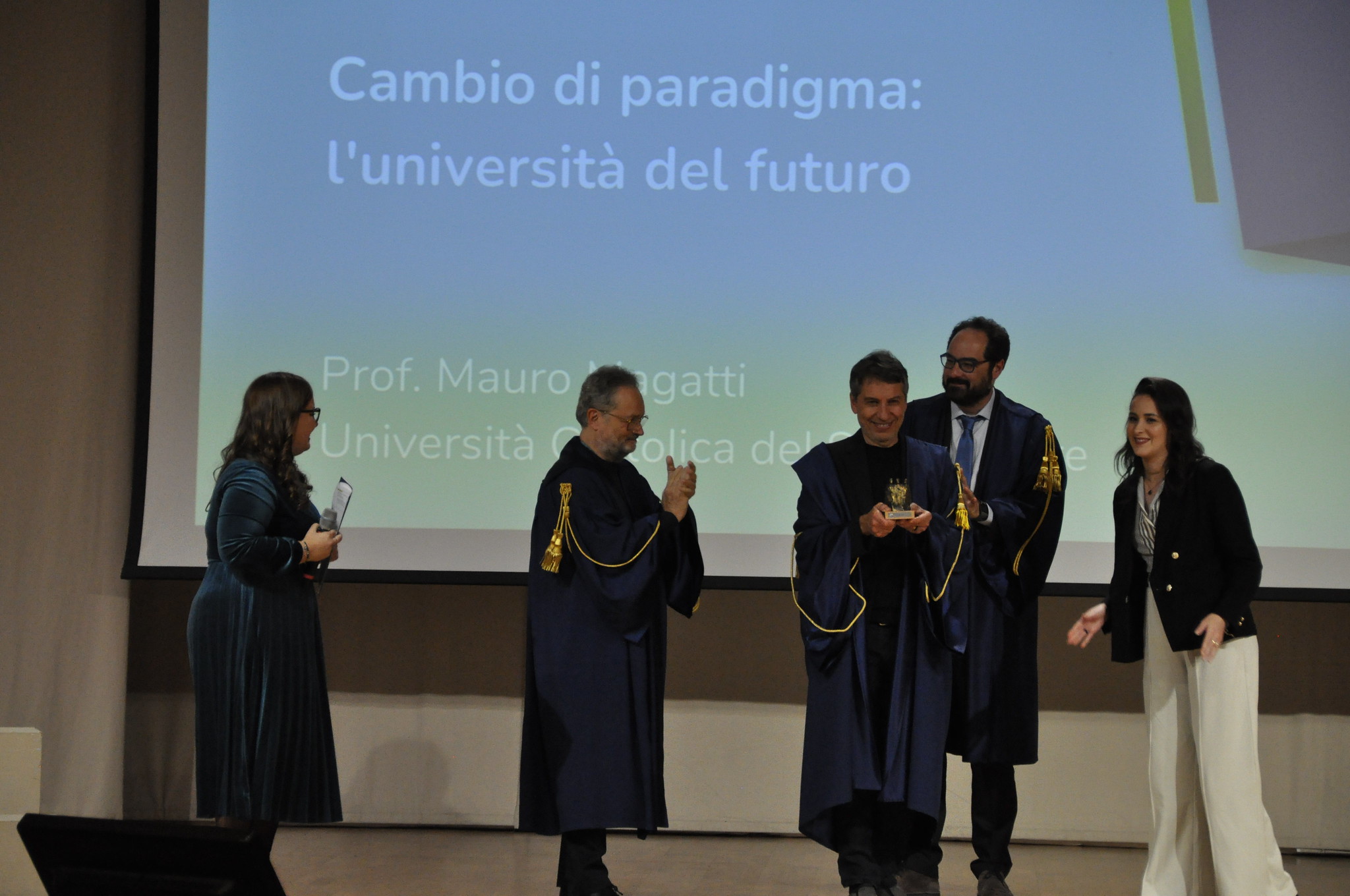
The speakers at the inauguration of the new academic year of the Sophia University Institute (SUI) pronounced words of encouragement and stimulus. They included the Grand Chancellor Cardinal Betori, Deputy Grand Chancellor Margaret Karram, Rector Declan O’Byrne and Prof. Mauro Magatti, Professor of Sociology at the Catholic University of the Sacred Heart. 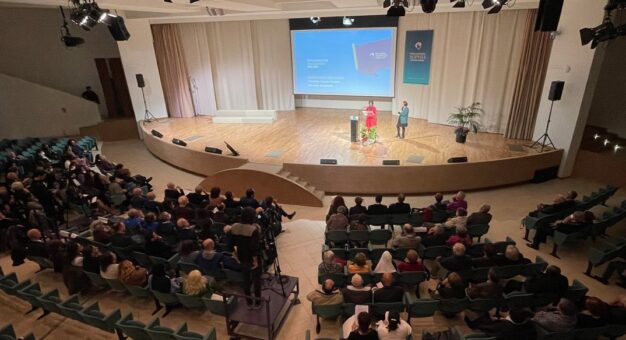 The official start of the year is a major event for any academic community. In the times we live in, with the complex challenges of culture and society that emerge from the pandemic and the return of war on European territory, it is a very important occasion. This year, 350 people attended the opening of the 2022/2023 Academic Year of the Sophia University Institute in Loppiano (Figline-Incisa, Valdarno-Italy). The title of the event, the 15th so far, was: “Paradigm shift: the university of the future”. As usual, Sophia wanted to take the opportunity to try to open up new paths, to present something of the “versatility” that is a constitutive part of her heritage. The Grand Chancellor, his eminence Card. Giuseppe Betori, who has accompanied and supported Sophia’s journey from the beginning, said that Sophia “is beginning to enter the time of maturity”. And he recommended “always drawing on the charismatic roots at the base of the Institute, roots from which life emerges”, including academic life.
  The Vice Grand Chancellor, Margaret Karram, President of the Focolare Movement, emphasized the renewal that, after the initial phase, characterizes the current moment of the Institute. She said, “We note that a new generation of teachers, who have trained academically in this Institute is taking the baton from those who started. I am referring to the Professors of the ‘first hour’ to whom all my esteem and gratitude goes. They are those who, with courage, left the prestigious positions they held in other universities to give life to Chiara Lubich’s dream: to create a university institution at the service of the Church and humanity, which would give cultural and academic consistency to the charism of unity, to contribute to the realization of ‘that all may be one’ (Jn. 17:21)”. The mission of the SUI appears of no secondary importance in this historical moment of “fragmentation of knowledge and opinions” which requires attention and dedication: “Only by listening to God’s Wisdom, only by letting ourselves be shaped by it and by working, starting with ourselves, to ensure that it is transformed into culture, we will trace the way to answer the many questions of contemporary thought and we will be able to help heal the wounds and immense pains that afflict humanity”. The student representatives, Merveille Kouatouka and Valentina Alarcón, proposed six words in their short presentation: welcome, listen, discover, contemplate, dare, desire. They are the six verbs that the students wanted to choose in their study of a subject that is not usually found in universities: “sharing” (a subject for which Sophia gives university credits, because it is an expression of the lifestyle that the Institute wants to promote). They said it is, “An invitation to open a path to create and be, a ‘place’ in which to share Wisdom and mutually nourish each other. We like to recall Benedict XVI’s invitation in Caritas in Veritate: ‘Truth is logos that creates diá-logos and therefore communication and communion'”.
  Prof. Declan O’Byrne is the recently appointed third Rector (Acting) of SUI, following Prof. Piero Coda, Rector until 2020 and Prof. Giuseppe Argiolas, Rector since 2020. In his speech, he focussed on an expression present in the 2014 Strategic Plan, which spoke of Sophia as the “university of the future“. He posed the question: “In what sense can such a statement be made?” It doesn’t mean that “Sophia pretends to be some kind of model of what other universities can be”. Rather it means “thinking of Sophia as a university which serves the future. In other words, shifting attention from the already to the not-yet”. And, again and above all, “Sophia, in continuity with the mission of the Church, must be able to direct its
  work towards the future and must know how to overcome the rigid distinctions between disciplines, but also to connect the trans-disciplinary effort to a vision informed by the destiny of all things to become one in Christ”. In his address, Prof. Mauro Magatti, Professor of General Sociology at the Catholic University of the Sacred Heart and a friend of Sophia since the beginning, reflected on the idea of the university. He said: “Social life cannot be understood without taking into account the ability to accept a deviation from the plan, a quantum leap with respect to constraints that would seem to configure an impasse, or an unshakable determinism. In this sense, the spirit can be thought of as something which is capable of “infinite in the finite”, of “infinitizing” through projections that open lines of flight and spaces of freedom beyond the factual”. He said: “We need new knowledge and therefore a new university (…) To live in the time of complexity, it is necessary to recognize, enhance and cultivate an open, multidimensional, widespread, embodied reason, in constant dialogue and questioning with what is non-rational, a-rational, and supra-rational”. “Live in the time of complexity” is the invitation of Prof. Magatti. Sophia’s Academic Community and its vast array of friends accept the challenge.
Michele Zanzucchi Foto: Cittadela Loppiano
9 Nov 2022 | Non categorizzato
The greeting of Margaret Karram, President of the Focolare Movement, to the men and women volunteers in formation, who were meeting together in Castelgandolfo on 5th November. She expressed her joy in sharing with them the beautiful letter she had received from Pope Francis. Activate English subtitles https://youtu.be/izLQ6PkQsHA

4 Nov 2022 | Non categorizzato
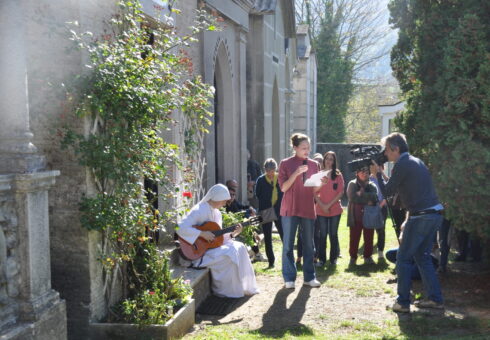
On 29th October 2022, the Feast Day of Blessed Chiara “Luce” Badano, her hometown, Sassello, opened its doors and gathered to remember this young woman whose testimony continues to inspire. On 29th October 2022, Blessed Chiara Badano would have celebrated her 51st birthday. A young girl in love with God, who at the age of 17, discovered that she had a bone tumour yet, even in illness, she never stopped believing in God’s love. Many young people, children and adults came to her hometown, Sassello, in the province of Savona (Italy) which is surrounded by woods and beautiful hills, to remember her on her birthday which coincides with her Liturgical Feast Day. Thirty-two years after her death, her witness continues to spread and the fruits of a life lived in light inspire many to go beyond obstacles, to feel caressed by God’s Love even in difficulties and pain and to give their lives for those in most need. The day began at midday at the chapel of the Badano family in the Cemetery, where many people from various countries gathered around Chiara’s tomb for the “Time-Out”, a minute of reflection to ask for peace all over the world. It was a simple but profound moment of meditation and prayer, in which Maria Teresa, Chiara’s mother, Daniele Buschiazzo, the Mayor of Sassello, Msgr. Luigi Testore, the Bishop of the Diocese of Acqui and the members of the Chiara Badano Foundation took part. The Mayor said, “29th October is generally a moment that enriches the whole community. And the fact that it is especially young people who recognize Chiara as an important point of reference, makes us even more proud. Every year this is a stimulating event for our Municipality and our community, addressing as it does, important issues. This year, the topic is peace”. In the afternoon, at the Parish of the Most Holy Trinity, in the centre of Sassello, many participated in the Mass, celebrated by Mgr. Testore, assisted by Fr. Enrico Ravera, the Parish Priest of Sassello. The Bishop said “Chiara shows us precisely what it means to welcome the Love of God and constantly discover this Love. So she was able to live her short life above all with this perspective, leaving us a very strong imprint that each of us can take back: discovering the Love of God and letting ourselves be guided by this Love to build our own lives”. 5th “Art Award” Immediately after Mass, the Chiara Badano Foundation announced the names of the winners of the 2022 “Art Award”, which gives young people the opportunity to illustrate with their own talents how much the story of Chiara Badano, her ideal and her lifestyle has fascinated, attracted and inspired them. This year’s winner in the “Children’s” category (10-16 years) was Manuel Arduini di Cattolica (Italy), with a drawing inspired by Chiara, entitled “The path to light”. Manuel explained, “What inspired me in this design was Chiara’s faith in the Church and in God”. In the “Youth” category (17-35 years), the winners were Guilaine, Darlene, Ashura, Evasta and Erica from Burundi. These 5 girls from the Chiara Luce Centre of the Focolare Movement in Bujumbura, wrote the words for a song (based on traditional music) and prepared a choreography that expresses the joy of getting to know about the life of Chiara “Luce” and how her example helps them in their lives. The Jury also made a special mention of a song by a group from Bujumbura which was entered in the Children’s category. Chiara Cuneo, Counsellor at the International Centre of the Focolare Movement received the award and the certificate and also brought the greetings of President Margaret Karram and Co-President Jesus Morán. Before concluding the award ceremony, Pasquale Capasso and Martina Bolino from Arzano (Italy), winners of the youth category for the year 2020, performed their winning song, “Here for Eternity” as in 2020, due to the pandemic they could not participate in person. Pasquale Capasso explained, “Having reached the last page of the book on Chiara, “From the rooftops down” written by Franz Coriasco, I thought that this is a story which should continue. I know lots of young people, like me, like us, trying to spend their lives serving others with their talents. And so, the experience of this song must surely be a common experience, with others and friends… and this song came out, which is a stimulus to carry on the witness that Chiara left us, because it is a commitment that we all feel we have to take on. Martina Bolino added, “It started a bit like a game… we joined in this game and the result was a kind of crazy joy that is contagious, so we’d like to thank those who invited us to take part”. “Chiara Luce Badano Solidarity” Award At the end of the award ceremony for the winners of the 2022 “Art Awards”, there was also the presentation and launch of the new “Solidarity Award”: an annual initiative to promote solidarity projects in all parts of the world, which will be linked to the artistic award. Cristina Cuneo, a member of the Chiara Badano Foundation, said, “From an early age, Chiara showed a true passion for the most in need, the weakest, the most marginalized in society, the elderly and in particular children. For this reason, inspired and encouraged by Ruggero Badano (Chiara’s father) and Delfina Giribaldi, the Foundation, has decided to establish the ‘Chiara Luce Badano Solidarity Award’, in accordance with its statutory mandate to support and encourage projects for the promotion of positive actions aimed at the weaker sections of the population”. The deadline for submitting projects is 20th January, 2023. The regulations of the competition are on Chiara’s website. For more information on Blessed Chiara “Luce” Badano: www.chiarabadano.org
Anita Martinez
26 Oct 2022 | Non categorizzato
Going to meet your neighbours, loving them completely, often means retracing your steps, even when you think you are in the right. It means putting your weapons away and preferring acts of kindness. Dad’s return For work reasons, my husband had been away for a whole week which meant that I had to manage four children at home on my own, as due to Covid-19 the schools were closed. In a discontented way, I kept thinking: “Was it right for him to take on so much?” Anxiety started to build up inside me which I knew would burst out when he came back. At a certain point, however, I noticed that our youngest child was carefully preparing a drawing to give to her father when he came home. That kind gesture made me think and it was a real examination of conscience for me: “What about me? How will I welcome him? Will I attack him with my recriminations, listing all the burdens I have had to bear?” That child’s drawing was an opportunity to change direction and to decide, together with the children who were enthusiastic about the idea, to welcome their father with a party, preparing good things to eat and decorating the house. When my husband arrived, he was taken by surprise. Tired, but happy to be home, he said: “You don’t know what it means for me to have a family like this!” (M.S. – Hungary) Healing relationships Years ago my relationship with a neighbour broke down. My efforts to reconcile with him were futile. Recently, I realized that the feast day of the Saint after which he is named was coming up and I had an idea. But first, since he had moved, I had to do some research to track him down. The morning of his name day, a little nervously, I went to his house with a basket of gifts. His wife answered the door with a cordial welcome, “Look who it is! I’m sorry, I didn’t recognize you at first” and she called her husband. I was wondering how he would react. But I could never have imagined his huge embrace as he said: “What a gift you have given me by coming to visit! I was mean to you, but you know, sometimes I can’t control my temper!” In the living room, we had a friendly conversation for about two hours. And when it was time to leave, he offered me some produce from his fields. I thanked God for this meeting that brought joy to us both: only He could instil in me the courage to dare and to believe in the good that is hidden deep in the heart of every person. (E.B. – Italy)
Compiled by Maria Grazia Berretta
(taken from The Gospel of the Day, New City, year VIII, n.2, September-October 2022)

24 Oct 2022 | Non categorizzato
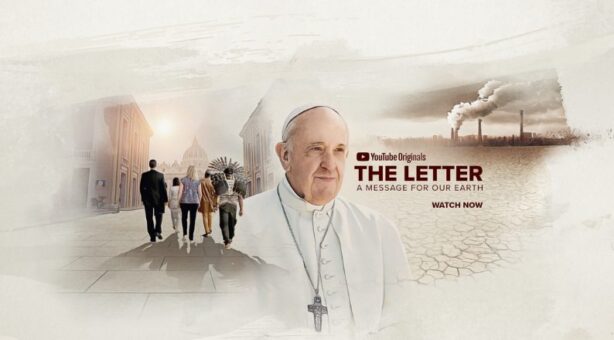
On Oct. 4, 2022, the docufilm “The Letter,” created by the Laudato Si’ Movement, was presented at the Vatican. It offers a perspective of how to act for the good of our “common home” and is now available for free on Youtube Originals in 12 languages. Arouna Kandé is a young Senegalese student born in a small village who used to work on a farm with goats and chickens but because of the gradual destruction of the environment the young Muslim was forced to leave the village. The young man explains how rising sea levels in the coastal town of Saint-Louis have already forced thousands of people to leave their homes. “My family in Senegal,” he says, “has done nothing to cause the drought in our village or the flooding in the city. We are being affected by the choices made by other people. However, the future is coming, it is mine, and I will make good use of it.” In the docufilm “The Letter,” presented by the Laudato Si’ Movement, of which the Focolare Movement is a partner, Arouna Kandé’s story is intertwined with the stories of Brazilian indigenous chief Cacique Odair Dadá Borari, 14-year-old Indian activist Ridhima Pandey, the Asners – an American couple, both marine biologists, and Irish woman Lorna Gold, all of whom are extremely active in safeguarding the environment. With a personalised letter leaving the Vatican and being delivered to each of them, a journey begins through their own lives until they return to the Vatican where Pope Francis engages in a dialogue with them in an atmosphere of intimate confidence and deep listening. Finally, the action moves to Assisi, to places made famous by St. Francis. There, Cardinal Raniero Cantalamessa offers a unique perspective for understanding the Franciscan roots of the message behind the Encyclical Letter Laudato Si’, dedicated by Pope Francis to care of the common home. The film was presented at the Vatican on 4 October, on the feast of the saint of Assisi, in the presence of its protagonists, director Nicolas Brown and his team along with the producers. In the Synod Hall, Arouna Kandé explained the importance of raising awareness of these issues. He spoke of schools being washed away by the waters and hundreds of boys having nowhere dry to rest, forced to sleep on their feet for days. The boy told of moving to a coastal town where the sea level is rising. He has not given up: he is now a university student and is setting up a new NGO to lead the next era of sustainable development in his country. Arouna is thus witnessing to the thousands of people who have firsthand experience of the climate crisis and have the knowledge to solve it. Ridhima Pandey, a 14-year-old Indian high school student, who has also participated in demonstrations to hold governments accountable for their climate action. She founded an NGO to help young women become climate activists. Ridhima said that future generations of young people will be the ones who suffer from global land abuse and neglect. “Our generation – the young people – is and will be the most vulnerable.” “The Letter” is a film to be watched in families, communities and schools because the message each of the protagonists receives is directed to every person on the planet enabling us to realise that we can all do our small or large part to care for “our common home” as Pope Francis calls it in Laudato Si’. The film will be available on Youtube Originals on 2 November 2022 in 12 different languages.
Carlos Mana
https://www.youtube.com/watch?v=Rps9bs85BII

 The
The 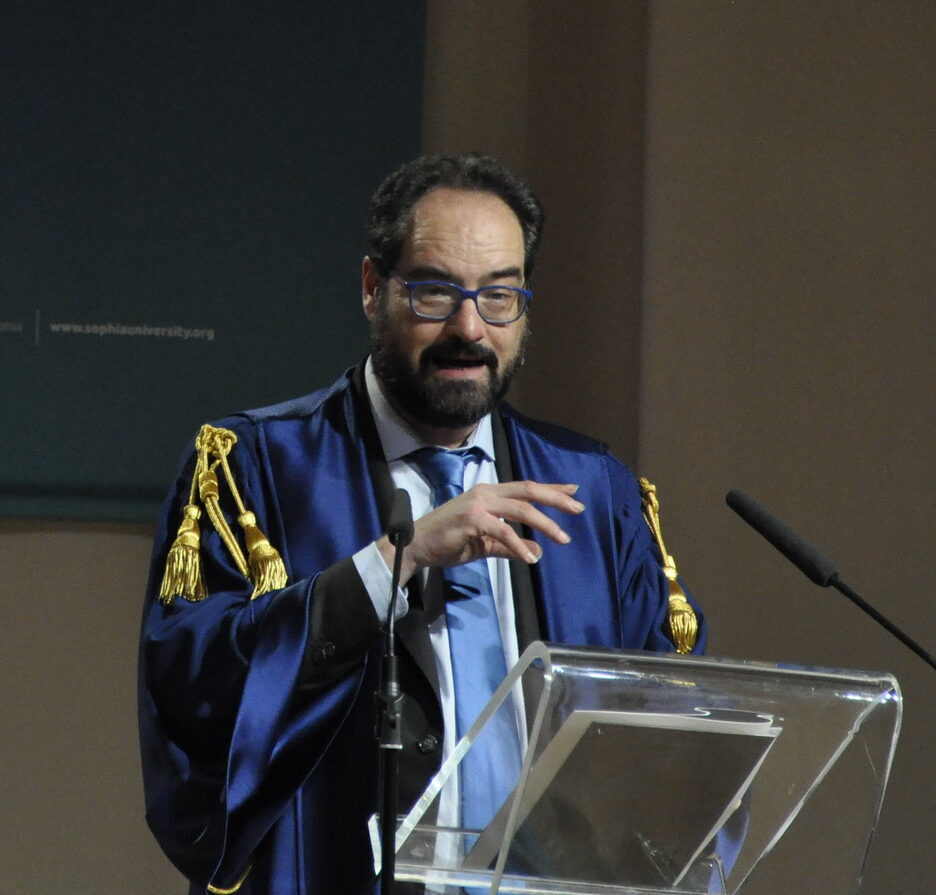 Prof. Declan O’Byrne is the recently appointed third Rector (Acting) of SUI, following Prof. Piero Coda, Rector until 2020 and Prof. Giuseppe Argiolas, Rector since 2020. In his speech, he focussed on an expression present in the 2014 Strategic Plan, which spoke of Sophia as the “university of the future“. He posed the question: “In what sense can such a statement be made?” It doesn’t mean that “Sophia pretends to be some kind of model of what other universities can be”. Rather it means “thinking of Sophia as a university which serves the future. In other words, shifting attention from the already to the not-yet”. And, again and above all, “Sophia, in continuity with the mission of the Church, must be able to direct its
  work towards the future and must know how to overcome the rigid distinctions between disciplines, but also to connect the trans-disciplinary effort to a vision informed by the destiny of all things to become one in Christ”. In his address, Prof. Mauro Magatti, Professor of General Sociology at the Catholic University of the Sacred Heart and a friend of Sophia since the beginning, reflected on the idea of the university. He said: “Social life cannot be understood without taking into account the ability to accept a deviation from the plan, a quantum leap with respect to constraints that would seem to configure an impasse, or an unshakable determinism. In this sense, the spirit can be thought of as something which is capable of “infinite in the finite”, of “infinitizing” through projections that open lines of flight and spaces of freedom beyond the factual”. He said: “We need new knowledge and therefore a new university (…) To live in the time of complexity, it is necessary to recognize, enhance and cultivate an open, multidimensional, widespread, embodied reason, in constant dialogue and questioning with what is non-rational, a-rational, and supra-rational”. “Live in the time of complexity” is the invitation of Prof. Magatti. Sophia’s Academic Community and its vast array of friends accept the challenge.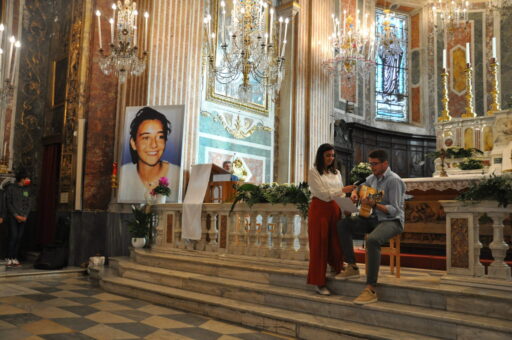
 Chiara’s tomb for the “Time-Out”, a minute of reflection to ask for peace all over the world. It was a simple but profound moment of meditation and prayer, in which Maria Teresa, Chiara’s mother, Daniele Buschiazzo, the Mayor of Sassello, Msgr. Luigi Testore, the Bishop of the Diocese of Acqui and the members of the Chiara Badano Foundation took part. The Mayor said, “29th October is generally a moment that enriches the whole community. And the fact that it is especially young people who recognize Chiara as an important point of reference, makes us even more proud. Every year this is a stimulating event for our Municipality and our community, addressing as it does, important issues. This year, the topic is peace”. In the afternoon, at the Parish of the Most Holy Trinity, in the centre of Sassello, many participated in the Mass, celebrated by Mgr. Testore, assisted by Fr. Enrico Ravera, the Parish Priest of Sassello. The Bishop said “Chiara shows us precisely what it means to welcome the Love of God and constantly discover this Love. So she was able to live her short life above all with this perspective, leaving us a very strong imprint that each of us can take back: discovering the Love of God and letting ourselves be guided by this Love to build our own lives”. 5th “Art Award” Immediately after Mass, the Chiara Badano Foundation announced the names of the winners of the 2022 “Art Award”, which gives young people the opportunity to illustrate with their own talents how much the story of Chiara Badano, her ideal and her lifestyle has fascinated, attracted and inspired them.
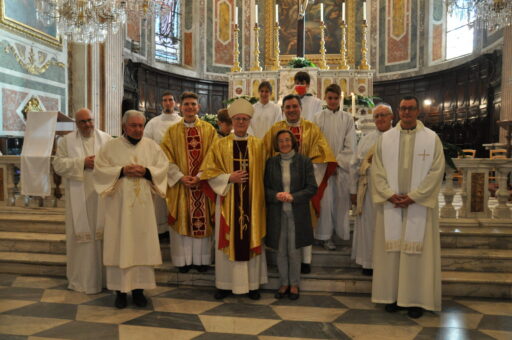 This year’s winner in the “Children’s” category (10-16 years) was Manuel Arduini di Cattolica (Italy), with a drawing inspired by Chiara, entitled “The path to light”. Manuel explained, “What inspired me in this design was Chiara’s faith in the Church and in God”. In the “Youth” category (17-35 years), the winners were Guilaine, Darlene, Ashura, Evasta and Erica from Burundi. These 5 girls from the Chiara Luce Centre of the Focolare Movement in Bujumbura, wrote the words for a song (based on traditional music) and prepared a choreography that expresses the joy of getting to know about the life of Chiara “Luce” and how her example helps them in their lives. The Jury also made a special mention of a song by a group from Bujumbura which was entered in the Children’s category. Chiara Cuneo, Counsellor at the International Centre of the Focolare Movement received the award and the certificate and also brought the greetings of President Margaret Karram and Co-President Jesus Morán. Before concluding the award ceremony, Pasquale Capasso and Martina Bolino from Arzano (Italy), winners of the youth category for the year 2020, performed their winning song, “Here for Eternity” as in 2020, due to the pandemic they could not participate in person. Pasquale Capasso explained, “Having reached the last page of the book on Chiara, “From the rooftops down” written by Franz Coriasco, I thought that this is a story which should continue. I know lots of young people, like me, like us, trying to spend their lives serving others with their talents. And so, the experience of this song must surely be a common experience, with others and friends… and this song came out, which is a stimulus to carry on the witness that Chiara left us, because it is a commitment that we all feel we have to take on. Martina Bolino added, “It started a bit like a game… we joined in this game and the result was a kind of crazy joy that is contagious, so we’d like to thank those who invited us to take part”.