24 Sep 2021 | Non categorizzato
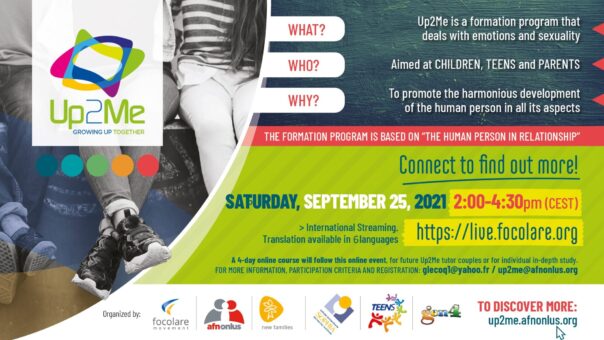
Announcing an international live streaming event, Saturday 25 September 2021, with a choice of six languages, to launch a new formation program – developed by the Focolare Movement – dealing with affectivity and sexuality, to promote harmonious human development in all its aspects, aimed at children, youth and parents. “Up2Me has given me a greater understanding of who I am, both emotionally and physically, and of the kind of life I want to build for myself, as well as showing me the importance of relationships with others”. “The program has really helped me relate to girls. It’s taught me to respect them. I’m more willing to help in the house, and I can work together with my mother and my sister now, without feeling I’m belittling myself”. “This experience allowed me to speak with others of my own age about issues which are important to us. I could express myself freely, without the fear of being judged badly”. This is just a taste of the feedback from the hundreds of youth in various parts of the world who have participated so far in Up2Me, the education pathway on affectivity and sexuality that aims at the harmonious development of the person in all its dimensions. The program is based on “person-relationship”. Being-in-relationship is part of the essence of being human, the ontological foundation to full growth, respecting the characteristics of their age group, which sees the children and youth as protagonists of conscious choices and capable of livng positive relationships. Saturday 25 September 2021, at 2.00pm (Italian time) offers the opportunity to find out more by joining a live streaming event through this link, with simultaneous translations in six languages: English, French, Spanish, Dutch, Portughese and Italian. Developed within the Focolare Movement, Up2Me has been piloted so far in 28 countries. It grew from the need frequently expressed by children and youth who find themselves facing big issues like life, health, sexuality, modern life styles, emotions, future life choices … without adequate tools to deal with them. Parents often feel unprepared to respond to these questions. So social media can become the main source of information, without addressing the value of the whole person. “I never found these things on the internet!” exploded one girl after an Up2Me session on knowing the beauty and complexity of one’s own body. Up2Me aims to respond to these challenges and help parents through this phase of accompanying children and adolescents in a program of integral formation. What are the main themes dealt with? For children: emotions, the body, friendship, life and death. For pre-adolescents and adolescents: the beauty and complexity of one’s own body, the wonder of birth, respect for human life and for the planet, personal hygiene, abortion, contraception, assisted reproduction techniques, addictions, pornography, gender studies, healthy life styles (sport, nutrition, rest), internet opportunities and issues, the importance of the spiritual aspect in human life, mass media, bullying, friendship, emotions, falling in love, one’s life project. For parents of pre-adolescents and adolescents: educating in times of crisis, authority and strictness, good communication, adoloscence, the age of opportunity, how to talk about sexuality with your children, addictions (substance, pornography, smartphone), life style (alcohol, smoking, food), new media. The formation program is also directed at those who hope to become Up2Me tutors via participation in an international training school covering theory and practical experience. Up2Me has a central coordinating team which works internationally with various local teams. An international multi-disciplinary Scientific Committee harnesses the professional expertise of academics in psychology, pedagogy, medicine, theology and law.
Lorenzo Russo

23 Sep 2021 | Non categorizzato
The meeting of the Bishops of various Churches that are friends of the Focolare began on Thursday 22nd September. On Saturday morning they will be received in audience by Pope Francis. “We must have the courage to take risks”, “The testimonies give us the courage to be one”, “We have witnessed an experience of lived ecumenism”: these are some of the initial impressions of the 181 Bishops from 70 Churches and 45 countries gathered on the first day of the meeting of Bishops from various Churches who are friends of the Focolare Movement. Brendan Leahy, a Catholic Bishop from Ireland and Matti Repo, a Lutheran Bishop from Finland are the moderators of the meeting. After greeting the participants, mostly connected through an internet link with 15 simultaneous translations, they gave the floor to Margaret Karram, President of the Focolare who said: “My wish, which is also a certainty, is that this meeting will strengthen among all those present, that wonderful reality of mutual listening and acceptance, in which the Holy Spirit becomes the protagonist of our relationships. He alone is capable of bringing about renewal in ecclesial and social structures, he knows how to pave the way and make every process of reconciliation constructive. Your presence at this Congress is in itself a sign of the times, it reveals the concern of each one for unity, a horizon that is not so far away because the life of the Gospel we share, makes it tangible among brothers”. Bishop Christian Krause, former President of the Lutheran World Federation explained the genesis of the meeting and then referred to its title: “‘Dare to be one’” (…) is a humble contribution to a dialogue and an ongoing initiative to share, to understand each other and to keep the message of Jesus among us on the road to peace”. He then invited everyone not to focus on protecting their institutional power, but “to open the doors to sharing the charism of unity and the Eucharistic hospitality of the children of God. Therefore, for heaven’s sake: ‘Dare to be one’!”. The programme included time to meet in linguistic groups to get to know each other and exchange first impressions. Then there was a presentation of the life of the Word of God in the Spirituality of the Focolare Movement. Sarah Finch, an Anglican focolarina read a passage from Chiara Lubich, which was then enriched by input from Lutheran bishop Dr. Matti Repo, Syrian Orthodox focolarina, Dr. Mervat Kelly, and Catholic focolarina, Dr. Sandra Ferreira. Then, some the Bishops themselves offered testimonies that illustrated what had been said. It was a series of personal experiences that demonstrated their commitment to building unity between the different Churches. In various pastoral situations, it was both moving and concrete. Chiara Lubich’s words which had just been read, resounded: “A fruit is that the Word makes us one: it brings about unity. As in plants that are grafted, two peeled branches, due to the contact of the two living parts, become one, so two souls, peeled of the human by living the Word of Life, are better consumed in one.” Four hours with participation from Australia to the USA, from Brazil to Ukraine, from Madagascar and through European and Asian countries, with a variety of time zones and of political and social conditions. The meeting continues for a second day on Friday, 24th September and then on Saturday 25th September, the participants will be received in audience by Pope Francis.
Carlos Mana
22 Sep 2021 | Non categorizzato
Synodality, ecumenism and peace are the themes that will engage 170 Bishops from 44 countries of the world and from 70 Churches and ecclesial communities who will meet from 23rd-25th September in Castel Gandolfo (Rome). Pope Francis will receive them in audience on 25th September. “Dare to be one. The courage of unity in a divided world” is the title of the next international conference of Bishops of different Christian Churches who are friends of the Focolare. The title aptly expresses the urgency that Bishops feel in these times when the pandemic has aggravated rifts, violence and old and new forms of loneliness all over the world. “To this we add the unjust distribution of wealth and poverty, the dramatic gap between freedom and oppression, the growing threats to the natural environment. All this prompted us to passionately formulate this appeal: “Dare to be one!”. We address it to ourselves and to our fellow Bishops so that it can be taken on in our respective Churches and communities”. This is how Bishop Christian Krause, former President of the Lutheran World Federation, one of the initiators of this event, summarized the significance of the conference. Mgr. Brendan Leahy, Catholic Bishop of Limerick (Ireland) who is the coordinator, explained, “This event is promoted by the worldwide network of Bishops of various Churches that are friends of the Focolare and who have been meeting regularly for 38 years to deepen their communion on the basis of the spirituality of the unity of the Focolare. The goal is to be united in Christ and if there is the presence of Jesus among us, the journey towards unity is assured ”. The meeting will have a blended mode: 10 Bishops will be physically present in Castel Gandolfo (Rome), while 170 will follow the conference online, alone or in small groups, in compliance with health rules. On 25th September they will be received in audience by Pope Francis, who, via streaming, will be able to communicate with all the participants, also those connected from afar. The following will intervene in the Conference: Margaret Karram, President of the Focolare Movement and Jesús Morán, Co-President of the Movement; Nelson Luiz Leite Campos, Bishop Emeritus of the Methodist Church in Brazil; Stefan Tobler, Reformed theologian, Professor of Evangelical Theology at the Lucian Blaga University of Sibiu (Romania); Piero Coda, Catholic theologian, member of the Joint International Commission for theological dialogue between the Catholic Church and the Orthodox Church, lecturer at the Sophia University Institute in Loppiano (Italy). The programme will offer insights into the spirituality of unity of Chiara Lubich, testimonies of life offered by Bishops of different Churches inspired by the Word of God, the mystery of Jesus Crucified, abandoned and risen, the charism of unity and its incarnation in the wounds of contemporary humanity. The central moment and certainly the most characteristic of the conferences of the Bishops who are friends of the Focolare is the “Pact of mutual love”. It is a solemn commitment to love one another on the basis of the invitation that Jesus makes in the “new commandment” (cf. Jn. 15:17). The Bishops will therefore undertake both to share the gifts offered by the Church of the others and to share their pains and joys, feeling them as their own in order to make the process of unity between the Churches ever closer and visible. Bishops friends of the Focolare: from the 1980s to today In 1982 Klaus Hemmerle, Catholic Bishop of Aachen (Germany) began promoting meetings of Bishops belonging to different Churches. Since the 1960s, many Bishops, who made the spirituality of the Focolare their own, were committed to walking together towards unity and promoting it at all levels. The words of the then Pope John Paul II to a group of Catholic Bishops friends of the Focolare on the occasion of an audience, represented a further encouragement to the organization of periodic meetings with Bishops of different Churches. Today these gatherings take place periodically in places that are symbolic of ecumenical dialogue. An itinerary that is not only spiritual, but also a concrete opportunity for the Bishops to get to know and welcome one another, offering each one the opportunity to experience the Christian life of the various Churches.
Focolare Communications Office
Stefania Tanesini

22 Sep 2021 | Non categorizzato
On 10th September the Municipality of Grottaferrata (Rome, Italy) posthumously conferred honorary citizenship on Chiara Lubich, an award that tangibly renewed the friendship between the founder of the Focolare Movement and this place she held so dear, where the first centres of the Movement were located. Margaret Karram, current President of the Movement received the plaque. A “mother city”, a place to “gather people with different vocations into a single people”. This was Chiara Lubich’s inspiration, which led her to perceive in the area of “Castelli Romani” a fertile ground where everything could flourish and, specifically, in the city of Grottaferrata (Rome-Italy), a new home for the Focolare Movement, after her hometown of Trent and Rome. In 1959, in Grottaferrata, a meeting room was inaugurated at Villa Maria Assunta, a beautiful house made available to the Focolare Movement by the Marquise Rossignani Pacelli, sister of Pope Pius XII. A house that soon became the heart of the Movement, the lively and fervent “Mariapolis” or “little town of Mary”. While continuing to reside in Rome, Chiara Lubich spent some periods in Grottaferrata during the years from 1956 to 1964.  Images of a story guided by God and recalled by Margaret Karram, the President of the Focolare Movement, on the occasion of the ceremony of conferring the posthumous honorary citizenship of Grottaferrata on Chiara Lubich on 10th September. Present at the event: Luciano Andreotti, Mayor of Grottaferrata, Angelo Viticchiè, former Mayor of the city, Sergio Lubich, nephew of Chiara, and Veronica Cimmino, Mayor of Rocca di Papa. The ceremony was followed by the screening of the docufilm “Chiara Lubich: Love wins everything”. Also present were the director of the film, Giacomo Campiotti, the artistic producer Saverio D’Ercole, the producer Luca Barbareschi and the actress Valentina Ghelfi. A sense of community and fraternity pervaded the appointment, which had already been scheduled for 2004 and then postponed due to Chiara’s illness and death. As the Mayor of Grottaferrata recalled, these values, rooted in the life of the Movement, could also become a unique “means of communion” for the public life of a city, where the “search for the common good” remains the main objective. What seems an arduous journey finds its confirmation in “unity through love” and in the unpublished words that Chiara would have liked to use in receiving this recognition, which come back to us thanks to the voice of Margaret Karram: “I would like to propose the Art of Loving to all those present and in particular to the citizens of Grottaferrata so that, if they wish, we can help each other live it and spread it everywhere “. A legacy which is for each of us and of which each, in his or her own small way, becomes the guardian, today as yesterday; an experience that, as the President of the Focolare Movement concluded, “does not stop at the borders of our cities, but extends in relationships of collaboration with other Municipalities, creating an ever brighter network of cities which give a witness of fraternity”.
Maria Grazia Berretta
20 Sep 2021 | Non categorizzato
On 17th September 1948, Chiara Lubich met Igino Giordani, whom she later called Foco, for the first time, in Rome, Italy. She was a Franciscan tertiary and was accompanied by some religious from the various Franciscan families. Giordani was 54 years old and already successful in the political and cultural fields when he met 28-year-old Chiara Lubich and recognised her charism. Giordani immediately joined the Focolare and, because of his contribution to the development of the Movement, Chiara Lubich considered him a co-founder. Here is the story of that meeting from Giordani’s diary. “Seeing a Conventual, a Friar Minor, a Capuchin and a man and a woman from the Third Order of Saint Francis united and in agreement, seemed to me already a miracle of unity, and I said so. The young lady spoke; (…) and at the first words I felt something new. There was an unusual quality in that voice: the quality of a deep and sure conviction born of a life in touch with God. (…) When, after half an hour, she had finished speaking, I was caught up in an enchanted atmosphere, as if in a cloud of light and happiness; and I would have liked that voice to continue. It was the voice that, without realising it, I had been waiting for. It put holiness within reach of all; it removed the barriers that separate the lay world from the mystical life. It brought out the treasures of a castle to which only a few were admitted. It brought God closer: it made him feel like a Father, a brother, a friend, close to humanity.(…) Something happened within me. It happened that my juxtaposed pieces of culture began to move and become animated, joining together to form a living body, nourished by a generous blood: the blood with which Saint Catherine burned? Love had entered and taken hold of my ideas, drawing them into an orbit of joy. What had happened was that the idea of God had given way to the love of God, the ideal image to the living God. In Chiara I had found not someone who spoke of God, but someone who spoke with God: a daughter who, in love, conversed with the Father. (…) Everything was illuminated. Pain took on a salvific meaning, or was resolved into love. Life appeared as an adorable design of God’s will and every moment of it became full and had its own beauty. Nature and history unfolded in rich patterns of harmony and wisdom. And to live this new life, to be born in God, I did not have to renounce my doctrines: I only had to place them in the flame of charity, so that they might be enlivened. Through my neighbour, I began to live God. Grace flowed freely, the barriers between supernature and nature collapsed. Existence became a whole adventure, consciously lived in union with the Creator, who is life”.
Igino Giordani
(Igino Giordani, Memorie di un cristiano ingenuo, [Memoirs of a naïve Christian] Rome, 1984, pp. 147-154).
17 Sep 2021 | Non categorizzato
This is a call to us, too – to have an open mind and heart in order to recognize and care for the needs of others; to use our talents, our time, for the common good at home and beyond. It is an invitation to put ourselves last in order to be first, to encourage everyone toward the inevitable future: universal brotherhood. Listening for hours Loving a neighbour sometimes means simply listening… even for hours! It happened to me this morning, when around 9:30am a friend who spends most of the year abroad came to visit me. He told me about his father who had recently passed away, his caregiver, various family problems, and about how abroad, in order not to miss Sunday Mass, he travels two hours each way to reach the chapel where it is celebrated in Italian… It was after 12 noon when we said our goodbyes. Only then did I realize how much time I had spent listening to him. (Umberto, Italy) Kitchen competition Each time I came home from work, I would always see how tired my wife was. I asked God how I could help her, and one evening, during dinner, I came up with the idea of a weeklong competition in the kitchen. Each of us had to prepare a different dinner (together with my grandmother there are exactly seven of us). Even our third son, a teenager who was typically content with things as they are, got hooked on the competition. Once the week had passed, one of our daughters suggested we continue, even giving grades. Here it became even more fun. With great joy I noticed my wife relieved and happy to see her children in action. Once, talking about it among ourselves, she told me that she was discovering new and unexpected sides of our kids. (B., Slovakia) That look said it all I had retired earlier than I had planned to be near my wife, who had been feeling ill for some time. Unfortunately, she was suffering from a degenerative disease. Day after day I saw her abilities diminish, her speech, her movements… Where was the wonderful woman with whom I had dreamed of a happy life, a large and beautiful family, a commitment to be an open home for all? Now she was there, motionless. She moved her eyes, and that look said it all. My faith was not a living one, partly because, as a philosophy teacher, I know the tricks of the mind and how it deceives us. But since the conversation with my wife had become silent, I sensed that she was happy if I prayed beside her, for her, with her. Two months ago she passed away in silence. She left behind so much good, which both I and our children cannot quantify. She sowed a seed of light in us. When the illness initially appeared, she had said: “Life is now uphill. I would like to walk it with you. But God asks me to know how to say thank you with my life.” (P., Italy)
Edited by Maria Grazia Berretta. From ‘Il Vangelo del Giorno’, Città Nuova, year VII, n.4, September–October 2021

 Saturday 25 September 2021, at 2.00pm (Italian time) offers the opportunity to find out more by joining a live streaming event through this link, with simultaneous translations in six languages: English, French, Spanish, Dutch, Portughese and Italian. Developed within the Focolare Movement, Up2Me has been piloted so far in 28 countries. It grew from the need frequently expressed by children and youth who find themselves facing big issues like life, health, sexuality, modern life styles, emotions, future life choices … without adequate tools to deal with them. Parents often feel unprepared to respond to these questions. So social media can become the main source of information, without addressing the value of the whole person. “I never found these things on the internet!” exploded one girl after an Up2Me session on knowing the beauty and complexity of one’s own body. Up2Me aims to respond to these challenges and help parents through this phase of accompanying children and adolescents in a program of integral formation. What are the main themes dealt with? For children: emotions, the body, friendship, life and death. For pre-adolescents and adolescents: the beauty and complexity of one’s own body, the wonder of birth, respect for human life and for the planet, personal hygiene, abortion, contraception, assisted reproduction techniques, addictions, pornography, gender studies, healthy life styles (sport, nutrition, rest), internet opportunities and issues, the importance of the spiritual aspect in human life, mass media, bullying, friendship, emotions, falling in love, one’s life project. For parents of pre-adolescents and adolescents: educating in times of crisis, authority and strictness, good communication, adoloscence, the age of opportunity, how to talk about sexuality with your children, addictions (substance, pornography, smartphone), life style (alcohol, smoking, food), new media. The formation program is also directed at those who hope to become Up2Me tutors via participation in an international training school covering theory and practical experience. Up2Me has a central coordinating team which works internationally with various local teams. An international multi-disciplinary Scientific Committee harnesses the professional expertise of academics in psychology, pedagogy, medicine, theology and law.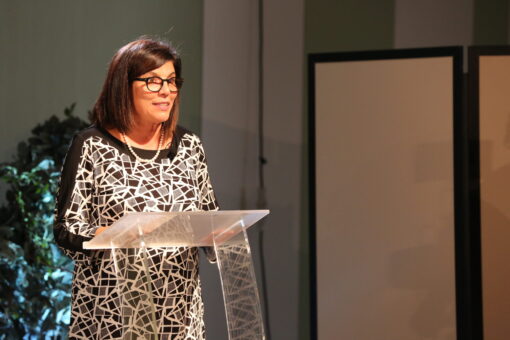
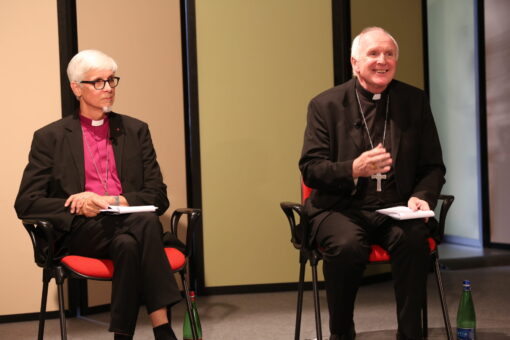 Brendan Leahy, a Catholic Bishop from Ireland and Matti Repo, a Lutheran Bishop from Finland are the moderators of the meeting. After greeting the participants, mostly connected through an internet link with 15 simultaneous translations, they gave the floor to Margaret Karram, President of the Focolare who said: “My wish, which is also a certainty, is that this meeting will strengthen among all those present, that wonderful reality of mutual listening and acceptance, in which the Holy Spirit becomes the protagonist of our relationships. He alone is capable of bringing about renewal in ecclesial and social structures, he knows how to pave the way and make every process of reconciliation constructive. Your presence at this Congress is in itself a sign of the times, it reveals the concern of each one for unity, a horizon that is not so far away because the life of the Gospel we share, makes it tangible among brothers”.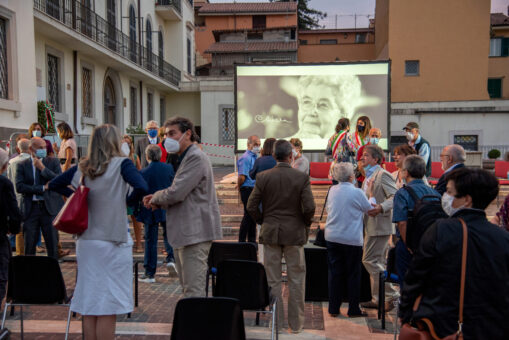
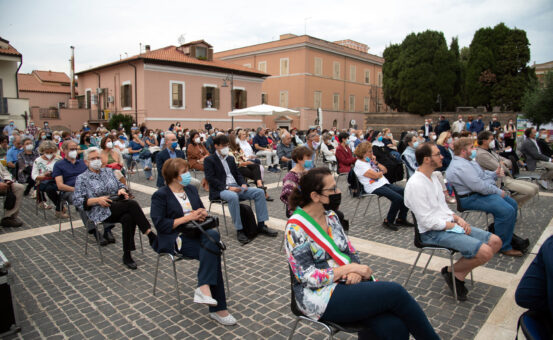 Images of a story guided by God and recalled by Margaret Karram, the President of the Focolare Movement, on the occasion of the ceremony of conferring the posthumous honorary citizenship of Grottaferrata on Chiara Lubich on 10th September. Present at the event: Luciano Andreotti, Mayor of Grottaferrata, Angelo Viticchiè, former Mayor of the city, Sergio Lubich, nephew of Chiara, and Veronica Cimmino, Mayor of Rocca di Papa. The ceremony was followed by the screening of the docufilm “Chiara Lubich: Love wins everything”. Also present were the director of the film, Giacomo Campiotti, the artistic producer Saverio D’Ercole, the producer Luca Barbareschi and the actress Valentina Ghelfi. A sense of community and fraternity pervaded the appointment, which had already been scheduled for 2004 and then postponed due to Chiara’s illness and death. As the Mayor of Grottaferrata recalled, these values, rooted in the life of the Movement, could also become a unique “means of communion” for the public life of a city, where the “search for the common good” remains the main objective.