
Christian hope is not an escape from reality. It is born in a dark place, in the narrow confines of a sealed tomb, where God has already overturned the judgment of this world. Precisely for this reason, it dares to speak in a time of wars (Gaza, Kyiv, Darfur and Tehran) and of hundreds of millions of people who do not know how they will make it to tomorrow.
Our days are woven with justified expectations: health, a secure job, a measure of peace, a justice that is more than words. But when these become our entire horizon, we either treat them as idols or, at the first serious fracture, we take refuge in cynicism and resignation.
Easter does not erase these hopes; it re-centres them. It roots them in Another and in doing so, preserves them. A love stronger than death does not remove the burden of action; rather, it breaks the anxiety of having to save the world through our own efforts alone.
The final word on history is not ours, nor that of the victors of the day. It is the word spoken over the body of Jesus. And the word of Easter already refutes every claim of death to be definitive. For Paul, the resurrection of Christ is not an isolated episode in Jesus’ biography. It is the opening of a new scene into which all humanity is drawn: “For as in Adam all die, so in Christ all will be made alive” (1 Cor. 15:22).
The Church Fathers followed this insight without attenuating it: the resurrection is the fulfilment of human nature in its entirety, not the privilege of a fortunate few. In Christ, God already contemplates the fullness of the human family: the faces of refugees in the Mediterranean, of those crossing the Sahara, of civilians hiding in basements in Darfur. For this reason, every wound to human dignity, every discarded body, is not only a social injustice; it is a profanation of a humanity that was conceived and loved within the very light of the Risen One.
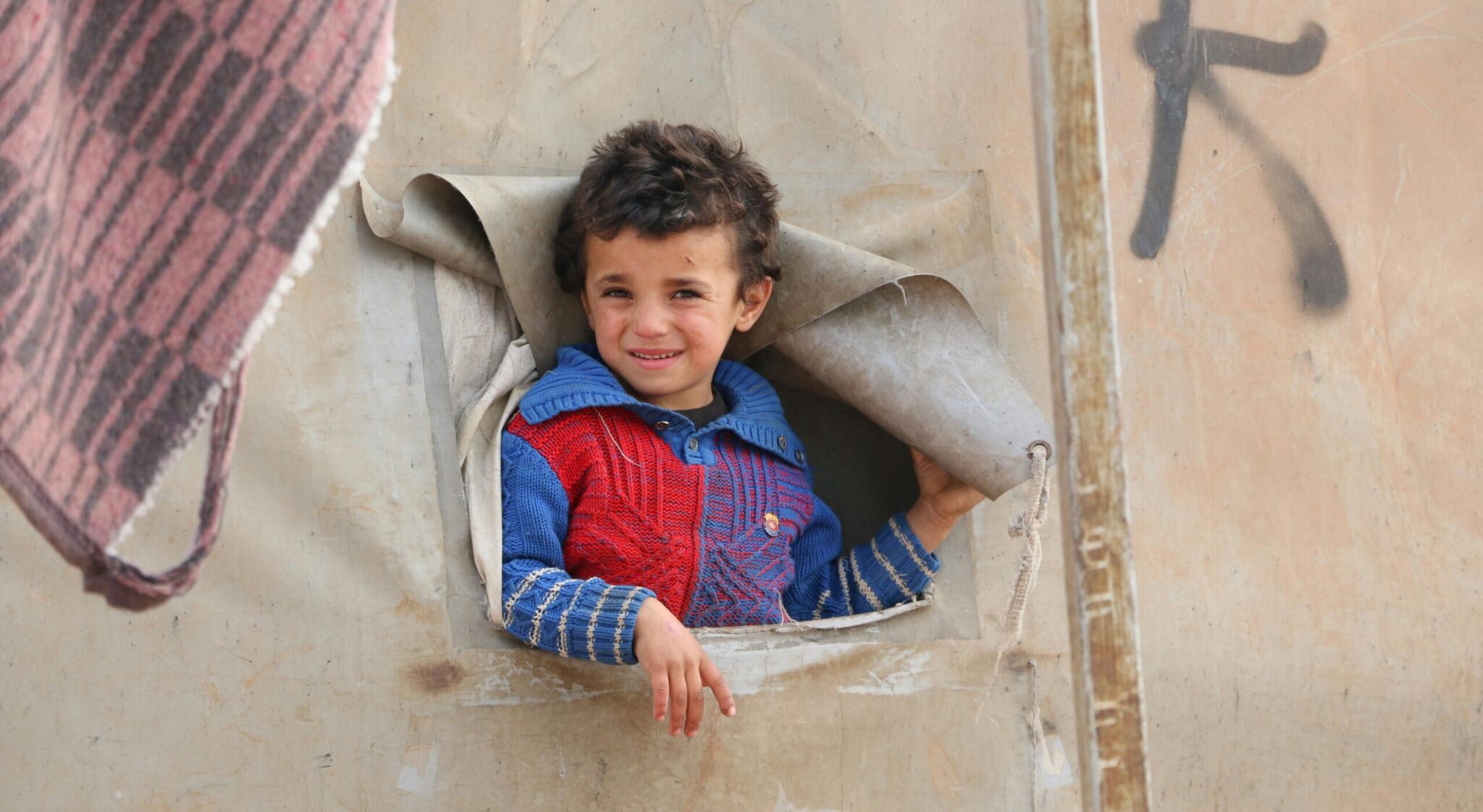
© Mourad Saad Aldin by Pexels.com
Paul widens the horizon further: “the whole creation has been groaning as in the pains of childbirth” (Rom 8:22). It is not only human conscience that groans, but the soil, the air and the seas. In 2026, the language of “labour pains” no longer sounds like pious symbolism: we read it in floods, in uncertain harvests, in villages forced to move because the water has run out. This groaning takes the form of protest; creation refuses to be treated as disposable material and Easter gives it a voice. In the risen Christ, every exploitation of the earth already appears for what it is: a choice against the future of all.
How, then, are we to live between a fulfilment already begun and a history still marked by too many failures? Not with paralysis, nor with superficial optimism. We live knowing that nothing authentically good is lost: a gesture of welcome, a choice to renounce something, honest work carried out under adverse conditions. Pope Benedict XVI reminds us that “every serious and upright human action is hope in action,” and includes among these efforts working for a more humane world, sustained by the great hope grounded in God’s promises (Spe Salvi, 35).
We can say even more: it is not an external addition to the Kingdom; it is already a visible fragment of it. Fulfilment belongs to God and yet God insists on passing through us as well. When we commit ourselves to refugees, to disarmament, to more humane working conditions, to a concrete and not rhetorical peace, we are not simply “preparing” something for later. We are allowing the life of the Risen One to take shape—humbly and fragilely—within our time.
Easter hope does not remain an idea or a feeling; it takes flesh. The resurrection teaches us that the logic of death has no power to determine the final outcome. For this reason, every war, every system of exploitation, every calculated indifference is already unmasked and stripped of ultimate meaning by the empty tomb.
In the tomb of this world, something has already changed forever: life has begun to rise up through the cracks of history. Not as vague consolation or as a “reward” in some undefined elsewhere, but as a reality that, in Christ, has already been entrusted to humanity and to all creation. In the judgement of God revealed at Easter—a judgment that liberates, not crushes—it is decided once and for all that death will not have the last word over anyone or anything.
This is the great hope.
Happy Easter: a hope that does not remain closed within the church, but engages in history.
Declan J. O’Byrne
Sophia University Institute
Originally published on Loppiano.it
Cover photo: Detail of the stained-glass window at the Maria Theotokos Shrine, Loppiano
0 Comments