
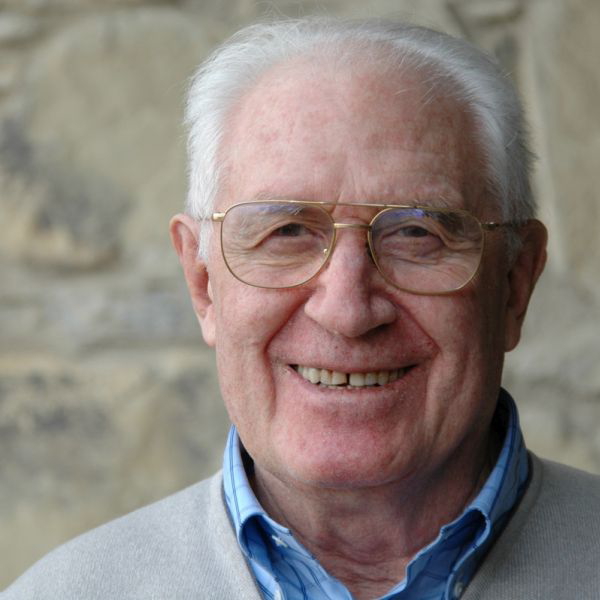
 Card. Giuseppe Betori, Archbishop of Florence traced an important phase of his story, and described him as «A promoter of proactive communion between the various groups and associations,» who «interpreted the hope of Cardinal Benelli and Chiara Lubich» for the creation of the Giorgio La Pira International Students’ Centre in Florence at the turn of the 1970s. In fact, Giorgio Martelli, a native of Pistoia, Tuscany, gave a decisive contribution to the birth of this joint project between the Florentine Archdiocese and the Focolare Movement, which up to today continues its commitment to the «youth from all the nations worldwide, especially the developing countries, fostering fraternal acceptance and promoting dialogue between people of all cultures and creeds.» The story of the La Pira Centre is one of the important stories that has crossed the life of Turnea (the name Chiara Lubich gave him and that described his: Turris Eburnea, Tower of Ivory, taken from the Marian litanies). Born into a working-class family, Turnea was brought up with a simple faith, moral rectitude and thirst for justice. As a young man he was active in the Catholic Action where he received a more solid Christian education. During the war, he and his father were caught twice in a round-up which condemned him to forced labour, from which he managed to escape. After the war he started working in the labour union as a clerk in the contracts and litigations office, and at the same time, took up his studies again and graduated as an industrial surveyor. During the Catholic Action period he met other youth active in Christian movements, among whom were Bruno Venturini, and Vitaliano Bulletti who also became focolarini. He himself commented on that period: «Before me were two aspects of Christian life that were alternatively a more personal aspect of the quest for a relationship with God, and a more social one concerning the need for fraternity among men, and the justice and struggles to reach them. But these were two separate spheres!!» His first meeting with the focolare came about in January 1950 when he first met Graziella De Luca, who had gone to his city to speak to some people about the experience of the newborn Focolare Movement. In the following months he went several times to Rome where he met, besides Chiara, the first focolare men and women. After an internal struggle that lasted a few months, he decided to become one of them, and after leaving his fiancée and family – amid great misunderstandings – he moved to Rome, and joined the first men’s focolare house. Subsequently, he lived in various focolare houses in Italy and Holland .
 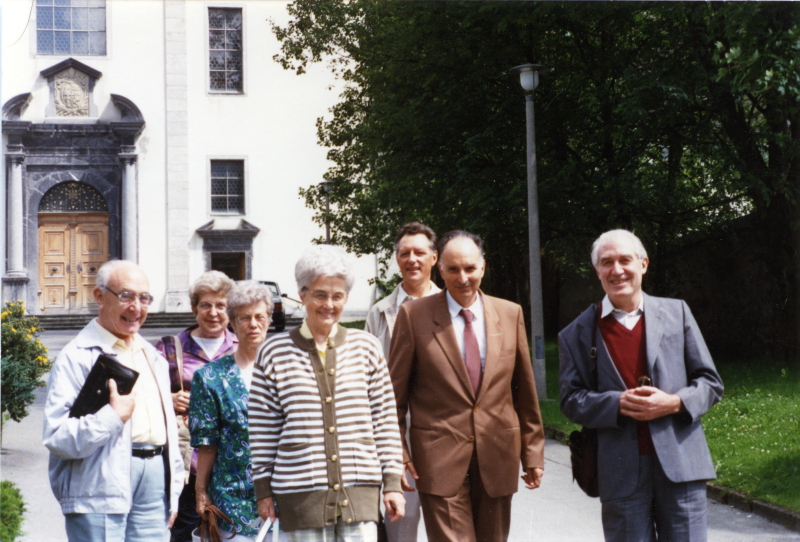 In 1968 Turnea he was appointed by Chiara as the first person to take charge of the newborn branch of the Volunteers of God. At their conventions Turnea encouraged moments of debate on issues and queries regarding the concretisation of the spirituality of unity in daily life. He often repeated Chiara’s affirmations: The Volunteers in our time have to take after the first Christians. For many years he dedicated himself to that Focolare aspect called harmony and environment and which concerned the construction works, the towns, the Mariapolis Centres, art and social works. It was a role he covered with passion, love and devotion also in the numerous trips and visits to various countries. Turnea endowed his efforts, tenacity and love also in many other fields: at the start of the Youth for a United World Movement, and in supporting the Santa Chiara Audiovisual Centre and the international Gen Rosso band. Free from specific assignments from 2008, he continued to give his contribution with advice and ideas. As a priest, he stood by many focolarini, especially those in suffering, and for whom he regularly celebrated the Holy Mass. In 2012 he was struck by a disease that caused a motor disability, which he bore, however, with his proverbial grit and his love for Jesus Forsaken and Abandoned. Regarding the last years, his long-time friend, Bruno Venturini recounted: «He would gather all his strength to try to be active, and was still willing to help. At times, after a difficult day he didn’t have the strength to get up and I would find him at the computer, checking his mail. At the same time he was always committed to accepting from God with serenity, this state of weakness and inactivity. He was never resigned and received all those who came to see him with joy. He spoke with great presence of mind and often with great effort, about all the most various topics one or the other was involved in. He never forgot to express his deep thoughts which showed his interior state, his full adhesion to God’s will: his heavenly thoughts.» On 26 January Turnea concluded his earthly journey. Focolare President Maria Voce wrote: We have «another giant» among the first focolarini. Maria Chiara de Lorenzo
Allow forgiveness to be experienced
Allow forgiveness to be experienced
0 Comments