13 Sep 2022 | Non categorizzato
An exceptional wave of monsoon rains, five times greater than average, has caused one of the most disastrous floods in Pakistan in recent decades. A real catastrophe but one which, despite the enormous difficulties, has not dampened the desire of many people on the ground to take concrete action for their neighbour. A fund-raising campaign has also been launched by the Focolare Movement’s Emergency Coordination Team. What Pakistan is currently experiencing is a real humanitarian and health emergency. The monsoon rains which began as early as mid-June 2022 and are also caused by climate change have brought a third of the country to its knees. Some 33 million people, 15% of the entire population, have been displaced, more than 1,500 people have died and more than 700,000 homes destroyed. The threat of diseases such as typhoid, cholera and dengue fever grows day by day, and the needs are becoming increasingly urgent. 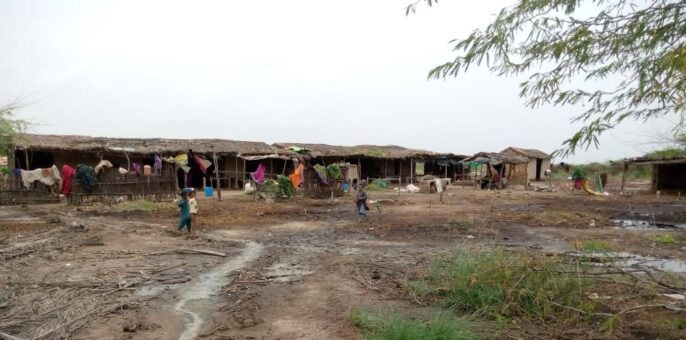 The megalopolis of Karachi, one of the places where the Focolare Movement has been present for some time, has not been hit as hard as other centres such as the provinces of Sindh, southern Punjab and Balucistan which even under normal conditions are already difficult to reach. However, “the displaced people are also coming here and we are mobilising to organise help in the reception camps,” said some members of the Focolare. In addition, many Focolare members of various ages and vocations are doing all they can to respond as a community to the most pressing needs, with some people even opening the doors of their homes, if necessary, as did Abid, a young father of a family, who took in sixteen Muslims who had lost everything on the first floor of his house. The largest city affected by the flood is Hyderabad. Matthew, a Gen, one of the young people of the local Focolare Movement, wrote: “The city centre is now safe, but the neighbourhoods near the Indus river are still in danger and some parts have been evacuated. The next two weeks will be very difficult.” In these days, fear is mixed with a lucid awareness which is generating an inner, instinctive force that looks to the other and, with renewed courage, mobilises and networks. “As Youth for a United World a few months ago we set up a group called ‘The spirit of giving’. We are Catholics and Anglicans from the Anglican Church of Pakistan,” continued Mathew’s brother, Hanan. “We met together to make a plan, to work out what we could do to help and how. You could think that we can’t do much or that it’s too little, but we said to one another everyone can give something, we need to move hearts”. And so it was that by knocking on all the doors in their neighbourhood and going into shops, these young people collected about 5000 rupees while another 2000 rupees arrived providentially in response to a flyer shared on social media. A desire to donate which from an experience of dialogue turned into service and action. Among the many people in need, we cannot forget that one of the groups most at risk in these parts are the nomadic Hindu communities: “Our families’ tents were on a plain. With the floods people sought refuge on a raised part of the land that is now surrounded by water. Now it is as if they are on an island which they can’t leave,” recounted some young people belonging to these communities. To rally around those affected and initiate targeted relief and support initiatives, especially there where resources are scarce, is more than just a wish. It is a real priority for everyone. In response to all this suffering in Karachi, in a rather poor neighbourhood on the outskirts of the city, a small group of Gen immediately stepped into action: “We set up a collection point where lots of people passed by. Some brought food, water or clothes. Some left money in a box placed at the entrance,” says Rizwan. “I noticed there weren’t many clothes for the children,” says Soiana, “so I started sewing for them using fabric I had left over from my work”. To contribute to the Focolare Movement Emergency Coordination Team’s fundraising campaign for Pakistan you can donate to:
| Azione per un Mondo Unito ONLUS (AMU) |
Azione per Famiglie Nuove ONLUS (AFN) |
| IBAN: IT58S 05018 03200 000011204344 Banca Popolare Etica |
IBAN: IT92J 05018 03200 000016978561 Banca Popolare Etica |
| SWIFT/BIC code: ETICIT22XXX |
SWIFT/BIC code: ETICIT22XXX |
| CAUSE: Pakistan Emergency |
| Contributions made to these two current accounts for this cause will be managed jointly by AMU and AFN. Tax benefits are available on such donations in many European Union countries and in other countries around the world, according to different local regulations. Italian taxpayers will be able to obtain tax deductions and allowances on their income, according to the regulations for non-profit organisations, of up to 10% of their income and with a limit of € 70,000.00 per year, excluding donations made in cash. |
Maria Grazia Berretta
12 Sep 2022 | Non categorizzato
Just as she loved and cared for her son Jesus, Mary wants the good of every person. She, a human being, is the model for every Christian, and by mirroring the stages of her life we can make our contribution to a new world. Even though our planet is beset with many tensions, Mary leads us in various ways to unity, and she desires this for all. She wants families united, different generations united; she asks for unity among different ethnic groups, races, and peoples; unity among Christians and unity, as far as it is possible, with the faithful of other religions and even with those who have no specific religious affiliation but seek the welfare of humankind. She reaches out to everyone, and she desires universal brotherhood. (…) May Mary, who made God the ideal of her life, help us make him our ideal as well. May Mary, who embraced the will of God in the incarnation and in her whole life, help us to fulfill his will to perfection. May she, who loved her neighbor as demonstrated in her visit to Elizabeth and at the wedding at Cana, fill our hearts with this same love. May Mary, who lived mutual love fully in the family at Nazareth, help us to practice it as well. May Mary, who was able to offer all her suffering at the foot of the cross, strengthen our hearts when we are besieged by suffering. May Mary, who is the universal mother, open our hearts to all humankind.
Chiara Lubich
(Chiara Lubich, Talk given in the Basilica di Santa Maria Maggiore, Rome, 30-11-1987, in Mary, The Transparency of God, New City Press, New York, 2003, p 81-82)
10 Sep 2022 | Non categorizzato
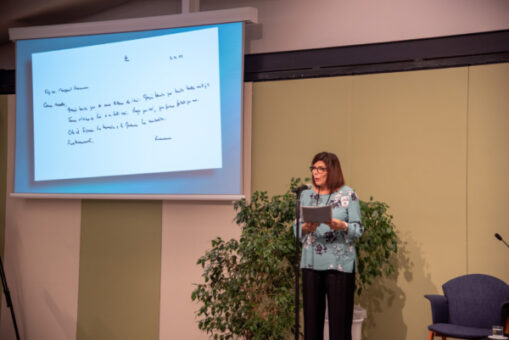
In addition to the joy of being together again in person after the pandemic, an unexpected and affectionate greeting from Pope Francis has arrived to those with overall responsibility for the Focolare Movement around the world, who are meeting from 10th to 23rd September. “I am grateful for so much good news. I am close to you personally, and to all of you. I assure you of my prayers, please pray for me too.” These were the Pope’s words in reply to a letter from Margaret Karram, President of the Focolare Movement, with which she chose to open the meeting of those responsible for the Focolare Movement in the world, together with its General Council. The President told the 104 people at the meeting that a few days ago she had felt urged to write to the Pope, to thank him for his constant closeness to her and to the Movement, hoping to give him joy. In her letter dated 6th September, among other things, she told the Pope: ‘A year and seven months have passed since I was elected President, and I confide in you that it has been a very demanding time with many challenges to be faced and many decisions to be made. I have understood more and more your words referring to the ‘pruning’ which is necessary for growth and, as I renewed my choice to embrace Jesus crucified and forsaken in this pruning, I perceived that I became more humble, I felt greater hope, and that my unity with you, Your Holiness, was ever stronger, together with the certainty that God is at work. At the same time, I witnessed a great fruitfulness and, in individuals and communities, I witnessed steps in spiritual growth being taken. I also saw greater care for the ‘least,’ and many tangible actions to help those who suffer the most’. Margaret concluded by assuring the Pope of the prayers of everyone in the Movement. She was very surprised when the following day she received this handwritten reply from Pope Francis:
7.9.22
Ms Margaret Karram My dear sister, Thank you very much for your letter to me yesterday. I am grateful for so much good news. I am close to you personally, and to all of you. I assure you of my prayers, please pray for me too. May the Lord bless you and may Mary protect you. Fraternally, Francis 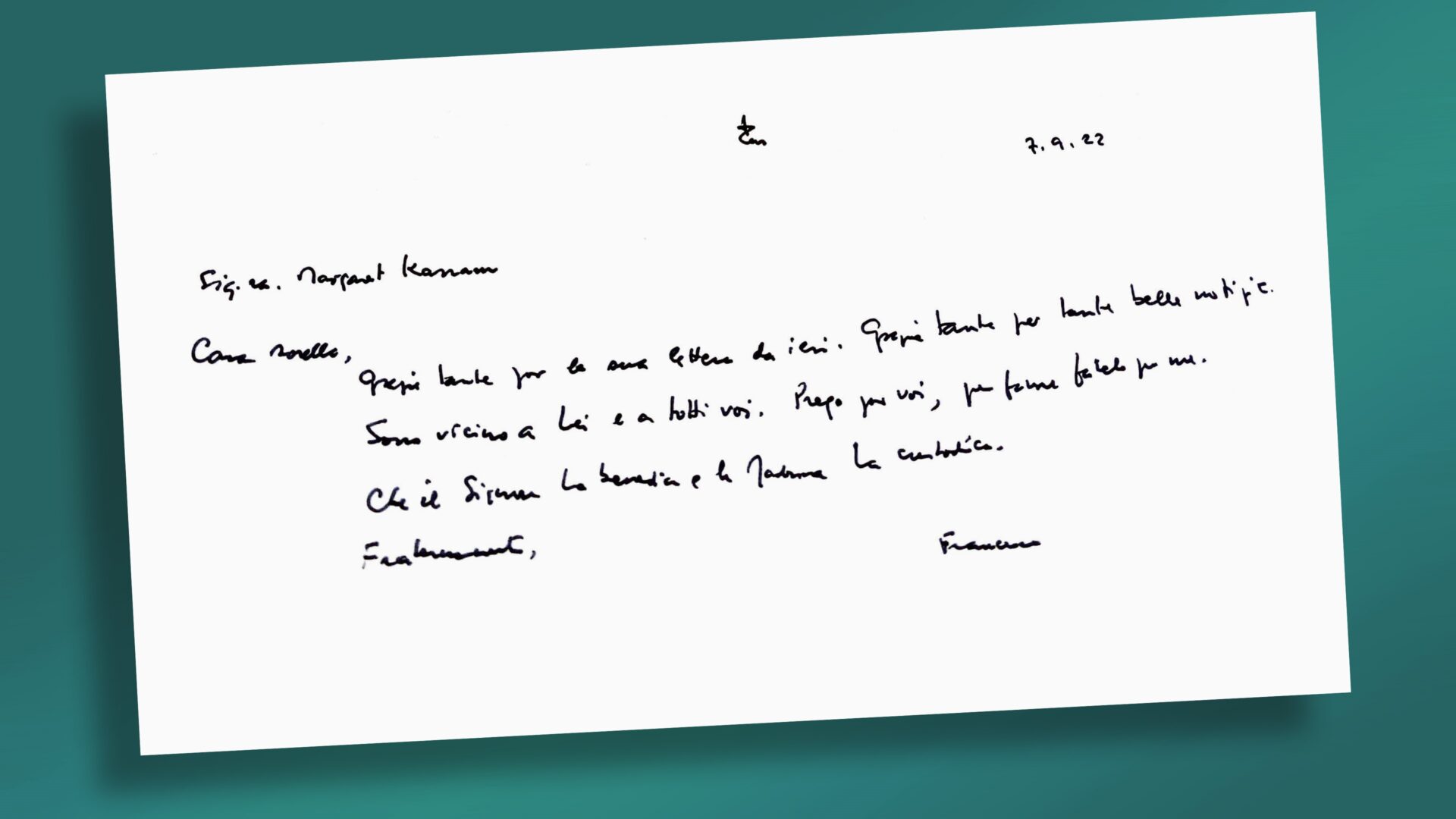
7 Sep 2022 | Senza categoria
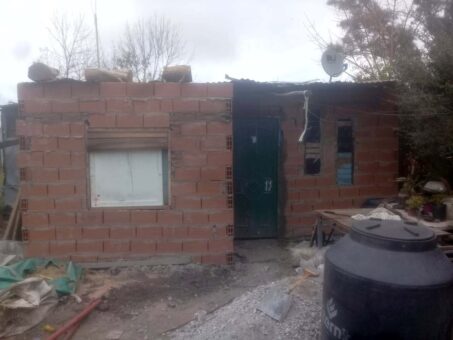
“Giving’ is like a breeze that opens so many doors. Here is the story of some Youth for Unity who supported a family in need on the outskirts of Buenos Aires, Argentina.The friendship that developed led to them sharing in experiences they could never have imagined. The work begun a few months ago by Youth for Unity, together with New Youth and other members of the community, in the cities of Rodríguez and Luján in the province of Buenos Aires, has developed in an unexpected and providential way. It all started at Christmas 2021, when some Youth for Unity thought of the fact that some families would not have anything special to eat during the festive season and they decided to take concrete action. . The first thing they did was was to contact Titian and his parents. Titan was five years old and lived with his family in difficult circumstances in a very poor area. They prepared a beautiful hamper for them, full of delicious things they could eat at such a special time: these included a chicken, a salad, good wine, cider, panettone, pudding and some fizzy drinks. They also thought of some presents. But the joy they created did not end there. When the Youth for Unity took the Christmas hamper to the family, they began to understand first-hand the reality in which these people were living. Having decent housing, even if only to avoid being left in the cold during the winter, seemed utopian. “It was shocking,” one representative from New Youth said, “but, at the same time, it was also a moment of real joy. In addition, chatting with Titian’s parents, the child’s enthusiasm to start the first year of primary school emerged and our concrete response was unanimous: ‘let’s support him!’” “We decided to buy him everything he needed for school. This meant shoes, socks, t-shirts, trousers, apron, backpack, exercise book, pencils,” say the Youth for Unity, who also received financial help from other young people, friends from Mendoza in Argentina and Guatemala. They still remember Titian’s first day at school: “Mum sent us photos of the child with his new things, they were really very happy.” 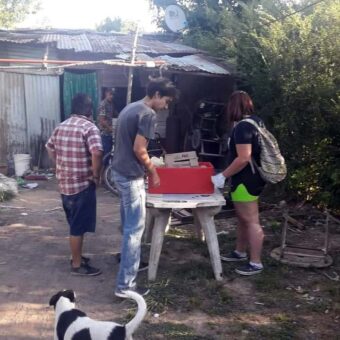 But there is more. Some time later, volunteers and other adults who knew the Movement – many of them housewives linked to New Humanity – told them that they had providentially obtained money to buy materials to build a house for the family. Ricardo, the father, was an accomplished builder and also had some sand and building materials. In this way, the financial help was transformed into bricks and cement and within 20 days, the house was standing. Winter was approaching and it was very important for them to have shelter. A voice message from Titian on WhatsApp confirmed this: ‘Thank you for donating the bricks for my room.’
(from Ciudad Nueva magazine, Cono Sud)
5 Sep 2022 | Non categorizzato
On 2 June 2000, the first conference on ‘Communication and Unity’ was held, in which Chiara Lubich presented to those attending, the model of the ‘great communicator’: Jesus in the moment of his forsakenness, the mediator between humanity and God. She then listed the guiding principles of communications inspired by the charism of unity. It is unthinkable that a new communication be imposed from above, by some international agency or institution. It will come rather from the experience of communicators who have God-Love as a model for communication and as a paradigm for professional relations. Guiding principles of our communication—And indeed it is God-Love that those of us who are involved in communication seek to draw upon. They have developed out of their daily experience an original way of communicating. We present it here as a small contribution to the body of research being developed today. The first thought: for them communication is essential. The effort to live the gospel in everyday life, the experience of the Word of Life, has always been indissolubly united with communicating it, describing the various steps and the results, since it is a law that we love others as ourselves. They believe that what is not communicated is lost. So life generates light, both for those who speak and for those who listen, and it seems the experience is fixed in eternity. They have almost a vocation for communication. The second thought: to communicate, we feel the need “to make ourselves one” as we say, with the one who is listening A third thought: emphasize the positive. It has always been our way to put what is good into light, out of a conviction that it is infinitely more constructive to point out what is good, dwelling on the good and positive aspects, than to stop at the negative, even though whoever is in a position of responsibility has the duty at the proper moment to point out errors, shortcomings and failures. Finally: the person matters, not the media, which are merely an instrument. Bringing about unity first of all requires the indispensable means, which is the person, St. Paul’s new self, who has welcomed the mandate of Christ to be leaven, salt, light of the world.
Chiara Lubich
(Chiara Lubich, Essential Writings, New City Press, New York, and New City London 2007 p. 295-296)
1 Sep 2022 | Non categorizzato
As part of the programme of activities for United World Week 2022, the preparation team from Cochabamba (Bolivia), in coordination with the ‘Casa de los Niños’ in the same city, organised a visit to the rural community of Carpani 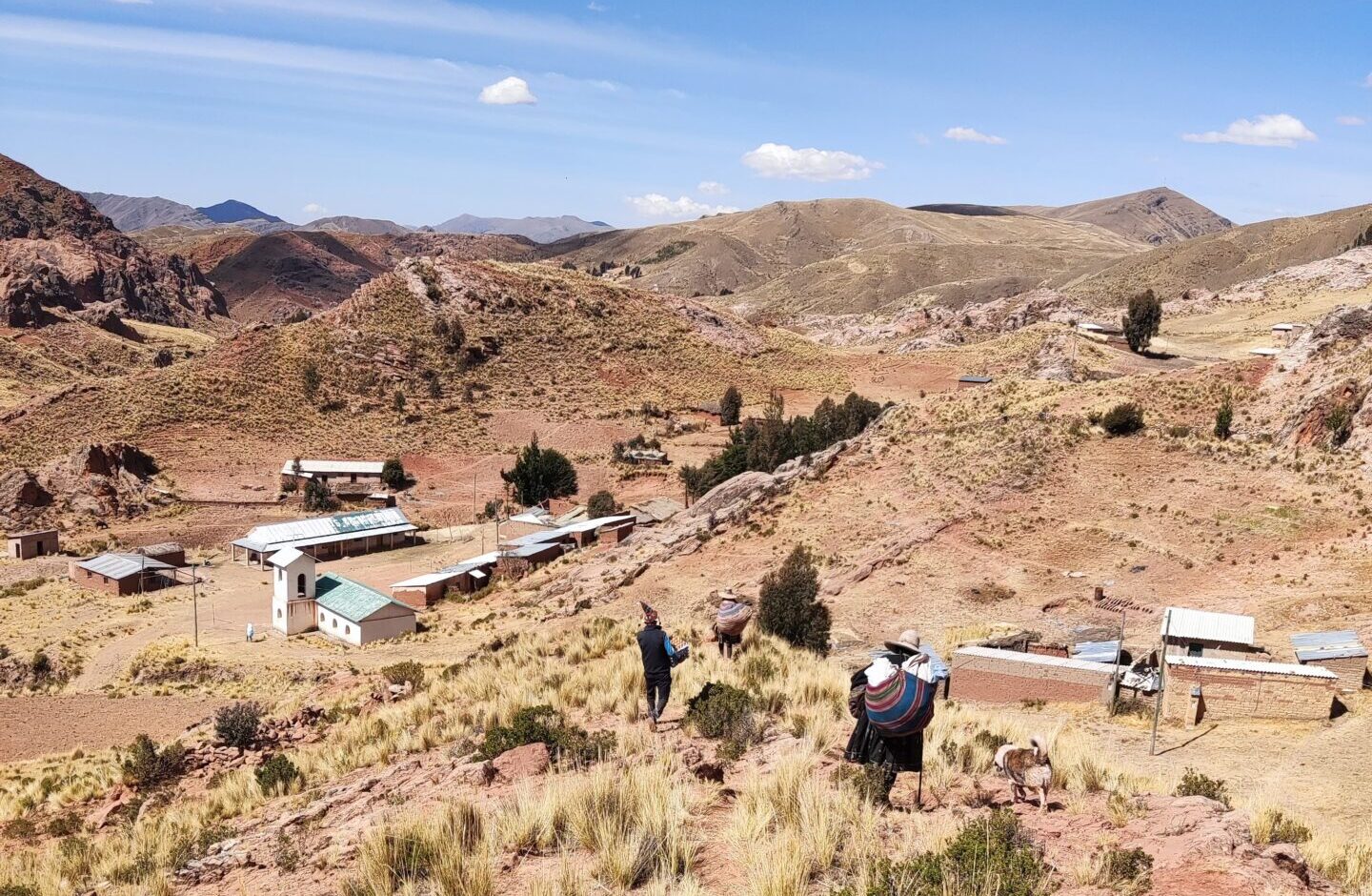 Carpani is a small town of 250 inhabitants, located in the Bolivian highlands (3,900 metres above sea level), between the departments of Cochabamba and Oruro. The invitation to visit the village was addressed to young people in particular but also to anyone else who was interested in joining. To get to the small town of Carpani (135 km from Cochabamba), we travelled for three hours on a mostly tarmaced road along an uphill mountain path. We then continued on a dirt track for about 15 km, and finally we followed a minor diversion, on a small road, to reach the village of brick and adobe clay houses nestled in the mountains. “The preparatory phase of the trip involved getting various goods, such as food and school materials for the small school which has just one multi-grade class,” says Aristide, head of the ‘Casa de los Niños’ (www.lacasadelosninos.it). Unfortunately, it has been neglected by local and national authorities who even withdrew the teacher’s salary but it has been receiving support from the ‘Casa de los Niños’ for many years – which also takes its inspiration from the charism of Unity – which tries to meet some of the many needs of the small population, sustained by a meagre production of potatoes and by grazing its small flocks of sheep.” Thanks to the support of the Focolare Movement community in Cochabamba, it has been possible to meet a large part of the needs that the Carpani community leader had told them about in advance.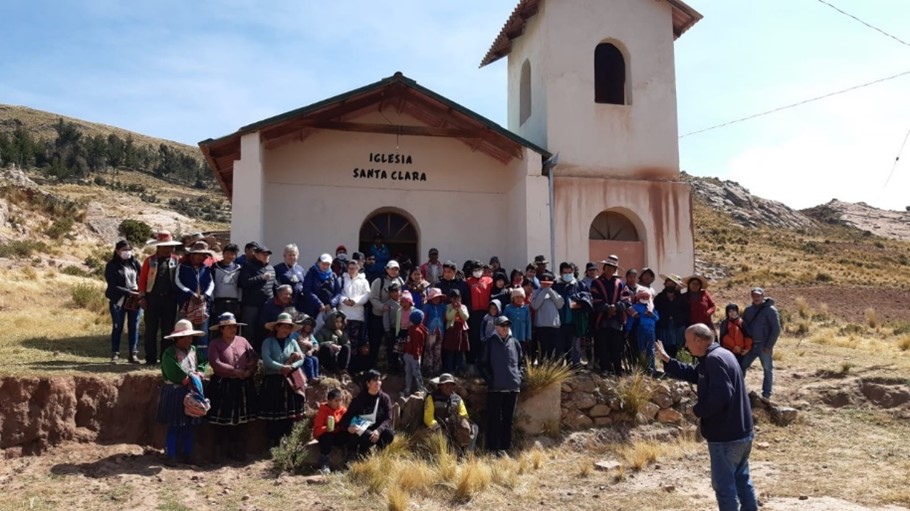
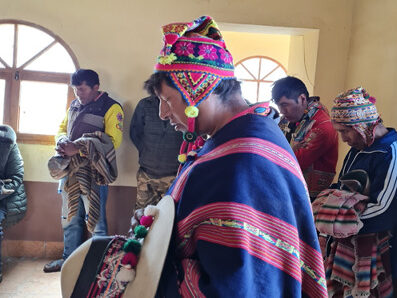 “The programme prepared for the day of the visit,” continued Silvana Verdún, “was very simple: community prayer in the small chapel, in the region’s native language of Quechua, although everyone also understands and speaks Spanish, followed by a moment of dialogue with the villagers, divided into groups of men, women and children.” “It was an experience of great mutual giving, and we all felt like brothers and sisters listening to each other and supporting each other, in the same simplicity and human warmth that characterises these people, as pure of heart as the sky and as untouched as the mountains that surround them,” said Franc Moura. The finishing touch to the community meeting was unmissable – the moment for sharing an outdoor lunch. We prepared a communal table with all the dishes that each participant had brought, and they offered us the fruit of their labour: “potatoes a la wathia”. This is a cooking technique typically found in rural communities, which consists of digging a hole in the ground, the depth of which depends on the amount of food to be cooked; the cavity and the boulders extracted are heated with embers of firewood and charcoal. Once the right temperature is reached, the food is placed inside the hole and covered by the hot clods for a certain amount of time. These were beautiful moments that are etched in our hearts. A family from Cochabamba, on their first trip to Carpani, wrote: “We had an unforgettable experience as a family. When we returned home we sat down to talk about it and the conclusion we drew was one of absolute happiness. We were very happy to meet all of you volunteers and the community of Carpani. It was a real blessing and we would like to continue participating in other activities. Thank you for the opportunity”. The ‘united world’ also advances in little Carpani!
By Orlando José Zurita Vilte – Bolivia (from Ciudad Nueva Interamericana) Foto: © Franc Moura
29 Aug 2022 | Non categorizzato
“In his first ‘Angelus’ message in Rome on 17th March 2013, Pope Francis said: “We don’t hear Jesus speaking words of contempt, or condemnation, but only words of love and mercy.” In fact, mercy and forgiveness are characteristic Christian virtues that we can practice every day with all the brothers and sisters we meet. What makes mercy so powerful that it triumphs over justice (cf. Lk. 1:54)? And why does Jesus consider this virtue so important that he makes it a condition for personal salvation? As Pope John Paul II clearly explained, mercy is “an indispensable dimension of love; it is, as it were, love’s second name.”[1] … This theme is found again in the prayer of the Our Father: “Forgive us our trespasses as we forgive those who trespass against us.” We could say that there is a law written in heaven in which our sins our remitted to the extent that we forgive our brothers and sisters. The theme of mercy and forgiveness pervades the entire Gospel. Actually, Jesus’ goal is what he revealed to us in his final prayer the night before his passion: to unite all people, to make all humanity one big family whose model is the Trinity. The whole of his teaching tends to give us, through his love, the tool for achieving this exceptional fellowship among ourselves and with God. And mercy is the utmost expression of love, of charity, that which completes it, which makes it perfect. Let’s try, then, in all our relationships, to live this love for others in the form of mercy! Mercy is a love that welcomes every neighbour, especially the poor and needy. It is a boundless, abundant, universal, and concrete love. It is a love which encourages reciprocity, which is the ultimate goal of mercy, without which there would be only justice, which serves to create equality, but not fraternity. People often talk about denying forgiveness to those who have committed serious crimes; revenge is called for more than justice. But once every attempt has been made to compensate for the damage done, we must make way for forgiveness, which is the only way to heal the personal and social trauma produced by wrongdoing. “Forgive and you will be forgiven” (Lk. 6:37). Therefore, if we have been offended or treated unjustly in any way, let’s forgive and we will be forgiven. Let’s be first to show kindness and compassion! Even if it seems difficult and requires great courage, let’s ask ourselves, in front of every neighbour: what would his or her mother do? This thought can help us to understand and live in accordance with the heart of God.
Chiara Lubich
(Chiara Lubich, in Parole di Vita, [Words of Life] Città Nuova, 2017, pp. 632/4) [1] John Paul II, Dives in Misericordia, n. 7
26 Aug 2022 | Non categorizzato
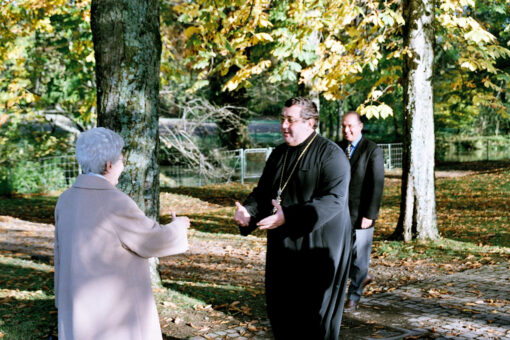
The eleventh Assembly of the World Council of Churches runs from 31 August to 8 September 2022 in Karlsruhe, Germany. The Focolare Movement has long been linked to the WCC by ties of friendship and collaboration, which continue in this latest Assembly. In a world torn apart by conflicts, afflicted by a pandemic which has widened inequalities, overwhelmed by an unprecedented climate crisis, characterized by scientific and technological innovations which often create new disparities between people and regions of the world, does it make any sense to speak of unity? And, if so, what contribution can Christians make to achieve it? These fundamental questions will be at the heart of the 11th Assembly of the World Council of Churches, taking place at Karlsruhr, Germany from 31 August to 8 September 2022. The Assembly, the highest governing body of the World Council of Churches, is normally convened every eight years. 352 Churches now belong to the WCC, in 110 countries, representing around 500 million Christians. The Assembly will gather around 4,000 participants from all around the world. Unity, for Christians, is the fulfilment of Jesus’ prayer “that they may all be one” (John 17:21). Words which inspire confidence in the Assembly’s title: “Christ’s love moves the world to reconciliation and unity”. The work of the Assembly springs from reflecting on the great challenges of the planet which have revealed such vulnerability, as well as ethnic, economic and social divisions and injustices. But which have also highlighted the interdependence of individuals and peoples; the responsibility we have towards others in a world in which no-one can save themselves on their own. In this context, the Christian Churches are gathering together for prayer and celebration, for reflection and action. It’s an opportunity to deepen their commitment to dialogue, visible unity and common testimony. Alongside the official delegates’ program are around 100 workshops and stands hosted by various Churches, Communities and Institutions, including the Focolare Movement sharing its own wide-ranging experience of dialogue. The Focolare stand will be supported throughout the Assembly by the team of “Centro Uno” (which coordinates the ecumenical activity of the Focolare internationally), with Focolare members from Germany, Switzerland, Ireland and Romania. On 5 September at 17:00, they will host a workshop on “Dialogue as a lifestyle: methodology and practice”, offering an experience of dialogue between Christians of different Churches, and between Christians and Muslims. A dialogue involving maximum respect of each one’s identity, prioritizing the engagement of theory with life. The World Council of Churches came into being on 23 August 1948, originally with 147 member Churches. Its principal aim to enable dialogue as the way and characteristic of authentic Christian life. The Focolare Movement’s links with the WCC go back to 1967 when Swiss Reformed theologian Lukas Vischer invited Chiara Lubich to Geneva. On her third visit, in 2002, Chiara also visited the WCC’s Ecumenical Institute at Bossey. WCC General Secretary Rev. Prof. Ioan Sauca has, on more than one occasion, referred to the importance to the Institute of that meeting with Chiara Lubich and her clarity in addressing the often challenging relationship between identity and unity.
Anna Lisa Innocenti
25 Aug 2022 | Focolare Worldwide
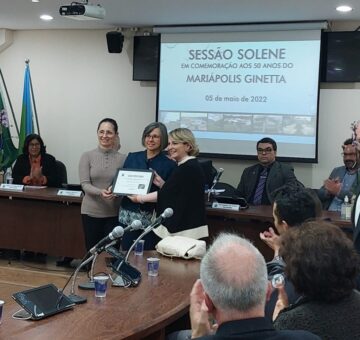
Mariapolis Ginetta celebrated its golden jubilee on August 15. The dream of its pioneers is now reality: it is a beacon of unity, dialogue and a new society for all. Since its genesis, the Catholic Church has sought in various ways to live out Jesus’ mandate in his priestly prayer, “Father, may they be one, as we are one” (Jn 17–21). Unity and dialogue are, even today, the basis of many ecclesial activities and thought. It was during World War II, in the city of Trent, Italy, that 21-year-old Chiara Lubich realized she wanted to live and spread unity among all peoples of the world, believers and non-believers alike. In Brazil, through Mariapolis Ginetta, this mission has been fruitful for 50 years now. City on the hill 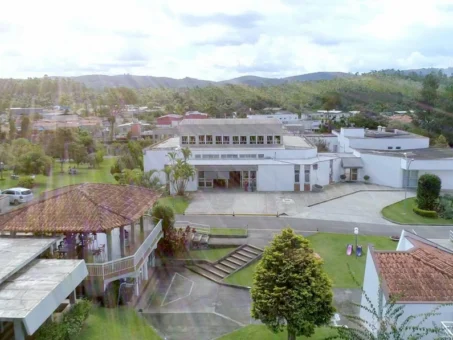 In founding the Focolare Movement, and taking a cue from her own experiences, Chiara thought it would be good to give rise to cities placed on the hill – visible and luminous, true beacons for society, where people could live the Gospel, in communion and mutual love, and experiencing the constant presence of God. Around the world today, there are 35 permanent Mariapolises, little towns started by the Focolare. Three in Brazil: Mariapolis Santa Maria near Recife, Mariapolis Gloria near Belem, and Mariapolis Ginetta, in the state of São Paulo at Vargem Grande Paulista, which on the Feast of the Assumption, August 15, celebrated its golden jubilee. Mariapolis Ginetta Fruit of God’s providence, and witness to much activity, the Mariapolis has been a place of spiritual and social gatherings for thousands of people all over the world. Inhabited by families, consecrated lay people, priests, and people of other religious denominations, this flagship little city is a space where each visitor can experience God. Karina Gonçalves Sobral, who lives with her husband and two daughters in the community, stresses the importance of the spirituality of unity and the values contained in the local culture. “The Mariapolis has as its mission to be a gathering place, an open house open for everyone. And it is truly for everyone. Those who come here feel welcomed. It is part of our charism, welcoming.” “Looking at various pieces of land that were proposed 50 years ago, this one in Vargem Grande really seemed to have the right characteristics to be a fruitful space where we could visibly embody the ideal of unity,” says Maria do Socorro Pimentel, a focolarina who has lived in the little city for more than 40 years. “We settled here, and today we celebrate an important milestone.” The founder’s presence
 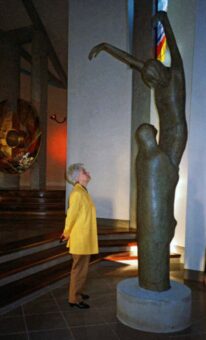 Chiara Lubich visited the Mariapolis Ginetta several times, and it was on one of her trips, in 1991, when she came face to face with the great social inequality of the Brazilian population. She was particularly inspired, and it was here that she created the Economy of Communion, whose main goal is to develop a network of businesses that share their profits, contrasting the culture of having with the culture of giving. The Mariapolis is named after one of Chiara Lubich’s earliest friends, Servant of God Ginetta Calliari, one of the greatest supporters of building this “city on the hill” who started the Focolare Movement in Brazil. Her body is buried in the cemetery there, where many faithful go to ask for graces. Recognition Starting in May 2022, the city of Vargem Grande Paulista recognized the social and spiritual work carried out by the Focolare Movement there and the importance not only of Mariapolis Ginetta, but all the work that supports children, adolescents and young people. Not to be forgotten is the work of establishing shelters for the homeless and a communication system, which has attracted investment, partnerships and lifted the profile of the municipality. For the mass celebrated on August 15, by Don João Bosco, Bishop of Osasco, Pope Francis sent an apostolic blessing, written in gratitude for this mission carried out by the Focolare Movement in the city, the state of São Paulo and throughout Brazil.
Ronnaldh Oliveira (From cancaonova.com)
22 Aug 2022 | Non categorizzato
Professor Giuseppe Argiolas has offered his resignation as Rector of the Sophia University Institute “for personal reasons”. The present Vice Rector, Professor Declan O’Byrne has been appointed as Acting Rector and will serve in this capacity until the natural end of the mandate, January 2024. The Vice Chancellor, Margaret Karram, President of the Focolare Movement, has written to the academic community of the Institute saying: “I ask you all to collaborate fully with Professor Declan O’Byrne, who has accepted the role assigned to him by the Congregation for Catholic Education, so that the Sophia University Institute can continue its service of teaching, research and cultural engagement with due professional diligence. I am grateful to Professor Argiolas for his commitment and for the work he has done to develop Sophia, especially during these difficult times of the pandemic, 2020-2022. I entrust to the responsibility of the whole academic body the good outcome of this new academic year”. The teachers and staff at Sophia are united to the Vice Chancellor in thanking Professor Argiolas for his dedicated commitment at the service of the Institute.
22 Aug 2022 | Non categorizzato
During the Fourth World Youth Day, held in Santiago de Compostela (Spain) in 1989, Chiara Lubich gave a talk entitled “Jesus is the way”. We have chosen an extract from it in which she invited everyone to set in motion the transforming power of love as Jesus himself did. He was God’s Son, he was love, and he came to earth out of love. He lived for love, spreading love, giving love, bringing the law of love and he died for love. Then he rose from the dead and ascended to heaven, fulfilling his plan of love. Everything was for love: love for you, love for me, love for everyone. We could say then that the way Jesus followed has a name: love. And we, who want to follow him, must walk along this way – the way of love. Love! Some of you might ask yourselves: what kind of love did Jesus have in his heart? Out of what kind of love did he act? What kind of love did he leave here on earth? The love that Jesus lived and brought on earth is a special and unique love. It is not the kind of love that you might imagine. It is not philanthropy; nor is it simply solidarity or kindness. It is not purely friendship or affection (like the love a boy can have for a girl, or a mother for her son); nor is it only non-violence. It is something exceptional, indeed, divine: it is the same ardent love that burns in God. Jesus has given us a flame of that infinite fire, a ray of that immense sun. It is something extraordinary. We do not think about this very often, but if we were to take it seriously, it would make us strong. … We must make this love become fruitful. How? By loving.
Chiara Lubich
(Chiara Lubich, L’amore al fratello, [Love of Neighbour] Città Nuova, 2012, pp. 50-51)
19 Aug 2022 | Non categorizzato
Love urges us to avoid being closed in ourselves but to do good for others. It leads us to take the initiative and overcome indifference. By showing commitment and getting our hands dirty, so to speak, we are reminded how much God has loved us and how great is the dream he has placed in our hearts. Seventeen hundredweight of books When we spoke to friends about the crisis in Argentina, we learned about the serious shortage of school books in Pease. Hence the idea emerged of making a collection and we circulated the idea among families we knew. The response was immediate and generous. There was no lack of initiative: advertisements in newspapers, appeals on the radio, talks in parishes and to various parents’ associations. Many people from a number of different cities became personally involved. We collected seventeen hundredweight of books for all school levels and sent them to Argentina by sea. Then, within a month, there were other groups of people who collected another two hundredweight of books and the money for their transport. Due to lack of experience, it was sometimes difficult to keep in mind all the practical details (e.g. suitable boxes for transport, customs procedures, etc.) But a solution was found for everything. We were also able to tell many people that we were motivated by the ideal of contributing to building a more united world. (S.A. – Spain)
Serving other people together I am a nurse and work in a social service centre. A couple with a nine-month-old baby who were in considerable need approached me for support. They didn’t even have money for their bus fare, the wife had injured her hand and the baby needed to complete his vaccinations. I could have turned them away because of the very strict referral requirements but inside I felt the urge to do something for these neighbours. I sanctioned access to emergency services and made sure I met all the family’s needs so that they would not have to buy bus tickets for another appointment. At one point, another nurse spontaneously volunteered to take care of them in my place: she treated the lady’s hand, provided her with further dressings and medication and also vaccinated the child. She was happy that she was able to help them and so was I. (Maina – Canada)
Edited by Maria Grazia Berretta
(taken from Il Vangelo del Giorno, Città Nuova, VIII, no.2, July – August 2022)
15 Aug 2022 | Non categorizzato
In 1976, in the Italian Cittá Nuova magazine’s column “Open Dialogue”, a reader asked Chiara Lubich the following question: “Every now and again I feel guilty for not having loved Mary enough, for thinking very little about her. What do you think I need to do so as to have a true devotion to Mary?” Mary is closer to God than to human beings, and yet she is a creature like us, and stands as such before her Creator. This means that she can be a kind of inclined plane, which reaches from heaven down to earth. With regard to having a true devotion to her – down through the centuries many devotions have flourished among the Christian people, giving them a definite idea of Mary’s maternal love through all the big and small trials of life. However, I would advise you to follow a way that brings to birth in your heart a love for Mary similar to the love Jesus has for her. The fact is that, even though Mary has all those magnificent and extraordinary qualities of which you are aware, she is also ‘the perfect Christian.’ And that’s because, as you can see from the Gospel, she didn’t live her own life, but allowed the law of God to live in her. She, more than anyone else, can say: ‘It is no longer I who live, but it is Christ who lives in me’ (Gal 2:20). Mary is the word of God fully lived out. So, if you really want to love her, ‘imitate her.’ You too should be the word of God lived out! And since you can’t live the whole of the Gospel all at once, re-evangelize your life by taking seriously and living every day one of the ‘Words of Life’ that it contains.
Chiara Lubich
(Chiara Lubich, Mary, Flower of Humanity, New City UK, 2017, pp. 181-82)
12 Aug 2022 | Non categorizzato
The Fifth Halki Summit took place in Turkey from 8th-12th June 2022. Sustaining the future of the planet together was the title of the meeting organised by the Ecumenical Patriarchate of Constantinople together with the Sophia University Institute, Loppiano (Florence, Italy). https://www.youtube.com/watch?v=tJ6ZGgiT7YU&list=PL9YsVtizqrYsxCVExqFc_vvuzCKyNbr43&index=1
8 Aug 2022 | Non categorizzato
The Word of Life of August 2022 asks us to always forgive. When we come before God – in the liturgy or in prayer – we should be in harmony with everyone. As Pope Francis says, we cannot go for a rest if there is disagreement with our brothers or sisters. Jesus uses almost an exaggeration in order to emphasize the importance before God of complete harmony among Christians, who are brothers and sisters to one another. Therefore, he says that if you are about to offer your sacrifice and you remember that any kind of conflict separates you from your neighbour, you should interrupt your sacrifice and go first to reconcile with your neighbour. The offering of the sacrifice – and for us Christians this means our taking part in the liturgy – would risk being an empty act if there is a lack of unity with our brothers and sisters. The primary sacrifice that God expects from us is the effort to always live in harmony with everyone. With this exhortation, Jesus is not proposing anything new or different from what was said in the Old Testament. … However, there is something new here and it lies in the fact that Jesus says that we must always take the initiative to ensure that constant harmony and fellowship is maintained. Therefore, he urges us to live the commandment of love of neighbour in a radical way. In fact, he does not say: ‘If you remember having offended your brother or sister’, but rather, ‘If you remember that your brother or sister has something against you.’ For Jesus, the very fact that we remain indifferent about any disharmony with our neighbour – even if we ourselves are not responsible for this disunity – is already a reason for not being acceptable to God and, indeed, being rejected by him. So, Jesus wants to put us on our guard not only against a violent outburst of hatred toward others, but also against any language or attitude that in some way denotes a lack of attention or love for our brothers and sisters. … We should try not to be superficial in our relationships, and instead search our heart carefully, into its most inner recesses, to be sure that we have eliminated even the slightest attitude of indifference or lack of generosity, every attitude of superiority or any intentional neglect of others. In everyday life, we can repair any discourtesy or display of impatience with an apology or a friendly gesture. If at times this isn’t possible, what counts is to radically change our interior attitude. Any instinctive rejection of our neighbour needs to be replaced by an attitude of welcome, of full and total acceptance of the other, of boundless mercy, of forgiveness, of sharing, of attention to their needs. If we do this, we can offer God all the gifts we want. He will accept them and take them into account. Our relationship with him will grow deeper and we will experience true union with him, which is our happiness, both now and in future.
Chiara Lubich
(Chiara Lubich, in Parole di Vita, [Words of Life] Città Nuova, 2017, pp. 282/3)
5 Aug 2022 | Non categorizzato
Forgiving is a constant daily exercise in our lives, and that very experience allows God’s love to put us back on our feet. Realising that we are forgiven is the starting point for trying to be merciful, opening our gaze on others and being truly free. The queue Just as I was feeling pleased to have arrived in time for the doctor’s appointment, a lady suddenly jumped the queue without thinking anything of it. I could feel myself getting angry and was about to say something when certain images from the war in Ukraine came to my mind. Immediately I decided to turn my rights into courtesy, into a welcome. But how difficult it is to put aside the idea of what one feels is one’s right! When I got home I told my family what happened and about my inner battle. After a long silence our eldest daughter started telling us about her latest experience. She too had been standing in a queue at the university secretary’s office and, confronting another student’s lack of respect, strongly reprimanded him to the point of making him ashamed. “Maybe I was wrong,” she added. In the end we concluded that whether it’s big or small, war lurks within us but it can be overcome with forgiveness. (F.I. – Italy) A lesson to remember My wife is a teacher and one day while she was at school and I stayed at home, as a surprise I decided to do all those little repair and cleaning jobs that sometimes get neglected due to various other commitments. I was happy at the thought that she would be pleased, but as soon as she got home she started complaining that the front door had been left open: “Didn’t it cross your mind that thieves might come in?” I was confused. I did not remember leaving it open but I did not want to argue so although I was sorry, I decided not to add fuel to the anger. In the afternoon my wife asked to speak to me. She wanted to apologise: “Seeing how many things you did and thinking how I told you off for something so trivial, I felt humiliated by my blindness. You taught me a real lesson with your silence”. A few days later she confided in me that, when she told the school what had happened between us, it created a great atmosphere of respect in the class that there’d never been before. (L.D. – Hungary)
Edited by Maria Grazia Berretta
(taken from Il Vangelo del Giorno, Città Nuova, year VIII, no.2, July-August 2022)
1 Aug 2022 | Non categorizzato
“Love your neighbor as yourself.” The measure of the love we must have for each brother or sister is contained in that “as”. In this excerpt from a talk to young seminarians, Chiara Lubich urges us to care for others as we care for ourselves. Jesus, who came from heaven to earth as the Word of God, had the experience of heaven, and he brought this experience with him to earth. He taught us to live the life of heaven on earth. He gave us the new commandment, in which he explains how we should love one another; he commanded us to live mutual love. He spoke of it as “his” commandment, typically his and new. And the early Christians considered this commandment, this teaching, as the synthesis of all Jesus’ teachings and they practiced it in an exemplary way. (…) The new commandment. We all know it, but the point is this: how should we interpret it? How should we put it into practice? What is the meaning and what are the consequences of putting mutual love into practice? We can understand this if we begin by understanding what love is, what loving means for a Christian. From the very beginning, one of the things that the Holy Spirit taught us through this charism was this: to realize that those words of the Gospel: “Love your neighbor as yourself” (Mk 12:31) had to be lived to the letter. That word “as” really meant “as”. So whether it is me, or you, or you, or you, it’s the same: love your neighbor as yourself. We realized that before this discovery, we had loved ourselves far more than we loved others. We were baptized Christians, some of us went to daily Communion, but we never dreamed of loving others as we loved ourselves, if we loved others at all. So we had to convert ourselves and be as concerned about others as we were about ourselves. We did this, we tried to do it with every neighbor we met and a revolution began. It seems impossible, but the Gospel is always fresh; it’s just a matter of understanding it, but a grace is needed. Why did a revolution begin? Because this way of behaving, wherever we live like this, impresses people – they’re surprised and they ask why we act as we do, what is behind it. In this way, they give you the opportunity to explain why you treat them as you do, why you serve, why you help. And many of these people who question you, want to try to live in the same way. As a result, people who were previously indifferent to one another, as we all are, even Christians, these people are renewed, they become interested in one another. They begin to love one another, to live in communion, giving the idea of what a living Church can be, just by living this one sentence of the Gospel: “Love your neighbor as yourself.” Saint Paul says, “The whole law is summarized in a single commandment: Love your neighbor as yourself” (Gal 5:14).
Chiara Lubich
(Chiara Lubich, Talk to a group of seminarians, Castel Gandolfo, December 30, 1989)
30 Jul 2022 | Non categorizzato
Deciding to reach out to one’s neighbour, putting aside one’s convictions, breaking down the walls of pride, means finding a way to the other’s heart and, on this journey, learning to recognise one’s own heart: entering into communion and rebuilding. Finally friends A classmate often used to tease me, always showing me in a bad light in front of others, especially girls, and it started to annoy me. I tried to tell him but he excused himself telling me there was no malice in what he was doing. Later I talked about it at home and what surprised me was that my parents did not seem to be on my side: “Have you tried to respect him more, instead of just defending yourself?” What was I to do? One day I realised my classmate was struggling with some maths homework, a subject I am quite good at. I beckoned to him then gave him what he needed to go ahead. During the break he came up to me almost in tears and gave me half his snack. I don’t know if I really understood what my parents were trying to tell me, but every trace of resentment I had towards him disappeared. The girl he was in love with approached us and, aware of the past tensions perhaps, commented: “It’s nice to see you two getting on so well”. I realised that my parents, wanting the best for me, were helping me to live with the greatest dignity. I thanked them for their advice. (R.G. – Italy) The first step In Colombia, the father is the head of the family but recently, since our daughter started studying at high school, my relationship with her had become difficult and there have been a number of ‘tantrums’. She has a strong character, like me, but I am the adult and have a certain experience of life. Several evenings ago I saw her engrossed in the computer and it was already late. When I pointed out to her that it was time to go to bed, she said she had to finish a job. What shocked me was she did not take me seriously. In fact, for the first time ever, she even raised her voice. So I unplugged the modem so that she couldn’t surf anymore. After that she stopped speaking to me. The atmosphere in the house was really tense for days, and the air felt unbreathable. At a certain point I began to have second thoughts about my attitude and asked God for the strength to be calmer, less proud, able to take the first step so as to build a new relationship with her. Noticing my efforts, she herself came up to me one day and apologised. (G.G. – Colombia)
Edited by Maria Grazia Berretta
(taken from Il Vangelo del Giorno, Città Nuova, year VIII, no.2, July-August 2022)
28 Jul 2022 | Non categorizzato
25 Jul 2022 | Non categorizzato
Kindness, mercy, and forgiveness are three characteristics of mutual love that can help us shape our social relationships. The unity brought by Christ always needs to be revived and translated into concrete social actions that are inspired entirely by mutual love. Here are some pointers about the foundations we can lay for our relationships: Kindness means wanting the good of others. It means “making ourselves one” with them, approaching them having completely set aside our own interests, ideas and the many preconceived notions that often cloud our vision. We do this so that we can take on the other person’s burdens, their needs, and their sufferings, and also share their joys. It means entering into the hearts of the people we meet to understand their mentality, culture and traditions and make these, in a certain sense, our own. In this way we can truly understand what they need and can discern the values that God has placed in each person’s heart. In a word, kindness means living for the people we are with. Mercy means welcoming others as they are, not as we would like them to be, with a different personality, with political views that match our own, with religious beliefs like ours, and without those faults and habits that irritate us. No, we need to expand our heart and make it able to welcome all people with all their differences, limitations, and problems. Forgiveness means always seeing other people with new eyes. Even in the most beautiful and peaceful environments, in the family, at school and at work, there are inevitably times of friction, disagreements and arguments. Sometimes people do not speak to each other or avoid each other, not to mention when feelings of hatred towards those who think differently take root in a person’s heart. Instead, we need to make a determined effort to try to see each brother and sister as if it were for the first time, as a completely new person, without remembering how he or she has offended us, but covering everything over with love, with a complete amnesty in our hearts, imitating God who forgives and forgets. True peace and unity can be reached when kindness, mercy and forgiveness are lived not only individually, but together, in reciprocity. Just as coals in a fireplace have to be poked every now and then to prevent them from being covered by the ashes, so too it is necessary, from time to time, to take steps to revive mutual love, and give fresh life to our relationships with everyone, so that they will not be smothered by the ashes of indifference, apathy and selfishness. These attitudes need to be translated into life, into concrete actions. Jesus showed us what love is when he healed the sick and fed the crowds, when he brought the dead back to life, and when he washed the feet of his disciples. Deeds, concrete deeds: this is what it means to love.
Chiara Lubich
(Chiara Lubich, in Parole di Vita, [Words of Life] Cittá Nuova, 2017, p. 787)
22 Jul 2022 | Non categorizzato
Answering an invitation and starting a new adventure. Josef Bambas is a focolarino – a consecrated member of the Focolare Movement. He is of Czech origin and has been living in Vienna for some years. He tells us about his choices, life in the focolare and the joy of accompanying many young people as they discover their own path in life. https://www.youtube.com/watch?v=QQXyw9w_MCo&t=18s
20 Jul 2022 | Non categorizzato
Catholic and Orthodox Church representatives gathered for a conference on the theme of integral ecology, inspired by the teachings of Pope Francis and Ecumenical Patriarch Bartholomew I. Istanbul, Turkey—Representatives of the Catholic and Orthodox churches, along with other members of civil society, gathered June 8–11, 2022 for the Halki Summit, a conference focused on the theme of integral ecology. Now in its fifth year, the event was organised by the Ecumenical Patriarchate of Constantinople in collaboration, for the first time, with Sophia University Institute. It was held over four days in which academics, theologians and leaders, alongside students and activists, debated, seeking new solutions to enact green changes in their spheres of influence. Its inspiration came from the prophetic vision of Pope Francis in his encyclical Laudato Si, and Ecumenical Patriarch Bartholomew I, also known as the “Green Patriarch” precisely because of his sensitivity to ecological issues. What were the outcomes of this summit?
Laura Salerno
To learn more, watch the full video: https://www.youtube.com/watch?v=tJ6ZGgiT7YU
19 Jul 2022 | Non categorizzato
Service-learning consists of applying classroom learning and getting to learn things that one cannot always learn in class. Clayss, based in Argentina, has built networks and alliances with educational institutions world-wide. A twenty years journey in the field of education is not a short one at all. CLAYSS, the Latin American Centre for service-learning started in Buenos Aires in 2002. It started as ‘a crazy dream’ in the midst of an economic and social crisis, and it has extended its activities not only to other Latin American countries but also to countries in Europe, Asia and Africa. This wide network, built together with various educational institutions, involves all age groups, from kindergarten to university. CLAYSS is marking its first twenty years of life by 20 conferences organized in 20 different cities. We met Nieves Tapia, its founder and director, at the LUMSA University in Rome.. Professor Tapia explained: “Service-learning combines theory and practice. It gives both children and young university students the opportunity to learn by applying classroom learning while being of service to others”.. An International Service-Learning Conference will be held in Buenos Aires at the end of August, and preparations are being made for another conference, scheduled to take place in Rome in October. About a hundred Catholic universties are expected to participate. In fact, Nieves Tapia explained that, “Uniservitate is a global programme that promotes service-learning in Catholic higher education”. And she added:: “Its objective is to generate a systemic change through the institutionalisation of service-learning as a tool that enables higher education institutions achieve their mission of offering an integral education to the new generations and involving them in an active commitment to the challenges of our time”.. Uniservitate’s global network is present in 26 countries in the 5 continents through partnerships with more than 30 universities and educational institutions.
Carlos Mana
Our interview. Activate English subtitles. https://www.youtube.com/watch?v=mzFTDiOJhJQ
18 Jul 2022 | Non categorizzato
The ‘holy journey’ that Chiara Lubich proposes to us is not to be made in solitude and detached from the world. It is a journey for everyone without differentiating between age, social status, and life choices. The method is to focus on love of neighbour and mutual love that will help us ‘forget’ the world. … We are called to remain in the midst of the world and to reach God through our neighbour, which means through love for our neighbour and through reciprocal love. It is by taking the commitment to undertake this unique and evangelical journey that we will discover, as if by magic, that our soul has been enriched by all these virtues. We need to have contempt for the world and there is no better contempt for something than completely disregarding it, forgetting about it, ignoring it. If we are all focused on others, on loving our neighbours, we don’t pay any attention to the world, we forget about it and therefore, we have contempt for it – even though this doesn’t dispense us from our duty to reject its suggestions whenever they assail us. We need to grow in virtue. But it’s by loving that we achieve this. Isn’t it written: “I run the way of your commandments, for you enlarge my understanding [with love].”[1] If by loving our neighbours we run along the path of fulfilling God’s commandments, it means we are making progress. We need love for sacrifice. But loving others truly means sacrificing ourselves so as to be dedicated to the service of our neighbour. Christian love, even though it is a source of great joy, is synonymous with sacrifice. We need to be fervent in doing penance. It is in a life of love that we find the main and the best type of penance. We need self-denial. Love of others always implies self-denial. Lastly, we need to know how to bear with difficulties. Aren’t so many difficulties in the world caused by living with other people? We need to learn how to bear with everyone and love them out of love for Jesus Forsaken. By doing so we will overcome many obstacles in life. Yes, by loving our neighbour we can find an excellent way to transform our lives into a ‘holy journey.’
Chiara Lubich
(Chiara Lubich, in Conversazioni, [Telephone conversations] Città Nuova, 2019, p. 262/3) [1] Ps 119:32.
14 Jul 2022 | Non categorizzato
From 17 to 19 June, the representatives of local entities representing the Focolare Movement around the world met to reconsider their role and share good practices and challenges at various levels. How is the Focolare structured juridically at a local level? How are the little towns, businesses and social actions in the different countries where the movement exists regulated and linked to the spirit of fraternity that animates them? In the past, someone once said that the Focolare Movement is not a complicated reality, but a complex one; a complexity that has evolved over almost 80 years of history and as a consequence of communities spreading around the world. There are currently around 2 million members and adherents in 182 countries. For this data to be correctly interpreted, it has to be recorded at the local level, and this is where the complexity arises because of the wide variety of forms of association that reflect the Movement’s activities at a regional level. In technical terms they are called ‘entities’ and allow for an association of people to exist and operate in a given territory or country. From 17 to 19 June, representatives of the local entities representing the Focolare Movement around the world met at the Mariapolis Centre in Castelgandolfo (Rome, Italy), some in person, others via video link, to reconsider their role and share good practices and challenges at various levels. Markus Alig, Focolare councillor for Western Europe for the aspect of economy and work, clearly expressed the need to take stock: “working together and sharing ideas for restoring works and structures, increasing transparency and making Focolare members of the different communities aware of projects in the pipeline and how things are going”. Starting from Chiara Lubich’s vision of work, Geneviève Sanze and Ruperto Battiston, responsible for the aspect of economy and work in the Movement, highlighted how central work is in the thought and life of the Focolare. They underlined the importance of entities that run little towns or social actions in which focolarini, people of various vocations and those who are not part of the Movement work together. This topical theme was also emphasized by the Dicastery for the Laity, Family and Life, which last April organised the annual meeting of Moderators of Associations of the Faithful, Ecclesial Movements and New Communities, on the theme “Working conditions within the Associations. A service according to justice and charity”. The entities: at the service of the life of the Focolare around the world Of the 180 participants, some recounted the history and the current “state of play” of activities born under the aegis of their respective entities, such as Simon Petre Okello from Uganda, who spoke about NASSO, Namugongo Social Services Organization Ltd, an organisation founded in 1999 by members of the movement to promote socio-educational and health activities inspired by the principles of fraternity. Over the years, three supporting ‘arms’ have developed: a health centre, a nutritional centre and a socio-economic centre. The organisation has thus enabled numerous activities to be developed over the years: continuous educational support from primary school to university; courses in therapeutic nutrition for children and parents; dental, radiology and maternity workshops; and assistance to patients before and after treatment. Social activities also include commitment to the environment in partnership with organisations in different countries. Kit Roble, who is responsible for the Focolare entity in the Philippines, described a pathway, still in progress, towards greater involvement and participation on the part of the board of directors in decision-making processes. This includes the involvement of qualified external consultants in the near future. A path that has highlighted the need for greater mutual listening and common discernment in facing the various challenges. Renata Dias, a lawyer in the USA, also spoke of a pathway that has led to distinguishing the entities that own the buildings from those that carry out the activities of the Movement, for a correct distinction of responsibilities, in a path of sharing and transparency. The experts: between faithfulness to the charism and looking to the future Among the experts who spoke was Prof. Patrick Valdrini, former Rector of the Catholic University of Paris, who illustrated the relevance of associative experiences that are born from ecclesiastical charisms, their place in the Code of Canon Law and possible new perspectives. A speech that highlighted the spiritual roots of the juridical structures needed for movements and lay aggregations to function properly: “Every charism belongs to the Church,” explained Prof. Valdrini, “it is inspired by the Holy Spirit and for the charism to be offered to people, institutions need to be created that enable the charism to spread and also protect its original spirit”. The last day of the meeting was dedicated to the constellation of associations born from the Focolare spirituality that promote the ideal of a United World. Professor Luigino Bruni recalled how these associations cannot lose sight of their link with Chiara Lubich’s charism, from which they start to find their specific way of incarnating it. Anne Claire Motte, a French lawyer and canonist now living in the Ivory Coast, chose the word “covenant” to express the path that must be followed with respect to the different orders, listening, mutual appreciating and giving utmost respect for people. They parted with a renewed commitment to “building networks” so as to go ahead together seeking inspiration from each other.
Stefania Tanesini
13 Jul 2022 | Non categorizzato
On 4 June 2022, the Gen 4 Global Kids Meeting, (the worldwide meeting of the children of the Focolare Movement) was held. Its title was “Bring love into the world and peace will come”. It was a festive day of sharing and joy in which the little children renewed their commitment to a better world. https://www.youtube.com/watch?v=4uyRKmn2kAw
12 Jul 2022 | Non categorizzato
Opening our home to Jesus, as Martha and Mary did in the Gospel, and freeing our hearts from worries in order to listen. Living the Word, putting it into practice in every day life, can offer many a precious opportunity to “choose the better part”. Solidarity A few days ago, Elisa, whose daughter I teach catechism to, asked me to contribute to a collection of food and clothing being sent through some Ukrainian women to their wartorn country. I spread the word, and the response was immediate. To Elisa’s astonishment, in only two days we put together over two tonnes of packages containing food and clothes. Then it was my own turn to be astonished. In my thank you message to all those who’d joined in this action, I mentioned I was also transferring a sum of money to a priest I know who has stayed in Ukraine. And several them contacted me immediately with offers to add their own contributions! In less than a day, I’d received 1,000 Euro. I was overwhelmed as I thanked them. One of the young people involved commented, “Don’t you remember the miracle of the loaves and fishes?”. My only conclusion, “Lord, increase my faith”. (Carmela – Italy) A children’s game – good for adults too When my children were small I invented a game in which they’d put a sweet or candy in a basket every time they did an act of love. Now they’re grown up with their own families. Recently my oldest son told me how that game has remained part of his life. He decided to put a sweet or candy in a little bowl every time he managed to overcome an obstacle in his relationship with his wife, when he held back his temper, or welcomed his wife’s idea even when he didn’t agree with it, or went to do something himself he thought she should have done, and when he listened attentively to her instead of jumping to conclusions and judging her. Eventually his wife noticed his mysterious brief disappearances from the room and got curious. When he explained, she was moved by his effort to keep their love alive and decided to join in the game. This marked a new phase in their family life and eventually the children joined in too. That simple game for children became important for the grown ups too. (F.Z. – France) Here to serve In our roles at the Ministry for Youth, we strive to work with a real spirit of family. This makes two contrasting demands on us: firstly, not to allow all the national political issues, emergencies and problems to prevent us from building personal relationships with everyone; while at the same time never forgetting that we are there to serve this section of society which has been entrusted to us. This means to keep as our number one priority our service to young people, especially those most in need, taking great care with the management of public funds when organizing any action from our department, making sure not to spend anything unncecessarily, to manage our human resources well, based on high levels of professionalism rather than political cronyism or nepotism, strictly avoiding any abuse of the public administration office for particular or personal interests. Just as in a natural family, life in the political sphere is composed of occasions large and small to choose and start again to love and serve our people. (N.T. – Argentina)
Collated by Grazia Berretta
(from Il Vangelo del Giorno, Città Nuova, anno VIII, n.2, luglio-agosto2022)
12 Jul 2022 | Non categorizzato
On June 8, 2022, Margaret Karram and Jesús Moran, along with some members of the Focolare Movement, were received in an audience by His Holiness Ecumenical Patriarch Bartholomew I. The meeting, which was held at the Fener, headquarters of the Ecumenical Patriarchate of Constantinople, focused on the productive friendship between the movement and the patriarchate. This began 55 years ago with Chiara Lubich’s visit to Bartholomew’s beloved predecessor, Patriarch Athenagoras, and the shared path taken to work together for the unity of Christians and all peoples on Earth.
Maria Grazia Berretta
Link to video: https://www.youtube.com/watch?v=2Y2cV4qLtC4
11 Jul 2022 | Non categorizzato
The Word we have chosen to live by during the month of July 2022, taken from Luke’s Gospel, says: “There is need of only one thing.,. We know only too well how much need there is for charity nowadays, as there was in Jesus’ time. We need love of neighbour, love for everyone, without excluding anyone. God who is Love. Believing in God’s love, responding to his love by loving; these attitudes are urgently needed today. People today are awaiting these two essential things. Without them, the world risks being like a train running out of control and coming off the tracks. Discovering, or rather rediscovering, that God is Love is the greatest adventure for people today. In the encyclical Ecclesiam Suam, [His Church] Pope Paul VI stated: “We are convinced that charity should today assume its rightful, foremost position in the scale of religious and moral values, and not just in theory, but in the practice of the Christian life. And this applies not only to the charity we show toward God, … but also to the charity which we in turn should lavish on … the whole human race. Charity is the key to everything. It sets all to rights. There is nothing which charity cannot achieve and renew. Who is there among us who does not realize this? And since we realize it, is not this the time to put it into practice?”
Chiara Lubich
(Lubich, Chiara., “Scritti spirituali /2, L’essenziale di oggi, [Spiritual writings/2 The essential for today] Città Nuova, 1978, p. 160)
6 Jul 2022 | Non categorizzato
Peace is a choice. This is the message conveyed by ‘We Choose Peace’ (© Gen Verde), the new track by Gen Verde. The international band explain its origins together with Naya, one of the young people who took part in the video clip. https://www.youtube.com/watch?v=hAUIeJe0SEE&t=101s
5 Jul 2022 | Non categorizzato
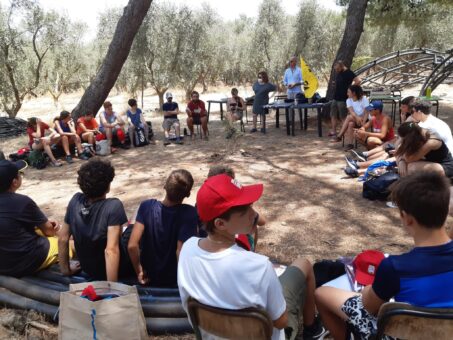
Since 2017, in lands confiscated from the mafia in San Vito dei Normanni (Puglia- Italy), “XFARM Agricoltura Prossima” has hosted training camps organized by “Libera”, a network of Associations, involved in a commitment against the mafia and in favour of social justice. This year, some young people from the Focolare Movement took part. 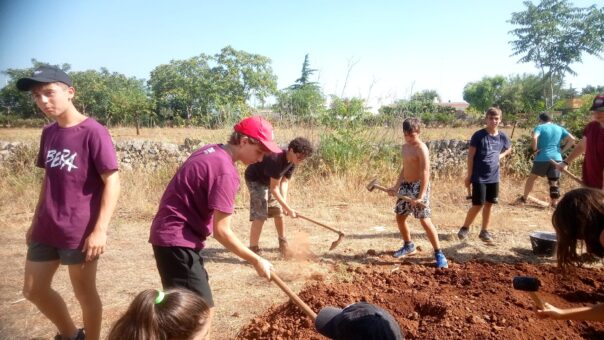 You see them handling the red earth of Puglia, in southern Italy, you observe them knead it with straw, you watch them shape the material to create something ecologically sustainable. And you think that what they are doing also has the force of a metaphor. They are aged 13-17 years old. They met in San Vito dei Normanni, in Brindisi, to contribute to the rebirth of an asset confiscated from the mafia gangs. They are mostly children of this land caressed by the sun and at this time of year, invaded by tourists. But they also come from Piedmont and Lombardy, where some people think that the mafia is only something to do with southern Italy. Not these young people. They came down here to Upper Salento to spend part of their holiday in a different way and to make a contribution to change. There are twenty of them, full of the energy and fun-loving, typical of their age. They’re spending 4 days here, protagonists in a project organized for them by Libera and the Focolare Movement.
 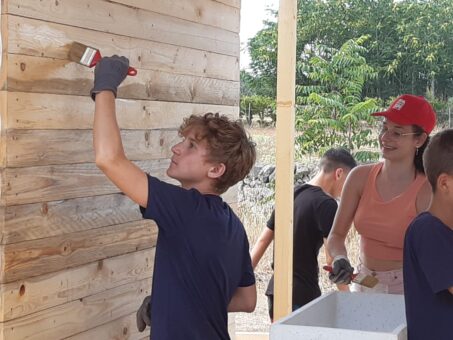 For a few hours a day, they work in the fields of social cooperatives that manage 50 hectares of olive groves and other structures taken from the “bosses”. And in their genuine commitment, you can perceive a desire to get their hands dirty, to roll up their sleeves, to actively bring something new, even in a land marked by the arrogance of the mafia. “This is our land, given back to the community”, they seem to say, as they work with clay, sand and silts to build wooden structures designed for a society in which everything can be circular. To guide them, the young people of the “Ex Fadda” urban laboratory and the “XFarm” project, a handful of enthusiasts of civil economy, active citizenship, and good practices in agriculture who after various experiences around the world found themselves here, in the land where the United Sacred Crown once ruled, to experience a new model of coexistence, to try to realize the dream of communities actively involved in regenerative processes. A utopia created here, a stone’s throw from the wild beauty of Torre Guaceto (Brindisi, Italy), thanks also to the “strength of the We”. Many different associations, secular and Catholic, trade union forces such as the Italian General Confederation of Labour, contribute to provide a common ground wherein to engage with the construction of a more united society, more attentive to preserving the environment and to working for social justice. “Memory is hope, commitment, it is something that characterizes us and pushes us not to repeat the mistakes of the past”, say the children, when the “E! State Liberi” project managers encourage them to reflect on that concept so central to the history of the network of associations created by Don Luigi Ciotti. Memory that becomes alive with the touching testimony of the Fazios, a couple whose son Michael, the same age as the listeners, was killed at the age of sixteen in the alleys of Bari Vecchia because he ended up in the middle of a settlement of accounts between gangs with which he had nothing to do. “Io stoc do”, “I’m here”, Lella says today, as she proudly did before to the wives of the mafia bosses who thought that after the murder they would leave the neighbourhood and the city. They remained, to obtain justice, to identify and then grant forgiveness to those who killed Michael, but also to try to offer a different future to that region of Italy, stained with the innocent blood of their son. “We are here”, repeat those fresh faces who today work in the fields, taking a stand to remind us that a better world is still possible. Just start by taking some land and try to do something worthwhile with it. One mother, when her son returned home after the camp, said, “I saw a light, a brightness in his eyes that I have never seen before. He told me that he had never experienced anything like this before”.
Gianni Bianco
4 Jul 2022 | Non categorizzato
Chiara Lubich spoke to young people in very clear terms. This is what happened at the 1992 Supercongress at the Palaghiaccio in Marino (Italy) when they asked her what they should do to limit consumerism. We need to live and spread the “culture of giving,” of giving. If you want my advice, it is this. At the beginning of the year, each of you should make a small bundle, as we call it, of all the things you have that are surplus to your needs. You might only have a few, but you will have something. It might be a book, a toy, a pencil, a knapsack that you don’t use anymore, some clothes… something, anything that’s over and above what you need. Gather these things together and take them to your centers, either to the Teens for Unity centers or the Gen centers. Then since you are very industrious and organize so many projects and so on, you can sell these things at a mini market, a raffle, or other opportunities you can create, to raise some money to give to boys and girls who are in need. … Bear in mind that you should keep for yourselves only what you really need, just like plants that absorb from the earth only the water, minerals, and other things they need, and no more. Likewise, each one of us should have only what we need. Everything else should be given away, to be put in common with others. Of course, you will experience that by giving, you will receive all kinds of things. This is the experience of our Movement all over the world. Why will you receive? Because the Gospel says: “Give” – this is the culture of giving – “and there will be gifts for you” and it goes on to say, “… a full measure” – like having an apron full of wheat – “a full measure pressed down, shaken together, and running over, will be poured into your lap.”[1] In other words, you will receive many things from all over, from a man you know, from a teenager, from your teacher, from your mother – you’ll be given many things. … So, spread the culture of giving. You can tell your experiences, as you already do, which is so edifying for people. You can say, for example, that you gave away one thing and then received another…. Tell your experiences, all these gospel events, that you see the Gospel promises coming true. You could talk about them or write about them; make drawings or videos, short videos, or on the television news programs you are already doing for children. By doing all this, you will create a mentality in everyone, the mentality of the culture of giving.
Chiara Lubich
(Lubich, Chiara. “Ai Gen 3, [To the Gen 3] 1981 – 1995, Città Nuova, 2006, p. 66-68) [1] Lk 6:38
1 Jul 2022 | Non categorizzato
The Encyclical, “Laudato Sì” helps us to look for ways to relax and rest in respectful harmony with the planet and the cultures it hosts, collaborating for greater sustainability. What are the choices we make when planning a trip? Do we only think of beautiful scenery, a place where we can rest or do we also think about the encounter with the environment, with people and their cultures? Here are some tips to live our holidays in a sustainable way.
- Rediscover our relationship with nature, noticing all its richness. When we visit places other than the one in which we live, we are invited to become aware of our Common Home, its beauty, its variety and breadth. It is important to take care of these places where we will live for a while and take the opportunity to integrate with the local people and the surrounding nature. It is always enriching to be open to an experience of encounter, of discovery of biodiversity, of natural resources (LS 151).
- Discover the local culture.Sometimes the riches of the place are set aside for the pursuit of conveniences for tourism. Respect for the culture of each place is central so that its identity is not lost. Before going on a journey, it can be helpful to do some research on that place, its people and its ecosystems, to get to know the local organizations that look after the conservation and protection of nature; to go there, aware of the value of its people and its territory and, since you only love what you know, we will be able to enlarge our hearts to an increasingly planetary dimension. The disappearance of a culture may be as or more serious than the disappearance of an animal or plant species (LS 145).
- Appreciate the wisdom of the original populations.Pay attention to indigenous communities and their cultural traditions. They are in fact fundamental interlocutors to get to know how the land is used and their customs. Many of these cultures respect the earth as a gift from the Creator and take care of the heritage of their ancestors as sacred spaces. It is necessary to respect them and interact with them to uphold their identity and values (LS 146).
- Support the conservation of natural areas and minimize the damage caused by our stay.Sometimes, it seems that many attitudes that we try to have throughout the year, are put aside during the holiday season. It is important to take care of the environment with actions such as: avoiding the use of plastic and paper material, reducing water consumption, differentiating waste, cooking only what you will eat, taking care of all living beings, turning off unnecessary lights. These are just a few examples to be able to have a generous attitude that shows the best of the human being (LS 211).
- Moderate energy consumption (air conditioning and heating).We can carry out small concrete actions in our daily life, as we mentioned in the previous point. Protecting energy resources is vital for our planet. Therefore, in summer, use air conditioning only as necessary. In winter, cover yourself a little more instead of turning on the heating. With these small savings, we contribute to a global movement that helps reduce the use of fossil fuels (LS 211).
- Try ecological transport: walks, bicycles, public transport.The quality of life in cities is associated with the development of good public transport that allows the movement of those who need to travel for work or leisure. It can be an enriching experience to use the means of transport of the local population. It can allow us to better understand their reality, avoiding adding other vehicles to the roads and may even be a better way to reach the places we want to visit (LS 153).
- Enjoy the simplicity to live in freedom.Sobriety does not consist in living every moment less, but in living it more intensely, enjoying simplicity, taking the time to get to know the place and its people, which allows us to value and respect every living being. We can leave our opinions and suggestions with the locals who have hosted, nurtured and/or guided us on our tours. This dialogue generates the reciprocity and motivation that these people need to improve and better welcome visitors (LS 223).
- Contemplating the cultural and technological works of every place.Find out about the museums to visit, the technological initiatives, the buildings that tell the identity of the place. “Technoscience, when well directed, can produce important means of improving the quality of human life” (LS 103).
- Fully integrate these moments of rest into our personal and community life.The value of rest is part of the spiritual life of many religions. Incorporating contemplative activities favours our spiritual growth in this path. It means to move onto another level, towards a fruitful dialogue with others and with nature. This rest motivates us not only to take care of the environment, but also to be generous and help the people most in need of the place we visit (LS 237).
- Consider the destination of our holiday and our trip a privileged space to experience interiority.Through the practice of worship of all kinds, we can embrace all the realities of the world. The hand that blesses is an instrument of the Creator’s love and a reflection of his closeness in the journey of life (LS 235).
EcoOne Southern Cone *
*Network of professors, academics, researchers and professionals working in the field of environmental sciences. **LS: Excerpts from paragraphs of Laudato Sì interpreted to take responsibility for tourism and rest.
30 Jun 2022 | Non categorizzato
The life of Jesus brings us the wonderful message of God’s mercy, Love that envelops and forgives everything. Building peace means putting it into practice in everyday life, to discover the beauty of a gift that revives people and makes them free. And there was peace My sister had been fighting with a friend for months. I invited her to my house one day to try and help her make peace. Before she arrived, however, I told my granddaughter Sandra, aged eight, about the problem and asked her to help me. She gladly said yes. I went straight to the point with my sister, but there was nothing to be done, she did not intend to forgive. Before leaving, she approached Sandra who was playing, asked her about the school, if she had learned to write: “Yes, if you give me a page, I’ll show you.” She casually wrote something. When my sister read it, she immediately became thoughtful and her eyes filled with tears. Sandra had written this sentence: “To live the art of loving you have to love everyone, be the first to love, love your enemies…” My sister said “I needed her to tell me what I should have done a long time ago!” and immediately she went to make up with her friend. (N.G. – Cameroon) Forgiveness that heals When I was nineteen, my father abandoned us and the pain and resentment of this accompanied me for years. As if to make up for that emptiness, when I got married, Nat and I always tried to keep our family together. Our children absorbed this atmosphere of love to the point that, when my husband was anxious, lost his patience and raised his voice, it was touching to see how the children, not at all frightened, embraced him, almost to appease his agitation. Their tenderness towards their father helped to dissolve the anger I felt towards my father; the wound I still had because of the suffering of that abandonment began to heal. Then one day I strongly felt the urge to forgive my father. I did it deep in my heart, but that wasn’t enough. So I talked to Nat about it, and together we went to find him. We found him and even thought I was shaking, I was able to make peace with him, also on behalf of the others in my family. I will never forget the feeling of serenity and freedom experienced on that occasion. (N.M.A. – Philippines) Laundry I live in a neighbourhood of houses separated from each other only by a wall on which we usually hang out our clothes to dry. One day, realizing that my neighbour’s laundry was already dry, I asked her son to remove it because I had to clothes to dry too. They took offence and started cursing. There were two plants on that wall that I had grown with great care. In the evening I heard a thud. When I went to see what was happening, I realized that my neighbours were dropping the second vase. Inside I felt myself seething with indignation, but the words about the land belonging to the meek came to me so I said to myself: “It doesn’t matter”. When my mother-in-law saw that I was not reacting, she said to me: “Give me the cane, I’m going to teach them a lesson”. I had to persuade her to be patient too. The situation remained tense for some time. Then one day, to our surprise, the neighbour knocked on our door. There was no water in her house and she asked if she could do her washing in our house. It was an opportunity to reconnect and in welcoming it, I realized how much she had changed. (R. – Pakistan)
Edited by Maria Grazia Berretta
(taken from Il Vangelo del Giorno, Città Nuova, year VIII, n.2, May-June 2022)
28 Jun 2022 | Non categorizzato
The 10th World Meeting of Families just concluded. “Be the seed of a more fraternal world” was Pope Francis’ mandate to all those families present. “The Church is with you, indeed, the Church is in you!… May the Lord help you every day to remain in unity, peace, joy, and perseverance in difficult moments too.” With these wishes Pope Francis greeted participants at the 10th World Meeting of Families, during the concluding Mass on 25 June in St. Peter’s Square. It was presided over by Cardinal Kevin Joseph Farrell, Prefect of the Dicastery for the Laity, Family and Life. The celebration was preceded by intense days that, touching on various themes, highlighted the witness of so many families from all over the world. They were days that many lived in their own dioceses, creating, as the pope called it, “a sort of immense constellation.” “They were moments full of beauty that touched us deeply, and we were truly able to experience God’s love for us, and for each family in the world,” says Keula, a member of the New Families Movement, an offshoot of the Focolare. She came to Rome with her husband Rogerio from Brazil. Forgiveness, openness to life, accompanying children, the role of the elderly, and hope in providence were just some of the themes discussed during this 10th World Meeting of Families. Held at the close of the Year of Amoris Laetitia Family, it had listening and consultation between family and marriage pastoral workers at its heart, with the goal of developing the theme chosen by the pope this year – “Family love: vocation and way to holiness”. Among the stages of this journey were discussion about the shared responsibility of spouses and priests in the pastoral care of particular churches, the concrete difficulties of families in today’s societies, the preparation of couples for married life, and training the trainers in family pastoral care, which is full of challenges. “We realized these past days how much the family can be a strength for the whole world today,” said Suse and Angelo from Korea. It is a force that must be defended and accompanied, and it can find a welcoming home in the Church and even become its expression. In line with the readings from the liturgy, the pope also spoke of the importance of freedom during his homily in St. Peter’s Square, “one of the most-valued goods sought after by modern and contemporary man.” It takes shape when lived in the family sphere. “All of you spouses, forming your family, with the grace of Christ have made this courageous choice: not to use freedom for yourselves, but to love the people God has placed beside you. Instead of living as ‘islands,’ you have put yourselves ‘at each other’s service.’ “This is how you live freedom in the family! There are no ‘planets’ or ‘satellites’, each traveling in its own orbit. The family is the first place where we learn to love.” It is precisely in service that the family responds to its calling and moves forward on the path of family love, an outgoing love that is “always open, extroverted, capable of touching the weakest… fragile in body and fragile in soul,” continued Pope Francis. “Love, in fact, even family love, is purified and strengthened when it is given.” Keeping our feet firmly planted on the ground, realising the challenges of our time, but with our eyes always fixed on heaven – all this could be found in the missionary mandate to families that the Holy Father read at the end of the celebration. It was a true mandate: the invitation to respond to this call toward holiness and walk together. “Be the seed of a more fraternal world. Be families with big hearts, be the welcoming face of the Church.”
Maria Grazia Berretta
27 Jun 2022 | Non categorizzato
In October 1946, Chiara Lubich wrote to Sister Josefina and Sister Fidente who were trying to put into practice the spirit of the emerging Movement. This excerpt from the letter captures the enthusiasm and ardour of the early days and spurs us, even today, to put God first in our lives. “God of my soul, my Love, my All, You speak to these two little hearts. Speak with Your Divine Voice. Tell them that You alone are Everything and that YOU LIVE IN THEM! Tell them not to search for you outside of themselves, but to always find you there, in their heart! You know already, Jesus, how much I love them and always want to be with them. … GOD ALONE IS EVERYTHING! And this Truth must be lived out through a burning love for Poverty! When is it that we love You, Lord? When we find You When is it that we can be sure of having found You? When we trust only in You and madly turn our gaze on high and seek only You: God–Our-Father! And now that your Brides are stripped of everything and are convinced that you alone suffice: now speak to their hearts telling them that you also accept (as I also gratefully and joyfully accept) the burning love that I bear them and the heartfelt desire to make of them what my heart would like to be for You! … My little sisters, How much good your life could accomplish, similar as it is to the life of Jesus when He lived and worked and loved in the little house of Nazareth! But don’t you realize that a soul who lives in this way, living life as a couple (Jesus and the soul), does as much as if she were out preaching to the entire universe? Now that you are stripped of your misery, which you will daily give over to God, you are free to love LOVE! He wants to live with you. And there’s nothing He desires more than this life as a couple.
Chiara Lubich
(Chiara Lubich, in Early Letters: At the origins of a new spirituality New City Press, Hyde Park, New York 2012 pp. 69-70)
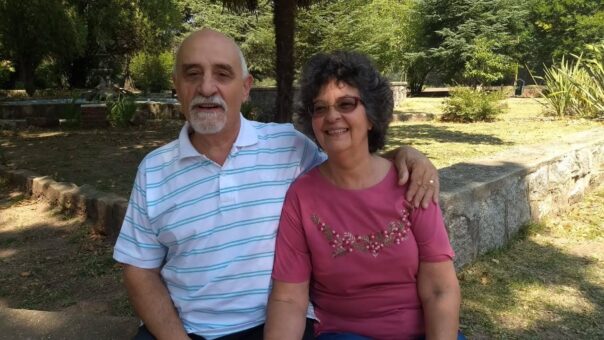
23 Jun 2022 | Non categorizzato
Family love: vocation and way to holiness. This is the theme of the Tenth World Meeting of Families being held in Rome from 22 to 26 June 2022. The voice and witness of several couples from “New Families “, a branch of the Focolare Movement, taking part in the event.  A moment of celebration and sharing to be embraced by the Church, “family of families” (Al 87) and to feel an integral part of this people on a journey. From 22 to 26 June 2022 Rome will host the Tenth World Meeting of Families, an event initiated by St John Paul II in 1994 and repeated every three years since then in different locations. The meeting, as announced by Pope Francis in a video message, is this year being held in a “multi-centred and widespread” form, responding to the needs dictated by the pandemic and the desire of so many to participate. In fact, many families around the world will be following the event from their respective dioceses, while others will have the joy of experiencing this moment in person. “This is the third time we have participated in the World Meeting of Families and each time we really bring home a load of gifts”.
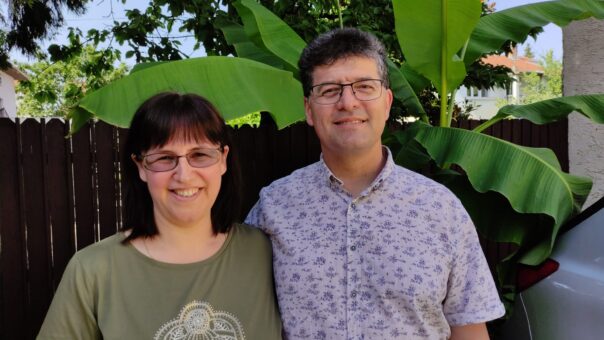
Istavan and Dori Mezaros (Serbia)
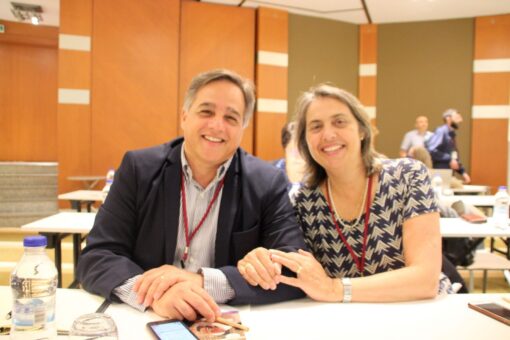
Liliana and Ricardo Galli, Brazil
Joao and Soraia Giovani, Argentina
Maria Grazia Berretta
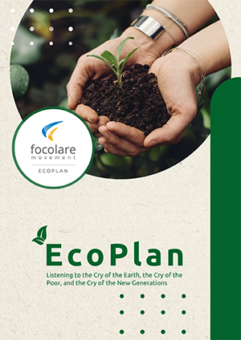
22 Jun 2022 | Non categorizzato
“We are commited to verifying the ecological sustainability of our structures and activities … We are dedicated to the creation of greater environmental awareness that will lead to more sustainable lifestyles.” Ecological conversion was one of the goals set by the Focolare Movement in the 2021 General Assembly. In response to this urgent need, the Focolare EcoPlan was initiated. “The Focolare Movement is deeply committed to ecological conversion through concrete actions and by fostering dialogue with all for the protection of our planet,” said Margaret Karram, at the opening of the fifth Halki Summit a few days ago. “Stimulated by our General Assembly at the beginning of 2021, we have decided to take courageous action through the creation of an ecological plan within our communities to bring about change and make our lives and our activities more sustainable.” 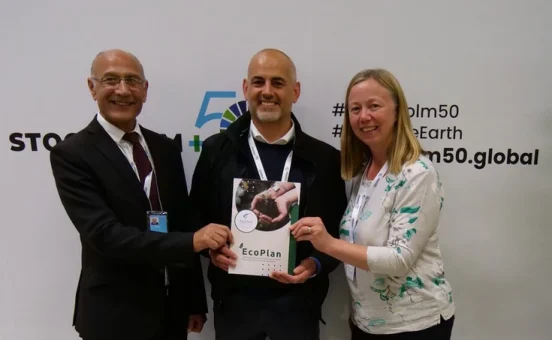 In fact, on 3 June 2022 in Stockholm, acting on behalf of all its communities, the Focolare Movement was able to present its own document – Focolare EcoPlan – which demonstrates its commitment to the environment. The presentation of EcoPlan was motivated by the spirituality that has given life to the Movement. It was officially handed over to Iyad Abu Moghli from Jordan, UNEP Senior Principal Advisor and director of the Faith for Earth Initiative, who said that the EcoPlan is “an ambitious and comprehensive ecological approach.”
Download PDF
Carlos Mana
https://youtu.be/B9SSOE_yzxk
21 Jun 2022 | Non categorizzato
On 20 June 2022 a conference was held in Rome on ‘The Identity of Movements and New Communities on the Synodal Path of the Church’ promoted by the Pontifical Lateran University and the Sophia University Institute. Increasing and deepening dialogue between hierarchical and charismatic gifts, between the institutional Church, Movements and New Communities. Cardinal Marc Ouellet’s wish is that these times, characterised by the synodal journey, may bring about a broader awareness of the charisms present in all the ecclesial communities. These words of the Prefect of the Congregation for Bishops and President of the Pontifical Commission for Latin America express the important stage in the conference “The Identity of Movements and New Communities on the Synodal Path of the Church” held yesterday at the Pontifical Lateran University and promoted jointly with the Sophia University Institute. At the centre of highly qualified speeches were the journey and open questions on these new expressions of the Spirit that require up-to-date answers which measure up to a continuously and rapidly changing world. Card. Kevin Farrell, Prefect of the Dicastery for the Laity, Family and Life, identified four areas of challenge that this journey presents today: dynamic fidelity to the charism, unity, synodality and missionary spirit: “The new perspectives that the Holy Spirit opens up before us always present themselves as challenges, something that does not leave us in peace because the Spirit is dynamism, it is creativity, it is life”.
How, then, is it possible to carry out an updating that has to be done in multiple environments: formation of members, evangelisation activities, activities to help and heal society’s deepest wounds? The variety and complementarity of responses and contributions offered by representatives of the Movements and New Communities provided a panorama on the current status of these ecclesial realities. Margaret Karram, president of the Focolare Movement, stressed how “In these times when the whole Church is moving towards a synodal approach, we are called to take a step further: to walk together, united, not just within our own realities, but together with everyone”. It is only by networking, by being a gift for the Church and humanity that the Movements will also discover their own identity in a new way. Mary Healy, professor of Sacred Scripture (Sacred Heart Major Seminary in Detroit, USA) highlighted formation, evangelisation and the primacy of the charismatic dimension as the three main fruits that Movements and New Communities have been bearing since the Second Vatican Council: gifts brought to the Church and humanity, founded on a personal and communitarian encounter with Christ. Speaking about “The Ecclesial Movements and New Communities in the current kairos of the synodal process”, Mons. Piero Coda, theologian and Secretary General of the International Theological Commission and lecturer at Sophia University Institute, highlighted a challenge that is still open: the provisional nature of the configuration of these ecclesial realities with regard to their recognition in the canonical order. The care of the Church in this phase provides a foretaste, in the current dynamic ecclesiological context, to new and more mature arrangements’. The session on “Foundation, Development and Incarnation of the Charism” was then entrusted with providing a representation of the Movements and New Communities. Moysés Louro de Azevedo Filho, Founder and General Moderator of the Shalom Catholic Community, presented the spirit and aims of this ecclesial expression that is “the bearer of a charism summed up in the word spoken by Jesus when he met the disciples in the Upper Room: “Shalom”, towards communitarian holiness”. Daniela Martucci, vice-president of the Comunità Nuovi Orizzonti highlighted the heart of its charism: listening to the cry of Jesus Crucified and forsaken in the poor, the least and the discarded as well as the cry of love of the God-Man who continues to repeat: “love one another as I have loved you”. Iraci Silva Leite emphasised the centrality of the Word of God that guides the experience of the “Fazenda da Esperança”, a Word that “unites us, particularly in our efforts to live love among ourselves and to give those who suffer the presence of Jesus”. Michel-Bernard De Vregille of the Emmanuel Community touched on the theme of crises that ecclesial realities have encountered and continue to encounter: “There is often the risk of wanting to set charism and institution against each other,” he said. “However, the torch of the hierarchical and institutional Church and the torch of the charism are made to meet together and become a bright and beautiful flame illuminating the world with the presence of the Risen Lord”. For the aspect of incarnation, Prof. Luigino Bruni, an economist, focused on the ‘narrative’ challenge of charisms born in a historical period often recounted in ways that are typical of the founding period. “Updating is needed together with the charism,” he said, “without losing touch with the charism’s fundamental core. A new narrative potential will come from the pluralism of languages, from various experiences, from the dialogue between people with different sensitivities: young people and adults, academics and ordinary people, Church and movements, etc.” In the afternoon, work focused on how charisms can and should develop all aspects of the life of members and communities, from the spiritual to the organisational, by including members of different vocations, to formation, to the administration of assets and all forms of responsibility and governance. Prof. Elena Di Bernardo, Professor of Canon Law (Institutum Utriusque luris, Pontifical Lateran University) offered a highly qualified excursus on the relations between theology and canon law, as they have been realised and evolved over time. ‘It must be assumed that the identity in itself of a Movement or ecclesial reality,’ she observed, ‘is fully acquired when all the charismatic aspects constituting it have received adequate juridical configuration’. At the close of the proceedings, the report by Dr Linda Ghisoni, Undersecretary of the Dicastery for the Laity, Family and Life, entitled “Laity today in the ecclesiology of communion”, highlighted two polarities to which attention must be given: person-institution and praxis-statutes. With regard to the former, she observed that ‘the institution, Movement or new community, will be preserved if its original charism, its proper purposes in which prayer and apostolate are combined, and, above all, will be preserved if the good of the persons who make it up is safeguarded. The latter can never be an alternative to the good of the institution!” Stressing how experience painfully teaches us that whenever the ‘good name’ of the community has been preserved by sacrificing individual persons and their rights, aberrations have been committed that are detrimental to the institution as a whole. He concluded: ‘The person at the centre, always, constitutes an investment in the community or movement. The other polarity instead concerns practice and statutes: if it is true that ‘life undoubtedly anticipates every normative definition’, it is also true that any legalism or demonisation of law must be avoided, which ‘far from being a necessary evil to be endured by drawing up a list of articles, constitutes a path of freedom for all: for all members and for those who are personally called upon to be its guarantors, particularly for those who hold positions of government, at all levels’.
Stefania Tanesini
20 Jun 2022 | Non categorizzato
Jesus affirmed that we are already made clean by virtue of the Word He proclaimed to us. Therefore, it is not so much rituals that purify the soul, but His Word insofar as we are able to put it into practice. It leads us to have our hearts always set on God alone. The Word of Jesus is not like human words. Christ is present in his Word, as he is present, although in another way, in the Eucharist. Through his Word Christ enters within us and, provided we allow him to act, he makes us free from sin and therefore, pure of heart. Thus, purity is the fruit of living the Word, all the Words of Jesus which free us from the so-called attachments, into which we inevitably fall if our heart is not in God and in his teachings. These could be attachments to things, people, ourselves. But if our heart is set on God alone, all the rest falls away. To achieve this, it can be useful to repeat throughout the day, to Jesus, to God, the invocation of a Psalm which says: “You, Lord, are my only good” (cf. Psalm 16:2) [1] Let us try to repeat it often, especially when the various attachments seek to pull our heart towards those images, feelings and passions which can blur the vision of good and take away our freedom. Are we inclined to look at certain advertising posters, to watch certain television programs? No, let’s repeat to him: “You, Lord, are my only good”. Re-declaring our love for God will be the first step towards going out of ourselves. And by doing so we will have gained in purity. Do we sometimes feel that a person or an activity is coming between us and God, like an obstacle that mars our relationship with him? It is the moment to repeat: “You, Lord, are my only good.” This will help us to purify our intentions and regain inner freedom. Living the Word makes us free and pure because it is love. The divine fire of love purifies our intentions and all our inner self, because the Bible considers the “heart” to be the deepest seat of intelligence and will. But there is one love which Jesus commands us to practice and which enables us to live this beatitude. It is mutual love, being ready to give our life for others, following the example of Jesus. It creates a current, an exchange, an atmosphere whose dominant note is precisely that of transparency, purity, because of the presence of God, who alone can make us pure of heart.[2] It is by living mutual love that the Word produces its effects of purification and sanctification. As isolated individuals we are incapable of resisting at length the solicitations of the world. Instead, mutual love provides a healthy environment capable of protecting the whole of our authentic Christian existence, and in particular, our purity.
Chiara Lubich
(Chiara Lubich, in Parole di Vita, [Words of Life] Città Nuova, 2017, pp. 616-618) [1] Cf. Psalm 16,2 [2] Cf. Psalm 50, 12
17 Jun 2022 | Non categorizzato
Put God at the centre of life and be assured that you will not waver. We can experience a deep sense of consolation by living what is expressed in the words of this psalm – a sense of feeing guided in our actions and knowing, deep in our hearts, that only He makes all things good. Seeds of Peace In our apartment block there was a growing attitude of discontent relating to the administration, repairs and noise. One day I was reflecting on the words of a priest: he had said that peace begins within us, in our conscience where we find the seed of truth that is God. This is a seed that germinates and grows when charity is put into practice in everyday life. I talked about the situation with my family and we came up with the idea of making some small improvements in the building every day, without telling other people what we were doing. For example, we decided to remove the dead leaves from the plants at the entrance and water them and we cleaned the glass and frames of the paintings in the foyer, which had perhaps never been dusted since they had been hung on the wall. Of course, these were the tasks that the people paid for cleaning should have carried out but at the following tenants’ meeting, the administrator pointed out that for a while, everyone had begun to feel that the environment was more welcoming and people began to share ideas about painting the staircase. When I reported this to the children, they were enthusiastic. A contribution to improving the world can start in even in one’s own apartment building. (C. – Croatia) The “bundle” to share From the very beginning of our marriage, we shared everything with one another. One day, my wife and I sat around a small table, trying to set up the family economy. Beyond the figures in themselves, the income and expenditure marked a growth in the quality of the relationship between us. We also involved our children. From then on, it became normal for a little used a pair of shoes, for example, to be seen as useful to someone else or for our indispensable outgoings to include a sum of money for a neighbour in need. A further step was the so-called ‘bundle’ to share with others: the focus of this was to give away what was not really needed. Only later did we realise the importance of what we had done. We felt that we had begun to relate to people who could need anything. Even a pencil, a book or a blanket became a sign of caring for others. This attitude renewed our lives. (L.R. – Holland) Trust I had lost my job, but I was confident that God’s Providence would help me find another one: had I not experienced many times that my efforts to put Gospel love into practice would be answered by “give and it will be given to you” (Lk 6:38) ? That very day, in the parish, I had to meet with a group of people and recount my experience as a Christian. At the end, I also mentioned that I was looking for a job. A girl who was present at that meeting told me that they were looking for an employee in her father’s company. That is how, by trusting, I found work. (F.I. – Italy)
Edited by Maria Grazia Berretta
(Taken from Il Vangelo del Giorno, Città Nuova, year VIII, no.2, May-June 2022)
16 Jun 2022 | Non categorizzato
On Sunday, 19th June, 2022, the new website of the Igino Giordani Centre will go online. The site is dedicated to this writer and politician, co-founder of the Focolare. Alberto Lo Presti told us that it is a completely revamped space, where you can meet “Foco” and get to the heart of his life. “Once someone said that if, by chance, all the Gospels disappeared from the earth, Christians should be such that, just by looking at their lives, the Gospel could be rewritten. Igino Giordani was that kind of Christian.” The words of Chiara Lubich, in describing the extraordinary figure of Igino Giordani (to whom she gave the name of Foco), allow us to grasp the beauty that lies behind the adventure of one who is considered a co-founder of the Focolare Movement. Hero of the last century, engaged on various fronts, from political, to social, to cultural, Giordani is still relevant today. The Igino Giordani Centre, founded by Chiara Lubich, will launch its new website on 19th June 2022 to showcase and protect his legacy. Alberto Lo Presti, at the helm of the Centre, told us about it. Prof. Lo Presti, where did the idea of creating a new site dedicated to Igino Giordani come from and what is new about it? We live in a challenging era from many points of view: peace and war, justice and inequalities, migration and welcome, work and unemployment… and since Igino Giordani has dealt with these issues with wisdom and inspiration, there are many people searching through his speeches, writings and testimonies, to find a light that might guide them in their current choices. This is why we decided to improve the website, completely renewing it, adapting it with the latest graphics and functionality. In this way we will give access, to those who are interested, to the main sources that illustrate his thought and life. How can the person of Foco make his way into the present day and be an inspiration also for the new generations? At the venerable age of 70+, Igino Giordani was considered a “myth” by many young people and teenagers who frequented the gardens of the International Centre of the Focolare Movement in Rocca di Papa (Italy), and came across him, sitting on a bench. They loved to spend time with him, to talk about serious matters or simply to share what they were living. Today, young people still need myths and heroes and often look for them in the most unlikely places (sports, cinema, video games, social media, influencers). To get to know Igino today, means getting to know the story of a real hero, who really had to go to war, who really chose peace, who really challenged the people in power to remain consistent with their ideals. Usually it is thought that youth is the time of ideals, which then with adulthood, are destined to collapse. Igino remained young to the last because, as he loved to say, “You never get old in the spirit”. Exploring his experience means listening to his teaching: living for the ideal of unity was the most exciting thing that happened to him. And alongside the improved functionality of the site and its new graphic layout, there is also a new Instagram page, already online, the first official channel entirely dedicated to Igino Giordani (Igino_giordani_official), to facilitate access to him, a citizen of the world and a real influencer of our time.
Maria Grazia Berretta
15 Jun 2022 | Non categorizzato
It’s not something you can learn from books – the art of supporting each other. But helping someone with their studies and devoting time to them can be the right opportunity to discover wonders and reap unexpected rewards, even in a place like prison. That’s what happened to Marta Veracini, giving her a new look on life. Laughing out loud while a voice in the distance whispers not to disturb; exchanging ideas and opinions, attempting to concentrate and stay in the books. This scene repeats daily in study halls of universities, between coffee breaks and on the way to a new class. All this and much more happens to Marta Veracini, a young woman from Tuscany, Italy, every time she hears the armoured doors close behind her at Dogaia, the prison in Prato (near Florence). A law graduate with a master’s degree in criminology, Marta joined the University of Florence’s organised civil service project in 2019. In it volunteers assist inmates preparing for university exams. Since then, even after the year ended, she continued her service – there in a place that anyone would have a hard time calling ‘beautiful’. Yet in surprising and unexpected ways, it has become a space dedicated to care and mutual trust, a place where relationships are a ‘welcoming home’, and where everyone, inmate or not, can finally be themselves. ‘I am always asked how it feels to bring comfort and help in a place like prison,’ says Marta. ‘The truth is that no one really understands how much you can receive, even in that context. ‘Volunteering in prison changed my life. It allowed me to break down the barriers of my shyness, my insecurities and allows me today to show off a smile that I used to hide. It is I who have to thank the people I have met for all they have done for me and continue to do. ‘I am truly free with them.’ It is a real achievement. There are so many cells that can imprison us, in fact, that can hold back our dreams, our thoughts, our hopes. Marta’s experience, together with those of the inmates she has had the good fortune to meet and help with their studies over the years, are an example of how together it is still possible to take flight, to feel that you are worth something and – why not – think about the future. ‘The university path is definitely tiring for everyone,’ Marta says, ‘but they work so hard, and it is good to see their grit and joy in passing an exam. These are great little milestones, where they face tough subjects. ‘Many, for example, are studying law, and some have already graduated. There are young people as well as adults from various regions of Italy, or foreigners. It is good to see how they set no limits, spur each other on and become examples for each other. ‘For those with long sentences, it means investing strength and time to achieve something that makes them proud, and makes their families outside proud. Those who are released have the opportunity to use what they have studied to be able to start over.’ Hers is a look of hope that embraces and allows itself to be embraced. The stories of daily life within the walls of Dogaia, captured in the book Marta wrote during the pandemic, My guardian angel has a life sentence, are a small drop in a great sea of indifference that divides the inside from the outside. Yet they are a testimony to how it is possible to break down barriers by generating beauty and putting unconditional love for one’s neighbour at the centre. ‘I have never wanted to know why each of them is in prison,’ Marta continues, ‘but one thing is certain: I have never looked at them as “monsters” – just people who, although with mistakes behind them, have the same needs, feelings and hope as others do to relate and share. ‘They are people who have dignity like everyone else, and thanks to them, I also found mine. In short, true friends.’
Maria Grazia Berretta
13 Jun 2022 | Non categorizzato
The Fifth Halki Summit, was held in Istanbul, Turkiye. Four days of talks and discussion on care for the environment for the future of the planet. At the end of the fifth Halki Summit, entitled “Sustaining the Future of the Planet Together,” we said our goodbyes in an atmosphere of warmth and friendship. The international, interdisciplinary meeting was organized jointly by the Ecumenical Patriarchate of Constantinople (Istanbul) and the Sophia University Institute, Loppiano (Italy). It was inspired by the prophetic teaching of Patriarch Bartholomew and Pope Francis and all agreed that it was an event of the Holy Spirit. Not by chance, the Summit was held in the week between the two dates of Pentecost in our respective Churches. The sincere communication and mutual attentiveness, as well as the open exchange of ecclesial approaches and reflections, led us to discover that we are at a decisive turning point for the future of the human family, in which each person has a responsible part to play. The challenge or opportunity to which we are called is that of developing a shared ecological ethos. As artisans of peace and fraternity, we wish to implement good practices in every sphere, whether educational or pastoral, social, economic or political. We committed ourselves to work on interdisciplinary pathways for the formation of new paradigms that can interpret and transform reality and overcome the culture of waste. It became clear that effective action can only be achieved through non-elitist education, in which the Churches are actively engaged. At the end, all participants wished to make an appeal “to the Churches and those who care about our common home”. We hope not to leave this event behind us as a beautiful memory, but instead, starting from our own conversion, nourished by evangelical wisdom, to work together for real change in the capacity to care. “Ecological culture”, Pope Francis reminds us, “Cannot be reduced to a series of urgent and partial responses to the immediate problems of pollution, environmental decay and the depletion of natural resources. There needs to be a distinctive way of looking at things, a way of thinking, policies, an educational programme, a lifestyle and a spirituality which together generate resistance to the assault of the technocratic paradigm. Otherwise, even the best ecological initiatives can find themselves caught up in the same globalized logic. To seek only a technical remedy to each environmental problem which comes up is to separate what is in reality interconnected and to mask the true and deepest problems of the global system” (Laudato Si’, no. 111).
Vincenzo Di Pilato (Photo: Alfonso Zamuner, Noemi Sanches e Nikos Papachristou)
13 Jun 2022 | Non categorizzato
The Word of Life of June 2022, “You are my Lord, I have no good apart from you ” proposes that we recognise Jesus in all circumstances of life, especially in the most difficult moments of physical or spiritual pain. Through his abandonment, Jesus himself became our access to the Father. His part is now done. It’s up to us to take advantage of this great grace. Each one of us has to do our own small part, which requires that we approach the gate and pass through it. How? When we suffer because of a sudden disappointment, or are distressed by an unexpected misfortune or an absurd illness, we should recall that Jesus took on himself the pain of all these various trials, and a myriad of others, too. Yes, Jesus forsaken is present in everything that causes us to suffer. Every pain we experience bears his name. So let’s try to recognize Jesus forsaken in all the distressful and difficult situations of life, in all our dark times, in our personal tragedies and those of others, in the suffering of humanity that surrounds us. All these are him because he made them his own. All we have to do is to tell him, with faith, “You, Lord, are my only good.”[1] It would be enough to do something practical to lessen “his” suffering in the poor and in those who are distressed, for us to go through the gate and find beyond it a joy never experienced before, a new fullness of life.
Chiara Lubich
(Chiara Lubich, from the Word of Life of April 1999) [1] See Ps 16:2.
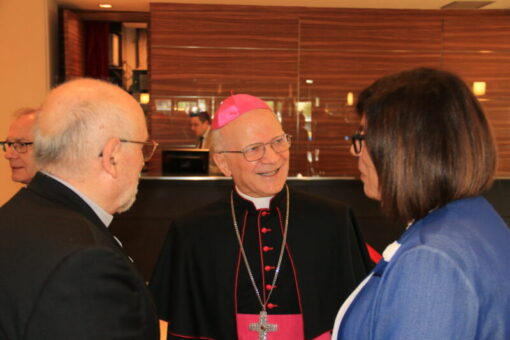
9 Jun 2022 | Non categorizzato
The 5th Halki Summit jointly organized by the Patriarchate of Constantinople and the Sophia University Institute began on 8th June, 2022, in Turkey. We had a dream… 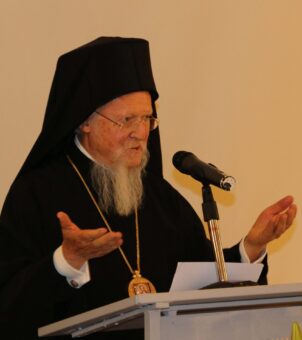 Yes, it was January 2019 and a delegation from the Sophia University Institute (IUS) visited the Ecumenical Patriarch Bartholomew in the Phanar, the historic Greek quarter of present-day Istanbul (Turkey). We were also welcomed very warmly by Metropolitan Elpidophoros of Bursa, then Abbot of the Monastery of the Holy Trinity on the island of Halki and Professor of the Theological School of the University of Thessaloniki (he became Archbishop of America the following May). We experienced a deep communion with him which gave rise to the desire to organize together a Summer School in Halki with Catholic and Orthodox students and teachers, on the theme of ecology, so dear to both the sister Churches of Rome and Constantinople. The pandemic delayed it but today that dream has come true.
  It is 6.30 pm on Wednesday, 8th June, 2022 and we are once again in the “queen of cities”, as the beautiful city of Constantinople was called, with good reason. Patriarch Bartholomew gave a passionate and informative greeting to participants, students and teachers from all continents and with very varied interdisciplinary and ecumenical experiences. The audience included Msgr. Marek Solczynski, the new Apostolic Nuncio to Turkey, Msgr. Vincenzo Zani, Secretary of the Congregation for Catholic Education, Archbishop Elpidophoros and Margaret Karram, President of the Focolare Movement and Vice-Chancellor of the IUS. “Everything is in a relationship of love” said Margaret Karram, recalling the destiny of unity embedded in the universe, that today more than ever, man and woman are called to promote with bold, prophetic action and thought. The title of the fifth Halki Summit organized jointly by the Patriarchate of Constantinople and the IUS, which began on Wednesday, 8th June, is a clear indication of this: “Sustaining the future of the planet together”. It is no coincidence that Patriarch Bartholomew emphasized two words from this title: “future” and “together”. The first refers to the strong intergenerational bond inherent in respect for the environment in which we live; the second to the mandatory interdisciplinary approach to be taken in the face of the vastness and complexity of ecological problems. He said, “It becomes evident that only a cooperative and collective response by religious leaders, scientists, political authorities, educational institutions and financial organizations will be able to effectively address these imperative issues of our time”.
  At the end of his speech, he referred to two concepts very dear to Orthodox theology and spirituality: “Eucharist” (in the sense of “thanksgiving” for the gift of creation) and “asceticism” (understood as “self-control” of consumerist passions). However, the Patriarch invited us to consider these concepts not simply in a liturgical or monastic sense, but as different ways of speaking about communion. “And this is where the vision of our brother Pope Francis,” he admitted with emotion, “coincides with the vision of the world that we have proposed and promulgated for over thirty years. We are both convinced that what we do to our world, ‘we do to the least of our brothers and sisters’ (Mt.25:40), just as what we do to others we do to God himself (cf. Mt.25:45). It is no coincidence that immediately after publishing the encyclical on the environment Laudato Sì, the next encyclical of Pope Francis was Fratelli Tutti”. There are many joint statements by the Pope and the Patriarch, together with the Archbishop of Canterbury, on the urgency of environmental sustainability, on social impact and on the importance of global cooperation. This is also what Pope Francis writes in Laudato Sì: “When we fail to acknowledge as part of reality the worth of a poor person, a human embryo, a person with disabilities … it becomes difficult to hear the cry of nature itself, everything is connected. (no. 117) The Patriarch clarifies the same concept, putting it in context: “Connections between us and the entire creation of God, between our faith and our action, between our theology and our spirituality, between what we say and what we do; between science and religion, between our convictions and every discipline; between our sacramental communion and our social conscience; between our generation and future generations, between our two churches, but also with other churches and other communities of faith”. Yes, everything is connected by a bond that only mutual love between people can make visible to every man and woman on this wonderful planet earth.
Vincenzo Di Pilato (Foto: Alfonso Zamuner)
8 Jun 2022 | Non categorizzato
Call for projects with an ecological impact addressed to the local communities of the Focolare Movement. Rules and conditions for participation. Proposals will be accepted until 30 June 2022. https://www.youtube.com/shorts/hflKLGLCPE0 What is the project The “Seed Funding Program” aims to sustain and encourage significant and promising initiatives in different parts of the world towards the creation of local/national ecological plans for people and planet within the Focolare communities. The main goal is to build local ecological plans within the Focolare communities to journey together towards an integral ecology. Our inspiration The world faces a complex social and environmental crisis. The Encyclical Laudato Si’ from Pope Francis explains how the cry of the poor is completely interconnected with the cry of the planet. We cannot consider our relationship with nature as separate from fraternity, justice and faithfulness to others. Chiara Lubich, the founder of the Focolare Movement, argued that it is by starting with small local problems that a moral conscience is formed that is capable of addressing problems on a global scale. In fact, Chiara continued: what is missing is not technical and economic resources but an extra soul, which means new love for mankind, to make us all feel responsible towards everyone. Participate! The SFP is looking for youth-led and intergenerational initiatives (ongoing or future initiatives) that aim at a change in our personal and communitarian lifestyle, envisioning a sustainable relationship between nature and human beings, and working within a local context. 10 projects will be selected and will be funded with up to 1000 euros. An international and interdisciplinary jury will select the projects according to the following criteria:
- The project should be oriented towards integral ecology (in favor of people and planet);
- The project should involve intergenerational efforts with young people playing a significant role in the leadership and implementation of each project;
- The project must involve the local community (possibly at a national level); and
- The project should show how spiritual values motivate ecological action (possibly with an ecumenical and interreligious dimension).
Submit your ecoplan and be part of this path together! https://www.new-humanity.org/fr/project/seed-funding-program/ In order to participate in this call, you may need to fill out some crucial information. Do not miss the framework and the call for projects survey.
The deadline to complete your application is June 30th, 2022. You will hear whether your project was successful to receive seed-funding by July 15th, 2022. Once successful for funding, you would commit to taking first steps within your project between July and September 2022 and we would love to see your first report by the end of October 2022. For more information, feel free to contact us at ecoplan@focolare.org More information about the Faith Plan for People and Planet at https://www.faithplans.org/
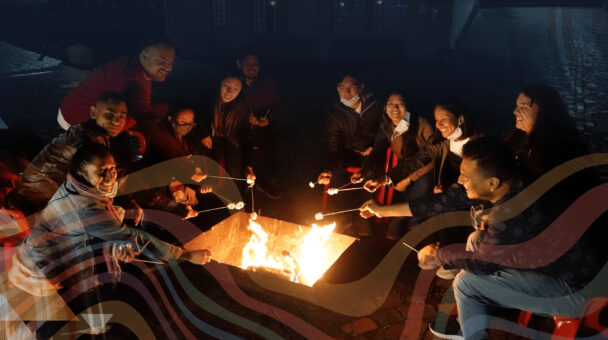
7 Jun 2022 | Non categorizzato
While much of the population of Latin America adheres to the Catholic Church, for many years there has been a growing sense of awareness among different churches. Often by working together on social issues, Christians from different traditions are able to experience real unity. Of particular importance is the Week of Prayer for Christian Unity, which in the southern hemisphere is celebrated between Ascension and Pentecost. More and more it’s the youth who are taking the lead to get things done.  Young people have always been attracted by the unknown, by what is different from themselves, by all that something new can bring, even in the realm of religion. So youth are always more open to those from another church to their own. This is precisely the experience of Ikuméni, a workshop for young Latin American Christians belonging to different churches and Christian traditions. “From the first day, I realised it was going to be challenging for everyone present, starting with me because the people I meet on a daily basis are nearly all Catholics like myself. In this course, everything was new and every participant came from a different church”, explains Carolina Bojacá, a young Focolare member from Colombia. In this formation journey, these young Christians from different traditions become travelling companions, in what is proving to be a real innovation in the ecumenical field. Starting from their shared faith in Christ, each one is prepared to serve actively in areas like sustainable development, peace and humanitarian aid. Carolina continues, “In August 2021 I participated in the online course for young people on good practice in ecumenism and inter-religious dialogue. There was a great atmosphere among us all from the start, and we all wanted to get to know each other better and build good relationships. As we tackled each theme, we quickly realised we would not be able to make progress unless we let go of all those prejudices or preconceptions that are often nurtured within a community and which block us from opening our minds and hearts to welcome each other. It’s the only way to discover the beauty of what unites us and also the differences that make us who we are as a church or group, without them being an impediment to working together for a more fraternal world. As the months went by, we got to know each other and eventually we managed to meet face to face. It was great to feel how strong our bond had become, to be able to give each other a hug, to pray together, to dialogue and discover the diversity and richness in each one, and in myself too!” As part of the course, the young participants prepare for a program of service. As it says in “Serving a Wounded World in Interreligious Solidarity”, the 2020 joint document by the World Council of Churches and the Pontifical Council for Interreligious Dialogue, Christians must now recognize the urgency to get involved with people of other religions in expressions of interreligious solidarity. So Carolina and her group rolled up their sleeves, as she explains. “In December, together with another youth member of the Focolare Movement who attended the same course, we thought of taking gifts to an indigenous community who had been violently displaced from their homeland to the outskirts of Bogotá. We proposed the idea to the others on the course and got a very positive response. Many contributed gifts and prayed for us, showing how even if we belong to a different church, our motivation is love inspired by Jesus, the model for all of us. At the end of the course we all gathered in Buenos Aires, Argentina. Each of us presented the actions inspired by the program not only to our fellow Ikuméni course mates, but also to some members of other religions who were invited. They happily shared their ideas and their own practical actions. It was a special moment of openning up to interreligious dialogue”. For many it was a completely new experience, a testimony of how fraternity can be built from personal commitment and effort combined with a great desire to get to know each other and do great things all together. “So now we’ve completed the course,” said Carolina, “but it’s only the first step to respond to a personal calling. We’ll continue to strengthen our relationships, help each other in actions which open up our hearts and continue working to make a united world something real”.
Carlos Mana
6 Jun 2022 | Non categorizzato
In 1976, during the first Gen School, Chiara Lubich answered questions from many young Focolare members from all over the world. Referring to what she was living in those days she said the following I read … a writing of mine which you too may have read its short and says: “Jesus forsaken, embraced, held tightly to oneself, consumed in one with us, we consumed in one with Him, made suffering with Him… suffering: this is how you become God, Love.” Those words touched me in a special way because I wrote them during a time of great light, so I wrote things greater than I could actually live, or if I did live them, it was as a young person. The more I go ahead the more I discover their value and depth. … I liked it very much and the Holy Spirit made me focus on this point of not being two of us: me and Jesus forsaken, that is, me and the suffering I experience, me and the doubt I have, I discovering Him and little by little embracing Him, saying to Jesus… taking time., no, at once! Made suffering with Him suffering, wanting that alone, this is how you become God, how you become God! Love, Love. Then, … I had just received a card from Loppiano in which Father Mario Strada had sent me, besides his letter, a few photos of his new little church at Cappiano, I think, photos of some beautiful frescoes. One of them had this sentence written beneath it: “Nox mea (my night) obscurum non habet” (my night has no darkness). I was very happy about this, as though the Lord had sent it to me, because – as I said – this is what I want to live. As soon as a suffering arrives, I must embrace it so quickly, I must hold it tightly to myself, consume it in one, made suffering with Him suffering. This is how you become, not suffering, but Love, God. … I have seen, gen, that living this all day long, is like a tonic of the Ideal that you can’t imagine… unimaginable! Because you start in the morning. You might be a little tired, you didn’t sleep well perhaps. So, tiredness, amazing, “My night has no darkness”, this suffering does not exist because I love it. I get up, and I might hear about some problems at once. Someone says: “Chiara, I need to tell you something.” And I say within: fantastic, Jesus, here we are, I embrace you, hold you tightly, made suffering with you, at once… “My night has no darkness.” And this all day long. I believe that we can progress spiritually more in a week by living this one thing than in months and months living in other ways. And this applies to all suffering; you’re suffering because your feet hurt; you’re feeling the cold; someone spoke a bit unkindly; you suffer about something you have to do; you suffer and …at once… – This is the way! … so that we can always proclaim, when we go to bed at night: Jesus, my night had no darkness. Truly, you feel that you can say (now, God must confirm this), that it is no longer we who live, but it is Love that lives within; it is God who lives within
Chiara Lubich
(Grottaferrata, 2 June 1976, at the Gen School) https://www.youtube.com/watch?v=34K64nLUofk
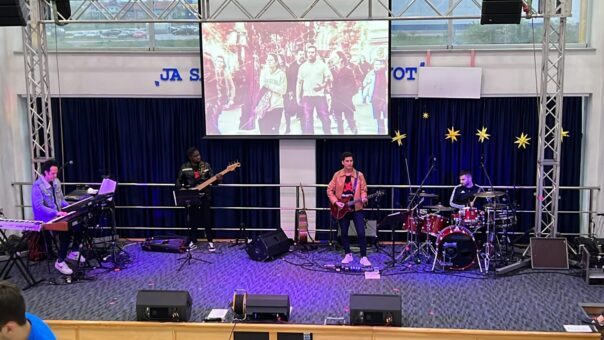
3 Jun 2022 | Non categorizzato
On a journey to bring solidarity to migrants fleeing their countries due to war and persecution, Gen Rosso’s music leaves a wake of sharing and fraternity. “We face so many problems, but with you, with this kind of activity, we feel driven to move forward.” These are the words of a migrant who fled Pakistan because of problems facing the country. Today he, like thousands of other migrants, is in a refugee camp in Lipa and Borići in Bosnia and Herzegovina and was able to meet Gen Rosso. From 4–8 May, the international performing arts group returned for a second time to locations on the “Balkan route,” where migrants fleeing their countries due to war or persecution travel every day. The goal of the trip was to bring solidarity and dignity to migrants, lift their hopes for a better world, strengthen their self-esteem, and breathe in the family atmosphere. It was organised with the help of Jesuit Refugee Service, which provides housing and essential aid to asylum seekers and migrants. “We had been here in October 2021,” says Michele Sole, one of the singers, “and it was a good feeling to return to familiar places. This time we went to a larger refugee camp in Lipa, where we met other refugees. The amazing thing is always to see how smiles and welcoming people without prejudice can make a difference and make their faces shine!” Welcoming gestures and small gifts during the brief moments experienced with them offered some a glimmer of joy and light. Another stop was to visit the John Paul II School in Bihać, where close to 100 children were able to participate in dance and singing workshops and attend two Gen Rosso concerts. Along with the pupils and their parents, some migrants from Pakistan, Afghanistan and Iran were also able to participate in the artistic events. “It was our way of trying to include everyone and experience how important and unimaginable the gift of sharing with this piece of suffering humanity is,” adds Michele. “I don’t know what happened to me this morning,” says a Muslim woman who was present, “but I felt your music inside, and moved and lucky to be here.” “Thank you, thank you really, for the passion and hope you gave us,” says an Afghan boy. “The singing was very beautiful.” “The concert was something special,” says Bihać Institute’s headmaster, adding to the chorus of messages of joy and hope. “We sincerely hope to meet again. It was a great honour and pleasure for us to have you here in our school.”
Lorenzo Russo
