
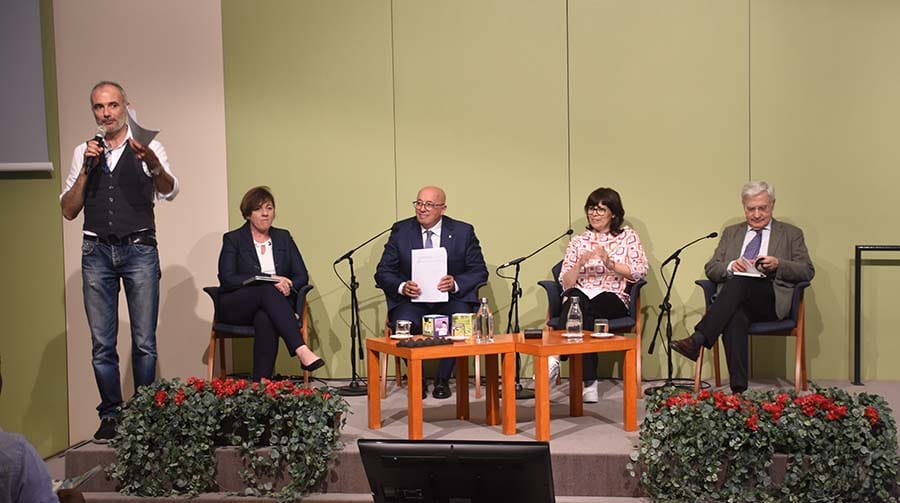
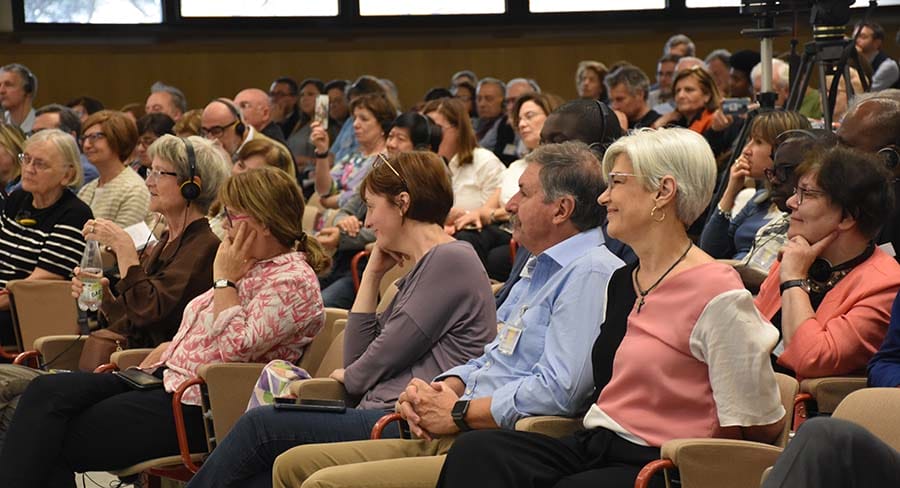
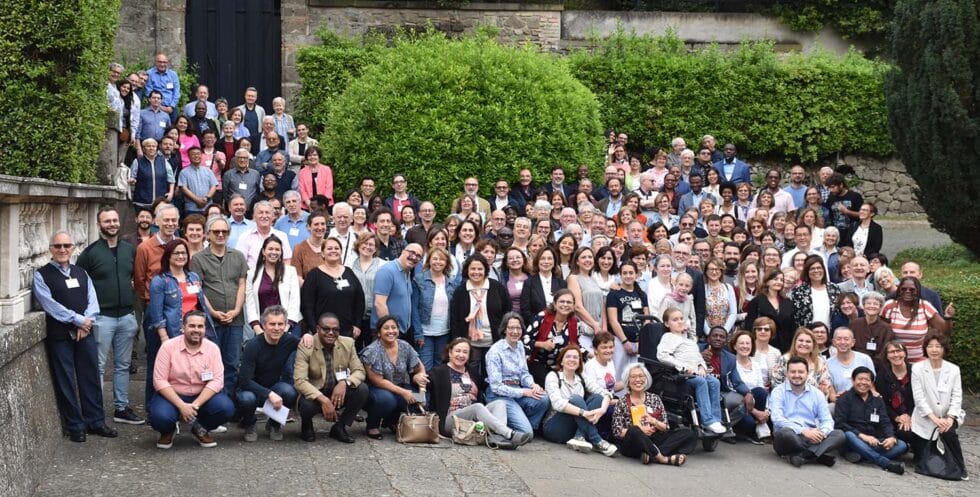
“Embracing Hope.” With this wish, about 200 people from the Americas, Africa, the Middle East, Asia and all over Europe met at the Mariapolis Center in Castel Gandolfo (Rome) from May 16 to 19.
They are the contact persons of the Umanità Nuova, movement, the social expression of the Focolare Movement, New Humanity the NGO with consultative status in the United Nations, along with representatives of disciplines that dialogue with contemporary culture, the contact persons of Ragazzi per l’unità and of AMU (Action for a United World), the NGO that deals with special projects and development.
Also in attendance was a delegation of very young high school students who are part of Living Peace International, along with young ambassadors for peace, such as Joseph,
from Sierra Leone, who narrated how at the age of six he was recruited as a child soldier and has now become a young peace leader.
For some time now, these various social expressions -each with its own characteristics and goals- have been working together to help provide concrete responses to the burning issues and expectations of the contemporary world: “Together for Humanity” is their new name. Taking up the Pope’s invitation to the Focolare Movement during a private audience on Dec. 7, 2023, which was to “be artisans of peace in a world torn apart by conflict,” they wanted to dedicate the meeting precisely to peace.
An experience of listening, communal reflection and concrete planning, carried out in the eight communities distinguished by areas and passions. A journey that will continue with the Genfest in Brazil next July, intertwine with the United Nations Summit for Future in September 2024, and with the event in Nairobi with the youth and cities of the world, on the occasion of the 80th anniversary of the United Nations. During the meeting, those present, with the help of experts and testimonies, professors, diplomats, social and cultural actors, and organized citizens, reflected on the issue of what is peace, if it is indeed possible to achieve it and by what means.
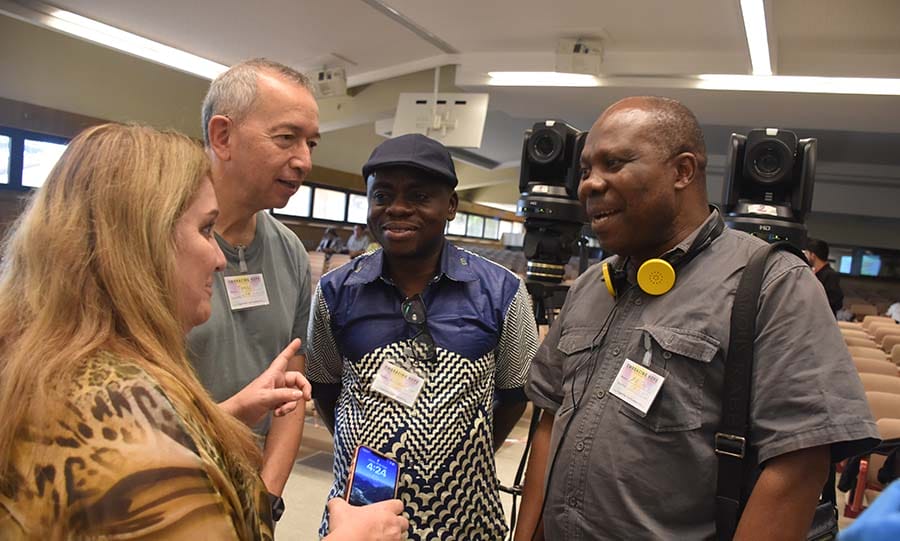
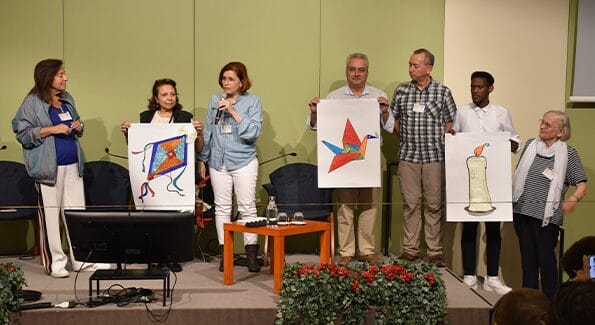
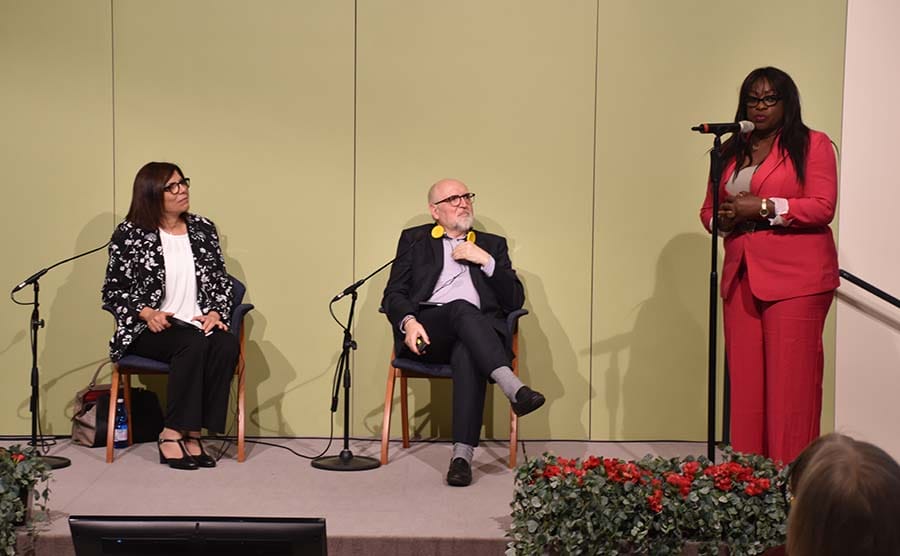
So many touching experiences from countries in conflict. From Syria, they recounted the brutality of the war they have been experiencing since 2011, aggravated by the embargo affecting an exhausted population. AMU projects such as RESTART, which supports micro businesses with loans and personalized mentoring, have helped slow constant migration processes. Christiane, from Lebanon, despite the situation in her country, characterized by very high inflation and high emigration rates aggravated by the impacts of the war in the Middle East, did not give up: she set up with her husband a productive enterprise for family support and to also help other artisans and rural producers sell their products. The productive initiative also extended to Egypt. From Congo, the fruits of the school for training leaders for peace were presented. A graduate of this school, Joëlle, a journalist and a presidential candidate of the Republic of Congo, launched her presidential platform with the values of peace and social justice. Youths from Ukraine greeted those present with a video, and so did some youths from Bethlehem, Pakistan, Cuba, and the Philippines. The “Together for a New Africa” (T4NA) project for African youth interested in changing the continent was presented: trained hundreds of youth and involved another 9,000 youth in an experience that reached 14 African nations. The same is being done in Mexico with the National Agenda for Peace, in the United States with courageous conversations against racism.
There is a need for true peace and human rights education as well as the need to name conflicts, exploring their reasons, trying to resolve them with a community strategy that listens to diverse and plural positions which precedes and accompanies every negotiation. It has been said that peace is not only the absence of war. Not everything that is called order is peace. It is not ideological: it is not pacifism. It is the condition in which each person can think and realize his own future. But we need to learn dialogue as a methodology, with which to be willing to lose something for the greater good. This is basically the reason for which perhaps negotiations are not progressive and even international organizations do not seem to be able to handle the crisis. Dialogue, trust, local and global networks, inter-generation, community. We start from here, from these key words, encouraged also by Margaret Karram and Jesús Morán , President and Co-President of the Focolare Movement, who were present on the final day. This is the road to peace, to which we want to contribute concretely, and together.
Mario Bruno
0 Comments