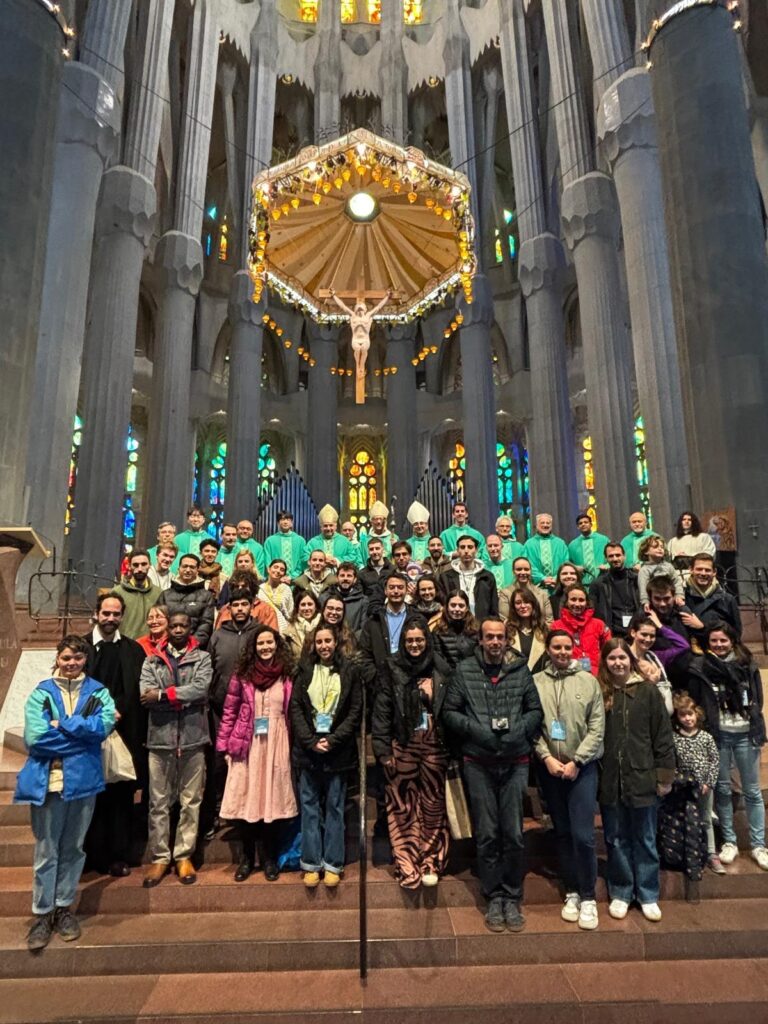
“May religions not be used as weapons or walls, but rather lived as bridges and prophecy: making the dream of the common good credible, accompanying life, sustaining hope and being the yeast of unity in a fragmented world.”
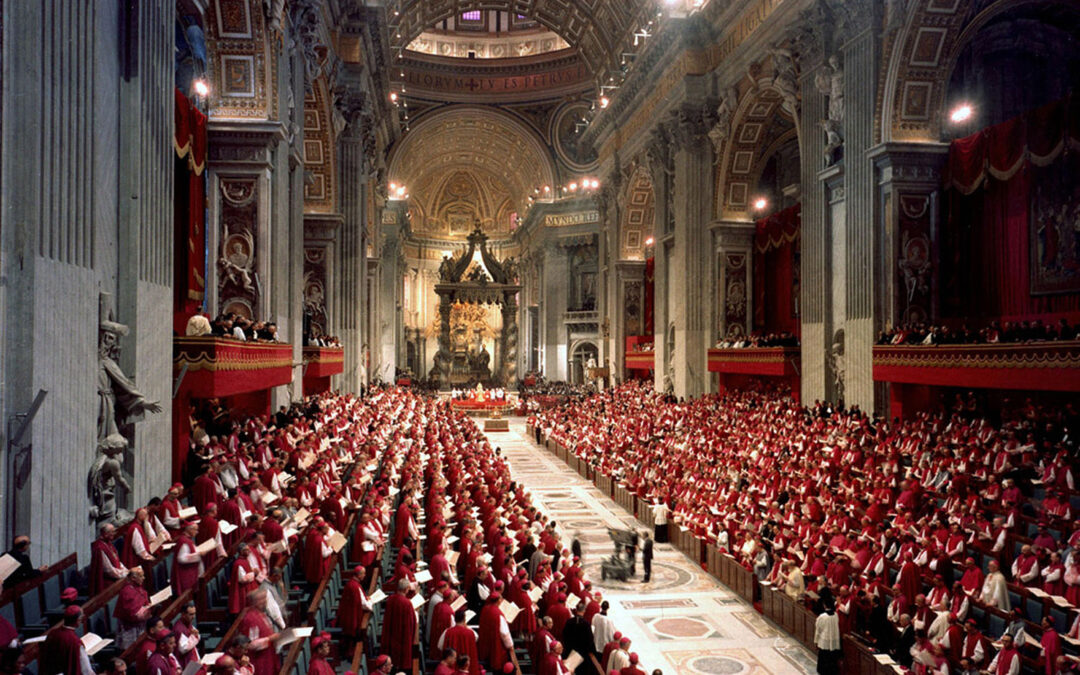
These are the closing words of Pope Leo XIV in the video message for the prayer intention of October 2025, dedicated specifically to “collaboration between different religious traditions”. In the month that marks the 60th anniversary of the conciliar document, Nostra Aetate (In Our Time), on the relationship between the Church and non-Christian religions, the Pontiff, in urging us to recognize ourselves “as brothers and sisters, called to live, pray, work and dream together”, perfectly captures the central points of this declaration, a child of Vatican II, revealing its great importance and continuing relevance.
The spirit of conciliar renewal has opened unknown paths, offered new perspectives on many things and in these six decades Nostra Aetate has certainly guided and inspired steps along the path of dialogue, fostering first mutual understanding and then acceptance between the various religions.
For this reason, the Dicastery for Interreligious Dialogue has issued an open invitation to a commemorative Celebration to reflect on the legacy of “Nostra Aetate” on 28th October, from 6:30 p.m. to 8:30 p.m. (Italian time) in the Paul VI Hall (Vatican City), in the presence of the Holy Father. The event can be followed through Vatican Media channels.
The document states that, the Church “in her task of promoting unity and love among men, indeed among nations, she considers above all in this declaration what men have in common and what draws them to fellowship. One is the community of all peoples”.
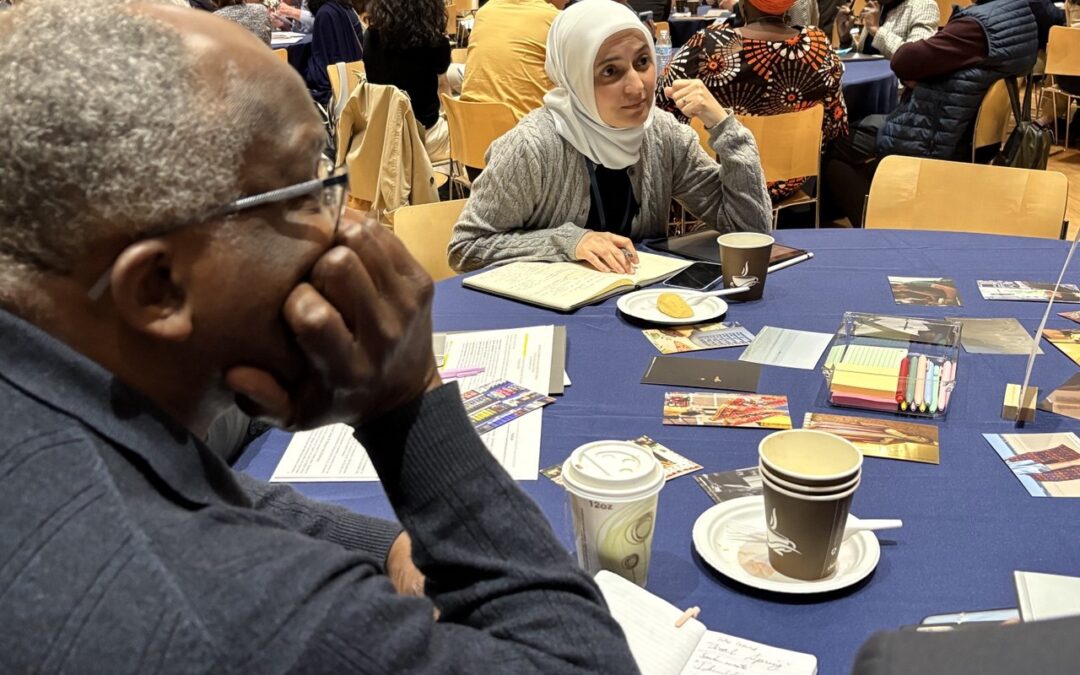
Chiara Lubich, founder of the Focolare Movement, very much welcomed this revelation, to live as “one human family”. The Movement, founded on a deep spirituality centred on unity among all people, is engaged in various forms of dialogue, including interreligious dialogue. For over five decades, through its Centre for Interreligious Dialogue and local centres around the world, it has established strong and fraternal relationships with thousands of believers and with numerous institutions, associations, movements and organizations of different religions. It does so in the conviction that friendship between people of different faiths is a vital force for building universal brotherhood.
We share here a short video that presents Chiara Lubich’s intuition and the path taken to develop dialogue.
Maria Grazia Berretta Photo: Session Concilio Vaticano II
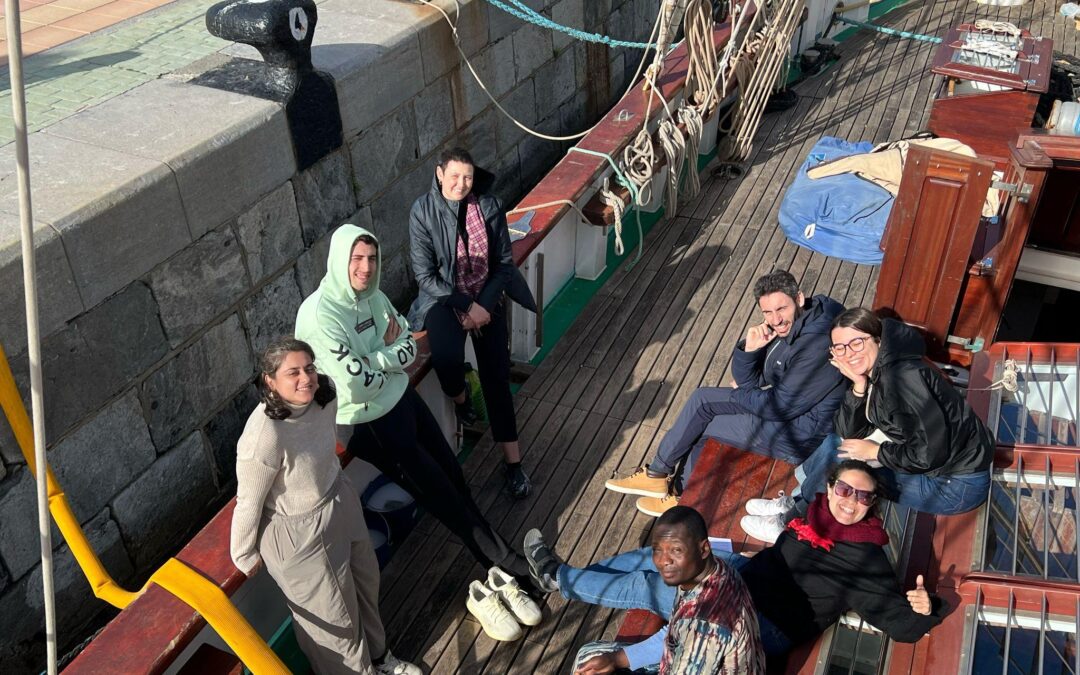
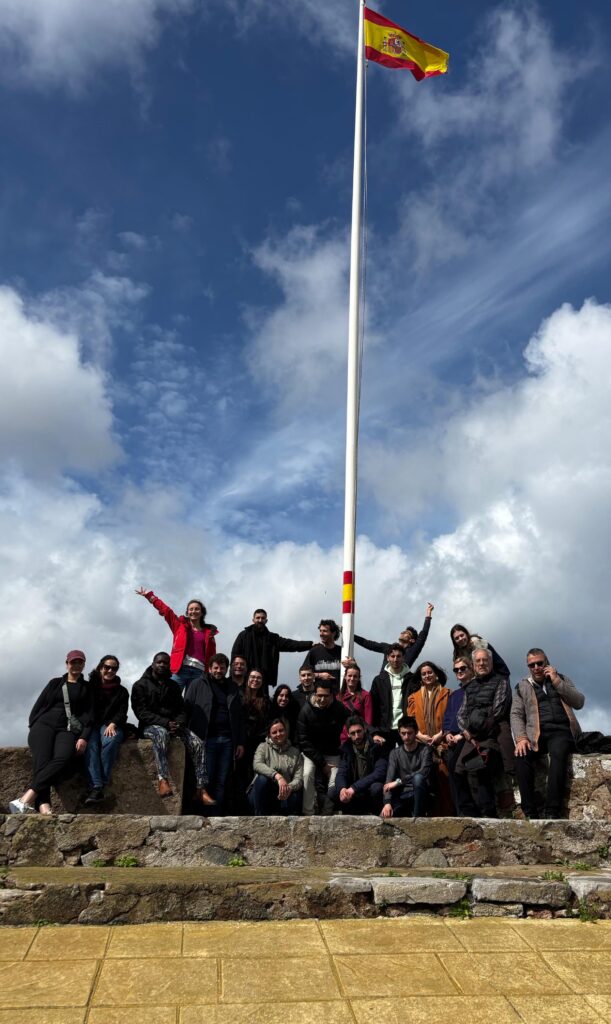
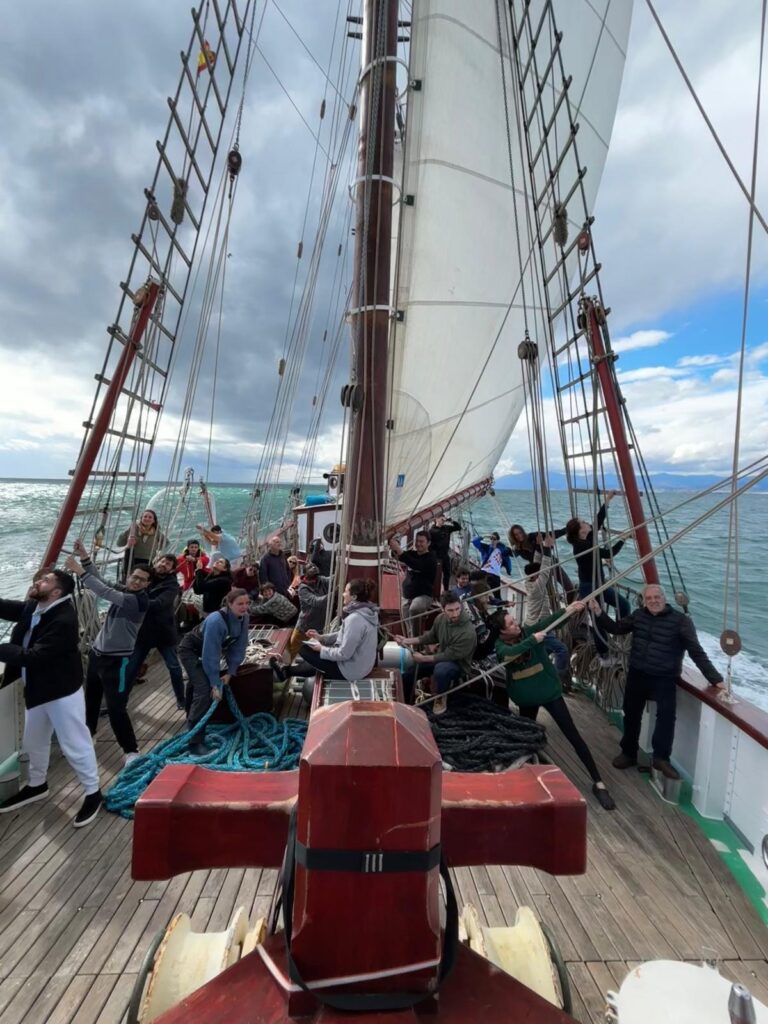
A few weeks ago, I was part of the MED25 project, a school-ship for peace. We were 20 young people from across the Mediterranean—North, South, East, and West—sailing together on a boat called “Bel Espoir.” We set off from Barcelona, and since the weather wasn’t as expected, we stopped in Ibiza before reaching Ceuta. From there, we traveled overland to Tetouan and then returned to Malaga. It wasn’t just a trip—it was a journey into each other’s lives, minds, and cultures.
Living on a boat with so many different people was beautiful, but not always easy. Every day, we had to share responsibilities: cooking, serving meals, cleaning, washing dishes. We rotated tasks in teams, so everyone experienced the full rhythm of life onboard. We also learned how to sail—which was pretty wild at first. I wish I could say it eventually became second nature, but in truth, it was harder than expected. You quickly learn how much teamwork it takes to move forward—literally.
But we weren’t there just to sail and cook. We were there to talk—really talk. We explored eight big topics together: culture, education, the role of women, religion, the environment, migration, Christian traditions, and of course, peace. These weren’t theoretical discussions. They were deeply personal. We shared our perspectives, and sometimes, we clashed. Some discussions got heated. There were moments of frustration. Some conversations even turned into real arguments.
But here’s the truth—on a boat, you can’t just walk away. You can’t go home and sleep it off. You live together. You eat together. You sail together. You are literally in the same boat. And that changes everything. It makes it impossible to stay angry for long. We had to talk it out. We had to listen. And sometimes, we had to admit we were wrong.
That, for me, was the most powerful part of the experience. I realized that most conflicts—between people or nations—don’t come from hatred. They come from ignorance. From stereotypes. From misinformation. And just like we had the chance to truly get to know each other on that boat, the world can do the same. If we could overcome years of misunderstanding in just two weeks together, imagine what could be possible if people were truly willing to listen.
I also discovered many unexpected things. Like how Lent is celebrated differently in Europe compared to the Middle East. Or how religion plays a completely different role in politics and public life depending on where you are. In Europe, it’s often a private matter, whereas in many Middle Eastern countries, it shapes laws, policies, and daily life. These weren’t just facts—I felt the difference through the people I lived with.
What touched me the most was that, despite all our differences, we had so much in common. We laughed a lot. We danced. We got seasick together. We also fasted together, since it was both Lent and Ramadan. We created art, read books, got silly, prayed in many different languages at the same time, discovered religions like Christianity, Islam, Hinduism, and Judaism, slept under the open sky, and shared quiet, sacred moments. And through all that, I realized that peace isn’t something far off or unreachable. It’s deeply human. It’s messy, and it takes work. But it’s possible.
I came back changed. Not because I think we’ve solved all our problems, but because I now believe that peace isn’t a dream—it’s a choice. A choice that starts with truly seeing and listening to the other.
And if 20 strangers could do that together on a boat in the middle of the sea, then there’s hope for the rest of the world too.