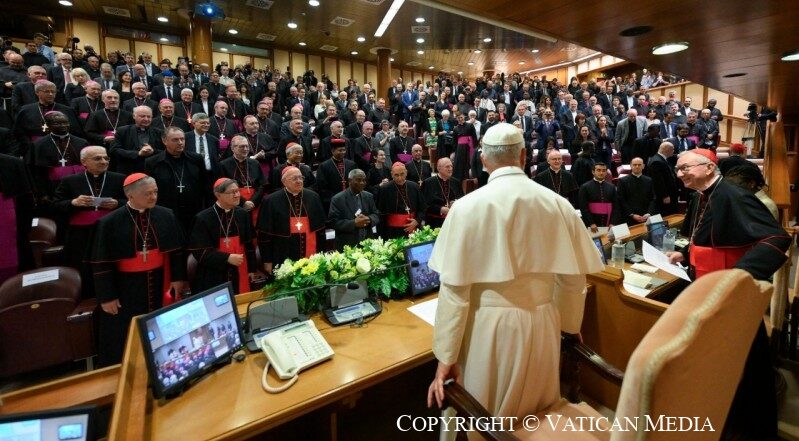
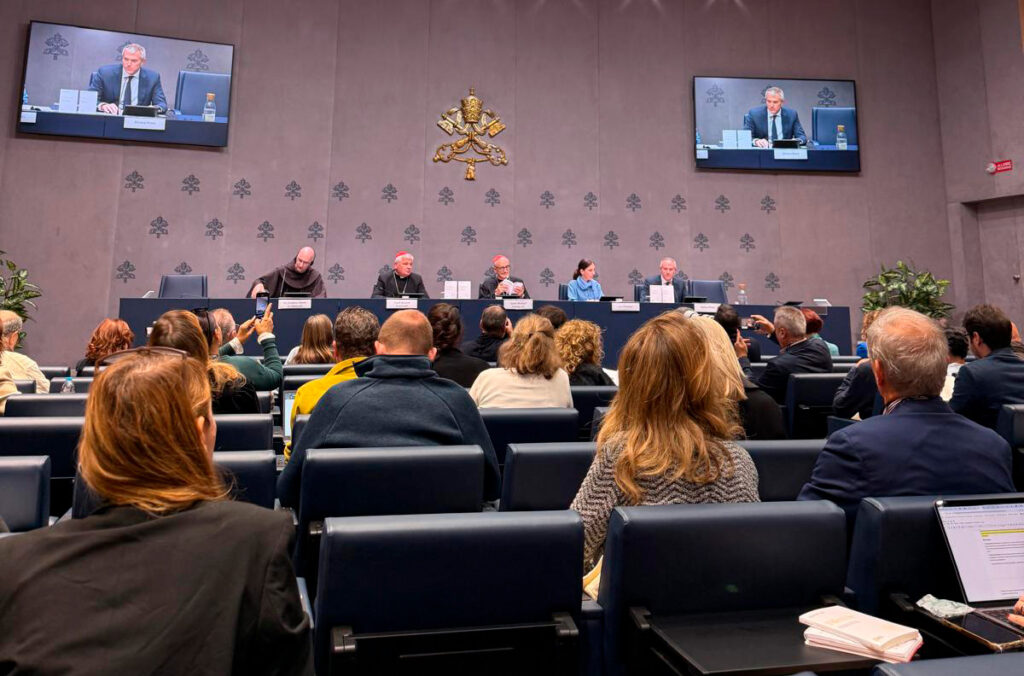
It was a morning that marked a significant moment in the history of the Church. On 25th May 2026 in the Synod Hall in the Vatican, Pope Leo XIV presented his first encyclical Magnifica Humanitas, on safeguarding the human person in the time of Artificial Intelligence. It was the first time that a Pope was present in the Hall where his magisterial document was being presented to the public.
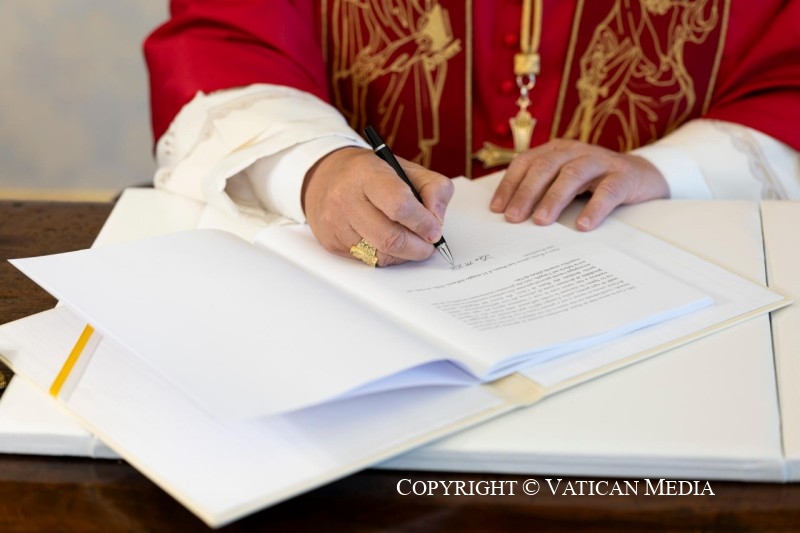
The encyclical was signed on 15th May, the 135th anniversary of the promulgation of the encyclical letter Rerum Novarum by Pope Leo XIII, who recognized in the industrial transformations of his time a profoundly human and social issue. This encyclical defends the human person in today’s time of Artificial Intelligence (AI) and calls for new urgent reflections on the role and future of technological progress.
After the interventions of experts and theologians, the Pontiff spoke. He focused on the “gravity of the moment” we are living through, which is a cause for concern in the Church which is called to “interpret new things in the light of the Gospel and the dignity of the person”. He explained that the document was born “from listening” to scientists and engineers who “work with sincere enthusiasm on technologies capable of alleviating immense suffering; listening to political leaders and public officials who have persistently sought just regulations; listening to parents and teachers deeply concerned about the future of the young generations”. He used strong words: “Artificial Intelligence must be disarmed. The expression is strong, I know”, Leo admitted, “but it was chosen deliberately because this moment needs words capable of attracting attention, awakening consciences and indicating ways forward for humanity”.
The Pontiff recalled that for some time “the Church has worked in favour of nuclear disarmament, as a service to peace and to the dignity of the human family”. Likewise, “Artificial Intelligence today also needs to be disarmed, because like nuclear energy, it must be at the service of all and of the common good. (…) Decisions about technology must never be separated from conscience and responsibility”. “But when technology weakens our critical sense, it is peace itself that is at risk. Disarming, however, is not enough. We must build.” Together.
The encyclical
“Magnifica Humanitas is the culmination of 10 year’s work of the Holy See,” said Msgr. Paul Desmond Tighe, secretary of the Dicastery for Culture and Education during the press briefing. In 2016 a French priest began to study some topics related to communication and technology. “In San Francisco (USA) he met some experts who wanted to inform the Holy See about technological developments that could influence the future of the world, Tighe continued, “For these scientists it was important to have the perspective of wise voices, so they sought collaboration with the Holy See”, leading to a synergy based on mutual listening
Christopher Olah, Co-founder of Anthropic (USA), one of the world’s leading artificial intelligence companies, also spoke at the Vatican presentation: “We need an every larger part of the world, religious communities, civil society, scholars and governments, to do what His Holiness has done here: to take all this seriously, to carefully observe events as they unfold and help guide them in a better direction. Today is only the beginning of a long collaboration between those of us who are building this technology and those who can see what we ourselves cannot see from the inside”.
Divided into five chapters, plus an introduction and a conclusion, Magnifica Humanitas starts from a central thesis: technology is not an “antagonistic force with respect to humanity”, nor is it “in itself an evil”. The Pontiff affirms that “injustices do not arise only from the wrong choices made by individuals, but also from structures, mechanisms and from economic and cultural structures that produce inequality”. This also applies to new technologies.
Leo’s concern focuses on the power that when concentrated in a few hands, “tends to become opaque and to escape public control”, bringing with it the risk of distorted development “which generates new dependencies, exclusions, manipulations and inequalities”. Here attention is directed toward those who control platforms, infrastructures and digital data.
Pope Leo XIV reiterated once again that there is no such thing as a “just war”. He called for the use of Artificial Intelligence in warfare to be subjected to the strictest ethical constraints because “there is no algorithm that can make war morally acceptable”.
We need “a politics that does not abdicate its responsibility”. The truth must be expresses through an “ecology of communication” opposed to fake news. The Pope indicated some elements: transparency in the content-selection algorithms, protection of personal data, serious journalism based on argument and verification, a new awareness in the “correct and critical” use of AI and the integration of knowledge.
In concluding the letter, the Pontiff invited the faithful to inhabit new technologies in the light of the Gospel, following “a sober and demanding path of Christian life”, so that even in the time of AI everyone can give witness to “the beauty of a magnificent humanity inhabited by God”.
Algeria is the largest African country by land area, and of its 48 million inhabitants, Christians make up less than 1%. It is the country Pope Leo XIV chose as the first stop of his African journey, which will then take him to Cameroon, Angola, and Equatorial Guinea. He arrived on April 13, 2026, and his initial meetings with the Algerian community highlighted the life and work of interreligious organizations and initiatives that have been active in the country for many years, often little known.
One of these is the Focolare Movement, a network dedicated to spiritual unity that arrived in predominantly Muslim Algeria in 1966. Its activities in the country are animated by Muslim members—mostly women—who take part by working in small groups throughout Algeria. They offer assistance in local centers for the elderly, provide tutoring for students, or study together with them.
The experience of a “true” faith—one that “does not isolate but opens, unites without confusing, draws close without imposing uniformity, and fosters genuine fraternity”—was shared in French by Monia Zergane, a Muslim woman whose life has become “a sign of hope for our world.” In the services of the Catholic Church in Algeria, Christians and Muslims work “side by side,” she explained, sharing the same concerns: “to welcome, serve, listen, care for the most vulnerable, organize, secure financial resources, and ensure that activity centers are safe places that uphold human dignity.” It is a service to the most “vulnerable”—women, children, the elderly, the sick—lived “together” and capable of creating a “real fraternity,” she said, grounded in the conviction that “to serve humanity is first and foremost to serve God.” This commitment, she emphasized, is nourished by all the “beautiful” qualities brought into play: skills, dedication, patience, forgiveness, compassion, and kindness.
She also spoke of brothers and sisters who were an “immense help and comfort” to her during illness, recalling with gratitude how she “could rely on their closeness, their unwavering solidarity, their gentleness, and their prayers.” In particular, the presence of a Focolare community and the daily effort to put love of neighbor into practice, she acknowledged, “often challenges me and helps me understand that life is not primarily made up of great, visible works, but of a communion lived day by day.” Aware that fraternity is also built through “simple gestures—a smile, a greeting that comes from the heart, a kind word, a service offered without expecting anything in return—and through the small things of everyday life: exchanging good wishes for a feast, sharing a meal after a time of fasting, listening to the spiritual meaning of a celebration.”
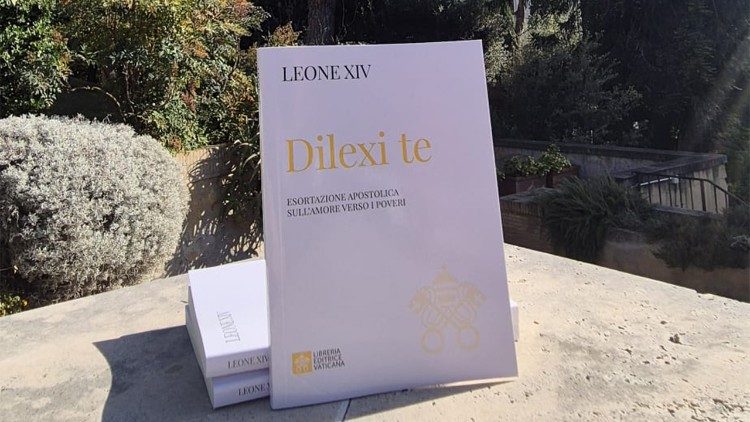
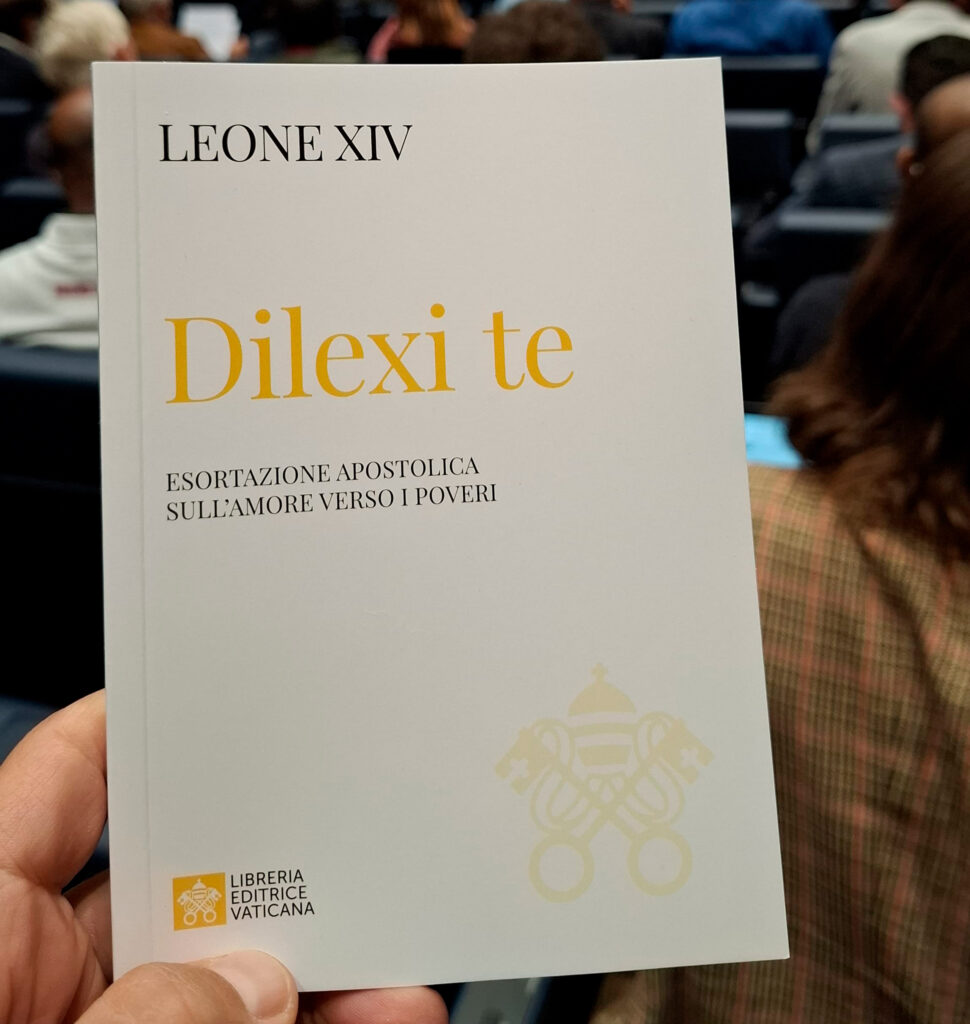
Dilexi te, “ti ho amato” (Ap 3,9) è la dichiarazione d’amore che il Signore fa a una comunità cristiana che, a differenza di altre, non aveva alcuna risorsa, particolarmente disprezzata e esposta alla violenza ed è, al contempo, la citazione che dà il titolo alla prima Esortazione apostolica di Papa Leone XIV, firmata il 4 ottobre, festa del Santo d’Assisi. Il documento rimanda al tema approfondito da Papa Francesco nell’Enciclica Dilexit nos sull’amore divino e umano del Cuore di Cristo ed è un progetto che l’attuale Pontefice ha fatto suo, condividendo con il Predecessore il desiderio di far comprendere e conoscere il vincolo tra quella che è la nostra fede e il servizio ai vulnerabili; il legame indissolubile tra l’amore di Cristo e la sua chiamata a farci vicini ai poveri.
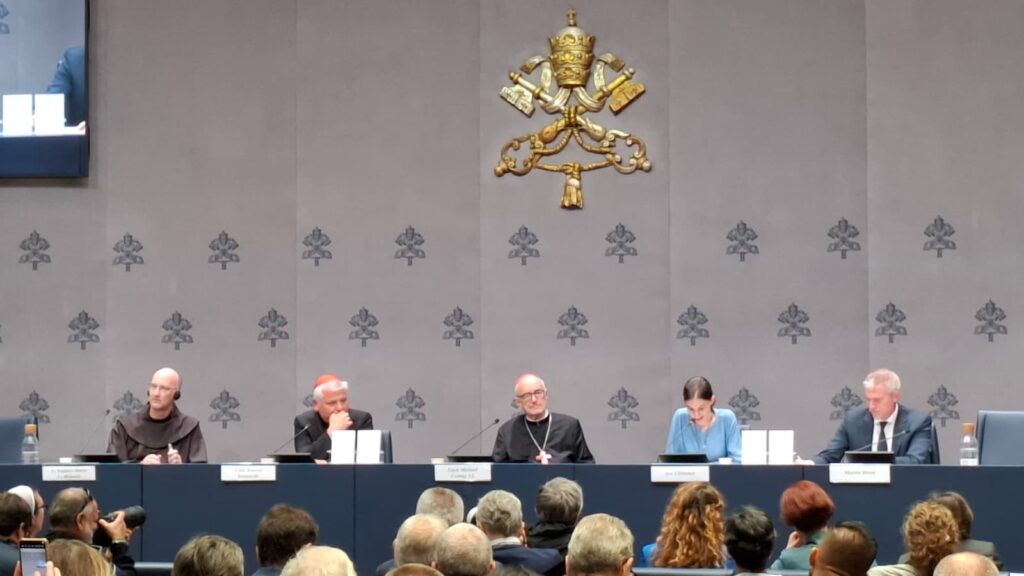
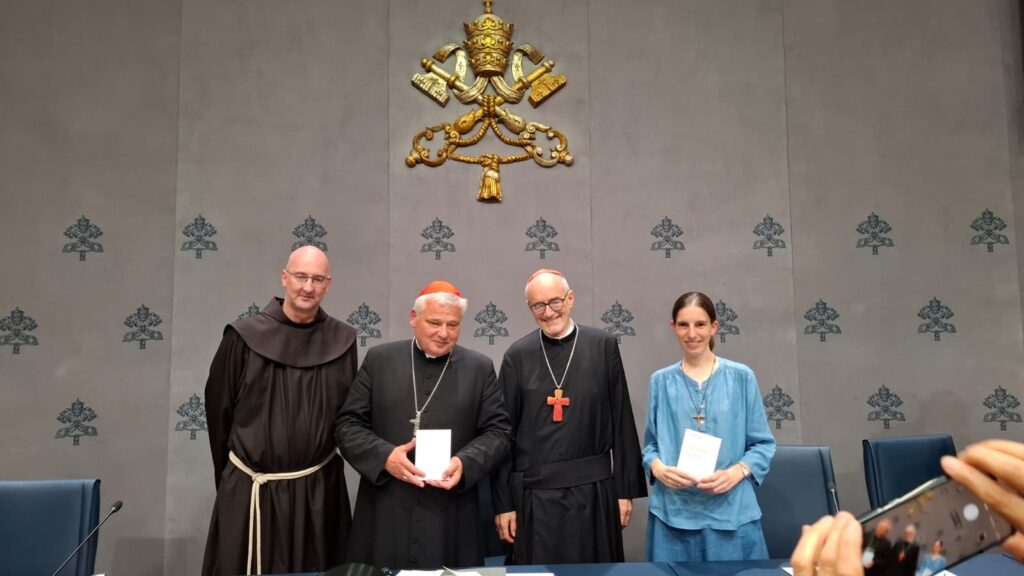
Alla conferenza stampa di presentazione della “Dilexi te” sono intervenuti (da sinistra): Fr. Frédéric-Marie Le Méhauté, Provinciale dei Frati Minori di Francia/Belgio, dottore in teologia; Em.mo Card. Konrad Krajewski, Prefetto del Dicastero per il Servizio della Carità; Em.mo Card. Michael Czerny S.J., Prefetto del Dicastero per il Servizio dello Sviluppo Umano Integrale; p.s. Clémence, Piccola Sorella di Gesù della Fraternità delle Tre Fontane di Roma (Italia).
The 121 points of the text show that being aware of the “experience” of poverty goes far beyond philanthropy. The Augustinian Pope affirms, “This is not a matter of mere human kindness but a revelation: contact with those who are lowly and powerless is a fundamental way of encountering the Lord of history. In the poor, he continues to speak to us.” (5)
Leo XIV invites us to reflect on the many faces of poverty: that of “those who lack material means of subsistence”, of “those who are socially marginalized”; “moral”, “spiritual” and “cultural” poverty; the poverty “of those who have no rights, no space, no freedom” (9). But no poor person, he continues, is “there by chance or by blind and cruel fate” (14), love for the poor “is the evangelical hallmark of a Church faithful to the heart of God” (103).
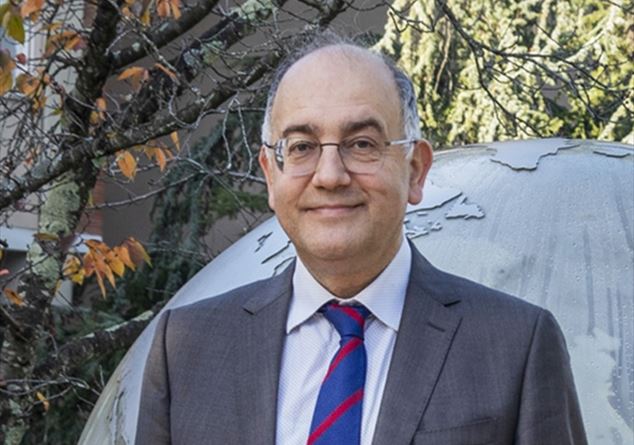
Prof. Luigino Bruni, economist and historian of economic thought, Professor of Political Economy at Lumsa University (Rome) and scientific director of the “Economy of Francis”, explained, “Let’s say right away that it is not easy for the Church or for Popes, to talk about poverty because, in the first place, the manner and substance of the poverty of the Church are not those of the UN or of States. The word ‘poverty has a very broad spectrum in Christianity, ranging from a “bad” poverty that is unchosen and endured, to an “evangelical” poverty, that of the poor whom Jesus called ‘blessed’. The Church must move within this broad spectrum because, if it leaves out either form of poverty, it steps outside the Gospel”.
In particular, the document denounces the lack of equality, defining it as the root of social ills (94), as well as the actions of unjust political-economic systems. The dignity of every human person must be respected today, not tomorrow (92) and, not surprisingly, during the press conference, held in the Vatican on 9th October, Card. Michael Czerny S.J., Prefect of the Dicastery for Promoting Integral Human Development, reflected extensively on what are called the ‘structures of sin’: “selfishness and indifference are consolidated in economic and cultural systems. The economy that kills (3) measures human worth in terms of productivity, consumption and profit. This dominant mind-set ’makes the rejection of the weak and unproductive acceptable and therefore deserves the label of ‘social sin ’”.
Prof. Bruni continues, “This is an old theme of the Church’s social doctrine – – and, even earlier, of the Fathers of the Church and of many social charisms, not least the Franciscans. In these passages you can intuit the hand of Pope Francis and the spirit of Saint Francis (64), but also of the most recent charisms, it was Don Oreste Benzi who first spoke of the “structures of sin”, up to the Economy of Communion and the Economy of Francis. The reference to meritocracy, again in full continuity with Pope Francis, is also important. It is defined as a “false vision” (14). Meritocracy is a false vision, because first it attributes many forms of poverty to the poor’s own lack of merit and then labels those same ‘unworthy poor’ as guilty. Meritocratic ideology is one of the main “structures of sin” (nos. 90 et seq.) that generate exclusion and then try to justify it ethically. The structures of sin are material (institutions, laws …) and immaterial such as ideas and ideologies”.
Prof. Luigino Bruni
The document naturally takes a look at the theme of migration. Robert Prevost makes his own the famous “four verbs” of Pope Francis: welcome, protect, promote and integrate, not forgetting women, among the first victims of violence and exclusion. He stresses the importance of education for the promotion of integral human development, highlights the witness and link with the “poverty” of many saints, blesseds and religious orders and proposes a return to almsgiving as a way to truly touch “the suffering flesh of the poor” (119).
In Dilexi te Pope Leo “urges” us to change course, to think of the poor not as a problem of society nor merely as “the objects of our compassion” (79) but as real actors to whom we can give voice and as “teachers of the Gospel”. We need to let ourselves be evangelized by the poor. The Pope writes, “the are part of our family”. They are “one of us”, therefore, “our relationship to the poor cannot be reduced to merely another ecclesial activity or function” (104).
Luigino Bruni adds, “To take evangelical poverty seriously means changing our point of view, in the deeply transformative way, the metanoia of the first Christians. And then, today, trying to answer some radical questions: how can we call the poor “blessed” when we see them as victims of misery, abused by the powerful, dying at sea, searching for food in our waste? What beatitude do they know? For this reason, the first and most severe critics of this first beatitude have often been and still are, those who spend their lives next to the poor, sitting with them, seeking to free them from their misery. The greatest friends of the poor often end up, paradoxically, becoming the greatest enemies of the first beatitude. We must try to understand them and thank them for being scandalized. And then try to advance the discourse into new and daring terrains which are always paradoxical. And how many “rich gluttons” have found in the beatitude of the poor an alibi to leave Lazarus (ref. Luke 16:19 -31) ‘blessed’ in his condition of deprivation and misery, perhaps even calling themselves “poor in spirit” because they gave some crumbs to the poor! There must be something wonderful in that “blessed are the poor”. We don’t understand it but at least let’s not reduce its paradoxical and mysterious prophecy. Pope Leo has tried to indicate some dimensions of this paradoxical beauty of poverty, especially in the long paragraphs dedicated to its biblical and evangelical foundation, but there is still much to discover and to say. I hope that future papal documents will also include the secular magisterium on poverty, which for at least 50 years has been given to us by people such as Amartya Sen, Muhammed Yunus and Ester Duflo, laureates of the Nobel Economics Prize. These and many other scholars have taught us that poverty is not a lack of money or income (flows) but a lack of capital (stocks): health, education, social, family, capabilities which later manifests as low income. It is only by working on these forms of capital today can we help the poor escape the poverty traps tomorrow. As Sen explained to us, poverty is the objective impossibility “to lead the life we would like to live” and is therefore a lack of freedom. Charisms have always intuited this, in missions, in Europe and everywhere, they filled the world with schools and hospitals, to improve the ‘capital’ of the poor. Even almsgiving, of which Pope Leo speaks at the end of the document (nos. 76 et seq.), should be directed towards ‘capital accounts’ and not dispersed in monetary aid that often increases the very poverty it intends to reduce. The Dilexi te is a starting point, for a long journey still ahead for Christians in the still partly unknown terrain of poverty, both the ugly kind to be reduced and the beautiful Gospel kind to be multiplied.
“We went to the Pope this morning to share with him the life of the Movement and to listen to what he had to say to us,” said Margaret Karram and Jesús Morán, President and Co-President of the Focolare Movement at the end of a private audience with Pope Leo XIV. “It was a meaningful, personal and fraternal meeting. He was interested to hear about our work for peace, for ecumenical and interreligious dialogue, for the dialogue with cultures and, especially, for communion between ecclesial movements. He encouraged us to continue spreading the charism throughout the world.” “At the end,” says Margaret Karram, “I asked him if we could bring his blessing to all those belonging to the Movement. ‘Certainly!’ he replied.” If you would like to follow Margaret and Jesús’s “live coverage” of this event, tune in tomorrow at 6 p.m. Italian time for the Link-up (the worldwide video conference call).
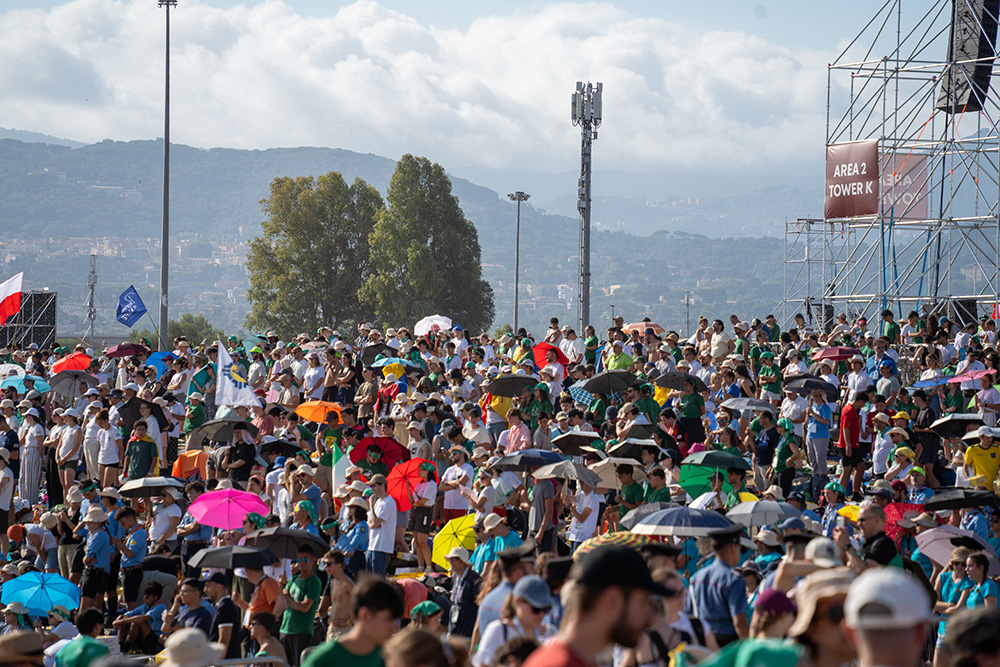
Watching the live broadcast of the vigil in Tor Vergata on the outskirts of Rome, and seeing those images of an immense multitude, you can’t help but wonder: what did the million young people come here to find? Was it to be close to Pope Leo XIV? That doesn’t seem like sufficient motivation to me. To get to know Rome? Maybe, but they would surely not have chosen that kind of accommodation, food and transport. The answer was found in the deep and prolonged silence during the hour of adoration. These young men and women from all over the world were attracted by Jesus, perhaps without even knowing it, to a personal and communitarian encounter, where He undoubtedly spoke to the heart of each one who returns home changed, with a stronger faith, with an experience of the divine that they will never forget.
TV image
The Jubilee week dedicated to young people began on 28 July and ended on Sunday 3 August 2025. Many activities were organised to welcome those who came to Rome for these days – visits to historical sites, to the basilicas, cultural events, concerts and catechesis.
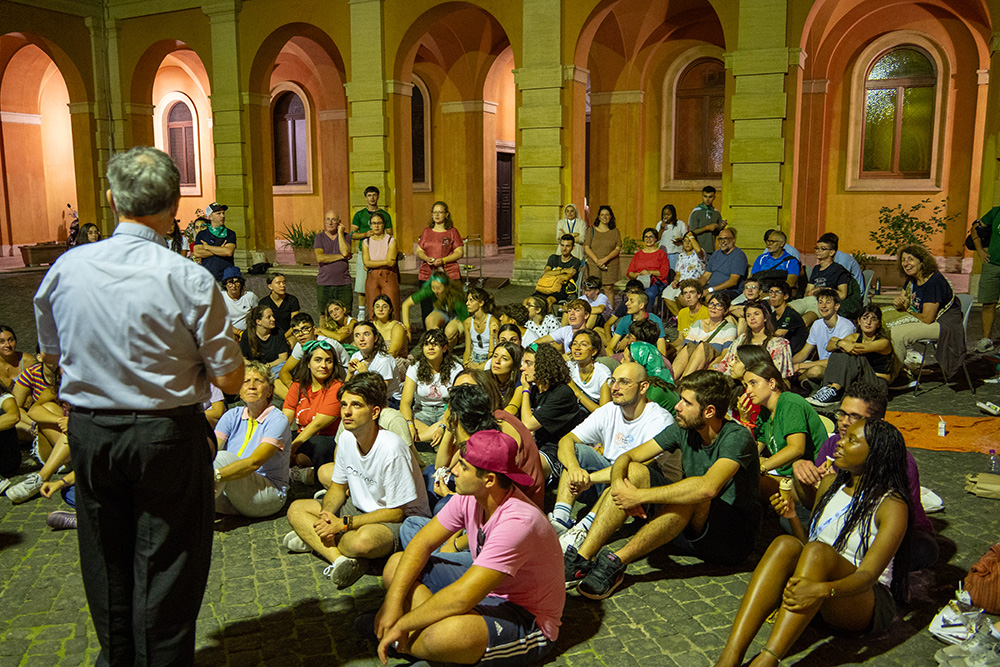
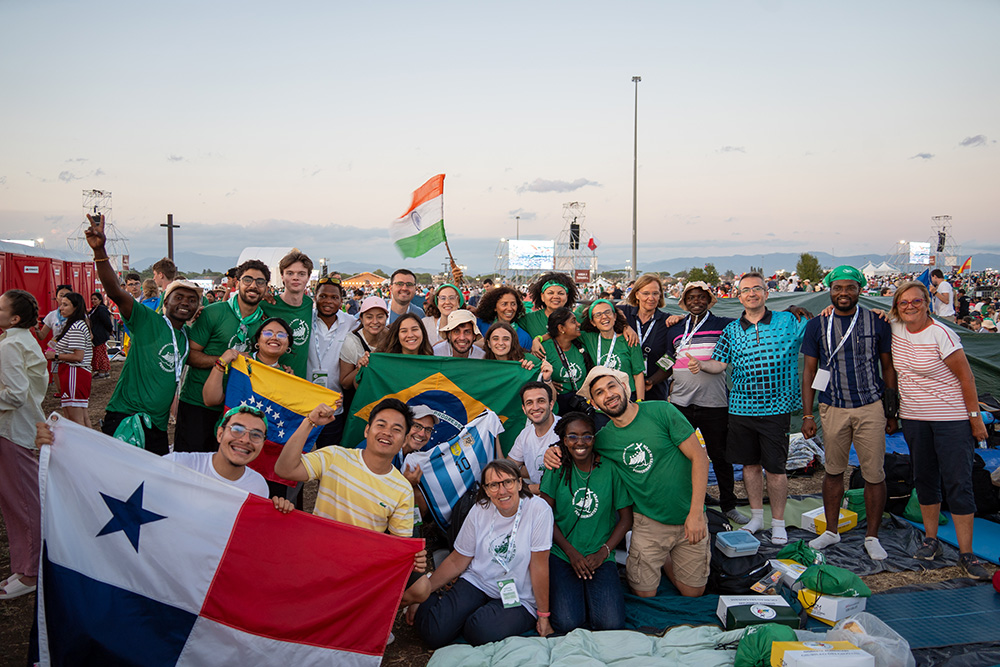
The Focolare Movement also offered four special itineraries in Rome following the Pilgrimage of the Seven Churches, conceived by St. Philip Neri: a historical itinerary that has accompanied pilgrims since the 16th century. It was a journey of faith and fraternal communion, consisting of prayer, songs and reflections on Christian life, with group activities, catechesis and testimonies, aided by a booklet of meditations to go into spiritual depth in the light of the charism of unity. The large group that took part in the programme consisted of young people who spoke English, Hungarian, Dutch, Italian, German, Romanian, Korean, Spanish and Arabic.
The entire ‘journey’ was based on four key ideas: pilgrimage (a journey), the holy door (an opening), hope (looking ahead) and reconciliation (making peace).
“Hope” is the word that echoed in Samaher’s testimony, a 28-year-old Syrian woman: “My childhood years were painful, dark and lonely. Home wasn’t a safe place for a child because of the conflicts, nor was society, because of bullying. I faced everything alone, unable to share it with anyone, even attempting suicide in secret due to severe depression and fear. The Gospel changed me. After the life within me had died and everything had become dark… the Gospel gave me back the light.”
The catechesis took place at the Focolare meeting point and was led by Tommaso Bertolasi (philosopher), Anna Maria Rossi (linguist) and Luigino Bruni (economist). “Isn’t a gaze that starts from love and arouses love the most concrete face of hope?” was the provocative question posed by Anna Maria Rossi to the young pilgrims.
José, an 18-year-old from Panama, confirmed this in the testimony he shared about the period of his illness: “My experience shows that when you put the art of loving into practice, which consists in seeing Jesus in everyone, loving everyone, loving your enemies, loving as yourself, loving one another… not only does your life change but other people’s lives change too. It was precisely this art of loving, which many people shared with me, that created a balance that was so strong it helped me not to collapse in difficult moments, supporting and strengthening me through every obstacle I encountered.”
Laís from Brazil also did not hide the challenges she faced because of her parents’ separation: “There were times when I didn’t understand why they lived apart, and I wanted them to be together again. However, when I became more aware of what had happened between them, I was able to ask sincere questions, and neither of them hid the truth. This helped me to accept the reality of our family. Today they have a friendly relationship with one another and this, for me, is an example of maturity, forgiveness and true love, which goes beyond difficulties and mistakes. Starting again is possible when we really put ourselves out there.”
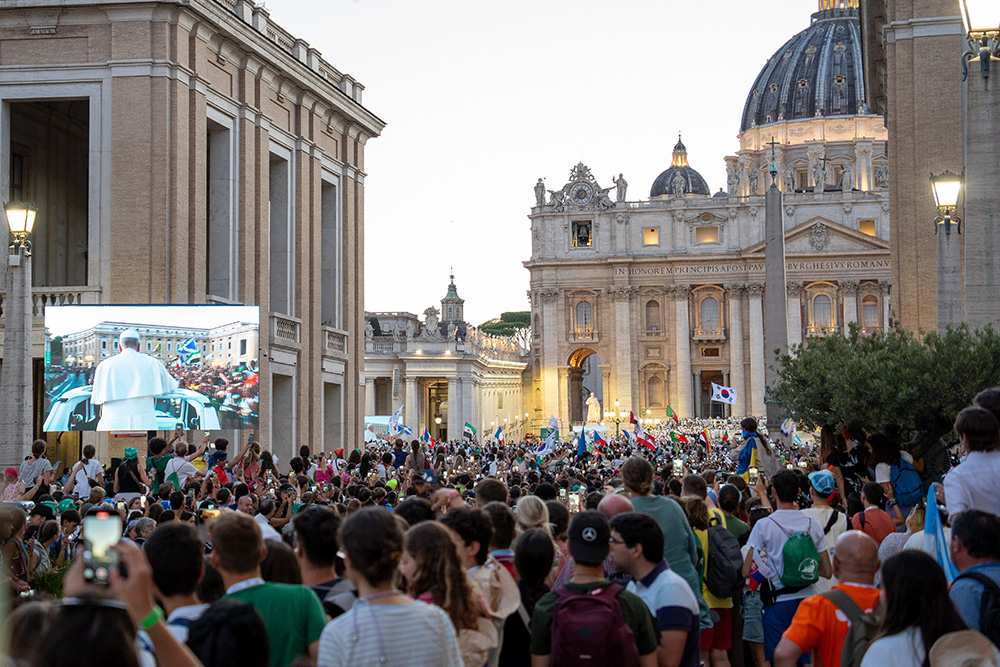
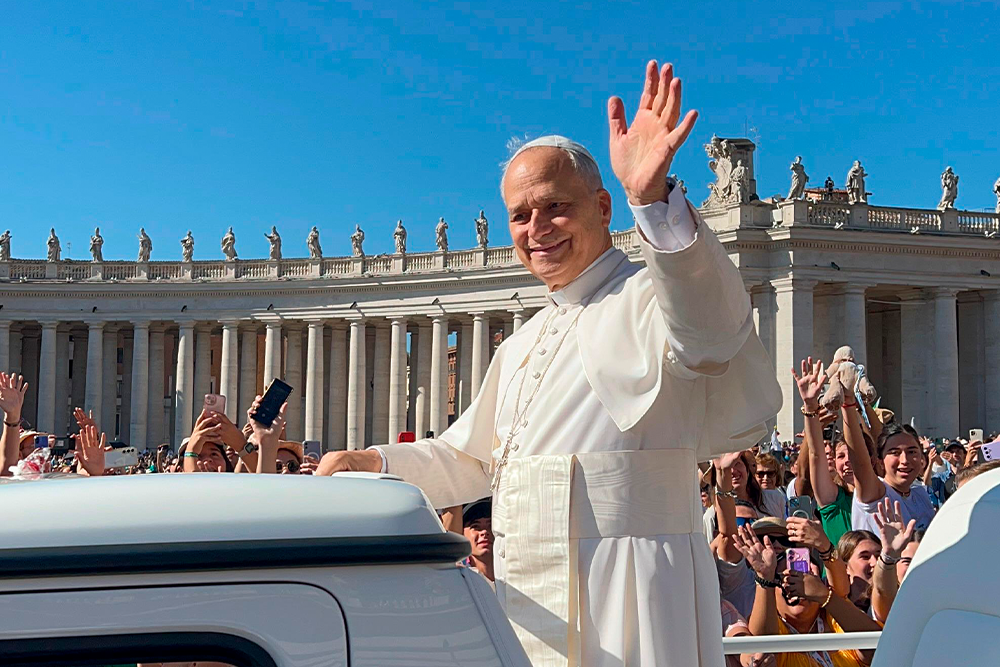
Pope Leo made several unscheduled appearances and gave unscheduled greetings, such as when, at the welcome Mass, he wanted to be present at the conclusion by travelling in the “popemobile” through St. Peter’s Square and the Via della Conciliazione packed with young people, to greet them. Speaking spontaneously, he said: ‘We hope that all of you will always be signs of hope. (…) May we always walk together with our faith in Jesus Christ, and may our cry also be for peace in the world.”
Then, on Saturday 2 August, as nature offered a magnificent sunset, responding to questions from young people in Tor Vergata, he reiterated his appeal: “Dear young people, love one another! Love one another in Christ. Know how to see Jesus in others. Friendship can truly change the world. Friendship is a pathway to peace ”. He then added: ’To be free, we must start from a stable foundation, from the rock that supports our steps. This rock is a love that precedes us, surprises us and surpasses us infinitely: it is the love of God. (…) We find happiness when we learn to give ourselves, to give our lives for others.” And he pointed out the way to follow Jesus: ’Do you truly want to encounter the Risen Lord? Listen to his word, which is the Gospel of salvation! Seek justice, renewing your way of life, to build a more humane world! Serve the poor, witnessing to the good that we would always like to receive from our neighbour!”
During Sunday Mass, Pope Leo XIV told the young people that we are made “for an existence that is constantly regenerated in giving, in love. And it is in this way that we continually aspire to a “something more” that no created reality can give us; we feel such a great and burning thirst that no drink in this world can quench it.” He concluded his homily with a heartfelt invitation: “Dear young people, our hope is Jesus. (…) Aspire to great things, to holiness, wherever you are. Do not settle for less.”
In his farewell address, he described these days as “a cascade of grace for the Church and for the whole world.” He reiterated his cry for peace: “We are with the young people (…) from every land bloodied by war. (…) You are the sign that a different world is possible: a world of fraternity and friendship, where conflicts are addressed not with weapons but with dialogue.”
A companion by your side
This unique and unrepeatable experience of the 2025 Youth Jubilee has come to an end. On this incredible journey, we walked, sang and walked, danced, rejoiced and walked, prayed, laughed and walked… driven by a common goal and many travelling companions. Yes, because beyond the wonderful programme that enriched us culturally and spiritually, the image of thousands of young people like us walking will remain forever etched in our minds. Perhaps if we had asked some of them what their destination was, they would have replied something like: “We’re going to the church of Santa Maria Maggiore” or “We’re finally going to rest”, but I am equally convinced that if we had also asked them how they were doing it, they would have told us with eyes full of energy about the songs they sang, the young people they made friends with and the fullness of spirit that this walking together gave them. After all, for us, the Jubilee was just that: a journey like no other, in a city like no
other, where the dreams, hopes, joys and sorrows of a sea of people come together, where even if you walk alone, you still have a companion by your side, where the world is both tiny and immense, where everything cries out for Unity. We return home with a memory that will not easily fade, the memory of a United World that takes each other by the hand and walks, with heads held high and hearts filled with a greater spirit.