
“When the Holy Year 2000 ended and the second Intifada began, the pilgrims disappeared. Christians here feel abandoned. Most of them make their living on the services provided to pilgrims. Pilgrimages not only give them material help, but spiritual support as well.” These are remarks from the Apostolic Nuncio in Jerusalem, Bishop Pietro Sambi.
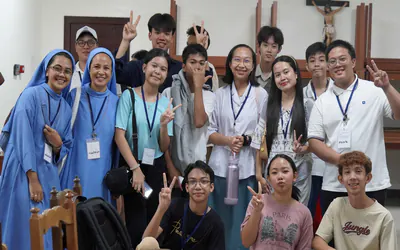
 “We were a mixed group of youth from Europe and Asia and right from the start, the unity among us ‘pilgrims’ and our local friends was natural and concrete. Our heart told us we had to go and visit them right in their own land to be able to understand how much they need to feel our support. But contact with these people is useful for us, most of all, who come from different parts of the world: we have a lot to learn from them and much to thank them for, for what they are living through and offering up for everyone.
“As we walked through the ancient city and looked around, we were filled with sensations we could hardly put into words. Faces, houses, colors and odors, words and silences, panoramas and stones. The very stones the God-made-man walked on and His presence is more than ever alive and resounding right here and now. It was deeply moving to see that there are still people who go on building peace, starting first of all from themselves. This was the greatest lesson we learned on this trip. “We were witnesses of touching experiences of life: of a woman who had lost husband, brothers or children; of people who live day by day with the fear of check-points; of one who saw her loved ones being dragged away, or another his house collapsing. Experiences of people who have lost all certainty except the certainty that ‘It is in giving Love to whoever comes our way that we get the strength to smile again.’ Which means ‘loving that soldier, smiling over a misunderstanding, going beyond injustice to offer something positive to someone one could rightly call ‘enemy’.’ The initiatives of solidarity are in the thousands; and just to cite an example, a typing office was set up in a village of the Palestinian Territories to offer new job opportunities. “During the days we spent in the Holy Land, such an unconditional love reached us, too. Our friends there really gave us so much of their life, their deeds, sweets, dinners, visits, celebrations – everything was part of a continuous act of Love for us.” P.B.
0 Comments